Advanced
Silver Albino Arowana (Osteoglossum bicirrhosum) – 10–25cm Sizes
24–30°C · pH 5–7.5
£351.99

The Silver Arowana (Osteoglossum bicirrhosum) is a South American bonytongue from the Amazon basin, Rupununi and Oyapock rivers that reaches 90 cm. It suits advanced keepers with public-scale or the very largest private aquaria; keep 24–30°C, the FishBase and Seriously Fish overlap, pH 5.0–7.5 and 2–15 dGH. Sold individually in dispatch sizes from 5 - 8 cm to 30-40 cm.
Adult size is the maximum length this species reaches at full maturity (scientific sources). The livestock you receive will be younger and smaller — pick a size above for the actual shipping size. Product-photo provenance and any image-specific limitations are stated on the listing.
Osteoglossum bicirrhosum
The Silver Arowana (Osteoglossum bicirrhosum) is a South American bonytongue from the Amazon basin, Rupununi and Oyapock rivers that reaches 90 cm. It suits advanced keepers with public-scale or the very largest private aquaria; keep 24–30°C, the FishBase and Seriously Fish overlap, pH 5.0–7.5 and 2–15 dGH. Sold individually in dispatch sizes from 5 - 8 cm to 30-40 cm.
Adult size is the maximum length this species reaches at full maturity (scientific sources). The livestock you receive will be younger and smaller — pick a size above for the actual shipping size. Product-photo provenance and any image-specific limitations are stated on the listing.
Maintain these water conditions for optimal health and vibrant colors
The Silver Arowana (Osteoglossum bicirrhosum) is a freshwater bonytongue in the family Osteoglossidae. It comes from South America, where its range includes the Amazon River basin and the Rupununi and Oyapock rivers. FishBase records a maximum of 90 cm total length. This is an advanced fish for a keeper able to provide a public-scale installation or one of the very largest private aquaria for its entire adult life.
Its upturned mouth supports surface feeding: FishBase describes an omnivore with a tendency to take fish at the surface and capture prey from below. Although it can adapt to naturally low-oxygen environments, aquarium care should provide a high proportion of dissolved oxygen, moderate water movement and stable conditions. Seriously Fish considers the species suitable only for public installations or the very largest private aquaria.
| Suits | Not suited to |
|---|---|
| Advanced keepers planning for a 90 cm adult | Ordinary home community aquaria |
| Biologically mature, heavily filtered installations | New or biologically immature systems |
| A tightly covered aquarium with immense long-term capacity | Open-topped or lightly covered aquaria |
| Carefully screened companions too large to swallow | Much smaller fish or casually chosen tank mates |
Choose it only when the permanent installation, filtration, cover and maintenance routine are ready as one plan. A juvenile body does not reduce the needs created by its adult size, jumping ability, predatory feeding and demand for stable water.
One purchase supplies one Silver Arowana in the selected size. The live size selector may show the labels 5 - 8 cm, 8-10 cm, 13 - 16 cm, 15 - 20 cm, 20-25 cm and 30-40 cm; use it to choose the dispatch size required for your prepared installation. The size you select is the size supplied, not the adult size. Every size must be planned around the same recorded 90 cm adult length and the same long-term housing standard.
Sex is guaranteed only when the selected option explicitly states male or female. This Silver Arowana listing has no sex-guaranteed option.
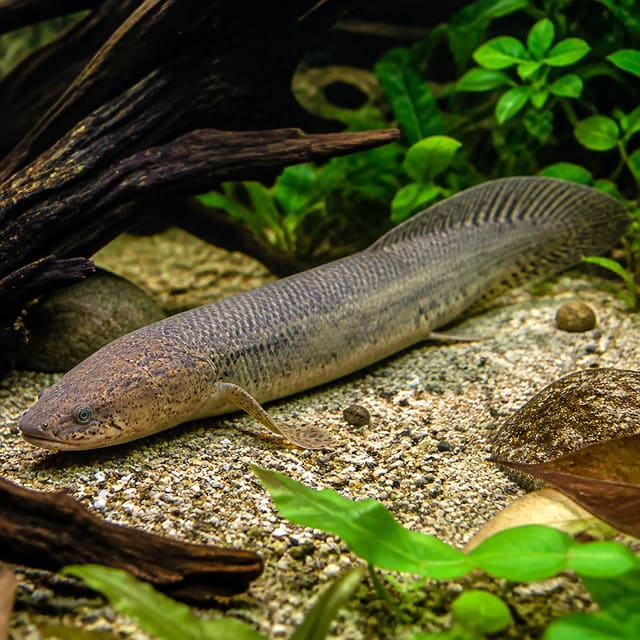
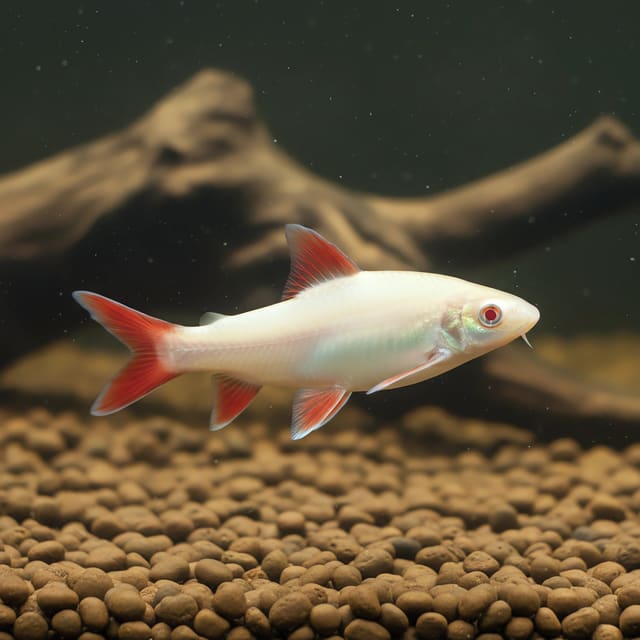
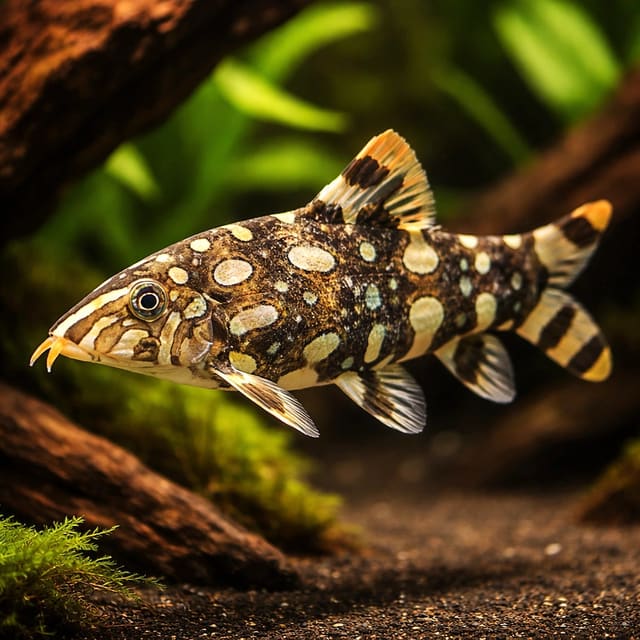
The gallery images are representative, based on reference photographs of this species, so colours can look slightly different from the live animal.
Before selecting a size, compare it with the animals already present and the secure capacity of the final system. A larger dispatch fish is still not an adult, while a smaller one is not a reason to defer the permanent installation. Every dispatch size needs the same permanent installation, so choose the size by the fully prepared aquarium.
Keep the aquarium at 24–30°C. This is the overlap between FishBase’s recorded species environment and the Seriously Fish aquarium range. Maintain pH 5.0–7.5 and hardness of 2–15 dGH, following the Seriously Fish species profile. Select a stable point inside those ranges that your source water and maintenance routine can hold consistently.
Space is the decisive commitment. The adult planning length is 90 cm, and Seriously Fish restricts the species to public installations or the very largest private aquaria. The final system also needs a tightly fitting, heavy cover, mature biological filtration, high dissolved oxygen, moderate water movement and enough filtration capacity for the waste produced by a very large predatory fish.
If that scale is beyond your long-term plan, browse the loaches and oddballs collection for animals whose adult needs fit the aquarium you can maintain permanently.
Plan around a maximum recorded length of 90 cm total length from FishBase. Seriously Fish limits the species to public installations or the very largest private aquaria. Those assessments make the adult system—not the juvenile holding period—the correct starting point for every space decision.
OATA’s group guidance for tankbusters says exceptionally large aquaria are required, often in excess of 500 litres, and that an off-the-shelf aquarium is unlikely to be large enough for long-term care. For this species, follow the stricter direction towards a public installation or the very largest private aquarium rather than treating 500 litres as a target. OATA’s group guidance also mentions indoor heated ponds for tankbusters; for this prodigious jumper, any such system still needs a tightly fitting, heavy cover.
A smaller aquarium is not a long-term stage in the care plan simply because the selected fish is young or small. Tankbusters may grow quickly, and delayed expansion risks leaving the fish in housing that no longer matches its body size, activity or waste production. Build and mature the permanent system before growth turns a future project into an urgent move.
Fit a tightly fitting, heavy cover before the Silver Arowana enters the aquarium. Seriously Fish describes Osteoglossum species as prodigious jumpers and treats this cover as essential. Check the complete top, including the areas around filter returns, cables and other equipment, so the cover remains tightly fitted after maintenance.
Arrange the surface zone to support the animal’s natural position without obstructing secure closure. Floating or overhanging vegetation and branches are appreciated, so use them where the installation can still be inspected and maintained properly. FishBase records the species as tending to feed on fish at the surface, using its superior mouth to capture prey from below. Keep the feeding area accessible and make sure surface features do not prevent you from seeing whether food is eaten.
| Decision | Action |
|---|---|
| Prevent jumping | Use a tightly fitting, heavy cover across the whole installation. |
| Offer surface shelter | Add floating or overhanging vegetation or branches where practical. |
| Retain access | Arrange cover so feeding, observation and filter servicing remain manageable. |
| Protect stability | Return every section of the cover to its secure position after maintenance. |
A decorative branch or floating plant is optional environmental cover; the heavy top is the essential safety control. Do not let planting, feeding access or equipment placement create an opening that defeats the cover. Inspect the closure as part of routine maintenance because a system that was secure before equipment was moved may no longer close in the same way afterwards.
Keep the temperature at 24–30°C. That range is the overlap between FishBase’s recorded environment of 24–30°C and the Seriously Fish aquarium range of 20–30°C. Maintain pH 5.0–7.5 and hardness of 2–15 dGH from the Seriously Fish profile. Use the water chemistry guide to understand the measurements, then compare your readings with the stated ranges using the water matcher.
Stability is obligatory for this fish’s well-being. Choose values within the ranges that can be maintained by the aquarium and its source water instead of repeatedly shifting the system towards a particular midpoint. Record results consistently so a gradual change becomes visible before it moves outside the operating range.
Keep ammonia at zero mg per litre and nitrite at zero mg per litre. OATA says nitrate should not exceed 20 mg per litre above the normal tap-water level. This is a relative limit: if the tap water measures 10 mg/L nitrate, keep the aquarium at no more than 30 mg/L. Test the tap water as well as the aquarium when applying that calculation.
Use a biologically mature, well-maintained filter system before adding the Silver Arowana. Seriously Fish says the species should never enter a biologically immature aquarium because stable conditions are obligatory. Follow the aquarium preparation and maturation guide before livestock arrives, and confirm that ammonia and nitrite are both zero.
The RSPCA explains biological filtration as the process in which beneficial bacteria convert toxic ammonia to toxic nitrite and then to safer nitrate. The filter therefore needs to be established, operating continuously and maintained without destroying its bacterial population. A clear-looking aquarium is not a substitute for zero ammonia and nitrite test results.
Provide a high proportion of dissolved oxygen and a moderate degree of water movement. Seriously Fish recommends external filters, powerheads or airstones as necessary to achieve those conditions. OATA notes that a very large fish may require several large aquarium filters or even a pond filter to control water quality and remove the substantial solid waste it produces.
Add future animals slowly. OATA warns that the beneficial bacteria must increase as fish numbers and feeding increase; stocking too quickly can create new tank syndrome when the filter cannot process the additional waste. For a fish of this scale, treat every livestock or feeding increase as an added demand on the biological filter.
Feed a varied diet based on appropriately sized foods that match this generalised predator’s recorded diet. FishBase describes the wild Silver Arowana as omnivorous, with a tendency to feed on fish at the surface. Seriously Fish reports wild stomach contents including other fishes, terrestrial insects, aquatic invertebrates and plant material such as fallen nuts and fruits.
For smaller specimens, suitable aquarium foods named by Seriously Fish include bloodworm, small earthworms and chopped prawn. Adults will accept strips of fish flesh, whole prawns or shrimp, mussels, live river shrimp and larger earthworms. Insects such as crickets are also suitable, best offered after their stomachs have been filled with fish flakes or vegetable matter. Floating dried products may be used in limited quantities rather than becoming the only food offered.
Offer only what the fish can eat within a few minutes, once a day. OATA sets that portion and schedule for tankbusters because uneaten food breaks down and releases toxic waste into the water. Match every piece to the fish’s present feeding ability, watch it being taken and stop when the few-minute portion has been consumed.
| Feeding decision | Practical choice |
|---|---|
| Smaller specimen | Bloodworm, small earthworms or chopped prawn in suitable pieces. |
| Larger specimen | Fish flesh, whole prawns or shrimp, mussels and larger earthworms. |
| Additional variety | Suitable insects or limited floating dried foods. |
| Portion control | Once daily, only the amount eaten within a few minutes. |
Do not feed mammalian or avian meat such as beef heart or chicken. Seriously Fish gives the lipids in these meats as the reason. Use the named aquatic and invertebrate foods instead, rotate suitable items and keep portion size tied to what is actually consumed. If food remains uneaten, reduce the next portion so uneaten food does not build up and break down in the water.
Change 30–50% of the aquarium water every week. Seriously Fish considers that weekly amount mandatory for the species, while OATA’s broader tankbuster guidance strongly recommends at least one 25% partial change each week. Use the species-focused 30–50% routine and combine it with removal of solid waste from the substrate and accessible areas.
Test the water at least once per week for ammonia and nitrite, and track nitrate against the normal tap-water level. Treat replacement water with tap-water conditioner to remove chlorine or chloramine before it enters the aquarium. Check filters for blockages during the same maintenance cycle so reduced flow is found before it compromises filtration, oxygenation or waste removal.
If filter media needs cleaning, rinse it lightly in aquarium water removed during the partial change. Do not run it under the tap because chlorine or chloramine may kill the beneficial bacteria established in the media. Clean only as needed to restore function while retaining the biological population that processes waste.
When a change appears, test water quality first because ammonia, nitrite, nitrate, temperature or other instability may reveal the immediate husbandry problem. Correct any measurable issue promptly and contact us for further guidance whenever a health or behaviour change concerns you. Keep written results so the normal pattern for this individual is easier to distinguish from a developing problem.
Be present to receive the parcel because live fish cannot be left unattended. The fish is hand-bagged in oxygen and placed in an insulated poly box, with a heat pack used when weather calls for it. Follow the current delivery and Live Arrival Guarantee policy for the complete terms.
For a Live Arrival Guarantee claim, contact us the same day with the order number and the continuous unboxing video showing the sealed parcel, the opening and the fish still inside the bag. The policy uses this sequence so the fish’s condition can be seen before the contents are disturbed.
Before the delivery day, confirm that the permanent system is mature, the heavy cover is ready to close, ammonia and nitrite are zero, and temperature, pH and hardness are within the stated ranges. OATA’s introduction guidance says water quality should be suitable before any fish is added. Once the fish is released, restore the secure cover immediately and observe swimming, breathing and condition against the health signs used in routine care.
Keep feeding and stocking within the established filter’s capacity. Any later increase in livestock or feeding increases the demand on beneficial bacteria, so make changes slowly and continue the weekly testing and water-change routine.
Consider only companions too large for the Silver Arowana to swallow, then assess where they swim, how territorial or competitive they are and whether the installation has enough scale for both animals. Seriously Fish describes the species as peaceful with animals too large to swallow, but that is an initial screen rather than a promise that every large fish will be compatible.
Avoid much smaller fish. OATA advises against mixing tankbusters with much smaller fish because of their large size and, in most cases, equally big mouths. This species is a generalised predator that naturally consumes other fishes and aquatic invertebrates, so swallowing risk must be assessed from the actual animals rather than a broad community label.
| Screen | Decision |
|---|---|
| Can the Arowana swallow it? | Avoid the candidate if the answer may be yes. |
| Is it aggressively territorial? | Avoid it. |
| Is it very competitive? | Avoid it. |
| Does it occupy the surface? | Avoid it except in the very largest installations. |
| Is it similarly sized and uses another zone? | Continue screening; size alone does not make it suitable. |
Seriously Fish names similarly sized Cichla species and larger doradid or loricariid catfishes as the best choices. Neither is a guaranteed match. Each candidate still needs enough space, suitable water, compatible feeding and a temperament that does not create territorial pressure or intense competition.
Ask us for a stocking and compatibility assessment using the aquarium’s scale, current occupants and measured water values. Give the adult identity and size of every proposed companion rather than relying on its juvenile appearance. A fish that passes the swallowing check can still fail because it is territorial, highly competitive or another surface-dweller.
House more than one Silver Arowana only with a plan for aggression and a distinct pecking order. Seriously Fish reports that conspecifics may become aggressive when space is limited and that a group forms a hierarchy even in larger systems. Assess any group around the actual fish, their behaviour and the immense space involved.
Avoid other surface-dwellers except in the very largest installations. They overlap the part of the aquarium used for feeding and normal activity, so a candidate that appears large enough may still fail the surface-use screen. Aggressively territorial or very competitive species should also be avoided rather than added for a trial.
Observe behaviour after any carefully planned introduction. Increased aggression, hiding, altered feeding, abnormal swimming or changed condition are reasons to test the water and reassess the combination. Compatibility is an ongoing welfare decision because growth, hierarchy and competition can change the pressure between animals even when the first introduction appears calm.
It reaches 90 cm total length according to FishBase; plan the full installation around that adult size.
Seriously Fish limits it to public installations or the very largest private aquaria; OATA’s broader tankbuster guidance says aquaria are often in excess of 500 litres, so do not treat 500 litres as a target for this 90 cm fish.
House more than one only with a plan for possible aggression when space is limited and for the distinct pecking order a group forms even in larger systems; assess any group around the actual fish and the space available.
No. We rate it advanced because it reaches 90 cm and needs an immense mature installation, heavy cover, powerful filtration, stable water and carefully screened companions.
Feed bloodworm, small earthworms and chopped prawn to smaller specimens, with strips of fish flesh, whole prawns or shrimp, mussels or larger earthworms for adults; OATA’s tankbuster guidance advises one daily portion eaten within a few minutes.
Keep it at 24–30°C, the overlap between FishBase and Seriously Fish, with pH 5.0–7.5 and hardness of 2–15 dGH.
It is peaceful with anything too large to swallow, but smaller fish are at risk of being eaten and it can be aggressive towards its own kind when space is limited.
Seriously Fish names carefully screened, similarly sized Cichla species and larger doradid or loricariid catfishes; avoid much smaller, aggressively territorial and very competitive fish, and avoid other surface-dwellers except in the very largest installations.
Tropical Fish Co hand-bags it in oxygen and packs it in an insulated poly box, with a heat pack when the weather calls for it, for a licensed live-animal courier; receive it in person and film every delivery in one continuous take from the sealed parcel through opening to the fish still inside its bag.
No reviews for this item yet. Bought one? Honest reviews only, good or bad.
What customers say about ordering from us
I have a small group of long finned mountain minnows. So was delighted to be able to order ten of this variety to increase the genetics in my tank . The ones I recieved are healthy but it’s to early to give a verdict on wether they are of a long finned type since they are small currently.
Gordon Walker · 23 Sept 2026
100% success travel and "installation". Pleased with quality of purchase. The Siamese fighter a bit "shy" so have not yet seen him at his best yet but looking good. Happy customer. GG
George E Garratt · 21 Sept 2026
Reviews of our shop, collected by Judge.me, an independent third-party review collector. Newest first.