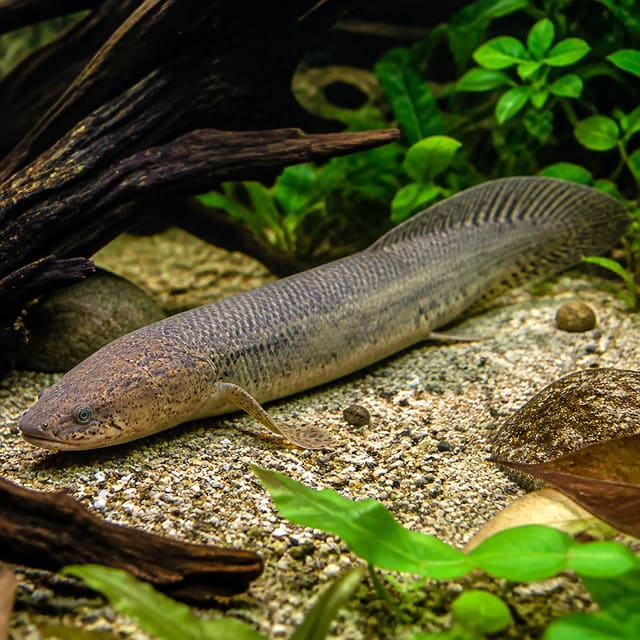
Australian Bonytongue – Scleropages jardinii with golden scales

Scleropages jardinii

Australian Bonytongue (Scleropages leichardti) - UK

Aggressive
£500.99In Stock

Rare Australian Bonytongue, also known as Jardini Arowana, ideal for experienced keepers seeking a striking show fish. Order today with secure UK delivery.

CarnivoreFishFreshwater FishModerate CarePredatory SpeciesRare SpeciesSurface Dweller

Care at a Glance

Scientific Name
Scleropages jardinii
Adult Size
60 cm
Lifespan
20 years
Care Level
Advanced
Temperament
Aggressive
Temperature
24–30°C
pH Range
6.5–7.5
Hardness
5–15 dGH
Minimum Tank
1000L
Diet
Pellets, prawns, fish, insects, crickets

Premium Quality

Healthy, vibrant fish from trusted suppliers

Expert Care

Detailed care guides and support

Live Arrival Guarantee

Your fish arrives healthy or we'll replace it

Acclimated

Properly quarantined and ready for your tank

Quick Care Guide

Temperature
24–30°C
pH Range
6.5–7.5
Minimum Tank
1000L
Adult Size
60 cm
Lifespan
20 years
Care Level
Advanced
Temperament
Aggressive
Diet
Pellets, prawns, fish, insects, crickets
Water Hardness
5–15 dGH
Tank Region
Top

Water Parameters

Maintain these water conditions for optimal health and vibrant colors

Temperature
24–30°C
24°CIdeal Range30°C
pH Level
6.5–7.5
6.5Ideal Range7.5
Water Hardness
5–15 dGH
5 dGHIdeal Range15 dGH

Why Choose This Fish?

Rare Australian Bonytongue, also known as Jardini Arowana, ideal for experienced keepers seeking a striking show fish. Order today with secure UK delivery.

The Australian Bonytongue, Scleropages leichardti, is one of the most striking oddball predators available in the freshwater fish UK hobby. Also known as the Spotted Bonytongue, Southern Saratoga, and Leichardti Arowana, this ancient surface hunter combines a long, armoured body, metallic bronze sheen, and bold spotting that makes it an impressive display fish for large tank systems. For keepers searching fresh water aquarium fish uk, freshwater fish aquarium uk, or a specialist uk freshwater fish aquarium centrepiece, this species stands apart from more common community fish. It reaches a serious jardini arowana size-class body length of 60-90cm, lives 15-20 years with proper care, and is best suited to advanced aquarists who understand the needs of large freshwater fish uk collections.

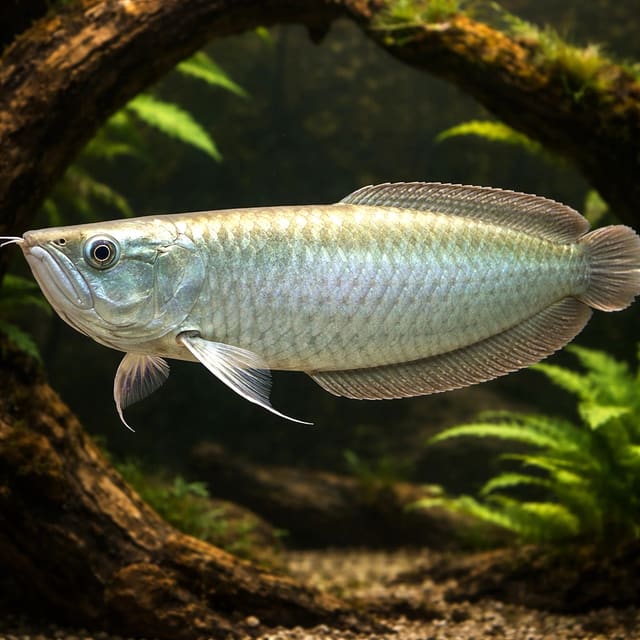
Although many hobbyists search for terms like Australian arowana tank size, jardini arowana tank size, and jardini arowana tank setup, the key point is simple: this is a powerful, top-dwelling predator that needs room, secure covers, and stable water. See our detailed photos showing the long jawline, reflective scales, and elegant finnage of this stunning Australian predatory fish. If you want a rare talking point rather than a typical community species, the Australian Bonytongue offers prehistoric looks, intelligent feeding behaviour, and true monster-fish presence for the serious freshwater fish uk for tank enthusiast.

🔹 Quick Facts

  • Scientific Name: Scleropages leichardti
  • Care Level: Advanced
  • Min Tank Size: 750 litres (165 gallons)
  • Temperature: 24-28°C (75-82°F)
  • pH Range: 6.0-7.5
  • Lifespan: Up to 20 years
  • Temperament: Aggressive
  • Diet: Carnivore

Classification

  • Order: Osteoglossiformes
  • Family: Osteoglossidae
  • Genus: Scleropages

Scleropages leichardti is one of the ancient bonytongues, a lineage prized by aquarists for prehistoric body shape, surface-feeding behaviour, and strong visual presence. In the hobby it is often compared with the Jardini Arowana and Asian arowana types, but the Australian Bonytongue has its own spotted pattern, long profile, and specialist appeal among keepers of exotic tropical fish UK oddballs.

Where Do Australian Bonytongue Come From? Natural Habitat Explained

The Australian Bonytongue comes from river systems in Queensland, Australia, where it inhabits slow to moderately flowing freshwater channels, lagoons, backwaters, and floodplain habitats. Unlike many small river fish species that hide among roots and leaf litter, this fish is a surface-oriented ambush predator built to patrol open water near overhanging vegetation. In the wild, it occupies warm tropical and subtropical waters where insects, crustaceans, smaller fish, and other animal prey are available near the surface.

For aquarists browsing a uk freshwater fish guide or wondering what are freshwater fish uk species compared with Australian oddballs, this fish is obviously not one of the freshwater fish native to uk. It is not part of the freshwater fish uk rivers, freshwater lake fish uk, or freshwater pond fish uk fauna, and it should never be confused with fresh water river fish uk species such as bream, gudgeon, or barbel. Questions like how many freshwater fish species are there in the uk, common freshwater fish uk, or freshwater fish names a-z usually refer to native and established fish, while this species belongs firmly in the specialist tropical aquarium category.

Its natural waters are often tea-stained or slightly tinted, with submerged timber, fallen branches, and shaded margins. That matters in captivity. A bright bare tank can make this fish nervous, while a long aquarium with dimmer zones, dark background panels, and broken lines of sight helps it settle. Hobbyists sometimes compare it with freshwater fish for small ponds uk or ask how big freshwater fish uk river species get, but the Australian Bonytongue is not a pond fish and is absolutely unsuitable for outdoor UK conditions.

In terms of conservation and responsible keeping, it is important to buy legally sourced stock and to understand local regulations on large predators. Searches such as invasive fish species uk, what fish are banned in uk, and native freshwater fish for sale uk show how often buyers want clarity. This species belongs in large indoor aquaria only, under experienced care, with no release risk and no mixing with undersized fish.

💡 Expert Tip

Mimicking the natural habitat of Australian river margins improves confidence and feeding response. Use a dark background, floating cover, and subdued lighting rather than a bright, exposed layout. Keep the surface calm enough for easy feeding, but maintain strong biological filtration underneath.

How to Set Up the Perfect Tank for Australian Bonytongue

If you are researching Australian arowana care guide details, tank setup is the make-or-break factor. This species gets huge, produces heavy waste, and can launch itself upward with surprising force. A juvenile may look manageable in a shop tank, but adult housing must be planned from day one.

Tank Size Requirements

The absolute minimum Australian arowana tank size is 750 litres, but a jardini arowana tank size equivalent of around 1000 litres is far more realistic for long-term care. Aim for a tank with substantial length and width, not just height. A footprint that allows smooth turning is essential once the fish passes 45-50cm. This is why the best arowana for home aquarium question always depends on available space; if you cannot house a 60-90cm predator properly, this is not the right species.

For a serious jardini arowana tank setup-style system adapted to this species, use a tightly fitted lid, weighted covers, and protected gaps around pipes and cables. Australian Bonytongue are powerful jumpers, especially when startled by sudden movement, bright lights, or aggressive tank mates.

Water Parameters

The ideal jardini arowana water parameters for this fish are 24-28°C, pH 6.0-7.5, and 3-14 dGH. The best target is around 26°C, pH 6.8, with stable rather than fluctuating chemistry. Buyers often search jardini arowana temperature and jardini arowana temperature range; for Australian Bonytongue, the same warm tropical bracket applies. If you need a shorthand reference, think of a stable, clean, slightly soft to moderately hard tropical setup. Scleropages jardinii water hardness searches are common, and the practical takeaway is that both Australian species handle moderate hardness better than many blackwater fish, but sudden swings should still be avoided.

24-28°C
Temperature
6.0-7.5
pH
3-14 dGH
Hardness
750-1000L+
Tank Size

Filtration

Use oversized filtration with strong biological capacity. A large external canister pair, sump filtration, or a hybrid mechanical/biological system works well. Turnover of 5-8 times tank volume per hour is a sensible target, but avoid creating a harsh surface torrent that interferes with feeding. Because this is a carnivore, dissolved organics can build quickly. Weekly water changes of 30-50% are normal in well-stocked monster tanks.

When building a display around this fish, many keepers also browse other unusual species such as Elephant Nose Knifefish or Elephantnose Fish, but filtration must be chosen for the biggest and messiest inhabitant, not the most delicate one.

Substrate

Substrate is mostly aesthetic because this fish lives at the top, but a dark sand or smooth fine gravel base helps reduce reflected light and makes the fish feel more secure. Avoid sharp decor and jagged rock piles. If the fish startles, it can injure its jaw, scales, or fins on hard edges.

Plants & Decor

Keep decor open. Use large branches, smooth root structures, and peripheral planting rather than dense central hardscape. Floating plants or surface diffusers help calm the fish. If you are considering tank companions, open swimming space is more important than decorative clutter. Tiny schooling species like X Strawberry Rasbora, X Rhombo Barb, or Four-Spotted Copeina - Pyrrhulina Spilota - are visually appealing but not suitable tank mates because they are simply too small.

Lighting Requirements

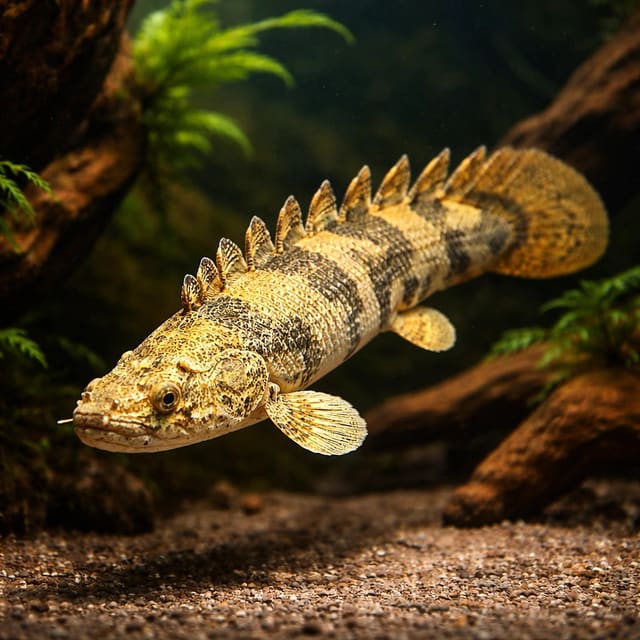
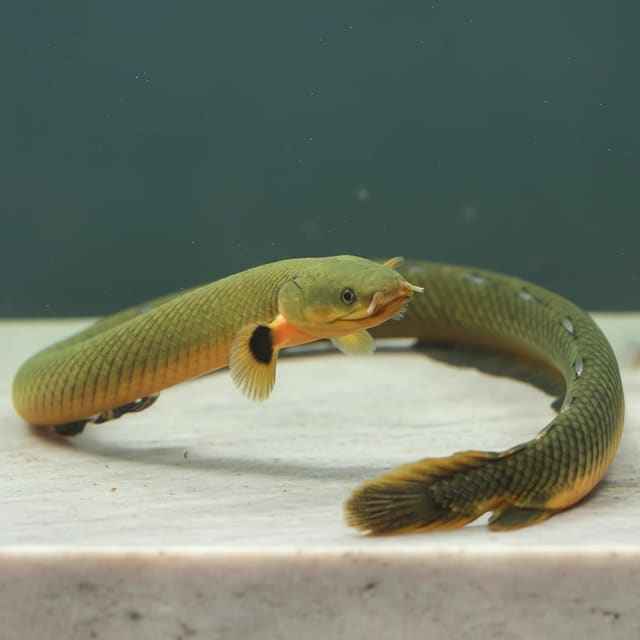
Moderate to dim lighting works best. Bright overhead lighting can make this species skittish and increase jumping risk. Use a dawn-dusk schedule if possible, and keep photoperiods around 8-10 hours. Our product image, freshwater-fish-uk.webp, is best understood as a guide to body shape and spotting under controlled aquarium lighting rather than a promise of identical colour in every tank.

Quick Setup Checklist

  • Tank volume of 750 litres minimum, 1000 litres recommended
  • Secure lid with no jump gaps
  • Temperature stable at 24-28°C
  • pH 6.0-7.5 with low fluctuation
  • Oversized biological filtration
  • Dark background and subdued lighting
  • Open swimming area with smooth decor
  • Weekly large water changes

💡 Pro Tip

Always cycle the aquarium for 4-6 weeks before adding a large predator. In monster tanks, immature filtration causes more trouble than slightly imperfect pH. Stable ammonia and nitrite at zero matter far more than chasing tiny number changes.

What Do Australian Bonytongue Eat? Complete Feeding Guide

The Australian Bonytongue is a carnivore with a strong feeding response and a preference for animal-based foods taken from the surface or upper water column. In the wild, it takes insects, crustaceans, and fish. In captivity, the best jardini arowana diet-style approach is variety rather than relying on one food item. This species does well on high-quality carnivore sticks, floating predator pellets, strips of fish or prawn, and occasional insect-based foods.

Staple Foods

A good staple diet includes floating carnivore pellets formulated for large predatory fish. These help provide balanced vitamins and minerals that single-ingredient foods cannot. If customers ask what do small freshwater fish eat, the answer is very different from what this species needs; Australian Bonytongue are not micro-predators or flake feeders, and they should not be managed like ordinary community fish.

Blyth’s Archerfish — A useful comparison species for surface-feeding behaviour; keepers who enjoy target feeding often appreciate both species, though they require very different stocking plans.
Hybrid Blue Neon / Tiger Parrot Fish — Not a food item, but a contrasting large display fish for aquarists comparing feeding intensity and temperament in bigger tropical systems.

Supplemental Foods

Supplement with river shrimp, mussel, earthworms from safe sources, mealworms, crickets, and pieces of white fish. Avoid making feeder fish a routine part of the diet. Feeder fish often introduce parasites and encourage nutritional imbalance. A varied menu supports growth, colour, and long-term organ health.

Treats & Special Foods

Treat foods can include prawns, insects, and occasional frozen lancefish or similar marine-origin items in moderation. Many buyers land on pages asking how much to feed freshwater fish, can you eat freshwater fish, is freshwater fish safe to eat, or freshwater fish to eat list. Those are human-food searches, not aquarium-care advice. For this species, the important point is controlled portions: feed what is consumed promptly, and do not turn every meal into a binge.

Feeding Frequency & Portion Control

Juveniles can be fed once or twice daily in modest portions. Adults usually do well with one substantial feeding per day or five to six feedings per week. Watch the body line. A healthy fish looks full-bodied but not swollen. Excess fat in large predators often comes from overuse of rich foods and oversized portions.

Time Food Amount
Morning Floating carnivore pellets Small handful, eaten within 2-3 minutes
Evening Prawn, insect mix, or fish strips 2-4 pieces depending on fish size

Searches such as what freshwater fish can you eat uk, what uk freshwater fish can you eat, what uk river fish can you eat, freshwater fish uk to eat, freshwater fish you can eat uk, best freshwater fish to eat uk, best uk freshwater fish to eat, best uk river fish to eat, which freshwater fish can you eat uk, and which uk freshwater fish are edible are common on Google, but they are unrelated to keeping Australian Bonytongue as ornamental fish. This is a display predator, not part of a british fish to eat or freshwater fish to eat list discussion.

⚠️ Feeding Warning

Overfeeding causes ammonia spikes, fatty degeneration, and poor water quality. Avoid mammal meat, frequent live feeder fish, and large meals that leave the fish bloated. Carnivorous fish need clean water as much as they need protein.

Australian Bonytongue Appearance: Colors, Patterns & Varieties

The Australian Bonytongue has the classic arowana-style silhouette: elongated body, broad scales, an upturned mouth built for surface strikes, and a long anal fin that mirrors the dorsal line toward the tail. Adults reach 60-90cm, making them a true predatory fish UK showcase species and one of the most memorable large predatory fish UK aquarium fish available to specialist keepers.

Colour is one of its biggest selling points. Most specimens show bronze, olive-brown, or chocolate tones overlaid with pale spots and scale edging. Depending on lighting, some fish display copper highlights and a subtle gold wash. Juveniles are often more contrasty, while adults become deeper and richer in tone. Some keepers searching for black freshwater fish uk or freshwater fish uk green are really looking for dark-bodied oddballs; this species often satisfies that visual preference better than bright community fish.

It is not one of the typical freshwater fish with red fins, and it should not be confused with british freshwater fish with red fins or smaller river species. Instead, its appeal lies in armour-like scales, prehistoric proportions, and the alert eye-line of a surface predator. Our photos show the spotted flank pattern and metallic body sheen that make this a stunning Australian predatory fish in large aquaria.

Sexual dimorphism is subtle. Mature males may appear slightly slimmer and more elongated in profile, especially around the head and mouthbrooding area in related species, but reliable sexing is difficult without breeding behaviour. If you see odd searches such as freshwater fish uk male, remember that most large predatory fish are not easy to sex visually when young.

What Fish Can Live With Australian Bonytongue? Compatibility Guide

Compatibility is where many sales go wrong. Buyers often search jardini arowana tank mates and Scleropages jardinii tank mates, and the same caution applies here: Australian Bonytongue are aggressive, territorial, and opportunistic predators. Anything small enough to swallow is food. Anything too pushy can trigger stress, fin damage, or jumping.

Ideal Tank Mates

The best companions are large, robust fish that occupy different zones and can hold their own without constant harassment. Suitable options may include sizeable catfish, some large cichlids, and other sturdy oddballs in very large systems. If you enjoy unusual display fish, you may also compare this species with Blyth’s Archerfish for upper-level behaviour, or browse oddballs like Protomyzon pachychilus for separate specialist setups. However, not every unusual fish belongs in the same aquarium.

In monster tanks, some aquarists pair Australian Bonytongue with heavy-bodied cichlids such as the Hybrid Blue Neon / Tiger Parrot Fish, but this requires space, observation, and backup plans. The fish must be too large to eat, not hyper-aggressive, and not a persistent fin-nipper.

Species to Avoid

Avoid all small fish, including rasboras, barbs, copeina, and similar species. That means fish such as X Strawberry Rasbora, X Rhombo Barb, and Four-Spotted Copeina - Pyrrhulina Spilota - are not community companions here. Delicate slow fish are also poor choices, as are aggressive bruisers that ram or trap surface swimmers.

Questions like what fish are native to england, what fish are native to uk, what freshwater fish live in the uk, barbel freshwater fish uk, common bream freshwater fish uk, bream freshwater fish uk, and gudgeon freshwater fish uk come up often in search, but UK native species are not appropriate tank mates for this tropical predator. Likewise, searches such as catch and keep fishing uk, when does the uk river fishing season start, when does the uk river fishing season end, when is the uk river fishing season, and when is uk river fishing season relate to angling law, not aquarium stocking.

Community Tank Stocking Examples

In a 1000-1200 litre aquarium, one Australian Bonytongue might be kept with one or two large bottom-dwelling catfish and one or two similarly robust midwater fish, provided all are introduced carefully and monitored. In many cases, a single-specimen display is safer and more attractive. For aquarists asking what are the best freshwater fish for beginners, this species is not on that list. It is an Australian arowana for experienced keepers, not a beginner community fish.

Compatibility with Invertebrates

Shrimp, crayfish, and most snails are risky. Small invertebrates become prey, while larger clawed species can injure the fish. Keep the setup fish-focused and uncluttered.

Species Compatible? Notes
Hybrid Blue Neon / Tiger Parrot Fish ⚠️ Caution Possible in very large tanks if size-matched and monitored closely
Elephant Nose Knifefish ⚠️ Caution Only with great care; different feeding style and stress sensitivity
X Strawberry Rasbora ❌ Avoid Far too small; likely to be eaten

💡 Compatibility Tip

Always quarantine new arrivals for 2-4 weeks and introduce them after a tank rearrangement if possible. Large predatory fish often react badly to sudden additions in an established territory.

How to Breed Australian Bonytongue: Complete Breeding Guide

Australian arowana breeding is exceptionally difficult in home aquaria and is generally not considered realistic for most private keepers. This species is a mouthbrooder, but the combination of adult size, aggression, and required space means breeding attempts are usually limited to public aquaria, specialist facilities, or very large custom systems. So while hobbyists may search jardini arowana fry for sale or try to compare Australian species, most captive-bred large arowana-type fish available in the trade come from specialist producers rather than ordinary home setups.

Breeding Setup

A breeding pair would require a very large aquarium or indoor pond-style system with excellent water quality, secure covers, and enough room for courtship without constant collision. Soft to moderately hard water, warm temperatures around the upper end of the normal range, and a calm environment are all important. Sexing adults is difficult, which makes pair formation one of the biggest challenges.

Spawning Behaviour

Like related bonytongues, courtship may involve circling, parallel swimming, and close body contact. Eggs are large, and the male typically takes them into the mouth for brooding. This is one reason searches such as freshwater fish uk male sometimes appear in breeding discussions, even though they are not species-specific enough to be useful on their own.

Egg Care & Hatching

In mouthbrooding species, direct egg handling is generally avoided unless there is a specialist reason to strip eggs artificially. Stress can cause the brooding parent to spit or consume eggs. Stable water and minimal disturbance are critical.

Fry Care & Growth

If fry are successfully raised, they need pristine water, secure rearing space, and appropriately sized live or frozen foods before moving onto prepared diets. The jardini arowana growth rate comparison is useful here: Australian bonytongues grow steadily under heavy feeding and clean water, but rapid growth should never come at the expense of skeletal development or water quality.

Common Breeding Challenges

The main obstacles are sexing, pair compatibility, tank size, and aggression. This is not a species for casual experimentation. If your goal is to keep a healthy display fish rather than produce fry, focus on long-term husbandry instead.

Advanced Breeding Tip

For institutions or specialist breeders attempting mouthbrooding species, visual barriers and oversized systems reduce pair stress far more effectively than repeated handling. Stable territory and minimal disturbance are more important than chasing tiny parameter changes.

Australian Bonytongue vs Similar Species: Which Should You Choose?

Large surface predators are often grouped together, but they do not all behave the same way. A common comparison is Australian arowana vs saratoga leichardti, though that phrase is often used loosely online. In practice, buyers are usually comparing the Australian Bonytongue with the Jardini Arowana, another Australian Scleropages species. Both are dramatic fish, but pattern, temperament, and availability can differ.

Feature Australian Bonytongue Jardini Arowana
Max Size 60-90cm Up to around 90cm
Care Level Advanced Advanced
Temperature 24-28°C 24-30°C
Price £500.00 Varies by specimen
Best For Collectors wanting a spotted Australian oddball Keepers seeking a classic jardini-style display predator

The Australian Bonytongue is ideal if you want a distinctive spotted fish with strong Australian provenance and a less commonly seen profile in the freshwater fish UK market. It works especially well as an Australian arowana for species tank centrepiece or in a carefully planned monster aquarium. If you are searching for the best arowana species for UK homes, the answer depends on tank size, lid security, and your willingness to manage aggression.

Compared with other oddballs sold in the same broad category, this fish is far more predatory than species like Elephantnose Fish and far larger than fish such as Protomyzon pachychilus. It is also a stronger candidate for a true jardini arowana for monster tank-style display than mixed community oddballs. If you want a prehistoric top-dweller that dominates the room, choose the Australian Bonytongue. If you want a peaceful oddity, choose something else.

Common Health Problems in Australian Bonytongue & How to Prevent Them

A healthy Australian Bonytongue is alert, surface-oriented, evenly buoyant, and responsive at feeding time. The eyes should be clear, scales flat, fins intact, and body line smooth without pinching or bloating. Because this species is large and active, poor conditions show quickly in behaviour: refusal to feed, repeated crashing into the lid, clamped fins, or staying motionless in a corner are all warning signs.

Signs of a Healthy Fish

Look for steady cruising, good balance, and confident surface feeding. Colour should be clean and metallic rather than dull and greyed out. Minor variation between specimens is normal, especially in imported fish adjusting to captive conditions.

Common Diseases & Symptoms

Typical issues include external damage from jumping, bacterial infections after abrasions, parasitic irritation, and stress-related appetite loss. Because this is a large predator, injuries from poor decor or unsuitable tank mates are more common than in small community fish. New arrivals may also show transport stress if not acclimated properly. Searches such as freshwater fish mass, rarest uk freshwater fish, or freshwater fish representative species are interesting from an educational angle, but for owners the practical concern is preventing trauma and maintaining water quality.

Treatment Options

First response should always be environmental: test water, increase aeration, and perform a substantial water change if needed. Quarantine is strongly recommended before using medication. Salt can help in some cases, but dose carefully around tank mates and filtration bacteria. Avoid random medication mixes. If the fish has damaged scales or jaw tissue from jumping, pristine water and low stress are often as important as any medicine.

Prevention Tips

Prevention starts with a secure lid, stable jardini arowana water parameters-style water quality, and a varied diet. Keep nitrate under control through water changes, remove uneaten food promptly, and avoid sudden bright-light shocks. This species benefits from calm routines. If you keep other fish, quarantine every addition. That matters more than many hobbyists realise when buying freshwater fish uk for sale online.

Quarantine Procedures

Use a separate heated and filtered holding tank for 2-4 weeks. Observe feeding response, breathing rate, and skin condition. Do not rush introductions into a display tank just because the fish looks active on day one.

⚠️ Health Warning

Never use medications casually in a display monster tank without checking compatibility and dosage. Large fish can be sensitive to overdosing, and stressed predators may injure themselves further if handled repeatedly.

Quarantine Protocol

  • Use a separate tank for 2-4 weeks
  • Match temperature to 24-28°C
  • Monitor appetite, respiration, and skin condition daily
  • Test ammonia and nitrite frequently
  • Keep decor simple to prevent injury
  • Only move to display after stable feeding and no symptoms

Understanding Australian Bonytongue Behavior in the Aquarium

This species is an intelligent, alert, top-level predator with a strong awareness of movement outside the tank. It often learns feeding routines and may track people across the room. That intelligence is part of the appeal. It is not a passive ornament; it is an active hunter with presence.

Most individuals are solitary or loosely tolerant rather than social. They do not need groups, and crowding generally increases conflict. During acclimation, they may be skittish and prone to sudden dashes. Once settled, they become more deliberate and confident, especially in dimmer tanks with secure cover.

Natural behaviour is encouraged by open surface area, floating cover, predictable feeding times, and minimal harassment from tank mates. If you are comparing what freshwater fish live in the uk with tropical oddballs, this fish behaves nothing like native shoalers or bottom-feeding river fish. It is a specialised ambush predator built for the upper water column, and that is exactly how the aquarium should be designed.

Why Buy from Tropical Fish Co?

Large predatory fish demand more than generic handling. Our Australian Bonytongue are selected for body shape, alert swimming behaviour, intact finnage, and clean scale condition, with special attention paid to jaw alignment and transport resilience. That matters with a species known for jumping and stress if packed poorly.

Before listing any freshwater fish for sale uk specimen of this type, we monitor feeding response and general condition, and we hold fish long enough to assess stability after import or transfer. For customers searching freshwater fish online uk, can you buy freshwater fish online, fresh water fish for sale uk, live freshwater fish uk for sale, uk freshwater fish for sale, freshwater fish uk buy, or freshwater fish delivery uk, the key issue is not just availability but safe preparation for travel.

Each fish is packed in insulated boxes with professional bagging, oxygen where appropriate, and seasonal heat packs in winter. We use tracked delivery methods and provide acclimation guidance so the fish can be introduced carefully to a mature system. Because this is not a beginner species, we strongly recommend discussing your setup first if you are unsure about tank size, filtration, or compatibility. That is especially relevant for buyers comparing freshwater fish for sale uk cheap listings or bulk-style freshwater fish uk wholesale offers; with large oddballs, husbandry quality matters more than bargain pricing.

We also help customers compare this fish against other unusual stock lines, whether they are browsing british freshwater fish for sale, uk river fish for sale, or specialist tropical oddballs. Order your Australian Bonytongue today with confidence if you have the space, filtration, and experience this remarkable fish deserves.

Why Choose Tropical Fish Co for Australian Bonytongue

  • Selected for strong body shape, intact fins, and confident feeding response
  • Packed specifically for large, jump-prone predatory fish with insulated transport methods
  • Clear guidance on tank size, acclimation, and compatibility before purchase

You Might Also Like

If you are building a specialist oddball collection, compare this fish with the surface-hunting Blyth’s Archerfish for another dramatic upper-level predator. For a very different intelligent oddball, the Elephant Nose Knifefish offers a fascinating sensory feeding style in suitable setups. If you enjoy bold display fish for large aquaria, the Hybrid Blue Neon / Tiger Parrot Fish is another eye-catching option. Smaller species such as X Rhombo Barb and X Strawberry Rasbora are better reserved for separate community tanks, while Four-Spotted Copeina - Pyrrhulina Spilota - suits planted setups rather than predator displays.