Advanced
Silver Arowana (Osteoglossum bicirrhosum)
24–30°C · pH 5–7.5
£84.99

A striking, surface-dwelling predator with elegant movement and impressive size, best suited to experienced keepers with very large aquariums. Expert care, semi-aggressive. 24-30C, pH 6.0-7.5.
Adult size is the maximum length this species reaches at full maturity (scientific sources). The livestock you receive will be younger and smaller. Product-photo provenance and any image-specific limitations are stated on the listing.
Osteoglossum sp.
Confirm your email, then we’ll send an availability message for this exact item if it returns within 180 days.
This request is only for this product—no newsletter or other promotions. A mail-provider retry may very rarely duplicate the same availability message. Unconfirmed addresses are removed after 48 hours. See our privacy policy.
A striking, surface-dwelling predator with elegant movement and impressive size, best suited to experienced keepers with very large aquariums. Expert care, semi-aggressive. 24-30C, pH 6.0-7.5.
Adult size is the maximum length this species reaches at full maturity (scientific sources). The livestock you receive will be younger and smaller. Product-photo provenance and any image-specific limitations are stated on the listing.
Maintain these water conditions for optimal health and vibrant colors
Arowana fish (Osteoglossum sp. 'Blue') represents one of the most prestigious and sought-after species available for sale UK, captivating advanced aquarists with its elegant swimming, impressive size, and commanding presence. This surface-dwelling predator originates from South America, likely the Amazon and/or Orinoco basin tributaries, though exact species-level identification remains uncertain. Available in sizes from 30-40cm, the species grows into a true giant reaching up to 120cm in length, demanding enormous aquarium space, expert-level care, and a lifetime commitment. The streamlined body, large scales, powerful jumping ability, and fascinating hunting behavior make this one of the ultimate showpiece fish. Only experienced aquarists with appropriate facilities, resources, and long-term plans should consider this magnificent but demanding species.
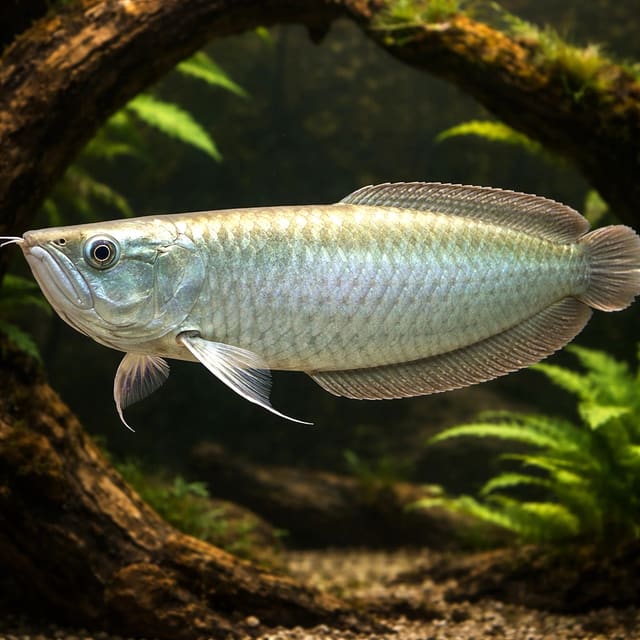
Osteoglossum sp. 'Blue' displays the characteristic elongated, laterally compressed body of South American arowanas, with large, metallic scales creating a shimmering appearance. Coloration in this variant features attractive bluish or silvery-blue tones, particularly prominent on the sides and dorsal surface. The scales reflect light beautifully, creating iridescent highlights that shift depending on viewing angle and lighting. The head is pointed with a large, upturned mouth adapted for surface feeding. Two distinctive barbels extend from the lower jaw, used for detecting surface prey. The dorsal and anal fins are positioned far back on the body, near the tail, and undulate gracefully during swimming. The pectoral fins are large and wing-like. Overall appearance is sleek, powerful, and elegant, with the arowana moving with fluid, mesmerizing grace through the water.
South American arowanas inhabit large rivers, tributaries, flooded forests, and oxbow lakes throughout the Amazon and Orinoco basins. Water conditions are typically warm, soft, slightly acidic, and moderately stained with tannins from decaying organic matter. Natural habitats feature overhanging vegetation, submerged wood, and flooded forest canopy. Arowanas are surface-dwelling predators that patrol just below the water surface, using their upturned mouth to capture insects, spiders, small fish, and other prey that fall onto or rest at the water surface. The species is renowned for its ability to leap from the water to capture prey on overhanging branches—jumps of 1-2 meters are common. Seasonal flooding disperses populations into temporarily inundated forests, while the dry season concentrates fish in deeper river channels.
Housing a blue arowana demands a truly massive aquarium or indoor pond of at least 2,000 litres—and realistically, substantially more for long-term success with adult specimens. The tank must emphasize length (minimum 250cm) and width over height, as arowanas are surface-dwelling fish requiring extensive horizontal swimming space. Use a completely secure, tightly fitting, weighted lid—arowanas are powerful jumpers and will leap through any gap. The lid must be robust enough to withstand impact from below. Furnish the environment sparingly with large, smooth driftwood positioned to leave the surface unobstructed. Avoid decorations that clutter the surface or mid-water zones. A soft sand substrate works best, though bare-bottom systems simplify maintenance. Lighting should remain subdued, as bright light stresses the fish. Ensure powerful filtration capable of handling the heavy bioload produced by a large predatory fish, with turnover rates of 8-10x tank volume per hour.
Expert Tip: Weight down the lid with bricks or heavy objects and ensure no gaps larger than 1cm exist. Arowanas are notorious for squeezing through surprisingly small openings or forcing lids open.
Maintain tropical temperatures between 24-30°C, with 26-28°C representing optimal conditions. The species tolerates slight variations but requires stability. pH should remain between 6.0-7.5, with slightly acidic to neutral values (6.5-7.0) ideal. Water hardness can range from soft to moderately hard, though soft to moderate hardness better replicates natural Amazonian conditions. Ammonia and nitrite must be undetectable, while nitrates should stay below 40 ppm through efficient biological filtration and substantial weekly water changes of 40-50%. Given the enormous bioload produced by a large carnivorous arowana, expect frequent, large water changes and powerful filtration to be non-negotiable. Dissolved oxygen levels must remain high, achieved through strong circulation and surface agitation.
As a carnivore, Osteoglossum sp. requires a varied diet of meaty foods. Offer high-quality carnivore pellets designed for large predatory fish as the dietary foundation, supplemented with frozen prawns, krill, mussels, squid, fish fillets, and occasional insects (crickets, mealworms, grasshoppers). Juveniles feed daily, while adults require feeding 2-3 times weekly. Avoid exclusive reliance on feeder fish, which provide poor nutrition and risk introducing disease or parasites. Feed from tongs or drop food at the surface, as arowanas are surface feeders and rarely venture to the substrate. Remove uneaten food promptly to prevent water quality degradation. Monitor body condition—a healthy arowana appears muscular and streamlined but not bloated or emaciated.
Blue arowanas are primarily crepuscular and nocturnal in the wild but adapt to daytime activity in aquariums. The species patrols just below the water surface with slow, graceful movements, constantly scanning for prey. Swimming behavior is elegant and mesmerizing, with the fish gliding smoothly and using subtle fin movements for precise positioning. Arowanas are semi-aggressive—generally peaceful toward tankmates too large to swallow but territorial and potentially aggressive during feeding. The species is intelligent and responsive, quickly learning feeding routines and recognizing keepers. Stress or poor water quality causes increased hiding (if cover is available), color fading, refusal to feed, or erratic swimming. In optimal conditions, the arowana displays confident, natural surface-patrolling behavior and becomes the undisputed centerpiece of the aquarium.
Selecting tankmates for Osteoglossum sp. is extremely challenging due to the species' predatory nature, surface-dwelling habits, and tendency to consume anything small enough to swallow. Only very large, calm fish kept in oversized aquaria have any chance of cohabitation. Potential candidates include large peaceful catfish (Pseudoplatystoma, large Synodontis) or other very large, non-aggressive species such as pacu or silver dollars, though even these carry risks. Absolutely avoid small fish, shrimp, aggressive fin-nippers, highly territorial species, or any tankmate small enough to be swallowed. Most aquarists find that a species-only setup eliminates stress, reduces aggression, and allows the arowana to be the sole focus. In practice, this is strongly recommended for this demanding giant.
Breeding Osteoglossum sp. in home aquariums is extraordinarily rare and effectively impossible for private aquarists. South American arowanas are mouthbrooders, with males carrying eggs and fry in their buccal cavity for several weeks. Sexing is difficult, and successful breeding typically requires very large systems, mature adults in prime condition, and expert husbandry. Attempting to breed this species at home is impractical given the space requirements, long maturation period, and complexity of replicating natural spawning conditions.
Tropical Fish Co supplies healthy, carefully selected blue arowana specimens with comprehensive care guidance covering the extreme long-term commitment required. We ensure all fish are feeding well on prepared foods before dispatch and provide detailed information on growth expectations, housing requirements, and the critical importance of secure lids and adequate space. Our experienced team candidly discusses the challenges of keeping this magnificent but demanding species, helping you make an informed decision. With nationwide UK delivery using specialist livestock couriers, your arowana arrives safely in insulated packaging with oxygen. We support responsible fishkeeping and encourage only those with appropriate facilities and long-term plans to consider this ultimate showpiece fish. Choose Tropical Fish Co for rare, specialist livestock and expert guidance.
No reviews for this item yet. Bought one? Honest reviews only, good or bad.
What customers say about ordering from us
I have a small group of long finned mountain minnows. So was delighted to be able to order ten of this variety to increase the genetics in my tank . The ones I recieved are healthy but it’s to early to give a verdict on wether they are of a long finned type since they are small currently.
Gordon Walker · 23 Sept 2026
100% success travel and "installation". Pleased with quality of purchase. The Siamese fighter a bit "shy" so have not yet seen him at his best yet but looking good. Happy customer. GG
George E Garratt · 21 Sept 2026
Reviews of our shop, collected by Judge.me, an independent third-party review collector. Newest first.