Expert
Hertae Hap Cichlid (Protomelas sp. 'hertae')
23–27°C · pH 7.5–8.5 · 600L
£18.99

Chunky Hap Cichlid (Protomelas annectens) is a Lake Malawi hap for large hard-water aquariums, best planned with sand, open swimming room and calm Malawi tank mates.
Protomelas annetens
Save when buying multiple fish. Each quantity is one fish; sex and pair formation are not guaranteed unless the selected variant explicitly states them.
Confirm your email, then we’ll send an availability message for this exact item if it returns within 180 days.
This request is only for this product—no newsletter or other promotions. A mail-provider retry may very rarely duplicate the same availability message. Unconfirmed addresses are removed after 48 hours. See our privacy policy.
Chunky Hap Cichlid (Protomelas annectens) is a Lake Malawi hap for large hard-water aquariums, best planned with sand, open swimming room and calm Malawi tank mates.
Cichlids are a family of roughly 1,800 accepted species, not one care type. Before buying, identify the exact species and source, then compare adult measurement, usable tank dimensions, social system, territory, tested water, diet and an exit plan. No family-wide minimum tank, water range or tank-mate list is safe.
The Chunky Hap Cichlid (Protomelas annectens) is a large Lake Malawi haplochromine for aquarists who want a bold, blue, open-water cichlid without turning the aquarium into a cramped mbuna fight. It is often supplied under the trade name Chunky Hap and this SKU is the 4-5 cm size, so it should be bought with the adult fish in mind rather than judged only by its juvenile footprint. Our stock records list the adult size at up to 20 cm, with hard alkaline water, a 24-26°C temperature range and pH 7.5-8.5.
This is not a small community fish. It belongs in a mature Malawi aquarium with mineral-rich water, strong filtration, open swimming space, sand, and calm but robust tank mates. In the wild, Protomelas annectens is associated with shallow sandy areas of Lake Malawi and is known to follow larger sand-dwelling cichlids, taking advantage of food disturbed from the substrate. That feeding strategy is the key to understanding the species: give it room, stable water, and a layout that combines open sand with rocky shelter instead of forcing it into a tiny rock maze.
| Common name | Chunky Hap Cichlid |
|---|---|
| Scientific name | Protomelas annectens |
| Supplier label | Protomelas / annetens, Chunky Hap |
| SKU and size | 0536, 4-5 cm |
| Adult size | Plan for up to 20 cm |
| Temperature | 24-26°C from our stock records; wider references commonly place Malawi care around the mid-20s |
| pH | 7.5-8.5 |
| Hardness | 10-30 dGH from our stock records |
| Temperament | Generally calmer than many mbuna, but still a sizeable African cichlid |
| Best aquarium style | Large Lake Malawi hap or peacock display with sand and open swimming room |
Protomelas annectens is endemic to Lake Malawi. It is associated with shallow sandy habitat, often close to larger sand-sifting cichlids that disturb small food items. That makes it different from strongly rock-bound mbuna. It still appreciates shelter and visual breaks, but it should not be forced into a narrow rock-only layout where a larger hap cannot swim naturally.
In the aquarium, expect a visible, active fish that watches the substrate and feeding activity carefully. It is usually best described as peaceful to moderately assertive for a Malawi hap, not gentle in the way a tetra or gourami is gentle. Males can become more territorial as they mature, especially around preferred display or spawning areas, so the final layout should give weaker fish routes out of view.
Start with a long aquarium rather than a tall but short one. A juvenile Chunky Hap may look comfortable in a smaller holding tank, but the adult fish needs length, turning room and excellent water stability. For long-term planning, treat this as a large Malawi cichlid and build around adult size. Fine sand or smooth substrate suits its natural feeding style, while rock piles at the sides or rear give cover without taking all the swimming space.
Filtration should be strong, oxygenation should be high, and nitrate control should be part of the routine. Malawi cichlids are active feeders, and a large hap produces more waste than small community species. Keep the water clear, hard and alkaline. Avoid soft, acidic conditions, and do not chase unstable pH changes with random additives; stable mineral-rich water is safer than numbers that swing up and down.
| Parameter | Target | Care note |
|---|---|---|
| Temperature | 24-26°C | Keep stable and avoid cold draughts during acclimation. |
| pH | 7.5-8.5 | Hard alkaline Malawi conditions suit this species best. |
| Hardness | 10-30 dGH | Mineral-rich water supports normal colour, appetite and long-term health. |
| Adult size planning | Up to 20 cm | Choose tank mates and aquarium length for the adult, not the 4-5 cm juvenile. |
| Substrate | Sand or smooth fine gravel | Useful for natural foraging behaviour and safer than sharp gravel. |
Keep Chunky Hap with other Lake Malawi cichlids that like similar water and are large enough not to be bullied or eaten. Suitable companions are usually calm haps, peacocks and carefully chosen non-mbuna Malawi species. Avoid tiny community fish, soft-water fish, delicate long-finned species and overly aggressive mbuna that may harass a more open-water hap.
A mixed Malawi aquarium works best when fish are chosen by adult size, diet and temperament rather than colour alone. If you are building a display, compare this fish with other Malawi haps and peacocks in the same category, then leave enough room for every species to mature. Introduce new cichlids with lights low, rearrange a little rockwork if territories are already fixed, and watch the first week closely.
The Chunky Hap is an opportunistic feeder. In nature, it benefits from food stirred out of the sand, so in the aquarium it should receive a varied but clean diet: quality Malawi cichlid pellets, spirulina or vegetable-supported foods, and occasional frozen foods such as mysis or brine shrimp. Avoid very fatty meals and avoid overusing bloodworm. Large cichlids can look hungry all the time, but heavy feeding quickly damages water quality.
Feed modest portions that are eaten quickly. Juveniles can take smaller meals once or twice daily; adults are better kept lean and active rather than overfed. A healthy fish should show steady appetite, clear eyes, open fins and normal breathing. If appetite drops, test water before assuming the problem is the food.
If you keep more than one, plan the social group before the fish mature. A single male with several females is usually easier than a forced pair, and very small groups can focus pressure on one weaker fish. Give the group more than one shelter zone and keep open lanes through the front of the aquarium so subordinate fish can move away without being trapped.
Use a mature aquarium with matching hard alkaline water before this fish arrives. Float the sealed bag to equalise temperature, then acclimate slowly with the aquarium lights low. Do not rush a Lake Malawi cichlid from shipping water into very different water chemistry. After release, leave the fish to settle and avoid heavy feeding on the first day.
During the first week, watch breathing, posture, colour, appetite and tank-mate pressure. Stress bars or hiding can happen after transport, but the fish should settle as water remains stable and aggression is controlled. If another cichlid immediately pins it into a corner, solve the social problem early rather than waiting for damage.
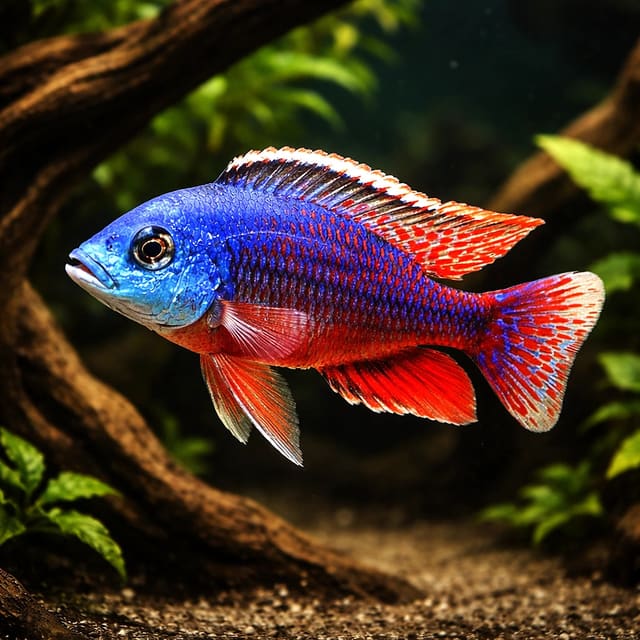
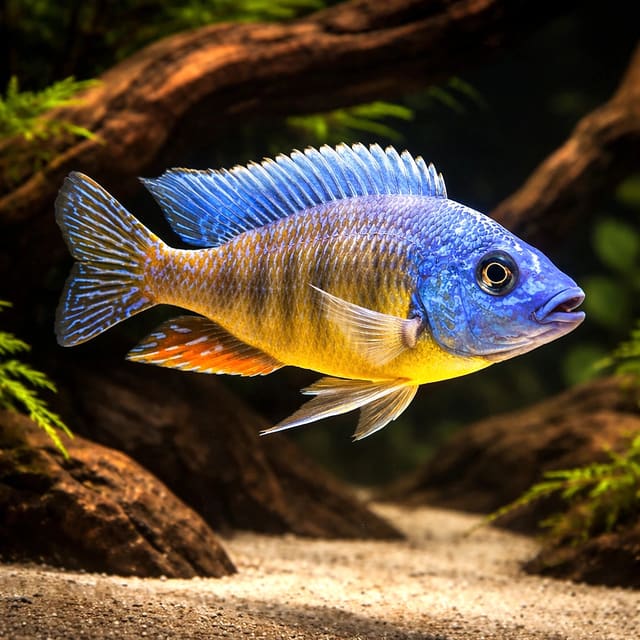
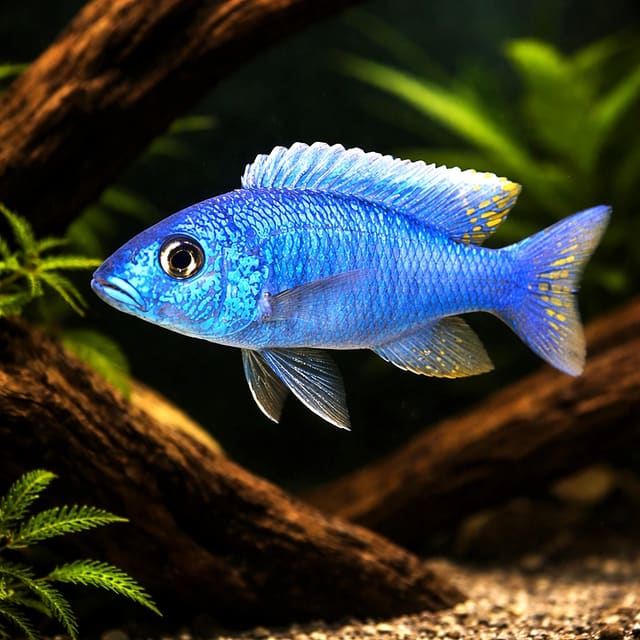
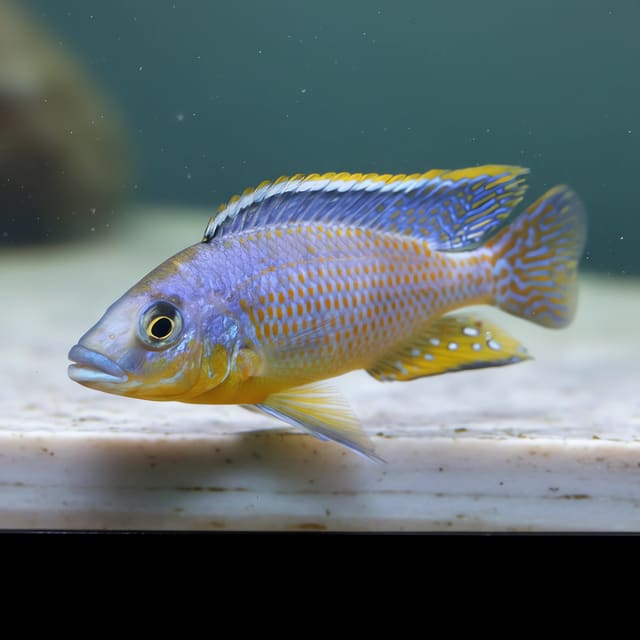
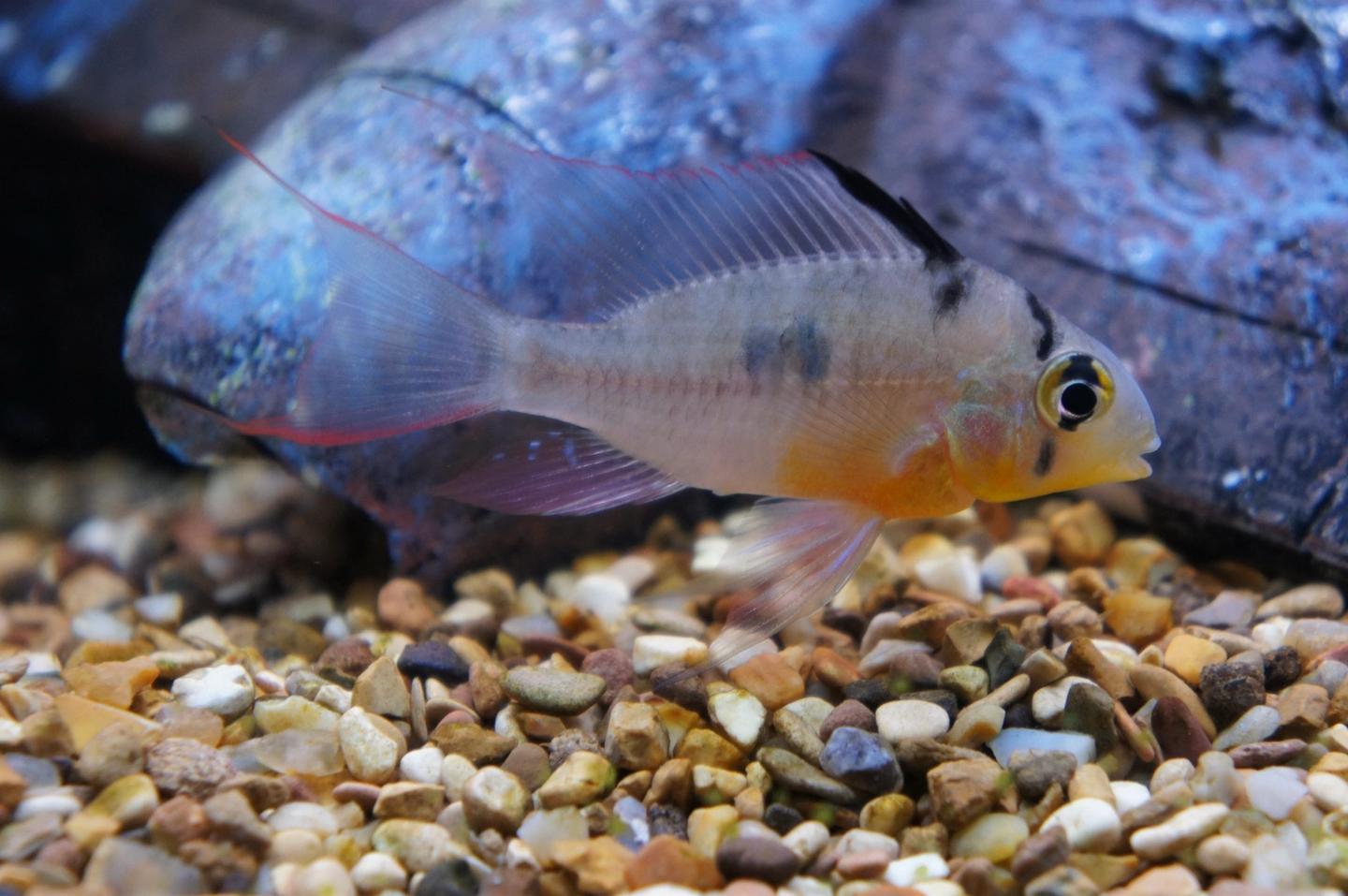
The source image for this listing shows the expected deep blue male profile and sturdy hap body shape. Juveniles and females may be less intense than mature males, and colour improves with size, condition, social confidence and stable water. The current listing also keeps the existing aquarium-view images so customers can understand how the fish may present in a display setting.
Choose Chunky Hap only if your aquarium is ready for a large Lake Malawi cichlid. The right home is hard, alkaline, well-filtered and spacious, with sand, open water and compatible cichlids. This page now uses the corrected scientific spelling Protomelas annectens while preserving the SKU and source identity behind the listing.
We pack live fish for tracked UK courier delivery using insulated packaging and seasonal heat support where needed. Check the delivery terms before ordering, make sure someone can receive the parcel, and prepare the aquarium before dispatch day. Careful planning gives this fish the best chance to arrive, settle and grow into the impressive adult hap it is meant to become.
No reviews for this item yet. Bought one? Honest reviews only, good or bad.
What customers say about ordering from us
I have a small group of long finned mountain minnows. So was delighted to be able to order ten of this variety to increase the genetics in my tank . The ones I recieved are healthy but it’s to early to give a verdict on wether they are of a long finned type since they are small currently.
Gordon Walker · 23 Sept 2026
100% success travel and "installation". Pleased with quality of purchase. The Siamese fighter a bit "shy" so have not yet seen him at his best yet but looking good. Happy customer. GG
George E Garratt · 21 Sept 2026
Reviews of our shop, collected by Judge.me, an independent third-party review collector. Newest first.