


−15%
Beginner
Gold longfin Bristle-Nose (Ancistrus sp. gold long fin)
23–29°C · pH 6–7.5 · 80L
£16.99£19.99

Long Fin Bristlenose Pleco for sale in the UK. A hardy, algae-eating catfish with flowing fins and great tank utility. Order today for fast delivery!
Adult size is the maximum length this species reaches at full maturity (scientific sources). The livestock you receive will be younger and smaller — pick a size variant above for the actual shipping size. Photos are AI-enhanced, so the animal may show subtle colour or marking differences.
Ancistrus sp. long fin
Long Fin Bristlenose Pleco for sale in the UK. A hardy, algae-eating catfish with flowing fins and great tank utility. Order today for fast delivery!
Adult size is the maximum length this species reaches at full maturity (scientific sources). The livestock you receive will be younger and smaller — pick a size variant above for the actual shipping size. Photos are AI-enhanced, so the animal may show subtle colour or marking differences.
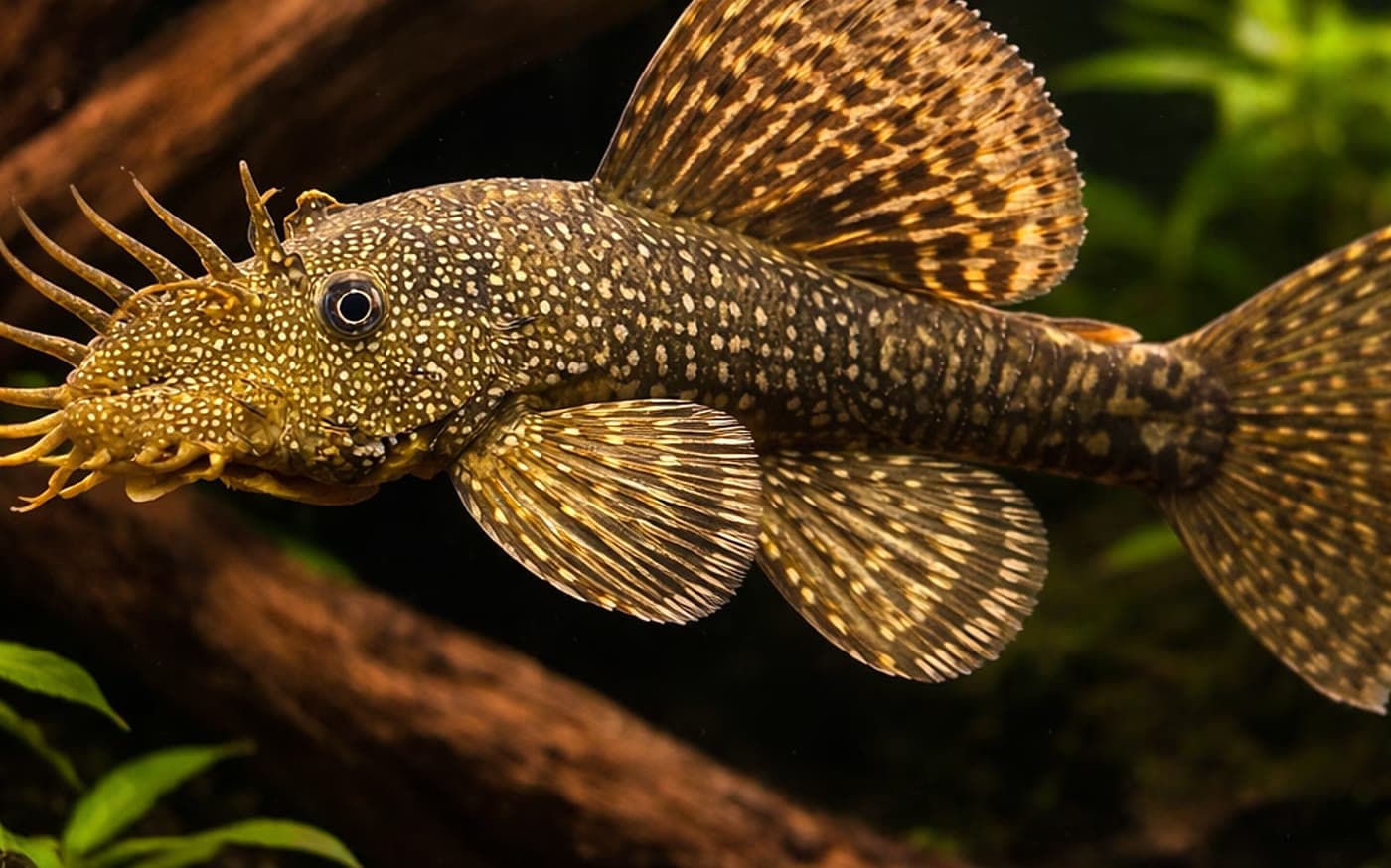
Peaceful algae-grazing catfish ideal for UK community tanks. Stays small (12-15 cm), loves driftwood, easy to breed. Sent by licensed live-animal courier with Live Arrival Guarantee.
Maintain these water conditions for optimal health and vibrant colors
If you want a pleco that earns its keep without taking over the tank, the Long Fin Bristlenose Pleco Ancistrus sp. is one of the smartest choices in the freshwater hobby. This South American catfish is loved for its calm temperament, manageable adult size of around 12 cm, and its habit of grazing on algae while adding real character to a community aquarium. Unlike the common pleco, which can outgrow many home aquariums, the bristlenose pleco stays compact, making it a far better fit for most UK setups. It is also a strong candidate for a planted aquarium, a peaceful community tank, or a carefully aquascaped display with caves and driftwood. With a lifespan of up to 10 years, easy care level, and a reputation as a reliable bottom feeder, this fish is ideal for beginners and experienced keepers alike. See our detailed photos showing the long, flowing finnage, the classic bushy nose, and the rich dark body tone that makes this variant stand out. If you have been searching for a bristlenose pleco for sale, want a hardy algae eater, or need a fish that helps keep glass and decor cleaner, this is a standout option that combines beauty, utility, and personality.
The bristlenose pleco belongs to the armored catfish family and is one of the most popular Loricariidae species in the aquarium trade. In the hobby, it is often compared with ancistrus cirrhosus, ancistrus leucostictus, clown pleco, and even the common pleco, but its smaller size and easier care make it the more practical choice for home aquariums. The long fin form adds extra elegance without changing the species’ core needs, so the same bristlenose pleco requirements still apply.
The bristlenose pleco origin is South America, where species and regional forms of Ancistrus live in slow-moving rivers, tributaries, floodplains, and forest-edge streams. In the wild, the bristlenose pleco natural habitat often includes submerged roots, leaf litter, rocks, and sunken wood. These fish spend much of their time clinging to surfaces, browsing biofilm, and hiding in shaded crevices during the day. That is why a good bristlenose pleco habitat in the aquarium should include driftwood, caves, and a few darker retreats.
Understanding the bristlenose pleco in the wild helps explain its behaviour in captivity. It is not a fast open-water swimmer like many tetras; instead, it is a bottom-dwelling grazer that prefers cover and steady water conditions. The long fin bristlenose pleco south american catfish habitat is typically warm, soft to moderately hard, and well oxygenated, which is why strong filtration and regular maintenance matter. In many regions, the species is adaptable, but it still thrives best when the aquarist recreates the long fin bristlenose pleco south american catfish water parameters found in nature.
There is no special conservation concern for most captive-bred bristlenose pleco stock in the hobby, but sourcing responsibly is always wise. A well-kept tank with stable bristlenose pleco water temperature, low nitrate, and plenty of hiding spots will bring out confident grazing behaviour, better colour, and healthier growth. If you are researching bristlenose pleco uk care, remember that room temperature homes often vary too much for year-round success, so a heater is usually the best choice.
Mimicking the natural habitat improves health and brings out natural behaviours. Use driftwood, shaded caves, and broad-leaved plants to recreate the bristlenose pleco natural habitat and reduce stress.
The most common question is bristlenose pleco tank size, and the answer depends on whether you are keeping one fish or a pair. For a single adult, the bristlenose pleco minimum tank size is 80 litres, but a larger tank gives more stable water quality and more grazing space. If you are planning a pair, the 2 bristlenose pleco tank size should be closer to 120 litres or more, especially if one is a male. The bristlenose pleco fish tank size should also account for decor, filtration, and the bioload from other fish. Many keepers ask what size tank for a bristlenose pleco, and the practical answer is: bigger is easier, even though this species remains small compared with the common pleco size.
For those comparing bristlenose pleco tank size litres, 80 litres is the absolute starting point, while 100-150 litres is a more comfortable long-term home. The ancistrus pleco tank size is one reason this fish is so popular with aquascapers and community tank owners. If you are searching for bristlenose pleco fish size or bristlenose pleco size before buying, expect juveniles around 3 cm to grow to about 10-12 cm, with males often appearing a little bulkier as they mature.
The bristlenose pleco temperature celsius range is 22-28°C, with 24-26°C being a very reliable sweet spot for most homes. If you are wondering what temp do bristlenose plecos need, aim for stability first and exactness second. The bristlenose pleco ideal temperature supports digestion, grazing, and immune function, while the bristlenose pleco breeding temperature is usually kept near the upper end of the range to encourage spawning. The ancistrus pleco temperature is similar across most forms, and the bristlenose pleco temperature range is forgiving as long as swings are avoided. The bristlenose pleco water temperature should not be left to chance, and bristlenose pleco room temperature is only acceptable if your home stays consistently within range.
For acidity, the bristlenose pleco pH requirements are 6.0-7.5, with neutral to slightly acidic water often producing the best results. Hardness from 2-20 dGH is acceptable, which makes this fish adaptable to many UK tap water conditions. The long fin bristlenose pleco south american catfish water parameters also include good oxygenation and low waste buildup. If you are comparing long fin bristlenose pleco south american catfish temperature with other South American catfish, this species is notably flexible, but it still dislikes sudden changes. A steady bristlenose pleco tank temperature is more important than chasing a perfect number.
Good filtration is essential because bristlenose plecos are steady grazers and produce regular waste. A canister filter or a high-quality internal filter with moderate flow works well, especially in planted tanks. The long fin bristlenose pleco south american catfish tank setup should include enough circulation to keep oxygen levels high, but not so much current that the fish struggles to rest. A sponge filter can also be useful in breeding tanks or fry setups.
For substrate, choose fine sand or smooth rounded gravel to protect the belly and barbels. Darker substrate often makes the bristlenose catfish yellow, albino bristlenose pleco full size, and darker colour forms stand out more strongly. Driftwood is not optional for this species; it is part of the long fin bristlenose pleco south american catfish tank setup because it supports grazing and digestion. Add caves, slate pieces, and long fin bristlenose pleco south american catfish hiding spots so the fish can rest without stress.
Live plants such as Java fern, Anubias, Cryptocoryne, and Amazon sword suit the long fin bristlenose pleco south american catfish for planted aquarium layouts. These fish usually ignore healthy plants, though they may rasp at soft growth if underfed. Lighting should be moderate rather than intense, with a 7-9 hour photoperiod. If you are building a display around peaceful long fin bristlenose pleco south american catfish for aquarium use, a balanced aquascape with shaded zones is ideal.
Always cycle the tank for 4-6 weeks before adding a bristlenose pleco. Stable bacteria colonies help prevent ammonia spikes, protect the fish’s gills, and reduce stress during the first month.
For setup support, pair this fish with a reliable aquarium filter, a stable aquarium heater, and a natural driftwood piece. If you are building a planted display, browse our aquatic plants collection for species that suit low-to-moderate light.
The bristlenose pleco diet is one of the easiest parts of its care, but it is also where many keepers go wrong. In the wild, the long fin bristlenose pleco south american catfish diet is based on algae, biofilm, soft plant matter, and small amounts of detritus. In the aquarium, the bristle nose pleco fish diet should be built around quality algae wafers, sinking vegetable pellets, and fresh vegetables such as courgette and cucumber. This species is an omnivore, so the ancistrus pleco diet can include occasional protein, but plant matter should remain the focus.
If you are asking what do bristlenose plecos eat or what does bristlenose pleco eat, think “grazing herbivore with flexible appetite.” The long fin bristlenose pleco south american catfish feeding guide should include a staple feed in the evening, when the fish becomes more active. What can bristlenose plecos eat? Plenty: algae wafers, blanched spinach, peas, sweet pepper, courgette, cucumber, and spirulina-based foods. For fry, what to feed bristlenose pleco fry is more specialised; use crushed wafers, powdered fry food, and soft vegetables once they begin grazing.
What time bristlenose pleco eat depends on the tank lights and stocking, but most feed after dusk. What day bristlenose pleco eat food? They can eat daily, though adults do not need heavy feeding if the tank already has natural algae. The long fin bristlenose pleco south american catfish algae eater reputation is real, but it should never be relied on as the only food source. The bristle nose pleco fish diet must be supplemented to prevent starvation, especially in clean new tanks.
| Time | Food | Amount |
|---|---|---|
| Morning | Blanched courgette or cucumber | 1-2 thin slices |
| Evening | Algae wafer or sinking pleco pellet | 1 wafer per fish |
| 2-3 times weekly | Protein treat such as bloodworm or shrimp mix | Small portion |
For quality nutrition, pair your feeding routine with algae wafers and a balanced pleco food. A small portion of vegetable pellets can also help maintain body condition without overloading the tank.
Overfeeding causes ammonia spikes and water quality issues. Remove uneaten vegetables after 8-12 hours, and avoid relying on leftover fish flakes, which are not enough for a healthy bristlenose pleco diet.
The bristlenose pleco fish size is usually 10-12 cm at adulthood, though growth rate depends on food, temperature, and tank stability. Juveniles may be sold as bristlenose catfish 3cm, and many buyers are surprised by how quickly they develop a more robust head and body. The long fin bristlenose pleco south american catfish size is similar to standard forms, but the extended fins make the fish look larger and more graceful. The body is flattened, armored, and built for clinging to surfaces, while the mouth is a suction cup designed for rasping algae.
Colour varies from dark brown to almost black, with some fish showing a bristlenose catfish yellow tone, especially in albino or lighter morphs. Many keepers ask why is my bristlenose pleco changing colour or why is my bristlenose pleco turning white; the answer is often stress, lighting, substrate contrast, or a shift in resting state. Healthy colour should be rich and even, not washed out. Our photos show the intense chocolate brown coloration achieved through stable water, good diet, and shaded decor.
Sexing is straightforward once the fish matures. Males develop longer bristles on the snout, while females usually have fewer or shorter bristles and a rounder body shape. If you are researching long fin bristlenose pleco south american catfish male vs female, the nose bristles are the easiest clue, but body shape is also useful. For buyers wondering how to tell male from female, mature males are more likely to guard caves and display territorial behaviour.
One of the best things about this species is that it is a peaceful bottom dweller for most community setups. Are bristlenose pleco community fish? Yes, in the right environment they are excellent community fish. Are bristlenose plecos schooling fish? No, they are not true schooling fish, and the long fin bristlenose pleco south american catfish schooling group should not be treated like a shoaling species. Keep them singly or in pairs, because males can be territorial. Are bristlenose pleco aggressive? Not usually, but are bristlenose pleco territorial? Absolutely, especially adult males around caves and feeding spots.
The best long fin bristlenose pleco south american catfish for community tank setups includes calm tetras, rasboras, corydoras, dwarf gourami, and peaceful rainbowfish. The long fin bristlenose pleco south american catfish with other fish works best when tank mates occupy midwater or upper levels. What fish can live with bristlenose pleco? Most non-aggressive community species can, provided the tank is large enough and food is distributed well. Bristlenose pleco fish tank mates should not be nippy, hyper-aggressive, or highly competitive at the bottom.
Can a bristlenose pleco live with a betta? Often yes, in a suitably sized tank with hiding places and a calm betta. Can bristlenose pleco live with goldfish? Usually no, because goldfish need cooler water and produce heavy waste. Can bristlenose pleco live with shrimp? Yes, especially with adult shrimp, though tiny shrimplets may be at risk if food is scarce. Can bristlenose plecos live with bettas, goldfish, or shrimp? The answer depends on temperature, temperament, and tank size, but shrimp and bettas are the most realistic pairings.
| Species | Compatible? | Notes |
|---|---|---|
| Fire Red Cherry Shrimp | ✅ Yes | Good with cover; protect shrimplets with dense plants |
| Honey Gourami | ✅ Yes | Peaceful upper-level fish that rarely compete for food |
| Peppered Corydoras | ✅ Yes | Shared bottom space works in larger tanks with multiple caves |
| Guppy | ✅ Yes | Active but non-threatening; keep feeding varied |
| Male Bristlenose Pleco | ⚠️ Caution | Territorial around caves and may spar with another male |
| Common Pleco | ❌ Avoid | Too large and often outcompetes smaller fish for space |
Always quarantine new arrivals for 2-4 weeks. This reduces the risk of introducing bristlenose pleco ich, parasites, or bacterial problems into an established community tank.
Popular questions like can bristlenose plecos live with bettas, can bristlenose plecos live with shrimp, and bristlenose pleco with cichlids all come down to temperament. Can bristlenose pleco live with african cichlids? Sometimes with mild species, but only in larger tanks where the pleco has secure caves. Bristlenose pleco with african cichlids is far safer than with very aggressive Mbuna, yet bristlenose pleco with cichlids is still best reserved for careful stocking plans. If you are looking for the best bottom feeders for community tank layouts or peaceful catfish UK options, this species is one of the strongest choices.
To build a balanced community, consider related fish such as Long Fin Bristlenose Red Pleco South, Lemon Blue Eye L144 Bristlenose Pleco, Albino Bristlenose Catfish Ancistrus Sp. Albino, Rio Itenez Stone Bristlenose Catfish Ancistrus, and Red-Black Bristlenose Pleco Ancistrus Sp. South.
Bristlenose pleco breeding is one of the more rewarding projects in the hobby because the species is relatively easy to spawn once conditions are right. The breeding difficulty is easy, and many aquarists are surprised by how quickly bristlenose pleco breeding behavior appears once a male claims a cave and begins fanning the entrance. The best results usually come from mature fish kept in clean water with stable temperature and plenty of vegetable food.
For bristlenose pleco fish breeding, use a dedicated tank of at least 80-100 litres with one male and one or two females. The bristlenose pleco breeding age is usually around 10-12 months, though size matters more than exact age. The bristlenose pleco breeding size is typically 7-8 cm or larger, and when can bristlenose plecos breed depends on how quickly they reach sexual maturity. What age do bristlenose plecos breed? Often within the first year if growth is strong.
Spawning is triggered by a slight temperature increase, rich feeding, and frequent water changes. The male cleans the cave and lures the female inside, where the bristlenose pleco fish eggs are laid and fertilised. Where do bristlenose plecos lay eggs? In caves, pipe sections, or tight crevices. What time bristlenose pleco eggs hatch depends on temperature, but incubation is usually around 4-7 days. The male guards the eggs until they hatch.
Fry care is straightforward if you stay ahead of food and water quality. Bristlenose pleco fry care starts with infusoria, powdered fry food, and crushed algae wafers. When to feed baby bristlenose pleco? Begin feeding as soon as the fry have absorbed their yolk sacs and start grazing. What do baby bristlenose plecos eat? Soft, tiny foods and biofilm. What to feed bristlenose pleco fry becomes easier once they are large enough to take vegetable matter.
Condition the pair for 2-3 weeks with high-quality algae wafers, blanched vegetables, and one or two small protein meals per week, then perform a 30-40% cool water change to trigger spawning. This often works better than simply raising temperature alone.
Comparing species helps you choose the right fish for your tank size, water, and maintenance style. If you are deciding between a bristlenose pleco and a common pleco, the smaller species is almost always the better home-aquarium choice. The common pleco can reach a far larger adult size, which makes it unsuitable for many standard tanks. By contrast, the bristlenose pleco growth rate is manageable, and the fish remains practical for community aquariums.
| Feature | Bristlenose Pleco | Common Pleco |
|---|---|---|
| Max Size | 12 cm | 45-60 cm+ |
| Care Level | Easy | Moderate |
| Temperature | 22-28°C | 24-30°C |
| Price | £7.74 | Varies |
| Best For | Community tanks, algae control | Large specialist aquariums |
| Feature | Bristlenose Pleco | Clown Pleco |
|---|---|---|
| Max Size | 12 cm | 10 cm |
| Care Level | Easy | Easy |
| Temperature | 22-28°C | 24-30°C |
| Best For | Algae grazing and community tanks | Wood-heavy tanks and softer diets |
If you want a fish that is easier to feed, easier to homore active on algae than many other plecos, the bristlenose pleco is the better pick. It is also a strong option for buyers comparing bristlenose pleco uk stock, starlight bristlenose pleco, bushymouth catfish, or different bristlenose pleco l number forms. For most aquarists, the balance of size, behaviour, and utility makes this species the most sensible choice.
A healthy bristlenose pleco should graze regularly, breathe calmly, and show clear eyes, intact fins, and a strong appetite. The body should look full but not bloated, and the fish should cling securely to decor. If it hides constantly, loses colour, or stops feeding, check water quality first. Long fin bristlenose pleco south american catfish health is closely tied to stable conditions, so most problems begin with stress, poor diet, or dirty water rather than disease alone.
Common bristlenose pleco diseases include bacterial infections, fin damage, constipation from too much protein, and bristlenose pleco ich. The long fin bristlenose pleco south american catfish diseases most often seen in home aquariums are preventable with quarantine, regular water changes, and a varied diet. If you suspect illness, move the fish to a hospital tank and test ammonia, nitrite, nitrate, and temperature immediately. Bristlenose pleco with african cichlids can also lead to stress if the tank is too aggressive or under-decorated.
Never use copper-based medications with invertebrates in the main tank. If shrimp are present, copper can be lethal even at low levels. Instead, use separate treatment tanks when possible. A 2-4 week quarantine protocol is the safest approach for any new fish, including when you buy long fin bristlenose pleco south american catfish UK stock or order long fin bristlenose pleco south american catfish online UK.
NEVER use copper-based medications with invertebrates - lethal to shrimp! Always read medication labels carefully and treat plecos in a separate tank if possible.
Bristlenose pleco behavior is one of the reasons the species is so popular. It is mostly active at night or in low light, when it grazes on surfaces and explores the tank. During the day it often rests under driftwood, inside caves, or on shaded glass. This makes it a good choice for aquarists who enjoy seeing natural, low-key activity rather than constant open-water movement.
Are bristlenose plecos aggressive? Not generally, but males can be territorial around caves and feeding areas. This is why long fin bristlenose pleco south american catfish group size should be kept small unless the tank is large and heavily decorated. In a suitable setup, the fish may show interesting colour shifts, especially when resting or feeding. These changes are normal and can also be influenced by substrate and lighting.
To encourage natural behaviour, provide hiding spots, driftwood, and a regular feeding schedule. A peaceful long fin bristlenose pleco south american catfish for aquarium setup is one where the fish feels secure enough to graze openly. Long fin bristlenose pleco south american catfish for beginners is a fair description because the species is forgiving, but it still rewards careful setup.
Our Long Fin Bristlenose Pleco stock is selected for strong body shape, confident feeding response, and attractive finnage, so you receive fish that settle quickly into a home aquarium. Each fish is held under observation before sale, and our live arrival process is designed to support healthy transport and fast acclimation to UK water. Whether you are looking for long fin bristlenose pleco south american catfish for sale UK, live long fin bristlenose pleco south american catfish for sale UK, or simply comparing long fin bristlenose pleco south american catfish price UK, you get a fish that has been prepared with care.
We pack live catfish delivery UK orders in insulated boxes with temperature protection as needed, and every shipment is handled to reduce stress during transit. If you want to buy long fin bristlenose pleco south american catfish UK or long fin bristlenose pleco south american catfish buy online UK, you can expect tracked delivery and careful packing methods that help maintain oxygen and temperature stability. We also include practical care guidance so you can set up the tank correctly from day one.
Many customers ask where to buy long fin bristlenose pleco south american catfish UK or whether a cheap long fin bristlenose pleco south american catfish UK option is worth it. The real value is a healthy fish that eats well, settles quickly, and lives for years. Order long fin bristlenose pleco south american catfish online UK with confidence, and if you need help choosing tank mates or food, our team can guide you through the first week of care.
Complete your setup with a few well-matched companions and essentials. A Fire Red Cherry Shrimp colony adds colour and helps use biofilm, while a Honey Gourami brings peaceful top-level activity. For another bottom-dweller, the Peppered Corydoras is a great community choice. Support feeding with algae wafers and pleco food, and keep the habitat natural with driftwood and live plants from our aquatic plants collection.
23–29°C · pH 6–7.5 · 80L

22–28°C · pH 6–8 · 400L

22–26°C · pH 6–7.5 · 60L

18–26°C · pH 6.5–8 · 30L

23–27°C · pH 7.4–8.4 · 500L

20–27°C · pH 6–7 · 54L

23–27°C · pH 7.4–8.4 · 150L

24–28°C · pH 6.5–7.8 · 300L

24–28°C · pH 5.5–7 · 60L

18–25°C · pH 6–8 · 100L

24–28°C · pH 7–8 · 120L

18–28°C · pH 6.5–8 · 20L

24–27°C · pH 7.5–8.8 · 150L

22–26°C · pH 6–7.5 · 60L

24–28°C · pH 7.5–8.5 · 40L

24–28°C · pH 7.5–8.5 · 500L


