−12%
Easy
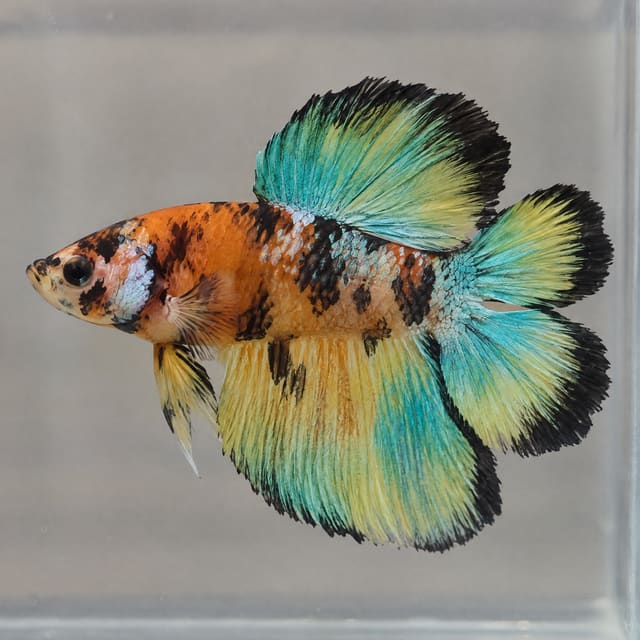
Halfmoon Plakat Male Betta (Betta splendens)
24–30°C · pH 6–8 · 20L
£20.23£22.99
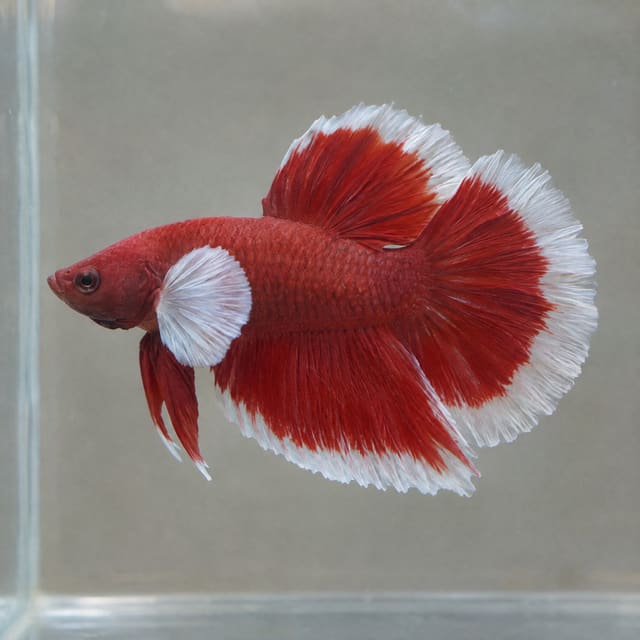
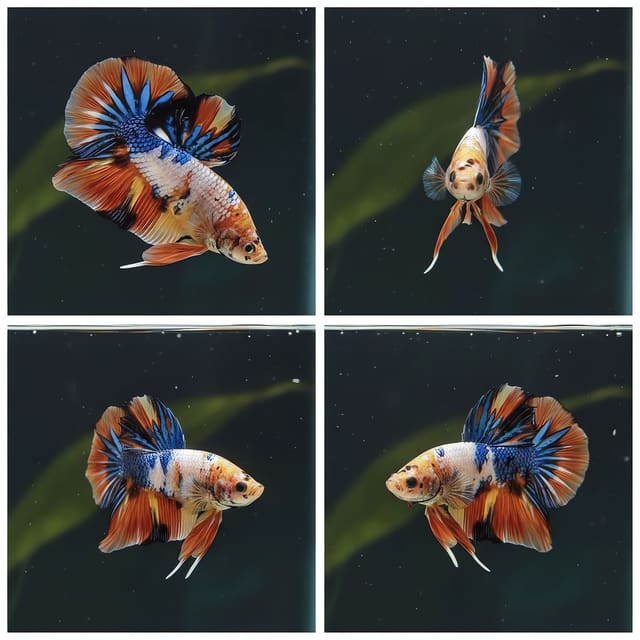
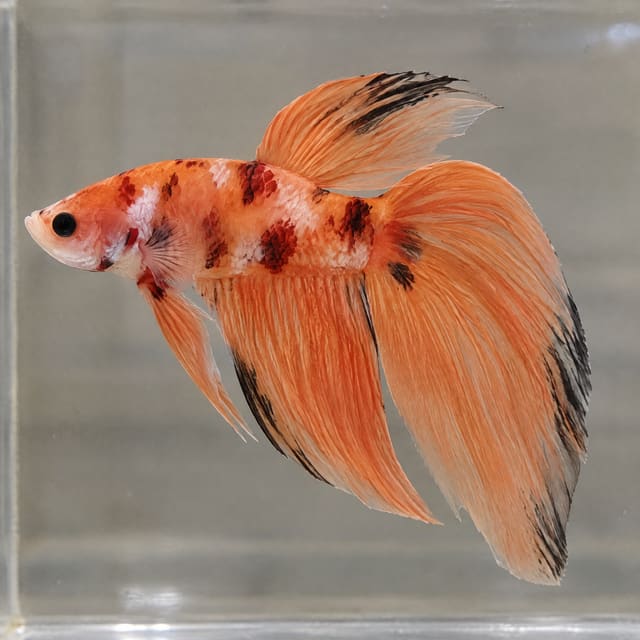
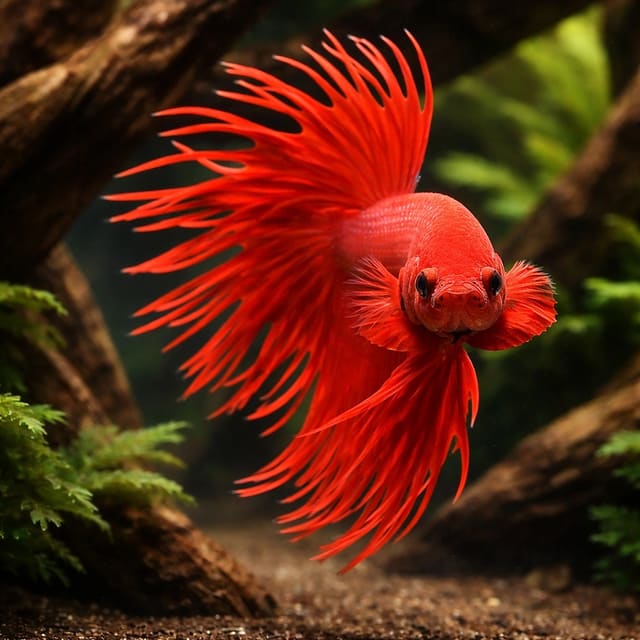
The Red Veiltail is a male Siamese fighting fish (Betta splendens) in solid deep red, with the long, draping fins of the classic veiltail form. Keep one male alone in a heated, covered tank of at least 20 litres at 26–28°C, with gentle flow and smooth décor to protect his fins. Sold as one live male, large size.
Adult size is the maximum length this species reaches at full maturity (scientific sources). The livestock you receive will be younger and smaller. Product-photo provenance and any image-specific limitations are stated on the listing.
Betta splendens
The Red Veiltail is a male Siamese fighting fish (Betta splendens) in solid deep red, with the long, draping fins of the classic veiltail form. Keep one male alone in a heated, covered tank of at least 20 litres at 26–28°C, with gentle flow and smooth décor to protect his fins. Sold as one live male, large size.
Adult size is the maximum length this species reaches at full maturity (scientific sources). The livestock you receive will be younger and smaller. Product-photo provenance and any image-specific limitations are stated on the listing.
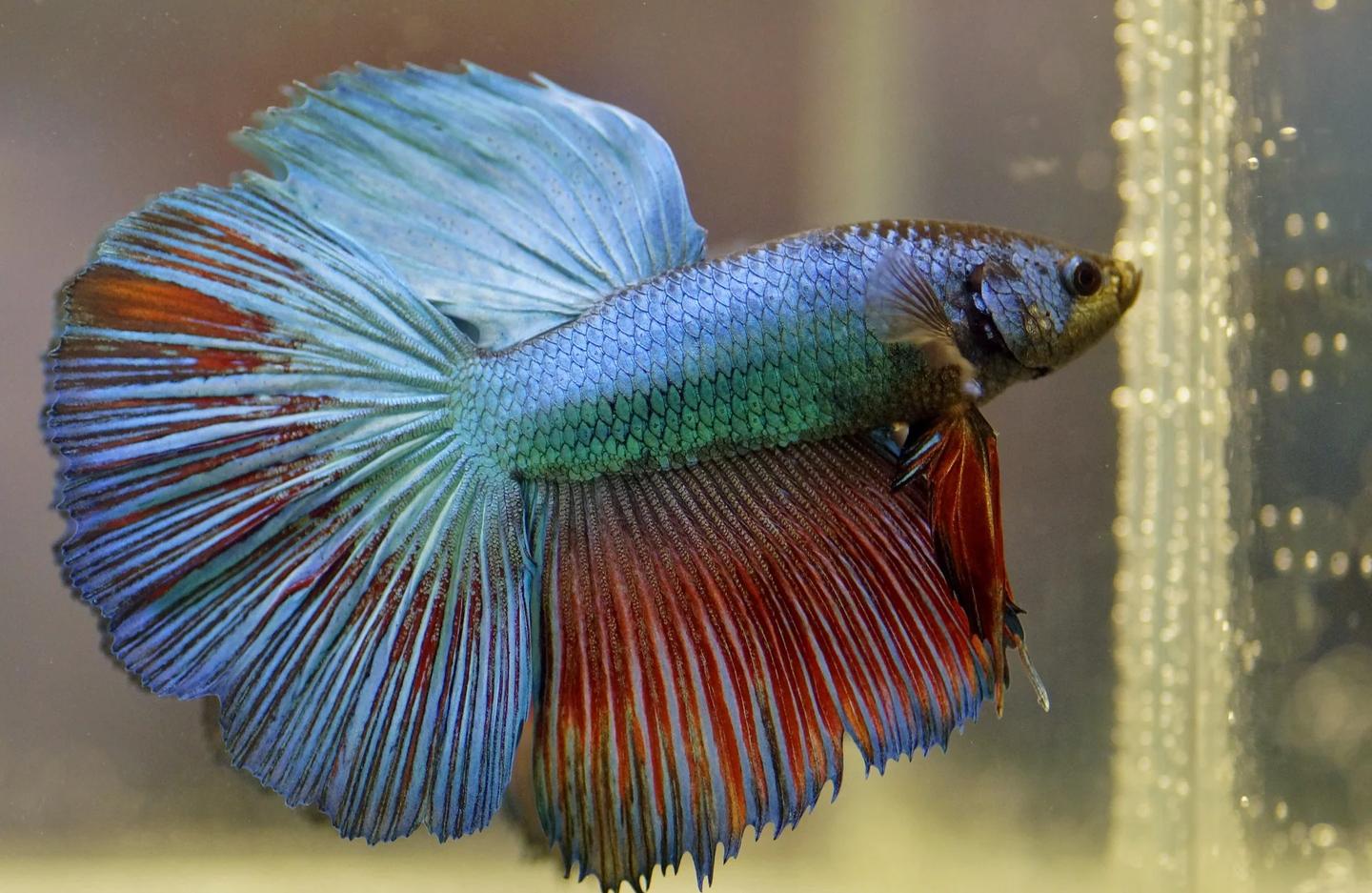
For one typical domestic Betta splendens, start with at least 20 litres, a mature filter, thermostatic heater, separate thermometer, gentle flow, a secure lid with surface access, and plants or refuges. Keep one male per aquarium.
Read the full care guidance when planning conditions for your aquarium.
The Red Veiltail Male Betta is the fighting fish most people picture when they hear the word betta: a male Betta splendens coloured a deep, solid red from nose to fin tips, with long fins that flow and drape as he swims. The tail falls away behind him like a veil, the dorsal fin sweeps back over it, the anal fin runs long underneath and the slim pelvic fins hang below the head. When he flares at his reflection every fin opens at once and the whole fish seems to double in size.
The veiltail is the oldest of the long-finned forms and still one of the most graceful. Seriously Fish lists it among the ornamental fin types alongside the halfmoon, crown tail, delta and plakat. Because his fins are long and heavy, a veiltail does best in a calm tank with gentle flow, smooth décor and resting places near the surface. Give him those and he is a hardy, characterful fish that soon learns to recognise the person who feeds him.
He must live as the only male in his tank. OATA warns that two males kept together will fight until one is severely injured or killed, and Seriously Fish describes the species as unsuitable for the standard community aquarium. Plan the tank around him and he will be its centrepiece.
| Suits | Not suited to |
|---|---|
| A heated, covered tank of 20 litres or more | A vase, bowl or unheated jar |
| Gentle flow from a sponge or turned-down filter | A strong current or powerful outlet |
| Smooth wood, soft plants and silk-smooth décor | Sharp plastic plants and rough rock that tear fins |
| Living alone or with calm bottom dwellers | Fin-nippers and other male bettas |
| Small, measured meals once a day | Frequent large feeds |
See every male and female in our betta fish range, open the labyrinth fish and betta category, or compare other long-finned males on our Betta splendens male page. Our betta fish buying guide is a good place to start if this is your first.
Every ornamental betta is the same species, and the names you see in shops describe fin shape and colour rather than different animals. Seriously Fish lists veiltail, plakat, halfmoon, halfmoon plakat, crown tail, delta, super delta, round tail and twin tail among the established forms. Knowing the difference helps you choose the look you want and the care that goes with it.
| Fin form | Tail shape | Red example in our range |
|---|---|---|
| Veiltail (this page) | Long, flowing, draping downwards | Red Veiltail Male Betta |
| Halfmoon | Long, opening to a 180° D shape | Red Halfmoon Betta, Male |
| Crowntail | Long rays extending beyond the webbing, spiky edge | Red Crowntail Betta, Male |
| Double tail | Tail split into two lobes, broad dorsal | Red Double Tail Betta, Male |
| Halfmoon plakat | Short fins, tail spread to a D shape | Super Red Halfmoon Plakat |
If you like the veiltail shape but want another colour, compare the Veiltail Nemo Male Betta, the Veiltail Green Male Betta or the mixed-colour Veiltail Male Betta Mix. Our betta types guide shows each form in pictures.
Wild Betta splendens comes from central Thailand, from Chiang Rai south to Surat Thani and Phang Nga according to Seriously Fish, and FishBase places it in the Mekong basin. It lives in still or slow water such as rice paddies, swamps, ditches and floodplain pools, often shaded and sometimes short of oxygen. The labyrinth organ above the gills lets it gulp air from the surface, which is how it survives there. Wild fish are short-finned and fairly drab; the long red fins of a veiltail are the product of generations of selective breeding. FishBase lists the wild species as Vulnerable.
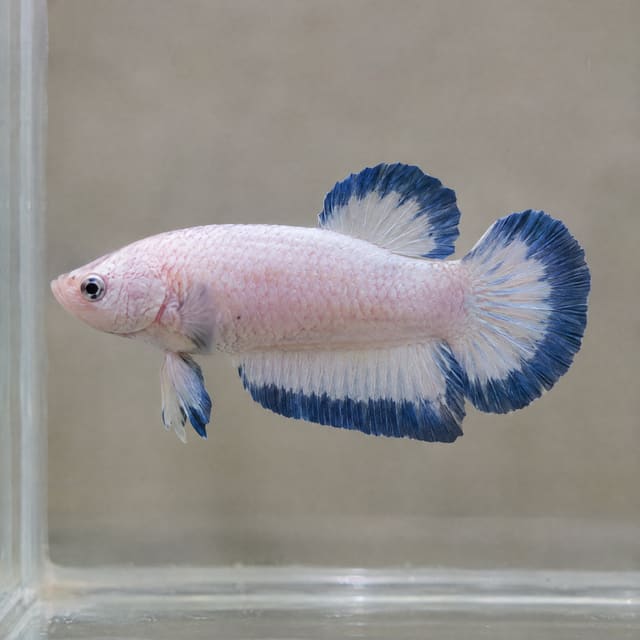
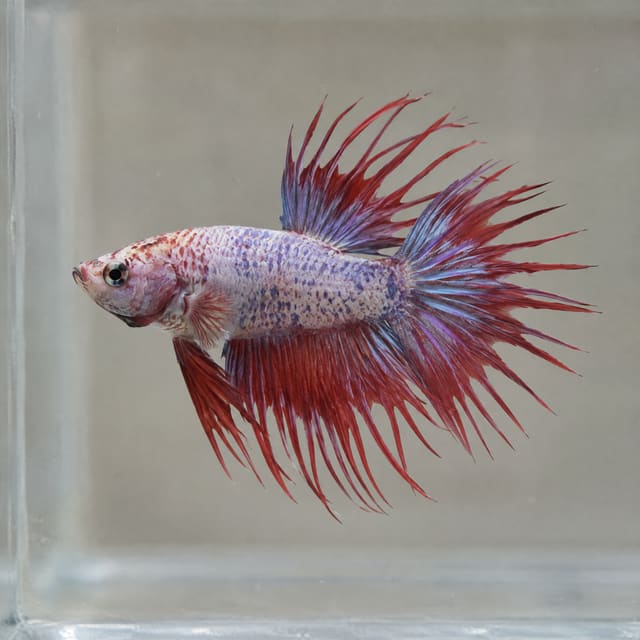
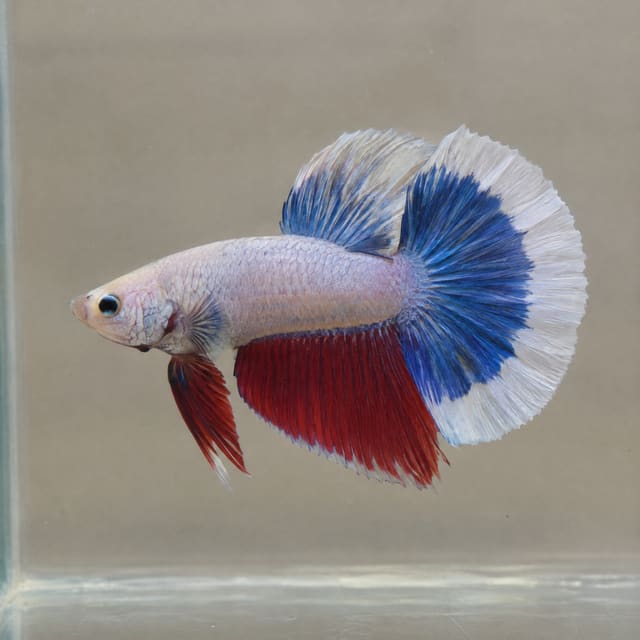
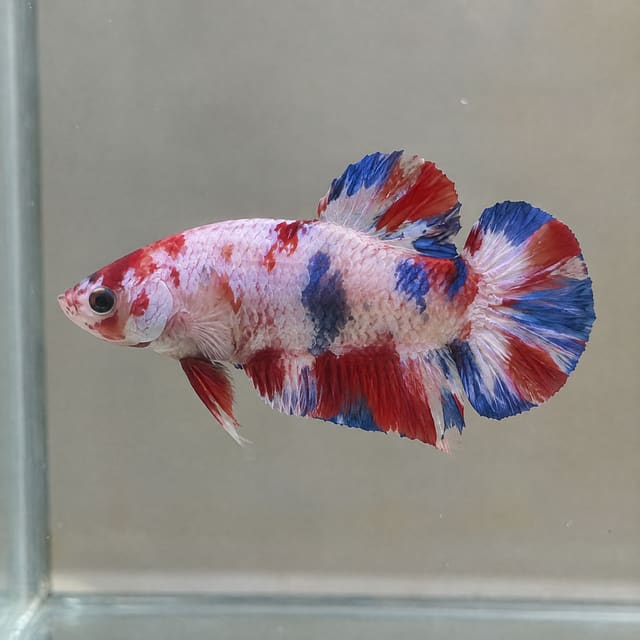
One purchase quantity supplies one live male Red Veiltail Betta in our Large size grade. The photographs show the colour form and fin type, not the individual fish you will receive. The shade of red, the length of the fins and small dark or blue tints in the fins vary from fish to fish, and colour deepens as he settles into a warm, clean tank.
Seriously Fish notes that the cheapest veiltail strains are mass-produced and can carry genetic defects, so watch a new male closely in his first weeks. Every fish is covered by our Live Arrival Guarantee. Read our delivery days and live arrival terms before ordering, and have the aquarium cycled and heated to 26°C first.
OATA gives a minimum of 20 litres for one male and advises buying as large a tank as you reasonably can. Seriously Fish suggests a base of 45 × 30 cm, about 41 litres, and says plainly that tiny tanks and jars are not suitable. All three sources describe a fish of about 7 cm body length: 70 mm standard length from Seriously Fish, 6.5 cm total length from FishBase and about 7 cm from OATA.
For a veiltail the shape of the tank matters as much as the volume. A long, low tank keeps the surface within reach, so a male carrying heavy fins does not have to swim far for air. Avoid tall, narrow tanks, which force him to swim up a long column of water every time he breathes.
Seriously Fish recommends tall stem plants, floating plants such as Salvinia and Riccia, water lilies and Cryptocoryne, plus wood, clay pots or tubes for shelter and dried leaf litter on the floor. It also advises keeping the tank covered and not filled to the brim, because the fish need humid air above the surface and are good jumpers. OATA adds that a cover glass must leave a gap so the fish can reach the air.
For a veiltail, choose everything with his fins in mind. Live plants and smooth wood are kinder than hard plastic. Broad leaves close to the surface make natural hammocks where a long-finned male can rest without swimming. Our aquarium plants range includes floating plants, Anubias and Cryptocoryne, which suit the job.
| Zone | What to put there | Why it helps a veiltail |
|---|---|---|
| Surface | Floating plants over part of the water | Dims the light and anchors a bubble nest |
| Just below the surface | Broad leaves or a resting ledge | Lets him rest his fins close to the air |
| Middle and back | Soft live plants and smooth wood | Cover without sharp edges to snag fins |
| Filter outlet | A sponge, spray bar or plants in front | Breaks up the current so he can swim easily |
A betta needs heated water all year round in the UK. The sources agree on pH, broadly agree on temperature and differ on hardness, so we work to the overlap. Stability matters more than an exact figure, so use a thermostatic heater and match the temperature of new water at every change.
| Value | OATA | Seriously Fish | FishBase | Our target |
|---|---|---|---|---|
| Temperature | 20–28°C | 22–30°C | 24–30°C | 26–28°C |
| pH | 6.0–8.0 | 6.0–8.0 | 6.0–8.0 | Steady within 6.0–8.0 |
| General hardness | 4–12 dGH | 1–15 dGH | 5–19 dH | 5–12 dGH |
| Carbonate hardness | 3–10 dKH | not given | not given | 3–10 dKH |
| Ammonia / nitrite | 0 mg/l | – | – | 0 mg/l |
| Nitrate | no more than 20 mg/l above tap | – | – | as low as possible |
Most UK tap water sits within these ranges once it is treated with a conditioner. Compare your own readings with our water matcher, read our water chemistry guide if the terms are new, and see our betta temperature guide for help choosing a heater.
Temperature, pH and hardness describe what kind of water he prefers; ammonia, nitrite and nitrate tell you whether the water is clean. Test weekly and keep a simple record, so you notice a rising reading before the fish shows any sign.
OATA says a filter is always essential and that bettas need a gentle current. Seriously Fish recommends a gentle air-powered sponge filter and advises against strong movement. For a veiltail this is the most important equipment choice in the tank: a male whose fins are pushed around by the current spends his energy fighting the water. Our guide to aquarium filtration explains the options.
In the wild, FishBase records zooplankton and insect larvae as the betta’s food. Seriously Fish says captive fish accept dried foods but should have regular small live or frozen foods for colour and condition, and it warns that bettas are particularly prone to obesity. OATA recommends a betta-specific pellet as the staple, with daphnia and small bloodworm as treats, fed once a day in an amount he finishes within a few minutes.
| Day | Food | How much |
|---|---|---|
| Most days | Betta Granulat or Betta Flakes | A few granules he eats within two minutes |
| Twice a week | Frozen brine shrimp, thawed in tank water | A small sliver |
| Once a week | Live daphnia | A few at a time so none are left |
| One day a week | No food | Helps prevent bloating |
Add him only to a tank that has finished its nitrogen cycle; our guide to the aquarium nitrogen cycle shows how to check. Then use OATA’s floating bag method: switch off the lights, float the sealed bag for 10 minutes, add small amounts of tank water to the bag over up to 20 minutes, and release him without the bag water. Our guide to acclimatising new fish covers the same routine.
Never keep two males together. Seriously Fish says bettas are not suited to the standard community tank and advises avoiding fish with trailing fins or a similar shape, which a male may see as a rival. OATA notes that males are often the victims of fin-nipping and do best alone or with very placid companions. With long red fins, a veiltail is an obvious target for nippers, so be strict. Read our betta tank mates guide and test any plan in our tank mates checker.
| May suit a larger planted tank | Avoid |
|---|---|
| Panda Corydoras and other small, calm catfish | Any other male betta |
| Zebra Otos grazing the glass | The Serpae Tetra and other known nippers |
| Kuhli Loaches in the substrate | Long-finned fish such as the Red Tuxedo Guppy |
| Horned Nerite Snails for algae | Gouramis and paradise fish |
| No companions at all, the simplest and safest choice | Fast fish that steal his food before he reaches it |
A healthy veiltail swims slowly but steadily, eats eagerly, flares now and then and holds his fins spread. OATA lists the warning signs: hanging at the surface or lying on the bottom, colour darker or paler than normal, more hiding, faster or slower breathing, white spots, fluffy growths, lost fins or scales, weight change and poor appetite. Long fins show problems early, which is an advantage if you look closely each day.
| If you see | Do this |
|---|---|
| Fins held tight to the body | Check the temperature and test the water at once |
| Ragged, darkened or shortening fin edges | Improve water quality and read our fin rot guide |
| A clean split or tear in a fin | Look for sharp décor or a nipping tank mate and remove it |
| White spots like grains of salt | Follow our white spot treatment guide |
| Resting on the bottom much of the day | Check the flow and temperature, and add resting leaves near the top |
| Swollen belly | Cut the food and add a fast day |
Males build bubble nests at the surface, often under a floating leaf, and FishBase notes that they guard them. A nest shows a healthy, settled fish. Breeding needs a separate tank and a lot of planning. OATA describes a female showing vertical bars when ready, a courtship dance and eggs placed in the nest, after which the female must be removed because the male defends it fiercely. Eggs hatch in about a day according to OATA, or 24–48 hours according to Seriously Fish, and the fry stay in the nest for three to four days. Seriously Fish adds that breeders cover the tank tightly so the fry have humid air while the labyrinth organ develops.
OATA reminds keepers that releasing aquarium animals or plants into the wild is illegal and usually fatal to the fish, and survivors can harm native wildlife. Under the Animal Welfare Act 2006 every pet owner has a duty of care. Dispose of old water and substrate down the drain or in household waste.
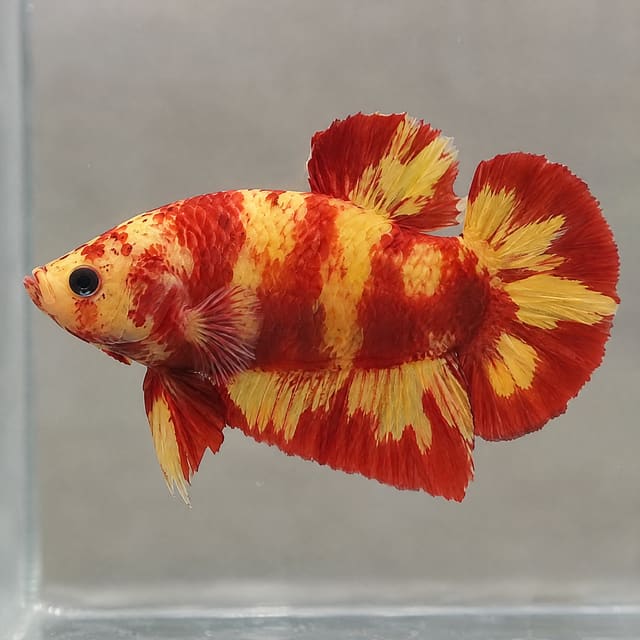
A male Siamese fighting fish, Betta splendens, of the veiltail fin form, coloured solid red. The veiltail has long, flowing fins, and the tail drapes downwards like a veil rather than spreading into a half circle. It is the classic betta most people picture.
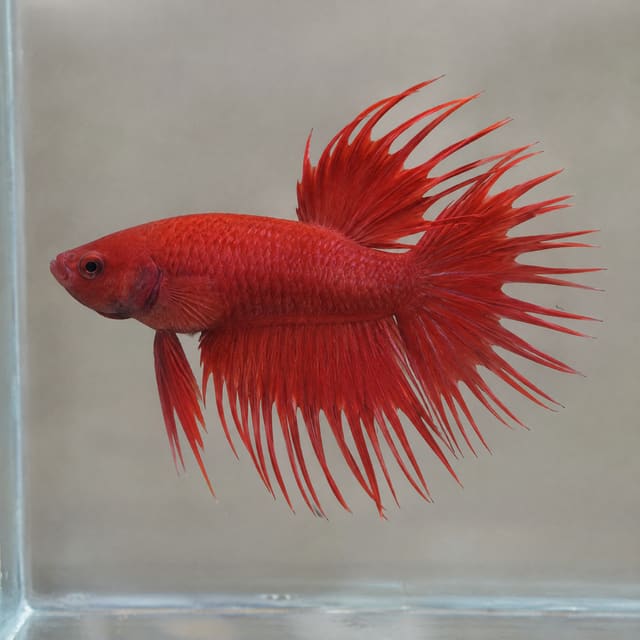
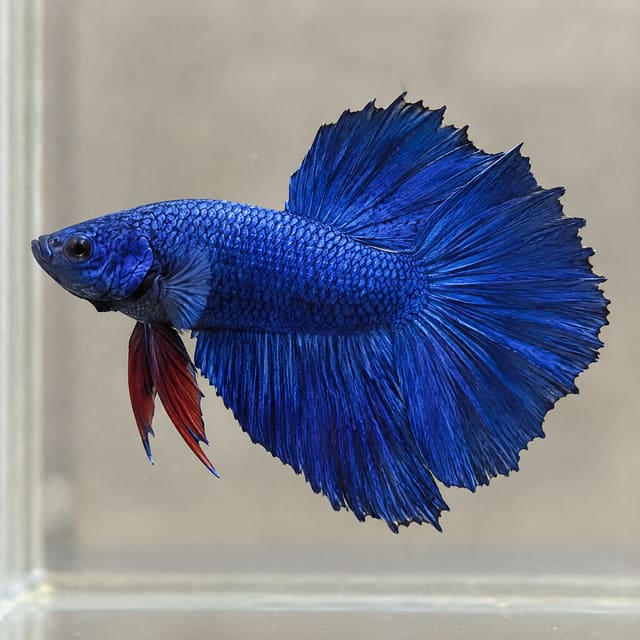
A veiltail’s long tail hangs and drapes. A halfmoon’s tail is bred to open into a 180° D shape, and a crowntail’s fin rays extend beyond the webbing to give a spiky edge. Care is the same for all of them; only the fins differ.
Seriously Fish gives 70 mm standard length, FishBase 6.5 cm total length and OATA about 7 cm. His long fins make him look much larger than the body measurement suggests.
At least 20 litres for one male, as OATA advises, and ideally a 45 × 30 cm base of about 41 litres, as Seriously Fish recommends. Fit a heater, a gentle filter and a lid with a small air gap above the water.
Long fins act like a sail. Seriously Fish advises avoiding strong water movement, and OATA asks for a gentle current. In strong flow a veiltail struggles to swim, tires quickly and may rest on the bottom or wedge himself behind décor.
Never with another male betta. Avoid fin-nippers such as tiger barbs and serpae tetras, which target long fins, and other long-finned or brightly coloured fish he may treat as rivals. Calm bottom dwellers in a larger planted tank are the safest choice.
A steady 26–28°C, inside OATA’s 20–28°C, Seriously Fish’s 22–30°C and FishBase’s 24–30°C. UK rooms are far too cool for a betta, so a thermostatic heater is essential.
A betta pellet or granule once a day, only what he finishes in a couple of minutes, with small frozen or live foods such as daphnia and brine shrimp a few times a week. Seriously Fish warns that bettas are particularly prone to obesity.
No reviews for this item yet. Bought one? Honest reviews only, good or bad.
What customers say about ordering from us
Easy website plenty of info on fish your buying great to pick a time slot
TRACEY DURRANT · 7 Oct 2026
Got some lovely fish thank you
Kevin Mackie · 7 Oct 2026
Reviews of our shop, collected by Judge.me, an independent third-party review collector. Newest first.
Moved by UK carriers licensed to handle live animals
Hand-packed with oxygen bags, poly box, heat pack
Email photos the same day; an optional unboxing video helps us review problems faster — claim terms apply
Klarna & PayPal Pay in 3 at checkout