Moderate
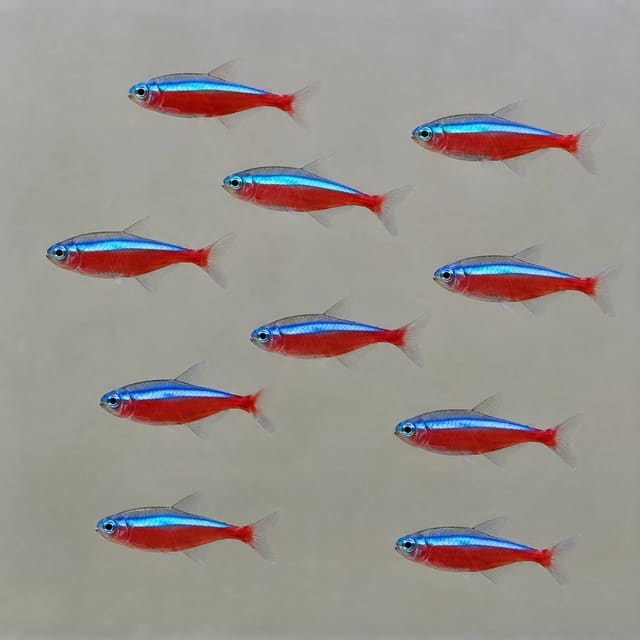
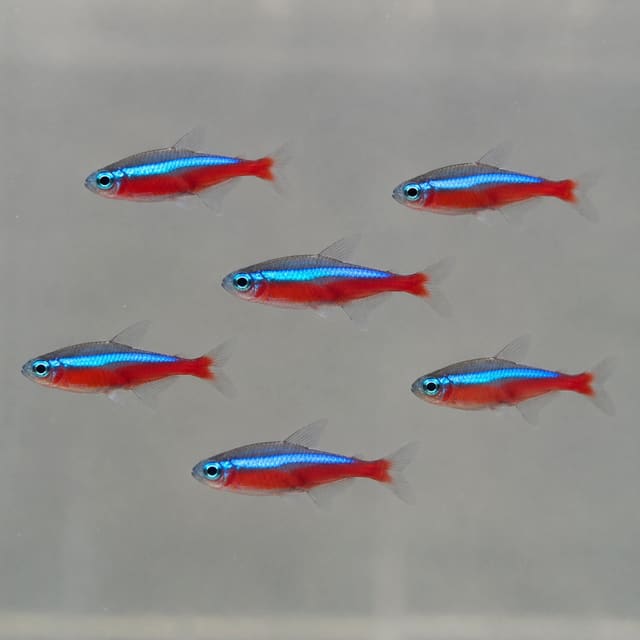
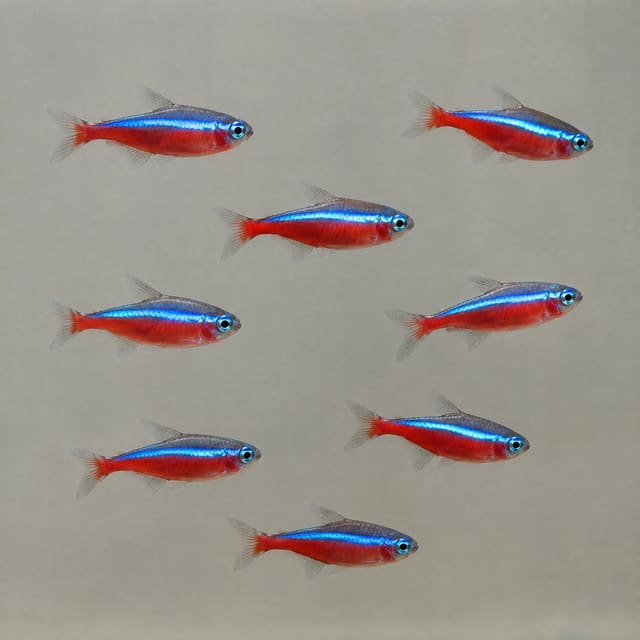
Neon Tetra (Paracheirodon innesi)
21–25°C · pH 5–7
£1.89
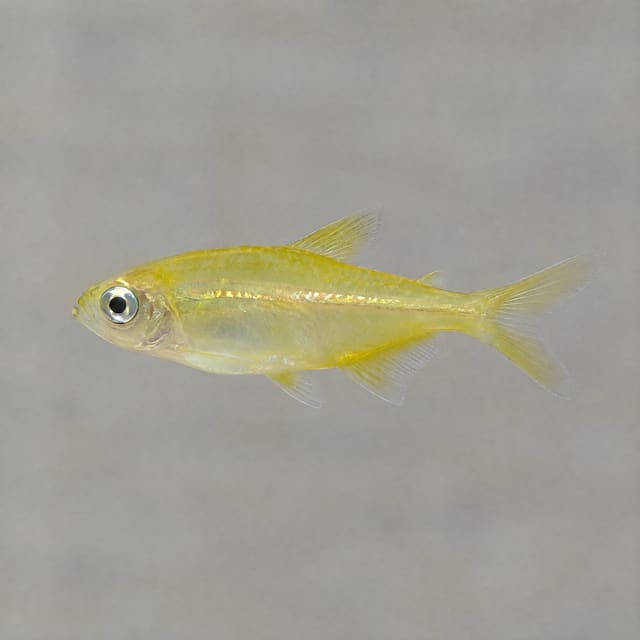
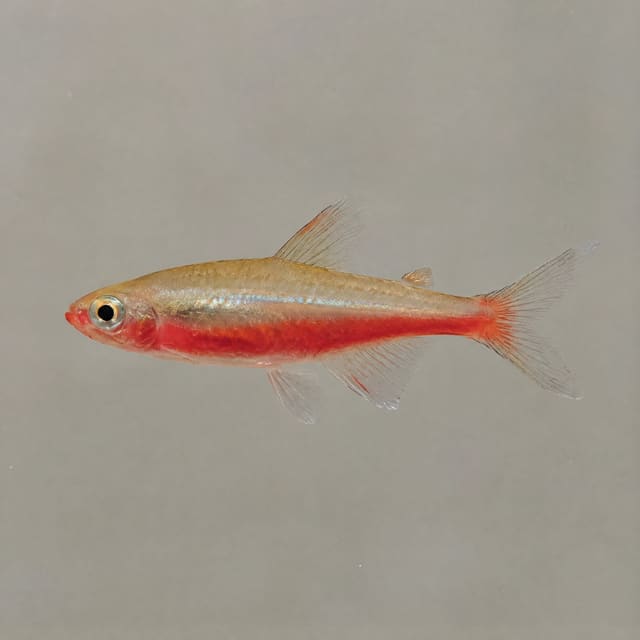
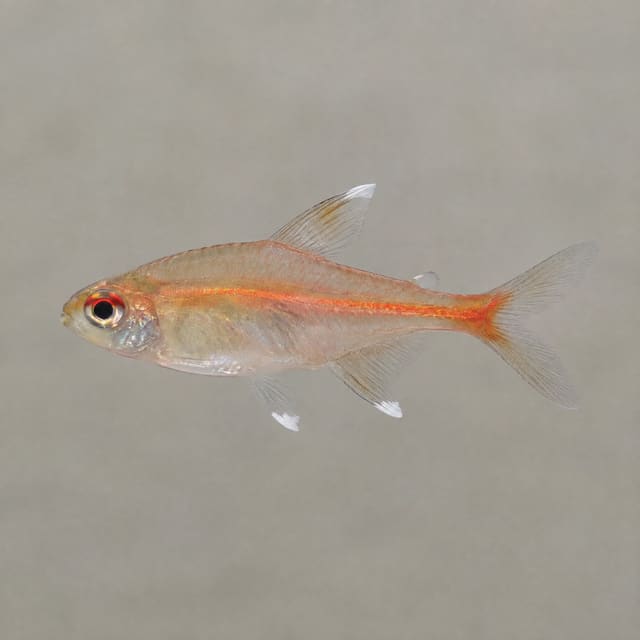
The Golden Neon Tetra is a leucistic, pale gold colour form of the neon tetra (Paracheirodon innesi), keeping a softened blue-green stripe and the red rear half. Keep a group of ten or more in a mature, planted tank at least 60 cm long at 22–25°C. Sold individually as one live fish, medium size.
Paracheirodon innesi
Quantity discounts are pricing offers, not a group-size recommendation. Check the full care guidance and your existing animals before choosing a quantity.
The Golden Neon Tetra is a leucistic, pale gold colour form of the neon tetra (Paracheirodon innesi), keeping a softened blue-green stripe and the red rear half. Keep a group of ten or more in a mature, planted tank at least 60 cm long at 22–25°C. Sold individually as one live fish, medium size.
Start here: use a mature, filtered aquarium at least 60 cm long. FishBase and OATA compile groups of five or more; our conservative planning screen starts at eight, then checks usable volume, water, filtration and every adult tank mate.
Read the full care guidance when planning conditions for your aquarium.
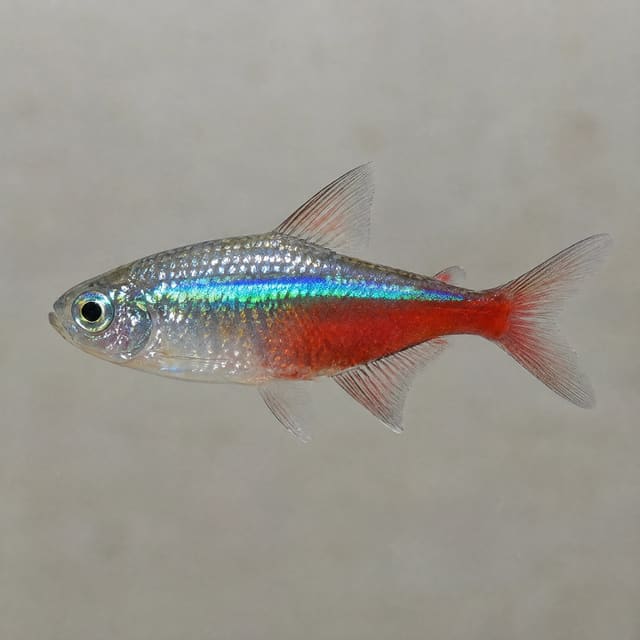
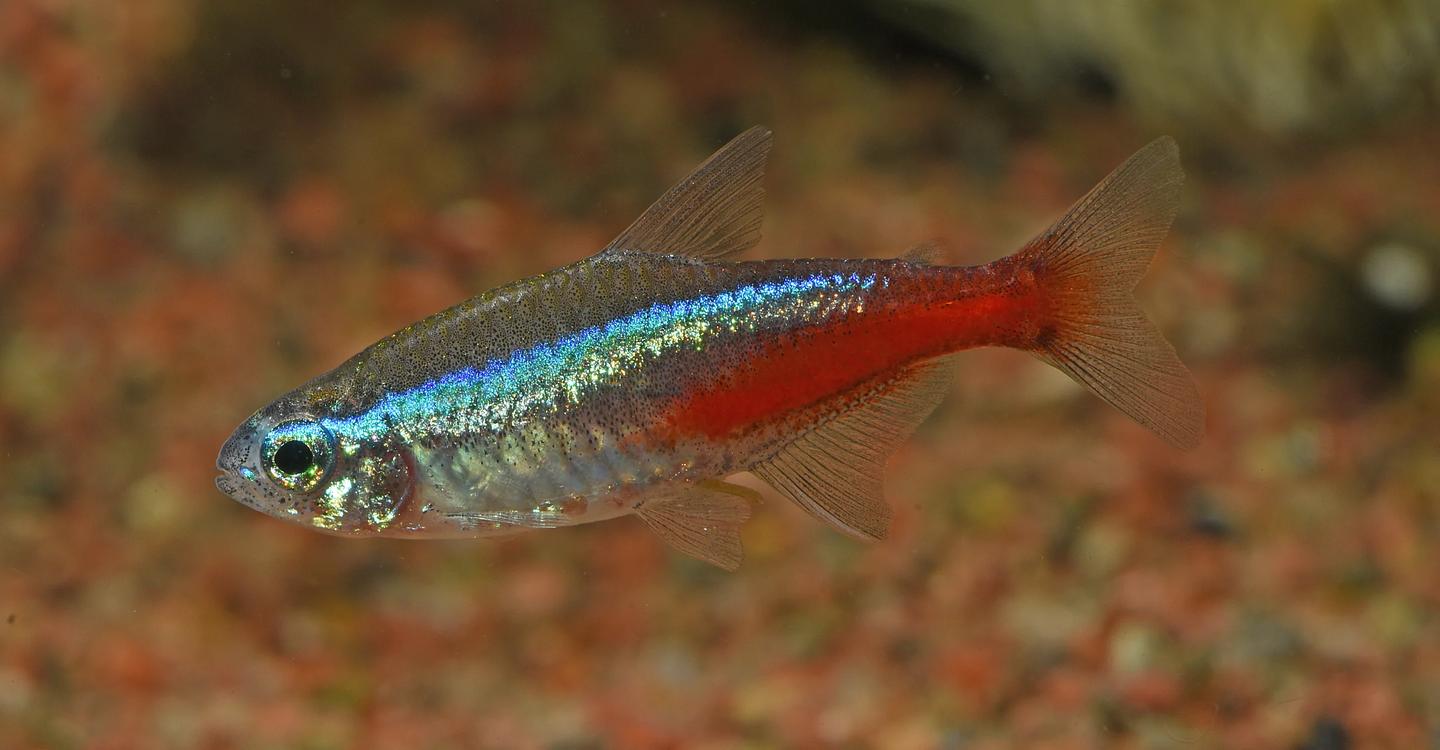
The Golden Neon Tetra is a pale gold colour form of the neon tetra, Paracheirodon innesi, one of the best-known shoaling fish in the hobby. Instead of the usual dark olive back, the body is a warm, slightly translucent gold. The iridescent stripe still runs from the eye to the tail, softened to a pale blue-green, and the red still fills the lower rear half of the body. In a group, under planted-tank lighting, golden neons look like a shoal of small glowing lanterns.
Seriously Fish lists the golden neon among the ornamental strains of the species and describes it as leucistic, meaning much of the dark pigment is reduced while other colours remain. Underneath the colour it is a normal neon tetra: small, peaceful, happiest in a group and at home in a planted community tank with gentle companions.
Because it shares the neon’s care exactly, the golden form is an easy way to give a familiar fish a fresh look. It works especially well against dark substrate, wood and deep green plants, where the gold body and pale stripe stand out more than the classic neon does.
| Suits | Not suited to |
|---|---|
| A mature, planted tank at least 60 cm long | A newly set-up tank that has not finished cycling |
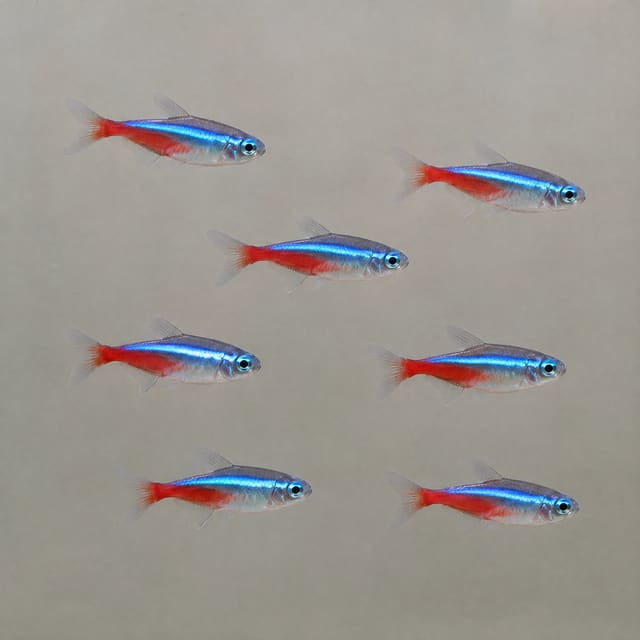
| A group of ten or more golden neons | Two or three fish on their own |
| Small, peaceful companions such as corydoras, pencilfish and hatchetfish | Angelfish and other fish big enough to swallow a 3 cm tetra |
| Soft to medium water held steady at 22–25°C | Very hard water combined with high temperatures |
| A varied diet of fine foods | Large pellets meant for bigger fish |
Browse every neon we stock in our neon tetras for sale collection, see the full tetras range, or open the South American tetra category and the Paracheirodon page, where neons, cardinals and green neons sit together.
The neon tetra was first described as Hyphessobrycon innesi, and Seriously Fish also lists the old name Cheirodon innesi. Today it is Paracheirodon innesi. The family has recently changed: FishBase now places the genus in Acestrorhamphidae, the American tetras, while older books and some care sheets, including Seriously Fish, still list it under Characidae. Both names refer to the same fish.
Seriously Fish lists several strains bred in the trade: albino, golden (leucistic), short-bodied, long-finned and diamond, which has reflective scales on the back. The golden neon keeps the normal body shape and fins and differs only in colour.
| Fish | Look | Species |
|---|---|---|
| Golden Neon Tetra (this page) | Pale gold body, softened blue-green stripe, red rear half | Paracheirodon innesi |
| Neon Tetra | Dark back, bright electric-blue stripe, red rear half | Paracheirodon innesi |
| Diamond Neon Tetra | Reflective silver-blue scales on the back | Paracheirodon innesi |
| Cardinal Tetra | Red running the full length of the belly | Paracheirodon axelrodi |
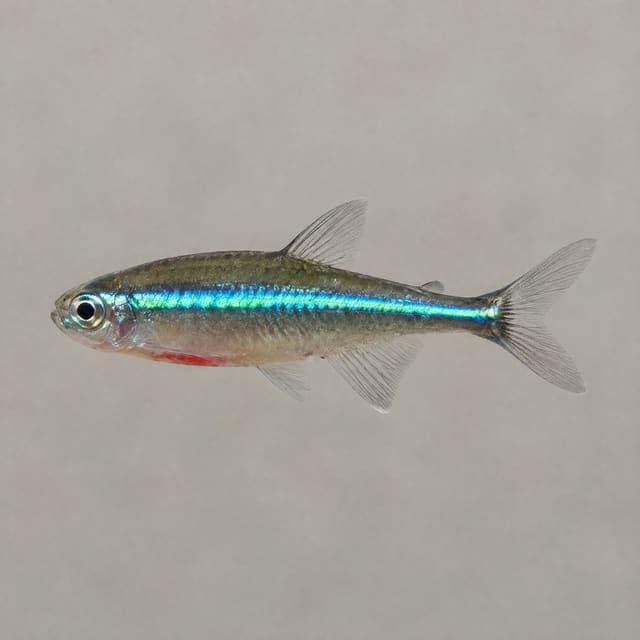
| Green Neon Tetra | Smaller, with a greener stripe and less red | Paracheirodon simulans |
One purchase quantity supplies one live Golden Neon Tetra in our Medium size grade. Order your whole group in one go, so the fish travel and settle together. The photographs show the colour form, not the individual fish you will receive: the depth of the gold, the strength of the stripe and the amount of red vary from fish to fish, and colours brighten once the group has settled into a calm, mature tank.
Sex is not chosen. Seriously Fish notes that mature females are rounder-bodied and slightly larger than males, which is the only reliable outward difference, so a group bought together will normally contain both. Read our delivery days and Live Arrival Guarantee before ordering, and make sure the aquarium has finished cycling first.
Adult size is small but the sources measure it differently. FishBase gives a maximum of 2.5 cm standard length and Seriously Fish 30 mm, both measured from the snout to the base of the tail; with the tail added, adults reach about 3–4 cm. FishBase and Seriously Fish both ask for a tank at least 60 cm long, and Seriously Fish suggests a 60 × 30 cm base of about 54 litres. OATA’s general guidance for tetras is at least 45 litres for a small shoal of the smaller species.
The length matters because neons swim as a group, back and forth through the middle of the tank. A long tank lets the shoal move as one, which is the whole point of keeping them.
Seriously Fish describes the neon’s home as acidic forest streams and small tributaries in the Amazon basin of Colombia, Brazil and Peru, usually blackwater stained brown by humic substances, sometimes clearwater. The rivers named include the Putumayo, Solimões, Purus, Ucayali, Marañón, Japurá, Javary and tributaries of the Napo. FishBase records the species from blackwater and clearwater tributaries of the Solimões. That means shade, plants, wood and leaf litter, with a calm current.
For a golden neon, a dark background and substrate do double duty: they make the shoal feel safe and they make the pale gold body glow. Plant the back and sides densely, add wood and a few dried leaves, and use floating plants to soften the light. Our aquarium plants range and our live plants for beginners guide help you choose.
| Zone | What to put there | Why it helps |
|---|---|---|
| Back and sides | Dense stem plants, ferns and wood | Cover that lets the shoal relax |
| Middle | Open water | Room for the group to swim together |
| Floor | Dark sand with a scattering of dried leaves | Blackwater look; makes the gold stand out |
| Surface | A patch of floating plants | Softer light, like a shaded forest stream |
Published water values for the neon vary widely because wild fish come from very soft, acidic water while most aquarium stock is farm-bred. Seriously Fish notes that commercially bred neons are more adaptable than wild ones. The table shows each source and the narrow overlap we recommend.
| Value | Seriously Fish | FishBase | OATA (tetras in general) | Our target |
|---|---|---|---|---|
| Temperature | 21–25°C | 20–26°C | 22–27°C | 22–25°C |
| pH | 4.0–7.5 | 5.0–7.0 | 6.5–8.0 | 6.5–7.0 |
| General hardness | 1–12 dGH | 1–2 dH | 4–12 dGH | 4–12 dGH, softer is fine |
| Carbonate hardness | not given | not given | 3–10 dKH | 3–10 dKH |
FishBase’s very low hardness reflects the wild habitat; farm-bred fish are kept well above it. UK tap water ranges from soft to very hard, and your water company publishes the figure for your postcode. If your tap water is very hard, mixing in some reverse-osmosis water brings it closer to the target. Compare your readings using our water matcher and read our water chemistry guide for the meaning of each value.
Temperature, pH and hardness describe the kind of water neons prefer; ammonia, nitrite and nitrate tell you whether the tank is clean. OATA’s targets are zero ammonia, zero nitrite and nitrate no more than 20 mg/l above your tap water. Small tetras are quickly stressed by waste, so test weekly.
A filter is essential for any tetra tank, and OATA recommends changing 25% of the water every week, siphoning waste from the substrate and treating the new water with a conditioner. Neons come from calm streams, so choose a filter rated for the tank but spread the outflow so the current stays gentle. Our guide to aquarium filtration explains the choices.
FishBase lists worms, small insects, crustaceans and plant matter as the neon’s natural food. Seriously Fish says it may accept dried foods in the aquarium but does best on a varied diet that includes live or frozen bloodworm, mosquito larvae, daphnia and moina. OATA’s advice for tetras is a good flake or granule as the staple, small frozen or live foods as extras, and a feed once a day of only what the fish finish within a few minutes.
| Day | Food | How much |
|---|---|---|
| Most days | Fine flake or micro granules such as Spirulina Forte Mini Granulat | What the shoal clears in about two minutes |
| Two or three days a week | Frozen daphnia, thawed in tank water | A small piece for a group of ten |
| Once a week | Freeze-dried bloodworm, crumbled | A pinch |
Neons are sensitive to the swings in water quality of a new tank, so add them only once the filter is fully mature; our guide to the aquarium nitrogen cycle shows how to tell. Use OATA’s floating bag method: lights off, float the sealed bag for about 10 minutes, add small amounts of tank water to the bag over up to 20 minutes, then release the fish with as little bag water as possible. Our guide to acclimatising new fish shows the routine.
Seriously Fish calls the neon peaceful and well suited to community tanks, and suggests similarly sized characins, hatchetfish, pencilfish, small catfish and small to medium non-predatory cichlids as tank mates, adding that other schooling fish help the neons feel secure. OATA warns that small tetras must not share a tank with fish large enough to eat them. At 3–4 cm, a golden neon fits easily in the mouth of an adult angelfish. Check your plan with our tank mates checker.
| Suits | Avoid |
|---|---|
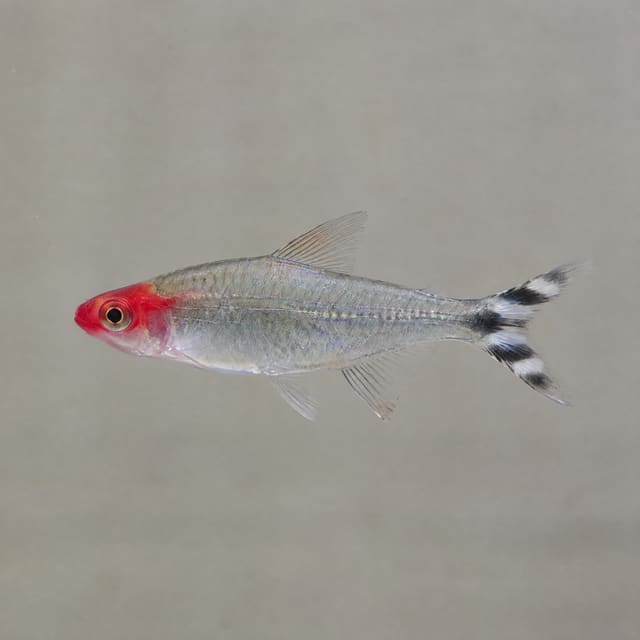
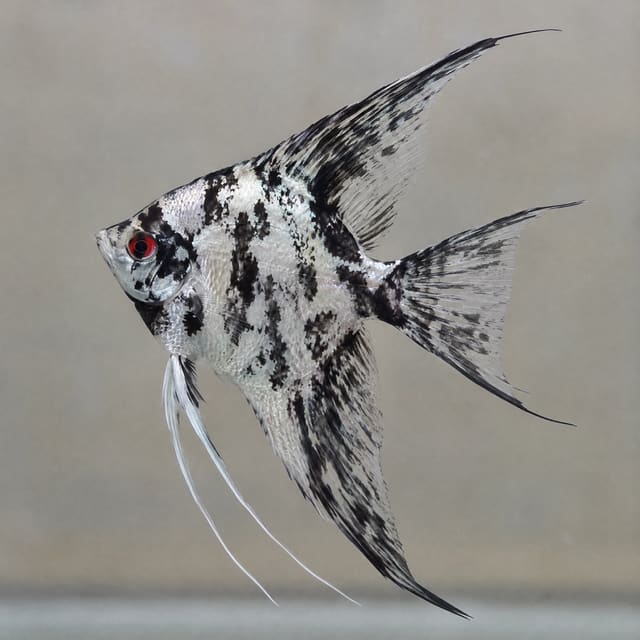
| Blackwing Hatchetfish at the surface | Angelfish such as the Marble Angelfish once they grow |
| Dwarf Pencilfish in midwater | Boisterous fin-nippers such as the Tiger Barb |
| Pygmy Corydoras and Panda Corydoras on the bottom | Large catfish and predators that hunt at night |
| Other small tetras such as the Ember Tetra | Fast, greedy fish that outcompete small tetras for food |
| Zebra Otos for algae | Hard-water fish kept at high temperatures |
A healthy golden neon shoal swims together, feeds readily and holds its fins open. Seriously Fish warns that years of commercial breeding have reduced the vigour of ornamental neon strains, so defects and ill health are not unusual and it is worth watching new fish closely. It also describes neon tetra disease, caused by the microsporidian Pleistophora hyphessobryconis: spores eaten by the fish settle in the muscle, causing white patches, restlessness and fish that drift away from the shoal. It is virtually untreatable once advanced and affected fish should be removed. Columnaris, a bacterial disease, can look similar and can be treated, so isolate any fish with symptoms and treat promptly.
| If you see | Do this |
|---|---|
| A pale or white patch in the body muscle | Isolate the fish at once; suspect neon tetra disease or columnaris |
| One fish swimming alone, restless at night | Watch it closely and isolate if it does not rejoin the group |
| White spots like grains of salt | Follow our white spot treatment guide for the whole tank |
| Ragged, whitened fin edges | Improve water quality and read our fin rot guide |
| Fish hanging at the surface or hiding | Test ammonia, nitrite and temperature straight away |
| Faded colour across the whole shoal | Check the water and look for a bully or bright, bare conditions |
Neons are not easy to breed in a community tank, but Seriously Fish gives a clear method. Use a separate, very dimly lit tank with fine-leaved plants such as Java moss, or a mesh base the adults cannot reach through. The water should be soft and acidic, around pH 5.5–6.5 and gH 1–5, at about 26.5–29°C, with a gently bubbling sponge filter. A group of about six of each sex, or a pair, is introduced, and the adults are removed once eggs appear.
OATA reminds keepers that releasing aquarium animals or plants into the wild is illegal and usually fatal to the fish, and that survivors can harm native wildlife. Dispose of old water and substrate down the drain or in household waste.
It is a colour form of the ordinary neon tetra, Paracheirodon innesi. Seriously Fish lists the golden neon among the aquarium strains and describes it as leucistic: much of the dark pigment is missing, so the body looks pale gold while the neon stripe and red rear half remain, in a softer tone.
No. It is the same species with the same care, bred for its colour. It can live and shoal with ordinary neons, though a single colour usually makes the more striking group.
FishBase records 2.5 cm standard length and Seriously Fish 30 mm, measured without the tail. Adults are about 3–4 cm overall, so this is a small fish that suits small and medium community tanks.
Seriously Fish advises a mixed-sex group of at least 8–10. OATA’s minimum for any tetra is five, and FishBase also mentions five or more. A group of ten or more looks better and feels more secure.
A tank at least 60 cm long, which FishBase and Seriously Fish both give; Seriously Fish suggests a 60 × 30 cm base of about 54 litres. OATA’s general minimum for a small shoal of small tetras is 45 litres.
Soft to medium, slightly acidic to neutral water at 22–25°C, where the sources overlap. We aim for pH 6.5–7.0 and 4–12 dGH. Most stock is farm-bred and adapts to a range of water, but stability matters more than an exact figure.
A parasite infection caused by the microsporidian Pleistophora hyphessobryconis. Seriously Fish says it causes white patches in the muscle, restlessness and fish leaving the shoal, and is virtually untreatable once advanced. Remove affected fish. Columnaris can look similar but is treatable.
Small foods: fine flake or micro granules as a staple, plus small frozen or live foods such as daphnia, bloodworm and mosquito larvae, which Seriously Fish recommends for best condition. Feed once a day, only what the group finishes in a few minutes.
No reviews for this item yet. Bought one? Honest reviews only, good or bad.
What customers say about ordering from us
Easy website plenty of info on fish your buying great to pick a time slot
TRACEY DURRANT · 7 Oct 2026
Got some lovely fish thank you
Kevin Mackie · 7 Oct 2026
Reviews of our shop, collected by Judge.me, an independent third-party review collector. Newest first.
Moved by UK carriers licensed to handle live animals
Hand-packed with oxygen bags, poly box, heat pack
Email photos the same day; an optional unboxing video helps us review problems faster — claim terms apply
Klarna & PayPal Pay in 3 at checkout