Moderate
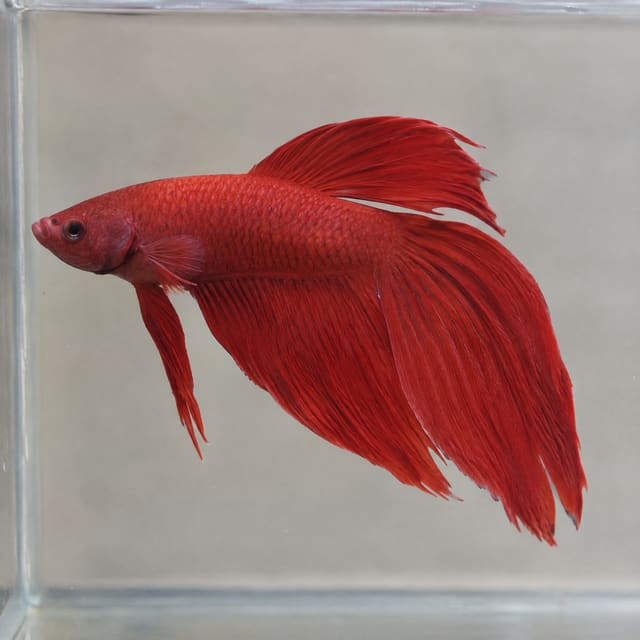
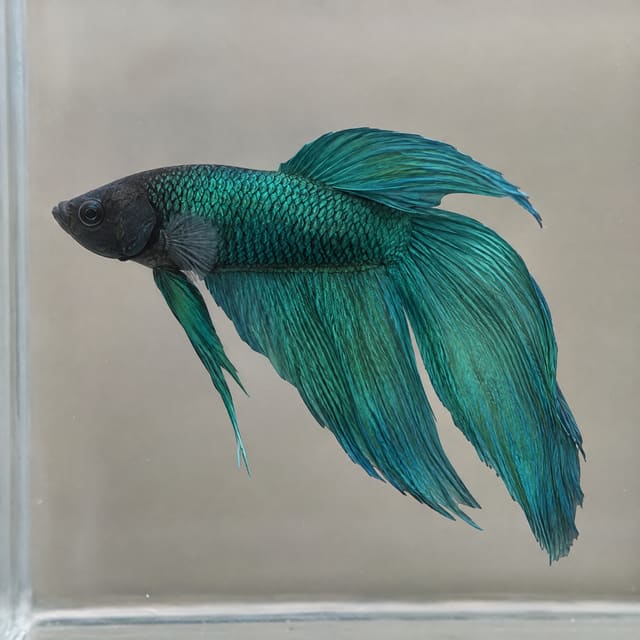
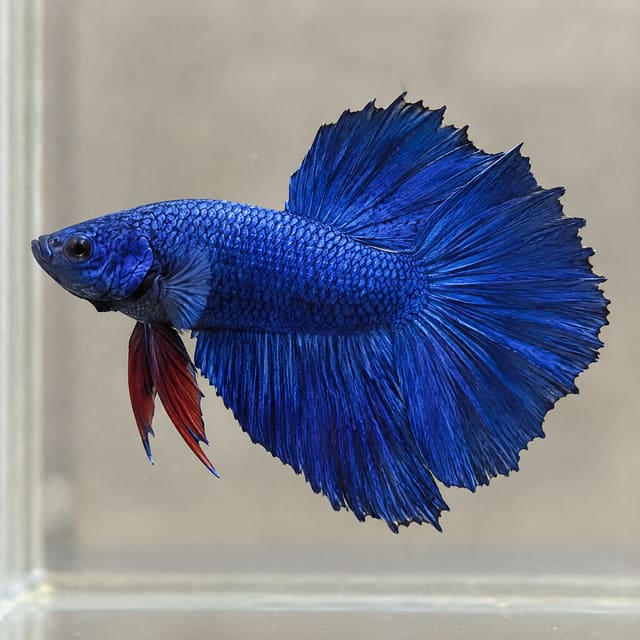
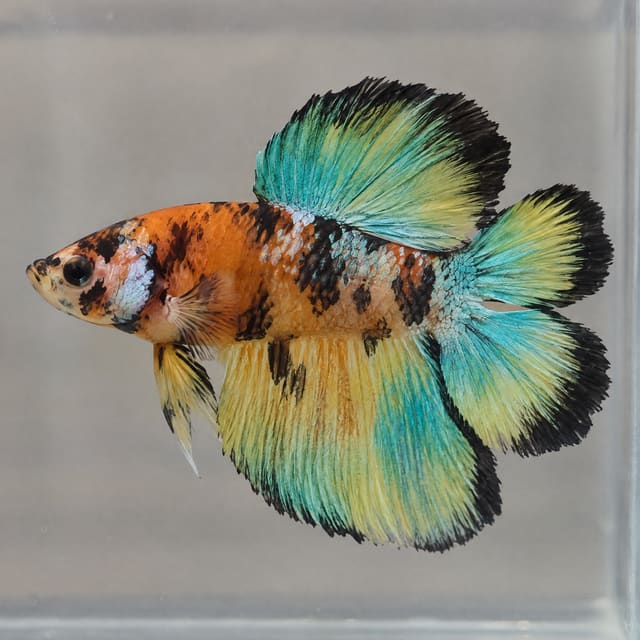
Avatar Plakat Male Betta (Betta splendens)
26–28°C · pH 6–8
£44.99
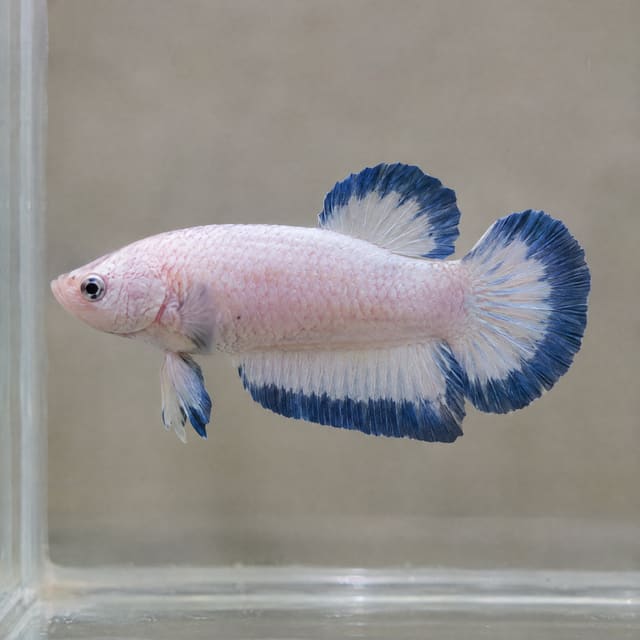
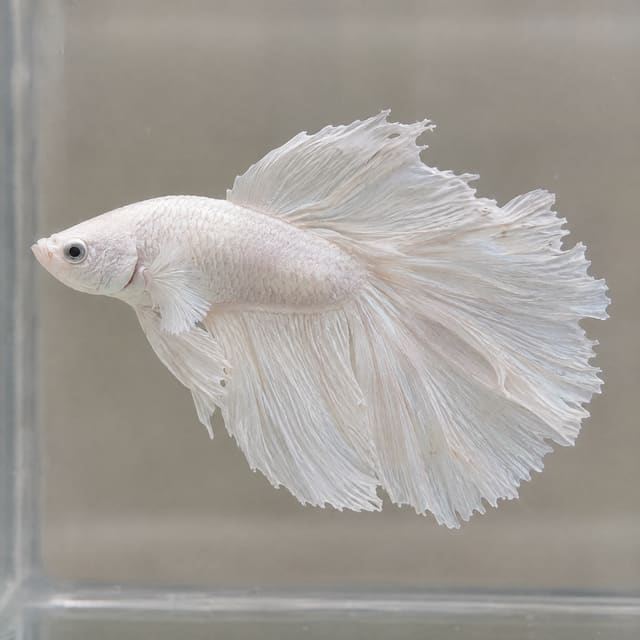
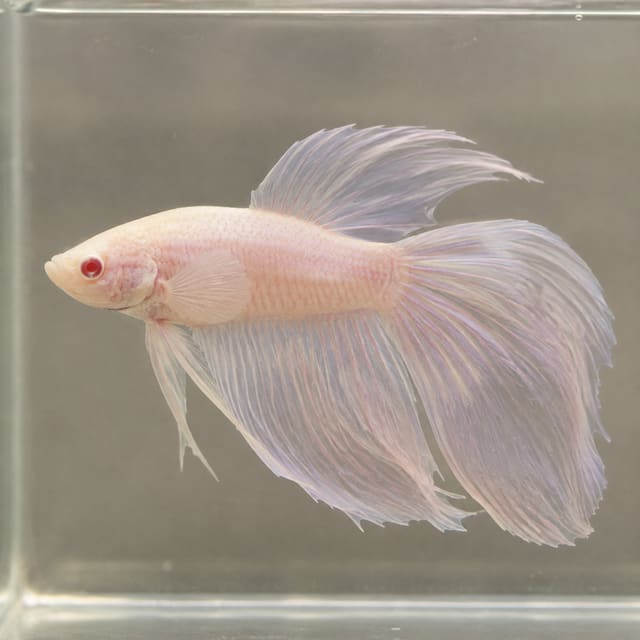
The White Plakat is a short-finned male Siamese fighting fish (Betta splendens) with a pure pearly-white body and fins and a broad, rounded tail. Keep one male alone in a heated, gently filtered, covered tank of at least 20 litres (ideally about 40) at 26–28°C. Sold as one live male, large size.
Adult size is the maximum length this species reaches at full maturity (scientific sources). The livestock you receive will be younger and smaller. Product-photo provenance and any image-specific limitations are stated on the listing.
Betta splendens
The White Plakat is a short-finned male Siamese fighting fish (Betta splendens) with a pure pearly-white body and fins and a broad, rounded tail. Keep one male alone in a heated, gently filtered, covered tank of at least 20 litres (ideally about 40) at 26–28°C. Sold as one live male, large size.
Adult size is the maximum length this species reaches at full maturity (scientific sources). The livestock you receive will be younger and smaller. Product-photo provenance and any image-specific limitations are stated on the listing.
For one typical domestic Betta splendens, start with at least 20 litres, a mature filter, thermostatic heater, separate thermometer, gentle flow, a secure lid with surface access, and plants or refuges. Keep one male per aquarium.
Read the full care guidance when planning conditions for your aquarium.
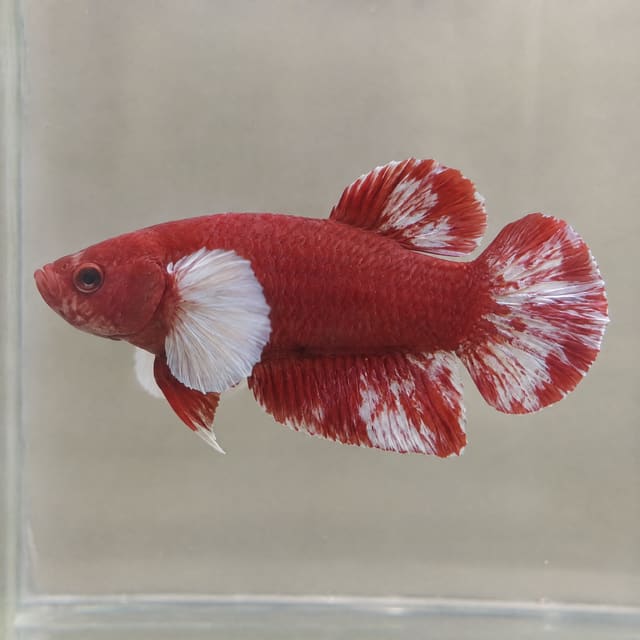
The White Plakat Male Betta is a short-finned male Siamese fighting fish, Betta splendens, bred for a pure white body and white fins. Under good aquarium lighting the scales have a soft pearly sheen, the fins are fine and nearly translucent at the edges, and the dark eye stands out against all that white. In a planted tank he looks almost like porcelain against green leaves and dark wood.
Plakat is the name Seriously Fish gives for the short-finned strains of the species. They are closer in shape to the wild fish than the long-finned show forms such as the veiltail, halfmoon and crowntail. The tail on this fish is broad and rounded, opening out into an almost D-shaped fan when he flares, but every fin stays short. That build matters: a plakat carries less fin weight, swims faster and turns more sharply than a long-finned male, and his fins are less likely to tear on décor.
He is still a fighting fish. Seriously Fish states that ornamental strains are more aggressive than other Betta species, and OATA warns that two males kept together will fight until one is badly injured or killed. Plan on one male per aquarium and you have a bold, interactive fish that soon learns to greet you at the front glass.
| Suits | Not suited to |
|---|---|
| A heated, filtered tank of 20 litres or more, ideally about 40 litres | A bowl, vase or unheated jar |
| One male betta per tank | Any tank already holding a male betta |
| A covered tank with an air gap under the lid | An open-topped tank filled to the brim |
| Gentle flow and plenty of plants and resting places | A strong filter current |
| A keeper who measures each meal | Anyone who likes to feed several times a day |
Browse every fighting fish we stock in our betta fish for sale range, open the wider labyrinth fish and betta category, or compare other males on the male Betta splendens page.
Seriously Fish gives the native range of Betta splendens as central Thailand, from Chiang Rai province south to Surat Thani and Phang Nga, and FishBase places it in the Mekong basin. Wild fish live in still or slow water: rice paddies, swamps, roadside ditches, ponds and the edges of streams, often shaded by plants and sometimes low in oxygen. FishBase lists the wild species as Vulnerable on the IUCN Red List. The ornamental bettas sold in shops are long-domesticated aquarium strains, and wild colour is a dull mix of browns and greens with a little iridescence.
The species belongs to the gourami family, Osphronemidae, within the labyrinth fishes. Seriously Fish explains that the labyrinth organ, a folded, blood-rich chamber above the gills formed from the first gill arch, lets the fish breathe air taken from the surface. FishBase calls the betta a facultative air-breather. That is why a betta needs access to the surface and humid air above it, and also why the organ is no excuse for a tiny, unfiltered tank.
| Male betta | Fins | Colour |
|---|---|---|
| White Plakat Male Betta (this page) | Short fins, broad rounded tail | Pure pearly white |
| Platinum Halfmoon Plakat | Short fins, tail bred to a full 180° spread | Metallic platinum white |
| Snow Dragon Plakat | Short fins | White with heavy, armour-like dragon scales |
| Crowntail White Male | Long fins with spiky, extended rays | White |
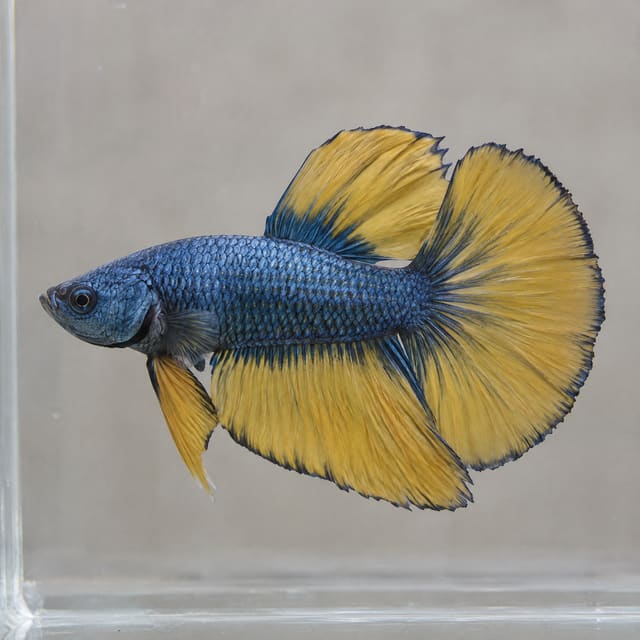
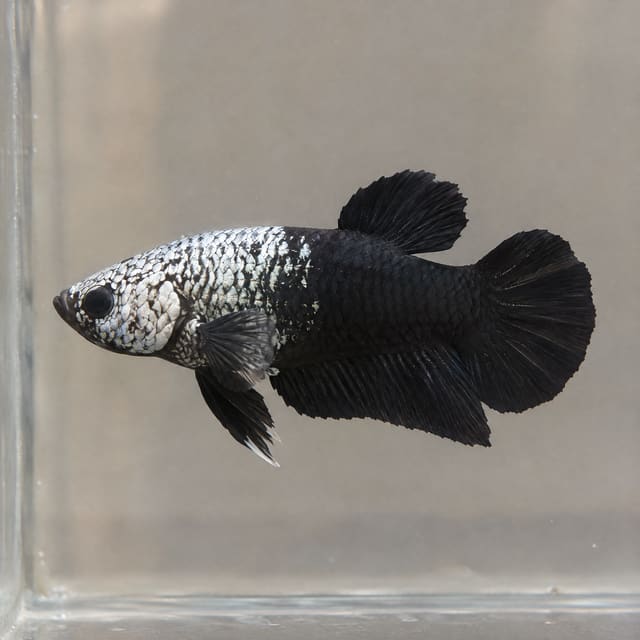
| Black Plakat | Short fins | Solid black, the opposite look |
All of these are the same species with the same care. Our guide to betta types explains each fin form in more detail.
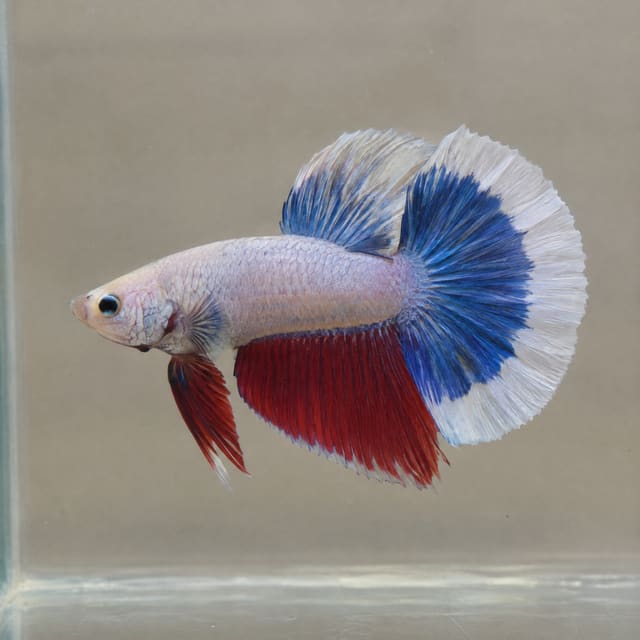
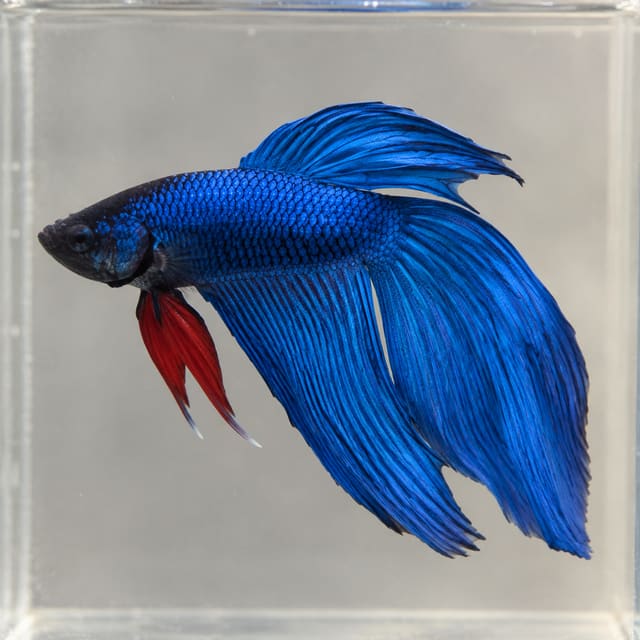
One purchase quantity supplies one live male White Plakat Betta in our Large size grade. The photographs show the colour form and fin type, not the individual fish you will receive. Bettas change colour with mood, temperature and condition, and a fish fresh from transport often looks paler or shows faint stress lines; give him a week in a warm, clean tank before judging his colour.
Read our delivery days and Live Arrival Guarantee before ordering, and have the aquarium cycled, heated to 26°C and tested before he arrives.
OATA sets at least 20 litres for a single male and asks keepers to buy the largest tank they reasonably can, since bigger tanks hold temperature and water quality more steadily. Seriously Fish recommends a footprint of 45 × 30 cm, about 41 litres, for a single male or a pair, and explicitly argues against the tiny tanks and jars bettas are sometimes sold with. FishBase gives a maximum of 6.5 cm total length, Seriously Fish 70 mm standard length and OATA about 7 cm. The sources differ in how they measure, but all describe a fish of around 7 cm that needs room to patrol.
A plakat uses that room. Short-finned males swim hard along the glass and investigate every corner, so floor space matters more than height. A long, shallow tank also keeps the surface within easy reach, which helps a fish that breathes air.
Seriously Fish suggests tall stem plants, floating plants such as Salvinia and Riccia, water lilies and Cryptocoryne, with driftwood, clay pots or tubes as shelters and dried leaf litter on the bottom. The same source says to keep the tank well covered and not filled to the top: adults need humid air above the surface and are good jumpers. OATA adds that if you use cover glasses you must leave at least a small gap between the water and the glass so the fish can reach air.
A white fish shows best against dark wood, deep green plants and a darker substrate. Floating plants soften the light, which helps him relax, and broad leaves near the surface give him somewhere to rest. Our aquarium plants range has easy floating plants, Cryptocoryne and Java fern that suit a betta tank.
| Zone | What to put there | Why it helps |
|---|---|---|
| Surface | Floating plants over part of the water | Shade, calm and a place for a bubble nest |
| Upper water | A broad leaf or resting ledge near the top | Easy access to air without a long swim |
| Back and sides | Tall stem plants, Cryptocoryne and wood | Visual barriers and hiding places |
| Floor | Dark sand or fine gravel with a few dried leaves | Shows off the white colour; leaf litter as cover |
Bettas are tropical fish and need a heater all year in the UK. The three sources agree on pH and broadly agree on temperature, but give different hardness ranges, so we work to the overlap and recommend keeping conditions steady rather than chasing a figure.
| Value | OATA | Seriously Fish | FishBase | Our target |
|---|---|---|---|---|
| Temperature | 20–28°C | 22–30°C | 24–30°C | 26–28°C |
| pH | 6.0–8.0 | 6.0–8.0 | 6.0–8.0 | 6.5–7.5, kept stable |
| General hardness | 4–12 dGH | 1–15 dGH | 5–19 dH | 5–12 dGH |
| Carbonate hardness | 3–10 dKH | not given | not given | 3–10 dKH |
Seriously Fish notes that wild fish probably prefer slightly acidic water of pH 5.0–7.0, but domestic strains like this one are bred in a wide range of water and do well across the shared 6.0–8.0. Most UK tap water falls inside that once it has been treated with a conditioner. Check your readings against the species with our water matcher, and read more about heating in our betta temperature guide.
Temperature, pH and hardness describe the water a betta prefers. Ammonia, nitrite and nitrate tell you whether the tank is clean. OATA’s targets are zero ammonia, zero nitrite and nitrate no more than 20 mg/l above your tap water. In a small tank these numbers rise quickly, so test weekly and after any change.
OATA says a filter is always essential, whatever the tank size, and that bettas need a gentle current so they can swim freely. Seriously Fish advises avoiding strong water movement and recommends a gentle air-powered sponge filter. If you use a small internal filter, turn the flow down or point the outlet at the glass. Our guide to aquarium filtration compares the options.
Wild bettas eat small invertebrates; FishBase lists zooplankton and mosquito and other insect larvae. Seriously Fish says captive fish accept dried foods but need regular small live or frozen foods such as daphnia, brine shrimp or bloodworm for colour and condition, and it warns that Betta species are particularly prone to obesity. OATA recommends feeding once a day, only what the fish eats within a few minutes, with a betta-specific pellet as the staple.
| Day | Food | How much |
|---|---|---|
| Most days | Soft Line Betta granules or Betta Flakes | Three or four granules, or a pinch he finishes in two minutes |
| Two or three days a week | Frozen daphnia, thawed in tank water | A small sliver |
| Once a week | Freeze-dried brine shrimp | Two or three pieces, soaked first |
| One day a week | No food | A rest day helps prevent bloating |
Add him only once the tank has finished its nitrogen cycle; our guide to the aquarium nitrogen cycle explains how to check. OATA’s floating bag method works well for bettas: switch off the lights, float the sealed bag for 10 minutes, add small amounts of tank water to the bag over up to 20 minutes, then release him without the bag water. Our guide to acclimatising new fish walks through each step.
Never keep two male bettas together. Seriously Fish does not recommend bettas for the standard community aquarium and advises avoiding tank mates with trailing fins or similar body shapes, which males may see as rivals. OATA adds that males do best alone or with very placid tank mates, since they are often victims of fin-nipping. Seriously Fish says some small cyprinids and loaches from similar habitats can work, but only after research. Our betta tank mates guide and tank mates checker help you test a plan before you buy.
| May suit a larger planted tank | Avoid |
|---|---|
| Pygmy Corydoras on the bottom | Any other male betta |
| Kuhli Loaches, which stay hidden by day | Fin-nippers such as the Tiger Barb |
| Calm small rasboras such as the Harlequin | Fancy guppies and other brightly coloured, long-finned fish |
| A Nerite Snail for algae | Gouramis, which share his shape and air-breathing habit |
| Living alone, the safest choice of all | Fast, greedy fish that take his food |
A healthy male swims actively, eats eagerly, holds his fins open and flares now and then. OATA’s warning signs include hanging at the surface or sitting on the bottom, colour darker or paler than normal, more hiding than usual, fast or slow gill movement, white spots or fluffy growths, lost fins or scales, weight change and loss of appetite. Test the water first whenever something looks wrong.
| If you see | Do this |
|---|---|
| Lying on the bottom, clamped fins | Check the temperature and test ammonia and nitrite at once |
| Swollen belly after meals | Feed less and add a fast day; Seriously Fish warns of obesity |
| Frayed or receding fin edges | Improve water quality and read our fin rot guide |
| White spots like grains of salt | Follow our white spot treatment guide |
| Fluffy cotton-like patches | Test the water and treat for fungus promptly |
| Torn fins with no sign of disease | Look for sharp décor or a nipping tank mate and remove it |
A male in good condition often builds a bubble nest, a raft of bubbles at the surface, sometimes among floating plants, even with no female present. FishBase notes that males build and guard nests; it is normal behaviour, not a sign of a problem. Breeding is a project for a separate tank: OATA describes females showing vertical bars when ready, a courtship dance, eggs placed in the nest, and the female removed afterwards because the male guards the nest fiercely. OATA gives about one day for the eggs to hatch, and Seriously Fish 24–48 hours, with fry leaving the nest after three to four days. Seriously Fish adds that fry need humid air above the water for the labyrinth organ to develop properly.
OATA reminds keepers that releasing aquarium animals or plants into the wild is illegal and usually fatal to the fish, and that the Animal Welfare Act 2006 gives every pet owner a duty of care. Dispose of old water and substrate down the drain or in household waste.
A male Siamese fighting fish, Betta splendens, from a short-finned line with pure white body and fins. Seriously Fish notes that plakat is the vernacular name for short-finned strains, which are closer in shape to the wild fish than the long-finned show forms.
Seriously Fish gives 70 mm standard length, FishBase 6.5 cm total length and OATA about 7 cm. A plakat’s short fins add less to that than the trailing fins of a veiltail, so he looks compact and muscular.
OATA asks for at least 20 litres for one male. Seriously Fish recommends a base of 45 × 30 cm, about 41 litres, and argues against jars and tiny tanks. We suggest 40 litres or more, heated, filtered and covered.
Keep him at a steady 26–28°C. That sits inside OATA’s 20–28°C, Seriously Fish’s 22–30°C and FishBase’s 24–30°C. Use a thermostatic heater, because UK room temperatures are far too cool for a betta.
Never with another male betta. OATA says males do best alone or with very placid tank mates, and Seriously Fish does not recommend bettas for the standard community tank. A few small, calm, short-finned fish can work in a larger planted tank.
Short fins weigh less and drag less, so plakat males usually swim faster and more freely than veiltails or halfmoons and are less prone to torn fins. Seriously Fish notes that ornamental strains in general can be aggressive, so his temper is no milder.
The photographs show the colour form, not the individual fish. Betta colour shifts with mood, temperature and condition, and OATA lists a darker or paler colour than normal as a warning sign, so a steady white is a good sign of a settled, healthy fish.
A betta pellet or granule once a day, only what he finishes in a few minutes, plus small frozen or live foods such as daphnia or brine shrimp two or three times a week. Seriously Fish warns that bettas are particularly prone to obesity.
No reviews for this item yet. Bought one? Honest reviews only, good or bad.
What customers say about ordering from us
Easy website plenty of info on fish your buying great to pick a time slot
TRACEY DURRANT · 7 Oct 2026
Got some lovely fish thank you
Kevin Mackie · 7 Oct 2026
Reviews of our shop, collected by Judge.me, an independent third-party review collector. Newest first.
Moved by UK carriers licensed to handle live animals
Hand-packed with oxygen bags, poly box, heat pack
Email photos the same day; an optional unboxing video helps us review problems faster — claim terms apply
Klarna & PayPal Pay in 3 at checkout