Easy
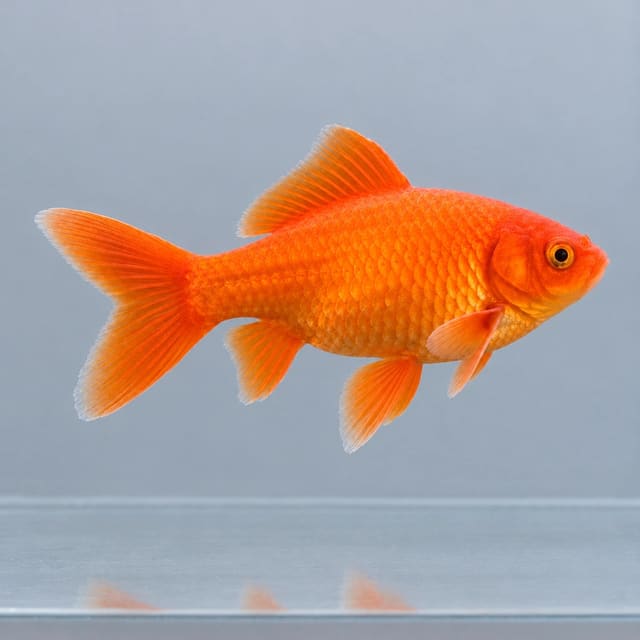
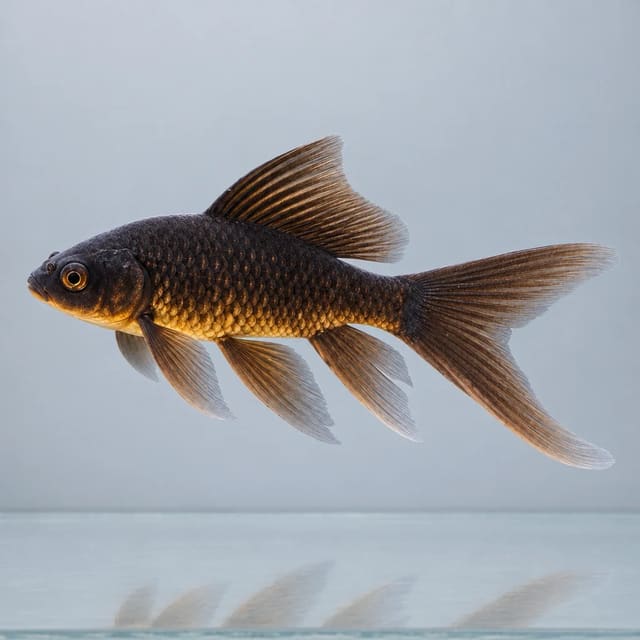
Black Comet Goldfish (Carassius auratus)
£6.49
The White Comet Goldfish is an all-white form of the comet, a slim, single-tailed goldfish (Carassius auratus) with a long, deeply forked tail. It is a hardy pond fish that grows to about 30 cm and stands out against a dark pond liner, so plan good heron protection. Sold individually as one live fish at 2–3 in.
Adult size is the maximum length this species reaches at full maturity (scientific sources). The livestock you receive will be younger and smaller. Product-photo provenance and any image-specific limitations are stated on the listing.
Carassius auratus
The White Comet Goldfish is an all-white form of the comet, a slim, single-tailed goldfish (Carassius auratus) with a long, deeply forked tail. It is a hardy pond fish that grows to about 30 cm and stands out against a dark pond liner, so plan good heron protection. Sold individually as one live fish at 2–3 in.
Adult size is the maximum length this species reaches at full maturity (scientific sources). The livestock you receive will be younger and smaller. Product-photo provenance and any image-specific limitations are stated on the listing.
The White Comet Goldfish is an all-white form of the comet goldfish, Carassius auratus. It has the comet's slim, streamlined body and long, deeply forked tail, but no red or orange at all: the scales carry a soft pearly sheen, the fins are translucent white and the dark eye stands out against the pale head. Against a black pond liner or a deep green planted margin, a white comet catches the light every time it turns, which makes it one of the easiest pond fish to watch from a distance.
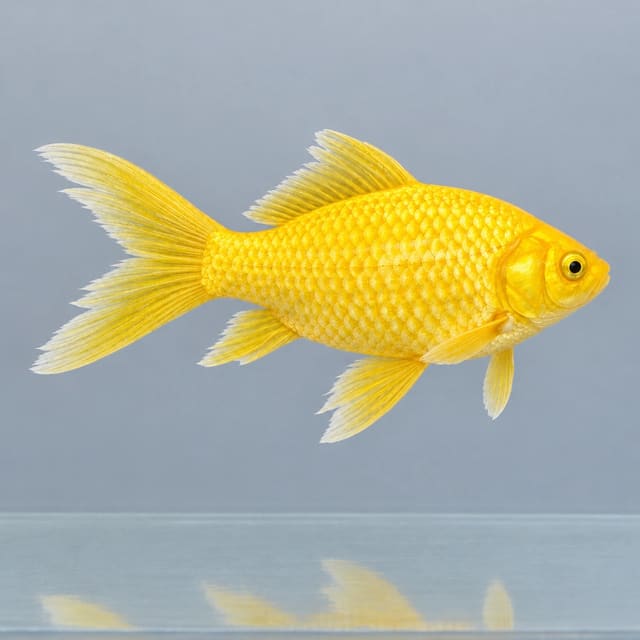
Comets come in many colours. Wikipedia's comet goldfish article, drawing on Johnson and Hess's Fancy Goldfish and Chris Andrews's guide, lists yellow, orange, red, white and red-and-white as common, and describes the comet as slightly smaller and slimmer than the common goldfish, from which it was developed in the United States in the 1880s. Practical Fishkeeping puts it simply: any goldfish with the forked comet tail is a comet, whatever its colour, and a good tail is well spread and does not droop or overlap.
| Fish | How it differs |
|---|---|
| White comet | All white, single long forked tail, slim body |
| Tancho single-tail | Silver-white body with a single red patch on the head (Wikipedia) |
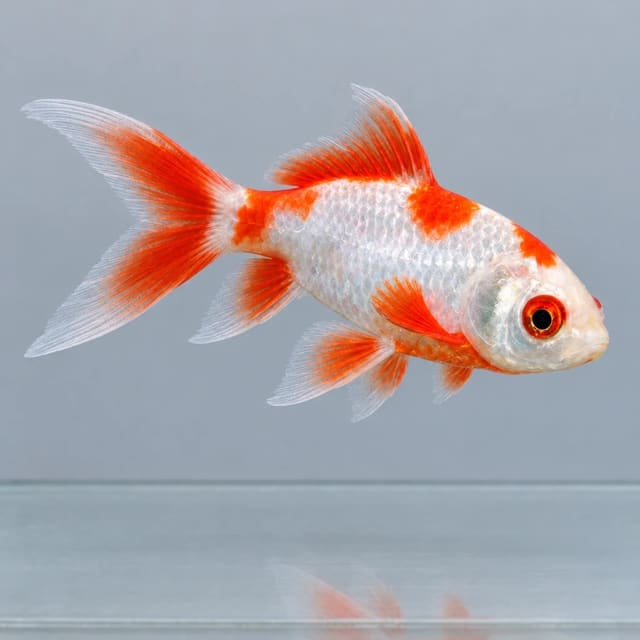
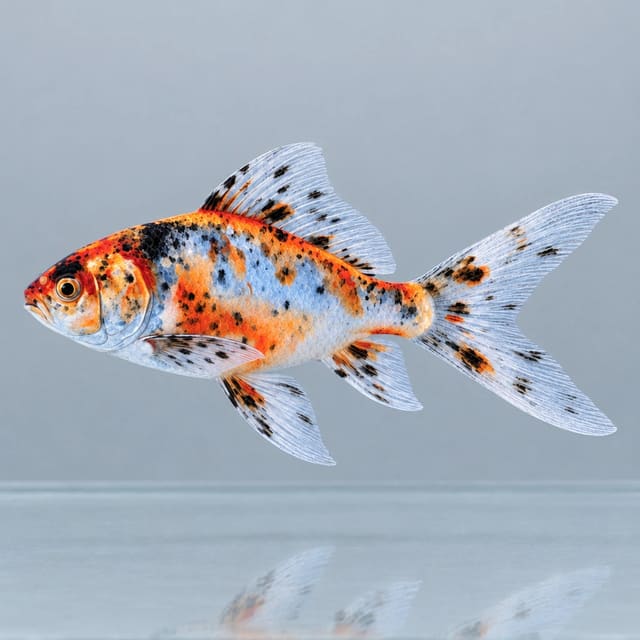
| Sarasa comet | The same comet shape with red-orange patches on white |
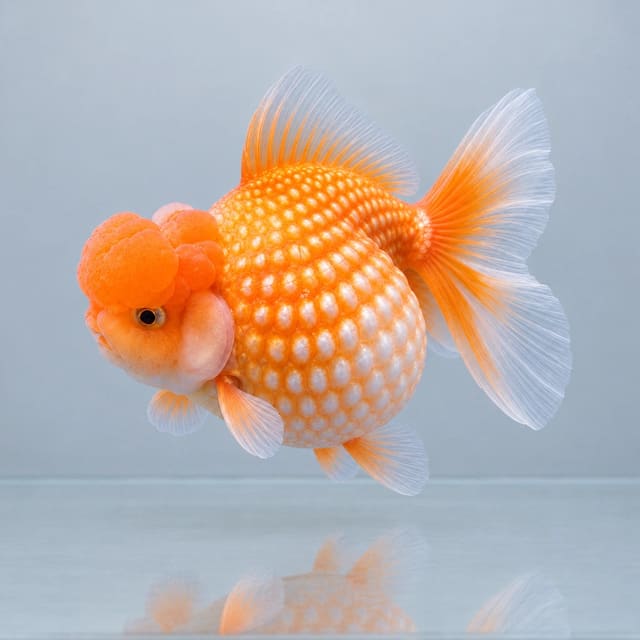
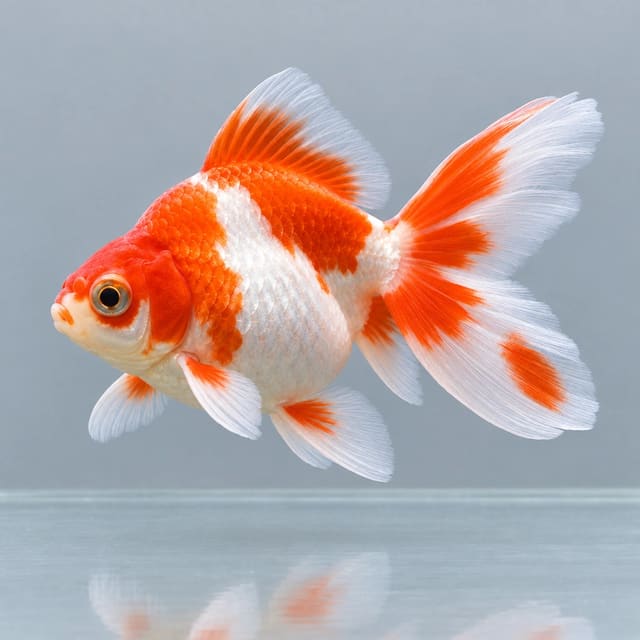
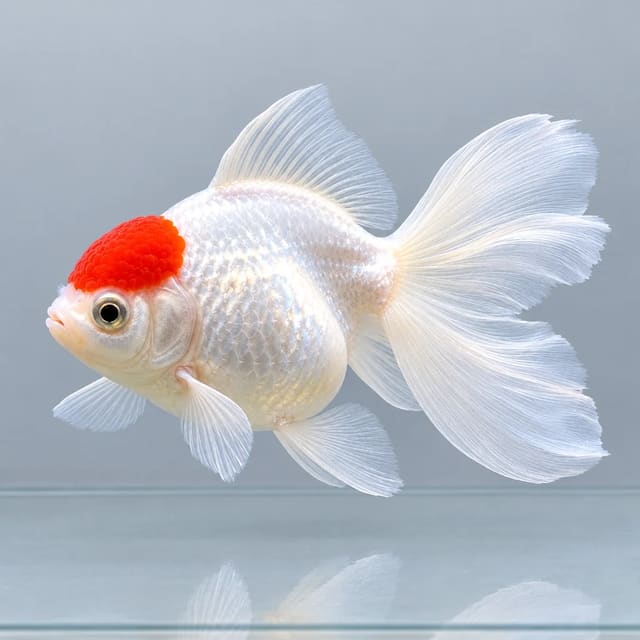
| White fancy goldfish | Twin tail and a rounder, slower body; best kept apart from comets |
For a contrasting partner, see our Bronzed Comet Goldfish, the same shape in metallic bronze, or compare the types in our comet goldfish guide. All our pond and fancy goldfish are listed under goldfish.
Each purchase supplies one live White Comet Goldfish at 2–3 in, about 5–8 cm, measured nose to tail. That is a young fish with most of its growing ahead of it. Sex is not chosen or guaranteed; the differences only show once fish mature, and are covered in the breeding section below. Individual fish vary a little in the strength of the sheen and the clarity of the fins, so the photographs show the colour form rather than the fish you will receive.
Check our delivery and Live Arrival Guarantee page for dispatch days before you order.
A 2–3 in comet grows into a large, long-lived fish. OATA gives up to 30 cm as the most common maximum body length of pond goldfish, Practical Fishkeeping says comets reach up to 35 cm and regularly 30 cm, and FishBase records 48 cm total length as the species maximum. OATA reports goldfish living up to 20 years in a healthy pond, while Wikipedia gives comets 5–14 years and longer in ideal conditions. Plan the pond for the adult, not for the fish in the bag.
The Maidenhead Aquatics pond guide suggests 25 cm of fish per 455 litres (100 imperial gallons), counted at adult size. Applied to adult comets of 30 cm, that gives:
| Pond volume | Adult fish length allowed | Adult comets at 30 cm |
|---|---|---|
| 1,000 litres | About 55 cm | 1 |
| 2,000 litres | About 110 cm | 3 |
| 3,000 litres | About 165 cm | 5 |
| 4,500 litres | About 245 cm | 8 |
Treat this as a starting point: the OATA garden pond guide says it is not possible to say exactly how many fish a pond can hold, because filtration, plants and feeding all play a part. Work out your litres with our tank volume calculator and add any other fish with our stocking calculator.
A pale fish is easy to see from above. That is the appeal of a white comet, but it also means herons, cats and other visitors will find it. OATA recommends netting a pond to stop wild birds or animals taking fish, especially in winter when there is little plant cover, and the OATA garden pond guide lists the practical options.
| Threat | Measure suggested by OATA |
|---|---|
| Herons | Netting with a 15–100 mm square mesh held 30 cm above the water, or a single strand of low-voltage fencing |
| Night visitors | Outdoor lighting around the pond |
| Otters | Multi-strand fencing; heavy-gauge mesh in winter |
| Bare winter water | Mesh over the pond while plants have died back |
| Losses already happening | Move survivors to a protected pond and restock only once predation has stopped |
Plants help too. The Maidenhead Aquatics pond guide aims for about 33–50% of the surface covered with vegetation, which gives a white fish somewhere to slip out of sight.
OATA recommends fish ponds at least 45–60 cm deep, and the garden pond guide asks for at least 60 cm in some parts, because depth keeps temperatures steadier in heat and frost. Choose a level spot with about four to six hours of sun and some shade, away from trees that drop leaves. Add shallow ledges for marginal plants and a mix of submerged and floating plants: OATA notes that live plants add oxygen, remove pollutants and provide food and shelter. Any pond with fish needs a filter, and a pump or fountain keeps the water moving and oxygenated.
Comets cope with a wide range, which is why they live outdoors in the UK, but each source draws the range a little differently.
| Reading | OATA pond fish | Other sources |
|---|---|---|
| Temperature | 4–24°C | Practical Fishkeeping: happiest at 10–20°C |
| pH | 6.5–8.5 | Practical Fishkeeping 7.5–8.5; Maidenhead Aquatics 7.0–8.0 |
| General hardness | 8–18 dGH | Maidenhead Aquatics: up to 25 dH |
| Carbonate hardness | 5–15 dKH | — |
| Ammonia and nitrite | 0 mg/l | — |
| Nitrate | No more than 20 mg/l above tap water | OATA garden pond guide: no more than 50 mg/l above tap |
pH and hardness describe the kind of water; a pH of 7.5–8.0 satisfies every source above. Ammonia, nitrite and nitrate measure waste, and those are the readings that make goldfish ill. Treat all tap water with a conditioner before it goes in, as OATA advises, and check your water company's postcode report. Our water matcher and water chemistry guide help you read the results, and test kits and conditioners are in our water care and treatment range.
OATA advises testing ammonia, nitrite, nitrate, pH and hardness every week, especially while a pond is new and after adding fish, and recording the results so changes stand out. A new pond should run with conditioned water and working equipment for at least 24 hours before fish go in, and a full fishless cycle takes several weeks; our nitrogen cycle article explains why.
| Test | Target | If it is off |
|---|---|---|
| Ammonia or nitrite | Zero | Feed less, check the filter flow, change some water |
| Nitrate | Within 20 mg/l of tap water | Partial water change; add plants |
| pH | Steady, about 7.5–8.0 | Look for the cause before correcting it |
| Filter flow | Strong from the outlet | Clean the media in pond water when flow drops |
Our aquarium filtration guide covers how biological filters work, and the same principles apply to a pond.
Goldfish are omnivores. FishBase records wild fish eating plankton, bottom-living invertebrates, plants and detritus, and Practical Fishkeeping says comets take a wide range of dried and frozen foods. OATA notes that different pellet sizes suit different sizes of fish, which matters for a 2–3 in comet: start with a small food and move up as it grows.
Browse our fish food range for other sizes.
In the warmer months, introduce the fish straight to the pond. OATA's method is to keep the bag out of bright light, float it for 10 minutes, add small amounts of pond water to the bag, then release the fish with as little bag water as possible. Our guide on how to acclimatise new fish shows each step. The OATA garden pond guide advises against adding fish in winter, when their immune system is inactive.
A small comet can also be grown on indoors first. The Maidenhead Aquatics database suggests starting small comets in a large aquarium and moving them to a pond as they grow, and OATA's aquarium sheet says non-fancy goldfish can be moved to an outdoor pond. Allow at least 100 litres for one goldfish and 50 litres more for each extra adult, with a filter and a 25% water change each week; move the fish out in spring once the pond and tank temperatures are close.
| Checkpoint | What to do |
|---|---|
| Before arrival | Test for zero ammonia and nitrite; fit the net |
| Arrival | Float for 10 minutes, mix in water, release gently |
| Next day | A pinch of small food; check it comes up to feed |
| Days 2–7 | Watch for clamped fins, flicking or hiding |
| End of week | Retest the water before adding more fish |
OATA advises against keeping comets with fancy goldfish, because comets swim faster and often outcompete them for food, and some boisterous fish nip the fins of fancies; Practical Fishkeeping says the same about twin-tailed goldfish. Most pond fish otherwise live together well, OATA says, although they may need slightly different conditions.
| Suits | Avoid |
|---|---|
| Other comets such as the Bronzed Comet Goldfish | Twin-tailed fancies such as the Red Oranda Goldfish |
| The Pearl Roach Rudd, which OATA says suits smaller ponds and groups | Tropical fish that need heated water |
| The Golden Orfe in a pond of 4,500 litres or more | Very large orfe or koi while the comet is still small |
| The Golden Tench, which keeps to the bottom | Crowding beyond the stocking table above |
Try a planned mix in our tank mates tool, or browse goldfish and coldwater fish and the cold water fish A–Z.
A white body shows changes clearly, which helps you catch problems early. OATA lists the signs of a healthy fish as clear, bright eyes, undamaged fins, intact scales with no ulcers or bumps, normal swimming and steady breathing, and warns about clamped fins, flicking and shimmying. Practical Fishkeeping advises against buying comets with visible blood in the fins.
| Sign | First action |
|---|---|
| Red streaks in the fins or body | Test ammonia, nitrite and nitrate; change some water |
| Black smudges after stress or treatment | Practical Fishkeeping describes this as temporary healing pigment that fades in days or weeks; still test the water |
| White spots, flicking or fluffy patches | Test the water and read our white spot guide |
| Hanging at the surface or gasping | Increase aeration and check for waste build-up |
Goldfish are the pond fish most likely to spawn. OATA says spawning can happen on its own when the temperature is right and males outnumber females, and suggests a shallow, heavily planted area because adults eat eggs and fry. The Maidenhead Aquatics database puts the start of spawning chases at 15°C and above, with eggs hatching in 48–72 hours. Practical Fishkeeping notes that mature males develop white tubercles on the gill covers and ridges on the pectoral fins, while females turn plump with eggs, and that comets cross freely with common goldfish and shubunkins, so mixed ponds produce mixed young.
In England and Wales, government guidance lists goldfish among the non-native fish you can keep without a licence. OATA states that releasing fish into the wild is illegal, and FishBase records goldfish as a potential pest where introduced. Rehome surplus fish through another pond keeper or a local aquatic shop.
It is an all-white colour form of the comet goldfish, Carassius auratus: a slim, single-tailed goldfish with a long, deeply forked tail. It is a hardy pond fish whose care is the same as any other comet.
Usually to about 30 cm. OATA gives up to 30 cm as the most common maximum for pond goldfish, Practical Fishkeeping says comets grow to 35 cm, and FishBase records 48 cm for the species.
A pale fish is easy to see from above, so protect the pond well. OATA suggests heron netting with a 15–100 mm square mesh held 30 cm above the water, or single-strand low-voltage fencing, plus plants for cover.
Yes. Comets are hardy pond goldfish. In a filtered pond at least 45–60 cm deep they rest near the bottom in winter; keep part of the surface free of ice and stop or reduce feeding in cold water.
Yes. The Maidenhead Aquatics database suggests starting small comets in a large aquarium and moving them to a pond as they grow, and OATA says non-fancy goldfish can be moved to an outdoor pond. Allow at least 100 litres for one goldfish.
Practical Fishkeeping explains that goldfish can gain temporary black pigment after stress or treatment, as an outward sign of healing, usually lasting days or weeks. Test the water to find out what caused the stress.
It is better not to. OATA and Practical Fishkeeping both advise keeping comets apart from twin-tailed fancy goldfish, which are slower and lose out at feeding time.
One live White Comet Goldfish at 2–3 in (about 5–8 cm). Sex is not chosen or guaranteed.
No reviews for this item yet. Bought one? Honest reviews only, good or bad.
What customers say about ordering from us
Easy website plenty of info on fish your buying great to pick a time slot
TRACEY DURRANT · 7 Oct 2026
Got some lovely fish thank you
Kevin Mackie · 7 Oct 2026
Reviews of our shop, collected by Judge.me, an independent third-party review collector. Newest first.
Moved by UK carriers licensed to handle live animals
Hand-packed with oxygen bags, poly box, heat pack
Email photos the same day; an optional unboxing video helps us review problems faster — claim terms apply
Klarna & PayPal Pay in 3 at checkout