Sold Out
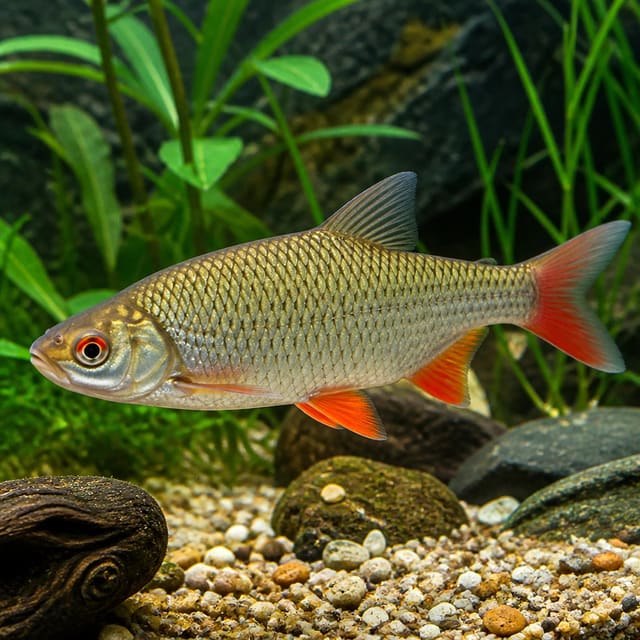
Pearl Roach Rudd (Scardinius erythrophthalmus)
£6.99
One Golden Tench per purchase. This unsexed coldwater tench needs a spacious, mature pond with stable water, room to forage and a long-term plan for adult growth.
Tinca tinca
Save when buying multiple fish. Each quantity is one fish; sex and pair formation are not guaranteed unless the selected variant explicitly states them.
One Golden Tench per purchase. This unsexed coldwater tench needs a spacious, mature pond with stable water, room to forage and a long-term plan for adult growth.
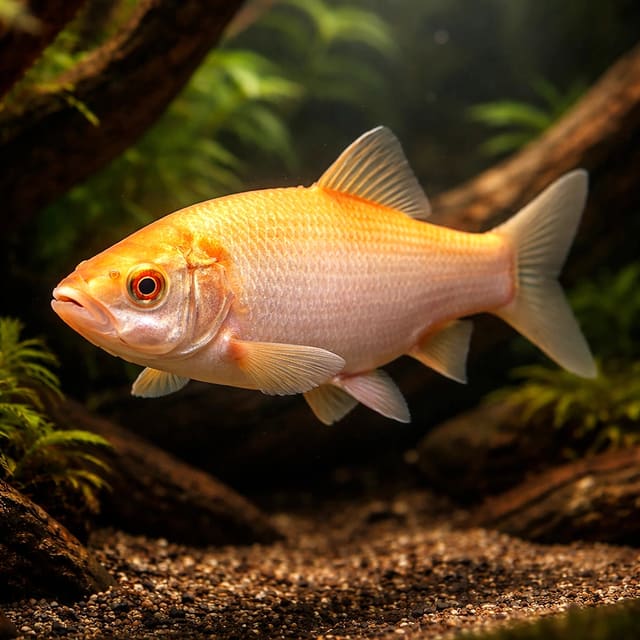
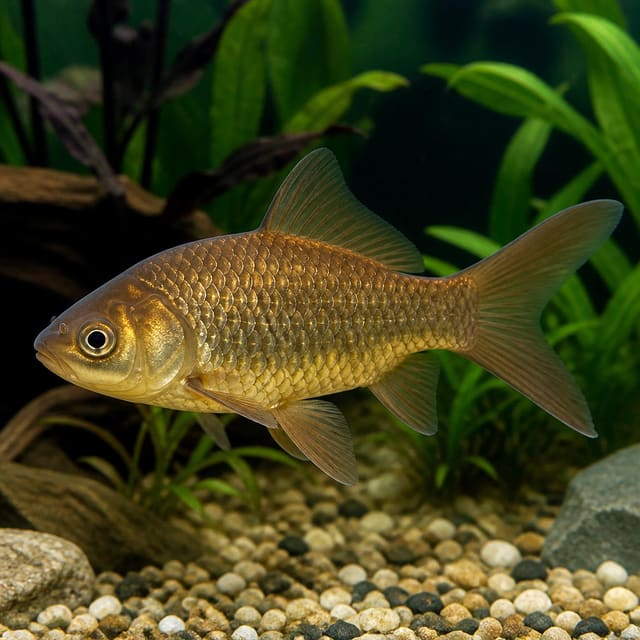
The Golden Tench (Tinca tinca) is the golden trade form of the tench: a substantial freshwater fish associated with quiet, vegetated water. One purchase supplies one live fish. The colour and size of an individual live fish can vary. Sex is guaranteed only when the selected option explicitly states male or female. This Golden Tench listing has no sex-guaranteed option. Choose it for a roomy, established coldwater pond or comparably suitable large system that can support an adult tench, rather than for a small indoor aquarium.
A tench is rewarding to watch for a different reason from a fast, surface-feeding display fish. Its natural history is tied to shallows, plants and food on or near the bottom. Give it open room as well as sheltered areas, and arrange feeding so you can see whether it is actually eating. Its golden colour is the feature of this retail form; the scientific name identifies the species and does not promise a particular shade or pattern on the fish you receive.
The most useful question before ordering is whether the finished pond can accommodate a large fish through all seasons. FishBase records a maximum for the species in standard length, and a much smaller common length in total length. Those two figures describe different observations and measurements; neither is a dispatch size or a prediction of what an individual will reach in your pond. Plan around generous adult space without treating an exceptional wild record as a routine growth target. If your pond only has spare room for a small juvenile, wait until the final accommodation is ready.
A good candidate is a keeper who already knows the pond's volume, depth, filtration, circulation and recent water results. A mature-looking pond can still have a filter problem or a low-oxygen episode, particularly after a change in feeding, stocking or weather. Tench will depend on the whole system, including the unseen biological filter, and not just on clear water. Set aside space for cover that does not turn every corner into a trap for debris or make it impossible to observe the fish.
The existing pond population also matters. A tench should have access to food without competing against fish that eat everything before a sinking portion reaches it. Its companions must be suitable for the same conditions and have enough room themselves. An agreeable reputation alone cannot make an overcrowded pond safe. The compatibility section below explains how to assess a shared pond without treating a named species as an automatic match.
Golden Tench is an ornamental retail name. Accepted taxonomy places Tinca tinca in the family Tincidae. The species occurs widely across Eurasia, including much of Europe, and FishBase describes shallow, densely vegetated lakes and backwaters among its habitats. These facts explain why cover and a foraging area are useful design cues; they do not supply a complete temperature, pH or pond-volume recipe. Wild environmental records are not a routine pond-care chart; assess the conditions of the pond you will actually use.
Before purchase, check the size and maturity of the whole setup, test the water, watch how the resident fish behave at feeding time and decide how the tench will be introduced. If you are converting a small indoor system into a pond later, prepare the pond first. Moving a fish on an assumed timetable, or assuming it can remain in temporary accommodation indefinitely, places the risk on the animal. A thoughtful pond plan makes this fish a much better long-term choice.
Think about the entire usable water volume and the shape of the pond, not just a single headline capacity. A long, open route for swimming, a bottom area where the fish can forage, planted shelter and accessible places to observe and feed all contribute something different. The pond must also support the other fish after they grow. Choose a genuinely spacious pond on the basis of the adults you intend to keep, the existing stock and the system's filtration; a generic litre minimum cannot describe every layout. A generic minimum for all fish would not answer this decision.
Depth and exposure need local judgement. Direct sun can warm shallow water rapidly; shade can moderate an exposed section, while an entirely dark or crowded planting scheme may make inspection difficult. Position equipment so water moves and exchanges gas, and retain quieter sheltered areas rather than making the whole pond a strong current. FishBase's description of vegetated backwaters is natural-history context, not an instruction to leave an ornamental pond stagnant. A pond still needs dependable water movement, oxygen and waste processing.
Make the bottom safe to use. Tench naturally take food from the substrate and FishBase records benthic animals, detritus and plant material in the diet of the species. Avoid sharp exposed edges where a foraging fish could scrape itself. Put planting and structure where they provide cover but do not create a dead zone full of decomposing food. A clear feeding area helps you see whether this comparatively quiet fish is getting its share. You can preserve both open space and vegetated cover; the fish does not need every inch to look like a wild lake bed.
Consider the full seasonal cycle before you buy. A pond must remain suitable during a warm spell, an autumn fall in water temperature, winter and spring restart. An average reading on a mild day does not show the extremes at the surface or the bottom. FishBase reports a broad wild environmental range for Tinca tinca, but that record is not a recommended captive target and cannot tell you whether a particular pond is safe at its edges. Measure your own conditions over time and get advice for your pond design and local climate where needed.
Fish waste and leftover food generate ammonia. A working biological filter converts ammonia through nitrite to less toxic nitrate, but it has to be established and kept functioning. The RSPCA describes a maintained filter as essential for an aquarium; the same waste-processing principle matters in a stocked pond. Do not assume that clear water proves a new system has matured. Test ammonia and nitrite before adding fish, after a filter interruption and after a meaningful increase in feeding or stock. OATA's broad freshwater guidance gives zero detectable ammonia and nitrite as the home-aquarium goal. Interpret the test using its stated units and instructions.
If a test suggests ammonia or nitrite, repeat it correctly, inspect the filter and the recent history of the pond, and act to protect the fish while you seek competent advice. A newly washed filter, power cut, decaying material or sudden stock increase can change the load on the biological system. Avoid making several chemical changes at once on the basis of one uncertain reading. Keep a simple log of the result, time, weather, fish behaviour, feeding and any work done to the filter; that record is often more useful than a single idealised number.
Water changes or top-ups must use water prepared appropriately for fish. Check the local water source and any treatment process rather than assuming that tap water from different places behaves alike. A top-up replaces evaporated water; it does not remove dissolved waste in the way a water change does. When you need to change water, match conditions sensibly and avoid a large abrupt shift. The amount and frequency depend on stocking, filtration, plants and measured trends. OATA's general aquarium guidance describes partial changes of up to a quarter weekly as a common maintenance example, but a pond's actual schedule must follow its own measurements and design.
pH, hardness, temperature and nitrate are worth monitoring, and should be assessed against the pond and its inhabitants, without borrowing a wild range as a husbandry target. Measure the pond and source water consistently. Look for stability and compare any change with weather, replenishment, plant growth and the fish's behaviour. Do not dose toward a borrowed pH value while ignoring the reason it moved. Our Aquarium Water Parameters: What to Test and Why guide explains the tests and their limits; it is background for interpreting measurements, not a pond-specific tench prescription.
Warm water holds less oxygen than cool water under otherwise similar conditions, and fish, plants and the filter all influence demand. Inspect pumps and water movement, especially after a power failure or blockage. Watch the fish as well as the equipment: unusual surface breathing, unusual stillness, loss of appetite or sudden hiding deserves a prompt water and equipment check. Bubbles alone do not prove that dissolved oxygen is adequate throughout the pond. If several fish show distress at once, treat the situation as an urgent system problem and seek experienced aquatic help.
Keep the filter operating as designed, but do not sterilise all biological media during routine cleaning. Remove blocked debris in a way that preserves useful bacteria and follow the equipment's instructions. A pond can look tidy while sludge accumulates in planting pockets or under a feature. A routine of observation, testing and small planned maintenance is steadier than waiting for a visible crisis and then making a large intervention. It also gives you a better baseline for judging a new fish's behaviour.
FishBase describes Tinca tinca taking benthic animals, detritus and plant material. In a managed pond, use an appropriate complete coldwater or pond food as the feeding foundation, with variety only where it is suitable for the fish and the water conditions. A sinking portion can reach a bottom-feeding tench, but only if it does not vanish into inaccessible planting or remain to rot. Observe the feeding site. If the tench is not taking food, first check whether a faster fish is intercepting it or whether the tench is stressed; adding more food can worsen water quality without solving either problem.
Offer modest portions and remove what remains uneaten. Appetite can change with temperature and after transport, so feed in response to observed fish and pond conditions rather than maintaining an unchanging daily quantity. Sudden overfeeding may create a waste spike even in an established pond. If using supplementary foods, check that they are appropriate for freshwater pond fish, handled safely and offered in a quantity the system can process. A varied diet means nutritional variety, not a requirement to scatter many foods and hope the fish find them.
Inspect body condition over time. A fish that appears to feed at the surface of a mixed pond may still be missing its share at the bottom; the reverse is also possible. Watch from a place where you can see the feeding area and avoid interpreting a single shy first day as a permanent feeding problem. A persistent change in condition, faeces, breathing or response to food calls for a water check and qualified advice rather than an automatic medication choice. Good feeding practice is inseparable from clean water and appropriate space.
Have the pond ready before the fish arrives. Check the current water, confirm that filtration and circulation are working, and plan a calm release area away from a feeding scrum. If quarantine is available, it should be a genuinely suitable, filtered and monitored system; an unfiltered small container is not a welfare improvement. Keep transport time short after receipt and protect the bag from temperature extremes and direct bright light. Do not leave a live animal unattended in its parcel.
Introduce the fish gradually according to the conditions in the transport bag and pond, keeping sudden temperature and chemistry changes to a minimum. The store's current Delivery & Live Arrival Guarantee page gives the current arrival and claim process. Its guidance is a starting point, not permission to pour transport water into the pond or to ignore a marked difference between bag and pond water. Keep the pond quiet after introduction and observe breathing, swimming and access to shelter before offering a large meal.
Make a note of the arrival time and first observations. It can take a quiet, cover-seeking fish time to settle and become easy to see, particularly in a planted pond. You should still be able to check for normal movement and welfare. If you cannot find the fish, look carefully around safe hiding places and any overflow or access points without dismantling the entire pond at once. A small change in behaviour may be a response to introduction; persistent distress or several affected fish suggests the water and equipment need immediate attention.
A few consistent observations beat an occasional long inspection. Look at the fish's movement, breathing and body condition during feeding, check the pond temperature in unusual weather, and test key water measures on a schedule appropriate to the system. Clean mechanical obstructions before they compromise flow, and remove excessive decomposing material. Record unusual readings so you can see a trend. OATA recommends regular testing and careful additions of fish because the biological filter must adapt when the load increases; this applies directly to the decision to add one more tench to an existing pond.
Plan what you would do during a power cut, pump failure or heatwave. Know how to restore circulation safely, how to test water and whom to contact for fish-health advice. Ensure netting or edging used for protection cannot entangle the fish. Check access to the pond for children and wildlife as part of ordinary site safety. These are not special treatments for Golden Tench: they are the practical responsibilities of keeping any substantial live fish in an outdoor system for years.
Stand at the pond and identify the unobstructed water, the sheltered water and the feeding area. A pond can have an impressive nominal capacity yet give a bottom-foraging fish little usable room if it is packed with containers, rockwork and other large residents. Ask whether a tench can move out of a dominant fish's way without being confined to one small corner. Check the bottom for sharp material and the planted areas for accumulated waste. If these observations reveal a problem, correct the layout and allow the system to settle before adding livestock.
Work through the existing stock rather than judging the new fish alone. Count adults, not only the small fish in front of you today. Consider where each resident feeds, how quickly it feeds and whether the pond remains stable after feeding. If the filter is already near its practical limit, another fish adds waste even if its initial body size looks modest. A stable record of water tests and routine maintenance gives you better evidence than a photograph of clear water. OATA's general guidance specifically warns that adding fish faster than filter bacteria can adapt risks a new-tank problem.
Keep a thermometer and suitable water tests in working order, with dates and units recorded. A reading is useful when it can be compared with the same method later. An unexplained shift in pH, a detectable ammonia or nitrite result, or a change in how several fish breathe requires attention even when no disease is visible. Do not turn FishBase's broad wild temperature record into a thermostat setting: wild occurrence and recommended captive care answer different questions. For a pond that repeatedly reaches extremes, seek advice based on its location, depth, cover and stock before placing the fish there.
Choose an introduction point where you can see the tench without stripping away all its shelter. Note how it moves and breathes after release, then return at a quiet time to check the feeding area. A shy fish may be less visible initially, but you still need a plan for confirming that it is present, uninjured and receiving food. Keep feeding restrained while you assess the added biological load. If its behaviour changes sharply, start with water and equipment checks and ask an experienced aquatic professional for help where the cause is not clear.
Finally, think beyond the exciting first week. Who can check the pond when you are away, and will that person recognise a blocked pump or distressed fish? Is there a safe way to handle an emergency without making a sudden large chemical change? These ordinary preparations improve the fish's prospects more than a vague promise that a species is hardy. They also help you decide honestly whether this is the right time to add a Golden Tench.
Begin with the actual pond, not a list of supposedly compatible names. Every inhabitant needs enough adult space, safe water, oxygen, food and a way to avoid constant competition. Tench are associated with the bottom and plant cover, so think about what happens there after another species is added. A fish that is peaceful in one generously sized pond can still struggle in an overcrowded one. No species pairing in the evidence for this offer amounts to a universal compatibility guarantee.
FishBase's natural-history record helps identify one pressure point: tench take food near the bottom. Watch the resident fish at feeding time. If they consume all food at the surface before a sinking portion arrives, a tench may need a separate feeding place or a different stocking plan. If a resident fish persistently chases newcomers into cover, the fact that both are sold as coldwater fish is not enough to make them suitable. Similar temperature tolerance alone does not settle questions of size, behaviour or food access.
A mixed pond needs room for each fish at adult size. Before buying, write down the number of residents, their expected growth and whether the filter has handled recent feeding and weather. Consider whether fry or very small animals could be disturbed during bottom foraging, and whether plants provide genuine refuge rather than a cramped corner. A densely stocked pond may offer no realistic way to introduce another substantial fish without worsening conditions for all of them.
Observe the tench after introduction. Hiding initially is understandable, but long-term exclusion from food, damaged fins or persistent frantic movement is a reason to reassess the arrangement. Equally, do not assume a calm-looking fish is feeding well: watch it take food. Changes to the pond layout or feeding pattern can sometimes resolve competition, yet they cannot create missing water volume. If the shared requirements cannot be met, keep the tench in a separate suitable system or choose a different stocking plan.
We do not name goldfish, koi or another coldwater species here as an automatic tank mate. Assess any proposed companions against the whole pond and get experienced advice where their adult sizes, feeding speeds or water needs differ. The best compatibility rule is simple: only combine animals when the same established system can meet each one's needs throughout adulthood.
Tench can become substantial fish. A recorded wild maximum is not a prediction for an individual pond fish, so plan a spacious adult home from the start and reassess the space available to every resident as they grow.
No. This coldwater tench needs a large, established environment with adult swimming and foraging room, filtration and stable water. A small aquarium or bowl is not suitable long-term accommodation.
Choose the number your mature pond can support at adult size, and judge any combination by space, water quality and observed behaviour rather than buying a fixed group.
It can suit a keeper prepared for a substantial coldwater fish, but the pond must already be mature and spacious. Check filtration, measured water, winter and warm-weather plans, and the adult needs of resident fish before ordering.
Tench take food near the bottom; wild diet records include benthic animals and plant material. In a pond, use suitable complete food, ensure a sinking portion reaches this fish and remove leftovers before they spoil the water.
Measure your pond through the seasons and seek advice for the actual system. FishBase's wild environmental range is not a routine pond-care target.
This fish is chosen for a calm pond arrangement, but behaviour must be observed in the actual group. Give it space and feeding access, and investigate persistent chasing, damage or exclusion instead of relying on a general temperament label.
Only fish whose adult size, water needs and feeding behaviour fit the same spacious pond should be considered. No named species is an automatic match; watch interactions and ensure the tench can reach food near the bottom.
Tropical Fish Co packs live fish for delivery under its current delivery and Live Arrival Guarantee policy. Arrange to receive the parcel, inspect it on arrival and follow that policy's acclimatisation and claim instructions if there is a problem.
Accepted name and family: Eschmeyer's Catalog of Fishes, Tinca tinca. Species size measurements, distribution and natural history: FishBase, Tinca tinca. General freshwater setup, filtration, acclimatisation and maintenance: Ornamental Aquatic Trade Association freshwater advice and the RSPCA's fish-environment guidance. These sources have different scopes: wild measurements and habitats are context, while the general welfare sheets help with husbandry principles. Neither supplies a verified exact pond-volume, temperature or pH target for the fish offered here.
For a separately kept indoor tropical aquarium, our How to Set Up a Tropical Fish Tank: 10 Safe Steps and Water Parameter Matcher are resources for that tropical context; they do not provide Golden Tench pond targets.
Read the underlying Catalog of Fishes tench entry, FishBase tench summary, OATA freshwater guidance and RSPCA fish environment advice for their distinct scopes.
No reviews for this item yet. Bought one? Honest reviews only, good or bad.
What customers say about ordering from us
Easy website plenty of info on fish your buying great to pick a time slot
TRACEY DURRANT · 7 Oct 2026
Got some lovely fish thank you
Kevin Mackie · 7 Oct 2026
Reviews of our shop, collected by Judge.me, an independent third-party review collector. Newest first.