Easy
Red Cap Fantail Goldfish (Carassius auratus)
4–25°C · pH 6.5–8.5 · 100L
£10.39
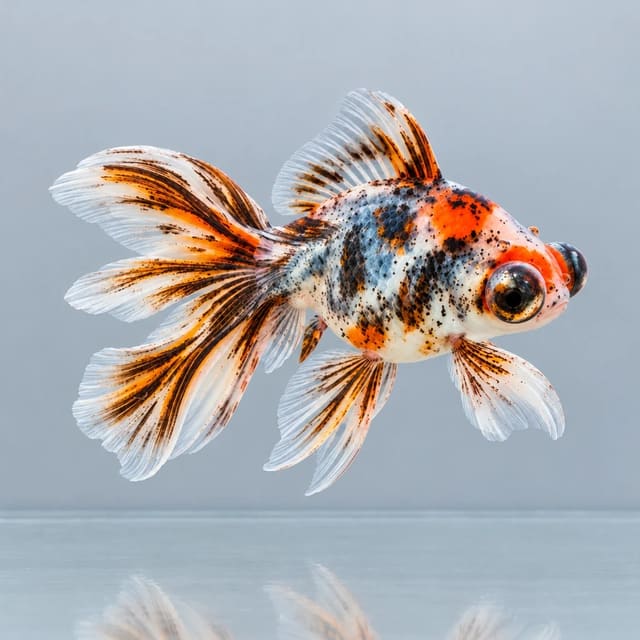
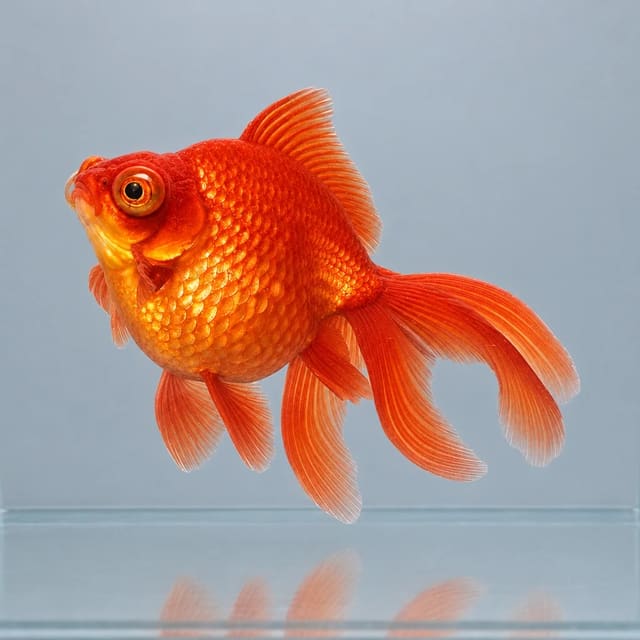
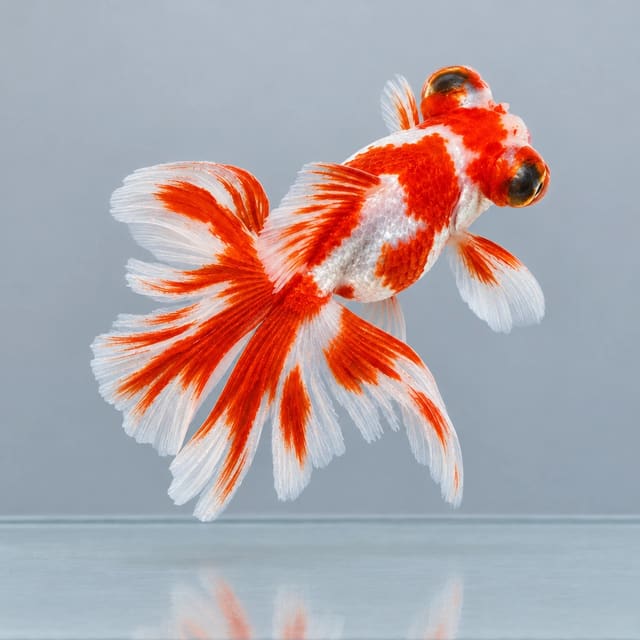
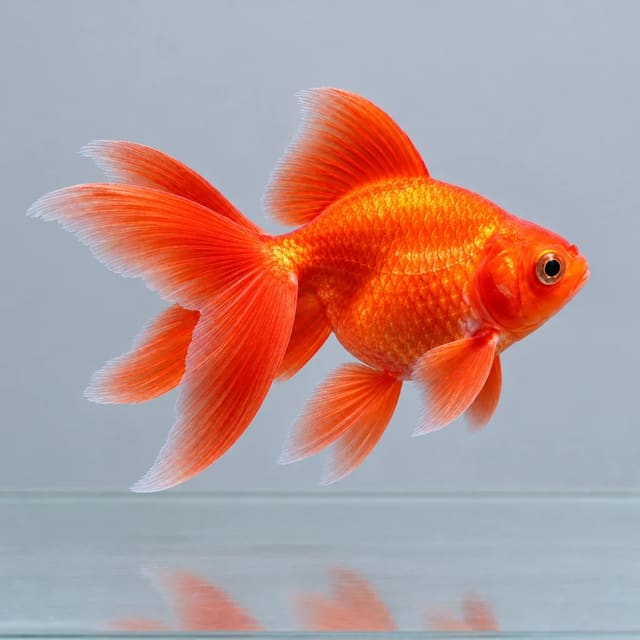
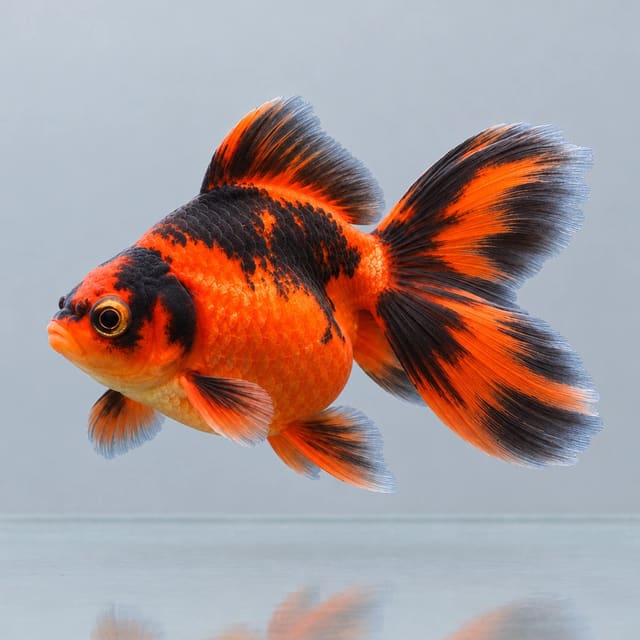
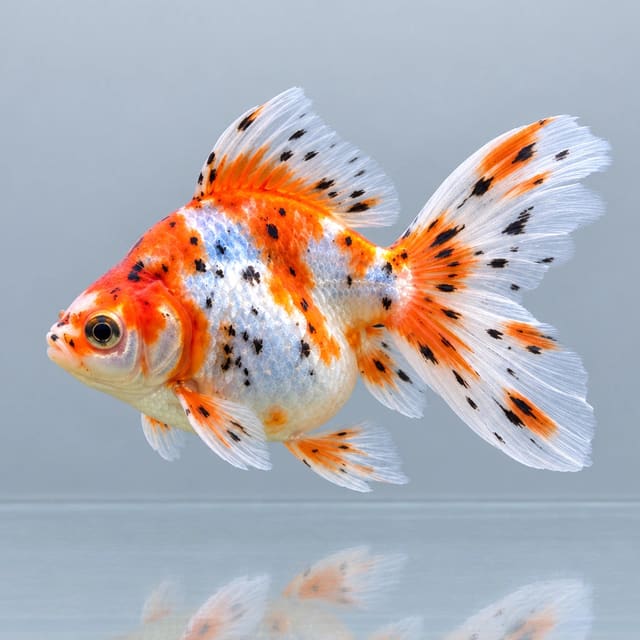
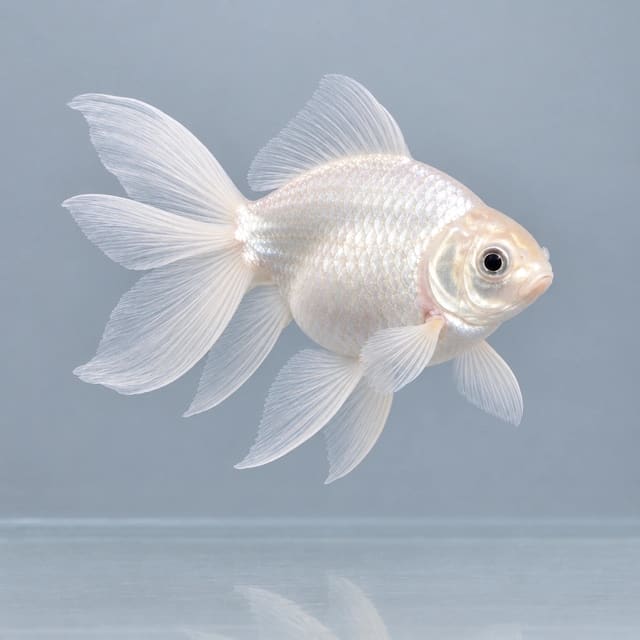
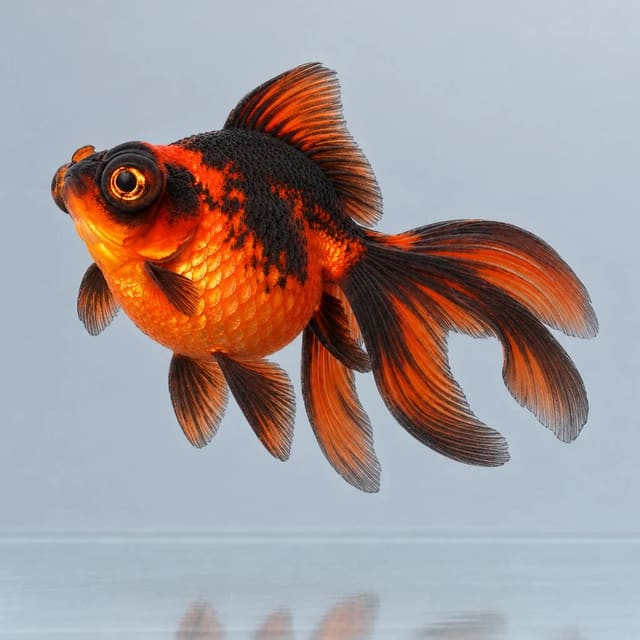
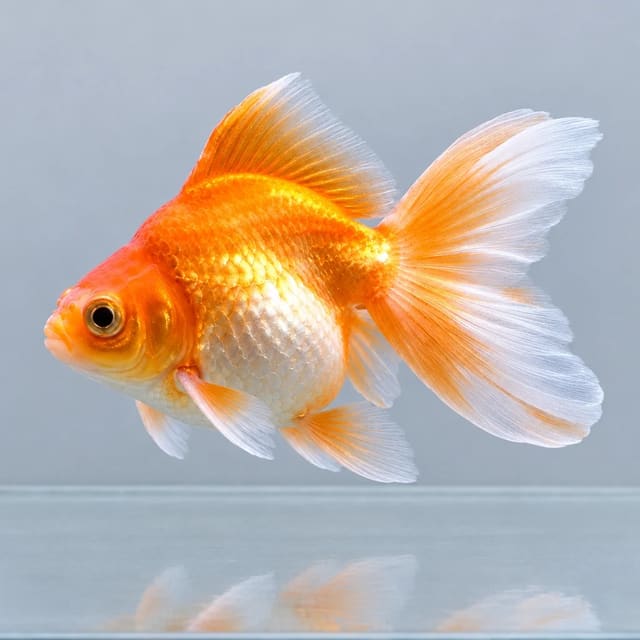
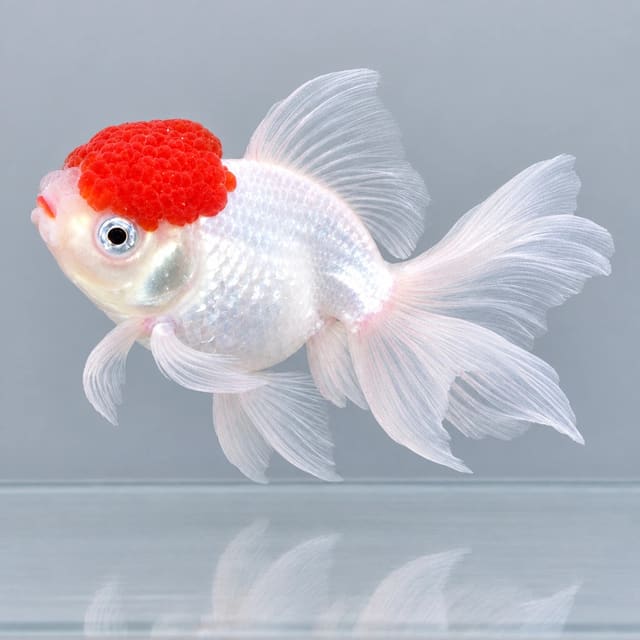
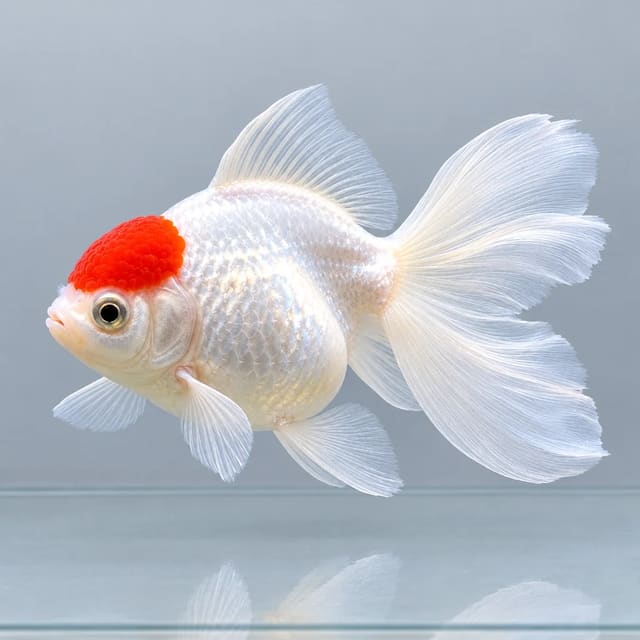
The Red and White Fantail Goldfish is a fancy goldfish (Carassius auratus) with an egg-shaped body, a tall dorsal fin and a flowing double tail, patched in red-orange and white in a pattern unique to each fish. It grows to about 20 cm and needs an indoor coldwater aquarium of 100 litres for the first adult and 50 litres for each one after. Sold individually in three sizes.
Adult size is the maximum length this species reaches at full maturity (scientific sources). The livestock you receive will be younger and smaller — pick a size above for the actual shipping size. Product-photo provenance and any image-specific limitations are stated on the listing.
Carassius auratus
Quantity discounts are pricing offers, not a group-size recommendation. Check the full care guidance and your existing animals before choosing a quantity.
The Red and White Fantail Goldfish is a fancy goldfish (Carassius auratus) with an egg-shaped body, a tall dorsal fin and a flowing double tail, patched in red-orange and white in a pattern unique to each fish. It grows to about 20 cm and needs an indoor coldwater aquarium of 100 litres for the first adult and 50 litres for each one after. Sold individually in three sizes.
Adult size is the maximum length this species reaches at full maturity (scientific sources). The livestock you receive will be younger and smaller — pick a size above for the actual shipping size. Product-photo provenance and any image-specific limitations are stated on the listing.
Read the full care guidance when planning conditions for your aquarium.
The Red and White Fantail Goldfish combines one of the classic fancy goldfish shapes with one of the most popular colour schemes: bold patches of red-orange on a clean white base, often with a red cap on the head and red splashes in the long, flowing double tail. It is a fancy goldfish, the same species as the common goldfish, Carassius auratus, shaped by generations of selective breeding. OATA describes fancy goldfish as more delicate than common goldfish and best kept in indoor aquariums, but among the fancy varieties the fantail is one of the most forgiving and a good first choice.
FishBase gives the wild goldfish's native range as East Asia, in China and Japan, and notes that cultured goldfish come in scarlet, red-pink, silver, brown, white, black and mixtures of these. Red and white is one of those combinations, and no two fish carry the same pattern.
These points come from Wikipedia's account of the fantail, which draws on Chris Andrews' Interpet guide and Johnson and Hess's book on fancy goldfish, and notes that good-quality fantails come from rigorous selection of the young fish. Compare it with other varieties in our goldfish and coldwater fish shop, the fancy goldfish category and the wider coldwater fish range, and see our coldwater fish buying guide for an overview.
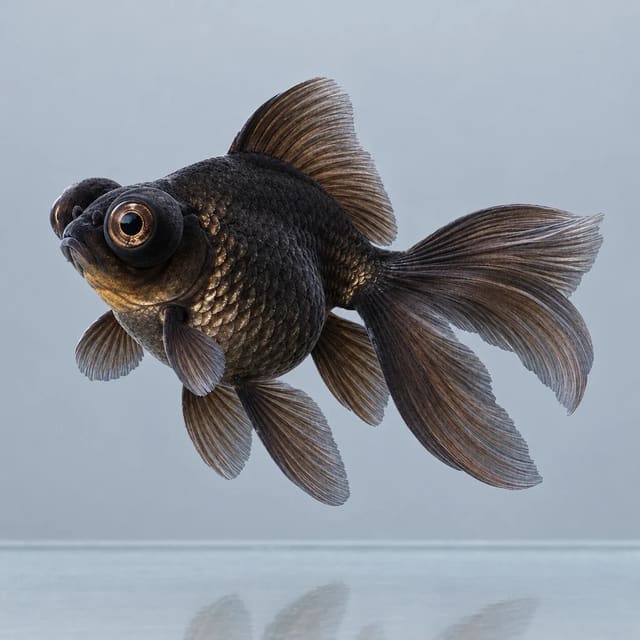
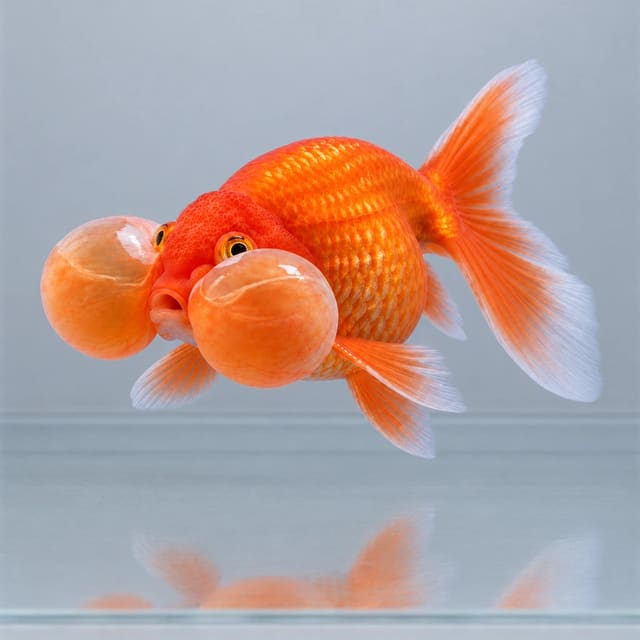
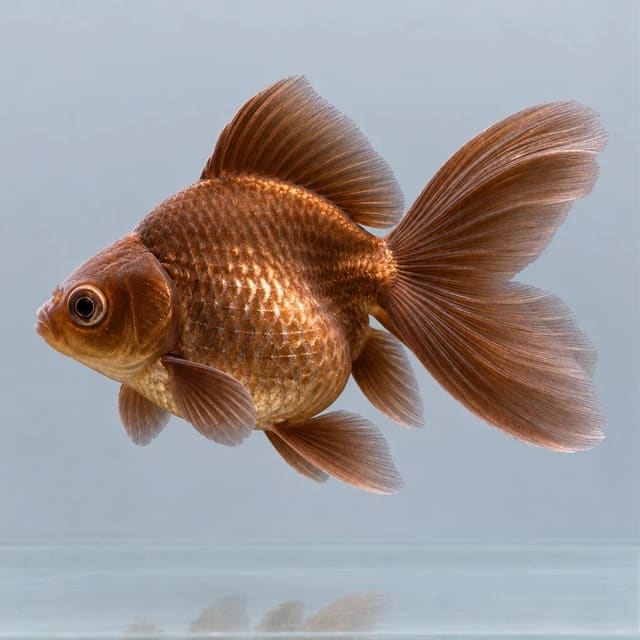
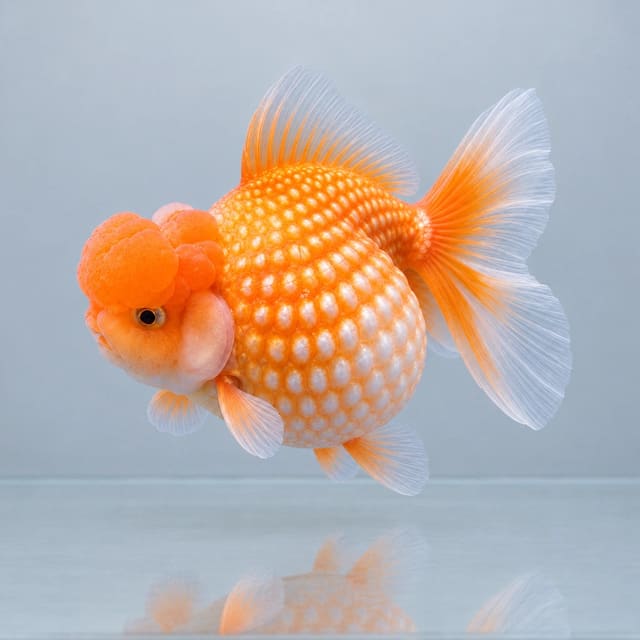
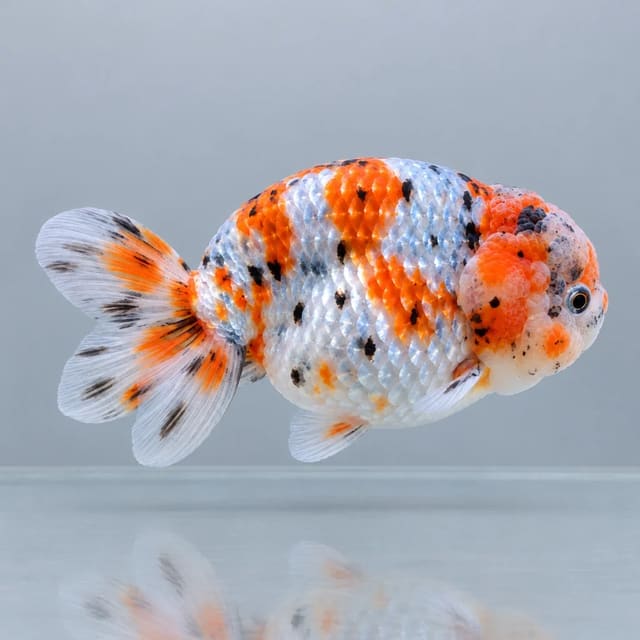
Every purchase is one live fish in the size you choose, measured as body length at dispatch. The pattern on your fish will be its own, so the photographs show the variety rather than the individual. Sex is not selected: goldfish only show their sex in the spring and summer breeding season.
| Size option | Best for |
|---|---|
| 3–4 cm | Starting a group economically and watching the fish grow |
| 5–6 cm | A good balance of price and a clearer view of shape and pattern |
| 8–10 cm | An instant display fish for an aquarium already sized for adults |
Read our delivery information and Live Arrival Guarantee before you order, and have the aquarium filtered and matured in advance.
OATA states that fancy goldfish are unlikely to grow larger than 20 cm, and recommends an aquarium of at least 100 litres for one adult goldfish, plus 50 litres for every additional adult. Small fish grow, so either buy the aquarium for the adults now or plan to upgrade.
| Group | Minimum aquarium (OATA rule) |
|---|---|
| 1 adult | 100 litres |
| 2 adults | 150 litres |
| 3 adults | 200 litres |
| 4 adults | 250 litres |
| 5 adults | 300 litres |
FishBase's general advice for goldfish is a group of five or more in an aquarium at least 100 cm long. OATA, writing specifically about fancy goldfish, says they can live alone or with others. A small group of fancy goldfish is the usual choice, and a long aquarium gives slow swimmers room to turn.
A fantail belongs in an indoor aquarium. OATA advises keeping fancy goldfish indoors only, and Wikipedia notes that fantails, though hardy, can be sensitive to long spells of cold water. A heater is not needed unless the room is very cold, OATA says, but sudden temperature swings stress goldfish and can lead to disease, so avoid draughty spots, radiators, conservatories and sunny windowsills.
| Reading | OATA guideline |
|---|---|
| Temperature | 4–25°C, best at 15–23°C |
| pH | 6.5–8.5 |
| General hardness | 8–18 dGH (medium-hard) |
| Carbonate hardness | 5–15 dKH |
| Ammonia | 0 mg/l |
| Nitrite | 0 mg/l |
| Nitrate | No more than 20 mg/l above your tap water |
The first four rows describe the water a fancy goldfish lives in; the last three are waste readings that should always be zero or close to your tap water. OATA notes that goldfish can adapt to a wider range over time, so aim for steady values rather than chasing exact figures. Wikipedia quotes about 23°C as ideal for fantails, the warm end of OATA's 15–23°C optimum. Enter your tap water readings in our water matcher and read our water chemistry guide to understand each number.
Long fins and a rounded body make a fantail a gentle, deliberate swimmer. OATA advises a gentle current for the fancy breeds, with the filter outflow spread out by a spray bar if possible, and a floor of aquarium gravel or sand. Goldfish readily eat soft live plants, so choose tough plants or good artificial ones, and leave a wide open area in the middle of the aquarium.
OATA also recommends overhead lighting for a regular day and night, and a quiet spot away from loud noise and vibration.
Goldfish are heavy eaters and produce plenty of waste, and OATA's goldfish sheet calls them very dirty fish that quickly raise ammonia and nitrite. Choose a filter rated above your aquarium's volume but with a gentle outflow, and read our article on understanding aquarium filtration to choose and maintain it.
OATA recommends a good-quality goldfish flake, granule or pellet, because goldfish need more carbohydrate than many fish, supplemented with live or frozen foods and vegetables such as daphnia, bloodworm, brine shrimp, blanched lettuce and shelled peas. Its pond fish sheet adds that colour-enhancing foods can bring out a goldfish's colour, which suits a red-and-white fish well.
| Food | Role | Example |
|---|---|---|
| Staple pellet or stick | Daily nutrition | Tropical Goldfish Pellet or Super Goldfish Mini Sticks |
| Colour food | Brings out the red | Tropical Goldfish Color food |
| Frozen foods | Variety and protein | Koi and Goldfish Special frozen food, frozen daphnia |
| Greens | Fibre | Thawed, shelled peas or blanched lettuce |
Feed once a day, only what the fish eat within a few minutes, as OATA advises; goldfish always behave as if they are starving, and leftovers quickly foul the water. OATA also notes that some fancy goldfish gulp air when feeding at the surface and lose their balance for a while afterwards, and that a slow-sinking food usually prevents it. If a fish stays tilted or upside down, test the water and use our swimming-sideways guide.
Only add fish once the filter is mature and ammonia and nitrite read zero; our article on the nitrogen cycle explained shows how to get there. Increase numbers gradually, OATA advises, because the filter bacteria need time to catch up with each extra fish; adding too many at once leads to "new tank syndrome".
Acclimatise each fish with OATA's floating-bag method: lights off, float the sealed bag for 10 minutes, add small amounts of aquarium water over up to 20 minutes, then release the fish with as little bag water as possible. Our guide on how to acclimatise new fish shows each step.
| When | Check |
|---|---|
| Day 0 | Water tested, room temperature steady, lights off for acclimatisation |
| Day 1 | A small first meal of slow-sinking food |
| Days 2–6 | Balance, fin carriage, breathing and appetite |
| Day 7 | Retest the water and make the first weekly change |
OATA lists what a healthy goldfish looks like: clear, bright eyes, undamaged fins, intact scales, no ulcers or lumps, normal swimming and steady breathing. Its warning signs include clamped fins, flicking against gravel or décor, shimmying on the spot, hanging at the surface or lying on the bottom, colour much paler or darker than usual, and loss of appetite.
| Warning sign | First action |
|---|---|
| Gasping or hanging at the surface | Test ammonia and nitrite and change water straight away |
| Tilting after meals | Change to a slow-sinking food |
| White spots | Follow our white spot guide |
| Split or reddened fins | Test the water and see our fin rot treatment guide |
| Flicking or clamped fins | Test the water, then watch closely for other signs |
OATA advises keeping fancy goldfish apart from common goldfish, which swim faster, out-compete them for food and are sometimes reported nipping their fins. The best tank mates are other fancy goldfish that swim at the same unhurried pace.
| Suits | Avoid |
|---|---|
| Other fantails of any colour | Common goldfish, comets and shubunkins |
| Ryukins, orandas and broadtails of similar size | Tropical fish that need a heater |
| Moors, with smooth décor | Fin-nippers |
| Fish added a few at a time | Overstocking beyond the 50-litre-per-adult rule |
Fancy goldfish in our range that share its needs include the White Fantail Goldfish, Chocolate Fantail Goldfish, Red and White Ryukin Goldfish, Red Oranda Goldfish, Blue Oranda Goldfish, Red Broadtail Fancy Goldfish, Black Moor Goldfish and the Mixed Long-Fin Goldfish. Check any mix with our tank mates tool.
OATA notes that fancy goldfish breed successfully in large home aquariums. In spring and summer, males show white breeding tubercles on the gill covers and the front fins, and females look fuller. Spawning is more likely with two males for each female and a slow rise in temperature to about 20°C, and it often follows a partial water change.
OATA reports that fancy goldfish often live six to eight years, and occasionally 20 or more, so a fantail is a long-term pet. FishBase lists the goldfish as a potential pest when released, with harmful effects reported where it has been introduced. Never release goldfish into the wild; if you cannot keep a fish, rehome it through a retailer, a club or another keeper.
It is a fantail, a fancy form of the goldfish Carassius auratus, with an egg-shaped body, a tall dorsal fin and a double tail divided into two matching halves, coloured in patches of red-orange and white. Every fish has its own pattern.
They are close relatives and the same species. Wikipedia, drawing on Chris Andrews' guide to fancy goldfish, describes the fantail as similar to the ryukin but without its shoulder hump and with less developed fins.
OATA says fancy goldfish are unlikely to grow larger than 20 cm, so plan the aquarium for fish of about that size.
Use OATA's rule: 100 litres for the first adult goldfish and 50 litres for each one after that. A 200-litre aquarium suits three adults, a 250-litre aquarium four.
It is better not to. OATA advises keeping fancy goldfish in indoor aquariums only, and fantails can be sensitive to long spells of cold water. Single-tailed goldfish are the right choice for a pond.
A good goldfish flake, granule or slow-sinking pellet once a day, only what is eaten in a few minutes, with daphnia, bloodworm, brine shrimp, shelled peas or blanched lettuce as extras. A colour food can help bring out the red.
OATA explains that some fancy goldfish swallow air when feeding at the surface and briefly lose buoyancy. Switching to a slow-sinking food usually solves it; if the fish stays tilted, test the water and check our swimming-sideways guide.
One live goldfish in the size you choose: 3–4 cm, 5–6 cm or 8–10 cm. It is not sexed, and its pattern will differ from the photographs.
No reviews for this item yet. Bought one? Honest reviews only, good or bad.
What customers say about ordering from us
Easy website plenty of info on fish your buying great to pick a time slot
TRACEY DURRANT · 7 Oct 2026
Got some lovely fish thank you
Kevin Mackie · 7 Oct 2026
Reviews of our shop, collected by Judge.me, an independent third-party review collector. Newest first.
Moved by UK carriers licensed to handle live animals
Hand-packed with oxygen bags, poly box, heat pack
Email photos the same day; an optional unboxing video helps us review problems faster — claim terms apply
Klarna & PayPal Pay in 3 at checkout