Easy
Fantail Goldfish, Assorted Colours (Carassius auratus)
4–25°C · pH 6.5–8.5 · 100L
£6.79
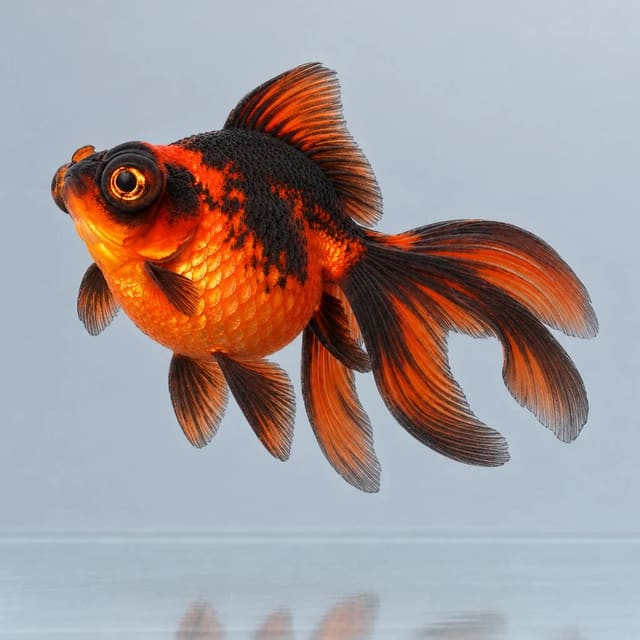
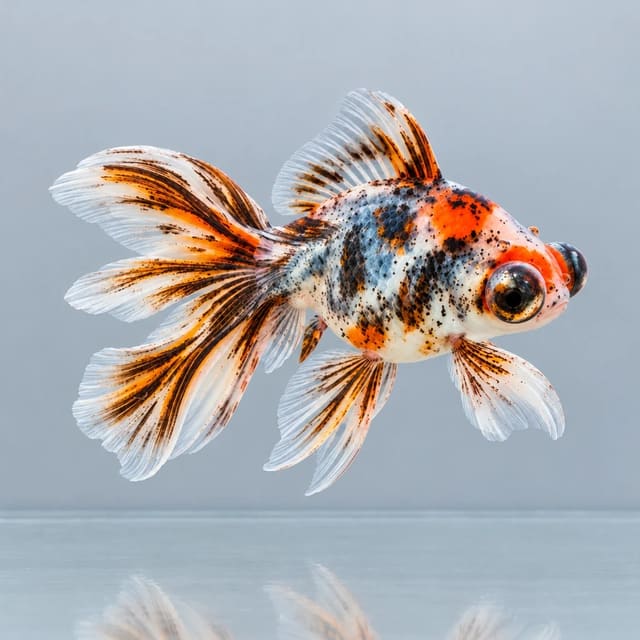
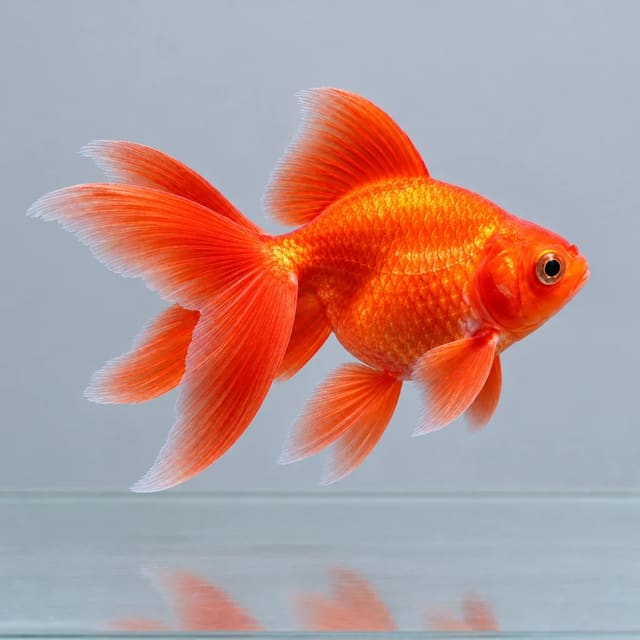
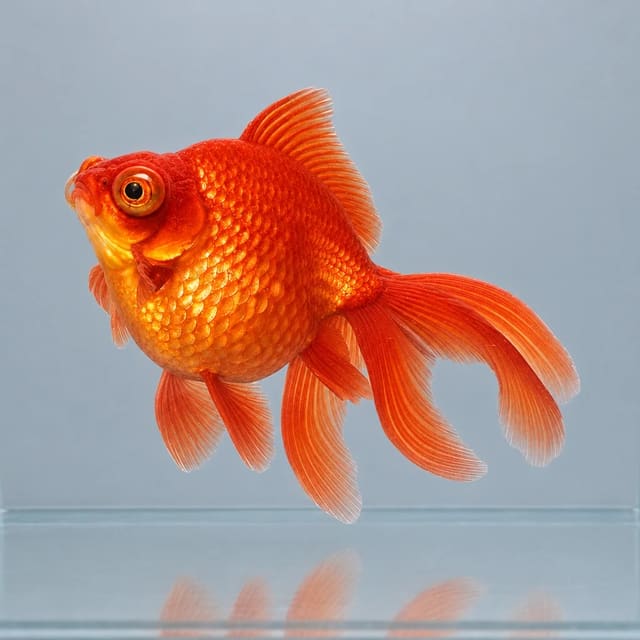
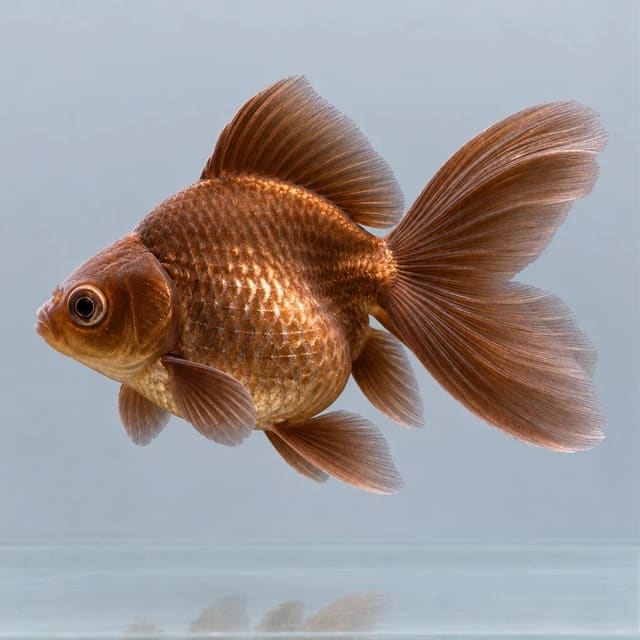
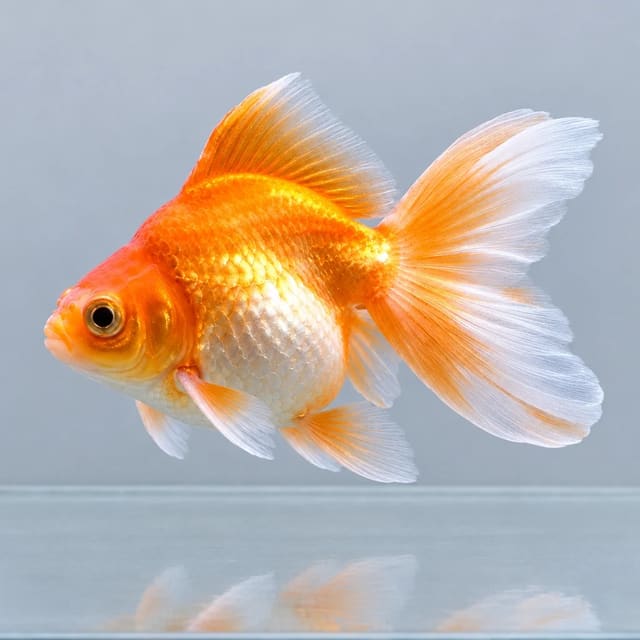
The Red and Black Fantail Goldfish is a fancy goldfish (Carassius auratus) with an egg-shaped body, a double, divided tail and red-orange colour patched with black, which often fades as the fish matures. It grows to about 20 cm and lives in an indoor coldwater aquarium of 100 litres or more, with 50 litres for each extra adult. Sold individually in three sizes.
Adult size is the maximum length this species reaches at full maturity (scientific sources). The livestock you receive will be younger and smaller — pick a size above for the actual shipping size. Product-photo provenance and any image-specific limitations are stated on the listing.
Carassius auratus
Quantity discounts are pricing offers, not a group-size recommendation. Check the full care guidance and your existing animals before choosing a quantity.
The Red and Black Fantail Goldfish is a fancy goldfish (Carassius auratus) with an egg-shaped body, a double, divided tail and red-orange colour patched with black, which often fades as the fish matures. It grows to about 20 cm and lives in an indoor coldwater aquarium of 100 litres or more, with 50 litres for each extra adult. Sold individually in three sizes.
Adult size is the maximum length this species reaches at full maturity (scientific sources). The livestock you receive will be younger and smaller — pick a size above for the actual shipping size. Product-photo provenance and any image-specific limitations are stated on the listing.
Read the full care guidance when planning conditions for your aquarium.
The Red and Black Fantail Goldfish is a fancy goldfish with a rounded, egg-shaped body, a tall dorsal fin and a long, divided double tail, coloured a rich red-orange broken by black patches over the back, head and fins. Like every fancy variety it is the same species as the ordinary goldfish, Carassius auratus: OATA explains that fancy goldfish are the result of selective breeding for fins, body shape and colour, and that they are more delicate than common goldfish and need more care. Kept well, in an indoor aquarium with clean, cool water, a fantail is one of the hardiest and most rewarding fancy goldfish.
The goldfish's wild ancestors come from East Asia. FishBase gives the species' native range as China and Japan and notes that cultured forms come in scarlet, red-pink, silver, brown, white, black and combinations of these colours. The fantail is one of the oldest and simplest of the fancy shapes: Wikipedia's account of the variety, drawing on Chris Andrews' Interpet guide to fancy goldfish, calls it the base for many other fancy goldfish varieties.
| Goldfish | How it differs |
|---|---|
| Fantail | Egg-shaped body, high dorsal fin, paired anal and tail fins divided into two matching halves, no shoulder hump |
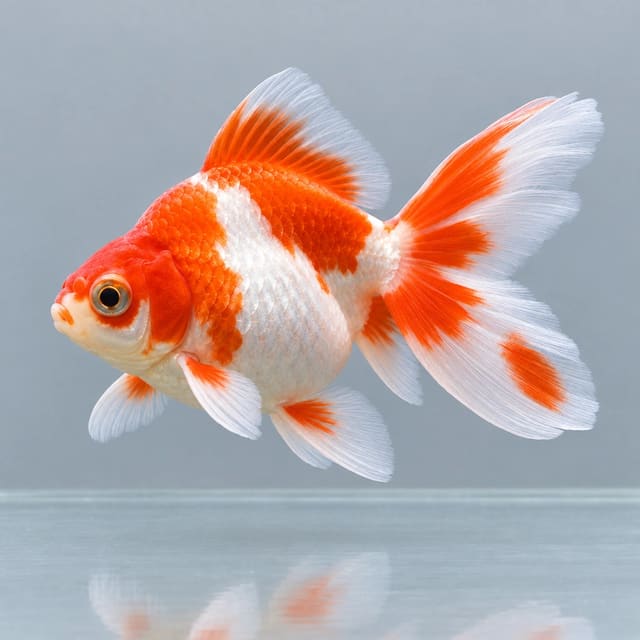
| Ryukin | Similar, but with a raised shoulder hump behind the head and more developed fins |
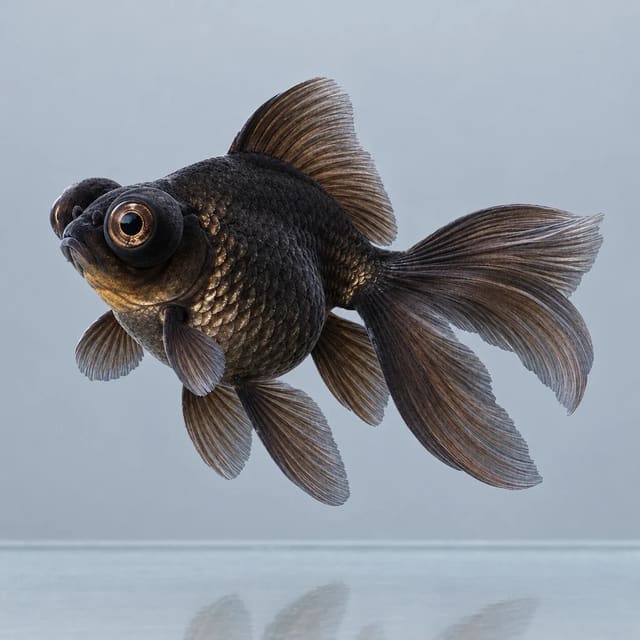
| Telescope eye and moor | A fantail-type body with protruding eyes |
| Common goldfish, comet, shubunkin | Long, slim body with a single tail; faster swimmers suited to ponds |
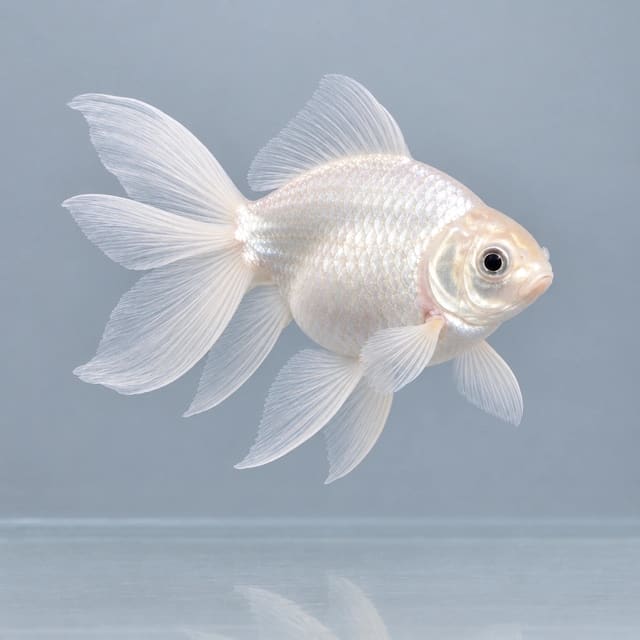
Wikipedia also notes that fantails may have metallic scales, which are shiny, or nacreous scales, which look pearly. Browse our goldfish and coldwater fish, the fancy goldfish range and the wider coldwater fish category, and read our coldwater fish buying guide before you choose.
Each purchase supplies one live goldfish in the size you select. Sizes are body lengths at dispatch; the tail adds more. Sex is not chosen or guaranteed, because goldfish can only be sexed during the spring and summer breeding season.
| Size option | What to expect |
|---|---|
| 3–4 cm | A young fish with years of growing ahead; the most economical way to start a group |
| 5 cm | A slightly older fish whose fin shape and colour are easier to judge |
| 8–10 cm | A well-grown fish with a fuller body and tail, for an aquarium already sized for adults |
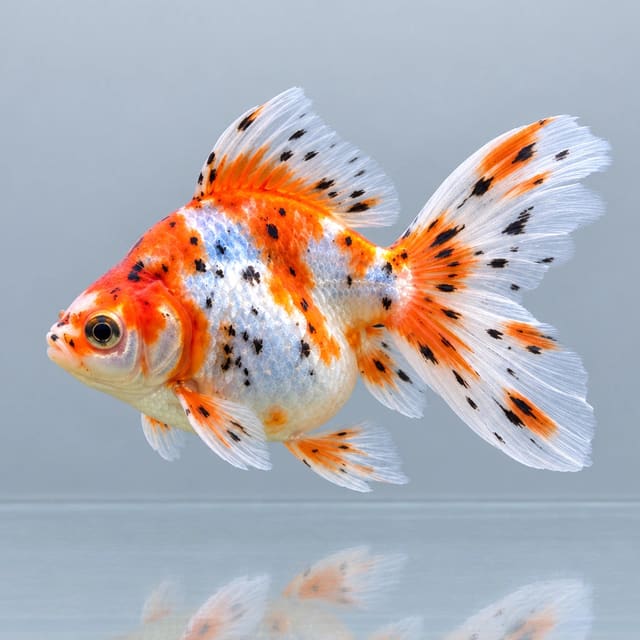
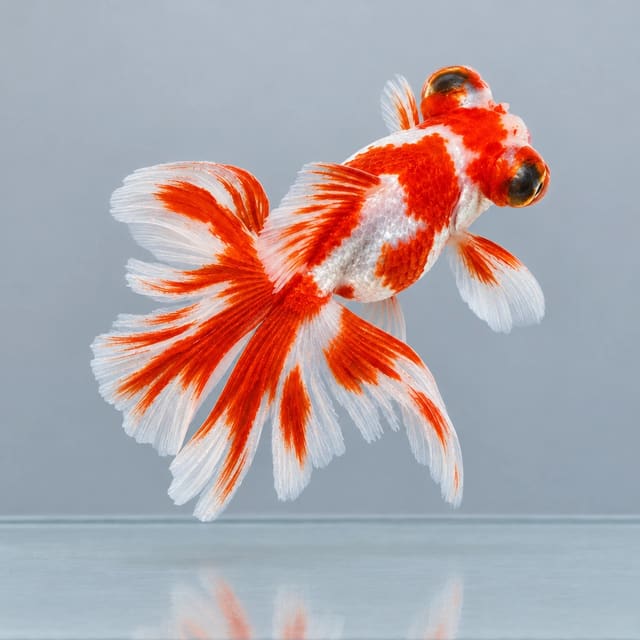
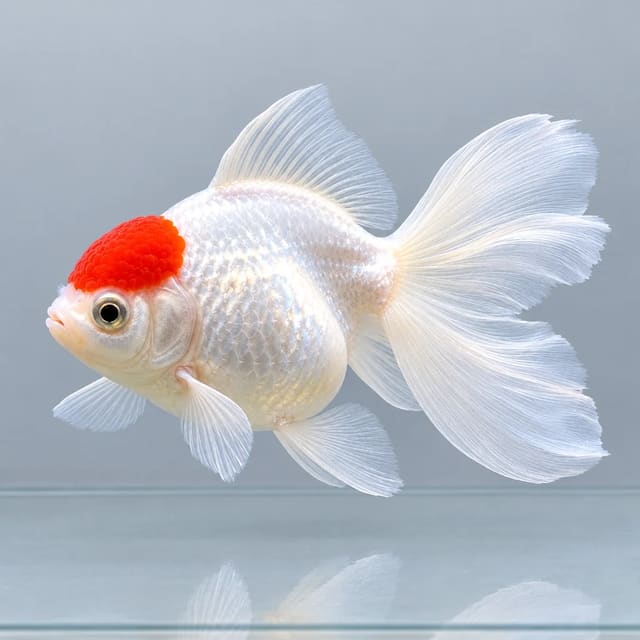
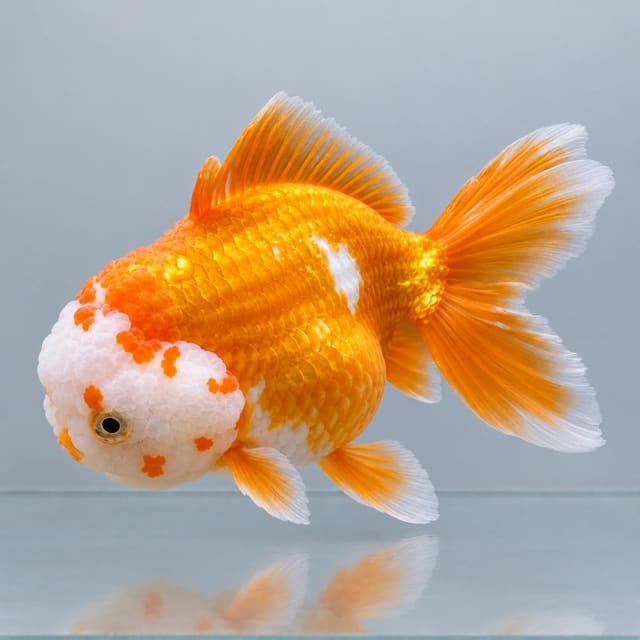
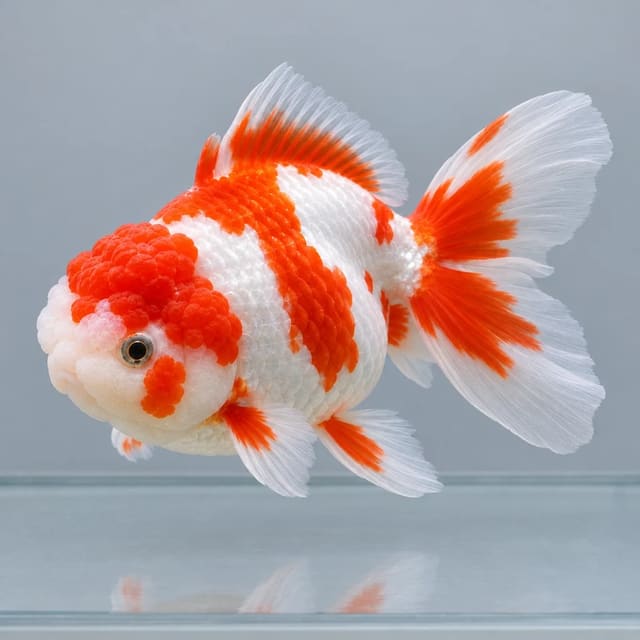
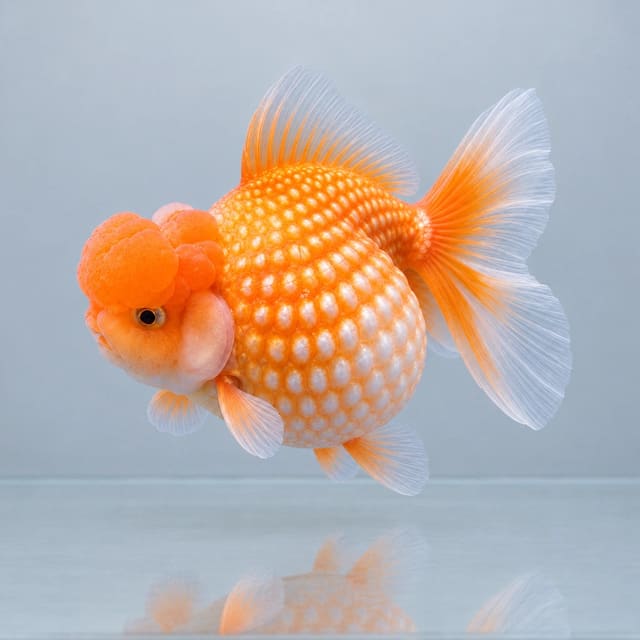
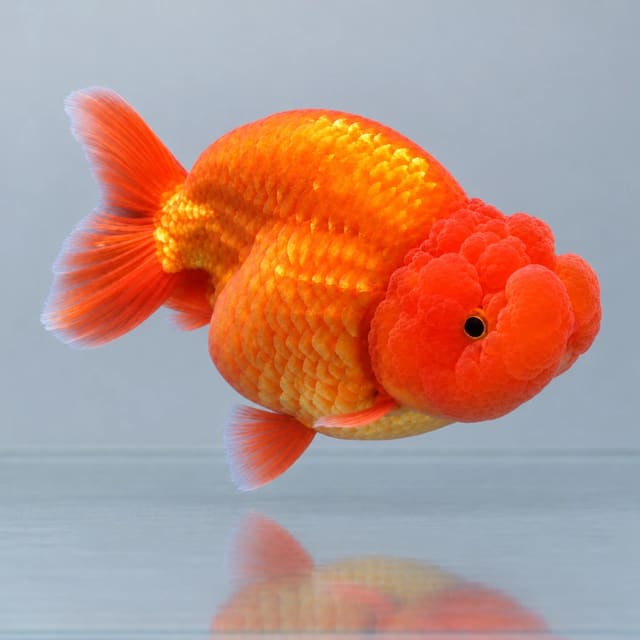
No two red-and-black goldfish share a pattern, so the photographs show the type, not the individual you will receive. The amount of black varies from fish to fish, and as the next section explains, it often changes with age. Before you order, read our delivery and Live Arrival Guarantee information and have the aquarium filtered and matured.
Black on a red goldfish is often temporary. In Practical Fishkeeping, Paul Green explains that in two- and three-coloured goldfish black is not a dominant colour and will often disappear over time, and that warmer water seems to speed this up. Many red-and-black fish therefore become mostly red as they mature, and no one can predict how much black an individual will keep. He also notes that black which appears after a treatment or a stressful event is a temporary response that usually fades within days or weeks. Fading black on a healthy, feeding fish is normal and not a sign of disease.
OATA says fancy goldfish are unlikely to grow larger than 20 cm, and that the aquarium should be able to hold them when fully grown. Its rule is at least 100 litres for one adult goldfish, plus 50 litres for each additional adult; otherwise you must be ready to upgrade the aquarium as they grow. A larger aquarium keeps temperature and water quality more stable.
| Group | Minimum aquarium (OATA rule) |
|---|---|
| 1 adult | 100 litres |
| 2 adults | 150 litres |
| 3 adults | 200 litres |
| 4 adults | 250 litres |
| 5 adults | 300 litres |
FishBase, writing about goldfish in general, suggests a group of five or more in an aquarium at least 100 cm long, while OATA says fancy goldfish can be kept on their own or with others. Most keepers choose a small group, and goldfish are sociable fish. Use our tank volume calculator to check your aquarium's true volume and our stocking calculator to plan the group at adult size.
OATA advises that fancy goldfish are best kept in indoor aquariums only. Wikipedia adds that, although fantails are generally considered hardy, they can be sensitive to prolonged exposure to low water temperatures. A garden pond is the wrong home for this fish.
A fantail is a steady, unhurried swimmer, and OATA notes that the fancy breeds prefer a gentle current: make sure the filter outlet is not too powerful, or spread it across the aquarium with a spray bar. Leave plenty of open water so the fish can turn easily.
| Area | Purpose |
|---|---|
| Open water across the middle | Room for slow swimming and turning |
| Smooth, rounded gravel or sand | Safe foraging; goldfish sift the bottom for food |
| Hardy or artificial plants at the back | Cover; goldfish readily eat soft live plants |
| Smooth ornaments or plant pots | Shelter without anything that can tear fins |
OATA warns against ornaments or artificial plants with sharp or very rough edges, which can injure long fins. It also recommends overhead lighting to keep a normal day-night rhythm, and a position out of direct sunlight and away from loud noise and vibration.
Goldfish are coldwater fish, and OATA says a heater is not needed for fancy goldfish unless the room is very cold. What matters more is stability: they do not tolerate large swings in temperature, which cause stress and disease, so keep the aquarium away from draughts, radiators and sunny windows.
| Reading | OATA guideline |
|---|---|
| Temperature | 4–25°C, best at 15–23°C |
| pH | 6.5–8.5 |
| General hardness | 8–18 dGH (medium-hard) |
| Carbonate hardness | 5–15 dKH |
| Ammonia | 0 mg/l |
| Nitrite | 0 mg/l |
| Nitrate | No more than 20 mg/l above your tap water |
OATA adds that goldfish can acclimatise to a wider range of temperature, pH and hardness over time. Wikipedia quotes about 23°C as ideal for fantails, which sits at the top of OATA's optimal band; a steady indoor room temperature within 15–23°C suits most fantails well. Much of the UK supplies hard to moderately hard tap water that sits comfortably inside these values, but check your water company's report, use our water matcher and read our water chemistry guide if you are unsure.
Goldfish eat a lot and produce a lot of waste; OATA's goldfish sheet warns they can be very dirty, which quickly raises ammonia and nitrite. Choose a filter rated for more than your aquarium's volume, set so the outflow stays gentle, and our article on understanding aquarium filtration explains how to size it.
OATA recommends a good-quality goldfish flake, granule or pellet, because goldfish need more carbohydrate than many other fish. It also notes that some fancy goldfish swallow air when they feed at the surface and briefly lose their balance afterwards; a slow-sinking food usually solves this. If a fish floats, tilts or struggles to stay level for longer than a short while after feeding, work through our fish swimming sideways checklist.
Goldfish are, in OATA's words, insatiable feeders that will always look for food. Feed once a day, only what they eat within a few minutes, and remove anything left over. Overfeeding is the most common cause of poor water in a goldfish aquarium. Paul Green also notes in Practical Fishkeeping that some keepers who want to keep black colouring avoid foods that enhance red.
Add fish only to an aquarium whose filter has matured, with ammonia and nitrite at zero, and build up numbers slowly: OATA explains that each new fish adds waste the filter bacteria must catch up with, and adding too many at once causes "new tank syndrome". Our article on the nitrogen cycle explained shows how to mature a filter.
OATA's floating-bag method: switch the aquarium lights off, float the sealed bag for 10 minutes so the temperatures match, add small amounts of aquarium water over up to 20 minutes, then release the fish with as little bag water as possible. Our guide on how to acclimatise new fish goes through each step.
| Checkpoint | What to do |
|---|---|
| Before arrival | Test the water and check the room temperature is steady |
| Arrival | Acclimatise with the lights off and keep the room calm |
| First feed | A small pinch of slow-sinking food the next day |
| Days 2–7 | Watch swimming, balance, breathing and appetite daily |
| End of week | Retest the water and do the usual 25% change |
OATA describes a healthy goldfish as having clear, bright eyes, undamaged fins, intact scales, no ulcers or lumps, normal swimming and steady breathing. Signs of trouble include clamped fins, flicking against gravel or décor, and shimmying, a side-to-side wobble on the spot.
| You notice | Do this |
|---|---|
| Hanging at the surface or gasping | Test ammonia and nitrite and change water at once |
| Floating or tilting after meals | Switch to a slow-sinking food, as OATA suggests |
| White spots on body or fins | Follow our white spot treatment guide |
| Frayed or reddened fin edges | Test the water and read our fin rot guide |
| New black patches after a problem | Usually a temporary stress response; keep the water clean and watch |
OATA advises against keeping common goldfish with fancy goldfish: common goldfish swim faster, often take most of the food, and boisterous ones have been reported nipping the fins of fancy varieties. The best companions for a fantail are other fancy goldfish of a similar shape and pace.
| Suits | Avoid |
|---|---|
| Other fantails | Common goldfish, comets and shubunkins |
| Ryukins and orandas of a similar size | Tropical fish that need heated water |
| Moors and telescope eyes, with smooth décor | Fin-nipping fish |
| Fish added gradually to a mature aquarium | Fish small enough to be swallowed |
Good partners from our range include the White Fantail Goldfish, Chocolate Fantail Goldfish, Black Moor Goldfish, Red and Black Telescope Moor Goldfish, Red and Black Oranda Goldfish, Red Oranda Goldfish, Red and White Ryukin Goldfish, Red Broadtail Fancy Goldfish and Mixed Long-Fin Goldfish. Our tank mates tool helps you check a mix before you buy.
OATA explains that fancy goldfish can be bred in large home aquariums. In spring and summer, males develop small white spots called breeding tubercles on their gill covers and front fins, and females look deeper-bodied. Breeding is more likely with two males to every female, and can be triggered by slowly raising the temperature to about 20°C; it often follows a partial water change.
FishBase lists the goldfish as a potential pest: it has been introduced around the world, with reported harmful effects on native wildlife. Never release goldfish into rivers, lakes or ponds you do not own. If you can no longer keep a fish, rehome it through a retailer, a club or another fishkeeper. With good care, OATA notes, fancy goldfish often live six to eight years, and some reach 20 or more.
It is a fantail, a fancy form of the goldfish Carassius auratus with an egg-shaped body, a tall dorsal fin and paired, divided tail and anal fins, coloured red-orange with black patches. Every fish is patterned differently.
Often they do not. Practical Fishkeeping explains that black is not a dominant colour in two- and three-coloured goldfish and often disappears over time, faster in warmer water. Fading black is normal and not a sign of illness.
OATA says fancy goldfish are unlikely to grow larger than 20 cm. Plan the aquarium for fish of that size.
OATA recommends at least 100 litres for one adult goldfish and an extra 50 litres for each additional adult: 150 litres for two, 200 litres for three.
It is better not to. OATA advises that fancy goldfish are best kept in indoor aquariums only, and fantails are described as sensitive to long spells of low temperature. For a pond, choose single-tailed goldfish instead.
Usually not. OATA says a heater is only needed in a very cold room, but the water must not swing in temperature, so keep the aquarium away from draughts, radiators and direct sun.
OATA advises against it: common goldfish swim faster, take most of the food and may nip the fins of fancy varieties. Keep fantails with other fancy goldfish.
One live goldfish in the size you choose: 3–4 cm, 5 cm or 8–10 cm. It is not sexed, and its pattern will differ from the photographs.
No reviews for this item yet. Bought one? Honest reviews only, good or bad.
What customers say about ordering from us
Easy website plenty of info on fish your buying great to pick a time slot
TRACEY DURRANT · 7 Oct 2026
Got some lovely fish thank you
Kevin Mackie · 7 Oct 2026
Reviews of our shop, collected by Judge.me, an independent third-party review collector. Newest first.
Moved by UK carriers licensed to handle live animals
Hand-packed with oxygen bags, poly box, heat pack
Email photos the same day; an optional unboxing video helps us review problems faster — claim terms apply
Klarna & PayPal Pay in 3 at checkout