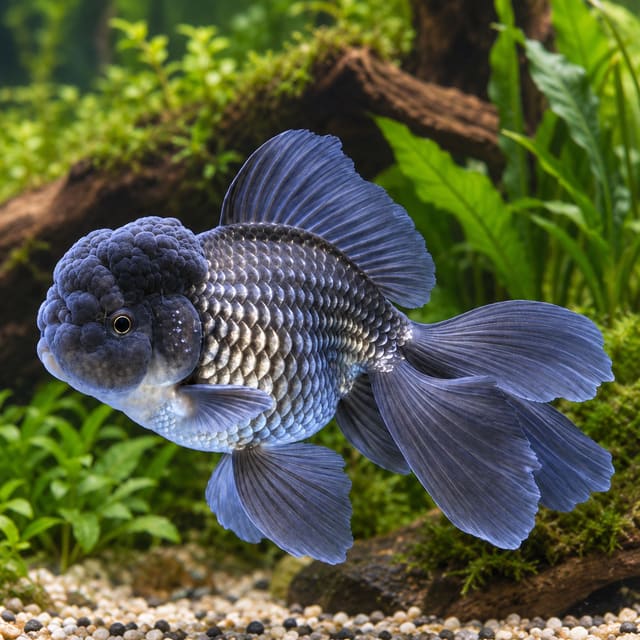
Carassius auratus l.f. blue oranda
4–25°C · pH 6–8
£10.99

A striking red-and-black oranda goldfish with a flowing body and distinctive head growth, ideal for spacious, well-filtered cool-water aquariums. Moderate care, peaceful. 15-25C, pH 6.5-8.
Adult size is the maximum length this species reaches at full maturity (scientific sources). The livestock you receive will be younger and smaller. Product-photo provenance and any image-specific limitations are stated on the listing.
Carassius auratus
Shoaling fish: kept in a group they feel safer, stay calmer and show their best colour.
Confirm your email, then we’ll send an availability message for this exact item if it returns within 180 days.
This request is only for this product—no newsletter or other promotions. A mail-provider retry may very rarely duplicate the same availability message. Unconfirmed addresses are removed after 48 hours. See our privacy policy.
A striking red-and-black oranda goldfish with a flowing body and distinctive head growth, ideal for spacious, well-filtered cool-water aquariums. Moderate care, peaceful. 15-25C, pH 6.5-8.
Adult size is the maximum length this species reaches at full maturity (scientific sources). The livestock you receive will be younger and smaller. Product-photo provenance and any image-specific limitations are stated on the listing.
Maintain these water conditions for optimal health and vibrant colors
Contrast is this fish's whole trade: rich red set against black on a flowing oranda body, topped by the variety's distinctive head growth. The red black oranda (Carassius auratus) sits a step above beginner goldfish — its care level is moderate rather than easy — but it repays the extra attention with one of the boldest colour pairings in cold-water fishkeeping and a lifespan of around ten years, which is a long time to enjoy a fish this distinctive. Head growth and two-tone colour together give it a presence a single-colour goldfish rarely matches, which is why this form tends to be bought as the showpiece of the tank rather than as one of the crowd.
Growing to about 15 cm, it favours the middle waters of the aquarium, and its compatibility record is candid about pace: common and comet goldfish swim far too quickly to share a tank fairly with it. Choose other fancy goldfish of matching body shape and swimming ability instead, with large snails recorded as a safe extra. Fast or aggressive fish, fin-nippers, warm-water tropicals and small easily-eaten species should all be left out of the plan entirely.
Keep conditions cool and consistent — 15–25 °C, pH 6.5–8.0 and hardness of 10–30 dGH — across at least 110 litres of well-maintained water. Feeding an omnivore of this type is straightforward, and its peaceful temperament keeps a properly matched tank harmonious; the moderate rating reflects the stability the variety needs, not any difficulty in day-to-day handling. The mid-water habit recorded for this fish also makes it easy to watch at eye level, where that red-on-black contrast does its best work.
Pair the red black oranda with similarly slow, similarly shaped fancies from day one, and resist adding faster fish later — feeding fairness is the whole game with this variety. UK dispatch is by licensed live-animal courier under our live arrival guarantee.
No reviews for this item yet. Bought one? Honest reviews only, good or bad.
What customers say about ordering from us
I have a small group of long finned mountain minnows. So was delighted to be able to order ten of this variety to increase the genetics in my tank . The ones I recieved are healthy but it’s to early to give a verdict on wether they are of a long finned type since they are small currently.
Gordon Walker · 23 Sept 2026
100% success travel and "installation". Pleased with quality of purchase. The Siamese fighter a bit "shy" so have not yet seen him at his best yet but looking good. Happy customer. GG
George E Garratt · 21 Sept 2026
Reviews of our shop, collected by Judge.me, an independent third-party review collector. Newest first.