Moderate
Red Cap Oranda Goldfish (Carassius auratus)
pH 6.5–8.5
£20.89
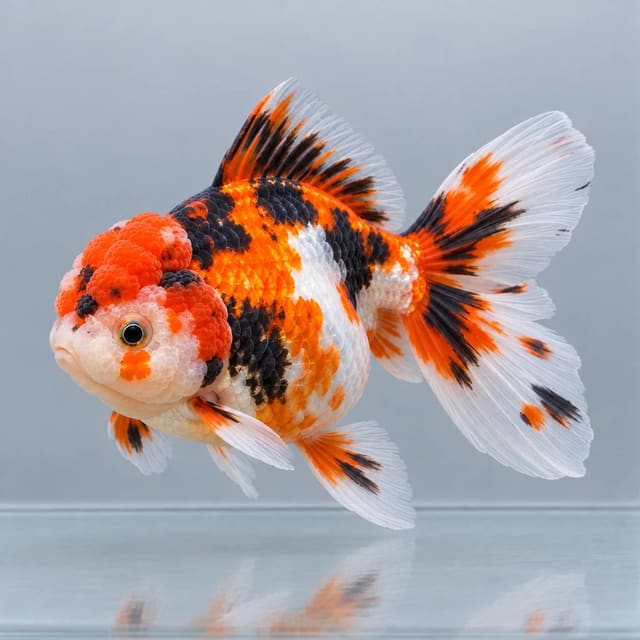
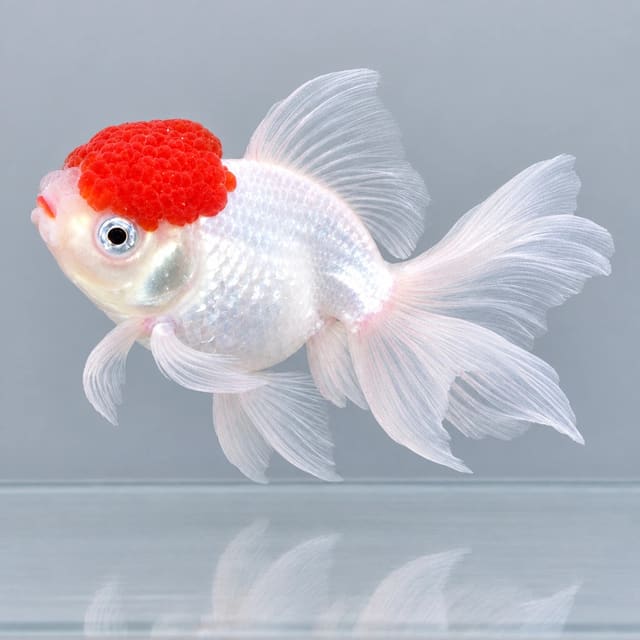
The red and white oranda is a large, hooded fancy goldfish with bold red patches on a pearly white body, a tall dorsal fin and a long double tail. Every fish has its own pattern. It needs an indoor coldwater aquarium of at least 100 litres for one adult, gentle flow and goldfish food. Sold individually.
Adult size is the maximum length this species reaches at full maturity (scientific sources). The livestock you receive will be younger and smaller. Product-photo provenance and any image-specific limitations are stated on the listing.
Carassius auratus
Quantity discounts are pricing offers, not a group-size recommendation. Check the full care guidance and your existing animals before choosing a quantity.
The red and white oranda is a large, hooded fancy goldfish with bold red patches on a pearly white body, a tall dorsal fin and a long double tail. Every fish has its own pattern. It needs an indoor coldwater aquarium of at least 100 litres for one adult, gentle flow and goldfish food. Sold individually.
Adult size is the maximum length this species reaches at full maturity (scientific sources). The livestock you receive will be younger and smaller. Product-photo provenance and any image-specific limitations are stated on the listing.
Read the full care guidance when planning conditions for your aquarium.
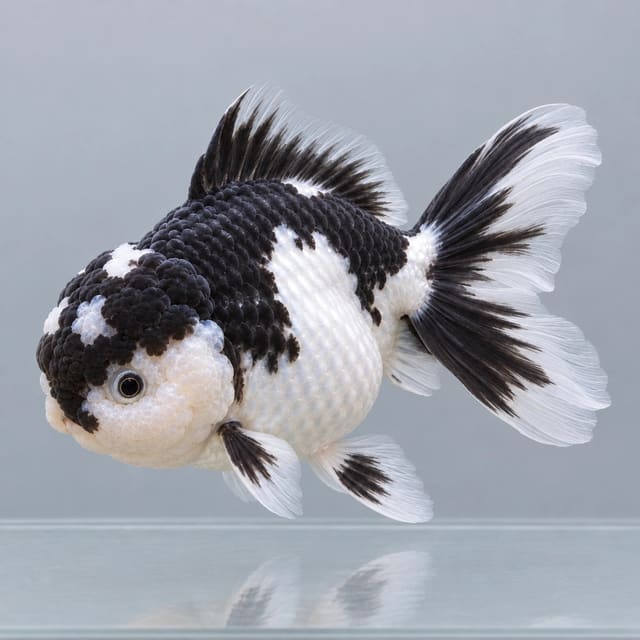
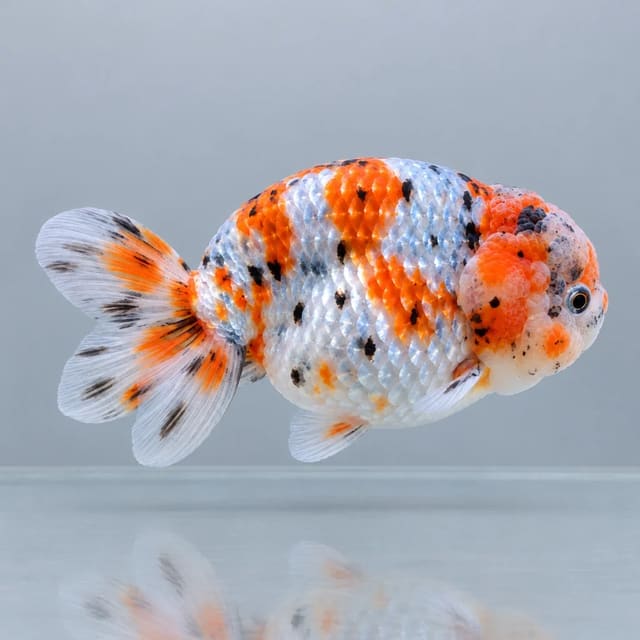
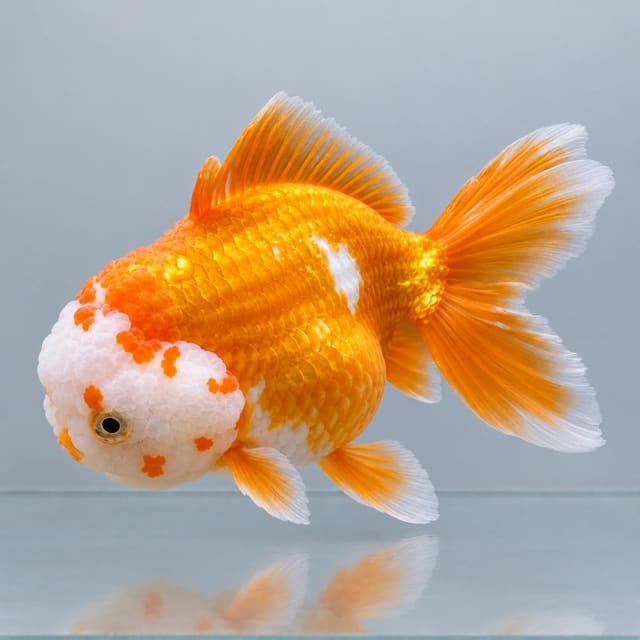
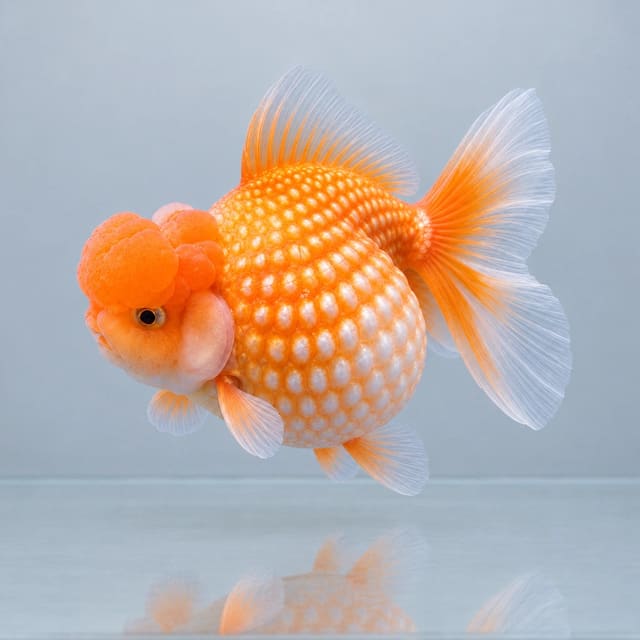
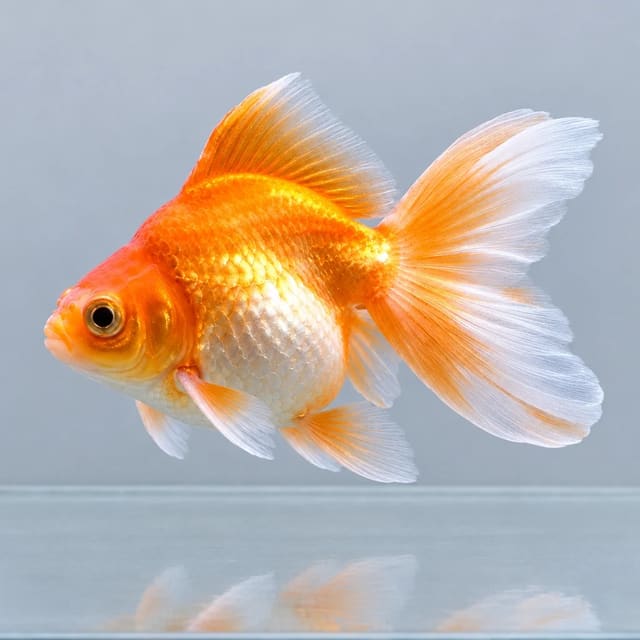
The red and white oranda is a fancy goldfish dressed in two bold colours: bright red patches over a white, pearly body, with a red-and-white hood that builds up on the head and cheeks. It has the classic oranda shape, a round, deep body, a tall dorsal fin and a long, divided double tail that flows behind it as it swims. No two red and white orandas share the same pattern. Some are mostly red with white fins, others mostly white with a few red bands and a red crown, and many sit somewhere between, which is why keepers often pick this colour form when they want a fish that is clearly their own.
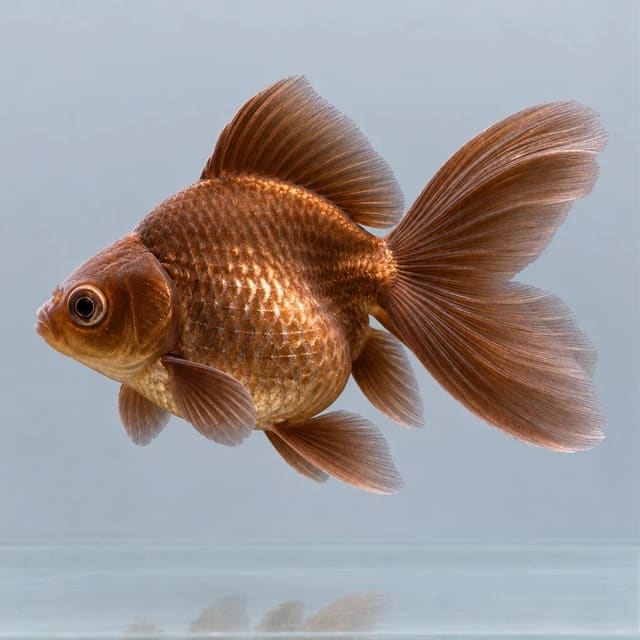
Every oranda is a domestic goldfish, Carassius auratus, a member of the carp family, Cyprinidae. Wikipedia's summary of the oranda explains that the name comes from the Japanese Oranda-shishi-gashira, meaning "Dutch lionhead", even though the breed is Chinese in origin; it may have reached Japan through the Dutch trading post at Dejima, or "Dutch" may simply have meant foreign. The same summary lists the oranda's colours: orange, red, red-and-white, red-and-black, black, blue, chocolate, bronze, white or silver, plus panda, tri-colour and calico patterns. Compare the colours in our oranda and fancy goldfish category.
| Fish | Body and fins | Head |
|---|---|---|
| Red and white oranda (this fish) | Round body, dorsal fin, long double tail; red and white patches | Hood (wen) over the head and cheeks |
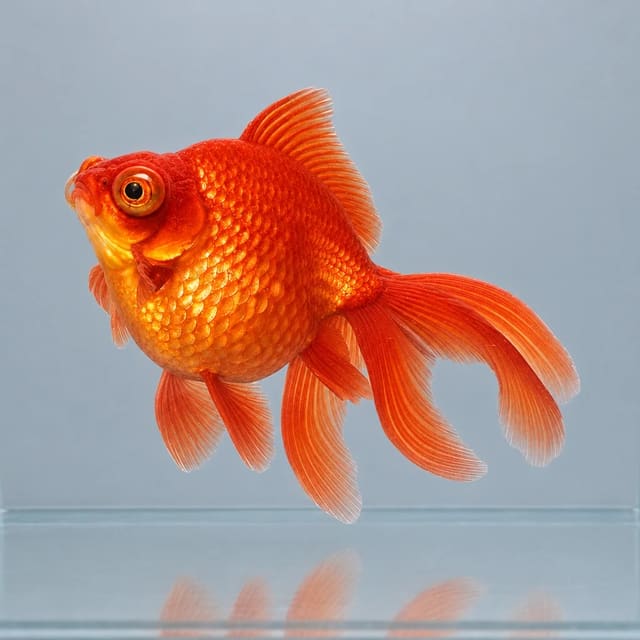
| Red Oranda | Same shape, red all over | Hood |
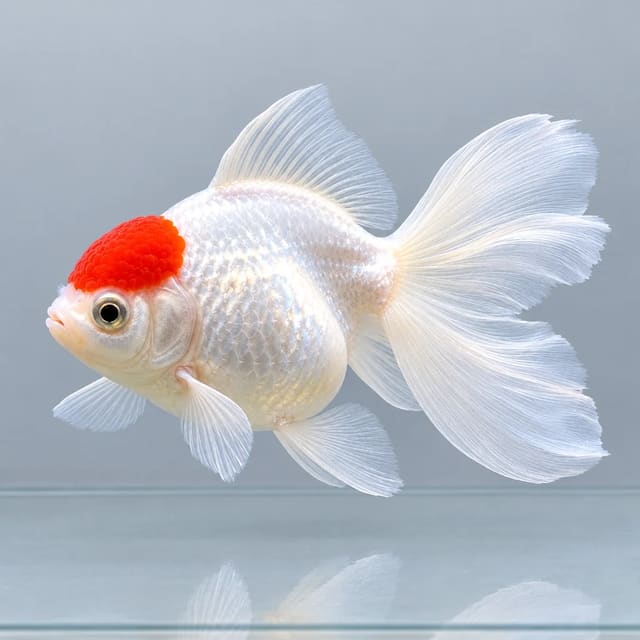
| Red cap oranda | Same shape, white body | Red hood on a white face |
| Red and White Ryukin | Deep body with a hump behind the head, long double tail | No hood |
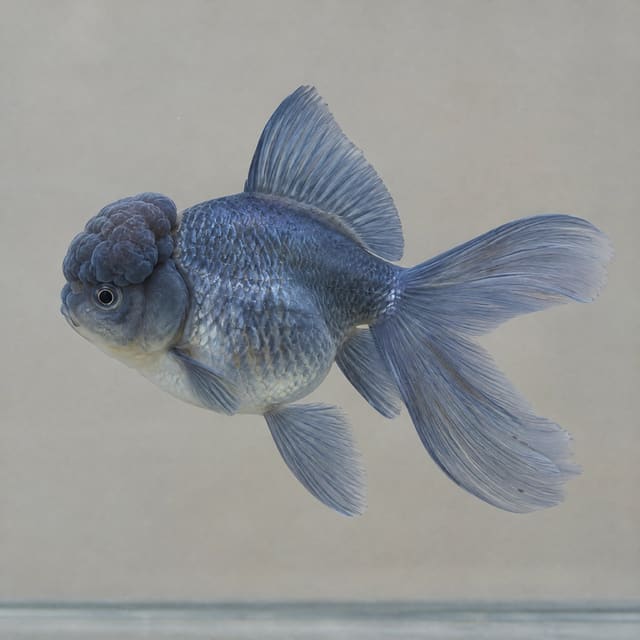
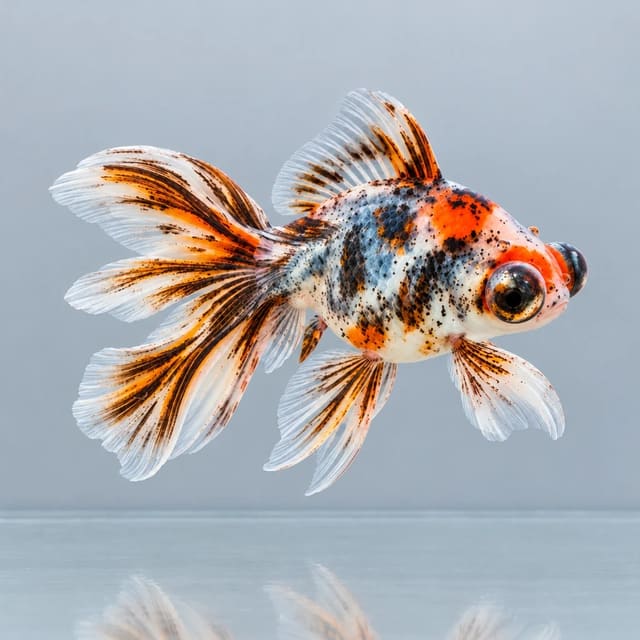
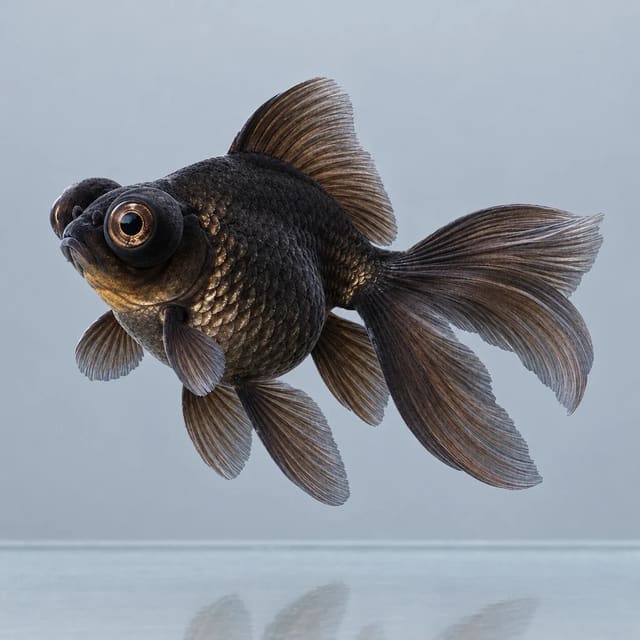
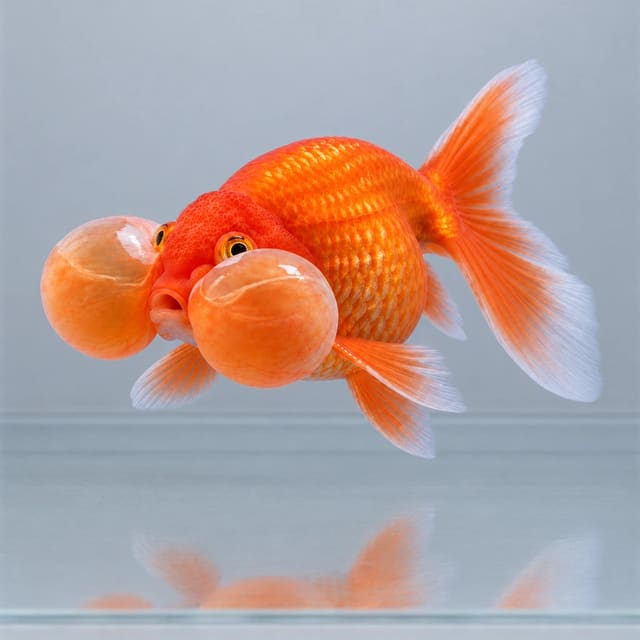
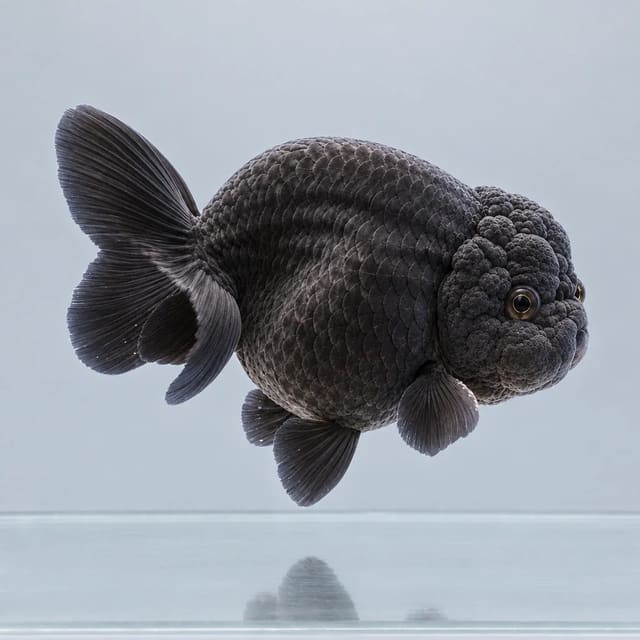
This listing is for one live red and white oranda, sex not chosen. It is sold as a large fish with its own one-off pattern, already showing the oranda shape and hood. The photographs show the colour form, prepared from a reference picture; the fish you receive will differ in pattern, in the size of its hood and in the balance of red and white. That is the nature of the variety rather than a fault.
A large oranda is a long-term companion, so set up the right aquarium before you order rather than after. Our delivery page explains dispatch days and the Live Arrival Guarantee.
Goldfish colour is not fixed for life. Writing about ranchu, Practical Fishkeeping notes that a goldfish's colour can change almost completely as it matures and that many goldfish become whiter with age. On a red and white oranda that usually means the red patches change shape: a band may break up, the hood may turn more white, or a once mostly red fish may finish more evenly split. It can also go the other way. Accept the pattern as a living thing and you will enjoy watching it develop.
The hood, or wen, is what makes an oranda an oranda. A 2025 study by Li and colleagues found that it forms as the skin of the head thickens, building up collagen-rich layers and dividing skin cells, with small bony outgrowths on the skull beneath it. Practical Fishkeeping says the head growth of young orandas takes one to two years to develop, so a large fish usually already shows a good hood that may continue to fill out.
The hood also brings responsibilities. Wikipedia notes that the wen can grow over the eyes and limit vision, that it is prone to bacterial infection and that it is easily injured by rough objects. Keep the décor smooth, the water clean and the tank mates equally slow, so a fish with limited sight still gets its share of food.
| Risk | How to prevent it |
|---|---|
| Cuts and scrapes | Smooth gravel or sand and rounded décor, as OATA recommends; no sharp rock or rough ornaments |
| Debris and infection in the folds | Clean water, weekly water changes and no overfeeding |
| Missing meals because of poor sight | Tank mates that are just as slow; sinking food spread where the fish can find it |
OATA says fancy goldfish are unlikely to grow past about 20 cm, but Practical Fishkeeping and Wikipedia both give 20-31 cm for orandas, so plan for a big fish. OATA's rule is 100 litres for one adult fancy goldfish plus 50 litres for each extra adult. Practical Fishkeeping suggests that a tank should be at least six times the length of the adult fish, and FishBase suggests keeping goldfish in groups of five or more in a tank at least 100 cm long. Most orandas live happily with company of their own kind.
| Set-up | Adult fancy goldfish | Minimum volume (OATA) |
|---|---|---|
| Red and white oranda alone | 1 | 100 litres |
| With a Blue Oranda | 2 | 150 litres |
| A trio of orandas | 3 | 200 litres, on a long base |
Measure your tank with our tank volume tool and check every adult fish in the stocking calculator. Leave plenty of open swimming water: orandas are slow, steady swimmers that do not need clutter.
| Value | OATA target | Notes |
|---|---|---|
| Temperature | 15-23°C ideal (tolerates 4-25°C) | Wikipedia gives orandas 17-28°C and calls them sensitive to low temperatures; keep the tank indoors |
| pH | 6.5-8.5 | Matches much UK tap water once conditioned |
| General hardness | 8-18°dH | Medium to hard water suits goldfish |
| Carbonate hardness | 5-15°dKH | Buffers pH against sudden drops |
| Ammonia and nitrite | 0 mg/l | Both are toxic even at low levels |
| Nitrate | No more than 20 mg/l above tap water | Controlled by water changes |
The sources disagree on temperature, so stay where they overlap: 17-23°C suits OATA's ideal and Wikipedia's tolerance range. Test your tap water for pH and hardness, compare it with these values in our water matcher, and read our water chemistry guide if any of the terms are new. Always add a tap water conditioner to new water.
Goldfish produce a lot of waste. Practical Fishkeeping's fancy goldfish guide calls good filtration essential for fancy goldfish because of their waste and oxygen demand, but recommends moderate flow because they are poor swimmers, and OATA suggests spreading the return through a spray bar. Choose a filter rated well above the tank volume and direct the outlet along the surface rather than across the swimming space. Our guide to aquarium filtration explains the options, and the tank must complete the nitrogen cycle before the fish goes in.
| When | Job |
|---|---|
| Every day | Watch the fish feed, check the thermometer and remove leftovers |
| Every week | Test ammonia, nitrite and nitrate; change at least 25% of the water (OATA) and siphon the gravel |
| Every month | Rinse filter media in removed tank water, never under the tap |
FishBase lists plankton, bottom-living invertebrates, plant material and detritus as the wild diet of the species. OATA recommends a goldfish-specific food as the staple, given once a day in an amount the fish eat within a few minutes, topped up with daphnia, bloodworm, brine shrimp, blanched lettuce or shelled peas.
Some fancy goldfish swallow air when they take food from the surface and then float or tilt. OATA suggests moving to a slow-sinking food if that happens. Our article on a fish swimming sideways covers other causes worth ruling out.
OATA warns that fish can carry disease without showing symptoms. Goldfish herpesvirus is a good reason to quarantine a new fish: Ito and Maeno (2014) found that the disease developed most readily at 20-25°C, and that goldfish infected in cooler water could survive and still carry the virus. A separate quarantine tank with its own net protects the goldfish you already keep.
To introduce the fish, turn off the aquarium lights, float the sealed bag for about 10 minutes, then add small amounts of tank water over up to 20 minutes before netting the fish into the tank and discarding the bag water. That is OATA's floating-bag method; our acclimatisation guide walks through it.
| Day | Check |
|---|---|
| Arrival | Lights off after release; no feeding until the next day |
| Days 1-3 | A small meal each day; the fish swimming upright and exploring |
| Days 4-7 | Fins held open, hood clean, no rubbing against décor |
| Day 7 | Full water test and the first weekly water change |
OATA recommends keeping fancy goldfish alone or with other fancy goldfish, never with common goldfish, which are faster, take the food and sometimes nip fins. Wikipedia adds that an oranda whose hood restricts its vision is best kept with other poor-sighted goldfish so it does not go hungry.
| Suits | Avoid |
|---|---|
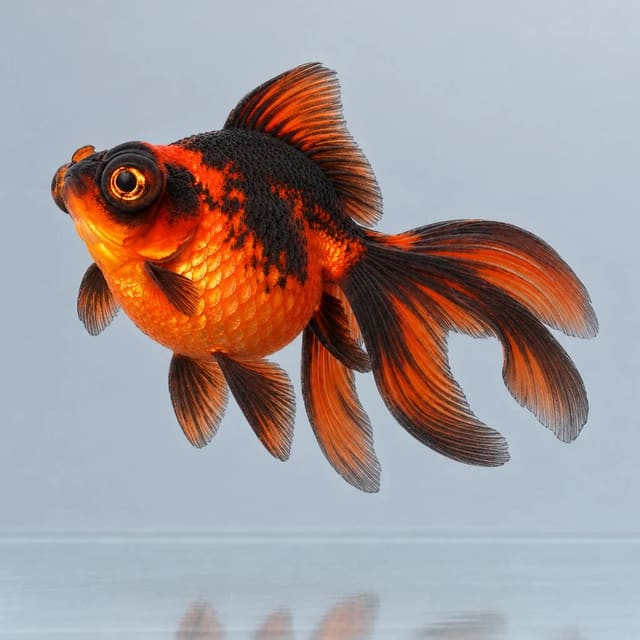
| Other orandas of a similar size, such as our Red and Black Oranda | Comets, shubunkins and common goldfish (see our comet goldfish page) |
| Ryukins such as the Red and White Ryukin | Tropical fish that need warmer water |
| Fantails such as our White Fantail Goldfish | Fin-nipping species and much larger fish |
Check any mix in our tank mates checker, and see every goldfish we stock in goldfish and coldwater fish or on our goldfish category page.
OATA lists the warning signs: hanging at the surface or sitting on the bottom, unusual darkening or paling, more hiding, faster or slower breathing, white spots, fluffy growths, lost fins or scales, weight change and poor appetite. With an oranda, look closely at the hood and fins at every feed.
| Sign | First step |
|---|---|
| White spots like salt grains | Read our white spot treatment guide before dosing |
| Frayed or split fins | Test the water and see our fin rot treatment guide |
| Cotton-like patches or redness in the hood | Improve water quality and seek fish-health advice early |
| Floating or tilting after meals | Switch to a slow-sinking food |
All fancy goldfish were bred from wild fish in East Asia, which FishBase gives as the native range of the species. Centuries of selection produced the round body, double tail and hood, and modern genetics is now finding the DNA behind them: Kon and colleagues (2020) sequenced 27 goldfish strains and linked regions of the genome to traits such as the loss of the dorsal fin, long tails and telescope eyes. The red and white oranda brings several of those traits together in one fish.
A fancy goldfish, Carassius auratus, with a round body, a tall dorsal fin, a long double tail and a hood on the head, coloured in patches of red and white. It is one of the colour forms of the oranda, alongside red, red cap, red and black, blue, chocolate and others.
No. Every red and white oranda has its own pattern, so the photographs show the colour form, not the individual you will receive. Size, the shape of the hood and the split between red and white all vary from fish to fish.
It can. Practical Fishkeeping notes that goldfish colours can change a great deal as fish mature. Red patches may spread, shrink or move, and white areas often grow with age. Choose the fish for the variety rather than for a fixed pattern.
OATA says fancy goldfish are unlikely to grow past about 20 cm, while Practical Fishkeeping and Wikipedia give 20-31 cm for orandas. Plan the aquarium for a fish of at least 20 cm.
OATA advises 100 litres for one adult fancy goldfish and 50 litres for each extra adult, so a pair of adult orandas needs at least 150 litres and a group of three at least 200 litres.
Usually not. OATA gives fancy goldfish an ideal of 15-23°C, which most UK living rooms hold without a heater. Wikipedia notes that orandas are sensitive to low temperatures, so keep the tank indoors and away from cold windows and draughts.
Not as a rule. OATA says fancy goldfish should be kept indoors, and orandas are slow swimmers that struggle against cold and against fast pond fish. An indoor aquarium suits it far better.
Other fancy goldfish of a similar size, such as orandas and ryukins. OATA advises against common goldfish, comets and shubunkins, which are faster, take the food and sometimes nip fins, and tropical fish need warmer water than a goldfish tank provides.
No reviews for this item yet. Bought one? Honest reviews only, good or bad.
What customers say about ordering from us
Easy website plenty of info on fish your buying great to pick a time slot
TRACEY DURRANT · 7 Oct 2026
Got some lovely fish thank you
Kevin Mackie · 7 Oct 2026
Reviews of our shop, collected by Judge.me, an independent third-party review collector. Newest first.
Moved by UK carriers licensed to handle live animals
Hand-packed with oxygen bags, poly box, heat pack
Email photos the same day; an optional unboxing video helps us review problems faster — claim terms apply
Klarna & PayPal Pay in 3 at checkout