Sold Out
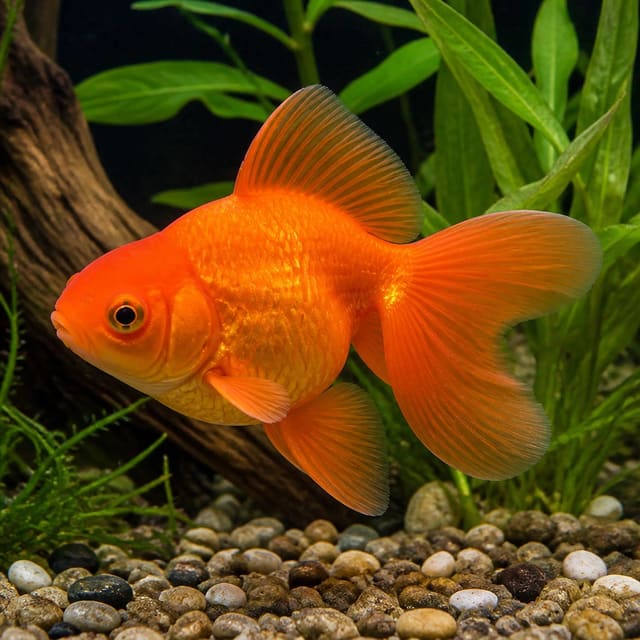
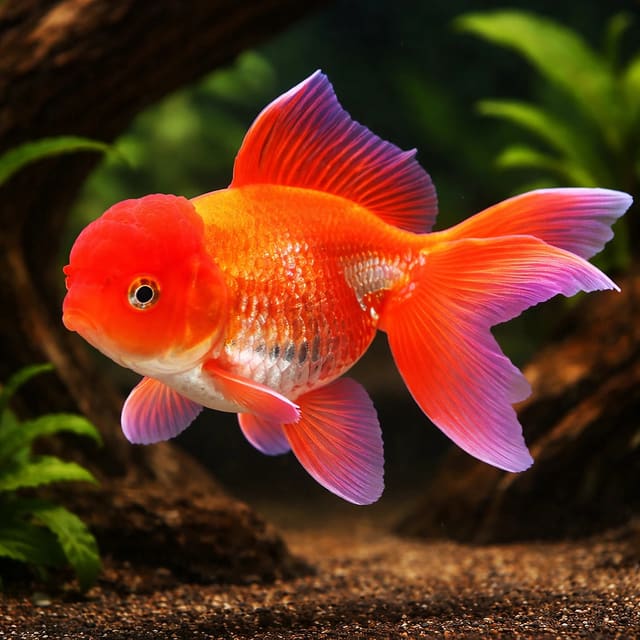
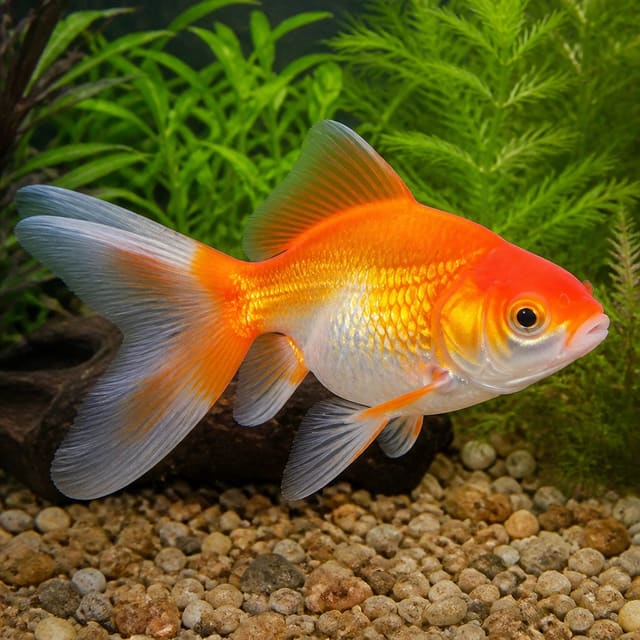
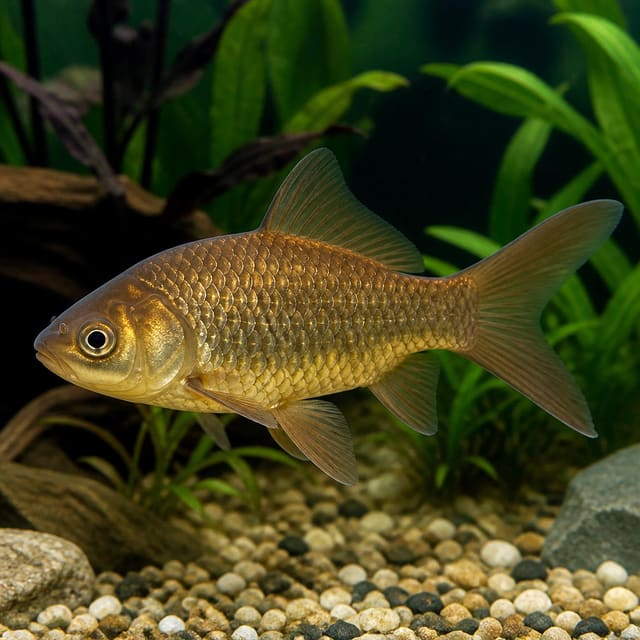
Carassius auratus l.f. oranda red black
15–25°C · pH 6.5–8 · 110L
£19.99
Carassius auratus l f blue oranda is a freshwater cyprinid from East Asia, China and Japan that reaches a maximum recorded 48 cm. It suits a keeper who can plan for an aquarium at least 100 cm long and a group of 5 or more; keep it at 4–25°C and pH 6.0–8.0, the overlap of FishBase’s recorded environmental range and OATA’s goldfish aquarium guidance. Sold individually; one purchase supplies one live fish.
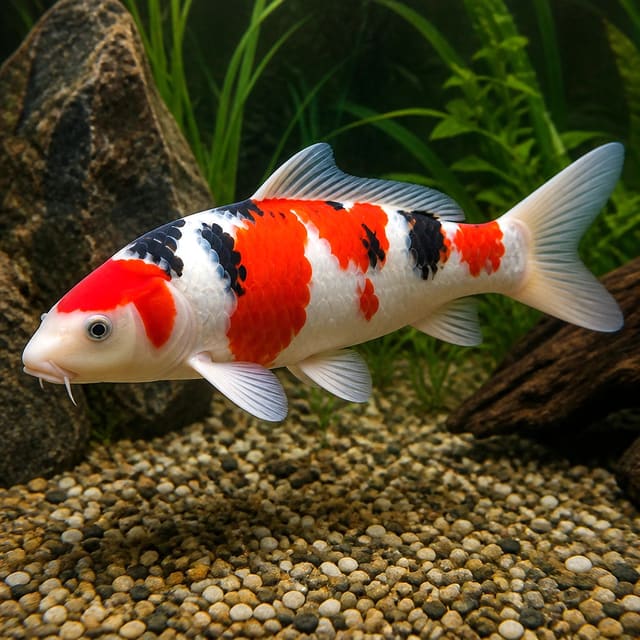
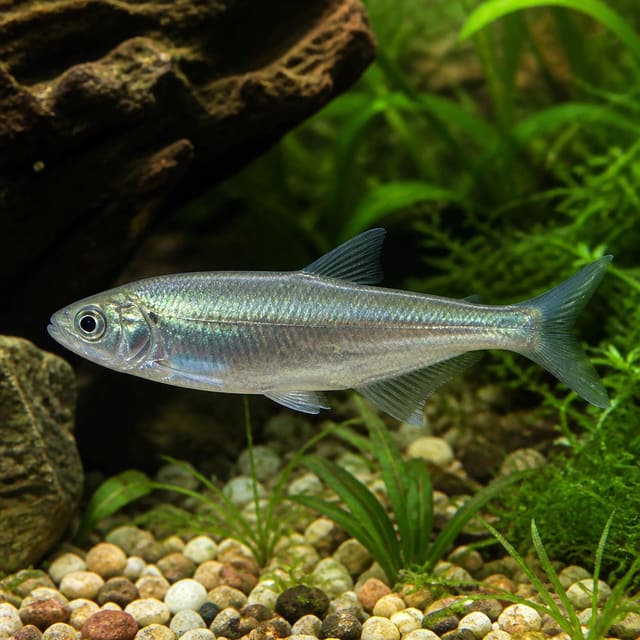
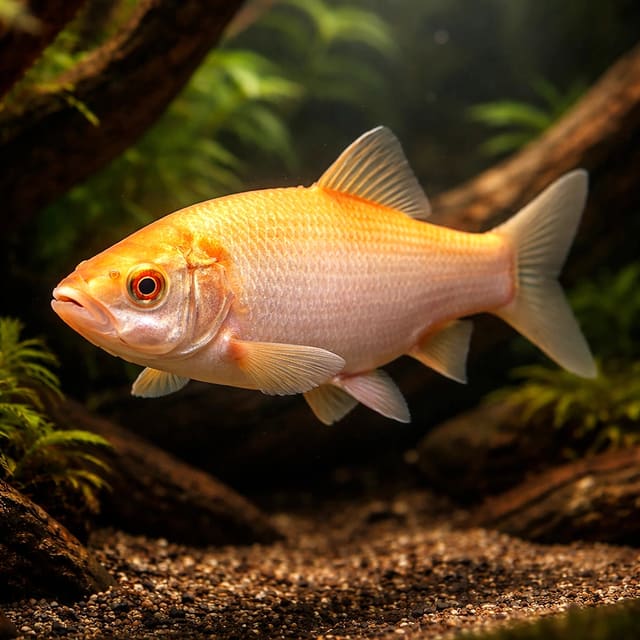
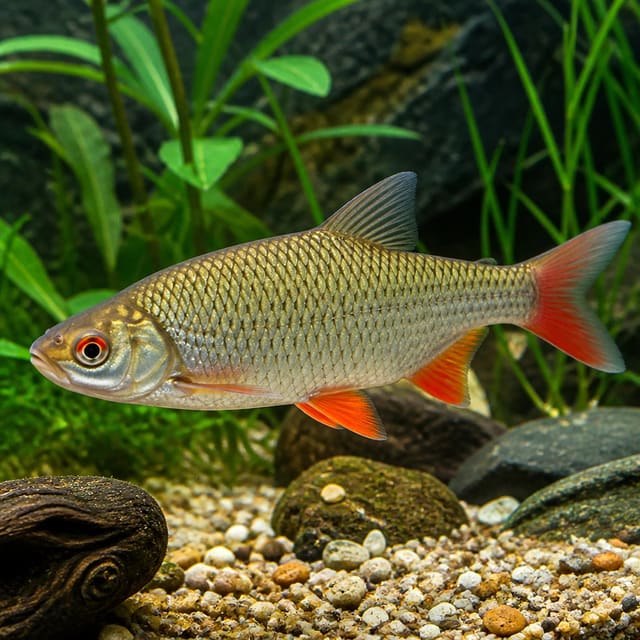
Adult size is the maximum length this species reaches at full maturity (scientific sources). The livestock you receive will be younger and smaller. Product-photo provenance and any image-specific limitations are stated on the listing.
Carassius auratus
Carassius auratus l f blue oranda is a freshwater cyprinid from East Asia, China and Japan that reaches a maximum recorded 48 cm. It suits a keeper who can plan for an aquarium at least 100 cm long and a group of 5 or more; keep it at 4–25°C and pH 6.0–8.0, the overlap of FishBase’s recorded environmental range and OATA’s goldfish aquarium guidance. Sold individually; one purchase supplies one live fish.
Adult size is the maximum length this species reaches at full maturity (scientific sources). The livestock you receive will be younger and smaller. Product-photo provenance and any image-specific limitations are stated on the listing.
Maintain these water conditions for optimal health and vibrant colors
The Carassius auratus l.f. blue oranda is a freshwater fancy goldfish in the Cyprinidae family. FishBase records Carassius auratus as native to East Asia, China and Japan and gives a maximum recorded length of 48 cm. This fish suits a keeper who can plan around that adult size, maintain a substantial filtered aquarium and test the water every week.
Although the blue oranda is an ornamental form, its care plan must account for the needs of goldfish as large, waste-producing freshwater fish. FishBase gives an aquarium group of 5 or more and a minimum aquarium length of 100 cm. Treat those figures as starting requirements rather than reasons to choose the smallest possible enclosure. More water gives greater stability, while the final stocking plan must also account for every adult fish.
Wikipedia identifies the goldfish as a freshwater cyprinid commonly kept in indoor aquariums. Never release it into natural waterways: released goldfish have become invasive pests in parts of North America and Australia.
| Suits | Not suited to |
|---|---|
| Keepers planning around a maximum recorded 48 cm adult length | Plans based only on a small starting fish |
| A filtered aquarium at least 100 cm long | Unfiltered aquariums or bowls |
| Plans for a group of 5 or more | Aquariums without room for the intended adult group |
| Water maintained at 4–25°C, pH 6.0–8.0 and 5–19°dH | Water outside those aquarium-care values |
| Weekly testing and a weekly 25% water change | Irregular maintenance or unchecked waste levels |
One purchase supplies one live blue oranda. Plan its home from the adult requirements rather than from its size on arrival.
Sex is guaranteed only when the selected option explicitly states male or female. This Carassius auratus l.f. blue oranda listing has no sex-guaranteed option.
OATA’s group-level goldfish guidance gives the adult volume rule, aquarium water targets, feeding schedule and maintenance routine. FishBase supplies the species maximum length, aquarium-length figure and group number. A five-adult plan works out at a minimum of 300 litres under OATA’s formula: 100 litres for the first adult plus four additions of 50 litres. Choose a larger aquarium where practical because greater water volume makes temperature and water quality more stable.
This is a cool-water aquarium fish, but “cool water” is not a substitute for measurement. Use a thermometer and water tests to keep the aquarium within the stated range, and prepare the filter to process the waste created by the complete adult group.
Plan for a maximum recorded adult length of 48 cm. FishBase gives that figure for Carassius auratus, so it is the adult size used throughout this care plan. OATA reports that up to 25 cm is more common in an aquarium, but that smaller reported figure is not a safe maximum for long-term space planning.
FishBase gives a minimum aquarium length of 100 cm. OATA advises at least 100 litres for one adult goldfish and an extra 50 litres for every additional adult. Use both measurements: aquarium length prevents a short enclosure from being chosen solely because it meets a volume figure, while the volume formula accounts for the intended number of fish.
| Adult stocking plan | OATA volume calculation |
|---|---|
| One adult | At least 100 litres |
| Two adults | At least 150 litres |
| Three adults | At least 200 litres |
| Five adults | At least 300 litres |
The five-fish example aligns with FishBase’s aquarium grouping of 5 or more. It remains a minimum calculation, not a reason to stop at exactly 300 litres. OATA advises buying as large an aquarium as reasonably possible because a larger water volume gives more stable temperature and water quality.
Review the complete adult plan before the first fish arrives. Account for the aquarium, filter and intended group together rather than expecting a small enclosure to serve until growth becomes obvious. If the final group would exceed the aquarium’s planned volume, change the aquarium plan before increasing the number of fish.
Growth should be assessed alongside body condition, feeding and water quality. A change in length does not alter the need for zero ammonia, zero nitrite and regular maintenance. Consistent care allows the aquarium and biological filter to support the fish as its waste output and space requirements increase.
Keep the aquarium at 4–25°C, pH 6.0–8.0 and 5–19°dH. These values are the overlap of FishBase’s recorded environmental range for Carassius auratus and OATA’s goldfish aquarium guidance. Measure temperature with a thermometer and test pH and hardness rather than relying on the description of the aquarium as cold water.
Maintain ammonia at zero mg per litre and nitrite at zero mg per litre. Nitrate should not exceed 20 mg per litre above the normal tap-water level. That nitrate target is relative to the source water: if the tap water contains 10 mg per litre nitrate, keep the aquarium at no more than 30 mg per litre. Test the tap water as well as the aquarium so the comparison is meaningful.
Our water chemistry guide explains what each test measures. Record the results so a change can be seen before it develops into a persistent problem. The water matcher can then compare the measured aquarium values with the stated care range.
Stability depends on water volume, filtration, stocking and maintenance working together. A reading inside the range today does not replace weekly testing, because feeding and fish waste continually add material that the filter and water-change routine must process.
Use a well-established biological filter and keep it running continuously. The RSPCA explains that aquarium filters are vital because fish release toxic ammonia. Beneficial bacteria in a working biological filter convert ammonia to nitrite and then to the safer nitrate, which is controlled through maintenance and water changes.
OATA states that a filter is essential for a goldfish aquarium. The aquarium should be prepared and the filter matured before livestock is introduced. Follow our guide to prepare and mature the aquarium, then confirm that both ammonia and nitrite are zero before adding the fish.
Stocking too quickly can cause new tank syndrome. OATA describes this as a shortage of nitrifying bacteria relative to the increased waste load, producing unhealthy ammonia and nitrite levels that may kill fish. A clear-looking aquarium can still contain these dissolved wastes, so water testing is the deciding check.
Use gravel and, ideally, live plants. Goldfish may eat live plants, so choose plants with that behaviour in mind and monitor whether they remain suitable for the aquarium. Siphon waste from the gravel during water changes instead of allowing it to collect around the base of plants and decorations.
Protect the biological filter during cleaning. Never run the filter media under the tap. Rinse it lightly in aquarium water removed during a partial water change, which reduces the loss of the established beneficial bacteria. Clean only as needed to remove blockage and maintain operation; the aim is to preserve biological activity, not to make the media look unused.
Feed a good-quality specialised goldfish flake or pellet once a day, giving only what the fish can eat within a few minutes. OATA recommends specialised goldfish food because goldfish require more carbohydrates than other fish species. The time limit controls the portion: if food remains after a few minutes, reduce the next serving.
FishBase records that wild Carassius auratus feed mainly on plankton, benthic invertebrates, plant material and detritus. That mixed natural diet supports the use of a complete goldfish formulation rather than treating the fish as a strict herbivore or strict predator.
| What you observe | What to do |
|---|---|
| All food eaten within a few minutes | Keep the portion and once-daily schedule consistent |
| Food remains after a few minutes | Reduce the next portion and remove accumulated waste during maintenance |
| The fish constantly searches for food | Keep to the measured schedule; this behaviour is not a reason to overfeed |
| Reduced interest in food | Test ammonia and nitrite and check for other changes in appearance or behaviour |
Overfeeding adds more than body weight. Uneaten food breaks down and releases toxic waste into the water, increasing the load on the biological filter and pushing ammonia, nitrite or nitrate in the wrong direction. Portion control is therefore part of water-quality management.
Judge feeding by the few-minute limit rather than by a fixed number of flakes or pellets. Food pieces vary in size, and the appropriate amount changes with the number and condition of fish. Watch every feeding so reduced appetite, competition or leftovers are noticed promptly.
When keeping more than one goldfish, check that each fish reaches the food. OATA warns that faster comet goldfish often out-compete slower fancy varieties, which is one reason not to mix this blue oranda with comets.
At least once every week, change 25% of the aquarium water. Use a siphon to remove waste from the gravel while taking out the water. Treat the replacement tap water with a tap-water conditioner to remove harmful chlorine or chloramine before adding it to the aquarium.
Test the water at least once per week. The required results are zero ammonia, zero nitrite and nitrate no more than 20 mg per litre above the normal tap-water level. Record temperature, pH and hardness alongside the waste readings so gradual changes can be separated from a single unusual result.
Do not rinse filter media under the tap because chlorine or chloramine may kill the beneficial bacteria established in the media. Avoid replacing routine biological filtration with an uncycled clean filter. The bacterial population is the working part of the filter, converting toxic ammonia and nitrite.
A weekly test is a minimum, not a limit. Test again when feeding has increased, fish have been added, appetite changes or swimming and breathing look different. These events can reveal a mismatch between the aquarium’s waste load and its biological capacity.
Use the first month to establish a reliable pattern. The first checkpoint is zero ammonia and nitrite before introduction. Each weekly checkpoint then confirms whether the same results are being maintained as the fish settles and feeds. If either toxic waste appears, pause further stocking, check the filter and restore the required water quality before continuing the group plan.
Tropical Fish Co hand-bags live fish in pure oxygen and uses an insulated polystyrene box, with a heat pack when the weather calls for it. A licensed live-animal courier carries the parcel. Read the current delivery and Live Arrival Guarantee policy before the delivery date so someone is ready to receive the parcel in person.
For a Live Arrival Guarantee claim, contact us on the day the fish arrives with the order number and the continuous video showing the sealed parcel, the opening and the fish inside the sealed bag. Keep the fish in the bag until its condition has been recorded.
Before introduction, OATA advises checking that aquarium water is suitable and that ammonia and nitrite are zero. The filter must already be mature enough for the added waste load. Increase the fish population slowly because every extra fish and every increase in feeding requires the beneficial bacterial population to process more waste.
Do not treat a quiet first observation as a substitute for testing. Water can look clear while ammonia or nitrite is present. The correct response to an unusual change is to measure the water, inspect filter operation and compare the behaviour with the fish’s normal pattern.
Observe the fish every day and use changes from its normal appearance or behaviour as an early warning. OATA describes healthy fish as having clear, bright eyes, undamaged fins, intact scales, no ulcerations or bumps, appropriate swimming behaviour and steady breathing.
| Change noticed | First action |
|---|---|
| Hanging at the surface, sitting on the bottom or erratic swimming | Test ammonia, nitrite, nitrate and temperature |
| Gill covers moving faster or slower than normal | Test the water and check filter operation |
| Darker or paler colour than normal | Compare behaviour, appetite and water results |
| More aggression or hiding than normal | Check companions, space, feeding access and water quality |
| White spots, fluffy growths or loss of fins or scales | Record the change and test the water promptly |
| Weight gain, weight loss or reduced interest in food | Review the measured portion and test water quality |
Begin with objective readings because even small amounts of ammonia and nitrite can stress goldfish. Confirm that both remain at zero, check nitrate against the tap-water baseline and make sure temperature, pH and hardness remain within the care range.
Do not guess a treatment from one symptom. Several water-quality and health problems can produce changes in appetite, swimming or breathing. Record what changed, when it started, the latest test results and whether other fish show the same sign. If you are concerned about the fish’s health, test the water and contact us for further guidance.
Daily observation works best when feeding and maintenance are consistent. A regular once-daily meal makes a reduced appetite easier to recognise, while written weekly test results show whether a health change coincides with deteriorating water quality.
Plan for a group of 5 or more. FishBase gives that aquarium grouping for Carassius auratus. Combine the social figure with the adult space calculation: OATA’s volume rule produces at least 300 litres for five adults, while FishBase gives a minimum aquarium length of 100 cm.
A group target does not remove the need to protect the biological filter. Add fish at a pace the established filter can support, testing ammonia and nitrite as the population and feeding load increase. Both readings must remain at zero. If either becomes detectable, pause further additions and restore water quality before continuing.
Do not treat the volume calculation as a promise that every five-fish combination will work. Individual behaviour and feeding access still require observation. More aquarium volume is beneficial because it improves environmental stability and gives greater capacity for the intended adult group.
When increasing the group, compare test results before and after each addition. Stable zero ammonia and nitrite show that the biological filter is processing the present waste load. Continue weekly maintenance and avoid increasing fish numbers and feeding faster than the bacterial population can adjust.
Avoid keeping comet goldfish with this blue oranda. OATA advises against mixing comet goldfish with fancy goldfish because comets swim faster and often out-compete the fancy fish for food. Reports also describe boisterous goldfish fin-nipping slower-swimming fancy varieties.
Other goldfish require an individual assessment rather than a universal compatibility promise. They must fit the same water range, adult space plan and filtration capacity, and every fish must be able to reach its food. Watch the group at each daily feeding because unequal access may become apparent before body condition changes.
Compatibility beyond the goldfish combinations described by OATA remains a case-by-case decision. Do not infer that another fish or invertebrate is suitable merely because it tolerates part of the same temperature range. Water chemistry, adult room, waste load, feeding behaviour and direct interactions must all pass the screen.
| Decision | Reason |
|---|---|
| Avoid comet goldfish | They may out-compete slower fancy goldfish and boisterous individuals may nip fins |
| Assess other goldfish individually | Water, adult space, filtration, feeding access and behaviour must all match |
| Do not assume other animals are suitable | No universal companion rule covers fish or invertebrates outside the named goldfish guidance |
Carassius auratus l.f. blue oranda reaches a maximum recorded 48 cm total length according to FishBase. Plan its aquarium around 48 cm rather than its size when it arrives.
For Carassius auratus l.f. blue oranda, use an aquarium at least 100 cm long. OATA’s goldfish guidance gives at least 100 litres for one adult and an extra 50 litres for each additional adult, so a five-adult plan starts at 300 litres.
Plan for 5 or more, which is the aquarium group size given by FishBase for Carassius auratus. Pace additions so the mature biological filter continues to hold ammonia and nitrite at zero.
A blue oranda can suit a prepared keeper who can provide an aquarium at least 100 cm long, plan around a 48 cm maximum adult length, maintain strong biological filtration and complete weekly testing and 25% water changes.
Feed Carassius auratus l.f. blue oranda a good-quality specialised goldfish flake or pellet once a day, giving only what it can eat within a few minutes. FishBase records a natural diet of plankton, benthic invertebrates, plant material and detritus.
Keep it at 4–25°C, pH 6.0–8.0 and 5–19°dH, the overlap of FishBase’s recorded environmental range and OATA’s goldfish aquarium guidance. Ammonia and nitrite must remain at zero.
OATA reports that boisterous goldfish may nip the fins of slower fancy varieties. Watch for changed aggression, hiding or damaged fins, and avoid comet goldfish because they may also out-compete fancy goldfish at feeding time.
Other goldfish may be assessed individually, but avoid comet goldfish with this fancy form. Any proposed companion must match its water, adult space and filtration needs and must not prevent it from reaching food; suitability with other fish or invertebrates requires case-by-case screening.
Tropical Fish Co hand-bags the fish in pure oxygen and uses an insulated polystyrene box, with a heat pack when the weather calls for it, before transport by a licensed live-animal courier. Receive the parcel in person, film continuously from the sealed parcel, inspect it the same day, float the bag for 20–30 minutes and release the fish without pouring bag water into the aquarium.
No reviews for this item yet. Bought one? Honest reviews only, good or bad.
What customers say about ordering from us
Easy website plenty of info on fish your buying great to pick a time slot
TRACEY DURRANT · 7 Oct 2026
Got some lovely fish thank you
Kevin Mackie · 7 Oct 2026
Reviews of our shop, collected by Judge.me, an independent third-party review collector. Newest first.