Moderate
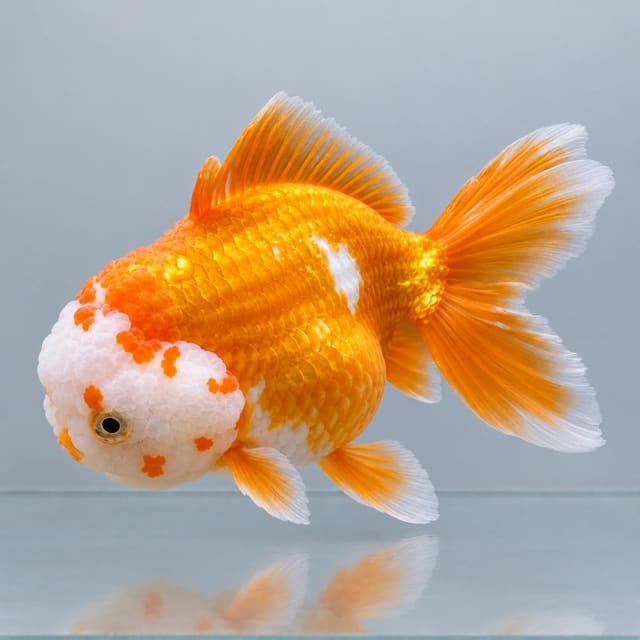
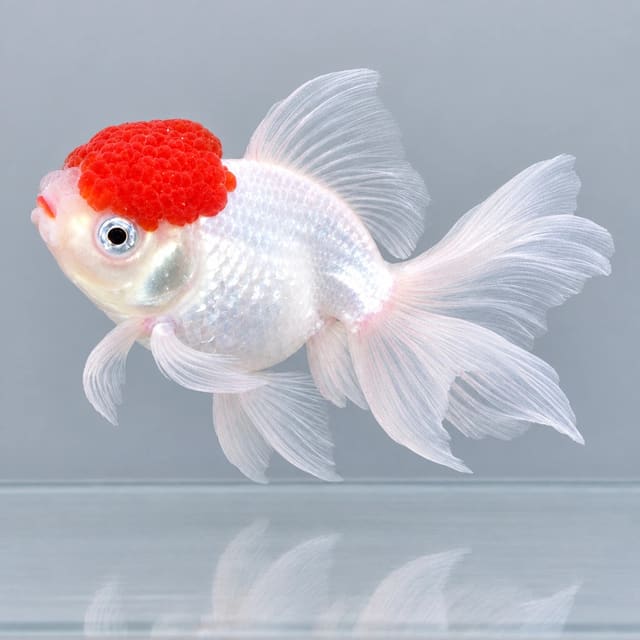
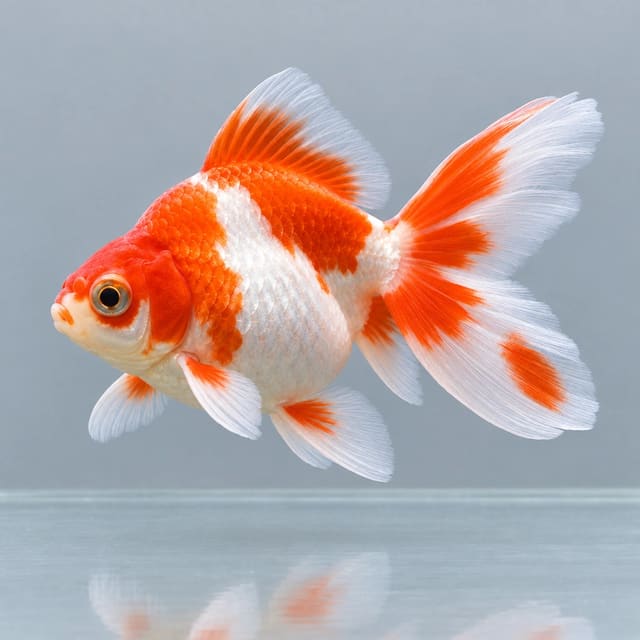
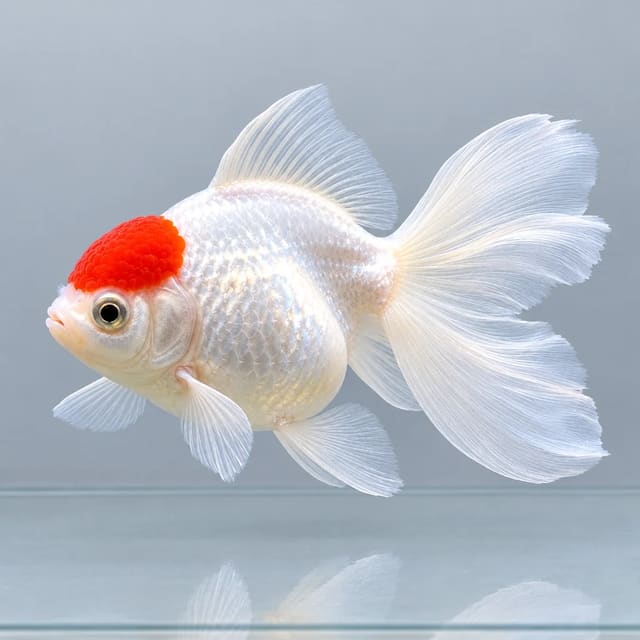
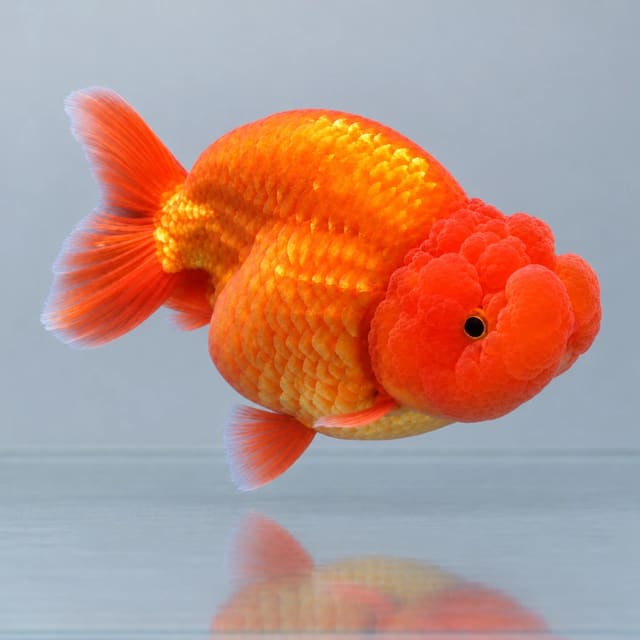
Red and White Oranda Goldfish (Carassius auratus)
pH 6.5–8.5
£62.69
The panda oranda goldfish is a black-and-white oranda: a round, twin-tailed fancy goldfish with an upright dorsal fin and a soft hood on its head. Choose a 6–7 cm young fish or a larger 8–9 cm Hi Grade fish. It needs an indoor coldwater aquarium of at least 100 litres for one adult, kept at about 15–23°C with gentle flow. Sold individually.
Adult size is the maximum length this species reaches at full maturity (scientific sources). The livestock you receive will be younger and smaller — pick a size above for the actual shipping size. Product-photo provenance and any image-specific limitations are stated on the listing.
Carassius auratus
Quantity discounts are pricing offers, not a group-size recommendation. Check the full care guidance and your existing animals before choosing a quantity.
The panda oranda goldfish is a black-and-white oranda: a round, twin-tailed fancy goldfish with an upright dorsal fin and a soft hood on its head. Choose a 6–7 cm young fish or a larger 8–9 cm Hi Grade fish. It needs an indoor coldwater aquarium of at least 100 litres for one adult, kept at about 15–23°C with gentle flow. Sold individually.
Adult size is the maximum length this species reaches at full maturity (scientific sources). The livestock you receive will be younger and smaller — pick a size above for the actual shipping size. Product-photo provenance and any image-specific limitations are stated on the listing.
Read the full care guidance when planning conditions for your aquarium.
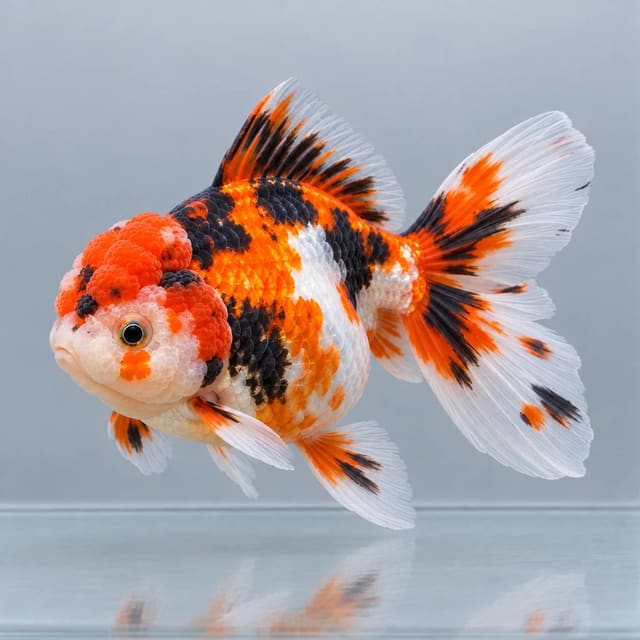
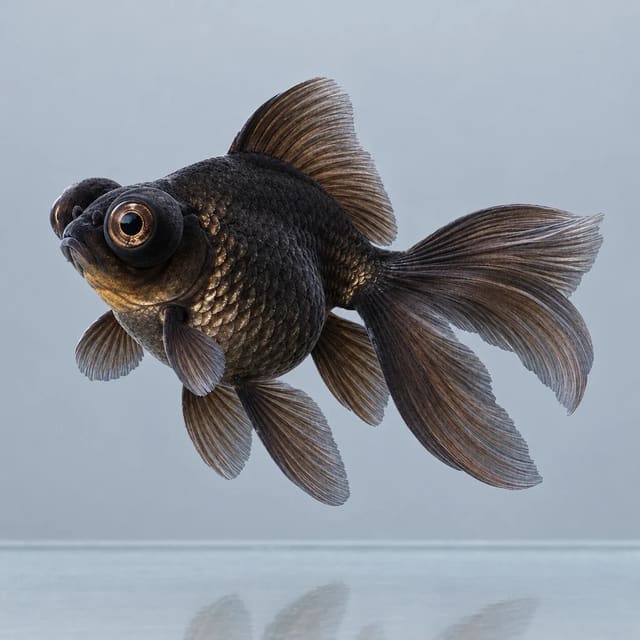
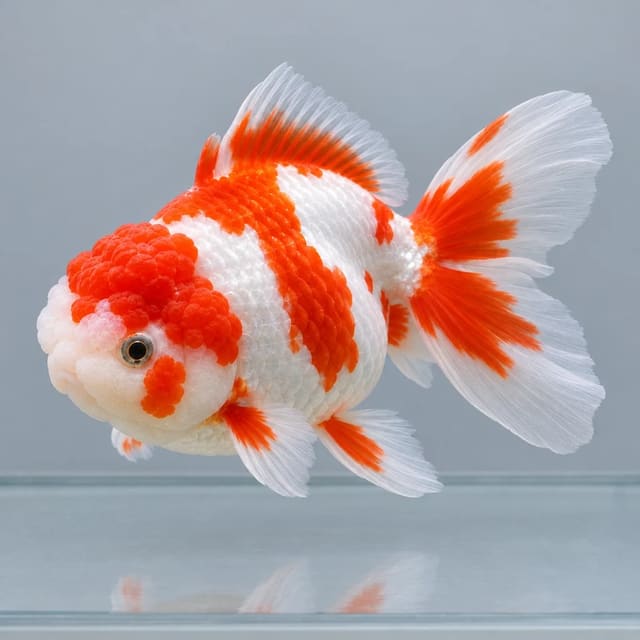
The panda oranda goldfish swaps the familiar gold and red of most goldfish for crisp black and white. In the photographed fish, a black saddle runs over the back and up across the head, the flanks and belly are pearly white, and the white fins are banded and streaked with black. Underneath the colour it is a classic oranda: a round, deep body, an upright dorsal fin, a long double tail and a soft, raised hood growing over the head. Like every goldfish, it is Carassius auratus, a member of the carp family, Cyprinidae.
"Panda" is the trade name for black-and-white goldfish, and Wikipedia's oranda summary lists the panda alongside red, blue, chocolate, calico and tri-colour forms of the variety. Pandas can grow into impressive fish: Practical Fishkeeping reported a panda oranda of 26 cm imported from China, described by the importer as the largest of its kind brought into the UK.
| Area | In the photographed fish |
|---|---|
| Hood | Black over the crown, breaking into white around the eyes and mouth |
| Back | A broad black saddle from the head to the base of the tail |
| Flanks and belly | Pearly white, shiny scales |
| Fins | White, with black streaks running out from the base |
| Tail | Long and double, white with black bands near the base |
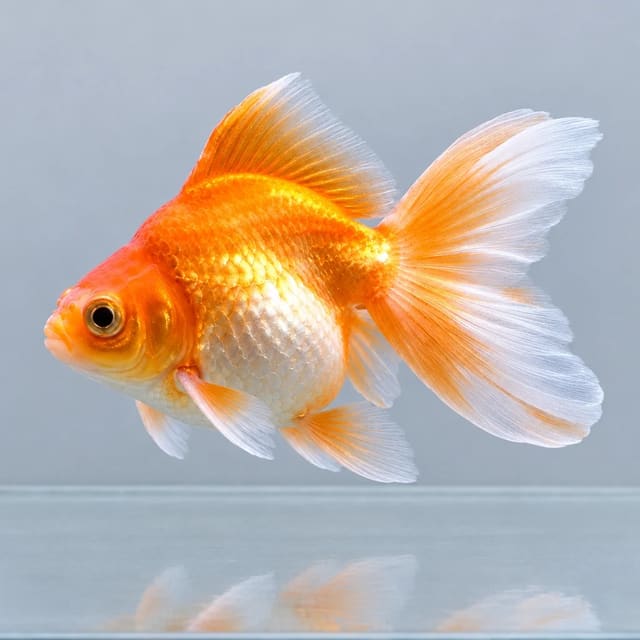
Each panda's pattern is unique, so the fish you receive will be marked differently. Browse our fancy oranda goldfish category for other colours, and the full goldfish and coldwater fish collection or coldwater fish category for the rest of the range.
One purchase supplies one live panda oranda, sex not chosen. Two sizes are offered:
OATA notes that adult males develop small white tubercles on the gill covers and pectoral fins in spring and summer, while females are deeper-bodied, but young fish cannot be sexed reliably. Check our delivery information for dispatch days and the Live Arrival Guarantee before you order.
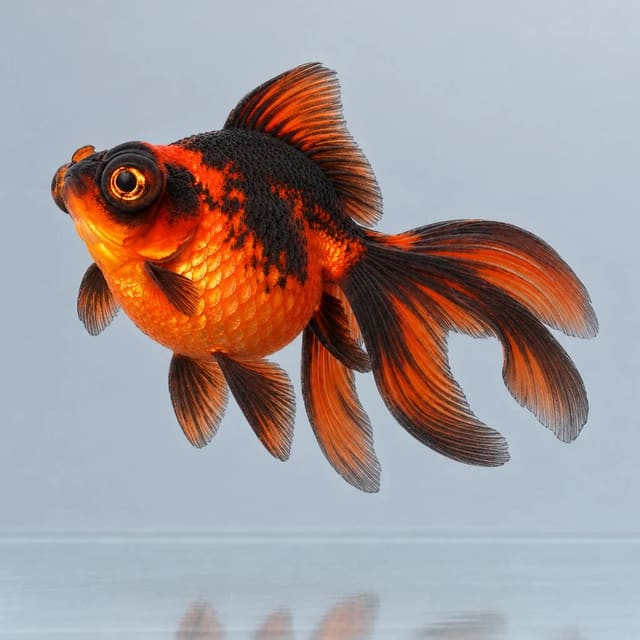
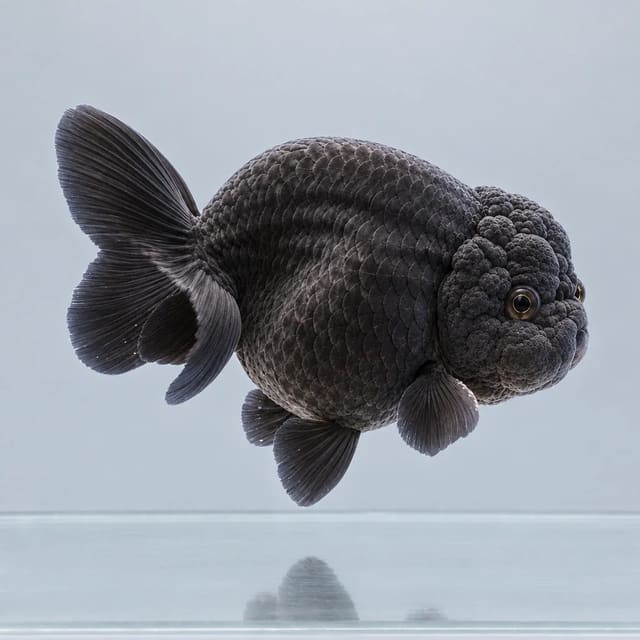
Black-and-white goldfish are beautiful but not permanent paintings. Practical Fishkeeping's article on ranchu notes that a goldfish's colour can change almost completely as it matures and that many goldfish become whiter with age. Its fancy goldfish guide adds that black moors may develop orange splotches on the underside and reports claims that they can revert to metallic orange in warm water. A panda oranda can do the same: some keep their contrast for years, others lose black, and some show orange or bronze patches as they mature.
| You can influence | You cannot control |
|---|---|
| Steady, cool water within 15–23°C rather than warm water | The genes each fish inherited |
| A varied, good-quality diet | The gradual whitening many goldfish show with age |
| Clean water and low stress | Exactly where black is gained or lost |
| A regular day and night under overhead light | How the final adult pattern settles |
We sell each fish as a panda on the day it is chosen. Enjoy it as a living fish whose looks develop, not as a fixed pattern.
Size estimates vary. OATA says fancy goldfish are unlikely to exceed 20 cm; Practical Fishkeeping gives 20–31 cm for orandas; and the record panda reported above measured 26 cm. Practical Fishkeeping's tank-shape rule is that the aquarium should be at least six times as long as an adult fish and twice as wide as the fish is long. Here is what that means at three adult sizes:
| Adult length | Minimum base (six-times rule) |
|---|---|
| 15 cm | 90 × 30 cm |
| 20 cm | 120 × 40 cm |
| 26 cm | 156 × 52 cm |
Volume matters as well as shape. OATA recommends at least 100 litres for one adult fancy goldfish and 50 litres for each extra adult, and says to buy the largest aquarium you reasonably can. FishBase suggests keeping goldfish in groups of five or more in a tank at least 100 cm long. Measure what you have with our tank volume calculator and plan the whole adult group in our stocking calculator.
OATA advises keeping fancy goldfish in indoor aquariums only, away from draughts, heat sources, direct sunlight, loud noise and vibration. A heater is not needed unless the room gets very cold. Use smooth gravel or sand, rounded décor with no sharp edges and an open area for swimming; OATA warns that rough ornaments and artificial plants can damage long fins and eyes.
Cycle the aquarium before any fish go in. Our guide to how the nitrogen cycle works explains why, and our article on aquarium algae control helps you keep the glass clear without harming the fish.
Goldfish are tolerant fish in the wild, but fancy forms do best in stable, clean water. The table sets OATA's aquarium targets beside the much wider ranges FishBase records for the species.
| Reading | OATA target for fancy goldfish | FishBase range for the species |
|---|---|---|
| Temperature | 15–23°C ideal; 4–25°C tolerated | 0–41°C recorded |
| pH | 6.5–8.5 | 6.0–8.0 |
| Hardness | 8–18 °dH general; 5–15 °dKH carbonate | 5–19 dH |
| Ammonia and nitrite | 0 mg/l | — |
| Nitrate | No more than 20 mg/l above tap water | — |
Treat the extreme FishBase figures as survival limits for wild fish, not targets. UK tap water is usually close to the OATA range, though soft-water areas such as much of Scotland and Wales read lower for hardness than the hard, chalky south and east of England. Compare your own supply in our water matcher and read the water chemistry guide for help with each reading.
Practical Fishkeeping describes goldfish as high in waste and oxygen demand but poor swimmers, so it recommends strong filtration with only moderate flow. OATA suggests a spray bar to spread the return. Weekly, change at least 25% of the water, OATA's figure; Practical Fishkeeping suggests two or three one-third changes each week for fancy goldfish. Test ammonia and nitrite at least weekly, and record the results so you notice trends early.
OATA adds some sensible habits: wash your hands before working in the aquarium and rinse off any soap, never start a siphon by mouth, treat replacement water with conditioner, and rinse filter media only in water taken from the tank, never under the tap.
Wild goldfish eat plankton, small invertebrates, plant material and detritus, according to FishBase. OATA recommends a goldfish-specific food as the staple, since goldfish need more carbohydrate than many fish, fed once a day in the amount eaten within a few minutes. Extras include daphnia, bloodworm, brine shrimp, aquatic plants, blanched lettuce and thawed, shelled peas.
If the fish floats or tilts after feeding, OATA links this to air swallowed at the surface and suggests a slow-sinking food. Our article on balance problems lists other causes. See the full range of fish food for more options.
OATA's pre-purchase checklist asks whether you have the right equipment and a suitable place for the aquarium, have checked compatibility, know how to transport and release the fish, understand the maintenance needed and can commit to the fish's whole life. With a fancy goldfish living six to eight years or more, that last point matters.
On arrival, switch off the aquarium lights, float the sealed bag for about 10 minutes, add small amounts of tank water to the bag over up to 20 minutes, and release the fish leaving as much bag water behind as possible. Our guide to acclimatising new fish covers the details. For the first week, test the water often and watch breathing, balance and appetite.
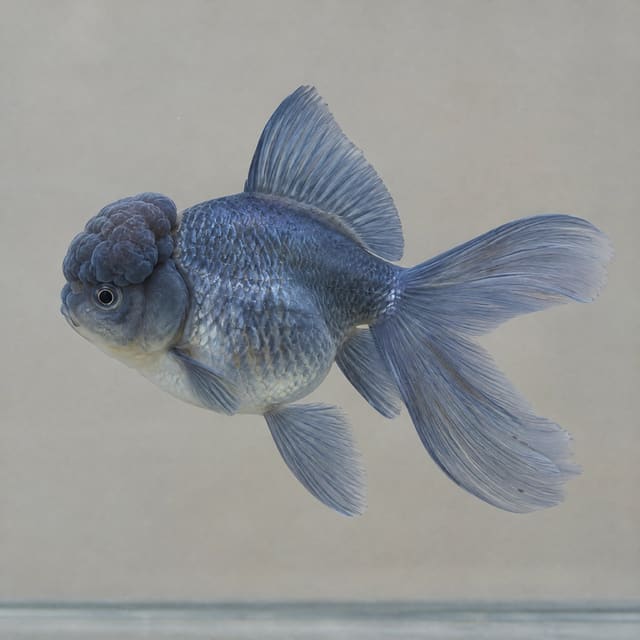
OATA says fancy goldfish can live alone or with other fancy goldfish, but not with common goldfish, which swim faster, take more of the food and sometimes nip fins. A panda looks striking next to coloured orandas such as our Blue Oranda or Red Oranda, and suits other round-bodied fancies like the Red Broadtail fancy goldfish.
| Suits | Avoid |
|---|---|
| Orandas of a similar size | Comets, shubunkins and other single-tailed goldfish |
| Other twin-tailed fancies with a slow swimming style | Tropical fish kept warm |
| Fish that accept goldfish foods at the same pace | Fin nippers and boisterous feeders |
Check your planned mix with our tank mates tool. Single-tailed goldfish need different housing; see our cold water fish page.
A welfare report covered by Practical Fishkeeping notes that debris can collect in the folds of an oranda's hood and lead to bacterial and fungal infections. Clean water, regular siphoning and smooth décor reduce that risk. OATA's list of warning signs includes hanging at the surface or lying on the bottom, colour much darker or paler than usual, faster or slower breathing, white spots or fluffy growths, damaged fins or missing scales, weight change and poor appetite.
OATA says goldfish can breed in large home aquariums, helped by two males to each female and by warming the water slowly to about 20°C followed by a partial water change. Eggs are laid among plants or on a spawning mop and should be moved away from the adults, which eat eggs and fry; they hatch in about three days. Never release goldfish or aquarium water into the wild.
Black-and-white goldfish are a recent chapter in a very long story. Omori and Kon (2019) date goldfish domestication to southern China about 1,000 years ago and count at least 180 varieties, while Chen and colleagues (2020) used the genomes of 185 goldfish varieties and wild crucian carp to trace their origin and the traits that separate the main groups.
Because of its black-and-white colouring, like a giant panda. It is an ordinary oranda, a hooded and twin-tailed fancy goldfish, in a black-and-white colour form.
OATA says fancy goldfish are unlikely to exceed 20 cm, Practical Fishkeeping gives 20–31 cm for orandas, and Practical Fishkeeping reported a 26 cm panda oranda imported from China. Plan for at least 20 cm.
It may. Practical Fishkeeping notes that goldfish colour can change almost completely with age, that many goldfish whiten as they mature and that black goldfish can develop orange patches underneath. The black-and-white pattern you buy is not guaranteed for life.
The 6–7 cm fish is a young panda with its hood and markings still developing. The 8–9 cm Hi Grade fish is larger and sold as a selected, higher-grade fish, with more of its hood and pattern already showing.
Usually not. OATA gives fancy goldfish an ideal of 15–23°C and recommends a heater only if the room gets very cold. Avoid warm water: Practical Fishkeeping reports claims that black goldfish can turn orange when kept warm.
No. OATA advises keeping fancy goldfish in indoor aquariums only. Orandas are slow swimmers and sensitive to low temperatures, so an outdoor pond does not suit them.
At least 150 litres, using OATA’s guide of 100 litres for the first adult and 50 litres for each extra one, with a long base so both fish have room to swim.
No reviews for this item yet. Bought one? Honest reviews only, good or bad.
What customers say about ordering from us
Easy website plenty of info on fish your buying great to pick a time slot
TRACEY DURRANT · 7 Oct 2026
Got some lovely fish thank you
Kevin Mackie · 7 Oct 2026
Reviews of our shop, collected by Judge.me, an independent third-party review collector. Newest first.
Moved by UK carriers licensed to handle live animals
Hand-packed with oxygen bags, poly box, heat pack
Email photos the same day; an optional unboxing video helps us review problems faster — claim terms apply
Klarna & PayPal Pay in 3 at checkout