Moderate
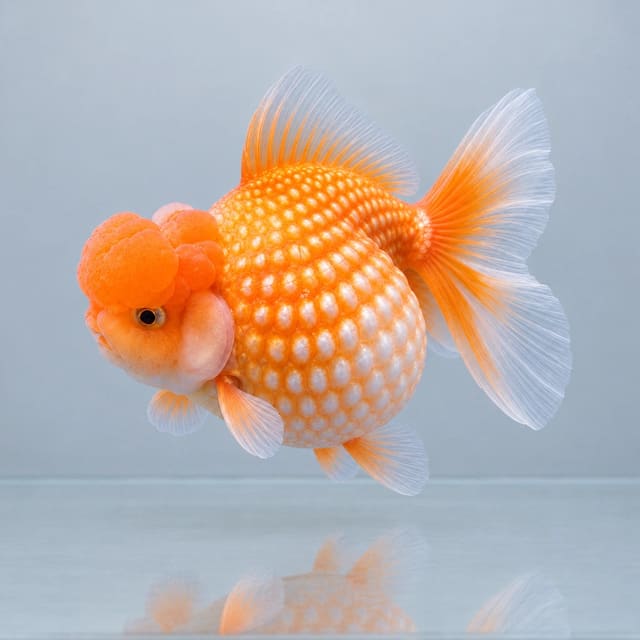
Pearlscale Goldfish (Carassius auratus)
100L
£20.89
The Bubble Eye is a fancy goldfish (Carassius auratus) with a soft, fluid-filled sac under each eye and no dorsal fin. It grows to about 20 cm and needs an indoor aquarium of 100 litres or more with smooth décor, covered filter intakes, gentle flow and only slow, gentle fancy goldfish for company. Sold as one live fish at about 5 cm.
Adult size is the maximum length this species reaches at full maturity (scientific sources). The livestock you receive will be younger and smaller. Product-photo provenance and any image-specific limitations are stated on the listing.
Carassius auratus
Quantity discounts are pricing offers, not a group-size recommendation. Check the full care guidance and your existing animals before choosing a quantity.
The Bubble Eye is a fancy goldfish (Carassius auratus) with a soft, fluid-filled sac under each eye and no dorsal fin. It grows to about 20 cm and needs an indoor aquarium of 100 litres or more with smooth décor, covered filter intakes, gentle flow and only slow, gentle fancy goldfish for company. Sold as one live fish at about 5 cm.
Adult size is the maximum length this species reaches at full maturity (scientific sources). The livestock you receive will be younger and smaller. Product-photo provenance and any image-specific limitations are stated on the listing.
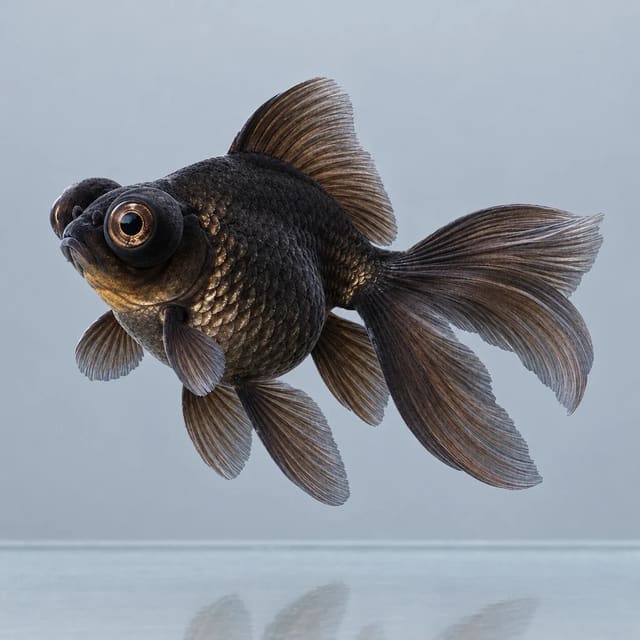
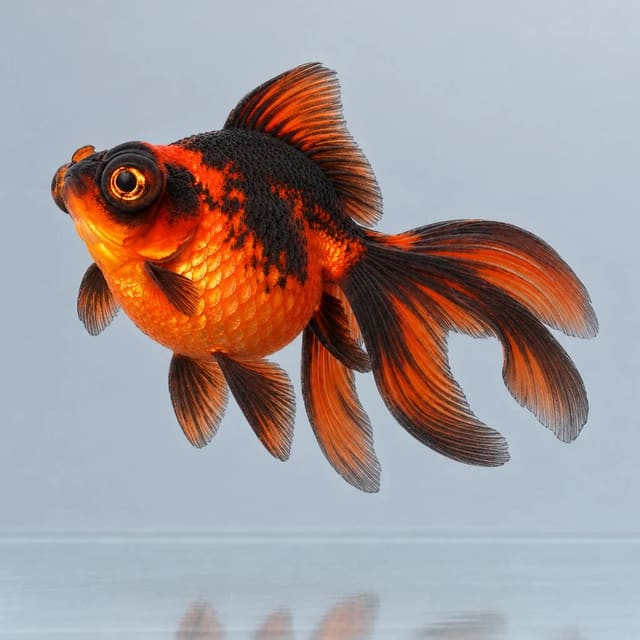
The Bubble Eye goldfish is a fancy goldfish (Carassius auratus) with a soft, fluid-filled sac beneath and around each eye, a smooth back with no dorsal fin and a short, divided tail. The fish in our photographs is a bright metallic orange with pale-edged fins and two large, translucent bubbles that wobble gently as it swims. It is a domesticated variety of a carp-family species that FishBase records as native to East Asia.
In the scientific literature the sacs are described as a developed infraorbital vesicle; Ota and Abe’s review of goldfish anatomy lists the bubble eye under its Japanese strain name, Suihougan. The Bristol Aquarists’ Society bubble eye standard calls the variety comparatively rare in the UK, though growing in popularity, and notes that in the Far East fish with small bubbles and celestial eyes are known as frogheads or toadheads.
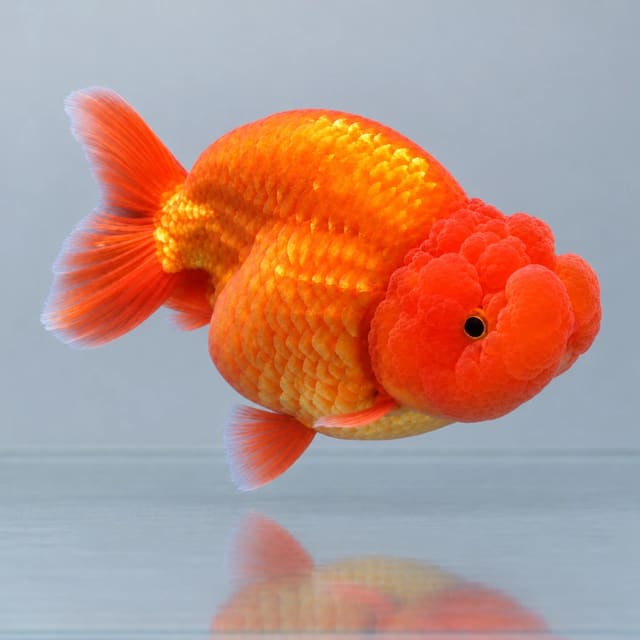
Like the ranchu, the bubble eye has lost its dorsal fin through selective breeding. A 2020 study of 27 goldfish strains located genetic regions linked to dorsal fin loss, a reminder that this shape is held only by careful selection.
| Feature | Bristol standard |
|---|---|
| Eye sacs | Under and around the sides of each eye, well developed and matched in size and shape |
| Dorsal fin | Absent; back smooth |
| Body | Medium length, depth about 50% of body length |
| Tail | Divided and forked, lobes held above the horizontal |
| Minimum show length | 5.5 cm body |
| Colours | Metallic self or variegated colours, or calico |
Some fish carry a second, smaller bubble on each side below and behind the mouth; the Bristol society calls this a double bubble.
Each purchase is one live Bubble Eye goldfish at about 5 cm. That is just under the 5.5 cm minimum the Bristol standard sets for showing, so your fish is a youngster whose body and sacs are still growing. Sex is not chosen or guaranteed.
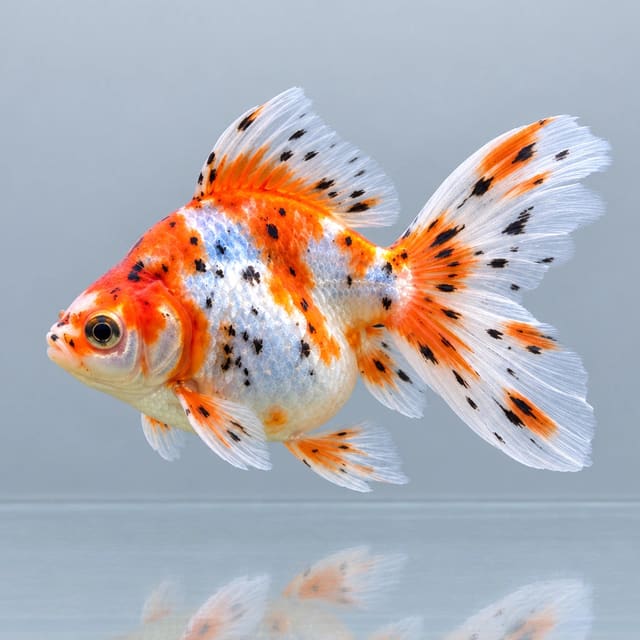
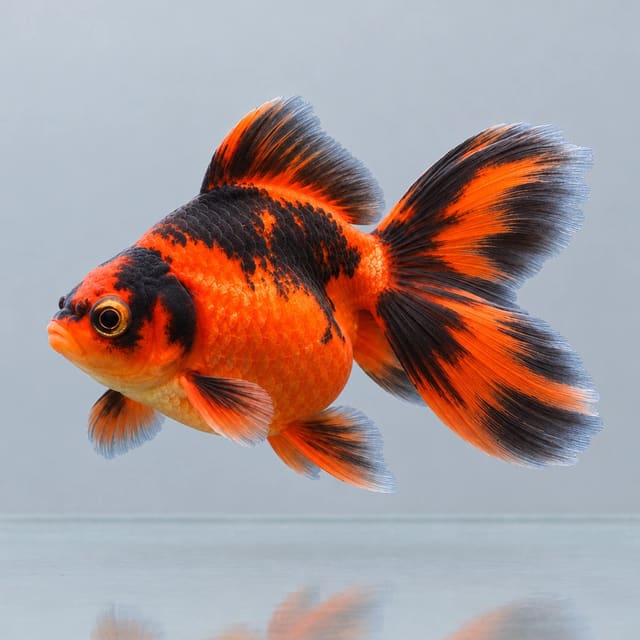
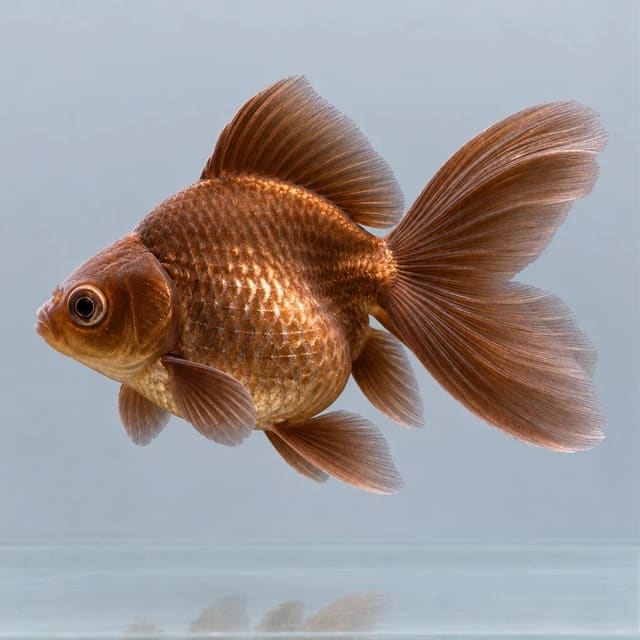
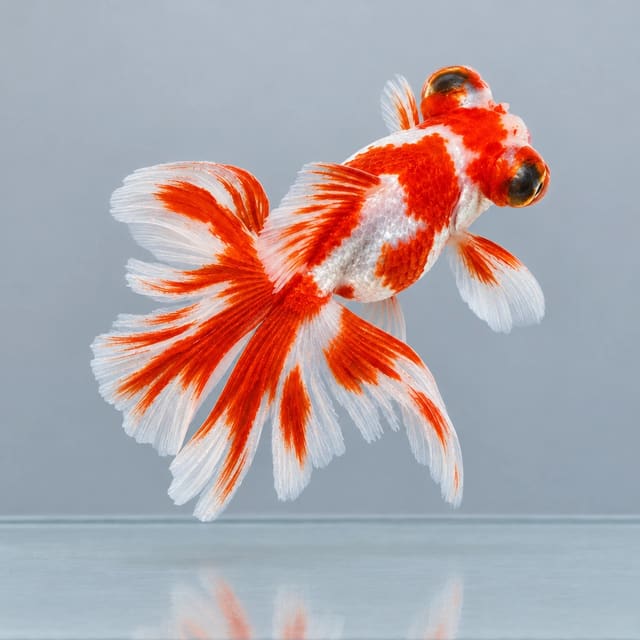
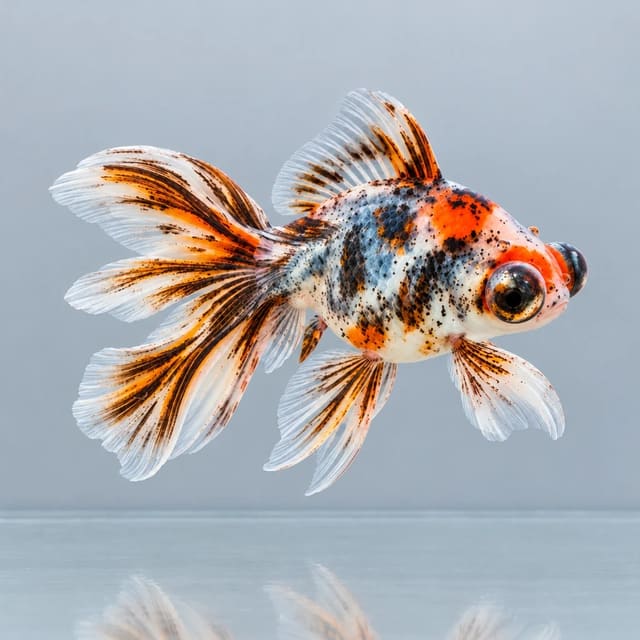
The gallery images are representative pictures of the variety, created from a reference photograph, and do not show the individual fish you will receive. Expect the same colour form and dorsal-less shape, with natural differences in sac size, tail shape and shade. Browse more goldfish and coldwater fish or the fancy goldfish category to plan companions.
The Bristol society says a larger sac on one side is common and does not affect the fish’s health, even though it makes the fish look unbalanced to a show judge, and it notes that long tail lobes and slimmer bodies are typical of Far Eastern lines. With proper accommodation, the society adds, the bubbles do not disadvantage the fish, and bubble eyes become very tame.
The bubbles are the reason to buy this fish and the main thing to protect. The Bristol society calls them fragile and advises keeping bubble eyes away from boisterous fish and sharp tank décor. OATA’s fancy goldfish care sheet makes the same point for all fancies: avoid sharp or rough décor that could damage long fins or delicate eyes, and keep the current gentle.
Three things can damage a sac: a filter intake that pulls the fish against it, a rough or pointed object, and a faster tank mate that bumps or nips. Each has a simple fix, set out below, and all of them should be in place before the fish goes in.
| Hazard | Safer choice |
|---|---|
| Open filter intake | Cover it with a sponge pre-filter, or use a sponge filter |
| Strong outlet | Spray bar or diffused return aimed along the glass |
| Rough rock, lava rock, slate edges | Smooth, rounded stones and smooth wood |
| Ornaments with narrow holes | Open, smooth shapes the fish cannot wedge into |
| Sharp gravel | Rounded gravel or soft sand |
| Hard-edged artificial plants | Soft silk plants or tough-leaved live plants |
| Unguarded heater, if one is used | A heater guard |
| Fast or pushy companions | Other slow, gentle fancy goldfish only |
Move the fish without a net whenever possible. Guide it into a jug or small container and lift it in water, so the sacs never press against mesh.
The Bristol Aquarists’ Society states that bubbles regrow if punctured. A damaged sac is still an open wound, though, and the fish needs the cleanest water you can give it while it heals.
Never try to drain or pierce a sac on purpose. A regrown bubble may not exactly match its partner, which, as above, the Bristol society does not regard as a health problem.
OATA gives fancy goldfish an adult size of about 20 cm and asks for at least 100 litres for one adult plus 50 litres for each extra adult. The RSPCA sets a minimum of 60 litres per goldfish. The Maidenhead Aquatics database suggests a tank around 1.2 metres long for dorsal-less fancies such as the ranchu and says length and width count for more than height.
| Bubble eyes and gentle fancies | OATA minimum | RSPCA minimum |
|---|---|---|
| 1 | 100 litres | 60 litres |
| 2 | 150 litres | 120 litres |
| 3 | 200 litres | 180 litres |
Use the tank volume calculator to check how much water your aquarium really holds, and the stocking calculator to check the planned group. A bowl is never suitable: the RSPCA rules bowls out for every goldfish because they are too small, cannot hold an efficient filter and swing in temperature.
OATA says fancy goldfish are best kept in indoor aquaria only, and for a bubble eye that is not negotiable: a pond would expose the sacs to rough edges, debris, birds and faster fish. A heater is usually unnecessary indoors. The RSPCA gives 10–21°C for goldfish and OATA 4–25°C with 15–23°C best, so we suggest a steady 15–21°C, away from sunny windows, radiators and draughts.
| Reading | OATA | Other sources | Target for a bubble eye |
|---|---|---|---|
| Temperature | 4–25°C (best 15–23°C) | RSPCA 10–21°C | 15–21°C, steady |
| pH | 6.5–8.5 | FishBase 6.0–8.0; Maidenhead 7.0–8.0 | 7.0–8.0 |
| General hardness | 8–18 dGH | FishBase 5–19 dH | 8–18 dGH |
| Carbonate hardness | 5–15 dKH | — | 5–15 dKH |
| Ammonia, nitrite | 0 mg/l | — | 0 mg/l |
| Nitrate | ≤ 20 mg/l above tap | — | As low as you can keep it |
Add a conditioner for chlorine and chloramine to every change, as OATA advises; our water care products include suitable ones. Test your tap water once and compare it with the table in the water matcher. Our water chemistry guide explains pH, hardness and nitrate in plain terms. Clean, stable water is also the best protection for the sacs, because a small scrape heals far better in good conditions.
Fancy goldfish make a lot of waste, so the filter has to be efficient, but OATA notes that fancy breeds prefer a gentle current. For a bubble eye, the intake matters as much as the outlet. A sponge filter, or any filter whose intake is covered with a sponge pre-filter, removes the risk of a sac being drawn against the slots.
Mature the filter before the fish arrives. The RSPCA advises fishless cycling for at least two weeks, testing every other day, until ammonia and nitrite have spiked and returned to zero. Our nitrogen cycle guide and filtration guide explain the process.
OATA recommends a goldfish flake, granule or pellet with daphnia, bloodworm, brine shrimp, blanched lettuce or shelled peas as extras, fed once a day in an amount eaten within a few minutes. Fancy goldfish lose out at feeding time to faster fish, and a bubble eye, with its sacs around the eyes, is among the slowest. Sinking foods let it feed on the bottom at its own pace and, as the Maidenhead database points out for dorsal-less fancies, reduce the air swallowed at the surface, which is linked to buoyancy trouble.
If it floats, tips or struggles to stay level after eating, try a different or slower-sinking food as OATA suggests, and read our guide to fish swimming sideways.
Check that ammonia and nitrite are zero before delivery. Then use OATA’s floating-bag method: lights off, float the sealed bag for about 10 minutes, add small amounts of tank water over up to 20 minutes and release the fish. Tip the bag gently so the fish swims out by itself; do not pour it through a net. Our acclimatisation guide shows each step and our delivery and Live Arrival Guarantee page sets out what to do if anything is wrong.
| When | Check |
|---|---|
| Day 1 | Lights off; watch that the fish is not drawn towards the intake |
| Day 2 | First small sinking meal at a fixed spot |
| Daily | Both sacs intact, breathing steady, swimming level |
| Day 3–4 | Test ammonia and nitrite |
| Day 7 | First routine water change |
OATA says fancy goldfish can live alone or with other fancy goldfish and advises against common goldfish, which swim faster, out-compete fancies for food and sometimes nip fins. The Bristol society goes further for the bubble eye, advising that it be kept apart from boisterous types. Choose companions that are as slow and gentle as it is.
| Suits | Use caution | Avoid |
|---|---|---|
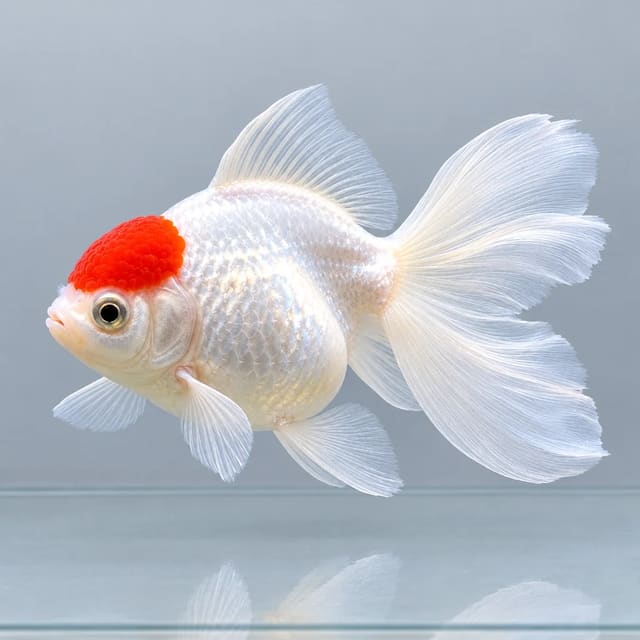
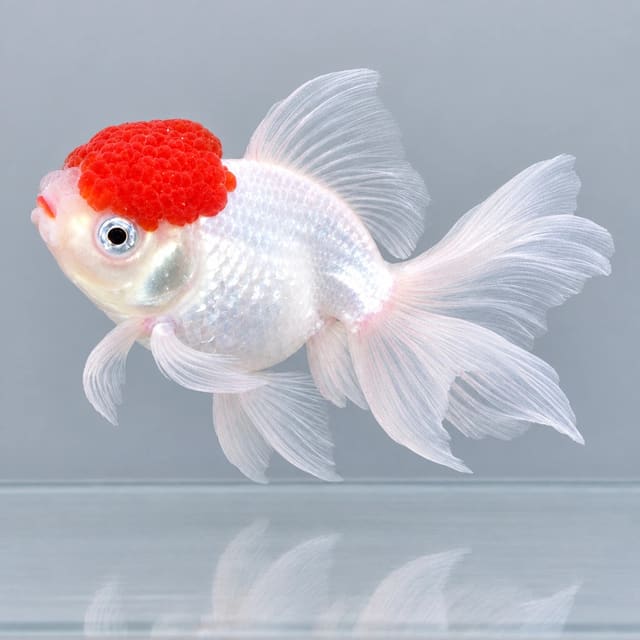
| Other bubble eyes | Calm orandas such as the Red Oranda | Comets, commons and shubunkins |
| Lionheads and ranchu | Large, older fancies of any type | Ryukins and other fast twin-tails |
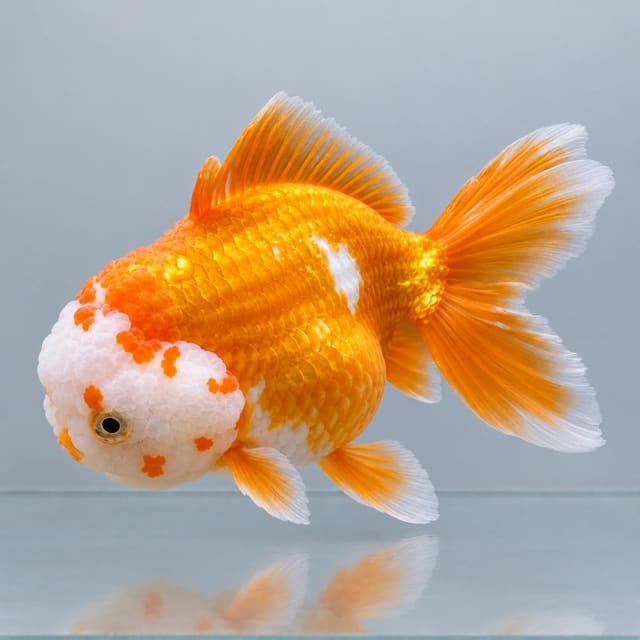
| Other slow, round fancies | Pearlscales, which the Bristol society calls very lively | Koi, pond fish and tropical fish |
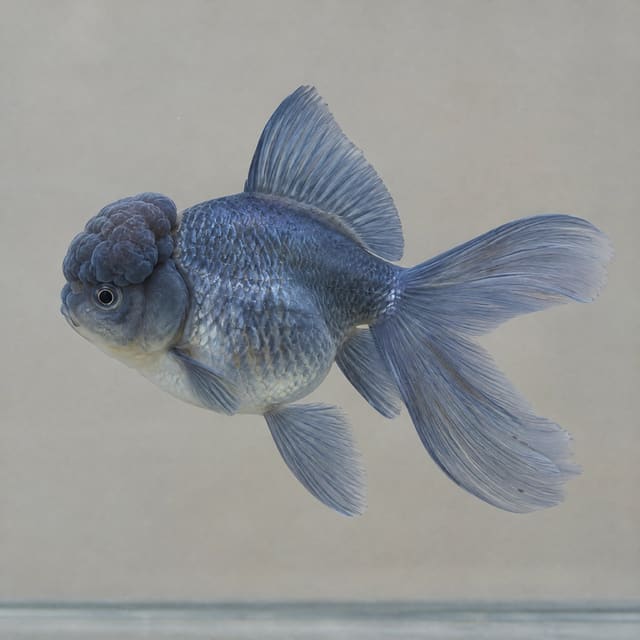
Watch the first few feeds closely when you add any companion; an oranda such as the Blue Oranda is usually calm, but the slower bubble eye should still reach food without being pushed. Our comet goldfish guide explains why single-tailed goldfish need separate housing, and the tank mates tool can check any other idea.
OATA lists the signs of a healthy fancy goldfish: clear, bright eyes, whole fins, intact scales, no ulcers or bumps, normal swimming and steady breathing. For a bubble eye, add one more daily check: both sacs whole and free of redness.
| If you see | Do this |
|---|---|
| A deflated or torn sac | Find the cause, test the water, follow the injury steps above |
| Redness or fluffy growth on a sac | Improve water quality and contact us for advice |
| Fish held against the intake | Switch off, free it gently, cover the intake with sponge |
| Floating or tipping after meals | Smaller sinking meals; review the diet |
| White spots | Read our white spot guide |
| Frayed fin edges | Check water quality; see our fin rot guide |
| Gasping or lying on the bottom | Test ammonia, nitrite and temperature at once |
OATA’s guidance applies: spawning is most likely in a large tank with about two males to each female, after a slow rise to around 20°C and a partial water change. Eggs hatch in about three days and adults eat eggs and fry. Males show white tubercles on the gill covers and pectoral fins in the breeding season; females are deeper bodied. Spawning goldfish chase hard, so give a breeding pair a bare, smooth tank where nothing can catch the sacs.
The Bristol society’s goldfish notes explain that ornamental goldfish hatch as wild-type, bronze or pink fry and that wild-type fry change from dark to their adult colour over time, so young bubble eyes look nothing like their parents at first.
A fancy goldfish, Carassius auratus, with a large, soft, fluid-filled sac under and around each eye and no dorsal fin. Ota and Abe describe the sacs as a developed infraorbital vesicle and name the Japanese strain Suihougan. The Bristol Aquarists’ Society notes that the variety is comparatively rare in the UK.
Yes. The Bristol society calls the bubbles fragile and advises keeping the fish away from boisterous companions and sharp décor. Cover filter intakes with sponge, use smooth décor and rounded gravel or sand, and avoid strong currents.
The Bristol Aquarists’ Society says the bubbles regrow if punctured. Treat the injury as an open wound: keep the water very clean, remove anything that could catch the fish and watch for redness or fluffy growths. Contact us if the area looks infected.
Yes. The Bristol society says a larger sac on one side is common and does not affect the fish’s health, although show judges prefer an even pair.
Plan for about 20 cm, the adult size OATA gives for fancy goldfish. OATA advises at least 100 litres for one adult and 50 litres more for each extra adult; the RSPCA gives 60 litres per goldfish as a minimum.
No, we sell it as an indoor aquarium fish only. OATA says fancy goldfish are best kept in indoor aquaria, and a pond exposes the sacs to rough surfaces, predators, debris and faster fish.
Only gentle, slow fancy goldfish: other bubble eyes, lionheads and ranchu, and calm round-bodied fancies. Avoid comets, commons, shubunkins, koi, fast twin-tails and any fish that nips or pushes.
One live Bubble Eye goldfish at about 5 cm. Sex is not chosen or guaranteed, and the sacs are still growing at this size.
No reviews for this item yet. Bought one? Honest reviews only, good or bad.
What customers say about ordering from us
Easy website plenty of info on fish your buying great to pick a time slot
TRACEY DURRANT · 7 Oct 2026
Got some lovely fish thank you
Kevin Mackie · 7 Oct 2026
Reviews of our shop, collected by Judge.me, an independent third-party review collector. Newest first.
Moved by UK carriers licensed to handle live animals
Hand-packed with oxygen bags, poly box, heat pack
Email photos the same day; an optional unboxing video helps us review problems faster — claim terms apply
Klarna & PayPal Pay in 3 at checkout