Easy
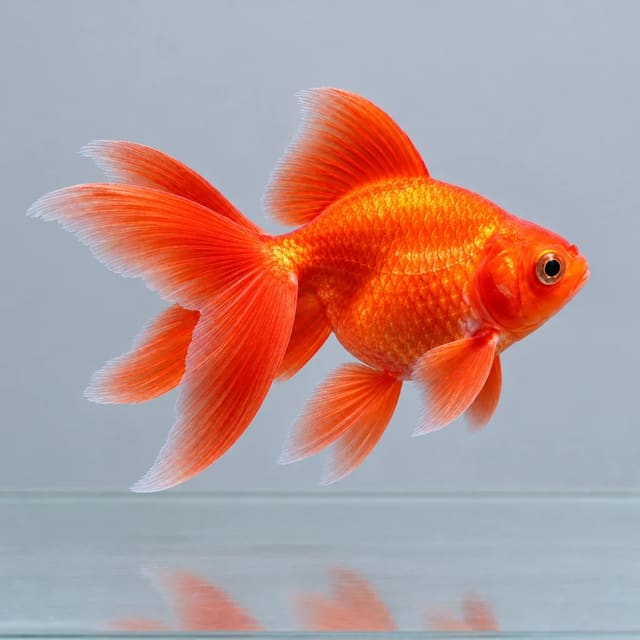
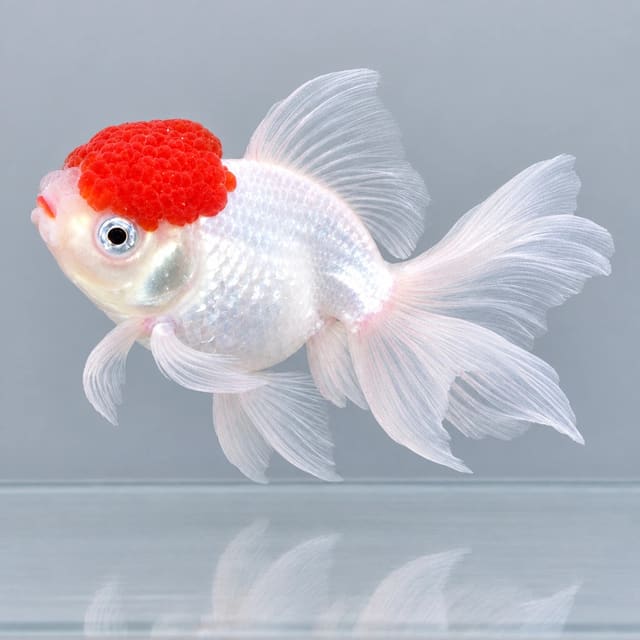
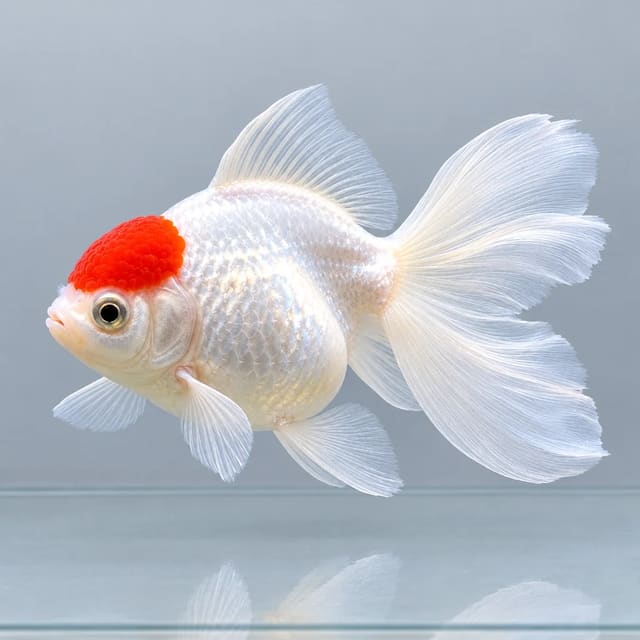
Red Cap Fantail Goldfish (Carassius auratus)
4–25°C · pH 6.5–8.5 · 100L
£10.39
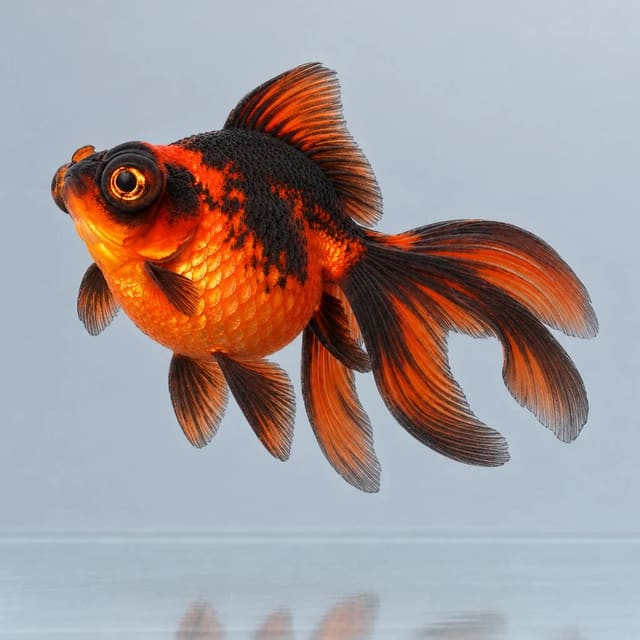
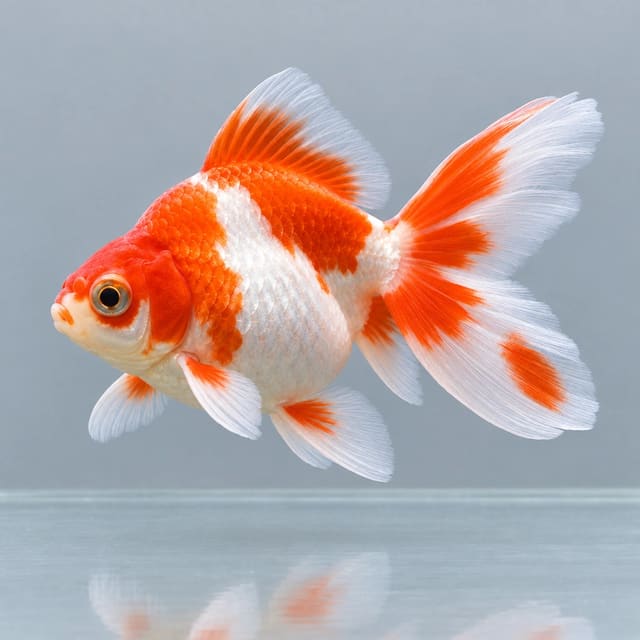
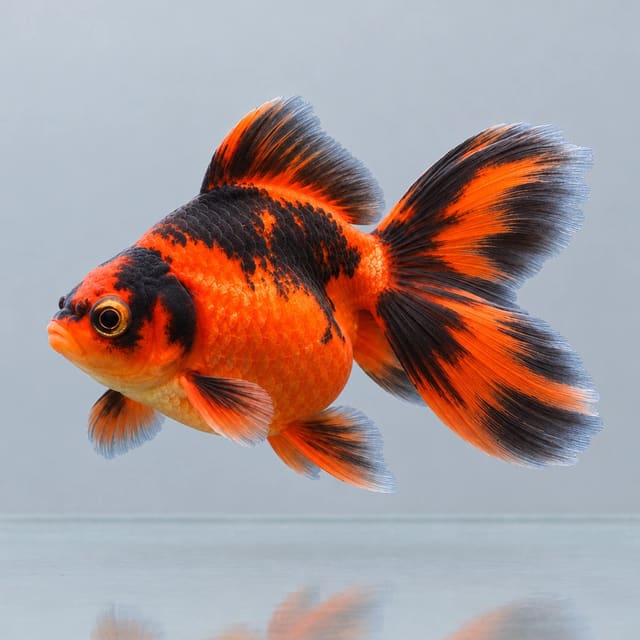
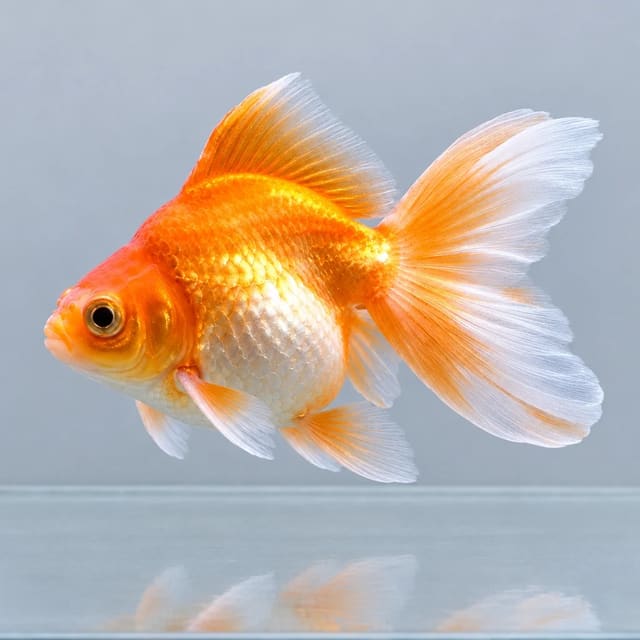
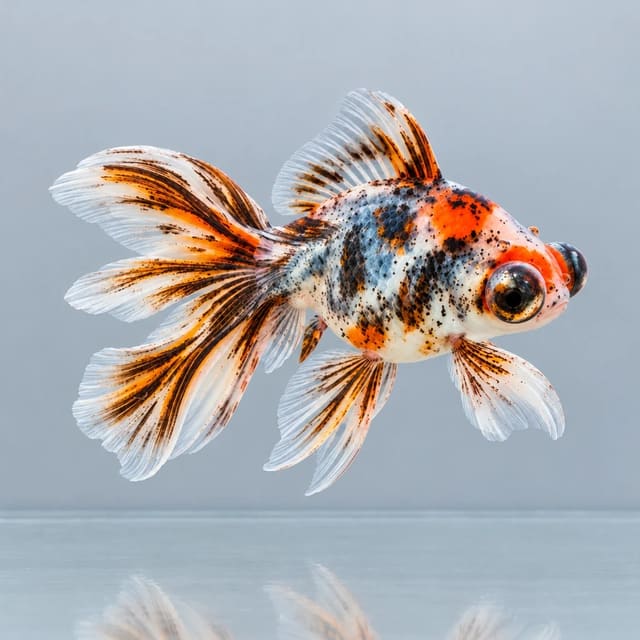
The Calico Fantail Goldfish is a twin-tailed fancy goldfish (Carassius auratus) with pearly nacreous scales patched in orange, red, white and blue and spotted with black, so every fish is unique. It stays under about 20 cm and suits an indoor coldwater aquarium of at least 100 litres for one adult, with other gentle fancy goldfish. Sold individually in three sizes.
Adult size is the maximum length this species reaches at full maturity (scientific sources). The livestock you receive will be younger and smaller — pick a size above for the actual shipping size. Product-photo provenance and any image-specific limitations are stated on the listing.
Carassius auratus
Quantity discounts are pricing offers, not a group-size recommendation. Check the full care guidance and your existing animals before choosing a quantity.
The Calico Fantail Goldfish is a twin-tailed fancy goldfish (Carassius auratus) with pearly nacreous scales patched in orange, red, white and blue and spotted with black, so every fish is unique. It stays under about 20 cm and suits an indoor coldwater aquarium of at least 100 litres for one adult, with other gentle fancy goldfish. Sold individually in three sizes.
Adult size is the maximum length this species reaches at full maturity (scientific sources). The livestock you receive will be younger and smaller — pick a size above for the actual shipping size. Product-photo provenance and any image-specific limitations are stated on the listing.
Read the full care guidance when planning conditions for your aquarium.
The calico fantail goldfish is a twin-tailed fancy goldfish, Carassius auratus, whose pearly scales are patched in orange, red and white over a soft bluish base and freckled with black. The same colours run into the translucent fins, so the divided fan-shaped tail looks speckled and almost lace-like. Because the pattern is set differently in every fish, no two calico fantails are ever the same.
Underneath the colour it is a standard fantail: a short, deep, rounded body, one dorsal fin and paired anal and tail fins. That body shape makes it a gentle, slow swimmer that suits an indoor coldwater aquarium without a heater. It belongs to the same species as every other goldfish, a member of the carp family that FishBase lists as native to East Asia, China and Japan.
| Element | Show ideal |
|---|---|
| Background | Blue |
| Patches | Violet, red, orange, yellow, brown and white |
| Spotting | Black, over the body and into the fins |
| Spread of colour | High and even, with colour, especially black, extending into the fins |
| Body and tail | Body about 65% as deep as long; divided tail held high without drooping |
That is how the UK fantail standard, published by the Bristol Aquarists’ Society, describes a calico fantail. Practical Fishkeeping’s breeding feature asks for a deep blue base and adds that many breeders like black body spots and black stripes in the fins; it lists too little blue and too much orange or red among the common faults. A pet calico rarely matches the show ideal exactly, and that variety is part of its appeal. Browse the rest of our fancy and coldwater goldfish range and the fancy goldfish category for other twin-tailed forms.
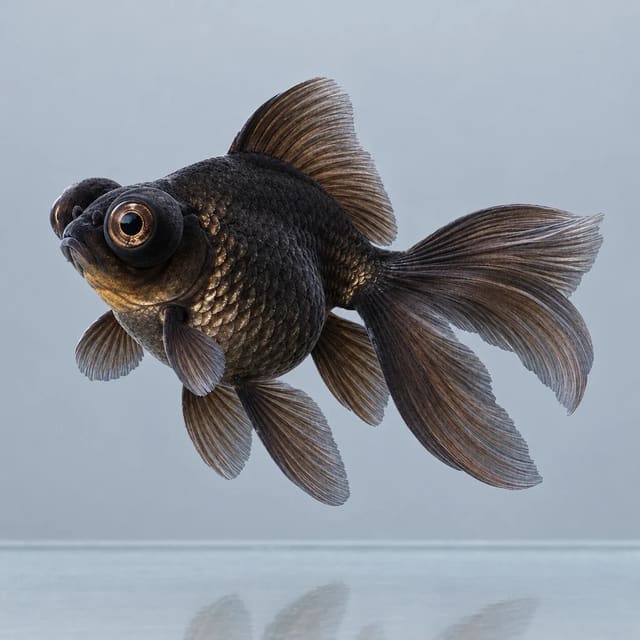
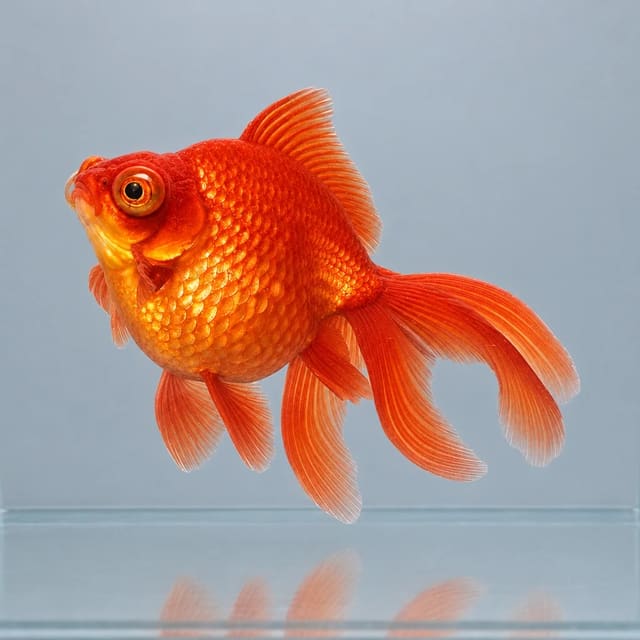
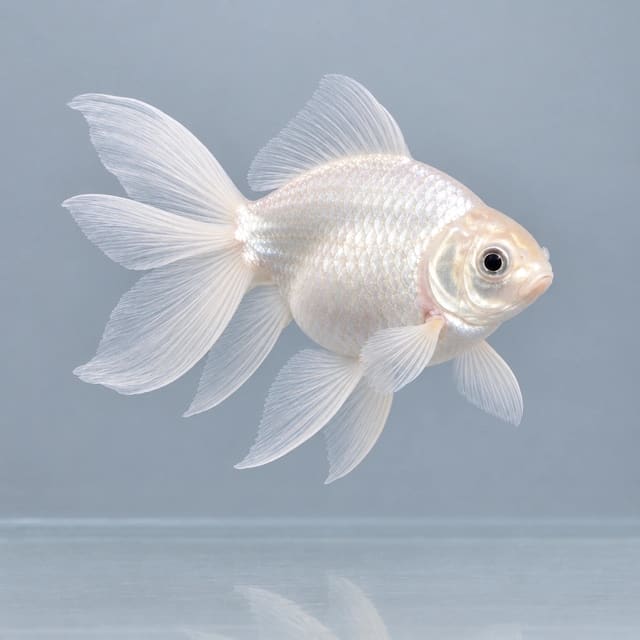
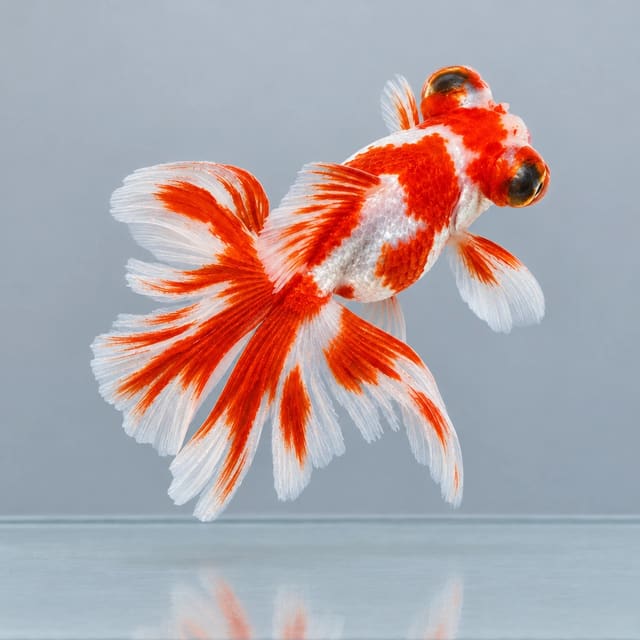
Each purchase is one live calico fantail goldfish in the size you select: 3–4 cm, 5–6 cm or 8–10 cm. The sizes are approximate. The photographs show a typical grown calico fantail; your fish will have its own arrangement of patches and spots, and the balance of orange, white, blue and black will differ.
| Size | Colour | Fins |
|---|---|---|
| 3–4 cm | Still developing; patches and spots can shift as the fish grows | Short, still growing |
| 5–6 cm | Main patches visible, finer spotting still filling in | Twin tail clearly formed |
| 8–10 cm | Pattern largely settled, so you see what you are getting | Fuller fan shape |
The Bristol Aquarists’ Society explains that all goldfish hatch in a dark wild-type colour and reach their adult colours as black pigment cells are gradually lost, which is why the pattern of a small calico can still change. Before you order, have the aquarium set up and matured, and read our delivery information and Live Arrival Guarantee.
Goldfish scales are transparent; the finish comes from a reflective layer of guanine crystals underneath. The Bristol society describes three scale types. Metallic scales have the full reflective layer and look like burnished metal. Nacreous scales have only part of it and look like dull mother-of-pearl. Matt scales have none and look flat. A calico goldfish is covered mainly in matt and nacreous scales with a few fully reflective ones, which gives the soft, pearly sheen and lets the blue and violet tones show through.
So a calico kept at the cooler end of its range, under good light and on a varied diet, has the best chance of holding its contrast, though some change over the years is natural and not a health problem.
OATA, the UK ornamental fish trade association, states in its fancy goldfish care sheet that fancy goldfish usually stay under 20 cm and often live six to eight years. It asks for at least 100 litres for one adult and about 50 litres for every further adult. The RSPCA uses a different rule, 2 litres of water per 0.5 cm of goldfish and never less than 60 litres each, which asks for more water once you keep two or more full-grown fish. Plan for whichever figure is larger.
| Aquarium (L × D × H) | Approximate volume | Adult fancy goldfish (larger of OATA and RSPCA) |
|---|---|---|
| 80 × 35 × 40 cm | 112 litres | 1 |
| 100 × 40 × 45 cm | 180 litres | 2 |
| 120 × 60 × 45 cm | 324 litres | 3, the size Practical Fishkeeping suggests for three adult twin-tails |
The volumes are simple length × depth × height before gravel and décor, so the real water volume is a little lower. Work out your own aquarium with our tank volume calculator and check the full adult group in the stocking calculator. OATA recommends indoor aquaria only for fancy goldfish, although a Bristol society breeder keeps fantails in outdoor ponds; for a pet calico, indoors is the safer choice.
Round-bodied goldfish are not strong swimmers, and their long, thin fins split easily. OATA asks for gravel or sand, décor without sharp or rough edges, and a gentle current, achieved by turning the filter down or using a spray bar. Practical Fishkeeping recommends small, round, inert gravel the fish can sift and mouth safely, smooth pebbles, water-worn wood, and either hardy plants such as Anubias attached to wood or non-spiky plastic plants.
Keep the aquarium away from radiators, draughts and direct sunlight, which all cause temperature swings, and give it eight to ten hours of light a day, the RSPCA’s suggestion for most aquarium fish.
Goldfish adapt to a wide range of water, so stability matters more than chasing exact numbers. The sources give slightly different ranges:
| Reading | OATA (fancy goldfish) | Other source |
|---|---|---|
| Temperature | 4–25°C, best 15–23°C | RSPCA 10–21°C |
| pH | 6.5–8.5 | FishBase 6.0–8.0 |
| General hardness | 8–18 dGH | FishBase 5–19 dH |
| Carbonate hardness | 5–15 dKH | – |
| Ammonia and nitrite | 0 mg/l | RSPCA 0 mg/l |
| Nitrate | No more than 20 mg/l above tap water | – |
We suggest 15–21°C, where OATA’s best range and the RSPCA’s range overlap; it also helps the black spotting last. Treat every water change with a dechlorinator from our tap water conditioners, because UK tap water contains chlorine or chloramine. Test your tap water’s hardness and pH, enter the readings in our water matcher tool, and read the guide to water chemistry if a value looks unusual.
A filter is always essential for goldfish, says OATA, and the aquarium should be matured before any fish goes in. The RSPCA recommends a fishless cycle of at least two weeks, testing every other day until ammonia and nitrite have risen and fallen back to zero; our article on how the nitrogen cycle works explains each stage. For a group of three adult twin-tailed goldfish, Practical Fishkeeping suggests an external filter of at least 1,000 litres per hour with an airstone.
OATA advises a food made for goldfish, as they need more carbohydrate than many other fish, fed once a day in an amount that is eaten within a few minutes. Live or frozen foods and vegetables, such as daphnia, bloodworm, brine shrimp, aquatic plants, blanched lettuce and thawed, shelled peas, add variety. Round-bodied goldfish sometimes gulp air while feeding and lose their balance for a while afterwards; OATA suggests a different or slow-sinking food, and our article on fish swimming sideways covers what to check.
| Day | Meal |
|---|---|
| Monday, Wednesday, Friday | Sinking staple: Tropical Goldfish Pellet or Super Goldfish Mini Sticks |
| Tuesday | Thawed frozen Koi and Goldfish Special |
| Thursday | Thawed Frozen Daphnia |
| Saturday | Shelled peas or blanched greens, plus a pinch of freeze-dried brine shrimp |
| Sunday | Light staple feed or a rest day |
Whatever you feed, give only what is cleared in a few minutes and net out leftovers. Goldfish beg constantly, but extra food simply turns into ammonia.
Introduce your calico fantail only when ammonia and nitrite read zero. OATA’s floating-bag method is to dim the aquarium lights, float the unopened bag for about 10 minutes, then add small amounts of aquarium water to it over up to 20 minutes before releasing the fish with as little bag water as possible. Our step-by-step acclimatisation guide shows each stage.
Calico fantails are peaceful and do best with other slow, fancy goldfish. OATA advises against keeping fancy goldfish with common goldfish, which swim faster, take most of the food and sometimes nip fancy fins. Practical Fishkeeping says fantails and ryukins are as easy to keep as telescopes and that the three mix well, while the delicate, long-finned British veiltail is better left out of such a group.
| Good companions | Keep apart |
|---|---|
| Other fantails and calico fancies | Comets and common goldfish |
| Orandas and ryukins of a similar size | Any fin-nipping species |
| Telescopes and moors | Heat-loving tropical fish |
From our range, the Red and Black Oranda Goldfish, the Blue Oranda Goldfish, the Red and White Ryukin Goldfish and the Mixed Long-Fin Goldfish share its needs. The single-tailed Bronzed Comet Goldfish belongs in a separate, larger set-up; our guide to comet goldfish covers their care, and the wider goldfish category lists our other single-tailed fish. Run any combination through our tank mates checker before you buy.
OATA lists the signs of a healthy fish: clear, bright eyes, undamaged fins, intact scales, no ulcers or bumps, normal swimming and steady breathing. Warning signs include clamped fins, flicking against gravel or décor and shimmying on the spot.
| Sign | First step |
|---|---|
| Fast gill movement or gasping at the surface | Test ammonia and nitrite straight away and increase aeration |
| Fine white spots like grains of salt | Test the water and read our white spot treatment article |
| Tilting or floating after meals | Reduce food, use sinking food and offer peas |
| Split or ragged fins | Check décor and tank mates, test the water and keep it very clean |
| Loss of appetite or hiding | Test the water first, then watch for bullying |
Fading black spots on their own are not a symptom; as explained above, black often fades naturally over time.
Calico colour does not breed true. The Bristol society records that pairing two calicos gives roughly 50% calico young, 25% pink, matt-scaled fish and 25% bronze, fully metallic fish. Some calico-type goldfish, known as midnights, even start calico and turn black as they age. That is part of why each calico fantail is unique and why breeders raise many fish to keep a few; one Bristol breeder keeps about 20 fish from roughly 3,000 fry a year.
In the breeding season mature males show small white tubercles on the gill covers and pectoral fins, and females look deeper-bodied. OATA suggests two males to each female and a slow rise to about 20°C after a partial water change to trigger spawning, with eggs hatching in about three days; Practical Fishkeeping’s fantail breeder uses three males to each female at about 17°C over Hornwort. The parents eat their eggs, so the eggs must be moved to a separate aquarium.
A twin-tailed fancy goldfish, Carassius auratus, with calico colouring: a pearly, bluish base covered in patches of orange, red, white and other colours and spotted with black. The pearly look comes from nacreous scales, which reflect less light than ordinary metallic goldfish scales.
The pattern is laid down differently in every fish, and even calico parents produce mixed young: the Bristol Aquarists’ Society says about half come out calico, a quarter pink and a quarter bronze. No two calicos are identical, so the fish you receive will not match the photograph exactly.
Not always. Practical Fishkeeping notes that black is not a dominant colour in goldfish and often fades over time, faster in warmer water. Keeping the aquarium at the cooler end of the range and giving good light helps the colour stay bold.
Fancy goldfish usually stay under 20 cm, according to OATA, and often live six to eight years. The Bristol Aquarists’ Society gives about ten years for fantails.
At least 100 litres for one adult and about 50 litres more for each extra adult (OATA). The RSPCA rule of 2 litres per 0.5 cm of fish asks for more once you keep two or more adults, so plan for the larger figure.
Normally not. OATA’s range is 4–25°C, best at 15–23°C, and the RSPCA gives 10–21°C, so a room-temperature indoor aquarium suits it. Only fit a thermostatic heater if the room gets very cold.
A sinking goldfish pellet or stick once a day, only what is eaten in a few minutes, plus daphnia, brine shrimp, bloodworm and shelled peas for variety. Avoid overfeeding, which pollutes the water quickly.
Other slow fancy goldfish of a similar size, such as other fantails, ryukins and orandas. OATA advises against common goldfish, which outcompete fancy varieties for food and may nip their fins.
One live calico fantail in the size you choose: 3–4 cm, 5–6 cm or 8–10 cm. Smaller fish are still developing their colour and fins.
No reviews for this item yet. Bought one? Honest reviews only, good or bad.
What customers say about ordering from us
Easy website plenty of info on fish your buying great to pick a time slot
TRACEY DURRANT · 7 Oct 2026
Got some lovely fish thank you
Kevin Mackie · 7 Oct 2026
Reviews of our shop, collected by Judge.me, an independent third-party review collector. Newest first.
Moved by UK carriers licensed to handle live animals
Hand-packed with oxygen bags, poly box, heat pack
Email photos the same day; an optional unboxing video helps us review problems faster — claim terms apply
Klarna & PayPal Pay in 3 at checkout