Easy
Red Cap Fantail Goldfish (Carassius auratus)
4–25°C · pH 6.5–8.5 · 100L
£10.39
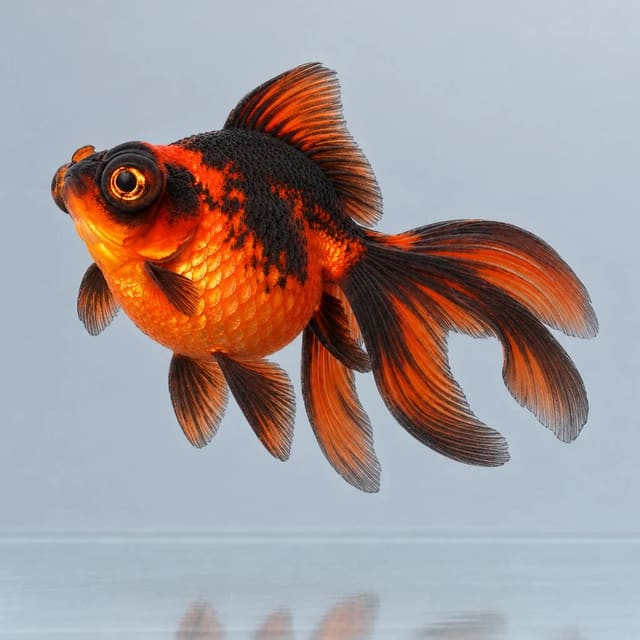
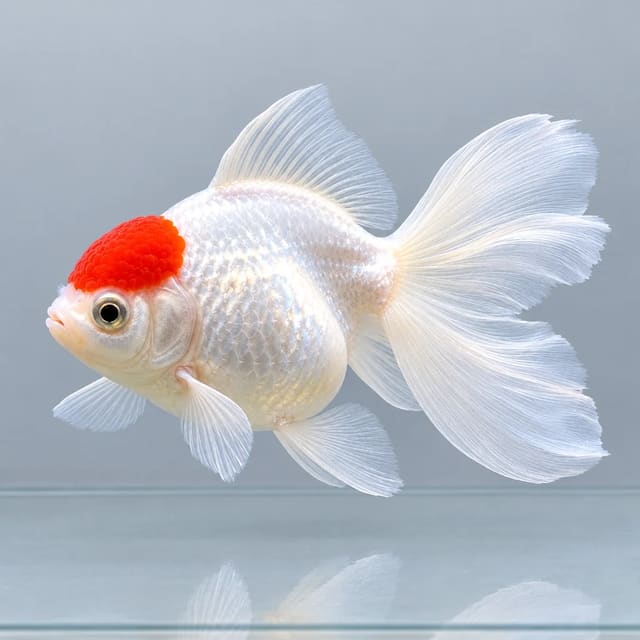
The Red Fantail Goldfish is a twin-tailed fancy goldfish (Carassius auratus) with an egg-shaped body, a fan-shaped divided tail and deep metallic red colour. It stays under about 20 cm and suits an indoor coldwater aquarium of at least 100 litres for one adult, kept alone or with other slow fancy goldfish. Sold individually in three sizes.
Adult size is the maximum length this species reaches at full maturity (scientific sources). The livestock you receive will be younger and smaller — pick a size above for the actual shipping size. Product-photo provenance and any image-specific limitations are stated on the listing.
Carassius auratus
Quantity discounts are pricing offers, not a group-size recommendation. Check the full care guidance and your existing animals before choosing a quantity.
The Red Fantail Goldfish is a twin-tailed fancy goldfish (Carassius auratus) with an egg-shaped body, a fan-shaped divided tail and deep metallic red colour. It stays under about 20 cm and suits an indoor coldwater aquarium of at least 100 litres for one adult, kept alone or with other slow fancy goldfish. Sold individually in three sizes.
Adult size is the maximum length this species reaches at full maturity (scientific sources). The livestock you receive will be younger and smaller — pick a size above for the actual shipping size. Product-photo provenance and any image-specific limitations are stated on the listing.
Read the full care guidance when planning conditions for your aquarium.
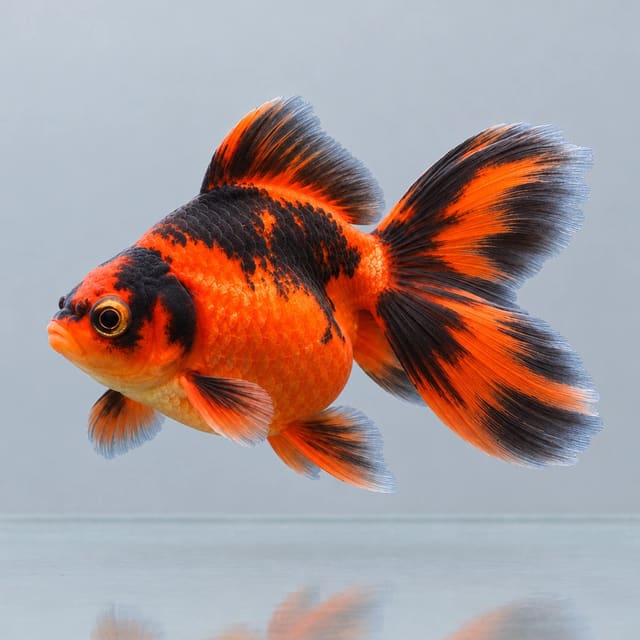
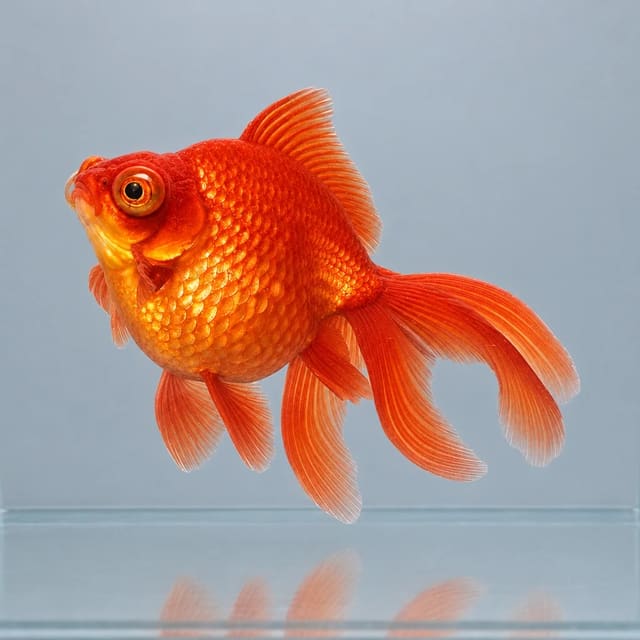
The red fantail goldfish is a classic twin-tailed fancy goldfish, Carassius auratus, with a short, egg-shaped body, a tall single dorsal fin and a divided tail that opens like a fan behind it. This colour form is a deep, glossy red to orange-red from nose to tail. It is one of the easiest fancy goldfish to keep and a good first choice for an indoor coldwater aquarium with no heater.
Every goldfish variety, from the long-bodied comet to the oranda, belongs to one species in the carp family, Cyprinidae. FishBase gives the native range as East Asia, China and Japan. Practical Fishkeeping notes that goldfish descend from a wild Asian carp and were first bred for colour in China more than 1,000 years ago, and the Bristol Aquarists’ Society traces the first record of gold colour to the Jin dynasty (265–419). Goldfish reached Japan in 1603 and Europe, through Portugal, in 1611, and were first bred in Europe in Holland in 1728.
| Feature | What to look for |
|---|---|
| Body | Short and rounded with a smooth outline, about 65% as deep as it is long |
| Tail | Divided and forked, with slightly rounded lobes held above the horizontal so it forms a fan seen from above |
| Other fins | A single dorsal fin; every other fin paired, with slightly rounded tips |
| Fin length | Relatively short compared with a veiltail |
| Colour | Intense metallic red with the shine reaching into the fins |
These points come from the UK fantail standard published by the Bristol Aquarists’ Society, which lists red among the metallic self colours. Practical Fishkeeping adds that a good fantail swims level, has no bump behind the head and holds its tail firmly rather than letting it droop. Compare it with the other varieties in our goldfish and coldwater fish range and in the fancy goldfish category, such as the Red and White Ryukin Goldfish, which has a deeper body and a hump behind the head, or the Red Broadtail Fancy Goldfish.
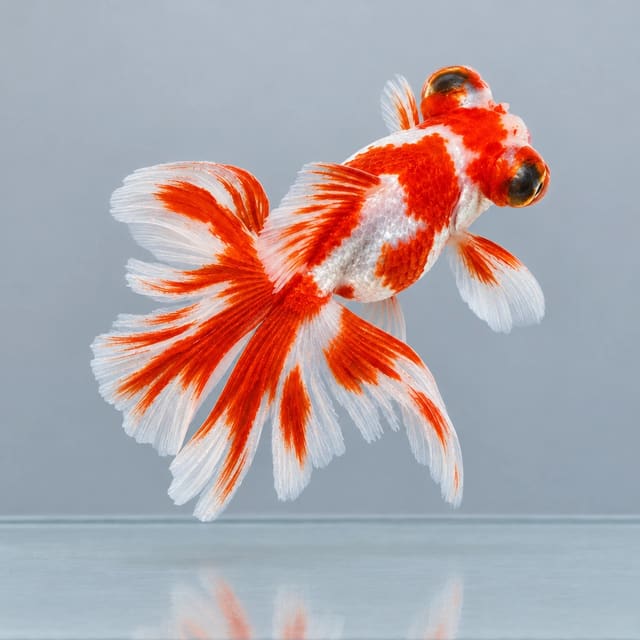
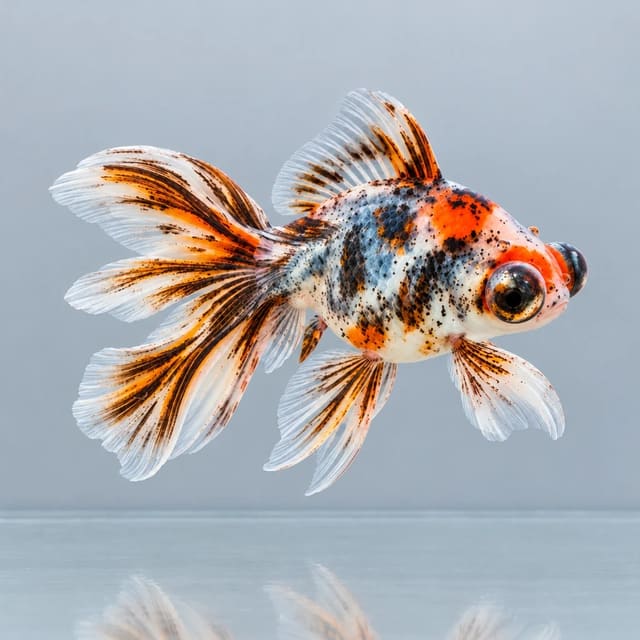
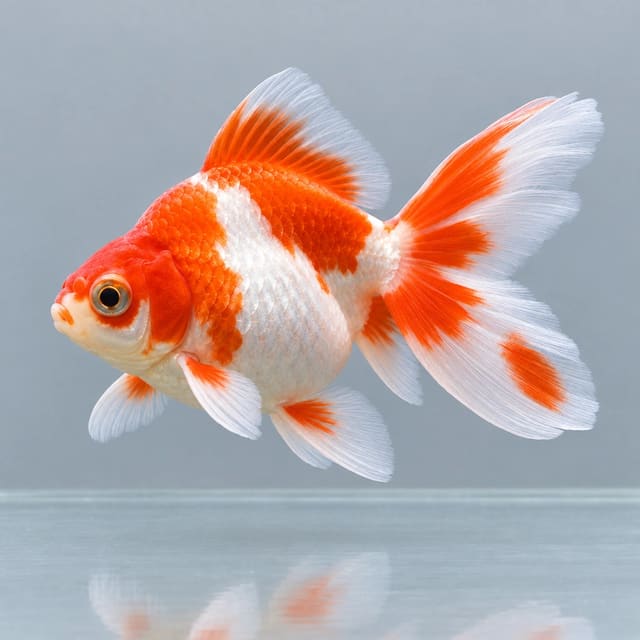
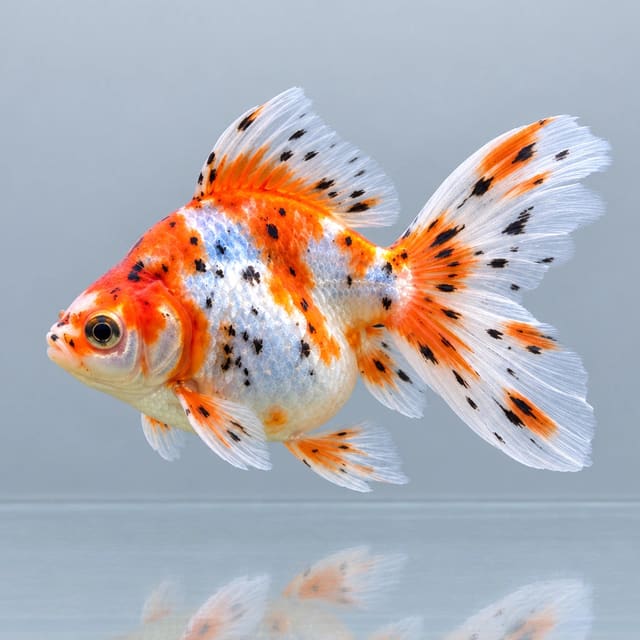
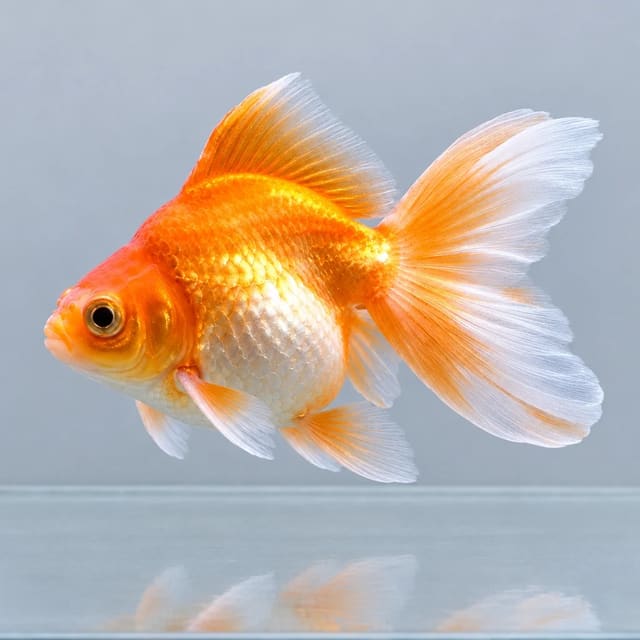
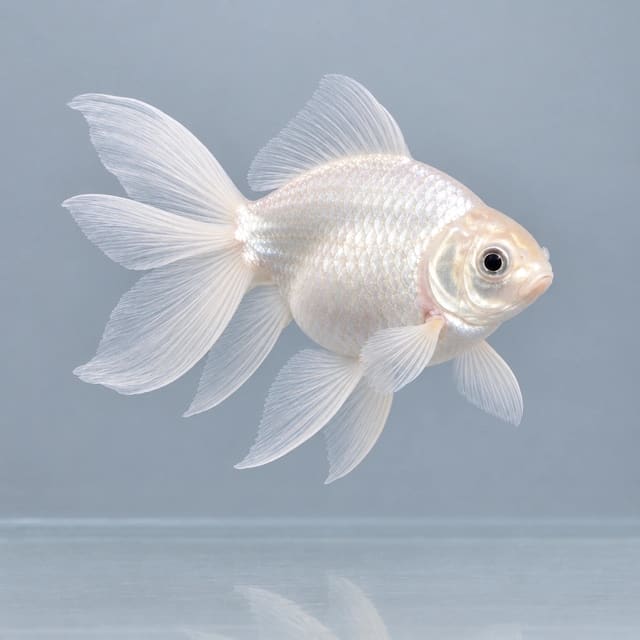
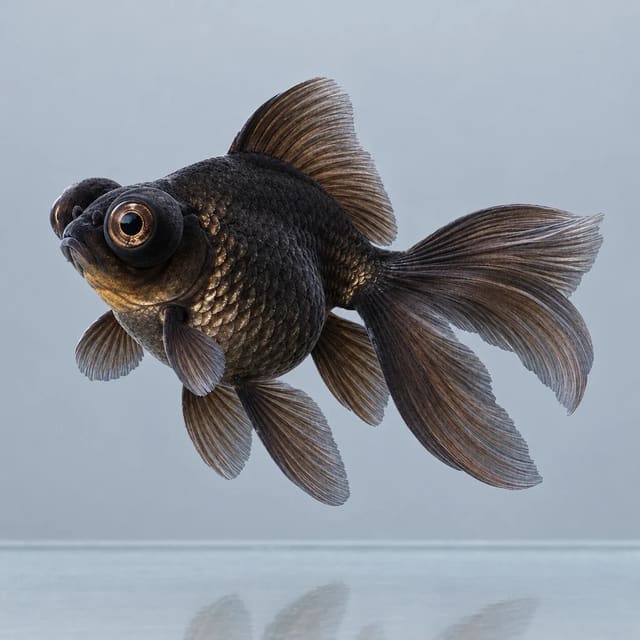
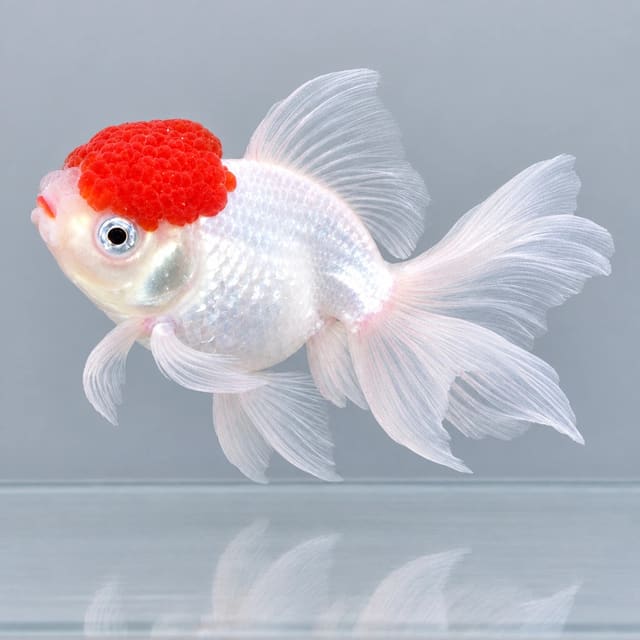
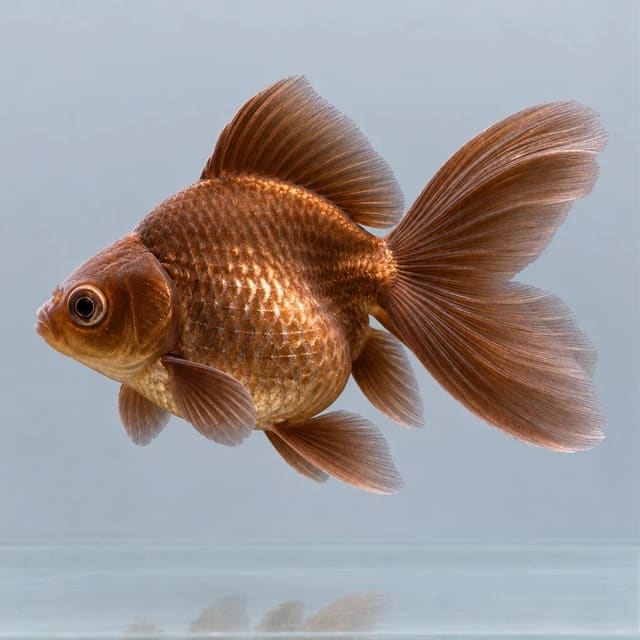
One purchase supplies one live red fantail goldfish. Choose from three sizes: 3–4 cm, 5 cm or 8–10 cm. Sizes are approximate. The photographs show the red fantail colour form at its best; the fish you receive is an individual, so its exact shade, fin length and shape will differ.
| Size | What to expect |
|---|---|
| 3–4 cm | A young fish with its tail still developing; the most economical way to grow fantails on |
| 5 cm | Tail shape and body depth are easier to see; a good size to start a small group |
| 8–10 cm | Closer to adult shape and colour; the fan of the tail is already well formed |
The fantail standard sets a minimum show body length of 5.5 cm, so a smaller fish has plenty of growing still to do. The Bristol Aquarists’ Society also notes that fantails bought from specialist shops often carry finnage longer than the show ideal; in a pet fish that is a matter of taste, not health. Long fins in the photographs are typical of a grown fish, and young fish show shorter fins.
Fancy goldfish are sociable, but sources differ on numbers: OATA says they can live alone or with other fancy goldfish, while FishBase suggests groups of five or more of the species. Many keepers settle on two to four fantails, which keeps the aquarium size manageable. Before ordering, read our delivery and Live Arrival Guarantee information and have the aquarium running and matured.
OATA, the UK ornamental fish trade association, says fancy goldfish usually stay under 20 cm and often live six to eight years, with rare reports of 20 years or more; the Bristol society gives about ten years for fantails. FishBase records 48 cm for the species, but that refers to long-bodied wild-type goldfish, not to short, round fancy forms like this one.
OATA advises the largest aquarium you can manage, with at least 100 litres for one adult fancy goldfish plus about 50 litres for each additional adult. The RSPCA gives 2 litres of water for every 0.5 cm of goldfish and at least 60 litres per goldfish; for a single 20 cm fish that is 80 litres, below OATA’s 100 litres, but for two or more adults the RSPCA rule asks for more (160 litres for two, 240 for three), so plan for whichever figure is larger. Goldfish bowls are never suitable: the RSPCA notes they are too small to hold a filter or keep the temperature steady.
| Adult fantails | OATA minimum | RSPCA rule for 20 cm fish |
|---|---|---|
| 1 | 100 litres | 80 litres |
| 2 | 150 litres | 160 litres |
| 3 | 200 litres | 240 litres |
| 4 | 250 litres | 320 litres |
Practical Fishkeeping takes a footprint view and recommends a base of at least 120 × 60 cm for three adult twin-tailed goldfish in the long term; a 120 × 60 × 45 cm aquarium holds about 324 litres. Use our tank volume calculator to turn your measurements into litres and the stocking calculator to check the whole adult group before you buy.
OATA recommends keeping fancy goldfish indoors only, in aquaria. A breeder writing for the Bristol Aquarists’ Society keeps fantails outdoors in ponds all year, so sources differ; for a pet fish we recommend an indoor aquarium, where you can see it every day and its long fins are safe from predators and cold snaps.
A fantail is a slow, round-bodied swimmer, and its divided tail tears easily on sharp edges. OATA advises gravel or sand and warns against décor with sharp or rough edges. Practical Fishkeeping recommends small, round, inert gravel that goldfish can dig through and mouth without it sticking in their throats, plus smooth pebbles and water-worn wood.
| Zone | What to put there |
|---|---|
| Open front and centre | Clear water for slow swimming and feeding |
| Back and sides | Tough plants such as Anubias tied to wood, or soft artificial plants without stiff points |
| Floor | Smooth, rounded gravel or sand that is easy to siphon |
Live plants are ideal, but goldfish graze on many soft species, so choose robust plants or accept some nibbling. Keep the filter outflow gentle; OATA suggests turning it down or spreading it with a spray bar so a weak swimmer is not pushed around. Fit overhead lighting for a regular day and night, as OATA recommends; the RSPCA suggests eight to ten hours of light a day. The Bristol society notes that goldfish kept in dim tanks turn pale, while brighter conditions bring out stronger, more saturated colour, which matters for a red fish.
Goldfish tolerate a wide range of conditions, but they do best in clean, stable water. Where sources give different ranges, aim for the overlap:
| Reading | Target |
|---|---|
| Temperature | 15–21°C suggested (OATA 4–25°C, best 15–23°C; RSPCA 10–21°C) |
| pH | 6.5–8.5 (OATA); FishBase gives 6.0–8.0 for the species |
| General hardness | 8–18 dGH (OATA); FishBase gives 5–19 dH |
| Carbonate hardness | 5–15 dKH (OATA) |
| Ammonia and nitrite | 0 mg/l |
| Nitrate | No more than 20 mg/l above your tap water (OATA) |
Most UK tap water suits goldfish once it has been treated. Add a tap water conditioner to every bucket to remove chlorine or chloramine; you will find conditioners in our water care and treatments range. Hardness varies widely across the UK, so test your tap water and compare it with the table using our water matcher; our water chemistry guide explains each reading. A heater is not needed unless the room gets very cold. If you fit one, the RSPCA suggests a thermostatic heater set to the bottom of the range, checked daily with a thermometer.
Goldfish eat a lot and produce plenty of waste, so filtration matters more than in many tropical tanks of the same size. OATA says a filter is always essential. For three adult twin-tailed goldfish, Practical Fishkeeping suggests an external filter rated at 1,000 litres per hour or more plus an airstone, and activated carbon to keep the water smelling fresh. Mature the filter before the fish arrives: the RSPCA advises a fishless cycle of at least two weeks, and our article on the nitrogen cycle explained shows how. Our guide to aquarium filtration explains how filters keep water clean.
OATA recommends a food made for goldfish, because they need more carbohydrate than many other fish, given once a day and only as much as is eaten within a few minutes. Goldfish always look hungry, so judge portions by what disappears, not by begging. Uneaten food breaks down into harmful waste.
Red colour comes from pigment cells that hold carotenoids, and the Bristol society points out that fish cannot make carotenoids themselves; they have to come from food. A colour-enhancing goldfish food in the rotation gives a red fantail the raw material to stay bright.
Some fancy goldfish gulp air at the surface while feeding and briefly struggle to stay level afterwards. OATA suggests switching to a different or slow-sinking food if this happens, which is why sinking foods suit a round-bodied fantail. If balance problems last, read our article on why a fish swims sideways.
Add fish only once ammonia and nitrite read zero, and add them gradually so the filter bacteria can keep pace. OATA describes the floating-bag method: switch off the aquarium lights, float the sealed bag for about 10 minutes so the temperatures even out, add small amounts of aquarium water to the bag over up to 20 minutes, then release the fish with as little bag water as possible. Our guide on how to acclimatise new fish takes you through it step by step.
| When | What to do |
|---|---|
| Before arrival | Test the water, confirm zero ammonia and nitrite, and set the filter to a gentle flow |
| Arrival day | Acclimatise with the lights off and leave the fish in peace |
| Next day | Offer a small pinch of sinking food and remove anything left after a few minutes |
| Days 2–7 | Watch swimming, balance, fins and appetite once or twice a day |
| End of week one | Retest the water and make the first weekly water change |
A red fantail is peaceful and gets on with other goldfish of similar build. OATA warns against mixing fancy goldfish with common goldfish, which are faster swimmers, often take most of the food and sometimes nip the fins of fancy varieties. Practical Fishkeeping describes fantails and ryukins as just as easy as telescopes, which it calls fantails with protruding eyes, and says the three mix well.
| Suits | Avoid |
|---|---|
| Other fantails of similar size | Common goldfish and comets |
| Ryukins and orandas | Fin-nipping fish of any kind |
| Telescope-eyed goldfish and moors | Tropical fish that need a heater |
| Fish added at a similar size | Fish small enough to be swallowed |
Good partners from our range include the Red Oranda Goldfish, the Blue Oranda Goldfish and the ryukin linked above. Keep the slim, fast Bronzed Comet Goldfish for a separate aquarium or pond; our comet goldfish guide covers how to keep them. Other coldwater species are listed in our coldwater fish directory and on the cold water fish for sale page; check any pairing first with our tank mates tool.
OATA describes a healthy fish as having clear, bright eyes, undamaged fins, intact scales, no ulcers or bumps, normal swimming and steady breathing. Get to know how your fantail normally swims, rests and feeds, so that changes stand out.
| If you see | Do this |
|---|---|
| Hanging at the surface or gasping | Test ammonia and nitrite at once and increase surface movement |
| Floating awkwardly after meals | Feed less, switch to a sinking food and offer shelled peas |
| Frayed or split tail edges | Check for sharp décor or a fin-nipping tank mate, test the water and read about fin rot treatment |
| Clamped fins, flicking against décor or shimmying | Test the water first, then seek advice before treating |
| White spots or fluffy growths | Test the water and get advice on treatment |
Colour also tells you something. The Bristol society explains that young goldfish start life in a dark wild-type colour and reach adult colours as black pigment cells are lost, so a young red fantail may still carry dark edges that fade. Paul Green, writing in Practical Fishkeeping, adds that colour can keep changing with age and that many goldfish become whiter over the years, so a few pale patches on an older fish are normal rather than a sign of illness.
Mature males develop small white spots, called breeding tubercles, on the gill covers and pectoral fins in the breeding season, and females are deeper-bodied. OATA notes that spawning is more likely with two males to each female in a large aquarium, often after the water is warmed slowly to about 20°C following a partial water change. The eggs are scattered over plants or a spawning mop, the adults will eat them, and they hatch in about three days. Practical Fishkeeping’s fantail breeder uses one female to three males, a temperature of about 17°C and plenty of Hornwort, with hatching after three to four days.
Only a small share of the young turn out as good fantails. The Bristol breeder sorts his fry at four weeks for twin tails, again at eight and twelve weeks for body and tail shape, and at 16–20 weeks for colour, keeping about 20 fish from roughly 3,000 raised each year. That selection is why a well-shaped red fantail is worth looking after properly.
It is a fancy goldfish, Carassius auratus, with a short, egg-shaped body, a divided twin tail that spreads like a fan, and metallic red or orange-red scales. All goldfish varieties belong to the same species and come from fish first bred for colour in China more than 1,000 years ago.
OATA says fancy goldfish usually stay under 20 cm. The species as a whole can grow much larger (FishBase records 48 cm), but that figure refers to long-bodied, wild-type goldfish, not to short-bodied fancy forms.
OATA advises at least 100 litres for the first adult fancy goldfish and about 50 litres more for each extra adult, so two fantails need about 150 litres and three about 200 litres. Practical Fishkeeping suggests a 120 × 60 cm base for three adult twin-tailed goldfish in the long term.
Usually not. OATA gives 4–25°C with 15–23°C as the best range, and the RSPCA gives 10–21°C. A heater is only worth fitting if the room gets very cold; if you use one, the RSPCA suggests setting it at the bottom of the range.
Sources differ. OATA recommends keeping fancy goldfish only in indoor aquaria, while a Bristol Aquarists’ Society breeder keeps his fantails in ponds all year. For a pet fish bought online, an indoor aquarium is the safer choice.
A sinking goldfish pellet or stick as the staple, once a day, only as much as is eaten within a few minutes. Add daphnia, brine shrimp, bloodworm and blanched, shelled peas for variety. A colour food helps keep the red bright, because fish cannot make the carotenoid pigments behind red colour themselves.
Yes, with other fancy goldfish such as ryukins, orandas and other fantails. Do not mix it with common goldfish or comets: OATA warns they are faster, take most of the food and sometimes nip the fins of fancy varieties.
It may. Young goldfish lose dark pigment as they mature, so small dark smudges usually fade, and Practical Fishkeeping notes that many goldfish become whiter with age. Bright lighting and a carotenoid-rich diet help keep red colour strong.
One live red fantail in the size you choose: 3–4 cm, 5 cm or 8–10 cm. The photographs show the colour form; your fish is an individual and its colour, tail and shape will differ slightly.
No reviews for this item yet. Bought one? Honest reviews only, good or bad.
What customers say about ordering from us
Easy website plenty of info on fish your buying great to pick a time slot
TRACEY DURRANT · 7 Oct 2026
Got some lovely fish thank you
Kevin Mackie · 7 Oct 2026
Reviews of our shop, collected by Judge.me, an independent third-party review collector. Newest first.
Moved by UK carriers licensed to handle live animals
Hand-packed with oxygen bags, poly box, heat pack
Email photos the same day; an optional unboxing video helps us review problems faster — claim terms apply
Klarna & PayPal Pay in 3 at checkout