Moderate
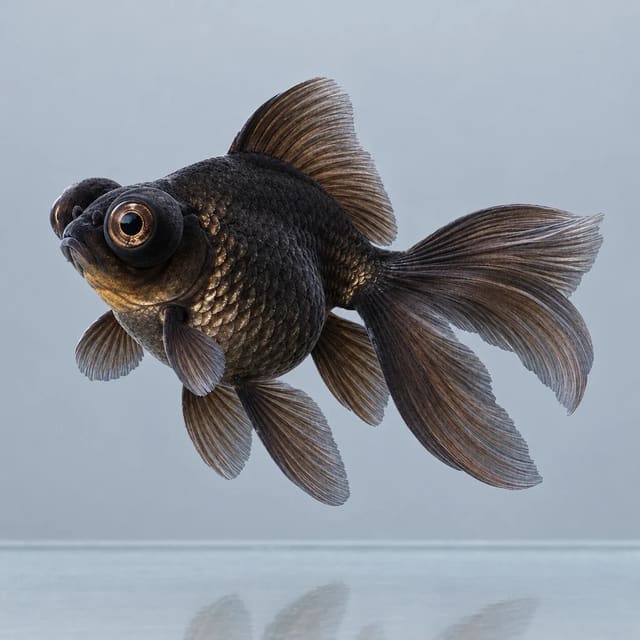
Black Moor Goldfish (Carassius auratus)
4–25°C · pH 6.5–8.5 · 100L
£6.99
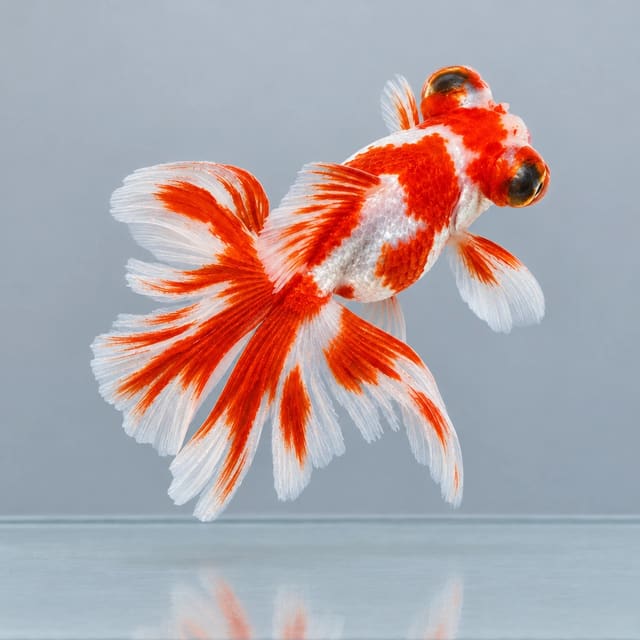
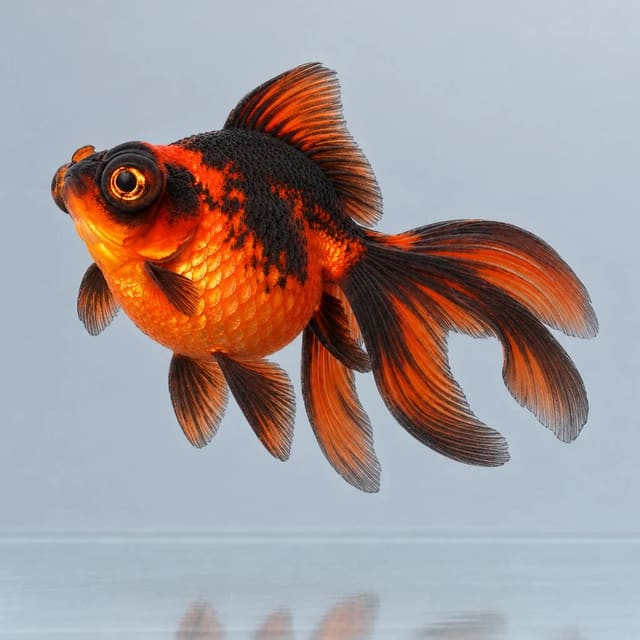
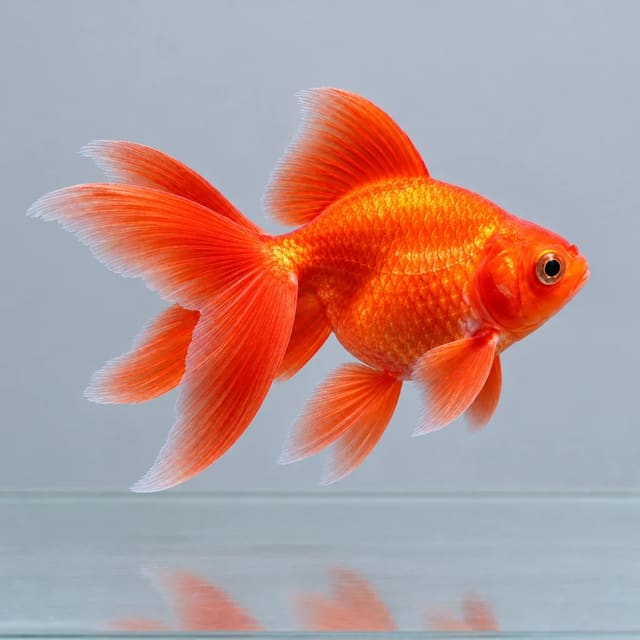
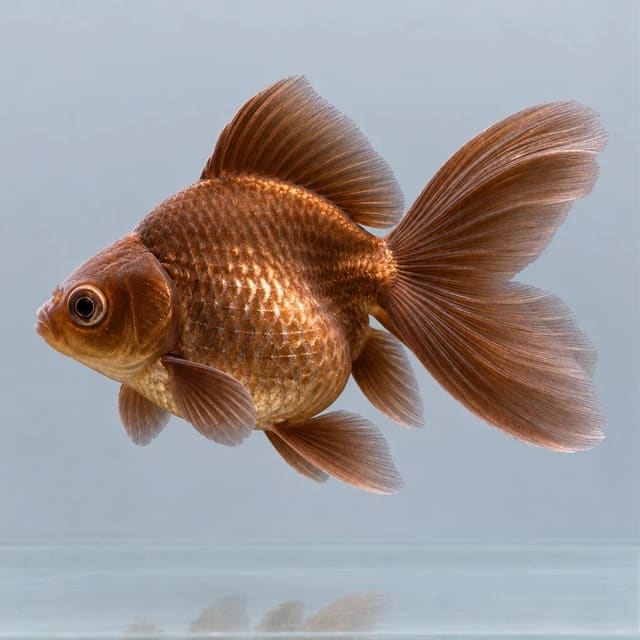
The Red Telescope Moor is a red telescope goldfish (Carassius auratus): a fancy goldfish with protruding eyes, a short round body and a divided double tail in solid metallic red. Keep it in an unheated indoor aquarium of at least 100 litres with smooth decor and other slow fancy goldfish. One live 4–5 cm fish per purchase.
Adult size is the maximum length this species reaches at full maturity (scientific sources). The livestock you receive will be younger and smaller. Product-photo provenance and any image-specific limitations are stated on the listing.
Carassius auratus
Quantity discounts are pricing offers, not a group-size recommendation. Check the full care guidance and your existing animals before choosing a quantity.
The Red Telescope Moor is a red telescope goldfish (Carassius auratus): a fancy goldfish with protruding eyes, a short round body and a divided double tail in solid metallic red. Keep it in an unheated indoor aquarium of at least 100 litres with smooth decor and other slow fancy goldfish. One live 4–5 cm fish per purchase.
Adult size is the maximum length this species reaches at full maturity (scientific sources). The livestock you receive will be younger and smaller. Product-photo provenance and any image-specific limitations are stated on the listing.
Read the full care guidance when planning conditions for your aquarium.
The Red Telescope Moor is a red telescope goldfish: a fancy Carassius auratus with eyes that bulge out from the sides of the head, a short, rounded body and a divided double tail, coloured metallic red from nose to fin tips. Practical Fishkeeping describes telescopes as essentially fantails with protruding eyes, and their care does not change with colour.
Telescope-eyed goldfish have a long history. The Bristol Aquarists’ Society records that they are known as dragon eyes in the Far East, where they reportedly first appeared around 1592, and as telescope eyes in the USA. A 2025 study linked the protruding eye to changes in the LRP2 gene and confirmed that it is recessive to the normal eye.
| Feature | This red telescope | A UK show Moor |
|---|---|---|
| Eyes | Protruding, set out from the head | Large, spherical, in raised sockets |
| Colour | Self-coloured metallic red | Metallic deep black only, with no brown or silver |
| Tail | Divided double tail | Broad divided tail with no apparent fork |
| Where you meet it | Sold widely as a “telescope moor” | Society shows judged to the Moor standard |
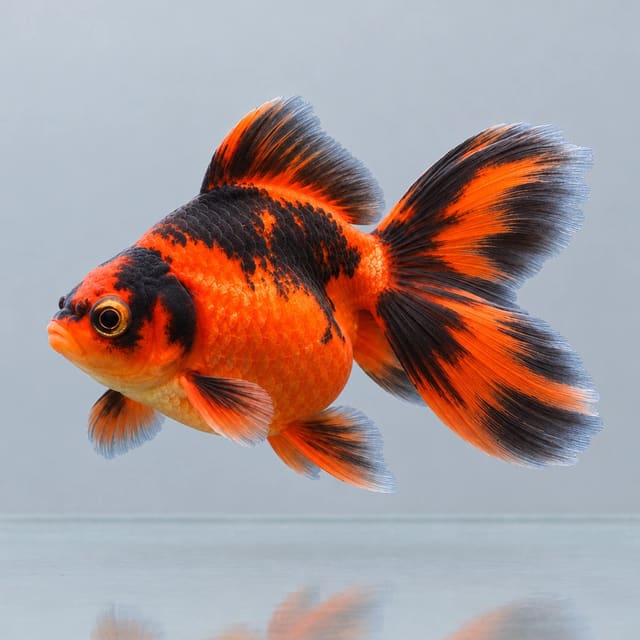
In the UK, a metallic telescope-eyed fish shown under the globe eye standard must be black, and the Moor standard is black only. The society notes, though, that self-coloured metallic telescopes are popular elsewhere and increasingly seen in the UK. So this fish is a pet colour form sold under the familiar trade name. Compare it with our classic Black Moor and the patterned Red and Black Telescope Moor, or browse every variety in our cold water oranda and fancy goldfish category.
Each purchase is one live Red Telescope Moor of about 4–5 cm. It is a young fish, well short of the 5.5 cm minimum body length that UK telescope standards set before a fish is judged, so its body depth, eyes and tail are still developing. The sex is not specified. If you would like a group, order each fish separately and size the aquarium for all of them as adults.
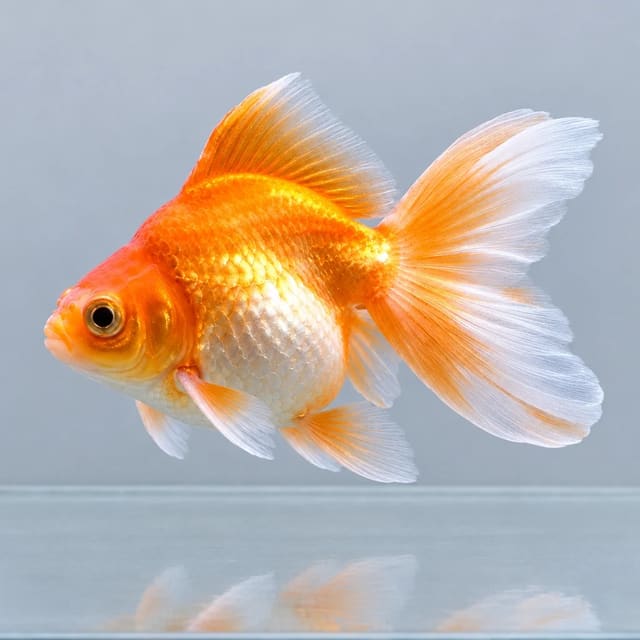
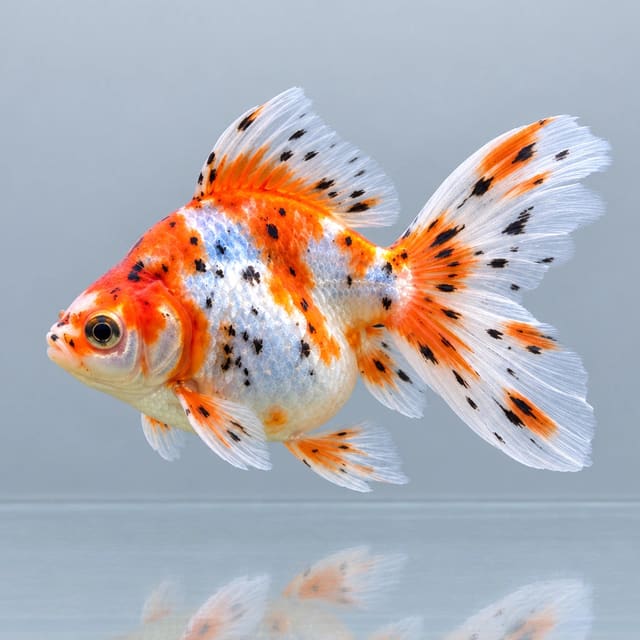
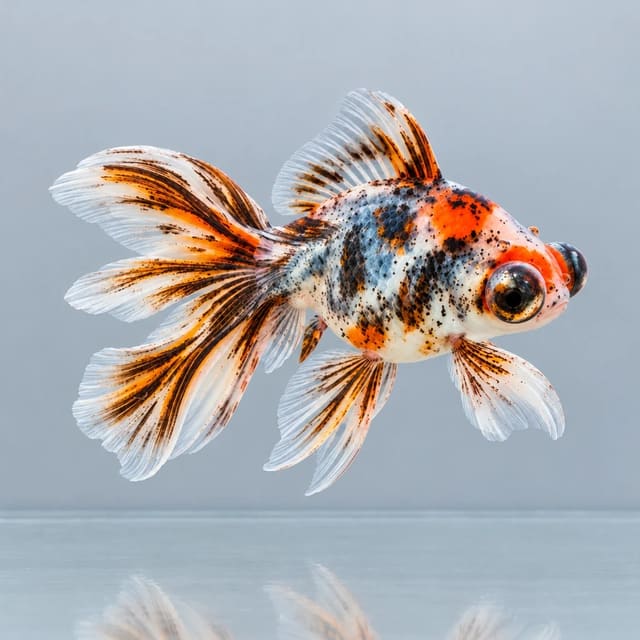
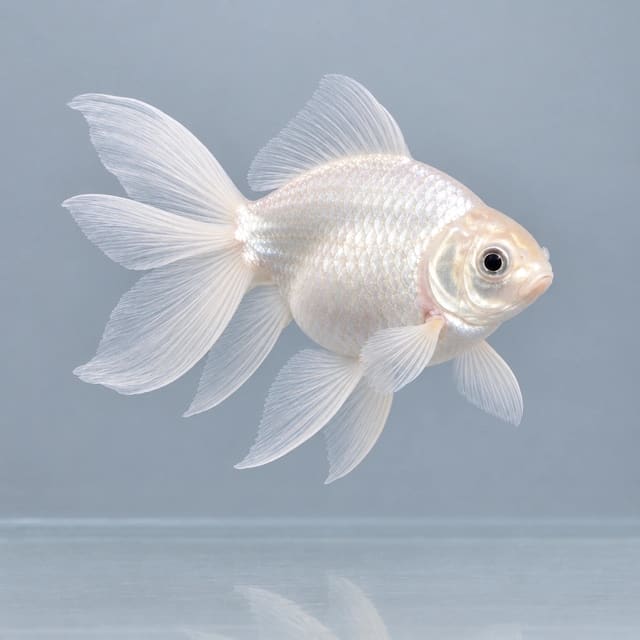
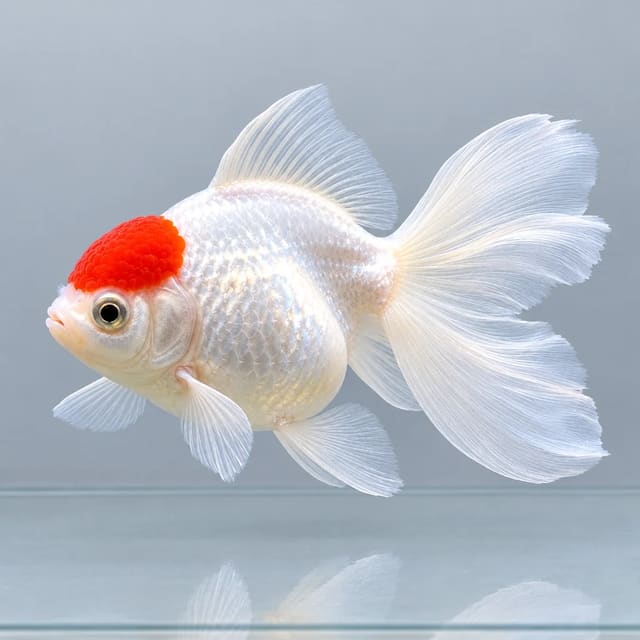
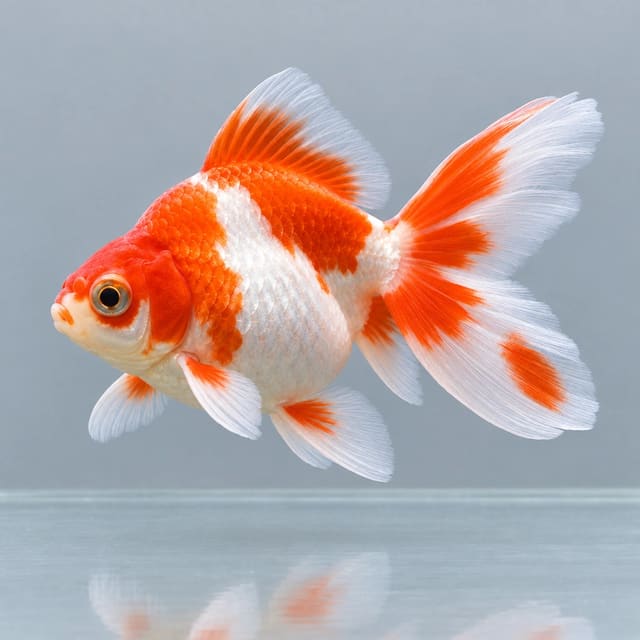
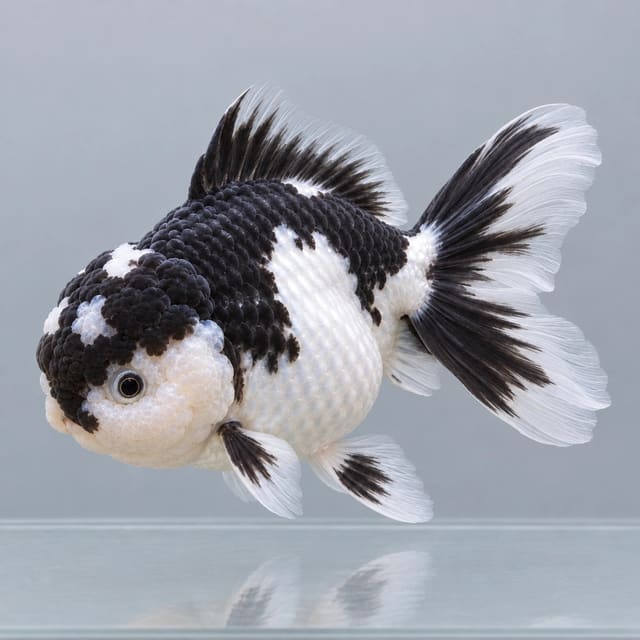
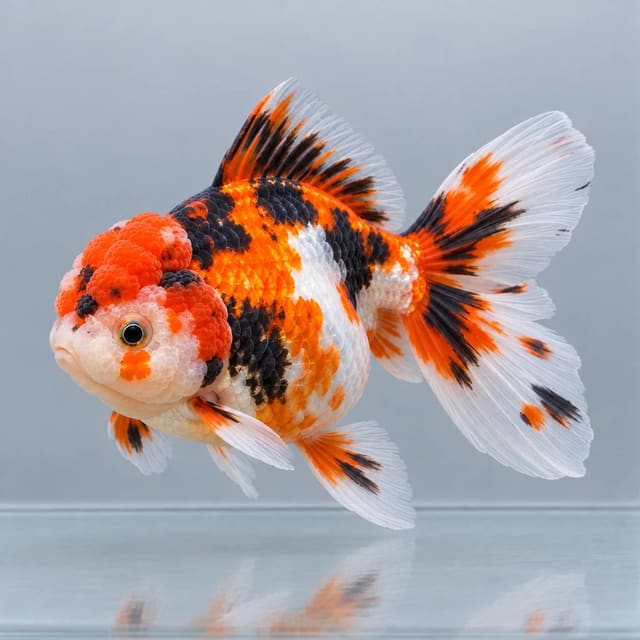
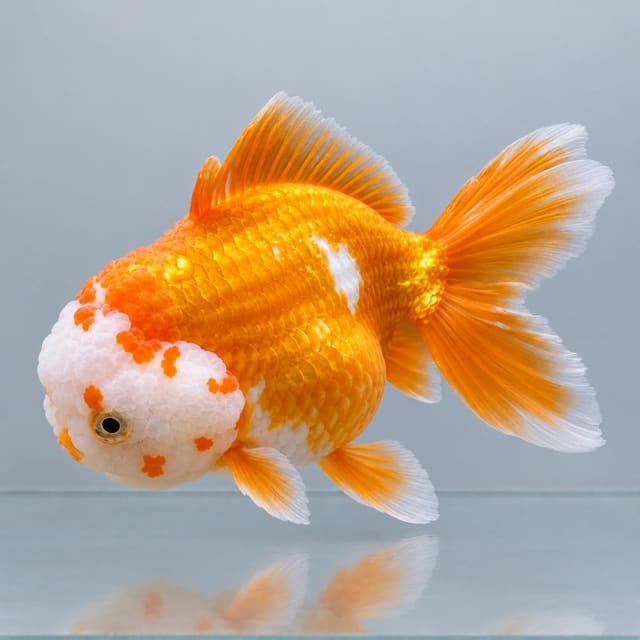
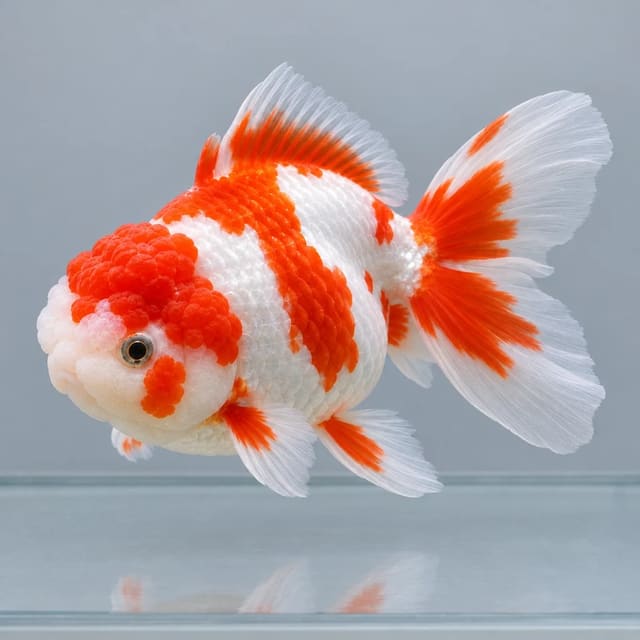
The photographs are representative images of the colour form, based on a reference picture; they are not photographs of the fish you will receive. Eye size, body shape and the shade of red vary from fish to fish.
The Bristol Aquarists’ Society explains that most goldfish start life black or grey and change to their adult colours as they lose black pigment cells. A young red fish can therefore still carry some darker edges on the fins or scales that fade over time. Red goldfish are rich in red pigment cells, and their metallic shine comes from a reflective layer under transparent scales. Light is the most important outside influence on colour: a fish kept dim looks pale, while good light gives a deep red. Colour-enhancing foods exist, but their effect varies.
A telescope that fits in your hand today will not stay small. OATA expects fancy goldfish to grow to about 20 cm, and Practical Fishkeeping gives telescopes about 20 cm of body length before the fins are counted. That is the size to plan around.
The published minimums differ. OATA wants at least 100 litres for one adult and 50 litres more for every additional adult. The RSPCA asks for at least 60 litres per goldfish and rules out bowls and small decorative tanks altogether. Practical Fishkeeping recommends a tank of at least 120 × 60 cm for three adult telescopes. FishBase notes that the species is usually kept in tanks of 100 cm or more. Take the largest figure that applies to your plans.
The RSPCA adds that wide tanks give better oxygen exchange than tall, narrow ones, which suits goldfish well.
The eyes of a telescope goldfish sit out from the head where they meet anything the fish swims past. Practical Fishkeeping warns that sharp decor and plants can damage them, and OATA warns against ornaments with sharp or rough edges for the same reason. Build the aquarium with that single risk in mind.
| Use | Leave out |
|---|---|
| Small, round, inert gravel or aquarium sand | Sharp or angular gravel and lava rock |
| Smooth, water-worn pebbles | Slate edges, coral and rough resin ornaments |
| One smooth, water-worn piece of wood | Spiky driftwood and branching roots at eye level |
| Anubias tied to wood, or soft non-spiky plastic plants | Hard plastic plants with pointed leaves |
| An open central area for swimming | Narrow gaps between rocks that the fish could wedge into |
Practical Fishkeeping adds that the gravel should be small enough to be mouthed without lodging in the fish’s mouth, as goldfish sift through it for food. Use overhead lighting to give a regular day and night, and keep the tank out of direct sunlight and away from radiators and draughts, as OATA advises.
A red telescope is a coldwater fish that needs no tropical heating. OATA suggests a heater only if the room gets very cold; the RSPCA notes that a thermostatic heater set at the low end of the range can smooth out swings if you are worried. Aim for steady conditions rather than perfect numbers.
| Reading | OATA value for fancy goldfish | Other source |
|---|---|---|
| Temperature | 4–25°C, best 15–23°C | RSPCA: 10–21°C |
| pH | 6.5–8.5 | FishBase: 6.0–8.0 |
| General hardness | 8–18 dGH | FishBase: 5–19 dH |
| Carbonate hardness | 5–15 dKH | — |
| Ammonia and nitrite | 0 mg/l | RSPCA: 0 mg/l |
| Nitrate | No more than 20 mg/l above tap water | — |
Treat tap water with a dechlorinator before it goes in, and let it reach room temperature first, as Practical Fishkeeping suggests. Our water matcher tool compares your test results with these values, and the water chemistry care guide explains pH, hardness and the nitrogen readings in plain terms.
OATA calls a filter essential for every goldfish but notes that fancy breeds prefer gentle water movement, so keep the output moderate or spread it with a spray bar. Practical Fishkeeping recommends an external filter rated at 1,000 litres per hour or more for telescopes, plus an airstone, and suggests activated carbon because goldfish tanks can smell. Our article on aquarium filtration explained compares filter types.
| How often | Task |
|---|---|
| Daily | Check temperature, feeding response and both eyes |
| Weekly | Test ammonia, nitrite and nitrate; siphon the gravel; change 25% of the water (OATA) or up to 50% (Practical Fishkeeping) |
| When media slows | Rinse filter media in removed tank water, never under the tap |
| Whenever you add fish | Test more often for the following week |
New aquariums need time before any fish goes in. The RSPCA recommends fishless cycling for at least two weeks; our nitrogen cycle guide explains the process step by step.
Telescopes are slow and deliberate feeders. Practical Fishkeeping recommends sinking goldfish pellets, which settle where a telescope can find them instead of being taken at the surface by quicker fish. OATA advises a food made for goldfish, which need more carbohydrate than many fish, fed once a day in an amount eaten within a few minutes. Extras such as daphnia, bloodworm, brine shrimp, soft plants, blanched lettuce or thawed, shelled peas add variety.
If the fish floats tail-up or struggles to stay level after eating, OATA suggests a different or slow-sinking food. Read our article on buoyancy problems for further steps.
Before the fish arrives, OATA asks you to confirm that ammonia and nitrite read zero, and to stock gradually so the filter bacteria can keep pace. Adding too many fish at once can cause what OATA calls new tank syndrome.
Our guide to acclimatising new fish adds tips for a calm first day, and our delivery information sets out dispatch days and the Live Arrival Guarantee.
OATA’s list of warning signs applies to every goldfish: hanging at the surface or resting on the bottom, unusual colour, faster or slower breathing, white spots, fluffy growths, torn fins or lost scales, clamped fins, flicking against objects, weight change and loss of appetite. On a telescope, check the eyes first: they are the most exposed part of the fish.
| Sign | Response |
|---|---|
| Cloudy or scuffed eye | Remove the decor it touched; test the water and keep it clean |
| Rapid breathing or gasping | Test ammonia and nitrite immediately; change water if either reads above zero |
| White grains on body and fins | See our guide to white spot and treat the whole tank |
| Floating or tipping after meals | Switch to slow-sinking food and smaller portions |
| Not eating | Test the water and check that faster fish are not taking the food |
A 2025 study notes that telescope-eyed goldfish are reported to have thinner retinas than normal-eyed fish, so treat any eye injury seriously and prevent it where you can.
A red telescope competes poorly with fast fish. OATA advises keeping fancy goldfish alone or with other fancy goldfish and not with common goldfish, which outcompete them for food and sometimes nip their fins. The RSPCA agrees that single- and twin-tailed goldfish should not be mixed, and adds that a goldfish does not need companions at all. FishBase, in contrast, suggests groups of five or more, so the sources differ: a single telescope is acceptable, and a small group is fine in a tank big enough for every adult.
| Good companions | Keep apart |
|---|---|
| Other telescopes and moors | Common goldfish, comets and shubunkins |
| Fantails and ryukins, such as the Red and White Ryukin, which Practical Fishkeeping calls equally easy and compatible | Any fish known for nipping fins |
| Orandas such as the Red and Black Oranda | Tropical species that need heated water |
| Broadtails such as the Red Broadtail | Fast, boisterous coldwater fish that dominate feeding |
Our tank mates checker flags combinations to avoid before you buy, and the fancy goldfish and coldwater fish collection shows the slow-swimming varieties we stock.
OATA advises that fancy goldfish are best kept in indoor aquariums only. A garden pond exposes protruding eyes to rough stone edges and leaves a slow fish competing with faster pond goldfish, which OATA and the RSPCA both warn against. Every goldfish is also a non-native species in the UK, and OATA reminds keepers that releasing any aquarium fish into the wild is illegal.
Keep the telescope as a separate indoor aquarium fish rather than moving it between pond and tank. If you keep pond fish too, our page of cold water fish for sale lists the hardier coldwater species that suit outdoor keeping.
It is a red telescope goldfish: a fancy form of Carassius auratus with protruding eyes, a short rounded body and a divided double tail, in solid metallic red. “Telescope moor” is the trade name it is sold under.
Shops use “moor” for telescope-eyed goldfish of many colours. In the UK show standards a Moor is black only and a metallic telescope-eyed fish shown under the globe eye standard must also be black, so a red fish is a pet colour form rather than a show Moor. Its care is exactly the same.
OATA puts fancy goldfish at about 20 cm at most, and Practical Fishkeeping gives telescopes about 20 cm of body length, not counting the fins. The fish you receive is about 4–5 cm, so plan for the adult.
OATA advises at least 100 litres for one adult fancy goldfish plus 50 litres for each additional adult. The RSPCA gives at least 60 litres per goldfish, and Practical Fishkeeping suggests at least 120 × 60 cm of floor space for three adult telescopes.
Most goldfish start dark and lose their black pigment cells as they mature, so a young red fish can still show some dark edges that fade. Light has the biggest effect on how strong the red looks: fish kept dim look pale. We cannot guarantee how the colour will develop.
Not normally. OATA gives 4–25°C with 15–23°C as the best range and suggests a heater only in a very cold room; the RSPCA gives 10–21°C for goldfish.
A goldfish pellet or granule once a day, giving only what is eaten within a few minutes, with daphnia, bloodworm, brine shrimp or shelled peas as extras. Practical Fishkeeping recommends sinking goldfish pellets for telescopes.
Other slow twin-tailed fancy goldfish: moors, other telescopes, fantails, ryukins, orandas and broadtails. Do not add common goldfish, comets or shubunkins, which are faster and take the food.
We advise against it. OATA says fancy goldfish are best kept in indoor aquariums, and protruding eyes are easily damaged in a pond with rough edges and fast fish.
No reviews for this item yet. Bought one? Honest reviews only, good or bad.
What customers say about ordering from us
Easy website plenty of info on fish your buying great to pick a time slot
TRACEY DURRANT · 7 Oct 2026
Got some lovely fish thank you
Kevin Mackie · 7 Oct 2026
Reviews of our shop, collected by Judge.me, an independent third-party review collector. Newest first.
Moved by UK carriers licensed to handle live animals
Hand-packed with oxygen bags, poly box, heat pack
Email photos the same day; an optional unboxing video helps us review problems faster — claim terms apply
Klarna & PayPal Pay in 3 at checkout