Moderate
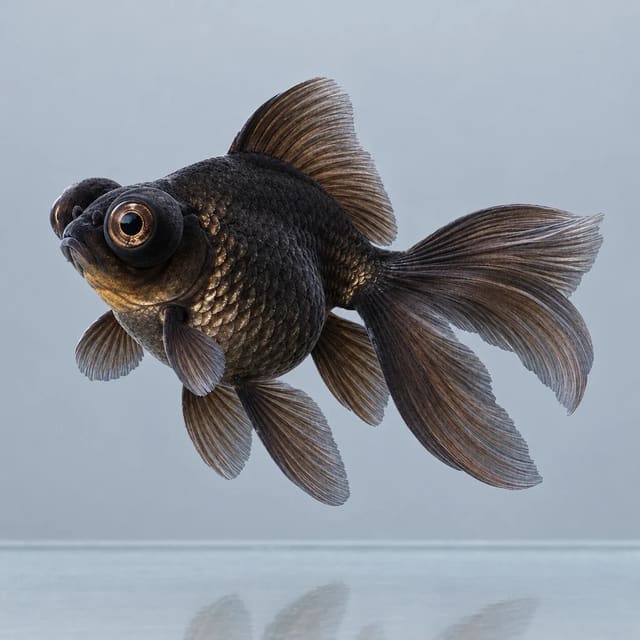
Black Moor Goldfish (Carassius auratus)
4–25°C · pH 6.5–8.5 · 100L
£6.99
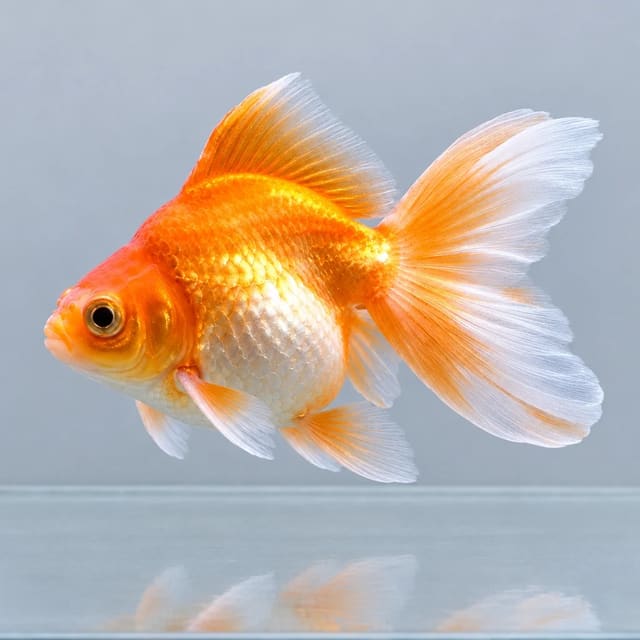
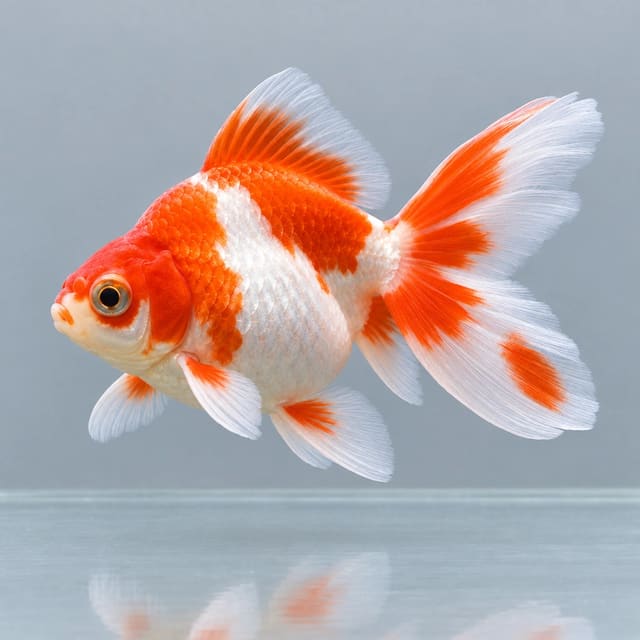
The Red Cap Fantail is a fantail goldfish (Carassius auratus) with a white body and fins and a red patch on top of the head, on a short round body with a forked twin tail held high. A hardy fancy variety for an unheated indoor aquarium of at least 100 litres with other slow fancy goldfish. One live 3–4 cm fish per purchase.
Adult size is the maximum length this species reaches at full maturity (scientific sources). The livestock you receive will be younger and smaller. Product-photo provenance and any image-specific limitations are stated on the listing.
Carassius auratus
Quantity discounts are pricing offers, not a group-size recommendation. Check the full care guidance and your existing animals before choosing a quantity.
The Red Cap Fantail is a fantail goldfish (Carassius auratus) with a white body and fins and a red patch on top of the head, on a short round body with a forked twin tail held high. A hardy fancy variety for an unheated indoor aquarium of at least 100 litres with other slow fancy goldfish. One live 3–4 cm fish per purchase.
Adult size is the maximum length this species reaches at full maturity (scientific sources). The livestock you receive will be younger and smaller. Product-photo provenance and any image-specific limitations are stated on the listing.
Read the full care guidance when planning conditions for your aquarium.
The Red Cap Fantail is a red cap fantail goldfish: a fantail form of Carassius auratus with a white body and white fins, crowned with a single patch of red on top of the head. Underneath the colour it is a classic fantail, with a short, rounded body and a divided, forked double tail carried high behind it.
Fantails are among the hardiest of the twin-tailed fancy goldfish. A UK breeder quoted by the Bristol Aquarists’ Society describes them as hardy and long-lived, and among the easier twin-tails to breed. Red and white goldfish have a long history too: the society dates the first white and red-and-white goldfish to domestic ponds in China during the Southern Song dynasty (1127–1279).
| Feature | Red cap fantail | Redcap oranda |
|---|---|---|
| The red on the head | A patch of colour on a fantail’s head | A raised, well-developed red growth on top of the head only |
| Tail | Divided and forked, lobes held above the horizontal | Divided and well spread, held below the horizontal |
| Body depth | About 65% of body length | About 65% of body length |
| Show standard | Fantail: a hood on the head is a fault | Redcap oranda: fantail-type fish with a high tail are disqualified |
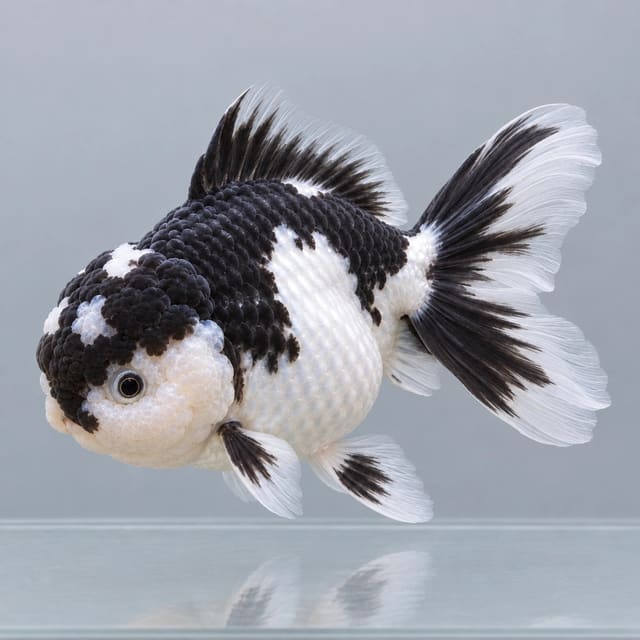
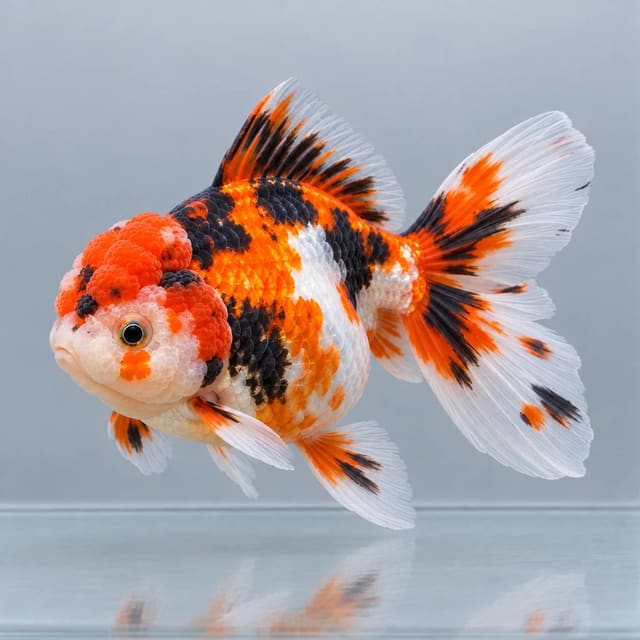
So although both fish are white with red heads, they are different varieties, and the difference matters when you compare prices or pictures. Practical Fishkeeping’s fantail breeder lists a hood developing on the head, like a ranchu or oranda, among the faults of an English fantail. If you want the hooded type, our Red Oranda shows what an oranda’s head growth looks like.
Each purchase is one live Red Cap Fantail of about 3–4 cm. That is a young fish: the UK fantail standard sets a minimum body length of 5.5 cm before a fish is judged, so the body, tail and head markings are still developing. Sex is not specified; OATA notes that mature males grow small white tubercles on the gill covers and pectoral fins in spring and summer, and females are deeper-bodied, but these signs come with maturity.
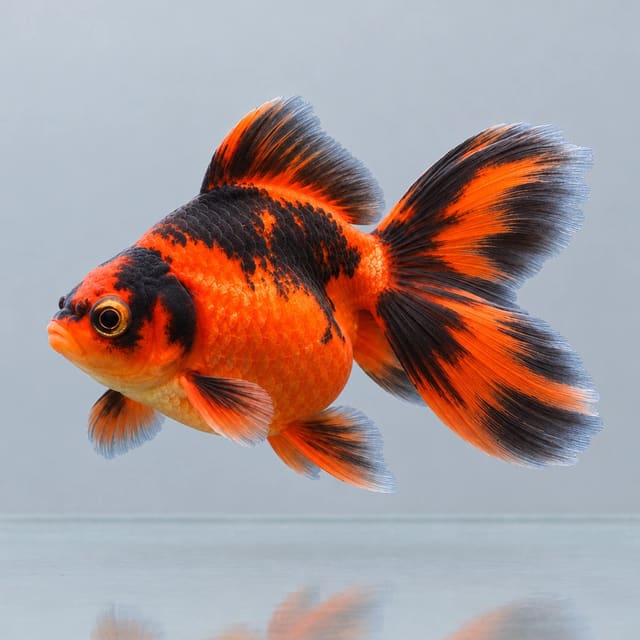
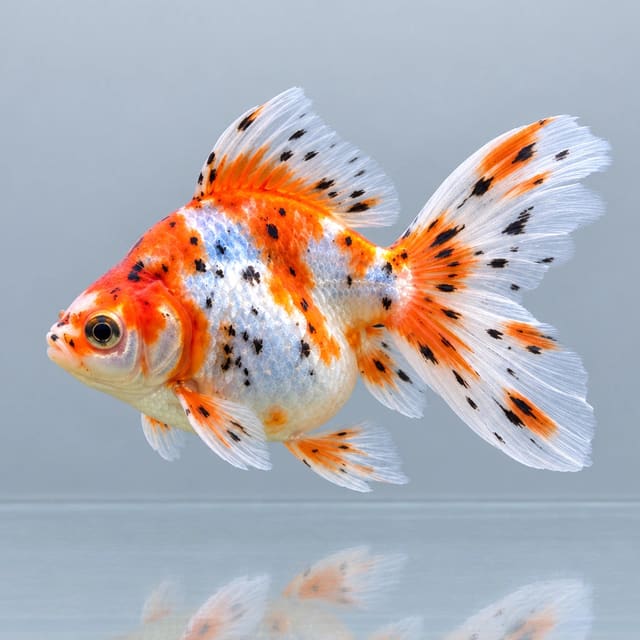
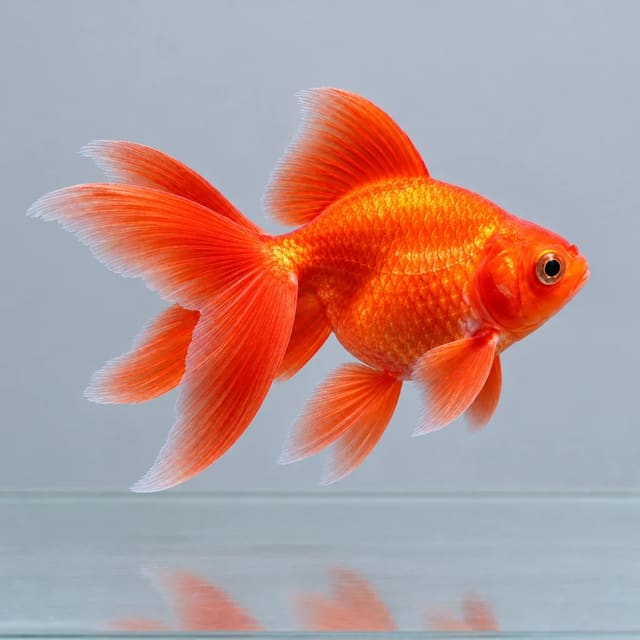
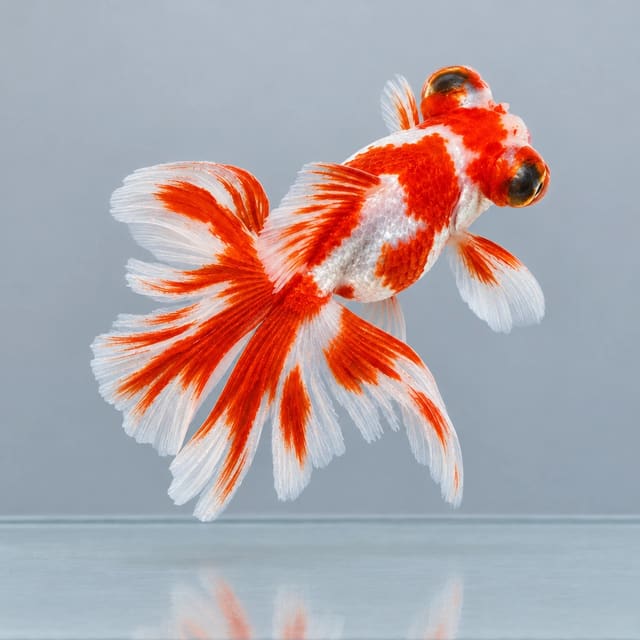
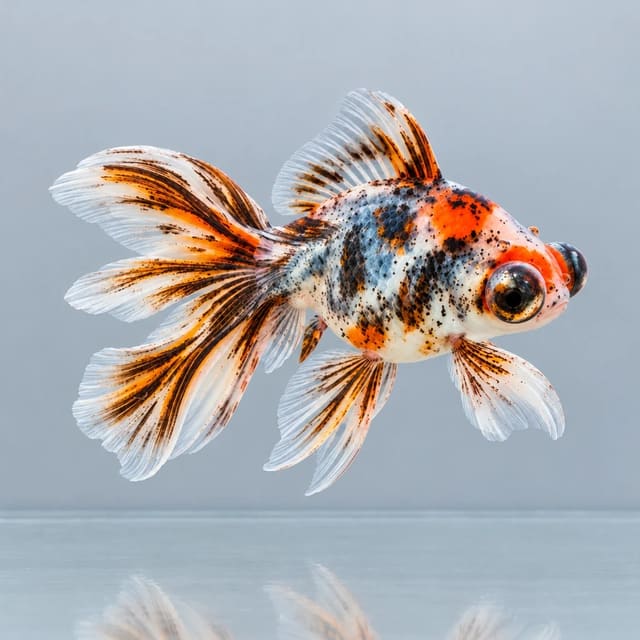
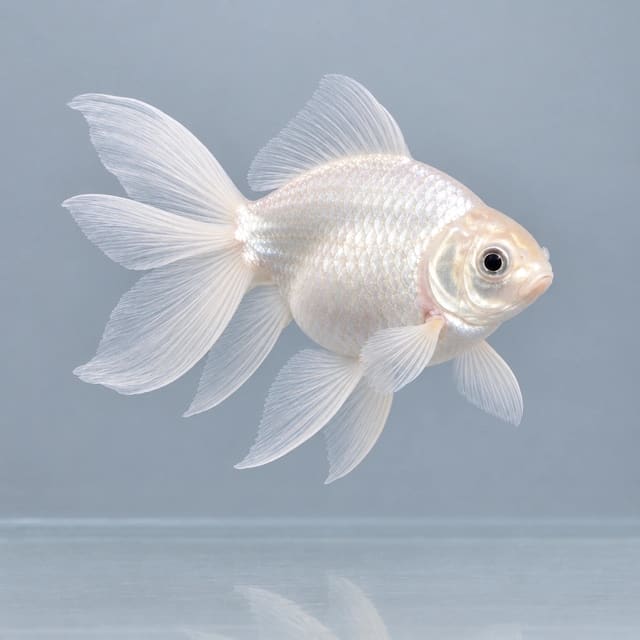
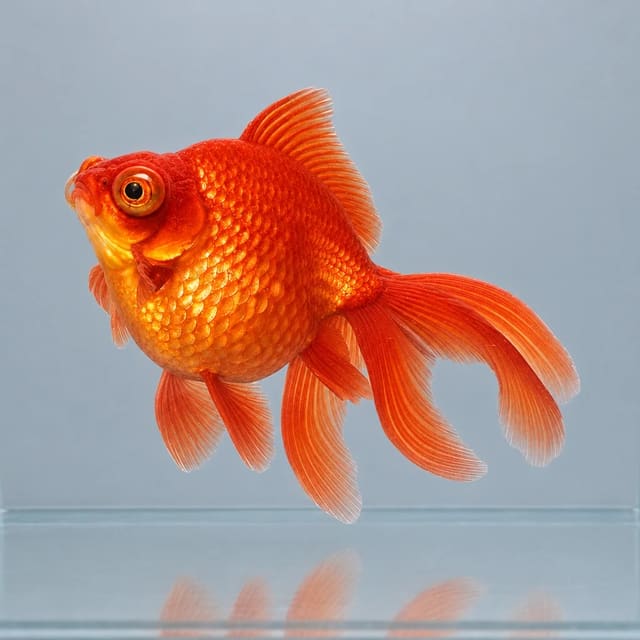
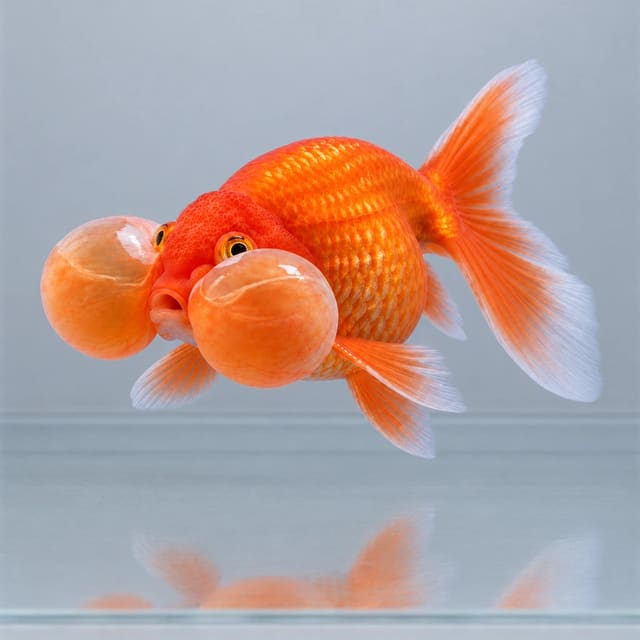
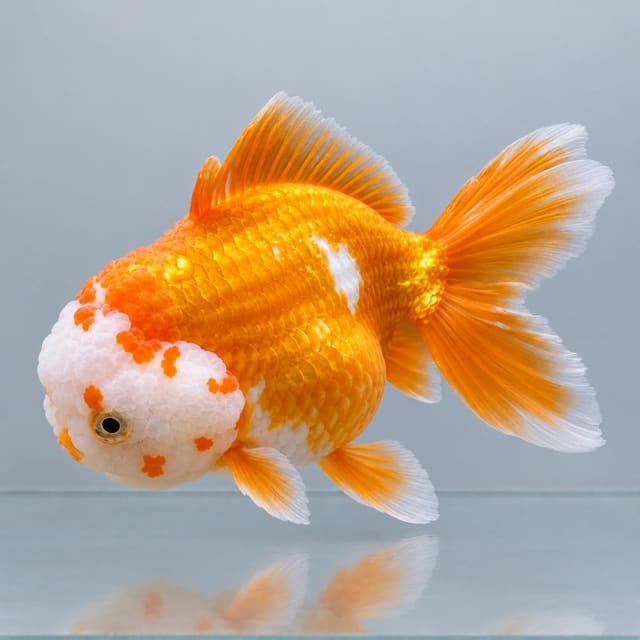
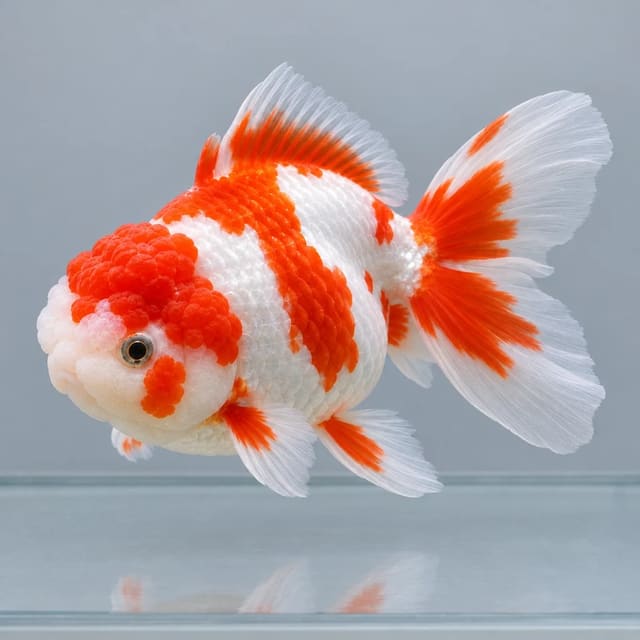
The photographs show the colour form and are based on a reference picture. They are not photographs of the fish you will receive, and the reference image shows a more developed fish than a 3–4 cm youngster.
The Bristol Aquarists’ Society explains that white areas on a goldfish carry no pigment cells, while red areas are rich in red pigment cells. On a red cap fantail the size, shape and depth of the red patch vary from fish to fish, and a young goldfish can still change as it grows. Light is the main outside influence on colour, the society says: dim conditions give a pale fish, good lighting a saturated one. Diet has a smaller effect. We cannot guarantee how the cap will look on the adult fish.
A fantail bought at 3–4 cm grows into a deep-bodied adult of up to about 20 cm, OATA’s figure for fancy goldfish. Plan the aquarium for that adult, not for the youngster in the bag. OATA asks for at least 100 litres for the first adult and 50 litres for every additional adult. The RSPCA gives at least 60 litres per goldfish, works on 2 litres for every 0.5 cm of fish, and rules out bowls and small decorative tanks.
Measure your aquarium and convert it to litres with our tank volume calculator. Choose length and width over height: the RSPCA notes that wide tanks exchange oxygen better than tall, narrow ones.
A fantail’s tail is shorter than a veiltail’s but still easily torn. OATA warns against decor with sharp or rough edges, which can damage long fins, and recommends aquarium gravel or sand. Live plants are ideal, OATA says, though goldfish may eat delicate ones; plastic plants and ornaments such as pots or caves give shelter where live plants are not used.
Goldfish need cool, clean, well-oxygenated water rather than heat. OATA’s values below are written for fancy goldfish; FishBase gives the species a pH of 6.0–8.0 and hardness of 5–19 dH, and the RSPCA gives 10–21°C.
| Reading | Target |
|---|---|
| Temperature | 4–25°C, with 15–23°C best (OATA); 10–21°C (RSPCA) |
| pH | 6.5–8.5 |
| General hardness | 8–18 dGH |
| Carbonate hardness | 5–15 dKH |
| Ammonia | 0 mg/l |
| Nitrite | 0 mg/l |
| Nitrate | Within 20 mg/l of your tap water |
Add a tap water conditioner to every refill to remove chlorine or chloramine, and bring the water to the aquarium’s temperature first. Test your own supply and compare it on our water matcher; our water chemistry guide explains each reading. OATA says a heater is usually unnecessary unless the room is very cold.
A filter is always essential, OATA says, but fancy goldfish prefer gentle flow: keep the output moderate or spread it with a spray bar. An air pump and airstone add oxygen without strong current. Our guide to aquarium filtration explains how to choose and size a filter.
| Step | Task |
|---|---|
| 1 | Test ammonia, nitrite and nitrate, as OATA advises each week |
| 2 | Siphon the gravel while removing about 25% of the water |
| 3 | Refill with conditioned water at tank temperature |
| 4 | Rinse filter media only in removed tank water, never under the tap |
| 5 | Look over each fish: fins, belly, breathing and swimming level |
Practical Fishkeeping suggests a larger 50% weekly change where possible for telescope-type goldfish, so sources differ on volume; treat OATA’s 25% as the minimum. A new aquarium must be cycled first: the RSPCA advises fishless cycling for at least two weeks, and our article on the nitrogen cycle explains why.
OATA recommends a quality flake, granule or pellet made for goldfish, which need more carbohydrate than many fish, fed once a day in an amount that is eaten within a few minutes. Daphnia, bloodworm, brine shrimp, soft aquatic plants, blanched lettuce and thawed, shelled peas make good extras. Overfeeding leaves food to rot and pollute the water.
Some round-bodied goldfish gulp air at the surface and then struggle to stay level. If that happens, OATA suggests a different food or a slow-sinking one.
OATA asks you to check that ammonia and nitrite are at zero before any fish goes in, and to build up stock gradually to avoid new tank syndrome, when the filter bacteria cannot keep up with waste.
| When | What to do |
|---|---|
| Arrival | Turn off the tank lights, float the bag for about 10 minutes, then add tank water to it gradually over up to 20 minutes |
| Release | Net the fish into the aquarium and throw the bag water away |
| Days 1–3 | Feed sparingly and watch swimming, breathing and appetite |
| Days 4–7 | Test the water more often than usual, then move to the weekly routine |
Our acclimatisation guide covers the floating bag method in more detail, and our delivery and Live Arrival Guarantee page explains dispatch and what to do if there is a problem.
On a white fish, small changes show up clearly, which makes a daily look worthwhile. OATA lists the signs to act on: hanging at the surface or sitting on the bottom, colour darker or paler than normal, more hiding or aggression, breathing faster or slower than usual, white spots, fluffy growths, damaged fins or missing scales, clamped fins, flicking against objects, weight change and reduced appetite.
| Sign | Action |
|---|---|
| Salt-like white spots | Read our white spot treatment guide and treat promptly |
| Ragged or shrinking fin edges | Test the water, check the decor and see our fin rot treatment guide |
| Gasping or fast gill movement | Test ammonia and nitrite at once; make a partial water change if either is above zero |
| Tipping or floating after feeding | Switch to a slow-sinking food and feed less |
| Clamped fins and flicking | Test the water first, then ask an experienced retailer before medicating |
OATA says fancy goldfish can live alone or with other fancy goldfish, but not with common goldfish, which are faster, outcompete them for food and sometimes nip fins. The RSPCA gives the same advice for single- and twin-tailed types and says a goldfish does not need company. Practical Fishkeeping notes that fantails, ryukins and telescopes are equally easy to keep and can share a tank. FishBase suggests groups of five or more, so the sources differ on numbers; if you keep a group, add OATA’s 50 litres for each extra adult.
| Suits | Avoid |
|---|---|
| Ryukins such as the Red and White Ryukin | Common goldfish, comets and shubunkins (see our comet goldfish guide) |
| Broadtails such as the Red Broadtail | Fish known to nip fins |
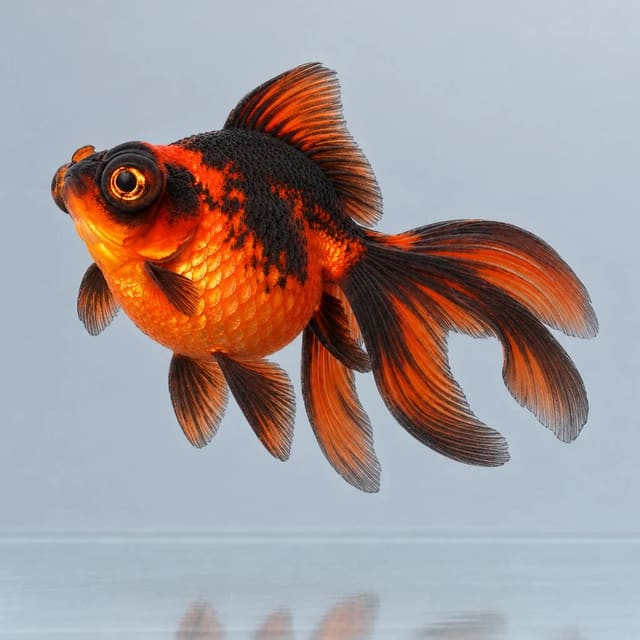
| Telescopes and moors, such as the Black Moor goldfish and Red and Black Telescope Moor | Tropical fish that need a heater |
| Orandas of similar size | Very large fish that dominate the feeding area |
Our tank mates tool checks a planned mix. Browse our fancy goldfish category or the wider goldfish and coldwater fish collection for suitable companions.
This is a point where the sources disagree. OATA advises that fancy goldfish are best kept in indoor aquariums only. The breeder quoted by the Bristol Aquarists’ Society raises young fantails indoors and then moves them to ponds, where they overwinter happily, and Practical Fishkeeping’s fantail breeder says goldfish are hardy enough to survive winter outdoors. For a single pet fantail, we recommend an indoor aquarium, where you can watch it daily and it never has to compete with fast pond fish.
Keep them only with other slow fancy goldfish, never with comets, shubunkins or other fast pond fish, and check them as closely as you would indoors. Our page of cold water fish shows species bred for outdoor life. Never release a goldfish into a river, lake or the wild: OATA notes that it is illegal, harms the fish and can damage native habitats.
Fantails are among the easier twin-tailed goldfish to spawn, but two published methods differ in detail.
| Step | OATA | Practical Fishkeeping fantail breeder |
|---|---|---|
| Fish | Two males to each female | One female, about two years old, with three younger males |
| Trigger | Warm slowly to about 20°C, often after a partial water change | From about 1 March, warm to about 17°C |
| Spawning site | Plants or a spawning mop, moved to a separate tank | A 91 × 61 cm tank planted with hornwort; adults removed after spawning |
| Hatching | About three days | Three to four days, with the water raised to about 22°C |
| Fry | A dedicated set-up and specialist fry food | Newly hatched brine shrimp, then selection for divided tails at about two weeks |
Fancy goldfish breeders select hard: the breeder quoted by the Bristol Aquarists’ Society rears about 3,000 fantail fry a year and keeps about 20. Plan homes for every young fish before you start.
A fantail goldfish, Carassius auratus, with a white body and fins and a red patch on top of the head. Like every fantail it has a short, rounded body and a divided, forked double tail held high.
No. A redcap oranda grows a raised red cap of growth on top of its head and carries its tail below the horizontal. A red cap fantail has the same colour scheme on a fantail’s smooth head and high-held tail, and UK fantail breeders treat a hood on a fantail as a fault.
OATA gives fancy goldfish a maximum of about 20 cm. You receive a young fish of about 3–4 cm, so plan the aquarium for the adult.
OATA advises at least 100 litres for one adult fancy goldfish plus 50 litres for each additional adult. The RSPCA gives at least 60 litres per goldfish. Both rule out bowls.
The size and shape of the red patch vary from fish to fish, and a young goldfish can still change as it grows. Good lighting keeps the red at its strongest. We cannot guarantee how the cap will look on the adult.
Not normally. OATA gives 4–25°C with 15–23°C as the best range and suggests a heater only in a very cold room; the RSPCA gives 10–21°C.
Other twin-tailed fancy goldfish of similar size and speed: ryukins, orandas, broadtails, telescopes and moors. Keep it away from common goldfish, comets and shubunkins, which are faster and take the food.
Sources differ. OATA says fancy goldfish are best kept in indoor aquariums, while a Bristol Aquarists’ Society breeder keeps fantails outdoors in ponds. We recommend an indoor aquarium for a single pet fantail.
OATA says fancy goldfish commonly live 6–8 years, with rare reports of more than 20. A UK fantail breeder quoted by the Bristol Aquarists’ Society gives about 10 years.
No reviews for this item yet. Bought one? Honest reviews only, good or bad.
What customers say about ordering from us
Easy website plenty of info on fish your buying great to pick a time slot
TRACEY DURRANT · 7 Oct 2026
Got some lovely fish thank you
Kevin Mackie · 7 Oct 2026
Reviews of our shop, collected by Judge.me, an independent third-party review collector. Newest first.
Moved by UK carriers licensed to handle live animals
Hand-packed with oxygen bags, poly box, heat pack
Email photos the same day; an optional unboxing video helps us review problems faster — claim terms apply
Klarna & PayPal Pay in 3 at checkout