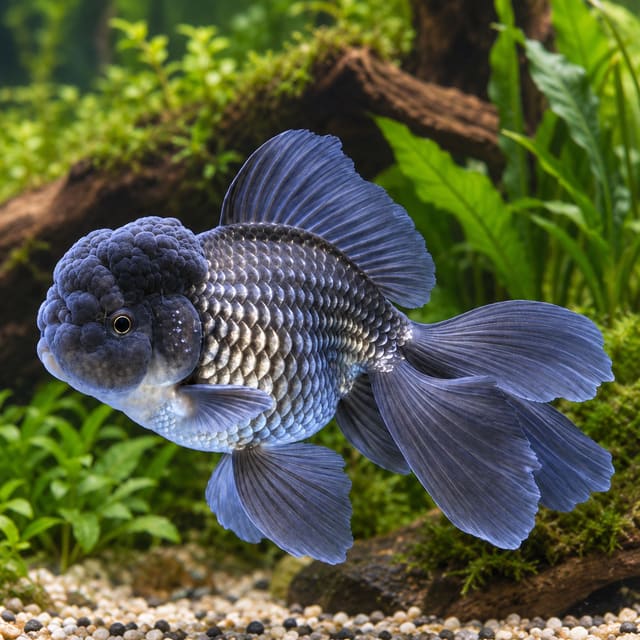
Carassius auratus l.f. blue oranda
4–25°C · pH 6–8
£10.99

Red oranda fancy goldfish with rounded body and elegant head growth. Peaceful cold-water fish to ~15cm; 15-25C, 110L+.
Adult size is the maximum length this species reaches at full maturity (scientific sources). The livestock you receive will be younger and smaller. Product-photo provenance and any image-specific limitations are stated on the listing.
Carassius auratus
Shoaling fish: kept in a group they feel safer, stay calmer and show their best colour.
Confirm your email, then we’ll send an availability message for this exact item if it returns within 180 days.
This request is only for this product—no newsletter or other promotions. A mail-provider retry may very rarely duplicate the same availability message. Unconfirmed addresses are removed after 48 hours. See our privacy policy.
Red oranda fancy goldfish with rounded body and elegant head growth. Peaceful cold-water fish to ~15cm; 15-25C, 110L+.
Adult size is the maximum length this species reaches at full maturity (scientific sources). The livestock you receive will be younger and smaller. Product-photo provenance and any image-specific limitations are stated on the listing.
Maintain these water conditions for optimal health and vibrant colors
Solid red over a rounded fancy-goldfish body, finished with the oranda's elegant head growth — that combination keeps the red oranda (Carassius auratus) among the most requested cold-water fish in the UK hobby. It is a long-term companion too: with a lifespan of around ten years and an adult size near 15 cm, this is a fish you plan an aquarium around rather than add on impulse, and one that rewards the planning with a decade of slow, stately colour.
Peaceful by temperament and active at every level of the tank, the red oranda still needs its company chosen for fairness. Round-bodied fancies are not built for racing, so pair it only with other fancy goldfish of a similar body shape and swimming ability. Faster, competitive fish — including common and comet goldfish — will reach every meal first, while fin-nipping species, aggressive fish and warm-water tropicals are each unsuitable for their own reasons. The compatibility record sums it up neatly: this fish thrives in a community, provided the community is built of its own kind. As an omnivore it takes a wide range of foods, which keeps balanced feeding easy so long as quicker fish are not stealing the meal first.
An omnivore rated at moderate care, it wants cool, well-buffered water: 15–25 °C, pH 6.5–8.0 and hardness of 10–30 dGH, in an aquarium of at least 110 litres. None of those numbers is difficult to hit; the discipline is in holding them steady year-round and resisting the urge to add quicker, pushier tankmates later on. Cooler-running rooms suit it better than heated tropical setups, since the recorded range tops out at 25 °C.
Budget tank space for the full-grown 15 cm adult, not the youngster that arrives, and stock alongside similar slow-bodied fancies from the start. Allow the full 110 litres for the first fish and scale the volume up generously for each additional fancy you plan to keep. Red orandas are dispatched UK-wide via licensed live-animal courier, covered by our live arrival guarantee.
No reviews for this item yet. Bought one? Honest reviews only, good or bad.
What customers say about ordering from us
I have a small group of long finned mountain minnows. So was delighted to be able to order ten of this variety to increase the genetics in my tank . The ones I recieved are healthy but it’s to early to give a verdict on wether they are of a long finned type since they are small currently.
Gordon Walker · 23 Sept 2026
100% success travel and "installation". Pleased with quality of purchase. The Siamese fighter a bit "shy" so have not yet seen him at his best yet but looking good. Happy customer. GG
George E Garratt · 21 Sept 2026
Reviews of our shop, collected by Judge.me, an independent third-party review collector. Newest first.