Moderate
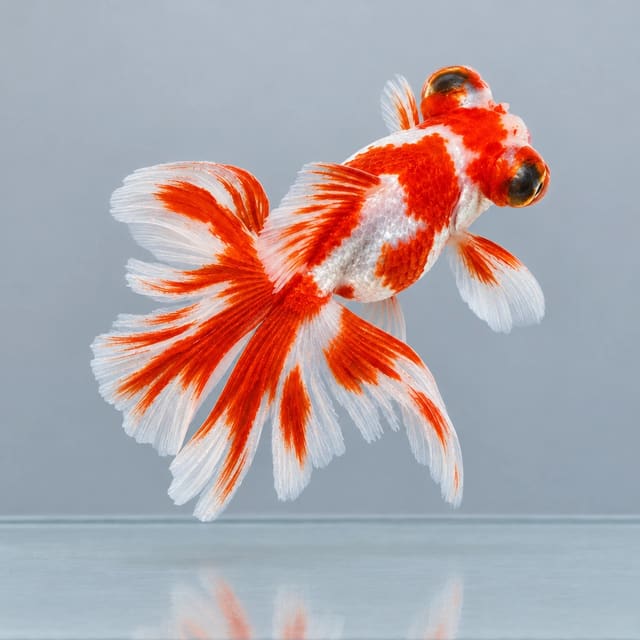
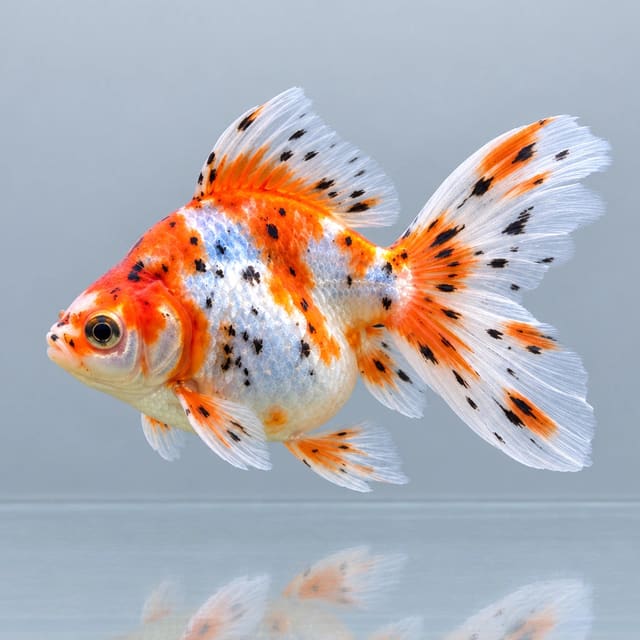
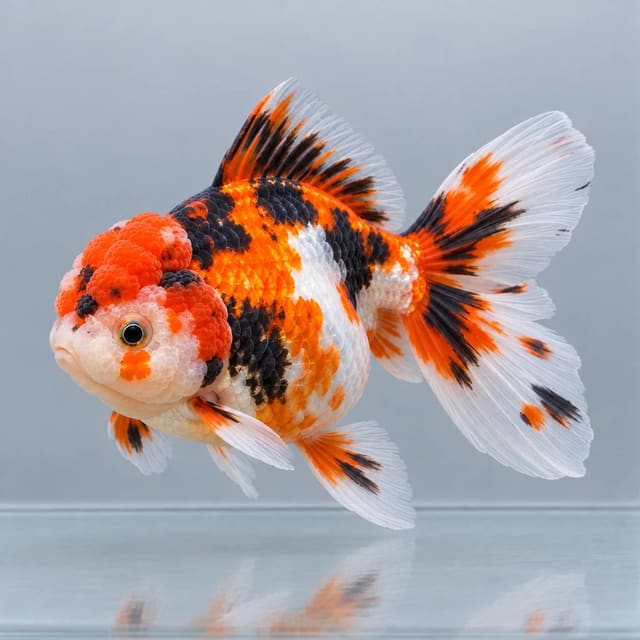
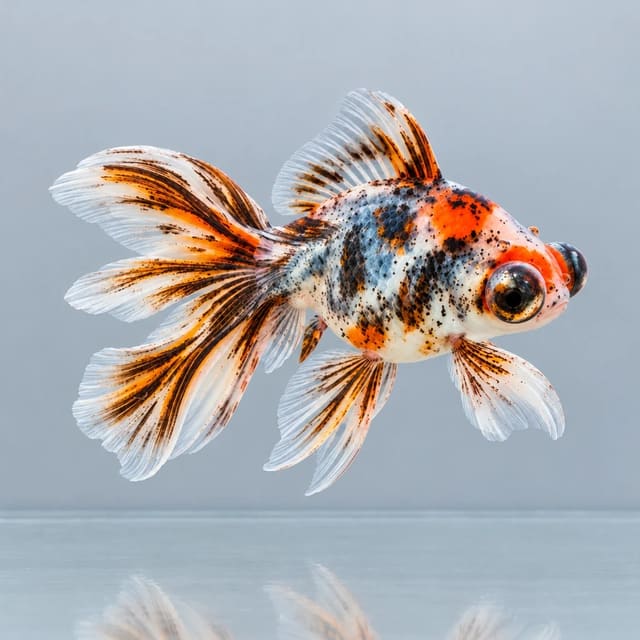
Calico Telescope Moor Goldfish (Carassius auratus)
4–25°C · pH 6.5–8.5 · 100L
£20.89
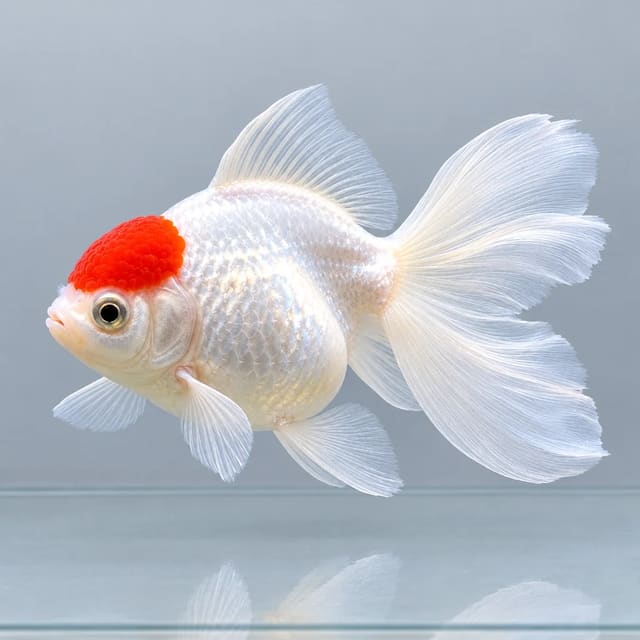
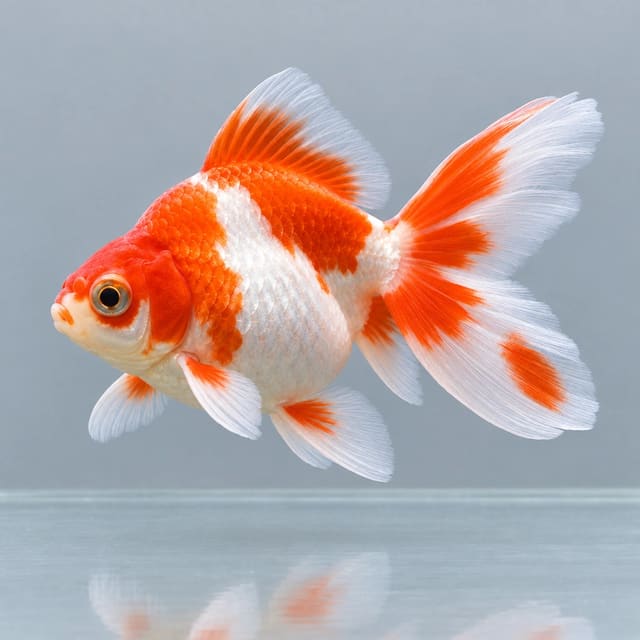
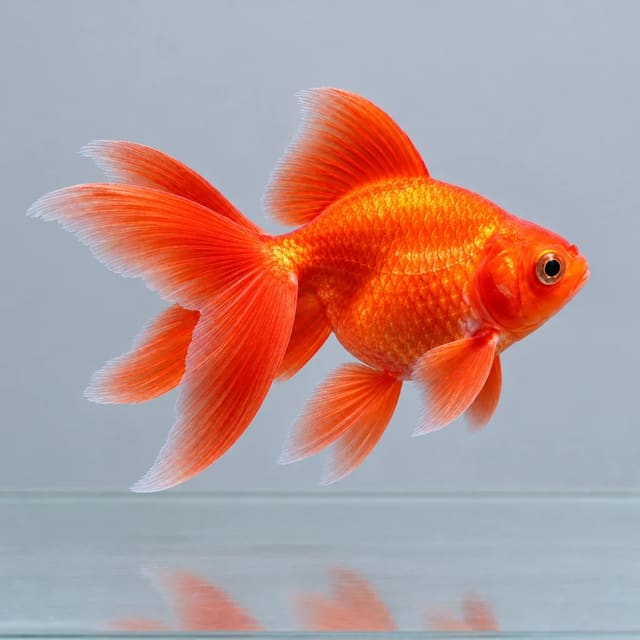
The White Fantail is a fancy goldfish (Carassius auratus) with pearly white scales, dark eyes, a short deep body and a divided, fan-shaped double tail. Keep it in an unheated indoor aquarium of at least 100 litres at 4–25°C (best 15–23°C), with smooth decor and other fancy goldfish. Sold individually at 3–4 cm.
Adult size is the maximum length this species reaches at full maturity (scientific sources). The livestock you receive will be younger and smaller. Product-photo provenance and any image-specific limitations are stated on the listing.
Carassius auratus
Quantity discounts are pricing offers, not a group-size recommendation. Check the full care guidance and your existing animals before choosing a quantity.
The White Fantail is a fancy goldfish (Carassius auratus) with pearly white scales, dark eyes, a short deep body and a divided, fan-shaped double tail. Keep it in an unheated indoor aquarium of at least 100 litres at 4–25°C (best 15–23°C), with smooth decor and other fancy goldfish. Sold individually at 3–4 cm.
Adult size is the maximum length this species reaches at full maturity (scientific sources). The livestock you receive will be younger and smaller. Product-photo provenance and any image-specific limitations are stated on the listing.
Read the full care guidance when planning conditions for your aquarium.
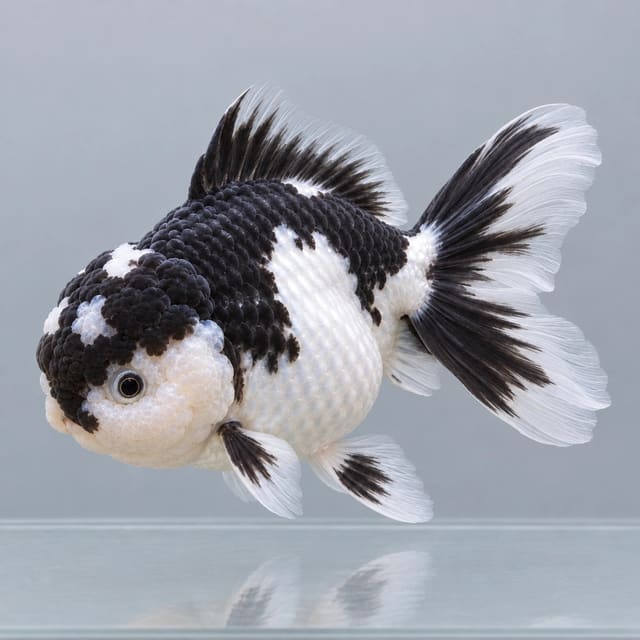
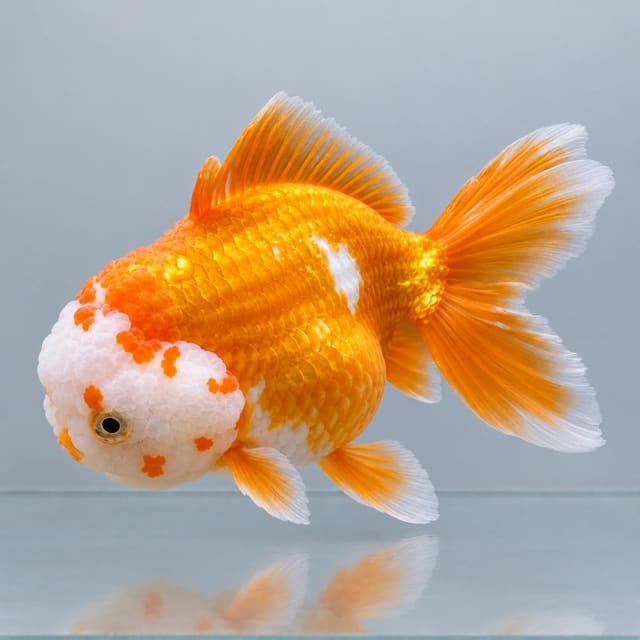
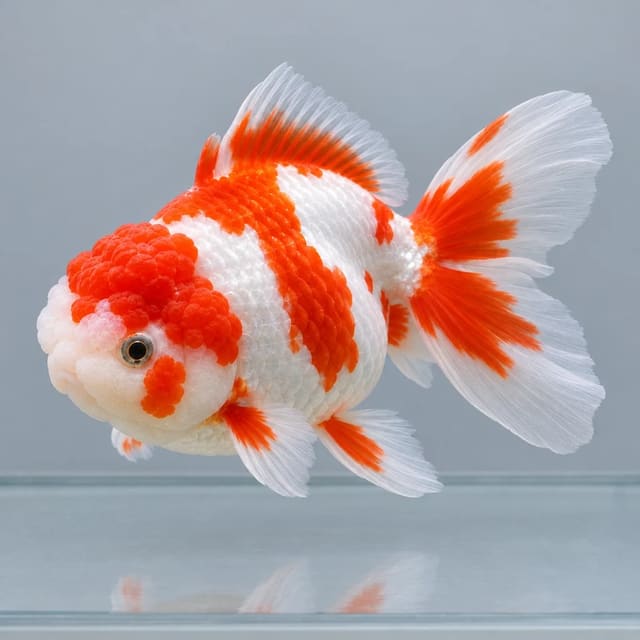
The white fantail goldfish is a fancy goldfish, Carassius auratus, with a short, deep body and a divided double tail that spreads like a fan behind it. In this colour form the scales are a pearly, silvery white and the fins are translucent white, so the dark eyes stand out clearly. Fantails are straightforward fish to keep: Practical Fishkeeping describes fantails and ryukins as just as easy as telescopes, which it calls basically fantails with protruding eyes.
All goldfish belong to one species in the carp family, Cyprinidae. Practical Fishkeeping’s fantail breeding feature notes that goldfish were domesticated from a dark greyish-brown wild carp and first bred for colour in China more than 1,000 years ago, and a 2020 genome study confirms their descent from crucian carp in ancient China. FishBase gives the species’ native range as East Asia.
| Variety | How to recognise it |
|---|---|
| Fantail | Short, rounded body about 65% as deep as it is long; divided, forked tail with slightly rounded lobes held above the horizontal |
| Ryukin | Between a fantail and a veiltail: deep body, pointed head and a dorsal hump |
| Veiltail | Very round body with a long, flowing, unforked veil tail |
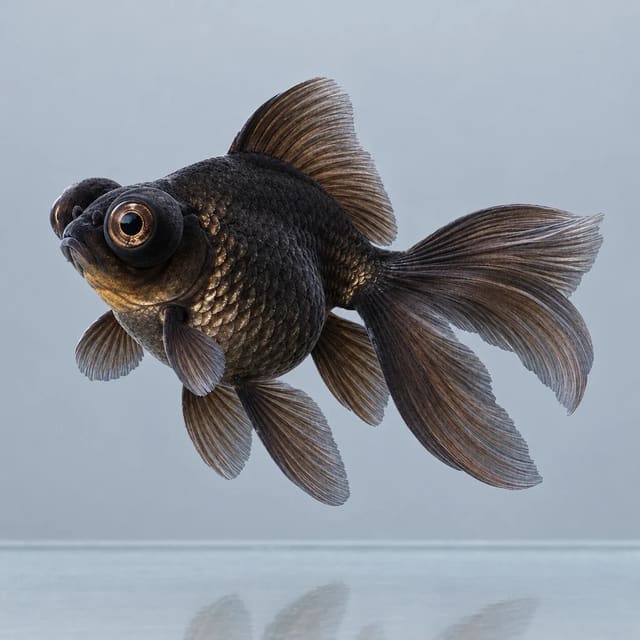
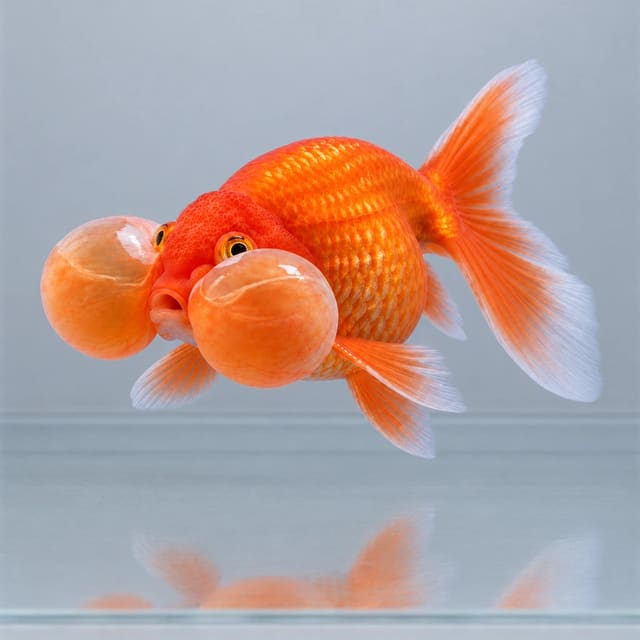
| Telescope or moor | Protruding eyes on a fantail- or veiltail-type body |
| Wakin | Body only slightly shorter than the wild type, with a double, fantail-like tail |
These descriptions come from the UK fantail standard, which once had long-tailed and short-tailed versions since merged into today’s intermediate form, and from the Bristol Aquarists’ Society’s variety list. See all our goldfish and coldwater fish, or browse the fancy goldfish category for fish that share its care.
The UK fantail standard lists red, orange, yellow, blue, brown and black as metallic self colours, with white appearing only within variegated patterns, alongside the multicoloured calico group. An all-white fantail is therefore a pet colour form rather than a show-standard fish, which makes no difference to its care. The Bristol Aquarists’ Society explains the three scale types that give goldfish their finish: metallic scales are shiny and reflective, nacreous scales have a softer mother-of-pearl look and matt scales have no shine at all.
Goldfish hatch in a dark wild-type colour and reach their adult colours as black pigment cells are lost, so shade and finish vary from one white fantail to the next. The fish in our photographs shows the colour form at its best; the individual you receive is a young fish and will not look identical.
By the UK standard a fantail carries its tail high, and Practical Fishkeeping lists long, drooping tails among the commonest faults. Finnage length varies from fish to fish, and the Bristol society notes that fantails from specialist shops often have finnage too long for the show standard. Check our delivery and Live Arrival Guarantee information before you order.
OATA’s fancy goldfish care sheet advises the largest aquarium practical, with at least 100 litres for one adult and 50 litres for each additional adult, or a plan to upgrade as the fish grows. Larger volumes keep temperature and water quality steadier. The RSPCA gives a guideline of 2 litres of water per 0.5 cm of goldfish length and at least 60 litres per goldfish; where the two differ, the OATA figure is the safer plan for a fish that will grow to around 20 cm.
A 3–4 cm fantail can live in that aquarium from the start, so there is no need to buy a small tank first and upgrade later. A bowl is never suitable: the RSPCA notes that small volumes cannot provide a stable environment.
| Stage | What to plan |
|---|---|
| On arrival (3–4 cm) | A cycled aquarium of the adult size, a gentle filter and a measured feeding routine |
| Growing on | Weekly tests and water changes as the fish eats more and produces more waste |
| Adult (up to about 20 cm) | At least 100 litres for one fish, plus 50 litres for each additional adult |
| Adding companions | Fancy goldfish of a similar size, added one at a time once readings are stable |
Use our tank volume calculator to turn your aquarium’s dimensions into litres, and the stocking calculator to check the whole population before you add more fish.
A fantail’s divided tail and paired fins can be torn on rough surfaces. OATA warns against decor with sharp or rough edges that could damage long fins, and recommends gravel or sand. Live plants are ideal, but goldfish readily eat them, so choose tough plants or accept some grazing; where live plants are not used, plastic plants and ornaments such as plant pots or caves provide shelter.
OATA also notes that fancy goldfish prefer a gentle flow, so spread the filter output with a spray bar or turn it down rather than aiming it across the tank.
Fit overhead lighting to give a regular day and night, as OATA recommends; the RSPCA suggests eight to ten hours a day for most species. Keep the tank away from windows, radiators and draughts, because temperature swings stress goldfish.
OATA’s ranges for fancy goldfish are below. OATA notes that goldfish adapt to wider ranges of temperature, pH and hardness over time, so a stable reading inside the range is better than repeated adjustments.
| Reading | Target range |
|---|---|
| Temperature | 4–25°C, best at 15–23°C |
| pH | 6.5–8.5 |
| General hardness (GH) | 8–18°dH |
| Carbonate hardness (KH) | 5–15°dKH |
| Ammonia | 0 mg/l |
| Nitrite | 0 mg/l |
| Nitrate | No more than 20 mg/l above tap water |
The RSPCA gives 10–21°C for goldfish, so the range both sources agree on is 15–21°C. A heater is only needed if the room gets very cold; if you fit one, the RSPCA suggests setting it at the lower end of the range to smooth out swings.
Use a tap water conditioner on every water change to remove chlorine or chloramine; our water care range includes conditioners. Hardness varies from region to region across the UK, so test your tap water’s GH, KH and pH. The water matcher shows how your readings compare with this fish’s range, and our water chemistry guide explains each value.
OATA says a filter is always essential, whatever the aquarium’s size. Choose one rated for the adult population and soften its output with a spray bar or by turning it down. Mature it before the fish arrives: the RSPCA recommends fishless cycling, which takes at least two weeks, and our guide to the nitrogen cycle explains how filter bacteria turn ammonia into nitrite and then nitrate.
OATA recommends a specialised goldfish food, because goldfish need more carbohydrate than many other species, given once a day and only as much as is eaten within a few minutes. Some fancy goldfish gulp air at the surface and lose their balance after feeding; OATA suggests trying a different or slow-sinking food. Our Tropical Super Goldfish Mini Sticks are sinking sticks made for fancy goldfish, and Tropical Goldfish Pellet is a sinking pellet suited to fancy varieties.
OATA lists daphnia, bloodworm, brine shrimp, aquatic plants, blanched lettuce and thawed, shelled peas as supplements. Freeze-dried brine shrimp is an easy way to add one of them. Goldfish are insatiable and will beg constantly, so judge the portion by what is eaten, not by how hungry the fish looks.
Before delivery, confirm a mature filter and zero ammonia and nitrite. OATA’s floating-bag method then takes up to half an hour: lights off, float the sealed bag for 10 minutes to match temperatures, add small amounts of aquarium water to the bag over up to 20 minutes, then release the fish and leave the bag water behind. Our guide on how to acclimatise new fish explains each step.
| When | What to do |
|---|---|
| Day before | Test the water; finish any changes to decor |
| Arrival | Float and acclimatise with the lights off |
| Days 1–2 | Feed a very small sinking meal once a day |
| Days 3–7 | Retest ammonia and nitrite; watch fins, swimming and appetite |
| End of week one | Normal water change; record all readings |
OATA warns that adding fish too quickly causes new tank syndrome, when the filter bacteria cannot keep up and ammonia and nitrite rise. Add companions one at a time.
OATA describes a healthy goldfish as having clear, bright eyes, undamaged fins, intact scales, no ulcers or bumps, normal swimming and steady breathing. On a white fish, reddened areas, streaks in the fins or damage to the tail edge show up clearly, so look the fish over at each daily feed.
| If you see | Do this |
|---|---|
| Red streaks or reddened skin | Test ammonia, nitrite and nitrate and act on the results |
| Split or ragged tail edges | Check decor for rough edges and tank mates for nipping |
| Clamped fins, flicking or shimmying | Test the water and compare with your log |
| Losing balance after feeding | Switch to sinking food and smaller portions |
| White spots or fluffy growths | Test the water and ask for fish-health advice |
| Hanging at the surface | Test ammonia, nitrite and temperature immediately |
If a problem continues after the water has been checked, contact us with the aquarium volume and your recent readings.
OATA says fancy goldfish can be kept alone or with other fancy goldfish, but not with common goldfish, which swim faster, outcompete them for food and sometimes nip their fins. The RSPCA likewise advises keeping single-tailed and twin-tailed goldfish apart, and OATA’s goldfish aquarium sheet warns specifically against keeping comets with fancy varieties.
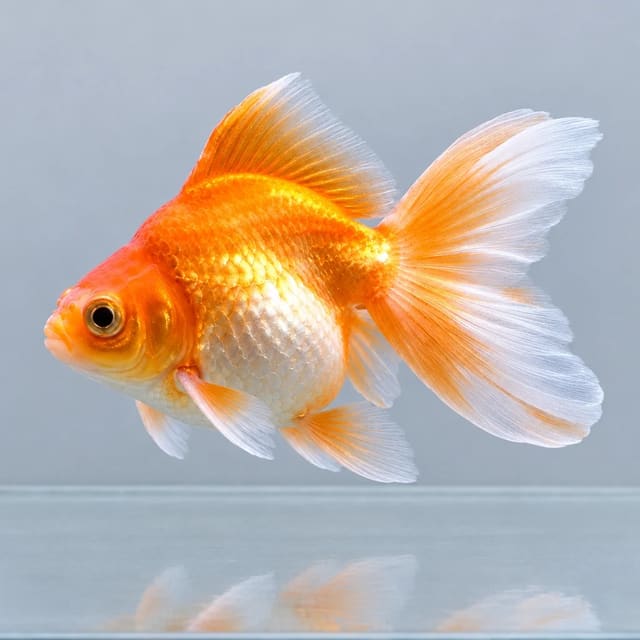
Good companions in our range include the Red and White Ryukin, the Red Broadtail Fancy Goldfish, the Red Oranda Goldfish and the Blue Oranda; the white fantail makes a striking contrast with red and blue fish. Use the tank mates tool to check any other pairing.
| Suits | Avoid |
|---|---|
| Other fantails and ryukins | Comets, common goldfish and shubunkins |
| Telescopes, moors and orandas | Fin-nipping species |
| Fancy goldfish of a similar size | Tropical fish that need heated water |
| A fish kept on its own | Any fish fast enough to take every meal |
Sources disagree here. OATA advises that fancy goldfish are best kept indoors in aquaria only. The Bristol Aquarists’ Society’s fantail notes describe the fantail as hardy and happily living outdoors in ponds, with young fish raised indoors in tanks before moving outside. We recommend an indoor aquarium for a white fantail, and especially for a young 3–4 cm fish. Our guide to comet goldfish explains why fast pond goldfish and slow fancies need separate homes.
The Bristol Aquarists’ Society describes the fantail as relatively easy to breed among the twin-tailed goldfish. Practical Fishkeeping’s fantail feature describes one breeder’s method: a 91 × 61 cm spawning tank planted with plenty of hornwort, water warmed to about 17°C from around the start of March, and one female placed with three males. After spawning the adults are removed; the eggs hatch in three to four days, and the fry are first fed newly hatched brine shrimp about 36 hours after hatching.
OATA’s general guidance differs in detail, so choose one method and follow it consistently.
| Point | Practical Fishkeeping breeder | OATA guidance |
|---|---|---|
| Ratio | One female to three males | Two males to each female |
| Temperature | About 17°C from around the start of March | Raised slowly to about 20°C; a water change often triggers spawning |
| Protecting eggs | Adults removed after spawning | Plants or spawning mop moved to another tank |
| Hatching | Three to four days | About three days |
Adults of both sexes eat eggs and fry. In spring and summer males develop white tubercles on the gill covers and pectoral fins, and females have deeper bodies. A Bristol Aquarists’ Society breeder keeps only about 20 of some 3,000 fry a year, so plan homes for every young fish you raise; OATA is clear that releasing aquarium fish into the wild is illegal.
A fancy goldfish, Carassius auratus, with a short, deep body and a divided, forked double tail that spreads like a fan, in an all-white colour form. It is one of the easiest twin-tailed goldfish to keep.
OATA puts fancy goldfish at about 20 cm at most. The fish is dispatched at 3–4 cm, so it will grow to several times that length.
OATA advises at least 100 litres for one adult fancy goldfish, plus 50 litres for each additional adult. The RSPCA gives at least 60 litres per goldfish; use the larger figure where you can.
Usually not. OATA gives 4–25°C, with 15–23°C as the optimum, and says a heater is only needed in a very cold room. The RSPCA gives 10–21°C for goldfish.
Other fancy goldfish of a similar build, such as ryukins, telescopes, moors and orandas. Practical Fishkeeping notes that fantails and ryukins mix well with telescopes. Avoid comets, common goldfish and shubunkins.
Sources differ. OATA advises keeping fancy goldfish indoors in aquaria only, while Bristol Aquarists’ Society breeders describe fantails as hardy fish that live outdoors in ponds. We recommend an indoor aquarium, especially for a young fish.
A goldfish food once a day, only as much as is eaten within a few minutes. OATA suggests a slow-sinking food for fancy goldfish that lose their balance after feeding, with daphnia, bloodworm, brine shrimp and peas as extras.
Not on its own. The UK fantail standard lists red, orange, yellow, blue, brown and black as self colours, with white appearing only in variegated patterns, so an all-white fantail is a pet colour form.
OATA gives 6–8 years in good conditions for fancy goldfish, with rare reports of more than 20, and a Bristol Aquarists’ Society breeder puts fantails at about 10 years.
No reviews for this item yet. Bought one? Honest reviews only, good or bad.
What customers say about ordering from us
Easy website plenty of info on fish your buying great to pick a time slot
TRACEY DURRANT · 7 Oct 2026
Got some lovely fish thank you
Kevin Mackie · 7 Oct 2026
Reviews of our shop, collected by Judge.me, an independent third-party review collector. Newest first.
Moved by UK carriers licensed to handle live animals
Hand-packed with oxygen bags, poly box, heat pack
Email photos the same day; an optional unboxing video helps us review problems faster — claim terms apply
Klarna & PayPal Pay in 3 at checkout