Moderate
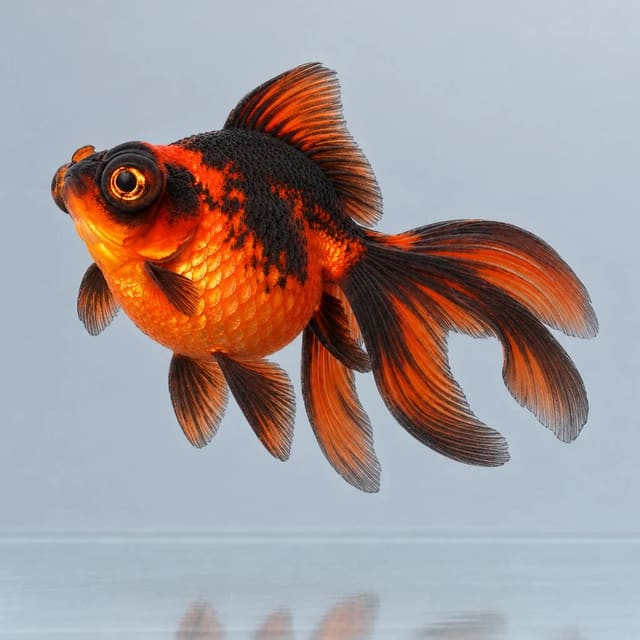
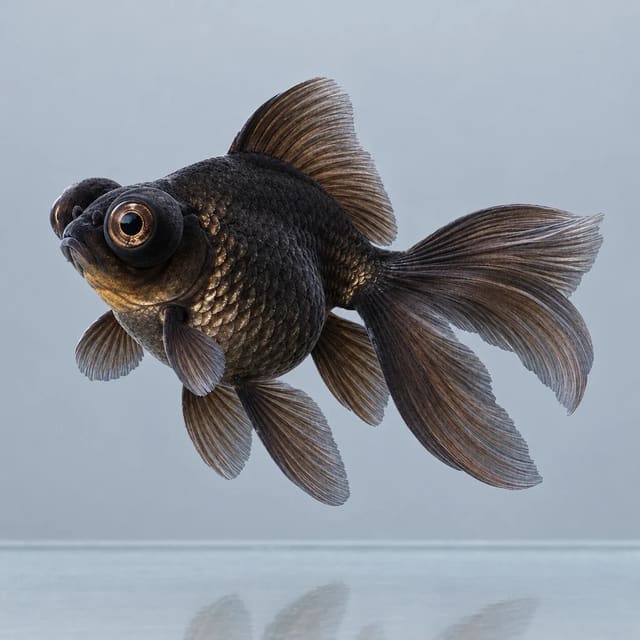
Black Moor Goldfish (Carassius auratus)
4–25°C · pH 6.5–8.5 · 100L
£6.99
The fantail goldfish is a hardy, twin-tailed fancy goldfish (Carassius auratus) with a short, rounded body and a forked tail held high like a fan. It grows to about 20 cm and needs an unheated aquarium of at least 100 litres for one adult, plus 50 litres for each extra fish. Sold individually in assorted colours at 3–4, 5–6 or 8–10 cm.
Adult size is the maximum length this species reaches at full maturity (scientific sources). The livestock you receive will be younger and smaller — pick a size above for the actual shipping size. Product-photo provenance and any image-specific limitations are stated on the listing.
Carassius auratus
Quantity discounts are pricing offers, not a group-size recommendation. Check the full care guidance and your existing animals before choosing a quantity.
The fantail goldfish is a hardy, twin-tailed fancy goldfish (Carassius auratus) with a short, rounded body and a forked tail held high like a fan. It grows to about 20 cm and needs an unheated aquarium of at least 100 litres for one adult, plus 50 litres for each extra fish. Sold individually in assorted colours at 3–4, 5–6 or 8–10 cm.
Adult size is the maximum length this species reaches at full maturity (scientific sources). The livestock you receive will be younger and smaller — pick a size above for the actual shipping size. Product-photo provenance and any image-specific limitations are stated on the listing.
Read the full care guidance when planning conditions for your aquarium.
The fantail goldfish is one of the oldest and sturdiest of the twin-tailed fancy goldfish. It has a short, rounded body, a smooth outline from nose to dorsal fin and a divided, forked tail that is held high and opens like a fan when you look down on it. If you want your first fancy goldfish, or a calm, colourful fish for a coldwater aquarium, the fantail goldfish is a sensible place to start. This listing is for assorted fantails: the colour is not chosen, so each fish is a small surprise.
Every fantail is Carassius auratus, the same species as the common goldfish. OATA explains that fancy goldfish are varieties produced by selective breeding for finnage, body shape and colour, and that they are more delicate than common goldfish and need greater care. Practical Fishkeeping notes that goldfish were domesticated from a dark greyish-brown wild carp native to Asia and first bred for colour in China more than 1,000 years ago, and FishBase places the wild species in East Asia, China and Japan.
The Bristol Aquarists’ Society (BAS), whose goldfish standards are widely used by UK breeders, calls the fantail relatively easy to breed among the twin-tails and points out that fairly good fantails, unlike most other twin-tailed types, can be bought from many shops at a reasonable price. That is exactly why it suits a first fancy goldfish aquarium.
| Feature | What a good fantail shows |
|---|---|
| Body | Short, deep and rounded; the BAS standard asks for a body depth of about 65% of body length, with a smooth outline and no bump behind the head. |
| Tail | Divided and forked, with slightly rounded, well-spread lobes held above the horizontal, never drooping. |
| Other fins | A single dorsal fin; all other fins paired, including a double anal fin, with slightly rounded tips. |
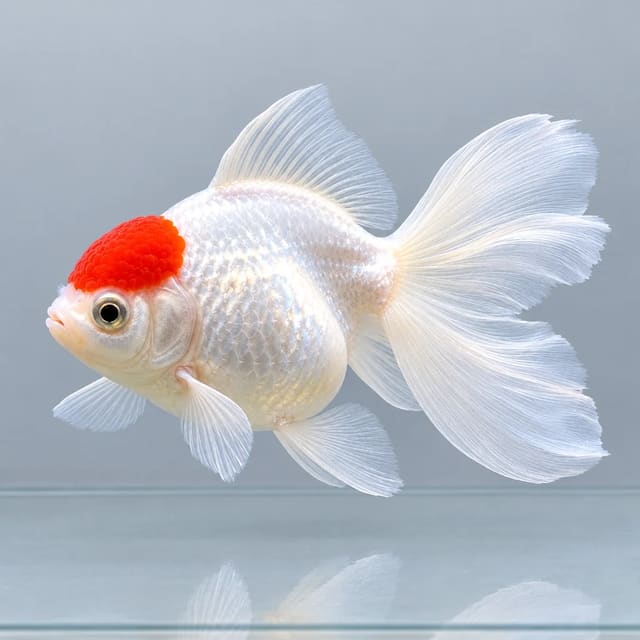
| Head | Smooth. A growth or hood on the head is a fault in a fantail; a hood is the mark of an oranda. |
| Finnage length | Moderate. BAS notes the fantail’s finnage is relatively short compared with the veiltail. |
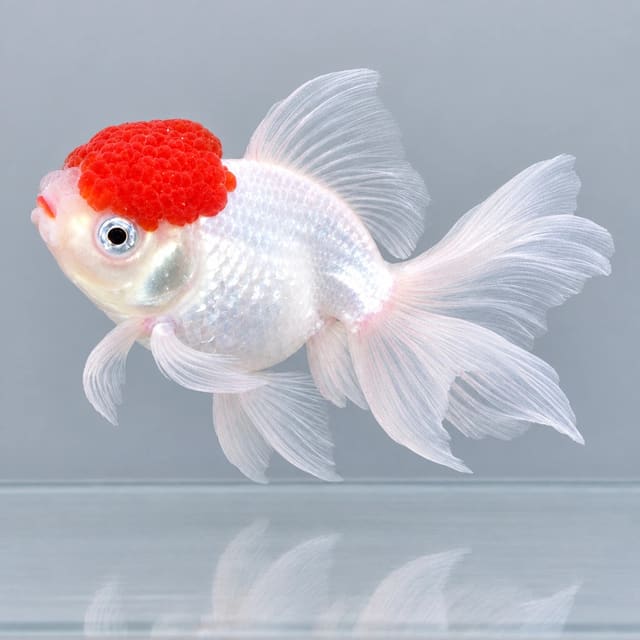
Compare it with the hooded Red Oranda Goldfish or browse our full oranda and fancy goldfish category to see how the twin-tailed varieties differ.
One purchase supplies one live fantail goldfish at the size you select: 3–4 cm, 5–6 cm or 8–10 cm. The price is for one fish. All three sizes are young fish of the same variety; the larger sizes simply give you a fish that is further on in its growth and finnage.
The size you select is the size supplied, not the adult size. OATA says fancy goldfish are unlikely to grow larger than 20 cm, so plan every fantail as a fish of up to 20 cm, whichever size you buy.
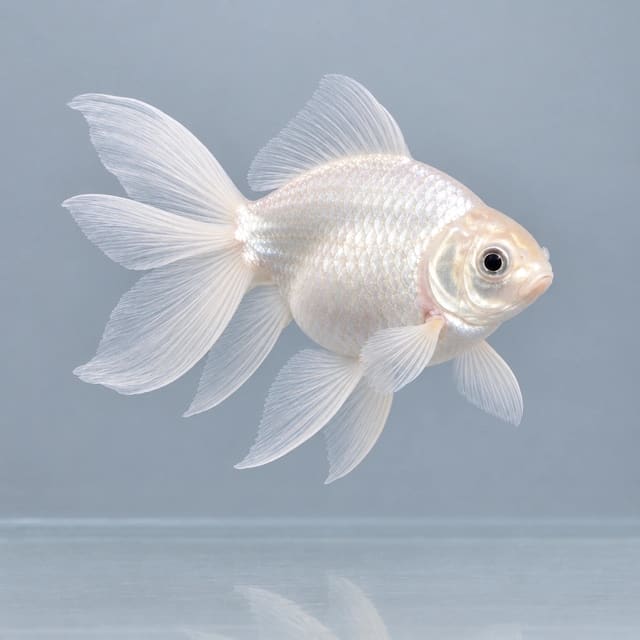
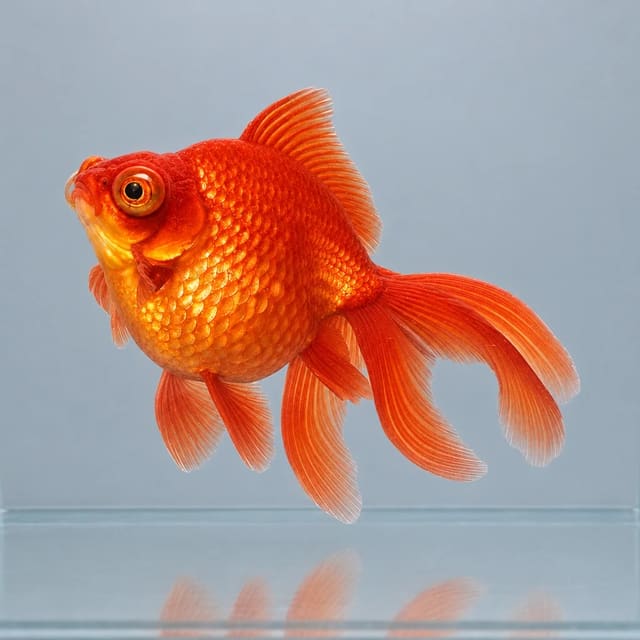
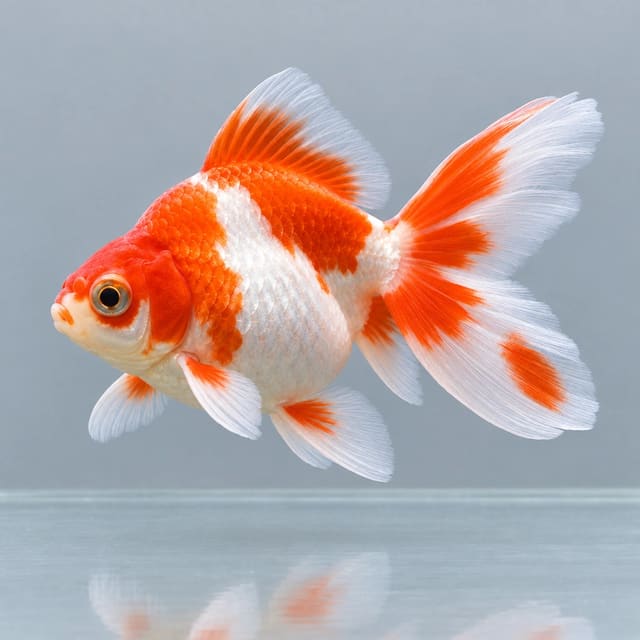
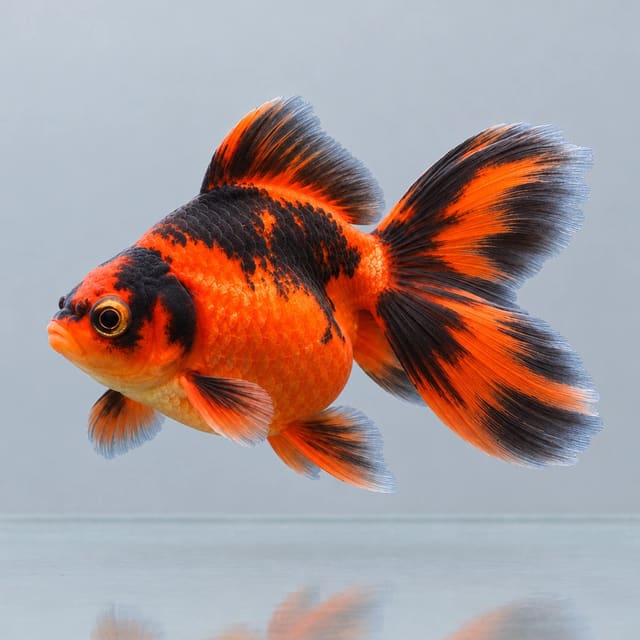
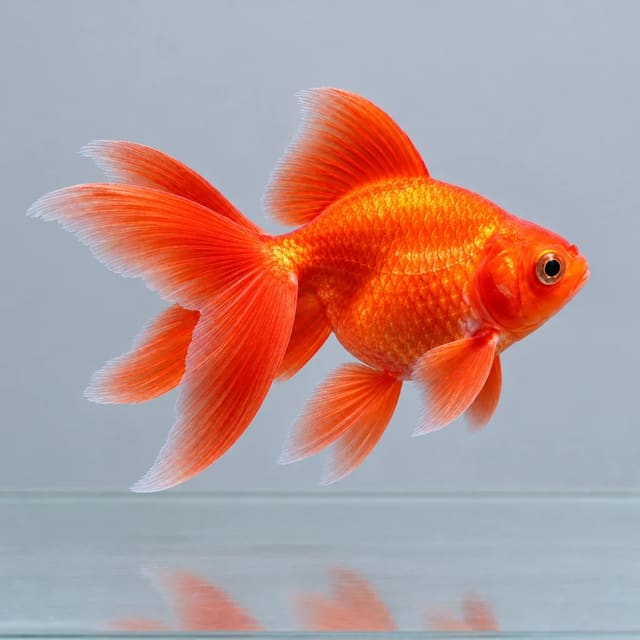
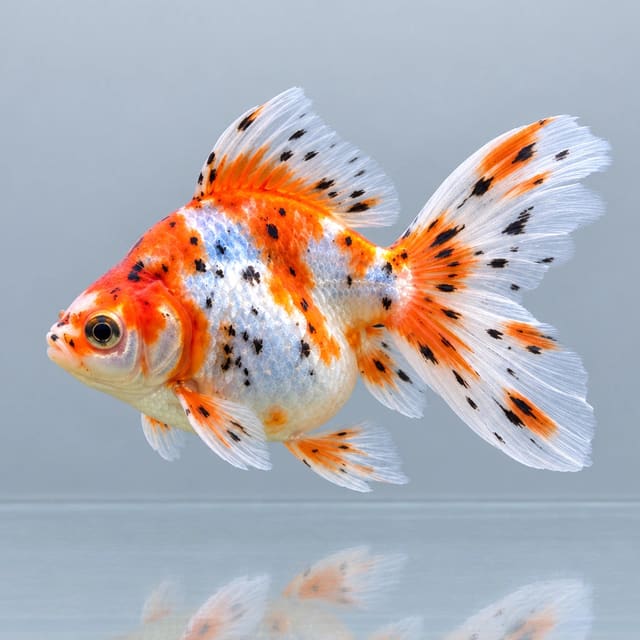
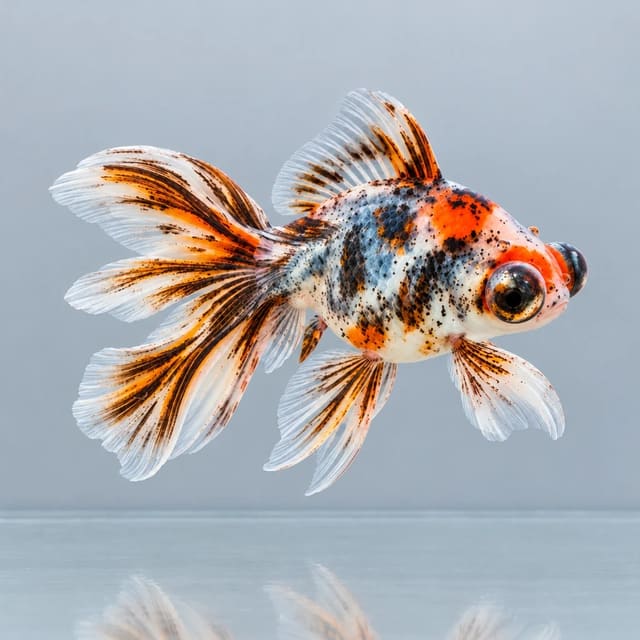
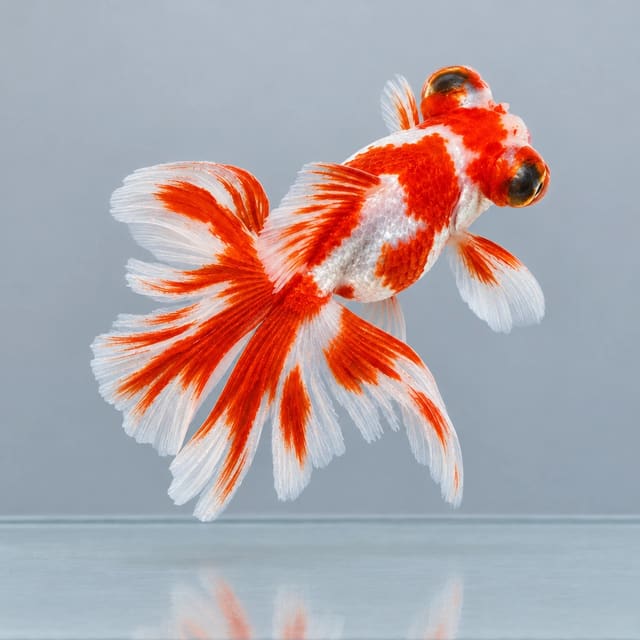
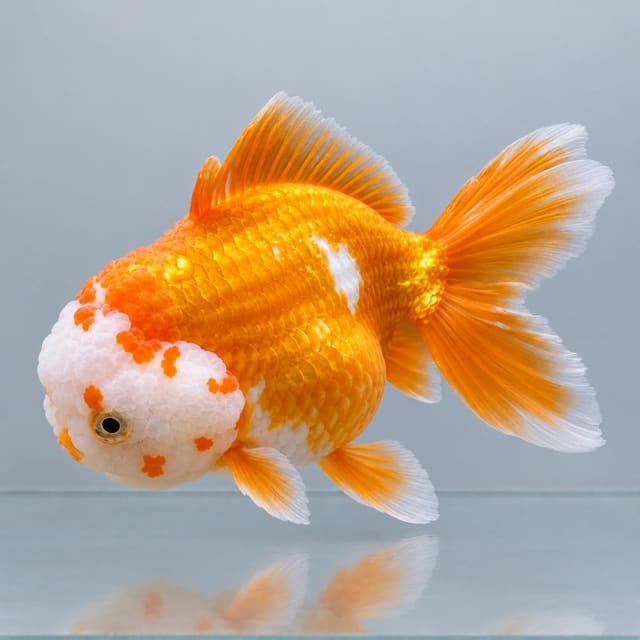
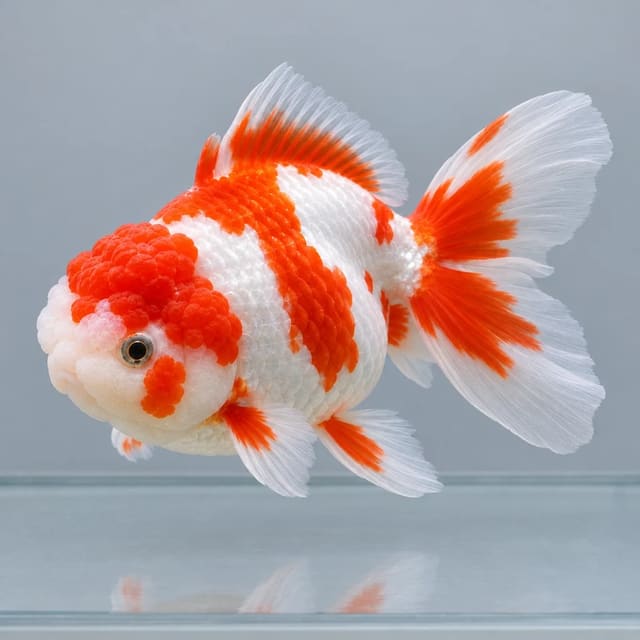
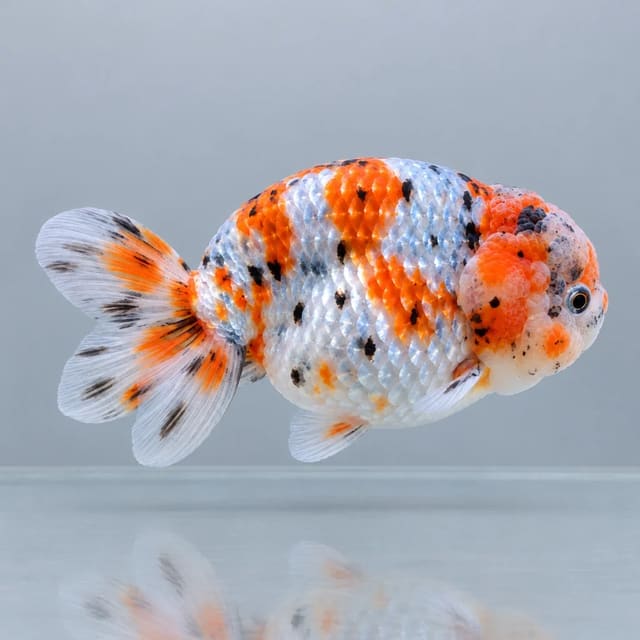
Because this is an assorted listing, we do not choose the colour. BAS lists the colours a fantail may show: metallic fish can be self-coloured (red, orange, yellow, blue, brown or black) or variegated in a mix of those colours and white, and calico fish have a blue background with patches of violet, red, orange, yellow, brown and white, spotted with black. The photographs show an orange-and-white example of the variety, not the fish you will receive.
Sex is not chosen or guaranteed. OATA explains that fancy goldfish can be sexed only in the breeding season in spring and summer, when males develop small white tubercles on their gill covers and pectoral fins and females look deeper-bodied.
The sources do not agree on whether goldfish need company, so let your aquarium size decide the number. Before ordering, read our delivery and Live Arrival Guarantee information so the aquarium is ready on the day the fish arrive.
Goldfish are large, hungry fish that produce a lot of waste, so space is the single most important decision. OATA advises at least 100 litres for one adult goldfish, plus 50 litres for each additional adult, and adds that the larger the aquarium, the more stable its temperature and water quality. The RSPCA gives a different rule of thumb, 2 litres of water for every 0.5 cm of goldfish length, which works out at 80 litres for a 20 cm fish. FishBase records a minimum aquarium length of 100 cm for goldfish. We use the most generous of these figures, the OATA one.
Shape matters as much as volume. The RSPCA explains that oxygen enters the water at the surface, so a wide tank with a large surface is better than a tall one of the same volume. A fantail is a slow, deep-bodied swimmer and appreciates open water along the front of the aquarium.
| Adult fantails | OATA minimum water volume |
|---|---|
| 1 | 100 litres |
| 2 | 150 litres |
| 3 | 200 litres |
| 4 | 250 litres |
| 5 | 300 litres |
OATA recommends aquarium gravel or sand, and ideally live plants, while warning that fancy goldfish readily eat live plants; tough plants or good artificial plants, plant pots and model caves give shelter. To protect long fins and eyes, avoid ornaments and artificial plants with sharp or very rough edges. Keep the floor open enough for the fish to forage, because goldfish spend much of the day sifting the bottom for food.
Place the aquarium carefully. OATA says fancy goldfish do not tolerate extreme fluctuations in water temperature, so keep the tank away from draughts, radiators and direct sunlight, and away from loud noises, vibration and sudden movement. Overhead lighting keeps a proper day-night cycle; the RSPCA suggests eight to ten hours of light a day. A secure lid is optional but recommended in OATA’s equipment list.
Fancy goldfish are not tolerant of poor water. OATA sets out the values below, and notes that the fish can acclimatise to a wider range of temperature, pH and hardness over time. The table also shows where the RSPCA and FishBase give different figures, so you can see the full picture.
| Value | OATA fancy goldfish guide | Other sources |
|---|---|---|
| Temperature | 4–25°C; 15–23°C is optimal | RSPCA: keep goldfish within 10–21°C |
| pH | 6.5–8.5 | FishBase (species): 6.0–8.0 |
| General hardness | 8–18 °dH (medium-hard) | FishBase (species): 5–19 dH |
| Carbonate hardness | 5–15 °dKH | — |
| Ammonia | 0 mg per litre | — |
| Nitrite | 0 mg per litre | — |
| Nitrate | No more than 20 mg per litre above your tap water level | — |
Where the ranges overlap, 15–21°C and pH 6.5–8.0 satisfy every source. A heater is not needed unless the room is very cold, according to OATA. If you worry about swings in a cold room, the RSPCA suggests a thermostatic heater set at the lower end of the range.
Treat every drop of new water with a tap water conditioner, because chlorine or chloramine in tap water harms fish and filter bacteria; our water care range has conditioners and test kits. Test your tap water for pH, hardness and nitrate, then compare the results with the table using our water matcher. Our water chemistry guide explains what each reading means. Change water at the same temperature as the aquarium, so the fish never feel a sudden swing.
A filter is always essential, OATA says, but fancy goldfish prefer a gentle current, so choose a filter rated for a heavy load of fish and spread its output with a spray bar. The aquarium must be fully cycled before any fish go in: the RSPCA recommends fishless cycling, testing every other day, and says cycling takes at least two weeks. Add fish only once ammonia and nitrite have risen and fallen back to zero. Our nitrogen cycle guide walks through the process, and our guide to aquarium filtration explains how to choose a filter.
Stock slowly. OATA warns that adding too many fish too quickly causes “new tank syndrome”, when there are not yet enough beneficial bacteria to cope with the extra waste and ammonia and nitrite rise to harmful levels.
Fantails take most foods. OATA recommends a good-quality goldfish flake, granule or pellet, because goldfish need more carbohydrate than many other fish, and advises feeding only what the fish eat within a few minutes, once a day. Goldfish always act hungry, so it is easy to overfeed; uneaten food breaks down and poisons the water.
Some fancy goldfish swallow air when they feed at the surface and briefly lose their balance afterwards. OATA suggests trying a different food or a slow-sinking type if you see this. Small sinking foods such as Tropical Super Goldfish Mini Sticks suit 3–4 cm fish, and Tropical Goldfish Pellet suits larger fantails.
| When | What to feed |
|---|---|
| Most days | A goldfish pellet, granule or stick, as much as the fish clear in a few minutes |
| One or two days a week | Frozen or freeze-dried foods such as daphnia, bloodworm or brine shrimp, for example Koi and Goldfish Special frozen food or freeze-dried brine shrimp |
| Now and then | Vegetable matter: thawed, shelled frozen peas, blanched lettuce or aquatic plants, all suggested by OATA |
Transport is stressful, so get the box open and the fish into the aquarium without delay. OATA describes the floating-bag method: switch off the aquarium lights, take the bag out of its outer wrapping away from bright light and float it for 10 minutes so the temperatures match. Then add small amounts of aquarium water to the bag over up to 20 minutes, and net the fish into the tank with as little bag water as possible. Our guide on how to acclimatise new fish shows each step.
| When | Check | Action |
|---|---|---|
| Arrival | Fins, breathing, balance | Lights off and keep the room quiet for the rest of the day. |
| Day 1 | Interest in food | Offer a small meal; remove anything not eaten within a few minutes. |
| Days 2–3 | Ammonia and nitrite | Both must read zero. If not, change water and feed less. |
| Day 7 | Full water test and behaviour | Do the normal weekly change; the fish should be feeding and exploring. |
Fantails are peaceful and unhurried. The RSPCA describes fancy goldfish as slow-moving, short-bodied fish with a twin tail, and OATA advises against keeping common goldfish with fancy varieties because the faster common fish out-compete them for food and boisterous ones sometimes nip their fins. Tropical fish are not suitable either: the RSPCA keeps goldfish at 10–21°C, well below the temperatures most tropical fish need.
| Suits a fantail | Avoid |
|---|---|
| Other fantails of similar size | Comets, common goldfish, shubunkins and other fast single-tailed goldfish |
| Ryukins, orandas and broadtails, such as our Red and White Ryukin, Blue Oranda Goldfish and Red Broadtail Fancy Goldfish | Koi and other large pond fish |
| Fish that enjoy the same 15–21°C water | Tropical fish that need a heated aquarium |
| Fish large enough not to be swallowed | Very small fish or shrimp, which goldfish may eat |
Before mixing, ask four questions: does the companion share the same temperature, does it swim at the same slow pace, will it reach a similar adult size, and does the aquarium have room for all of them as adults? Our tank mates tool checks a planned mix for you. Our Mixed Long-Fin Goldfish are another twin-tailed option. For the difference between fancy and pond goldfish, read our guides to comet goldfish and choosing cold water fish, or browse all our goldfish and coldwater fish.
This is where the sources disagree most. OATA says fancy goldfish are best kept in indoor aquaria only. BAS, on the other hand, describes fantails as hardy fish that live happily outdoors in ponds, and its breeder notes describe young fantails being brought on in ponds where they overwinter. In Practical Fishkeeping, fantail breeder Ray Rich writes that goldfish are easily tough enough to survive our winters.
Our advice is to keep fantails in an indoor aquarium, where you can see them every day, control the water and feed them without competition. If you do want them outdoors:
OATA describes a healthy fancy goldfish as having clear, bright eyes, undamaged fins, intact scales, no ulcers or lumps, normal swimming and steady breathing. Most problems start with water quality, so test first whenever something looks wrong.
| Sign | First action |
|---|---|
| Clamped fins, flicking against décor or shimmying | Test the water at once and change water if any reading is out of range. |
| White spots like grains of salt | See our white spot treatment guide. |
| Ragged or whitening fin edges | Improve water quality and read our fin rot guide. |
| Floating, tipping or struggling to stay level, especially after meals | Switch to a slow-sinking food and read our guide to fish swimming sideways. |
| Bleeding at the base of the fins or vent, lethargy, several fish ill at once | Spring viraemia of carp can affect goldfish. Cefas says Great Britain is free of it and that suspected cases must be reported to the Fish Health Inspectorate. |
With good care fancy goldfish live a long time. OATA reports many fish living 6–8 years and rare reports of 20 years or more; BAS says fantails live for about 10 years. FishBase gives 41 years as the maximum reported age for the species as a whole.
Fantails spawn as the water warms in spring, and the sources give slightly different recipes. OATA suggests two males to each female and a slow rise in temperature to about 20°C, and notes that spawning often follows a partial water change. Practical Fishkeeping’s breeder starts around the beginning of March, warms the water to about 17°C, spawns one female with three males over plenty of hornwort, then raises the temperature to about 22°C once the adults are removed; the eggs hatch in three to four days. OATA gives about three days.
Remove the eggs or the adults straight after spawning, because fancy goldfish eat their eggs and fry. Feed the fry newly hatched brine shrimp and keep their water very clean. Expect to rear many more fry than you keep: Practical Fishkeeping’s breeder selects for properly divided tails from about two weeks old, and a BAS breeder keeps only about 20 fish from 3,000 fry a year. Interestingly, the two sources disagree on difficulty: BAS calls the fantail relatively easy to breed, while Practical Fishkeeping says it can be very challenging to breed well and consistently.
A fancy goldfish, Carassius auratus, with a short, rounded body and a divided, forked twin tail that is held high and spreads like a fan when seen from above. It has a single dorsal fin and paired anal fins. It is the same species as the common goldfish, shaped by selective breeding.
The colour is not chosen. Fantails come in self colours such as red, orange, yellow, blue, brown or black, in variegated metallic mixes such as red and white, and in calico. The photographs show an orange-and-white example of the form, not the fish you will receive.
OATA says fancy goldfish are unlikely to grow larger than 20 cm. The size you choose (3–4 cm, 5–6 cm or 8–10 cm) is the size supplied, not the adult size, so plan the aquarium for a fish of up to 20 cm.
OATA advises at least 100 litres for one adult goldfish and an extra 50 litres for each additional adult, so two fantails need about 150 litres and three about 200 litres. A wide tank with a large water surface is better than a tall, narrow one.
No. OATA gives 4–25°C with 15–23°C as the optimum and says a heater is not needed unless the room is very cold. Avoid sudden temperature changes, draughts, radiators and direct sunlight.
Sources disagree. OATA says fancy goldfish are best kept in indoor aquaria only. The Bristol Aquarists’ Society describes fantails as hardy fish that live happily outdoors in ponds. We recommend an indoor aquarium; a summer pond is possible only with other slow fancy goldfish, never with comets or koi.
It is better not to. OATA advises against keeping common goldfish with fancy varieties because the faster fish out-compete them for food and some nip their fins. Keep fantails with other twin-tailed fancy goldfish.
The RSPCA says goldfish do not need the company of other fish, while FishBase notes goldfish in aquariums in groups of five or more. Many keepers choose two or three; the deciding factor is space, at about 50 extra litres per adult.
No reviews for this item yet. Bought one? Honest reviews only, good or bad.
What customers say about ordering from us
Easy website plenty of info on fish your buying great to pick a time slot
TRACEY DURRANT · 7 Oct 2026
Got some lovely fish thank you
Kevin Mackie · 7 Oct 2026
Reviews of our shop, collected by Judge.me, an independent third-party review collector. Newest first.
Moved by UK carriers licensed to handle live animals
Hand-packed with oxygen bags, poly box, heat pack
Email photos the same day; an optional unboxing video helps us review problems faster — claim terms apply
Klarna & PayPal Pay in 3 at checkout