Moderate
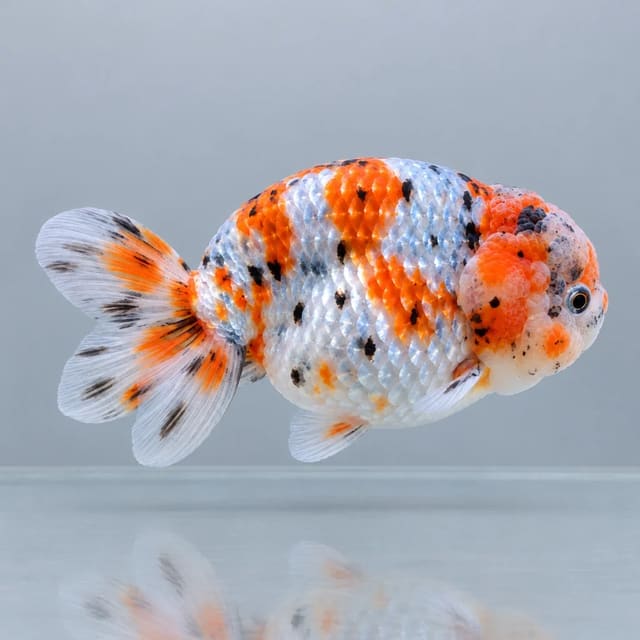
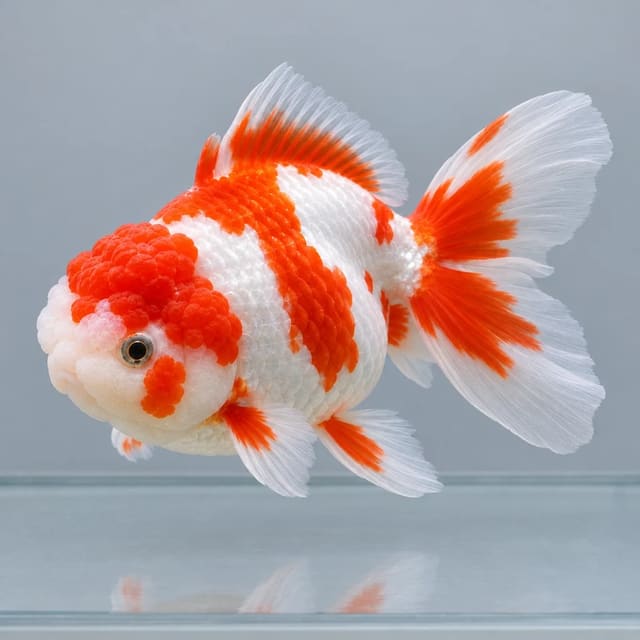
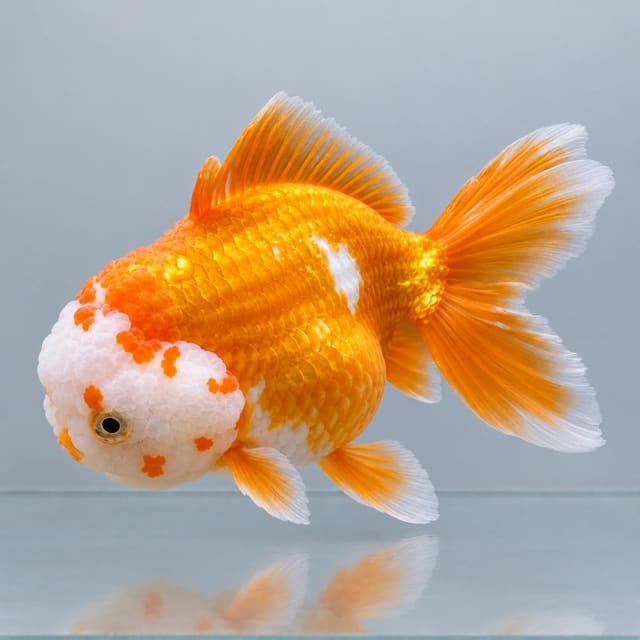
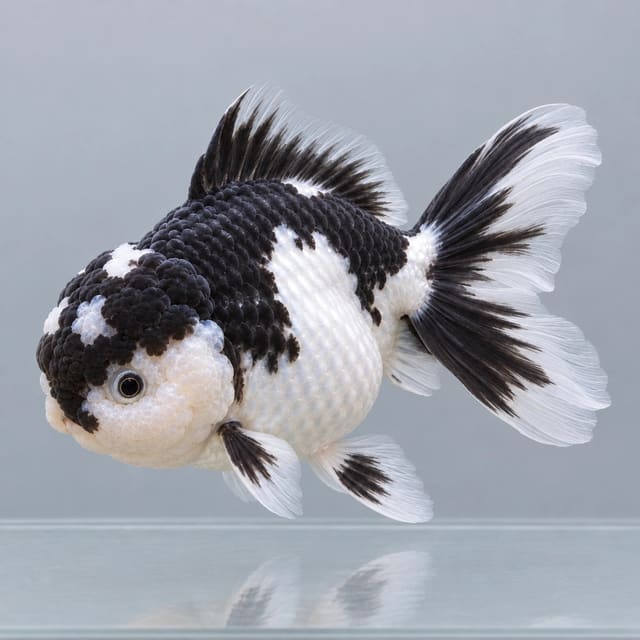
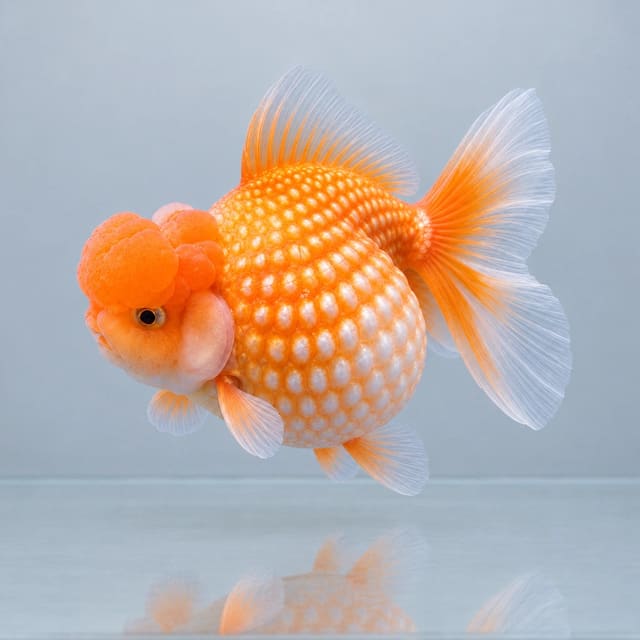
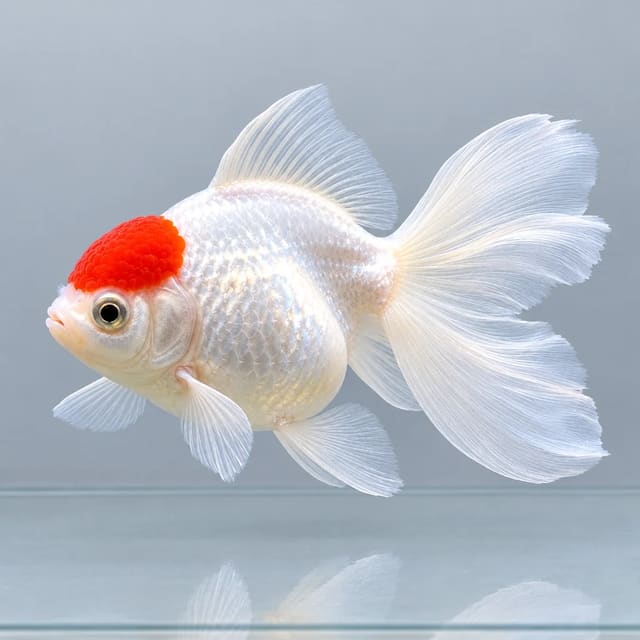
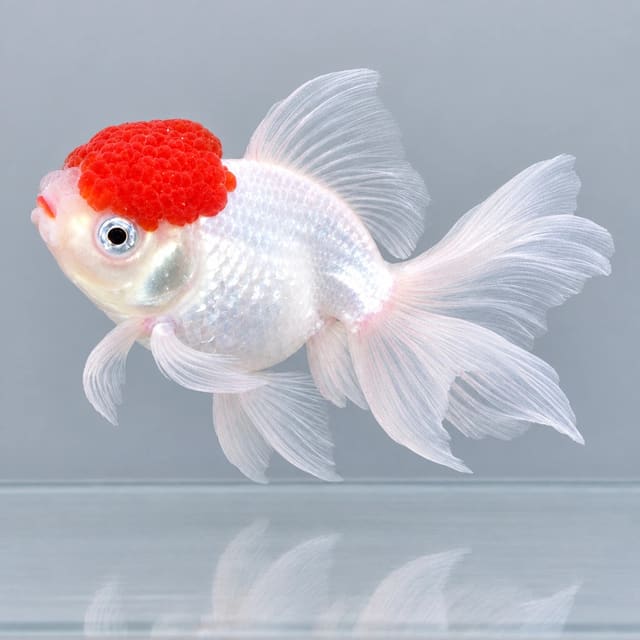
Red Cap Oranda Goldfish (Carassius auratus)
pH 6.5–8.5
£20.89
The Chocolate Fantail is a brown fancy goldfish (Carassius auratus) with a deep, rounded body and a divided, fan-shaped double tail. Keep it in an unheated indoor aquarium of at least 100 litres at 4–25°C (best 15–23°C) with other slow fancy goldfish. One live fish per purchase, 3–4 cm or 5–6 cm.
Adult size is the maximum length this species reaches at full maturity (scientific sources). The livestock you receive will be younger and smaller — pick a size above for the actual shipping size. Product-photo provenance and any image-specific limitations are stated on the listing.
Carassius auratus
Quantity discounts are pricing offers, not a group-size recommendation. Check the full care guidance and your existing animals before choosing a quantity.
The Chocolate Fantail is a brown fancy goldfish (Carassius auratus) with a deep, rounded body and a divided, fan-shaped double tail. Keep it in an unheated indoor aquarium of at least 100 litres at 4–25°C (best 15–23°C) with other slow fancy goldfish. One live fish per purchase, 3–4 cm or 5–6 cm.
Adult size is the maximum length this species reaches at full maturity (scientific sources). The livestock you receive will be younger and smaller — pick a size above for the actual shipping size. Product-photo provenance and any image-specific limitations are stated on the listing.
Read the full care guidance when planning conditions for your aquarium.
The Chocolate Fantail Goldfish is a brown colour form of the fantail, one of the classic fancy goldfish. Like every goldfish it is Carassius auratus, a member of the carp family Cyprinidae, and it is a domesticated fish: FishBase gives the wild species’ native range as East Asia and lists brown among the colours of its cultured forms. Chocolate fantail, brown fantail and chocolate fancy goldfish are trade names for the same kind of fish.
A fantail is recognised by its shape rather than its colour. It has a short, deep, egg-shaped body with a smooth back, a single high dorsal fin, and paired anal and tail fins. The tail is divided into two matching halves that open like a fan behind the fish. The UK fantail show standard on the Bristol Aquarists’ Society goldfish site asks for a short, rounded body about 65% as deep as it is long, and a caudal fin that is divided and forked, with slightly rounded, well-spread lobes held above the horizontal.
On this fish the scales and fins are a rich chocolate to copper brown with a metallic sheen. Wikipedia’s summary of the variety notes that the fantail has no shoulder hump and less developed fins than the Japanese ryukin, which is the quickest way to tell the two apart.
| Variety | What to look for |
|---|---|
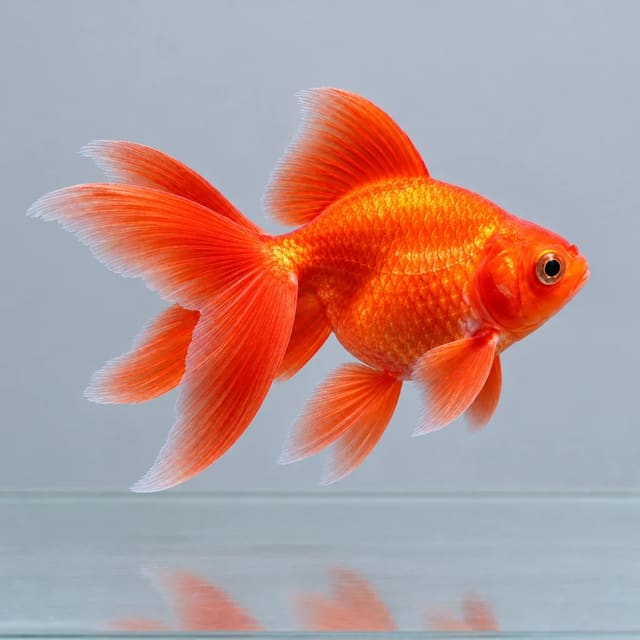
| Fantail | A smooth back from head to dorsal fin, a divided fan-shaped tail and normal eyes |
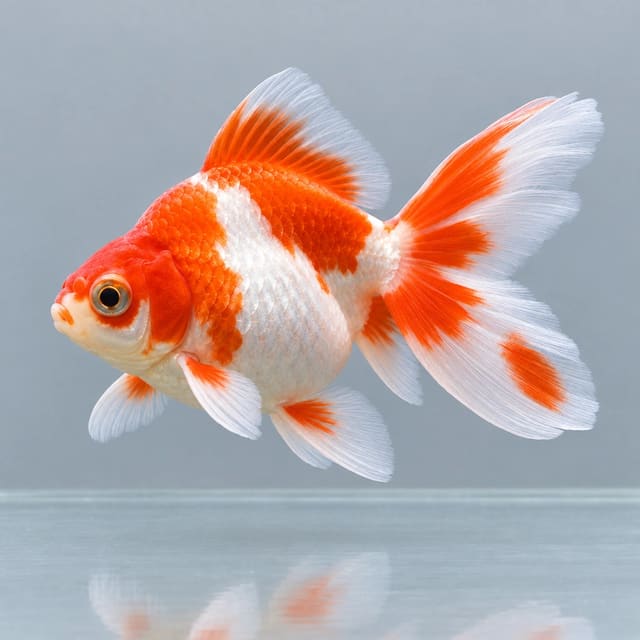
| Ryukin | A high hump behind the head and usually longer fins, as on our Red and White Ryukin Goldfish |
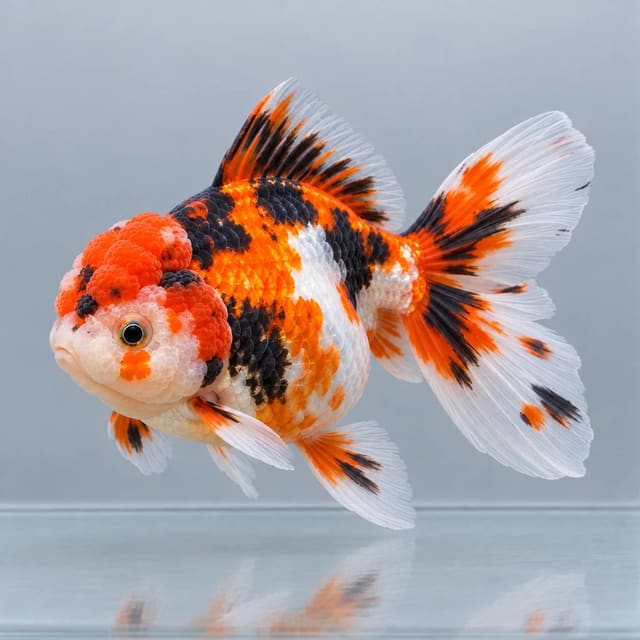
| Oranda | A raised hood growth on the head, as on our Red Oranda Goldfish |
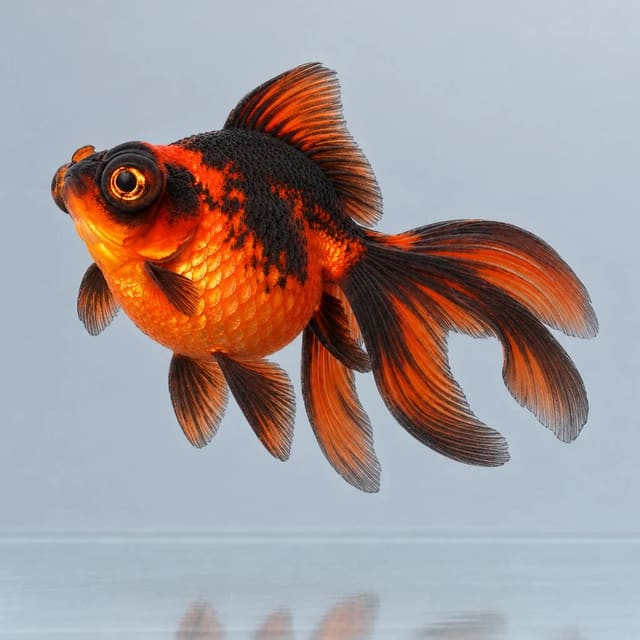
| Telescope and moor | Protruding eyes on an otherwise fantail-like body |
| Common, comet and shubunkin | A single tail and a long, slim body; these are not fancy goldfish |
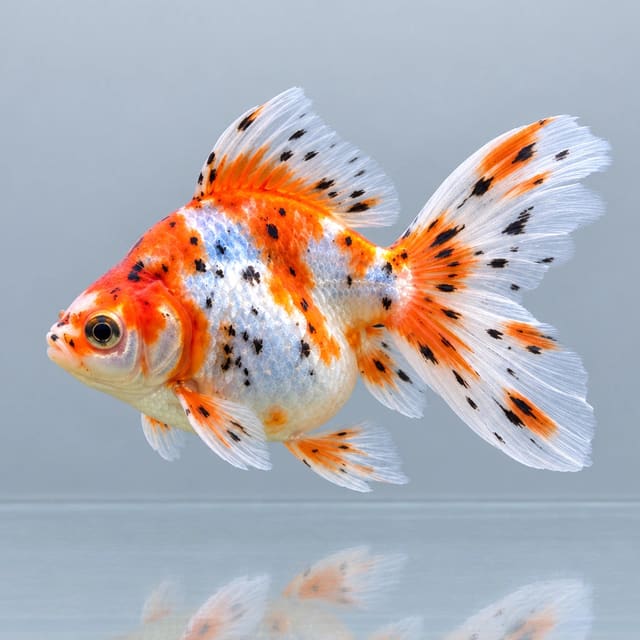
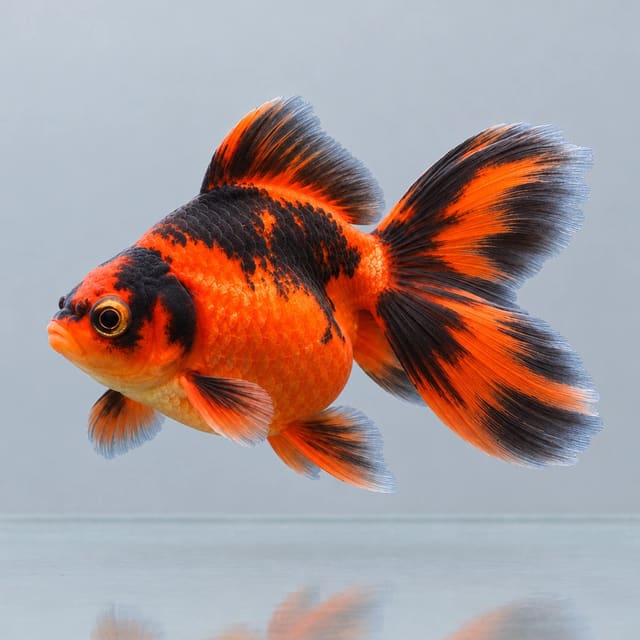
Browse the other fancy varieties in our Oranda & Fancy Goldfish category or the wider goldfish and coldwater fish range. The gallery photographs are representative of the variety; none shows the exact fish you will receive, and brown shades can look different under aquarium lighting.
One purchase quantity supplies one live Chocolate Fantail of the size you select: 3–4 cm or 5–6 cm. Use the size selector for the current choices and price. The size you select is the size supplied, not the adult size. OATA’s fancy goldfish care sheet says fancy goldfish are unlikely to grow larger than 20 cm, and that is the figure to plan for, whichever size you buy.
Young goldfish cannot be sexed reliably, so this listing does not offer a male or a female. In the spawning season of spring and summer, OATA’s goldfish care sheet notes that males develop small white spots called tubercles on the gill covers and pectoral fins, while females have deeper bodies; that is when the sexes can be told apart.
Colour is not fixed for life in goldfish. In a Practical Fishkeeping answer, Paul Green explains that goldfish colours shift with age, that black colouring is not dominant and tends to fade, faster in warmer water, and that all-black moors often turn copper from the belly up. A chocolate fish carries dark pigment too, so expect its brown to deepen, lighten or develop copper or orange tones as it matures; we cannot promise the shade will stay exactly as it is on arrival.
Before ordering, read our delivery and Live Arrival Guarantee information and make sure the aquarium is fully cycled. Delivery day is not the time to discover that the filter is not ready.
Give one adult Chocolate Fantail at least 100 litres, and add 50 litres for every further adult goldfish (OATA). Bigger is better: OATA points out that a larger volume keeps temperature and water quality more stable, and a fantail needs room to turn its deep body and long fins without brushing the glass or décor.
Footprint matters as much as litres. In a Practical Fishkeeping answer on telescope-eye goldfish, which are fantail-type fish with protruding eyes, Jeremy Gay recommends at least 120 × 60 cm of floor area for three adults in the long term, and suggests a 120 × 60 × 45 cm aquarium, because depth matters less than surface area for these fish.
| Adults planned | OATA minimum volume | Practical note |
|---|---|---|
| 1 | 100 litres | Choose a long aquarium rather than a tall, narrow one |
| 2 | 150 litres | Allow open swimming space for both fish |
| 3 | 200 litres | Practical Fishkeeping suggests a 120 × 60 cm footprint for three adults |
| 4 | 250 litres | Increase filtration as well as volume |
A 120 × 60 × 45 cm aquarium holds about 324 litres before gravel and décor go in (120 × 60 × 45 = 324,000 cm³). Our tank volume calculator does this sum for your own aquarium; remember that substrate, rocks and the gap below the rim reduce the real water volume.
Place the aquarium away from draughts, radiators, direct sunlight, loud noise and vibration, as OATA advises. A heater is only needed if the room is very cold, and overhead lighting helps keep a regular day and night. Never keep a fantail in a bowl or an unfiltered container: goldfish produce a lot of waste, and a small volume fouls quickly.
Keep the layout simple and smooth. OATA warns that ornaments or plants with sharp or rough edges can damage long fins and delicate eyes, and that fancy goldfish prefer a gentle current, so diffuse the filter outlet with a spray bar or aim it at the glass.
| Item | Use it? |
|---|---|
| Small, round, inert gravel or sand | Yes. Goldfish dig and mouth the substrate; Practical Fishkeeping recommends gravel small and round enough not to get stuck in the mouth |
| Smooth pebbles and water-worn wood | Yes, for structure without sharp edges |
| Hardy plants tied to wood, such as Anubias, or non-spiky plastic plants | Yes. Goldfish eat many soft plants, so check a plant’s suitability before buying |
| Plant pots or caves | Yes, as shelter, if the openings are wide and smooth |
| Sharp rock, spiky artificial plants and rough ornaments | No: they tear fins and can injure eyes |
| A strong, undiffused filter jet | No: fancy goldfish prefer a gentle current |
Leave an open swimming area along the front and centre. Fantails are slower and less agile than single-tailed goldfish, and an uncluttered space lets every fish reach the food. Position décor so you can still siphon the gravel, because removing solid waste is part of the weekly routine.
Live plants help, but not every plant survives goldfish. Tough, slow-growing plants attached to wood or rock last longer than soft stem plants pushed into the gravel. If the fish eat or uproot everything green, plastic plants, plant pots and caves give the same shelter.
Keep the Chocolate Fantail at 4–25°C, with 15–23°C as the optimal range, at pH 6.5–8.5, with medium-hard water of 8–18 °dH general hardness and 5–15 °dKH carbonate hardness. These are the values in OATA’s fancy goldfish care sheet. OATA’s general goldfish sheet and FishBase give pH 6.0–8.0 and 5–19 °dH for the species; the two sets overlap at pH 6.5–8.0 and 8–18 °dH, which is the safest band to aim for.
| Reading | Keep it at |
|---|---|
| Temperature | 4–25°C, ideally 15–23°C |
| pH | 6.5–8.0, where the OATA and FishBase ranges overlap |
| General hardness | 8–18 °dH |
| Carbonate hardness | 5–15 °dKH |
| Ammonia | 0 mg/l |
| Nitrite | 0 mg/l |
| Nitrate | No more than 20 mg/l above your tap water level |
Most UK homes keep an indoor aquarium inside this temperature range without a heater, but watch for summer peaks: a tank in a conservatory, by a sunny window or next to a radiator can run warmer than 25°C. Wikipedia’s summary also notes that fantails can be sensitive to long spells in very cold water, so an unheated room that drops close to freezing is not ideal either.
UK tap water ranges from soft to very hard depending on where you live. Test your own tap water for pH, general hardness and carbonate hardness, then compare the readings with this fish’s range in our water matcher. Our aquarium water parameters guide explains what each reading means and how to test it.
Stability matters more than a perfect number. If the aquarium is already inside the range, do not chase a different pH with chemicals: sudden swings stress fish more than a steady reading at either end of the range.
A filter is essential in every goldfish aquarium (OATA). Goldfish eat eagerly and produce a lot of waste; that waste releases ammonia, which filter bacteria convert to nitrite and then to the less harmful nitrate. For three adult telescope-type fancy goldfish in a 120 × 60 cm tank, Jeremy Gay suggests an external power filter rated at 1,000 litres per hour or more, plus an airstone. A spray bar softens that flow for long-finned fish.
Cycle the aquarium before the fish arrives. Our guide to the fish tank nitrogen cycle explains how to mature a filter without fish. Adding several goldfish to a new tank can cause what OATA calls new tank syndrome, where waste builds up faster than the bacteria can process it and ammonia and nitrite rise.
Add fish gradually even once the tank is mature, and retest after each addition. Clear water is not proof of safe water, because ammonia and nitrite are invisible.
Feed a good-quality flake, granule or pellet made for goldfish. OATA explains that goldfish need more carbohydrate than other fish, so a goldfish food is a better staple than a general tropical flake. Offer only what the fish finish within a few minutes, once a day: goldfish always look hungry, and uneaten food breaks down into toxic waste. In the wild FishBase records goldfish eating plankton, bottom-living invertebrates, plant material and detritus, so a varied diet suits them.
Watch buoyancy after meals. OATA notes that some fancy goldfish gulp air at the surface while feeding and lose their balance for a while afterwards, and that switching to a slow-sinking food may help; Practical Fishkeeping also recommends sinking goldfish pellets for fancy goldfish. If a fish floats, tilts or sits on the bottom for longer than a short spell after feeding, test the water first and read our guide to fish swimming sideways.
Before the fish arrives, confirm that the filter is mature, that ammonia and nitrite are both zero, and that the temperature, pH and hardness are inside the range above. Check the planned number of fish against the aquarium volume one last time.
These are OATA’s steps; our guide to acclimatising new fish covers them in more detail. Give a small first meal the following day, and retest ammonia and nitrite after the new fish goes in rather than waiting for the weekly test.
If you already keep fancy goldfish, make sure the existing fish are healthy and watch that the newcomer can reach the food. OATA advises against buying a fish that looks healthy if sick fish share its tank, because fish can carry disease without showing signs; the same caution applies when you move fish between your own aquariums.
Learn what normal looks like in the first weeks. OATA describes a healthy goldfish as having clear, bright eyes, undamaged fins, intact scales, no ulcers or bumps, normal swimming and steady breathing. Feeding time is the best moment to check every fish.
| If you see | Do this |
|---|---|
| Hanging at the surface, sitting on the bottom or erratic swimming | Test ammonia, nitrite and temperature straight away |
| Floating, tilting or upside-down swimming after meals | Feed smaller meals of a slow-sinking food and check the water |
| Clamped fins, flicking against décor or shimmying | Test the water; OATA lists these as common signs of disease |
| White spots on the body and fins | Check temperature and water, then read our white spot treatment guide |
| Ragged, white-edged or shrinking fins | Check water quality and look for sharp décor; see our fin rot guide |
| Darker or paler colour, more hiding, faster or slower gill movement | Compare with your water readings and any recent change |
Do not diagnose from a single sign. Many symptoms follow poor water, so a test result is the first step. If a problem continues, contact us with your aquarium size, temperature, pH, ammonia, nitrite and nitrate readings, the tank mates and what you have seen.
OATA says fancy goldfish can be kept alone or with other fish. FishBase’s aquarium note for the species suggests groups of five or more in a tank at least 100 cm long. The two sources differ; in practice a small group of fancy goldfish works well, as long as the aquarium meets the rule of 100 litres plus 50 litres for each further adult.
Choose companions that swim at a similar pace. OATA does not recommend common goldfish as tank mates for fancies: they swim faster, often take most of the food and sometimes nip fins. Jeremy Gay adds that ryukins and fantails can be mixed with telescopes, which are essentially fantails with protruding eyes, while long-finned British veiltails are more delicate and probably best left out of the mix.
| Suits | Avoid |
|---|---|
| Other fancy goldfish of similar build, such as the Blue Oranda Goldfish or the Red Broadtail Fancy Goldfish | Common, comet, shubunkin and other fast single-tailed goldfish |
| Ryukins and telescope-eye goldfish | Fin-nipping fish |
| A mixed group such as our Mixed Long-Fin Goldfish | Tropical fish that need heated water |
| A group that fits the volume rule for every adult | Adding fish beyond what the volume and filter can support |
Our tank mate checker helps screen other species. Keep the whole group’s adult sizes in mind: the 50-litre step applies to every further adult goldfish, fancy or not.
OATA advises keeping fancy goldfish in indoor aquariums only, and that is our advice for this fish. The Bristol Aquarists’ Society fantail notes record UK breeders who describe fantails as very hardy and keep adults outdoors, so the sources differ. Young fish of 3–4 or 5–6 cm belong indoors, and a pond full of fast single-tailed goldfish is the wrong home for a fantail.
Goldfish can spawn in large home aquariums when the water warms in spring. OATA suggests two males to each female and a slow rise to about 20°C, often after a partial water change; eggs are laid on plants or a spawning mop and hatch within about three days. A Practical Fishkeeping feature on breeding fantails describes warming the water to about 17°C from early March and spawning one female with three males over plenty of Hornwort, with hatching in three to four days. The figures differ slightly, but the method is the same.
It is a brown colour form of the fantail, a fancy goldfish (Carassius auratus) with a short, deep body, a single high dorsal fin and a divided, fan-shaped double tail. It is a domesticated fish; the wild species comes from East Asia.
OATA says fancy goldfish are unlikely to grow larger than about 20 cm. The 3–4 cm and 5–6 cm options are the sizes supplied, so plan the aquarium for the adult.
At least 100 litres for one adult and 50 litres more for each further adult goldfish. For three adult fantail-type goldfish, Practical Fishkeeping suggests a footprint of at least 120 × 60 cm.
Usually not. OATA gives 4–25°C with 15–23°C as the optimum, so a heater is only needed in a very cold room. Keep the tank away from radiators and sunny windows.
OATA advises keeping fancy goldfish in indoor aquariums only. Some UK breeders keep adult fantails outdoors, but young fish should stay indoors and never share a pond with fast single-tailed goldfish.
Other fancy goldfish of similar build, such as orandas, ryukins and telescopes. Avoid common, comet and shubunkin goldfish, which outcompete fancies for food and may nip fins, and tropical fish that need heated water.
Not necessarily. Goldfish colours can change with age, and dark colouring tends to fade or turn coppery over time, faster in warm water. Expect some change as the fish matures.
Some fancy goldfish gulp air while feeding and lose buoyancy for a while. Feed smaller meals of a slow-sinking goldfish food and test the water if the problem lasts.
No reviews for this item yet. Bought one? Honest reviews only, good or bad.
What customers say about ordering from us
Easy website plenty of info on fish your buying great to pick a time slot
TRACEY DURRANT · 7 Oct 2026
Got some lovely fish thank you
Kevin Mackie · 7 Oct 2026
Reviews of our shop, collected by Judge.me, an independent third-party review collector. Newest first.
Moved by UK carriers licensed to handle live animals
Hand-packed with oxygen bags, poly box, heat pack
Email photos the same day; an optional unboxing video helps us review problems faster — claim terms apply
Klarna & PayPal Pay in 3 at checkout