Advanced
Bubble Eye Goldfish (Carassius auratus)
100L
£26.19
The Pearlscale is a very round fancy goldfish (Carassius auratus) whose scales each carry a raised, pearl-like dome. It grows to about 20 cm and needs a cool indoor aquarium of 100 litres or more with smooth décor, gentle flow and sinking, fibre-rich food. Sold as one live fish at 3–4 cm.
Adult size is the maximum length this species reaches at full maturity (scientific sources). The livestock you receive will be younger and smaller. Product-photo provenance and any image-specific limitations are stated on the listing.
Carassius auratus
Quantity discounts are pricing offers, not a group-size recommendation. Check the full care guidance and your existing animals before choosing a quantity.
The Pearlscale is a very round fancy goldfish (Carassius auratus) whose scales each carry a raised, pearl-like dome. It grows to about 20 cm and needs a cool indoor aquarium of 100 litres or more with smooth décor, gentle flow and sinking, fibre-rich food. Sold as one live fish at 3–4 cm.
Adult size is the maximum length this species reaches at full maturity (scientific sources). The livestock you receive will be younger and smaller. Product-photo provenance and any image-specific limitations are stated on the listing.
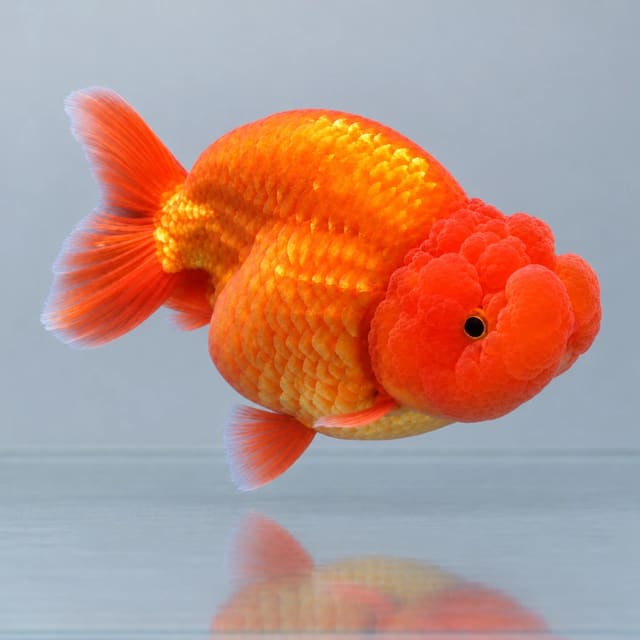
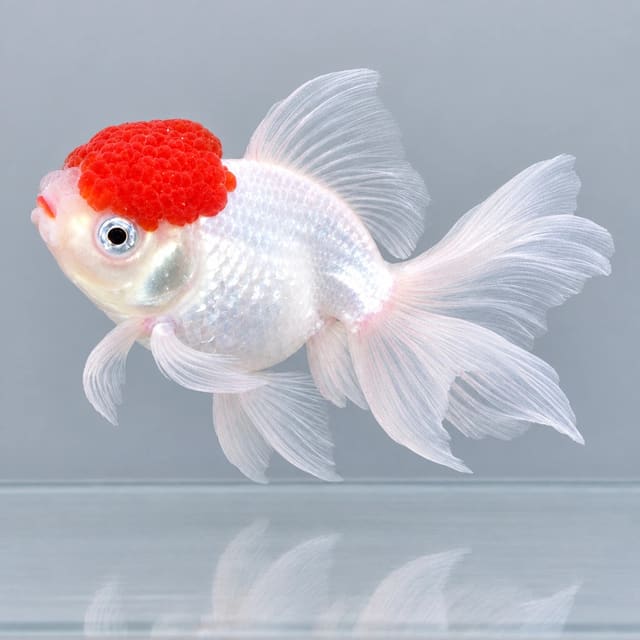
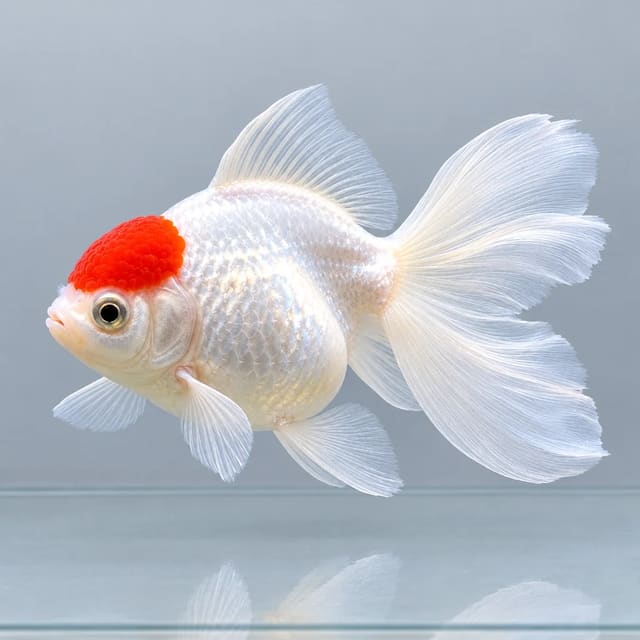
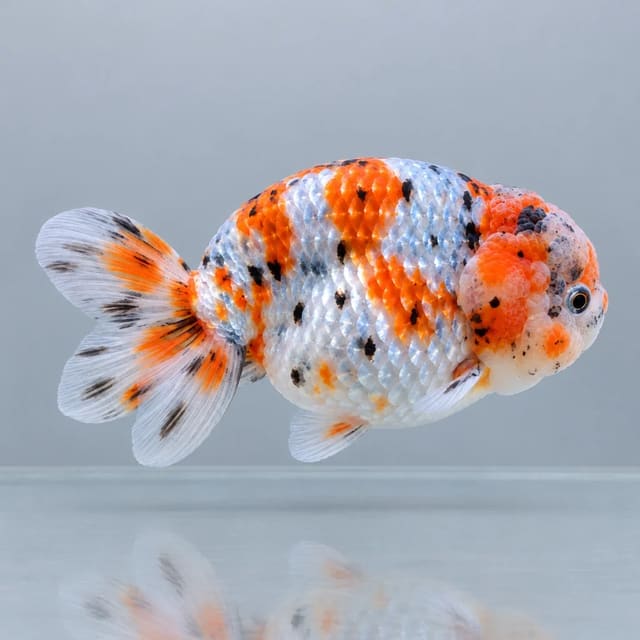
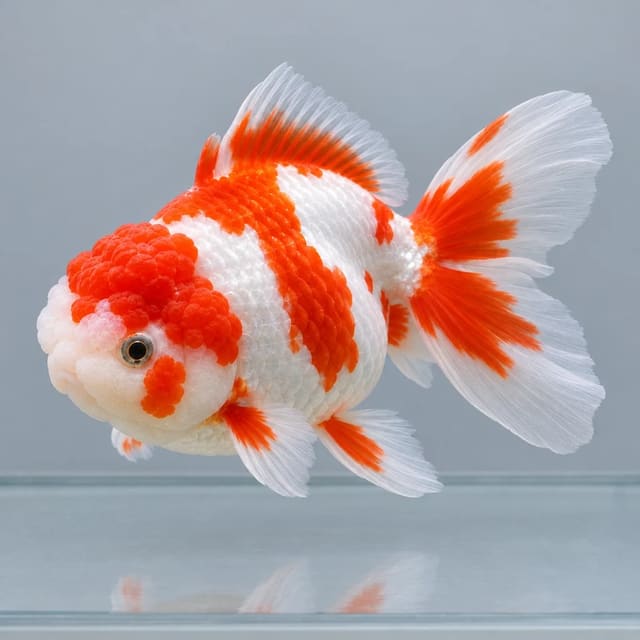
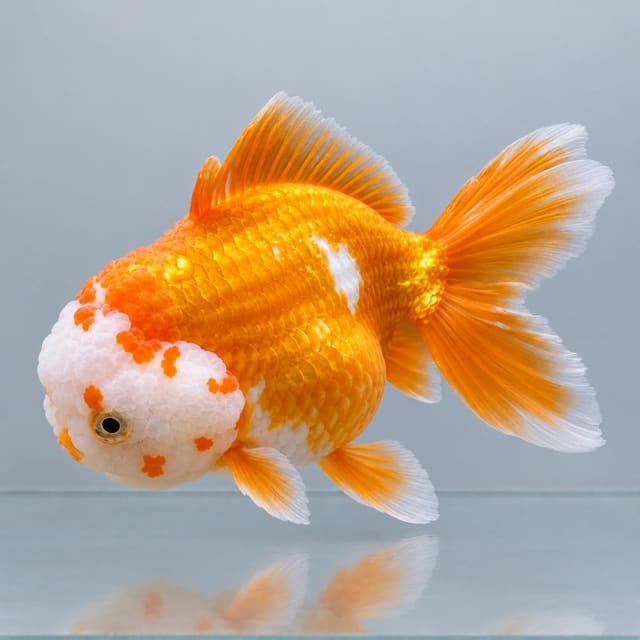
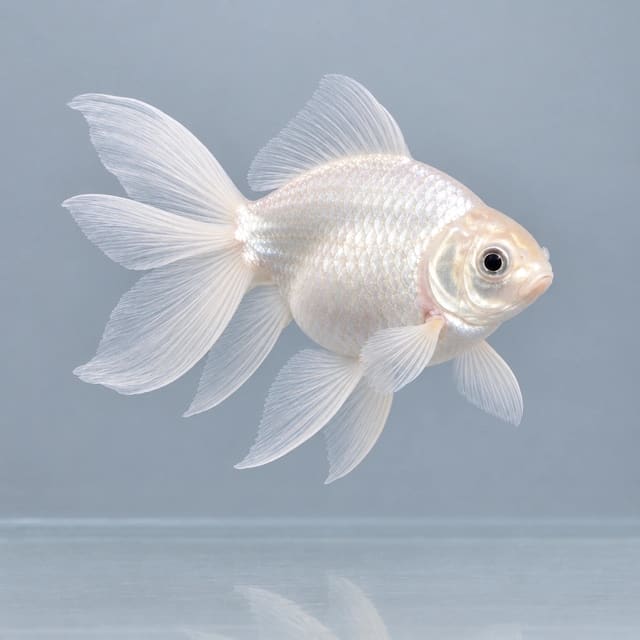
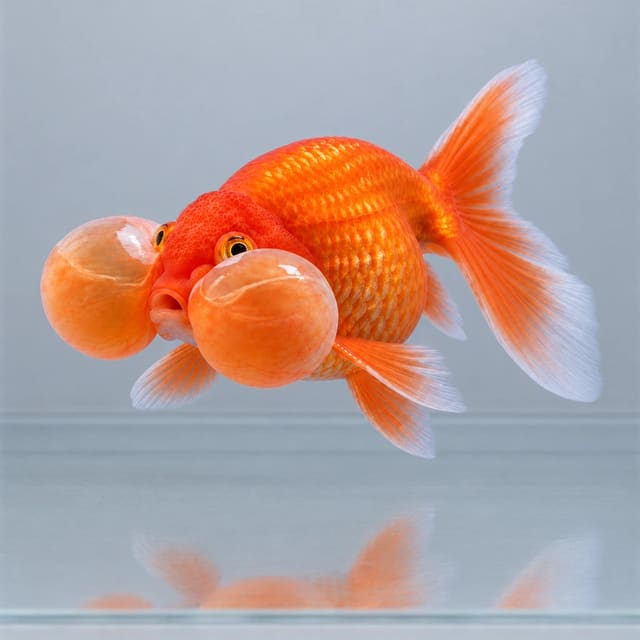
The Pearlscale goldfish is a fancy goldfish (Carassius auratus) with an almost spherical body covered in raised, pearl-like scales. Each scale has been bred to carry a thickened centre, Practical Fishkeeping explains, so the body looks studded with tiny domes that catch the light. The fish in our photographs is orange over a pearly white belly, with a single dorsal fin, a divided tail edged in translucent white and a small crown of head growth.
A peer-reviewed review by Ota and Abe describes the domed scale as a mutation that is fixed in the Pearlscale strain and affects every scale on the body. The Bristol Aquarists’ Society pearlscale standard gives 1900 as the year pearlscales first appeared and calls the pearlscale the commonest of the novelty fantail derivatives in Britain, though it notes the fish is seen less often than ten years earlier. The society describes it as a very lively fish that breeds true to form. Like every goldfish it belongs to the carp family, and FishBase records the species as native to East Asia.
| Variety | Body depth (Bristol standard) | Dorsal fin | Signature feature |
|---|---|---|---|
| Pearlscale | About 75% of length | Single | Domed scales all over the body |
| Lionhead | About 60% of length | None | Large, rounded hood |
| Ranchu | About 50% of length | None | Curved back, raised tail, hood |
| Bubble eye | About 50% of length | None | Fluid-filled eye sacs |
The pearlscale is the roundest of the four, which is why breeders and judges value a short, deep body with scales of even size neatly arranged in rows.
Each purchase is one live Pearlscale goldfish at 3–4 cm body length. The Bristol standard sets 5.5 cm as the minimum length for showing, so this is a young fish with its roundest shape still to come. Sex is not chosen or guaranteed.
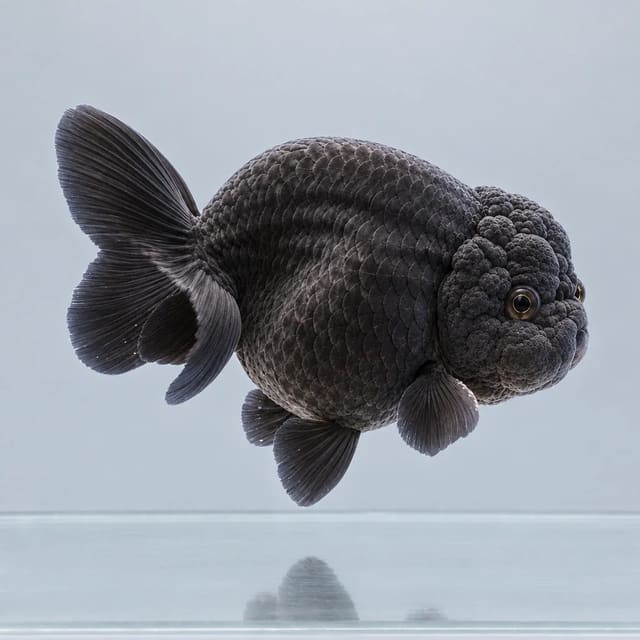
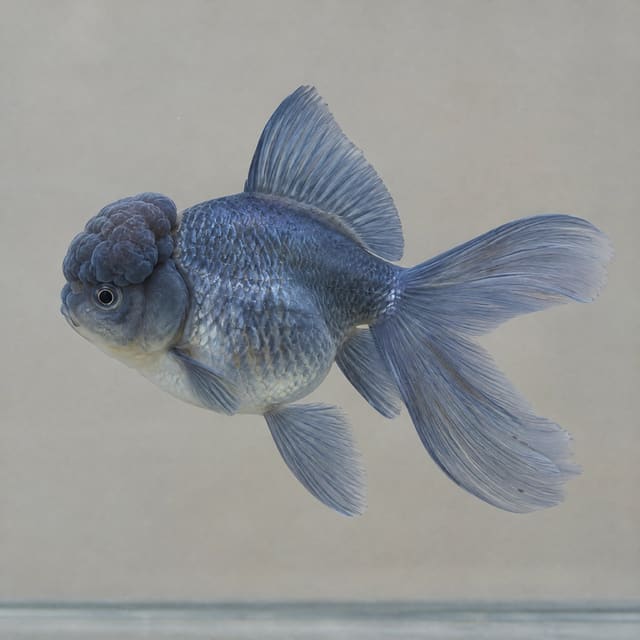
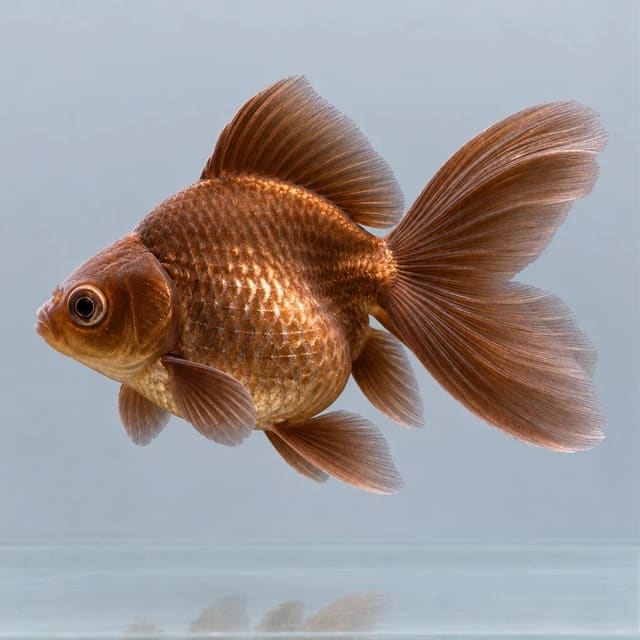
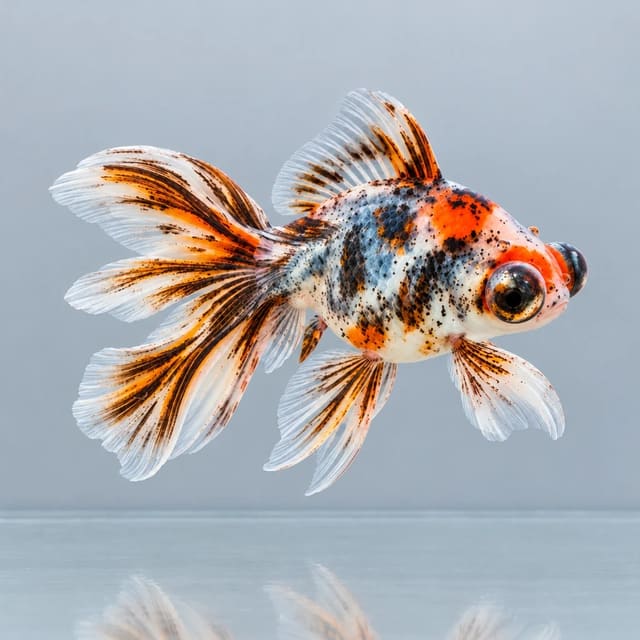
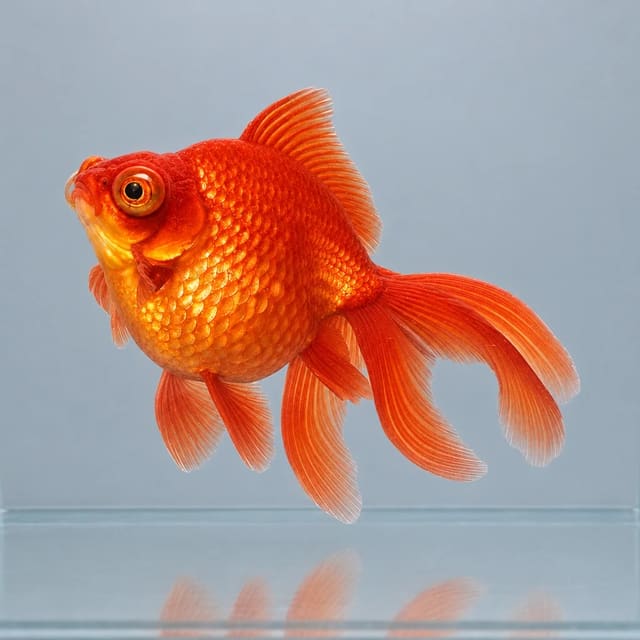
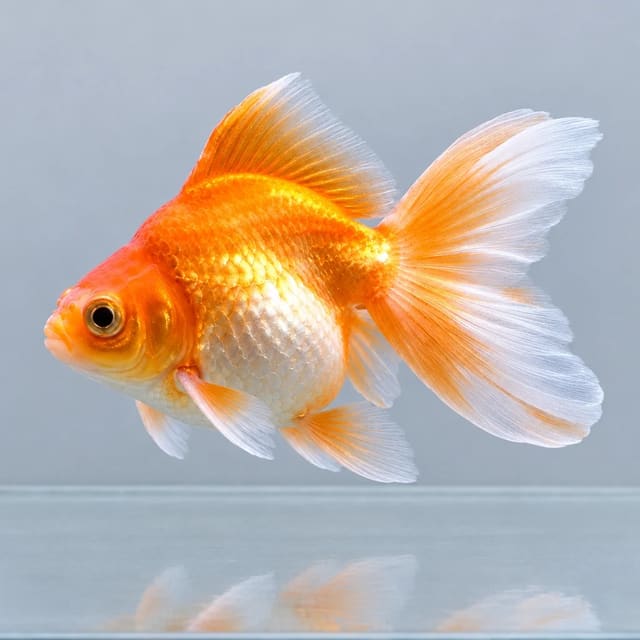
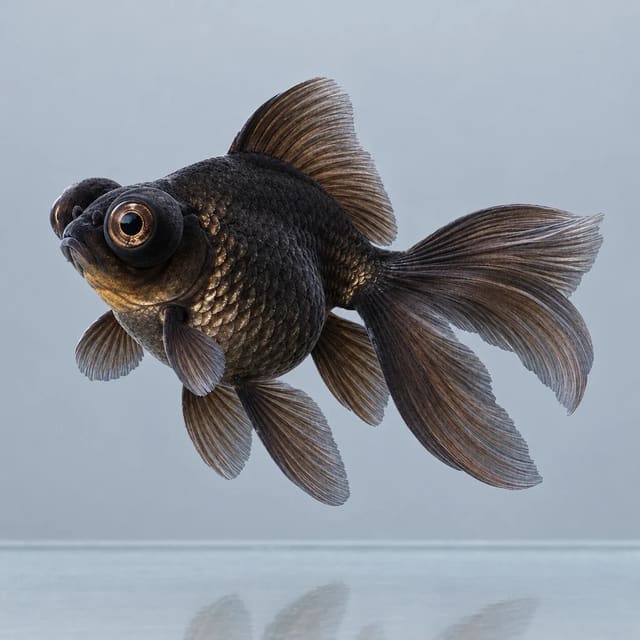
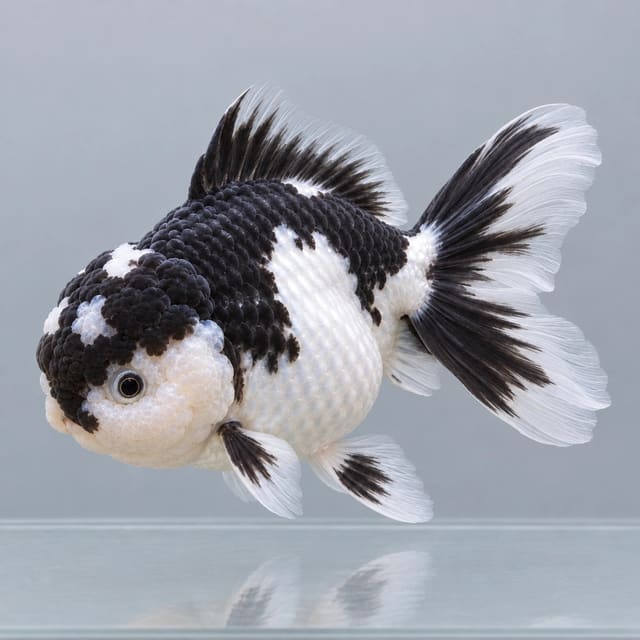
The gallery images are representative of the variety, made from a reference photograph, and do not show your individual fish. The Bristol society notes that typical British pearlscales are orange and white, that young fish often have an overall orange cast, and that yellow pearlscales are shown too. Compare it with our other goldfish and coldwater fish and the oranda and fancy goldfish category.
The pictured fish has a crown of head growth. Practical Fishkeeping describes a newer pearlscale type with a hood on top of the head, sold as the Haminishiki or goose head. A standard pearlscale has no hood, so we do not promise one: your fish is sold as a pearlscale, and any head growth is a bonus rather than part of the description. Colour can also change as a goldfish matures, and Practical Fishkeeping notes that many goldfish whiten with age.
Pearl scales are the reason to choose this fish, and they do not come back in the same form. Practical Fishkeeping says damaged scales grow back flatter and without the thickened centre, which can leave a smooth patch that spoils the look. Its advice is to remove rocks or other objects the fish may rub against. OATA’s fancy goldfish care sheet adds a general warning against sharp or rough décor.
| Hazard | Safer choice |
|---|---|
| Rough rock and sharp-edged slate | Smooth, rounded stones |
| Jagged wood | Smooth, sanded wood |
| Sharp or crushed gravel | Rounded gravel or soft sand |
| Tight caves and narrow ornament holes | Open shapes the fish cannot wedge into |
| Chasing by fast tank mates | Companions of the same pace |
| Rough netting | Guide the fish into a container and lift it in water |
A fish that flicks or rubs against décor is also showing a warning sign that OATA lists, so check the water at the same time as you smooth the layout.
OATA gives fancy goldfish an adult size of about 20 cm and asks for at least 100 litres for one adult, plus 50 litres for each extra adult. The RSPCA sets a minimum of 60 litres per goldfish and suggests 2 litres for every 0.5 cm of fish. The Maidenhead Aquatics pearlscale profile lists a maximum of 20 cm and prefers a tank about 1.2 metres long, with length and width more important than height.
| Pearlscales and companions | OATA minimum | RSPCA minimum |
|---|---|---|
| 1 adult | 100 litres | 60 litres |
| 2 adults | 150 litres | 120 litres |
| 3 adults | 200 litres | 180 litres |
| 4 adults | 250 litres | 240 litres |
Check real water volume with the tank volume calculator and your planned group with the stocking calculator. A bowl will never do; the RSPCA explains that bowls are too small, cannot hold an efficient filter and change temperature quickly.
OATA says fancy goldfish are best kept in indoor aquaria only and rarely need a heater. The RSPCA gives goldfish 10–21°C; OATA gives 4–25°C, with 15–23°C best; the Maidenhead database gives 10–28°C. We suggest a stable 15–21°C, where those ranges overlap. Keep the tank inside, away from direct sun, radiators and draughts, with 8–10 hours of light a day as the RSPCA advises.
| Reading | OATA | Maidenhead pearlscale | FishBase (species) | Our target |
|---|---|---|---|---|
| Temperature | 4–25°C (best 15–23°C) | 10–28°C | — | 15–21°C |
| pH | 6.5–8.5 | 7.0–8.0 | 6.0–8.0 | 7.0–8.0 |
| Hardness | 8–18 dGH; 5–15 dKH | Up to 25 degrees | 5–19 dH | 8–18 dGH |
| Ammonia, nitrite | 0 mg/l | — | — | 0 mg/l |
| Nitrate | ≤ 20 mg/l above tap | Keep low | — | As OATA |
Condition every water change against chlorine and chloramine, as OATA advises, using a treatment from our water care range. Test your tap water once for pH and hardness and check it against the table with the water matcher. Our water chemistry guide explains the readings. Steady values matter more than hitting an exact number.
The Maidenhead database describes fancy goldfish as large, messy fish that need efficient filtration and weekly partial water changes to keep nitrate low, plus well-oxygenated water during warm spells. OATA calls a filter essential but says fancy breeds prefer a gentle current, so spread the return with a spray bar.
Cycle the filter before the fish arrives. The RSPCA recommends fishless cycling for at least two weeks, testing every other day, until ammonia and nitrite have peaked and returned to zero. See our nitrogen cycle guide and our guide to aquarium filtration.
The Maidenhead Aquatics pearlscale profile warns that buoyancy problems in pearlscales are often caused by digestive issues linked to their convoluted digestive tract, and that swallowing air while feeding adds to the risk. It recommends sinking pellets, granules or flake with plenty of fibre, and frozen or live foods such as bloodworm, mysis and daphnia, which it suggests feeding more heavily to fish showing swim bladder symptoms. Ota and Abe add an anatomical note: goldfish strains with a globular shape have fewer vertebrae and a front swim bladder chamber much smaller than the rear one.
OATA recommends a goldfish-specific staple, once a day, in an amount eaten within a few minutes, with daphnia, bloodworm, brine shrimp, blanched lettuce or shelled peas as extras.
If your pearlscale floats, tips or sinks after meals, change to a different or slower-sinking food as OATA suggests and feed smaller amounts. Our guide to fish swimming sideways helps you rule out a water problem first.
Before delivery, check that ammonia and nitrite read zero and that the tank is within the target range. Then follow OATA’s floating-bag method: lights off, float the sealed bag for about 10 minutes, add small amounts of tank water over up to 20 minutes, and let the fish swim out. Our acclimatisation guide walks through it, and our delivery and Live Arrival Guarantee information explains what to do if anything is wrong on arrival.
| When | Check |
|---|---|
| Day 1 | Lights off; leave the fish to explore |
| Day 2 | A small sinking meal; watch it swim level afterwards |
| Daily | Scales lying in neat rows, fins open, breathing steady |
| Day 3–4 | Test ammonia and nitrite |
| Day 7 | First routine water change |
OATA says fancy goldfish can live alone or with other fancy goldfish, and advises against common goldfish, which swim faster, out-compete fancies for food and sometimes nip fins. The Maidenhead database calls the pearlscale sociable and suggests keeping it with its own kind or other fancy varieties. The Bristol society describes the pearlscale as a very lively fish, but OATA’s warning about faster single-tailed goldfish still applies.
| Suits | Avoid |
|---|---|
| Other pearlscales | Comets, commons and shubunkins |
| Orandas such as the Red Oranda and Red and Black Oranda | Koi and other pond fish |
| Ranchu and lionheads | Tropical fish that need heated water |
| Broadtails such as the Red Broadtail | Fin-nippers and boisterous fish |
A Red and White Ryukin is a reasonable match in a large tank, but watch feeding so the round pearlscale still reaches food. Bubble eyes need extra care with any livelier companion. Our comet goldfish guide explains why single-tailed goldfish live better apart, and the tank mates tool checks other combinations.
OATA lists the signs of good health: clear, bright eyes, whole fins, intact scales, no ulcers or bumps, normal swimming and steady breathing. Learn how your pearlscale’s scales look when it is well. Pearl scales are domed but sit in tidy rows against the body; scales that start to stand out from the body like an open pine cone, with a swollen belly, are a different and serious sign.
| If you see | Do this |
|---|---|
| Scales lifting outwards with a swollen belly | Test the water at once and contact us for advice |
| A smooth patch where pearls were lost | Look for the décor or companion that caused it |
| Floating, tipping or sinking after meals | Smaller sinking, fibre-rich meals |
| Flicking, rubbing or clamped fins | Test the water and inspect the gills |
| White spots | See our white spot treatment guide |
| Ragged fin edges | Improve water quality; read our fin rot guide |
Well-kept fancy goldfish can live a long time: the Maidenhead database says pearlscales can easily live for more than 15–20 years with appropriate care, and FishBase records a maximum age of 41 years for the species.
OATA suggests a large tank, about two males to each female, a slow rise to around 20°C and a partial water change to trigger spawning. Eggs hatch in about three days, and adults eat eggs and fry, so separate them. Males show white tubercles on the gill covers and pectoral fins; females are deeper in the body, which can be hard to judge on a fish this round.
Practical Fishkeeping calls the pearlscale a challenging fish to breed because of its rounded body and small head, and notes that good colour and pattern are hard to combine with good scales. The Bristol society adds that the variety breeds true to form but that adding the full calico range to the usual orange and white is difficult.
A fancy goldfish, Carassius auratus, bred so that every scale has a thickened, domed centre, giving rows of raised “pearls” over a very round body. Unlike the ranchu and bubble eye it keeps a single dorsal fin. The Bristol Aquarists’ Society gives 1900 as the date pearlscales first appeared.
They grow back, but Practical Fishkeeping notes that regrown scales are flatter and lack the thickened centre, so the fish can be left with a smooth patch. Smooth décor and careful handling protect the pearls.
Not necessarily. The photographed fish has a crown of head growth, a type Practical Fishkeeping calls the Haminishiki or goose head. A standard pearlscale has no hood, so we do not promise one; your fish is sold as a pearlscale.
Plan for about 20 cm: OATA gives that size for fancy goldfish and the Maidenhead Aquatics database lists the pearlscale at 20 cm. Its body is very deep, about 75% of its length in the Bristol standard.
Round fancies are prone to buoyancy problems. The Maidenhead database links them mainly to digestion and to air swallowed while feeding at the surface, and recommends sinking foods with plenty of fibre. OATA suggests trying a different or slower-sinking food.
OATA advises at least 100 litres for one adult fancy goldfish and 50 litres more for each extra adult; the RSPCA sets a minimum of 60 litres per goldfish. The Maidenhead database suggests a tank about 1.2 metres long.
Other fancy goldfish of similar size and pace, such as orandas, ranchu and lionheads. Avoid common goldfish, comets and shubunkins, which OATA warns out-compete fancies for food and sometimes nip fins, and avoid tropical fish that need heat.
One live Pearlscale goldfish at 3–4 cm. Sex is not chosen or guaranteed.
No reviews for this item yet. Bought one? Honest reviews only, good or bad.
What customers say about ordering from us
Easy website plenty of info on fish your buying great to pick a time slot
TRACEY DURRANT · 7 Oct 2026
Got some lovely fish thank you
Kevin Mackie · 7 Oct 2026
Reviews of our shop, collected by Judge.me, an independent third-party review collector. Newest first.
Moved by UK carriers licensed to handle live animals
Hand-packed with oxygen bags, poly box, heat pack
Email photos the same day; an optional unboxing video helps us review problems faster — claim terms apply
Klarna & PayPal Pay in 3 at checkout