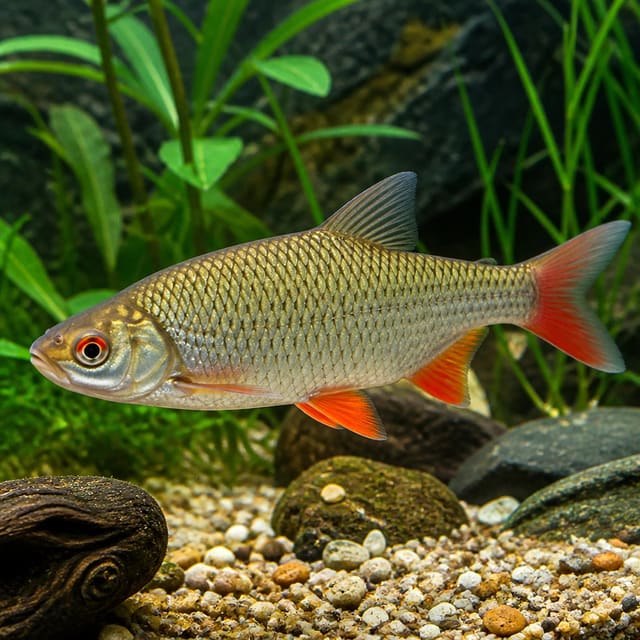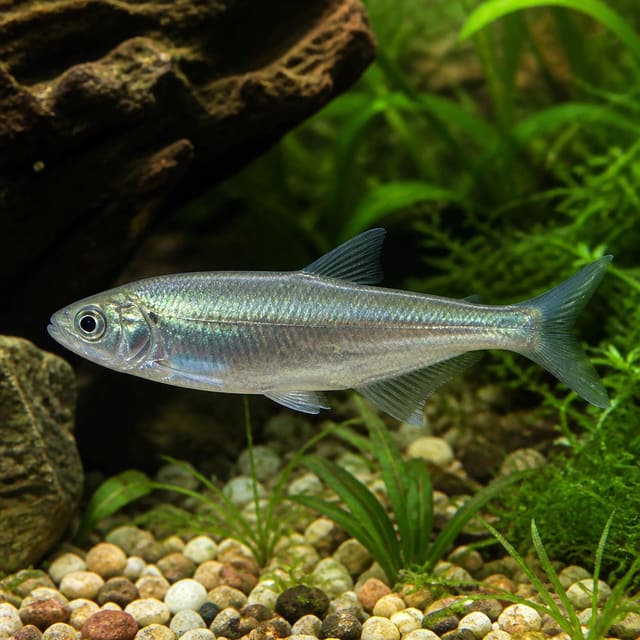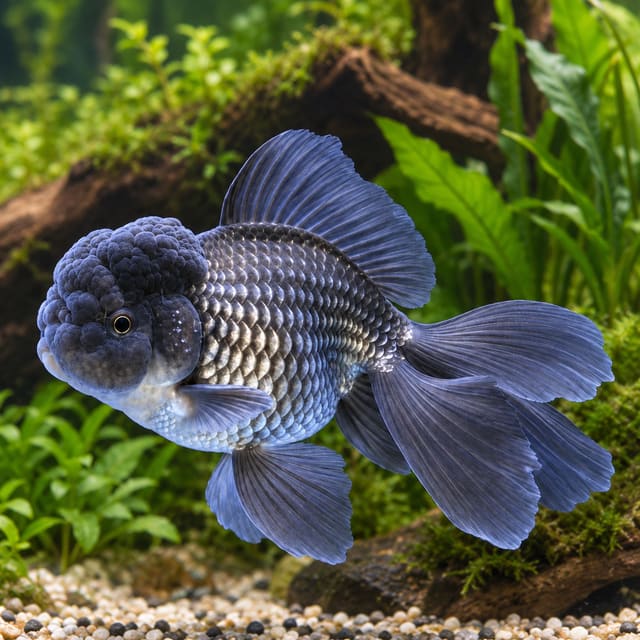
Carassius auratus l.f. blue oranda
4–25°C · pH 6–8
£10.99
Photo coming soon
The size, price and care details on this page are for this listing.
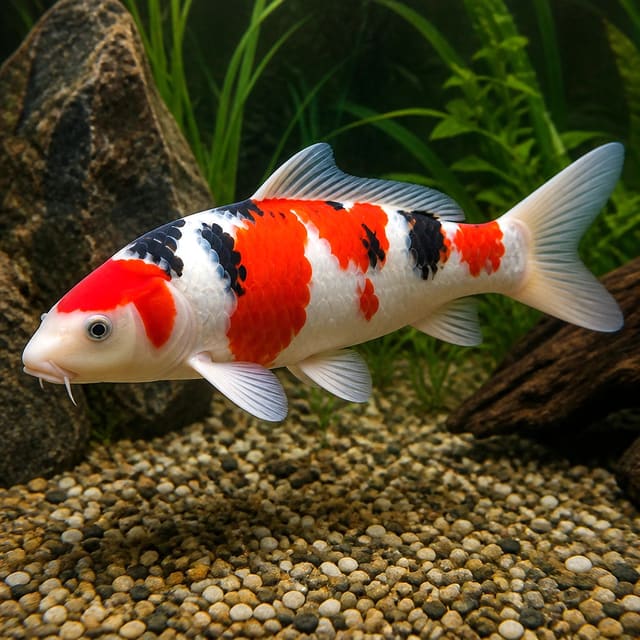
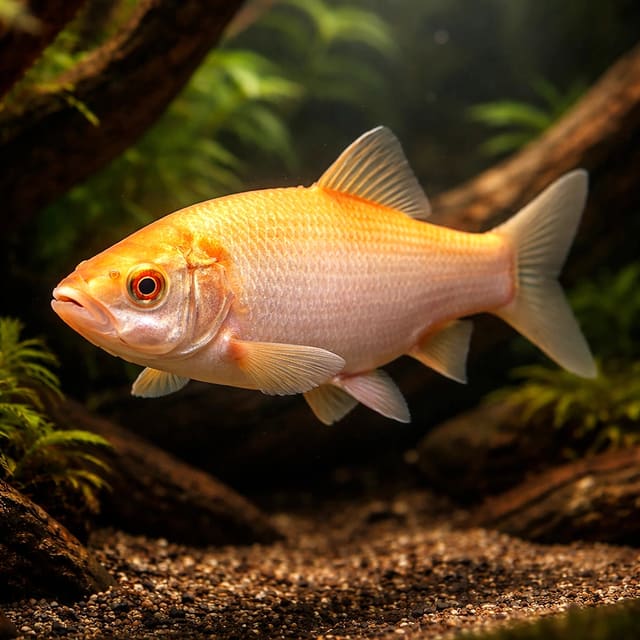
One young banana koi, a coloured ornamental carp, dispatched at about 4–6 cm. Koi are coldwater pond fish, not aquarium fish: plan for an adult of up to about 75 cm, a filtered outdoor pond of 4,500 litres or more, preferably over 90 cm deep, and careful feeding as the water cools.
Adult size is the maximum length this species reaches at full maturity (scientific sources). The livestock you receive will be younger and smaller. Product-photo provenance and any image-specific limitations are stated on the listing.
Cyprinus carpio
One young banana koi, a coloured ornamental carp, dispatched at about 4–6 cm. Koi are coldwater pond fish, not aquarium fish: plan for an adult of up to about 75 cm, a filtered outdoor pond of 4,500 litres or more, preferably over 90 cm deep, and careful feeding as the water cools.
Adult size is the maximum length this species reaches at full maturity (scientific sources). The livestock you receive will be younger and smaller. Product-photo provenance and any image-specific limitations are stated on the listing.
Maintain these water conditions for optimal health and vibrant colors
This listing is for one young banana koi, a coloured ornamental carp, sent out at around 4–6 cm long. That is a small fish in a bag. It is also the beginning of a pond fish that OATA, the Ornamental Aquatic Trade Association, says can grow up to 75 cm. Everything on this page is written with that second number in mind, because the size on arrival is the least important figure when you are deciding whether a koi is right for your garden.
The word koi is simply Japanese for carp. The longer name, nishikigoi, translates as "brocaded carp", and it covers the whole family of colour varieties bred from carp in Japan. Banana koi is the trade name this fish is bought and listed under. It is not one of the classical Japanese variety names you will meet in koi books, such as Kohaku, Showa, Asagi or Ogon, so please don't read a Japanese pedigree or a show grade into the name.
If you came looking for a yellow koi, the classical names are worth knowing. Wikipedia's koi article describes Ogon as a metallic koi of one colour only, most often gold, platinum or orange; Ki Utsuri as a black fish with yellow markings; and Ki Bekko as a yellow-skinned fish with black markings. Our banana koi is listed under its trade name rather than under any of those, and as with every koi, the exact shade, sheen and markings belong to the individual fish.
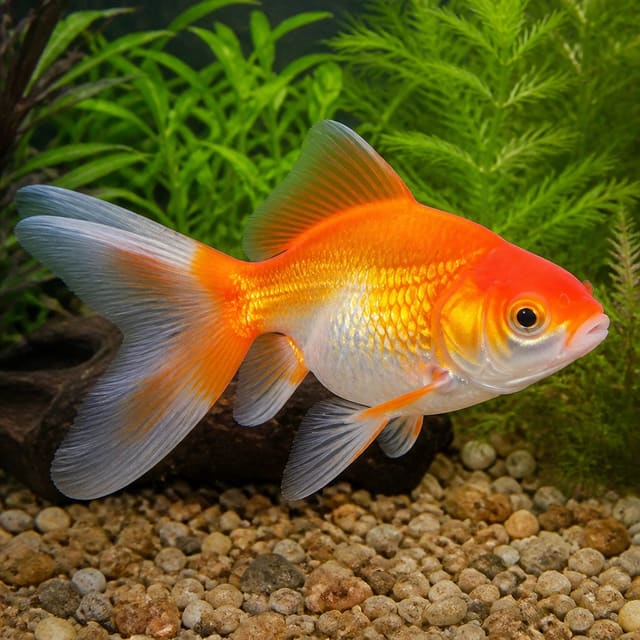
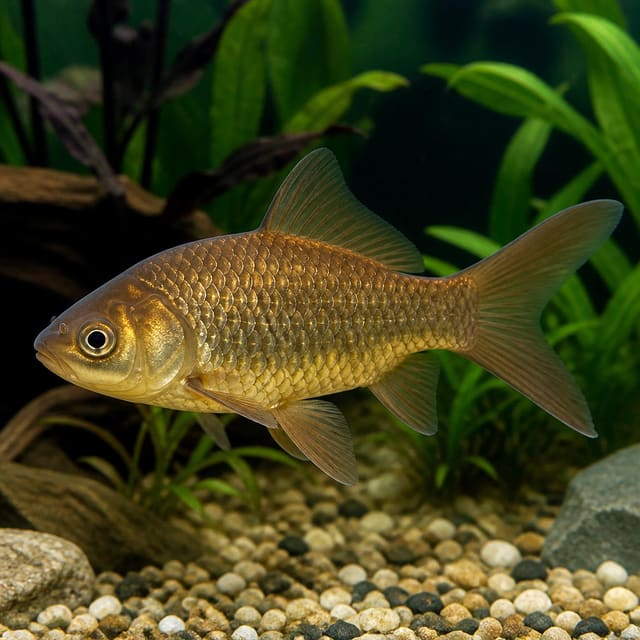
Small koi and goldfish can look surprisingly alike. The giveaway is the mouth. Koi have prominent barbels on the lip, the little whisker-like feelers, and goldfish do not. The common carp that koi descend from carries two pairs: one at the corners of the upper lip and one on the lower lip. On a young koi they are small, but if you look closely once it has settled you can usually pick them out.
We get asked this more than anything else about koi, so it gets a section of its own. A 5 cm koi looks perfectly at home in a bag, and it is easy to picture it in a tank in the lounge. It is not an indoor aquarium fish and it is not a tropical fish. It is a pond carp that, given the right conditions, keeps growing for years.
Space is the first problem. OATA's pond guidance puts koi, along with tench and orfe, in ponds of 4,500 litres or more, and it says koi need specialist ponds and equipment, including filtration systems, pumps and UV units. A large home aquarium might hold a few hundred litres. A fish heading for 75 cm would outgrow it, and the waste from a fish that size would overwhelm the water.
Temperature is the second point, and it is often misunderstood. Carp are not delicate about heat as such: FishBase gives the common carp a temperature range of 3–35 °C, and Wikipedia's common carp article puts the species' preferred range at 23–30 °C. The reason koi sit in our coldwater section is that in Britain they are kept outdoors all year, in unheated ponds that warm in summer and cool right down in winter. OATA's water range for pond fish is 4–24 °C, and Wikipedia's koi article says koi benefit from being kept at about 15–25 °C. Both describe a garden pond, not a heated tank.
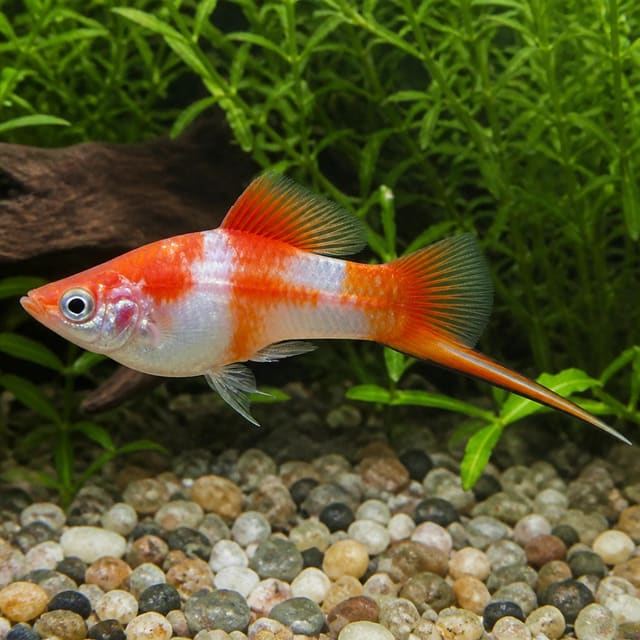
The word koi turns up in the names of several tropical aquarium fish, and that causes real confusion in searches. The Koi Angelfish (Pterophyllum scalare), the Koi Kohaku Swordtail (Xiphophorus hellerii) and the Koi Tuxedo Male Guppy (Poecilia reticulata) are colour forms of tropical species: an angelfish, a swordtail and a guppy. They borrow the koi name for their colouring. None of them is a carp, all of them need a heated indoor aquarium, and none should ever share water with a koi carp.
So if your search for koi was really about one of those fish, follow the link. If you want a genuine koi carp for an outdoor pond, the rest of this guide is for you.
Every koi, whatever its colour, goes back to wild carp. FishBase lists the common carp, Cyprinus carpio Linnaeus, 1758, as a freshwater fish that also tolerates brackish water, and notes that wild stocks occur naturally only in rivers draining to the Black, Caspian and Aral Sea basins. It describes the wild fish living in warm, slow-flowing water: lowland rivers and well-vegetated lakes with soft bottoms. Adults and young alike feed on bottom-living animals and plant material. Keep that picture in your head, because a koi in your pond behaves very much like a carp in a weedy lake.
People have kept carp for a very long time. Wikipedia's common carp article notes that the Romans farmed them, and that monks between the 13th and 16th centuries spread carp farming across Europe. The ornamental story runs separately, in Japan. According to Wikipedia's koi article, systematic breeding of coloured carp began in the 1820s in a cluster of villages spanning Ojiya and Yamakoshi, in what is now Niigata Prefecture, and the name nishikigoi did not exist until the 1910s. Butterfly koi, the long-finned type also called longfin koi or dragon carp, arrived much later, in the 1980s.
This is where the references part company, and it is fairer to say so than to pretend otherwise. The scientific name on this listing, Cyprinus carpio, is the name koi have traditionally been sold under. Wikipedia's koi article opens more cautiously, calling koi coloured varieties of carp, Cyprinus sp., and describes them as domesticated Amur carp with a complicated ancestry. Its common carp article says the parent species is likely the East Asian carp, possibly Cyprinus rubrofuscus, which was once treated as a subspecies of the common carp and can interbreed with it.
FishBase lists Cyprinus rubrofuscus Lacepède, 1803 as a valid species from Laos, Viet Nam and China, ranging from the Amur to the Red River drainages. For looking after the fish, none of this changes anything: a koi is a large carp for an outdoor pond whichever name the taxonomists settle on.
Koi colour is the product of careful selective breeding, and it does not hold on its own. Wikipedia notes that koi left to breed freely revert to the original carp colouring within a few generations, and that koi released into the wild quickly revert too. Released koi are treated as an invasive pest in many parts of the world; Wikipedia notes they make the water murkier, reduce aquatic plants and, in Japan, breed with native carp. OATA's advice is blunt: never release aquarium or pond animals into the wild. It is illegal, and for most fish it ends badly.
You are buying a fish of about 5 cm that can grow to 75 cm, so the pond has to be planned for the adult, not the youngster. These are the figures we work to, with where each one comes from.
| What to plan for | Figure | Where it comes from |
|---|---|---|
| Pond volume for koi | 4,500 litres or more | OATA pond fish guidance |
| Pond depth for koi | preferably over 90 cm | OATA pond fish guidance |
| Depth for pond fish in general | at least 45–60 cm | OATA pond fish guidance |
| Usual koi pond depth where summers are warm | a metre or more | Wikipedia, Koi |
| Usual koi pond depth where winters are harsh | at least 1.5 m | Wikipedia, Koi |
| Adult length of koi | up to about 75 cm | OATA pond fish guidance |
Depth earns its place quietly. OATA explains that a deeper pond holds a steadier temperature, gives the fish a cool zone at the bottom during hot spells and a warmer area at the bottom when the weather freezes. In a shallow pond the whole body of water swings with every heatwave and cold snap, and koi do best with as little fluctuation as possible.
Those volume figures are a starting point for koi in general, and koi are not a fish to keep alone. Wikipedia's common carp article describes carp as schooling fish that prefer groups of five or more. If this banana koi is the first fish in a new pond, size the pond and the filter for several adult koi rather than one, and add fish gradually, as explained in the water quality section below.
OATA says a pond should receive some sunlight, which helps plants grow, but warns that too much can cause temperature problems and drive heavy algae growth. A position that gets sun for part of the day and shade for the rest is a sensible compromise. Dead leaves and plant material rotting on the bottom are worth keeping on top of; OATA recommends removing dead plants before winter so they do not release toxic gases as they break down.
A small, brightly coloured fish near the surface is an easy meal. Wikipedia lists herons, kingfishers, otters, mink, cats, foxes and badgers among the animals able to spot and eat koi. OATA advises covering the pond with a net to stop wild birds and animals taking fish, especially over winter. Put the net up before the first fish goes in rather than after the first loss.
Live plants help a pond: OATA notes they give off oxygen, take up pollutants and provide food, either directly or by supporting tiny organisms the fish graze on. The catch with koi is the carp habit of rooting through the bottom. Wikipedia's common carp article warns that carp feeding can uproot, disturb and eat submerged vegetation. We suggest planting in baskets with a layer of large gravel over the soil, keeping tougher marginal plants on shelves, and accepting that soft plants within reach of a hungry koi may be eaten.
OATA's starting point is that any pond holding livestock should have a filter. For koi it goes further and talks about specialist ponds and equipment, including filtration systems, pumps and UV units. A pump or fountain helps circulate and oxygenate the water. Koi are big, hungry fish, and everything they eat comes back out as waste. In a pond, the beneficial bacteria living in the filter are what deal with that waste, which is why the filter matters more than almost any other piece of kit.
| Parameter | Target for pond fish (OATA) | Other reference |
|---|---|---|
| Temperature | 4–24 °C | Koi benefit from about 15–25 °C (Wikipedia, Koi); common carp tolerate 3–35 °C (FishBase) |
| pH | 6.5–8.5 | 6.5–9.0 for common carp (FishBase) |
| Ammonia | zero | |
| Nitrite | zero | |
| Nitrate | no more than 20 mg per litre above your tap water level | |
| General hardness | medium-hard, 8–18 °dH | 10–15 dH for common carp (FishBase) |
| Carbonate hardness | medium-hard, 5–15 °dKH |
Check your own tap water against those pH and hardness figures with a test kit before filling or topping up. The numbers that catch people out are ammonia and nitrite, and both should read zero in a pond with a working filter.
OATA recommends testing ammonia, nitrite and nitrate every week, and especially during the first set-up and after adding fish. Keep a simple notebook or phone note of the readings. A slow rise in nitrate over a few weeks tells you the pond needs more water changing; any ammonia or nitrite reading at all tells you something is wrong now, and that the feeding should be cut back until you have found out why.
Any new tap water going into the pond, whether for a top-up or a water change, should be treated with a tap water conditioner to remove chlorine or chloramine. That applies to the hosepipe as much as the bucket.
A brand-new pond has very few of the bacteria that break down waste. OATA describes the risk of "new pond syndrome" when too many fish go in too quickly, and advises building up numbers slowly, because the bacterial population has to grow each time fish are added. A single young koi going into a matured, filtered pond is a gentle step. Ten fish going into a pond filled last weekend is not.
Carp are hardy about oxygen; Wikipedia notes that common carp can survive water with very low oxygen by gulping air at the surface. That is a survival trick, not a lifestyle. If you see your koi hanging at the surface and gulping, treat it as a sign the water is short of oxygen: check the pump, add aeration and test the water. Cloudiness is a different matter. Carp root through sediment for food, and Wikipedia's common carp article notes that this feeding raises turbidity. Good mechanical filtration and a clean bottom keep a koi pond clearer than a muddy one.
A koi pond runs on the calendar. What you feed, how much, and how you protect the pond all change as the water warms and cools, and the water temperature, not the date, should guide you. A floating pond thermometer is one of the cheapest and most useful things you can own.
| Pond water | What the guidance says |
|---|---|
| About 15–25 °C | Wikipedia's koi article says koi benefit from this range. OATA suggests a higher-protein food in summer to support growth. |
| Cooling in autumn | OATA advises switching to a lower-protein, more digestible food such as wheatgerm. |
| Below about 10 °C | Wikipedia notes that koi immune systems are very weak below 10 °C and that feeding is not recommended below that point. |
| Below 8 °C | OATA says it may be better not to feed pond fish at all. |
| Warming in spring | OATA advises reintroducing food slowly. |
The two references draw the no-feeding line at slightly different temperatures, 10 °C in Wikipedia's koi article and 8 °C in OATA's guidance. In practice we would cut right back as the water drops through 10 °C and stop altogether once it is reliably below 8 °C. Cold fish eat little, and any food left uneaten simply becomes waste in the pond.
Carp handle cold well. Wikipedia's common carp article notes that they easily survive winter in a frozen-over pond as long as some free water remains below the ice. The thing to prevent is a surface sealed solid with ice. OATA advises a pond heater or a floating device to make sure the surface does not become sealed. Before winter, clear dead plant material out of the pond, keep the net on, and leave the koi in peace.
Spring catches people out. The days warm up, the fish start moving about and looking for food, and it is tempting to feed them as you would in July. OATA's advice is to reintroduce food slowly, and a test kit tells you whether the pond is keeping up: if ammonia or nitrite appear, ease off. Small amounts, with regular tests, is the way through April and May.
Because koi immune systems are at their weakest in cold water, the time of year matters when you introduce a new fish. If your pond has already dropped below about 10 °C, a young koi arriving now has to cope with the stress of travel and a change of water at exactly the point its defences are lowest. In that situation, talk to us before ordering, and think seriously about waiting until spring has warmed the pond. If the water is still comfortably above 10 °C and the pond is mature, an early autumn introduction gives the fish a few weeks to settle before winter.
Koi are omnivores, and their wild relatives eat almost anything they can find on the bottom. FishBase records common carp feeding on bottom-living animals and plant material, and Wikipedia's common carp article lists aquatic plants, plant tubers and seeds alongside insects, crustaceans, molluscs, worms, fish eggs and fish remains. Wikipedia's koi article adds that koi will happily take foods such as peas, lettuce and watermelon. In a garden pond, a good quality floating koi food does most of the work, with the seasonal changes described above.
A koi of 4–6 cm has a small mouth. Large adult koi sticks or pellets are no use to it, so choose a small pellet or crumble that it can take whole, and move up a size as it grows. If the pond already holds larger fish, scatter some food where the youngster can reach it rather than in the middle of a feeding frenzy.
OATA's rule of thumb is to feed pond fish only what they can eat within a few minutes, once a day. Anything left floating after that is waste, and waste becomes ammonia. When in doubt, feed a little less. A slightly hungry koi in clean water is far better off than a well-fed koi in water the filter cannot keep up with.
Almost every water quality problem in a koi pond starts with the food tin. A pond that was clear and stable in May can turn cloudy with rising nitrate by August if the feeding has crept up as the fish grew. If your test readings drift, look at how much you are feeding before you look at anything else.
Koi are sociable carp. Wikipedia's common carp article describes carp as schooling fish that prefer groups of five or more, and a pond with several koi moving round together is a far more natural sight than a single fish on its own. Expect your banana koi to spend much of its time near the bottom, sifting through sediment the way carp do in the wild, and to come up to the surface at feeding time.
OATA's pond fish guidance covers goldfish, koi, sturgeon, orfe, rudd and tench, and says most pond fish are compatible with each other, although they may need slightly different conditions to do well. That makes goldfish, orfe, rudd and tench the usual companions for koi in a large pond. Two points are worth knowing before you mix them:
Two groups do not belong with koi at all. Tropical aquarium fish, including the koi-coloured angelfish, swordtails and guppies mentioned earlier, need heated indoor tanks. And the eggs and fry of other pond fish are at risk, because fish eggs are part of the normal carp diet listed in Wikipedia's common carp article.
Koi breed on their own in a pond, and Wikipedia's koi article places spawning in spring and summer. FishBase describes common carp as polygamous spawners that breed in shallow, weedy areas at around 15–20 °C, scattering sticky eggs that attach to plants and hatch in about four days. Wikipedia's common carp article adds that spawning is triggered by rising water temperatures and rainfall, starting at around 17–18 °C, and that a single female can lay 300,000 eggs in one spawning.
Those numbers explain why koi breeding is a selection game. Wikipedia notes that koi produce thousands of offspring from one spawning, and that the large majority are not good enough to be kept as nishikigoi; the rest are culled or sold on as lower-grade pond koi. In a garden pond many eggs never get that far, since fish eggs are part of the normal carp diet.
There is a welfare side too. OATA warns that koi can be aggressive during breeding, and that the process can stress the fish, cause permanent damage to females and, in severe cases, kill them. If you see males chasing a female relentlessly round the pond in late spring, keep a close eye on her, and be ready to give her space in a separate vat or pond if she is getting battered. For a 4–6 cm youngster, all of this is something for the future rather than the first season.
The best health check is the one you do every day at feeding time. OATA describes healthy fish as having clear bright eyes, undamaged fins, intact scales, no ulcers or bumps, normal swimming and steady breathing. Get to know how your banana koi looks and moves when it is well, and you will spot a change early.
OATA lists clamped fins, flicking against gravel or decor, and shimmying as signs that something is wrong. Gasping at the surface points to low oxygen. In nearly every case, the first thing to do is test the water: ammonia, nitrite and nitrate, then pH. A great many koi health problems begin with water quality, and correcting the water is often half the cure.
Wikipedia's koi article notes that koi immune systems are very weak below 10 °C. That is why stress in cold water, whether from moving fish, rough handling or poor water, is best avoided.
Wikipedia's koi article names two serious viral diseases of koi: koi herpesvirus (KHV) and spring viraemia of carp (SVC), caused by Rhabdovirus carpio, and states that no treatment is known for either. Its KHV article describes the virus as a herpesvirus of common carp and koi, first reported in 1998 and confirmed in 1999, and now found in 33 countries. Signs it lists include mottled gills, red and white patches on the gills, bleeding gills, sunken eyes, pale patches and blisters on the skin, along with disorientation and fish isolating themselves from the group.
Two facts from that article matter most to anyone adding fish to a pond. Fish that recover from KHV stay infected for life and can carry it to other fish, and the virus spreads through new fish being introduced to a system. If you already keep koi, think carefully about how any new fish, this one included, joins them. If you ever see the signs above, especially gill damage combined with sudden losses, contact a vet who works with fish straight away rather than trying a treatment from the shelf.
Koi can live a very long time, although the famous figures need care. Wikipedia's koi article reports claims of 100–200 years and the story of Hanako, a koi said in 1974 to be 226 years old from her scale rings, while also noting that some sources put the accepted age at little more than 50 years. FishBase gives a maximum reported age of 38 years for the common carp, and Wikipedia's common carp article mentions a wild-origin fish that lived 64 years. Treat the extreme claims as stories. The practical point is the one OATA makes: be prepared to look after the fish properly for the whole of its life, which may well be decades.
Koi travel well when everything is ready for them, and the work starts before you order. Please read our delivery and live arrival information first, so you know how the process works and what we need from you.
Start a continuous video while the parcel is still sealed, and open it in the same take so the fish can be seen in its still-sealed bag. If the fish arrives dead, dying or clearly in poor condition, email hello@tropicalfishco.co.uk on the day of delivery with your order number and that video. Photos on their own do not meet our live arrival policy. Where a claim is accepted under the guarantee terms, we either replace the fish with your next order or refund it.
Watch the fish's breathing, appetite and behaviour over the first week, and follow OATA's advice to keep a particular eye on water quality during that time. A young koi may stay low or tuck itself away at first. If the water is warm enough for feeding, offer a small pinch of suitable food the next day; if it is ignored, remove it and try again later. Test ammonia and nitrite a couple of times during the week, especially if the pond is new or other fish went in recently.
From then on, the routine is simple: daily observation at feeding time, weekly tests, sensible seasonal feeding and a filter that is cleaned without being sterilised. Look after the water and a banana koi will look after itself.
These are the sources used for the facts on this page.
No reviews for this item yet. Bought one? Honest reviews only, good or bad.
What customers say about ordering from us
Easy website plenty of info on fish your buying great to pick a time slot
TRACEY DURRANT · 7 Oct 2026
Got some lovely fish thank you
Kevin Mackie · 7 Oct 2026
Reviews of our shop, collected by Judge.me, an independent third-party review collector. Newest first.