Moderate
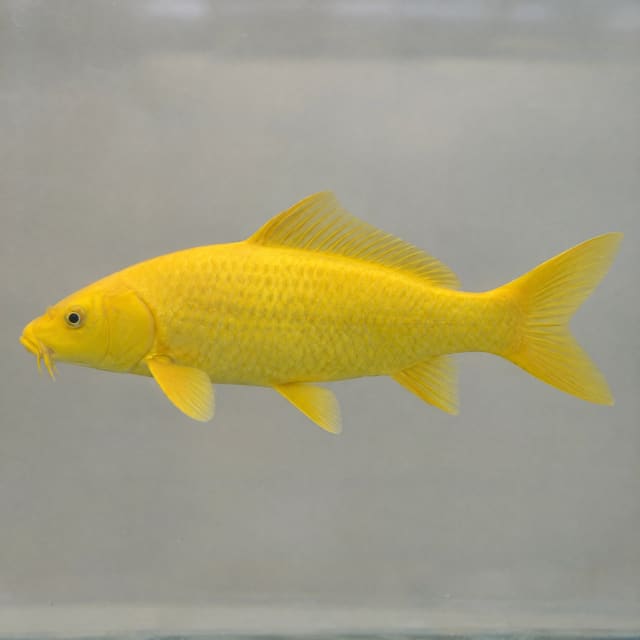
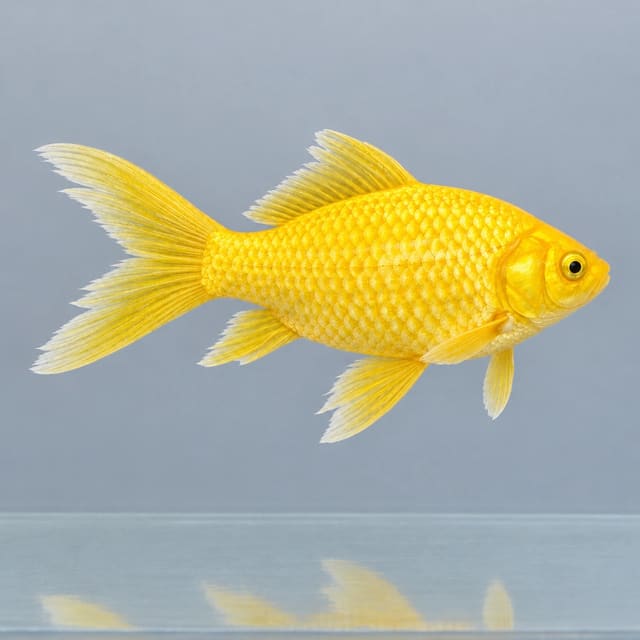
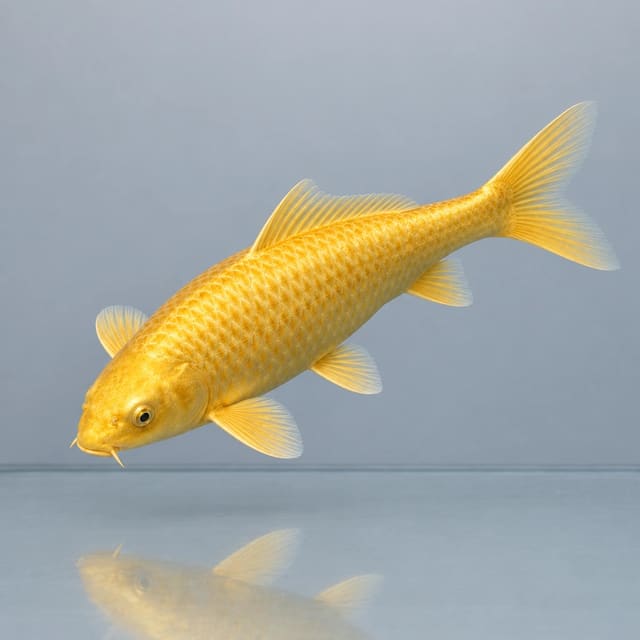
Gold Ogon Koi (Cyprinus carpio)
4–24°C · pH 6.5–8.5
£15.69
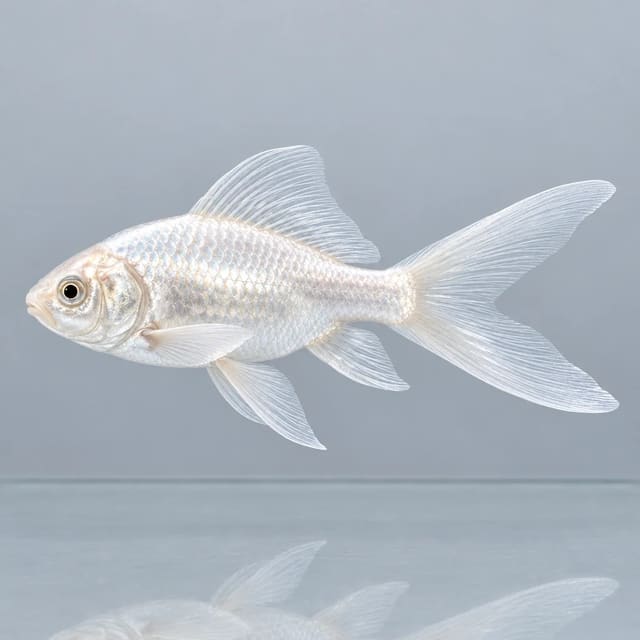
The platinum ogon koi is a single-colour, metallic silver-white koi with standard short fins, an ornamental form of Cyprinus carpio. Koi can grow up to 75 cm and need a filtered pond of 4,500 litres or more with part of it deeper than 90 cm. Sold individually as one live fish at 2–3 inches.
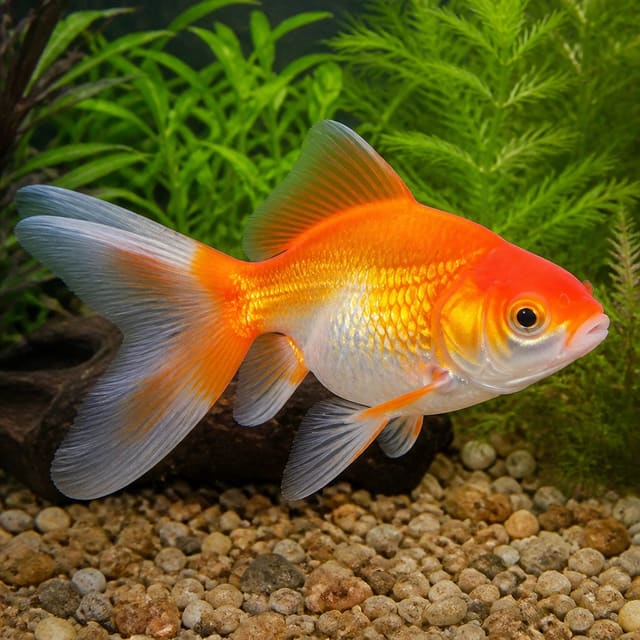
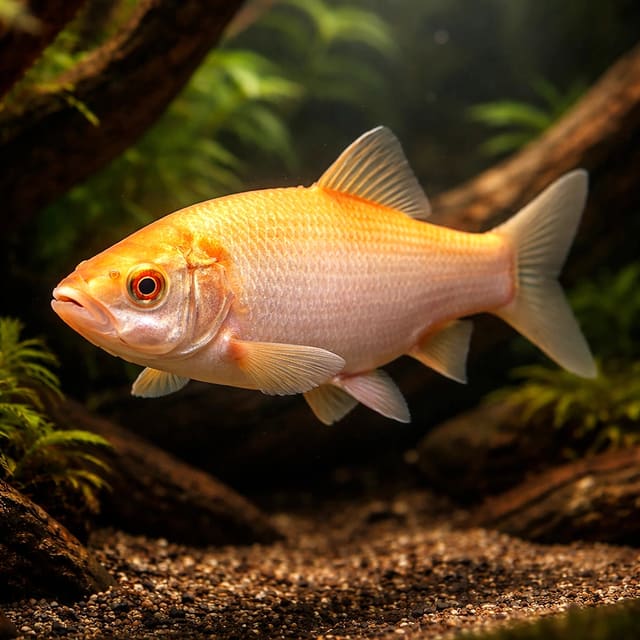
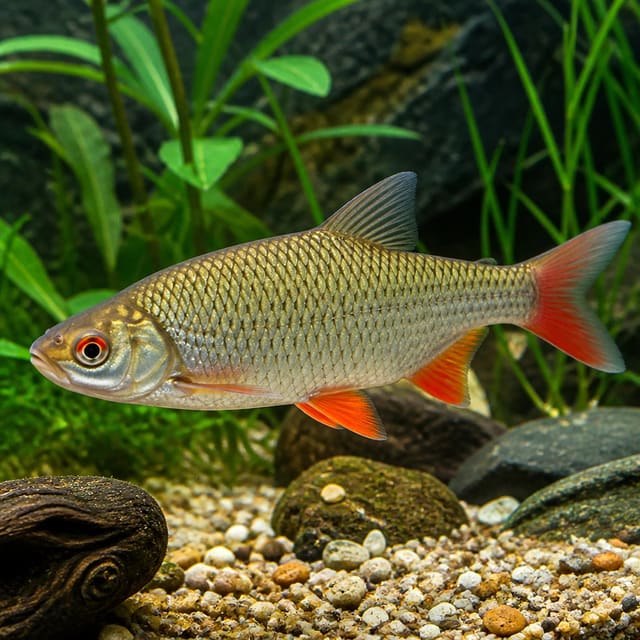
Adult size is the maximum length this species reaches at full maturity (scientific sources). The livestock you receive will be younger and smaller. Product-photo provenance and any image-specific limitations are stated on the listing.
Cyprinus carpio
The platinum ogon koi is a single-colour, metallic silver-white koi with standard short fins, an ornamental form of Cyprinus carpio. Koi can grow up to 75 cm and need a filtered pond of 4,500 litres or more with part of it deeper than 90 cm. Sold individually as one live fish at 2–3 inches.
Adult size is the maximum length this species reaches at full maturity (scientific sources). The livestock you receive will be younger and smaller. Product-photo provenance and any image-specific limitations are stated on the listing.
Read the full care guidance when planning conditions for your aquarium.
The platinum ogon koi is a koi of one colour only: a bright, metallic silver-white from nose to tail, with no pattern at all. Its scales catch the light like polished metal, so it stands out clearly against dark pond water and alongside the reds, oranges and blacks of patterned koi. If you want a clean, simple koi that is easy to spot from across the garden, a platinum ogon koi is a classic choice. This fish has the normal short fins of a standard koi, not the long, flowing fins of a butterfly koi.
According to the Wikipedia koi article, ogon (from the Japanese for “gold”) are metallic koi of a single colour, and the colours most often seen are gold, platinum and orange. The ogon line was created by Sawata Aoki in 1946 from wild carp he caught in 1921, which makes it one of the more recent koi varieties; most others descend from much older Japanese lines. In Japanese classification, shiny one-colour koi belong to the hikari-mujimono group.
Koi are ornamental carp. UK law and FishBase treat them as common carp, Cyprinus carpio, which is how we list them. The sources do not all agree on this: the same Wikipedia article says most koi breeds descend from the Amur carp, Cyprinus rubrofuscus, bred in Japan in the first half of the 19th century. Either way, care is the same.
| Word | What it tells you |
|---|---|
| Platinum | The colour: an even, metallic silver-white. |
| Ogon | A metallic koi of a single colour, with no pattern. |
| Hikari-mujimono | The Japanese group name for shiny, one-colour koi. |
| Koi or nishikigoi | Ornamental carp; nishikigoi means “brocaded carp”. |
| Not a ghost koi | Ghost koi are hybrids of ogon and wild carp, popular in the UK; a platinum ogon has no wild-type colouring. |
Compare it with the other koi in our koi and carp category.
One purchase supplies one live platinum ogon koi at 2–3 inches (roughly 5–8 cm). The price is for one fish. Sex is not chosen or guaranteed. The photographs show the variety, not the individual you will receive; every koi is slightly different in lustre and scale pattern.
Small koi are hard to judge. Practical Fishkeeping’s guide to koi varieties notes that koi under about six inches are difficult to identify and that if a fish looks shiny, it belongs to a metallic variety. For any metallic koi it suggests looking for an even scale pattern and fins with a strong metallic lustre.
The size supplied is not the adult size. OATA says koi can grow up to 75 cm. FishBase records 129 cm total length for the species, with a common length of 31 cm, and a maximum reported age of 38 years. Much greater ages are claimed for individual koi in Japan, but they are not well verified.
OATA describes koi as perhaps the most famous pond fish, but slightly more delicate than other pond species, needing good water quality with minimal fluctuations. It recommends a pond of 4,500 litres or more for koi, with part of it deeper than 90 cm, and says koi need specialist ponds and equipment, including filtration systems, pumps and UV filters that keep the water clear by reducing floating algae.
Depth does more than give a large fish room. OATA explains that it keeps temperatures stable, with a cool zone at the bottom in warm spells and a warmer area at the bottom in freezing winters. Give the pond some sunlight to help plants grow, but not so much that it overheats or drives algae, and avoid overhanging trees that drop leaves; if you cannot, use an autumn net. Shallow ledges around the edge let you grow a wider range of plants.
| Item | Target |
|---|---|
| Volume | 4,500 litres or more (OATA). A regular pond 3 m × 2 m × 1 m deep holds about 6,000 litres. |
| Depth | Over 90 cm in at least part of the pond (OATA). |
| Filtration | A pond filter sized for koi, a pump and a UV unit (OATA). |
| Cover | A net against herons and other predators, and to stop new fish jumping out in their first weeks. |
| Position | Some sun but not full exposure all day; no overhanging trees. |
Our volume calculator works out litres from length, width and depth, and our stocking calculator helps you judge how many adult fish a pond can hold.
OATA sets out the values below for UK ponds. FishBase gives wider ranges for the species, which show how tolerant carp are, but stability matters more to koi than any single number.
| Value | OATA pond guide | FishBase (species) |
|---|---|---|
| Temperature | 4–24°C | 3–35°C |
| pH | 6.5–8.5 | 6.5–9.0 |
| General hardness | 8–18 °dH | 10–15 dH |
| Carbonate hardness | 5–15 °dKH | — |
| Ammonia and nitrite | 0 mg per litre | — |
| Nitrate | No more than 20 mg per litre above tap water | — |
Test the pond once a week, as OATA recommends, especially while the pond is new and after adding fish. Treat any tap water you add with a conditioner to remove chlorine or chloramine; our water care range has pond-sized conditioners and test kits. Our water matcher compares your tap water with the targets, and our water chemistry guide explains pH, hardness and nitrate. OATA warns that nitrate and phosphate feed blanket weed and green water, so keep both low.
A koi pond lives or dies by its filter. OATA notes that stocking a pond too quickly causes “new pond syndrome”, when the filter bacteria cannot keep up with the extra waste; our nitrogen cycle guide explains the process. Never rinse filter media under the tap, because chlorine kills the beneficial bacteria; rinse it lightly in pond water instead.
| Season | Jobs |
|---|---|
| Spring | Watch closely for disease as the water warms, because OATA says winter can weaken the fish’s immune system. Reintroduce food slowly. |
| Summer | Test weekly, keep the pump and filter running and watch oxygen on hot nights. |
| Autumn | Remove dead leaves and plants, trim back marginals and fit an autumn net. |
| Winter | Keep a hole in any ice with a pond heater or floating device (OATA). The RSPCA warns never to break ice by force. |
| Every year | Replace the UV bulb, as OATA suggests, or as the maker recommends. |
FishBase records that carp feed on bottom-living invertebrates and plant material in the wild, so koi are omnivores. OATA explains that a pond fish’s appetite follows the water temperature: feed a higher-protein food in summer to build reserves for winter, switch to a lower-protein, more digestible wheatgerm food as the water cools, and consider not feeding at all once it falls below 8°C. Feed only what the fish eat within a few minutes, once a day, and choose a pellet size to suit the fish.
| Water | Food |
|---|---|
| Warm summer water | A small koi pellet such as Tropical Koi Probiotic Pellet S or Tropical Koi Spirulina Pellet, as much as is eaten in a few minutes. |
| Cooling autumn water | A wheatgerm food such as Tropical Koi Wheat Germ Garlic Pellet S. |
| Below about 8°C | Little or no food, as OATA advises. |
| Spring warming | Small amounts of wheatgerm food, increasing slowly as the fish become active. |
Use OATA’s floating-bag method: take the bag from its outer wrapping out of bright light, float it on the pond for 10 minutes so the temperatures match, then add small amounts of pond water before releasing the fish with as little bag water as possible. Our guide on how to acclimatise new fish covers each step. Net the pond for the first couple of weeks, because OATA says new fish are more likely to jump.
In late autumn and winter the pond may be far colder than the bag. We suggest settling the fish in a quarantine tank indoors and moving it to the pond when the weather warms in spring. Quarantine is wise at any time: Cefas stresses that fish can carry koi herpesvirus without showing signs. A tank is only a temporary home, though; FishBase notes that carp are not recommended for home aquariums.
| When | Check | Action |
|---|---|---|
| Arrival | Breathing, fins, balance | Acclimatise, release quietly and keep the net on. |
| Days 1–3 | Feeding response | Offer a small meal only if the water is above about 8°C. |
| Day 7 | Ammonia, nitrite, nitrate, pH | Correct anything out of range with a partial water change. |
| Day 14 | Skin, gills and behaviour | The koi should be swimming with the group and feeding. |
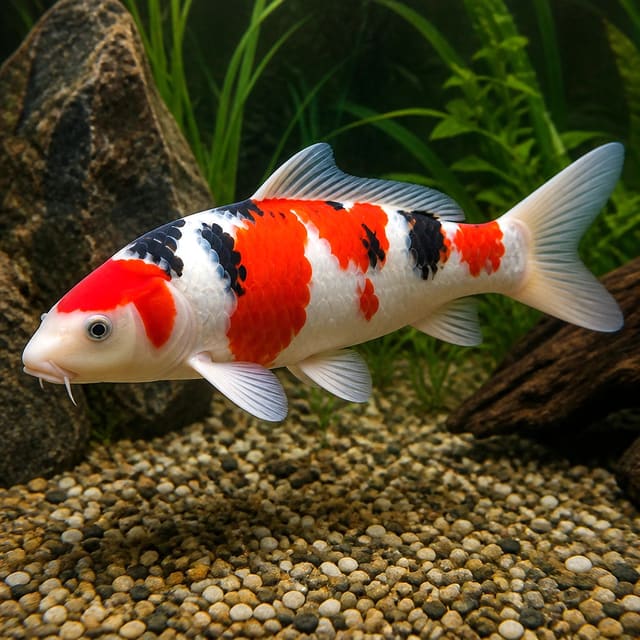
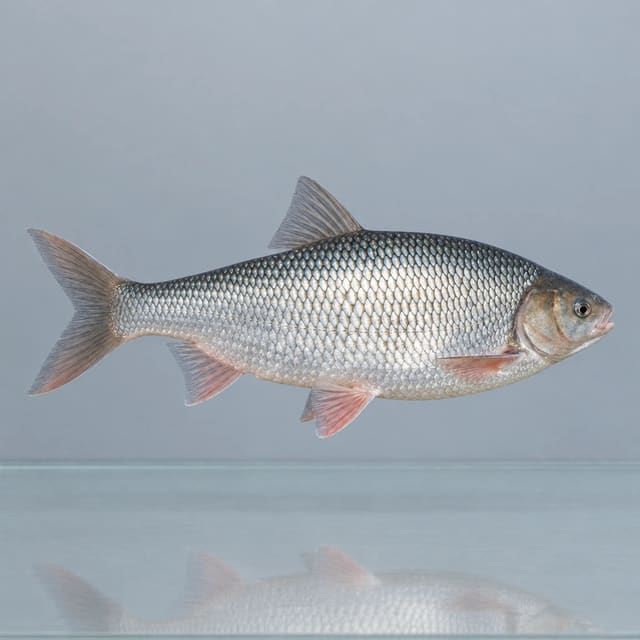
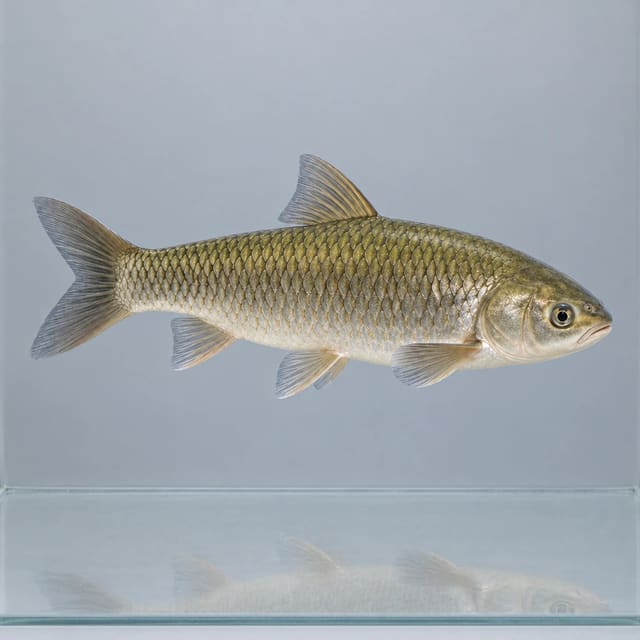
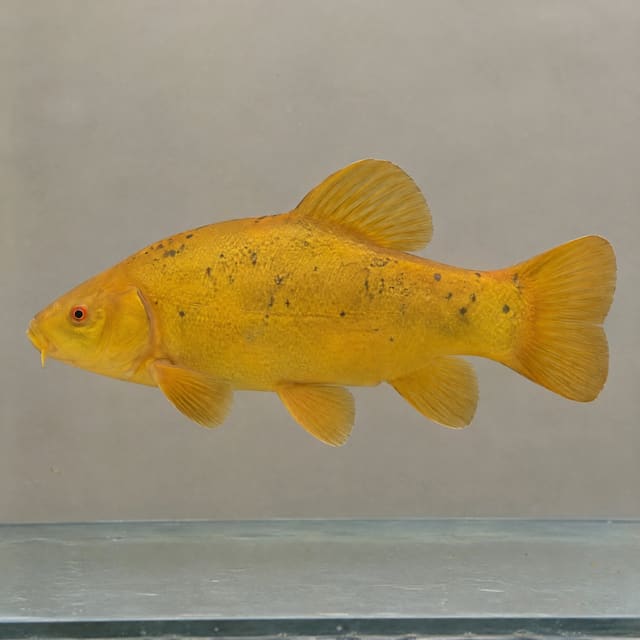
OATA says most pond fish are compatible with each other, though they may need slightly different conditions. Koi share a pond happily with other koi such as our Grade A Premium Koi Mix and the yellow Banana Koi, with orfe such as the Golden Orfe, which OATA says should be kept in groups of four or five, with the bottom-dwelling Golden Tench and with single-tailed goldfish.
| Suits a koi pond | Avoid |
|---|---|
| Other koi of any colour | Twin-tailed fancy goldfish, which OATA keeps in indoor aquaria |
| Orfe in groups of four or five, tench and rudd | Sturgeon, unless the pond is built for their cool, highly oxygenated water |
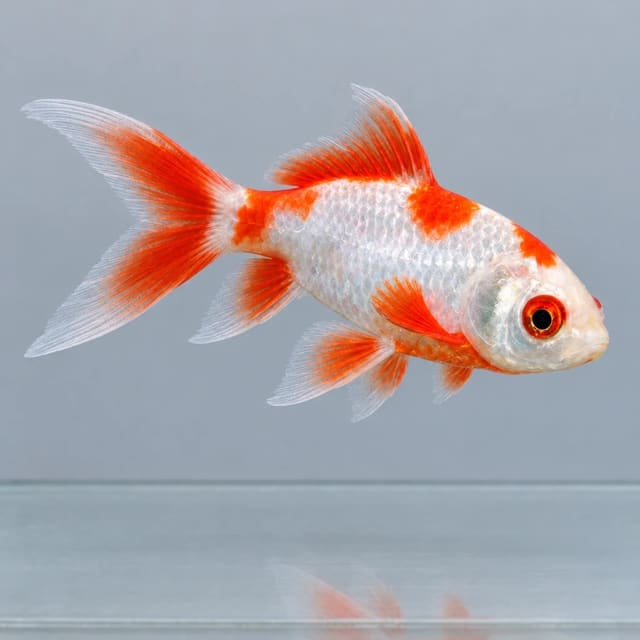
| Comets, shubunkins and other pond goldfish | Tropical fish, which need heated water |
Our tank mates tool checks a planned mix, and our guide to choosing cold water fish compares the main pond species. Browse the whole goldfish and coldwater fish range for more.
Every koi keeper should know about koi herpesvirus. Cefas describes KHV as a contagious viral disease of common carp, including koi, that can kill many fish. It occurs at water temperatures between 16°C and 29°C, is often triggered by stress, has no treatment and is endemic in Great Britain. It is a notifiable disease: in England and Wales you must report a suspected case to the Fish Health Inspectorate at Cefas immediately. Spring viraemia of carp, another notifiable virus of koi and goldfish, is most active at 11–17°C; Great Britain is free of it.
| Sign | First action |
|---|---|
| Hanging at the surface, sitting on the bottom, flicking or clamped fins | Test the water at once and correct ammonia or nitrite with a partial water change. |
| Lethargic fish gathering at the water inlet or in the shallows; pale or patchy gills; rough, dry skin patches; too much or too little mucus | Possible KHV. Do not move fish, water or equipment to another pond, and report it to the Fish Health Inspectorate at Cefas. |
| Bleeding or reddening at the fin bases, vent or skin | Possible KHV or SVC: report to the Fish Health Inspectorate. |
| White spots, fluffy growths, lost scales | Identify the problem before treating; test the water first. |
Prevention is the only defence against these viruses. Cefas advises against buying fish of unknown origin and points out that the viruses spread on contaminated equipment as well as in fish and water, so quarantine new fish and keep separate nets for each pond.
Koi spawn in late spring and early summer if conditions suit. FishBase records that carp breed at 15–20°C, that a female can lay more than a million eggs in a season, that the sticky eggs are attached to plants and hatch in about four days, and that spawning females are usually followed by several males. OATA warns that koi can be aggressive during breeding and that the chase can cause permanent damage to females, or even kill them, especially when there are more males than females. Wikipedia adds that koi revert to the wild colour within a few generations if they are allowed to breed freely, so pond-bred youngsters rarely look like their parents. Most keepers simply let spawning pass and watch the females closely.
A koi of a single metallic colour, silver-white all over, with no pattern. Ogon are the one-colour metallic koi; the most common colours are gold, platinum and orange. Koi are ornamental carp, sold in the UK as Cyprinus carpio.
OATA says koi can grow up to 75 cm, and FishBase records 129 cm for the species as a whole, with a common length of 31 cm. It is supplied at 2–3 inches, so plan for a large fish.
OATA recommends a pond of 4,500 litres or more, with part of it deeper than 90 cm, plus specialist filtration, a pump and a UV unit. Koi are not suitable for small ponds or long-term aquarium keeping.
Only for a short period, for example as quarantine when it arrives in winter. FishBase notes that common carp are not recommended for home aquariums, and koi belong in a large, filtered pond.
No. GOV.UK guidance for England and Wales says you do not need a licence to keep common carp, which includes koi. Never release koi into the wild.
No. A ghost koi is a hybrid of an ogon and a wild carp, popular in the UK. A platinum ogon is a pure one-colour metallic koi with no darker wild-type scales.
A koi pellet sized for its mouth once a day, as much as it eats in a few minutes. Use a higher-protein food in summer, a wheatgerm food as the water cools, and stop feeding below about 8°C, as OATA advises for pond fish.
Koi herpesvirus (KHV) and spring viraemia of carp (SVC) are both notifiable. In England and Wales you must report suspected cases to the Fish Health Inspectorate at Cefas. Quarantine new fish and buy from known sources.
No reviews for this item yet. Bought one? Honest reviews only, good or bad.
What customers say about ordering from us
Easy website plenty of info on fish your buying great to pick a time slot
TRACEY DURRANT · 7 Oct 2026
Got some lovely fish thank you
Kevin Mackie · 7 Oct 2026
Reviews of our shop, collected by Judge.me, an independent third-party review collector. Newest first.
Moved by UK carriers licensed to handle live animals
Hand-packed with oxygen bags, poly box, heat pack
Email photos the same day; an optional unboxing video helps us review problems faster — claim terms apply
Klarna & PayPal Pay in 3 at checkout