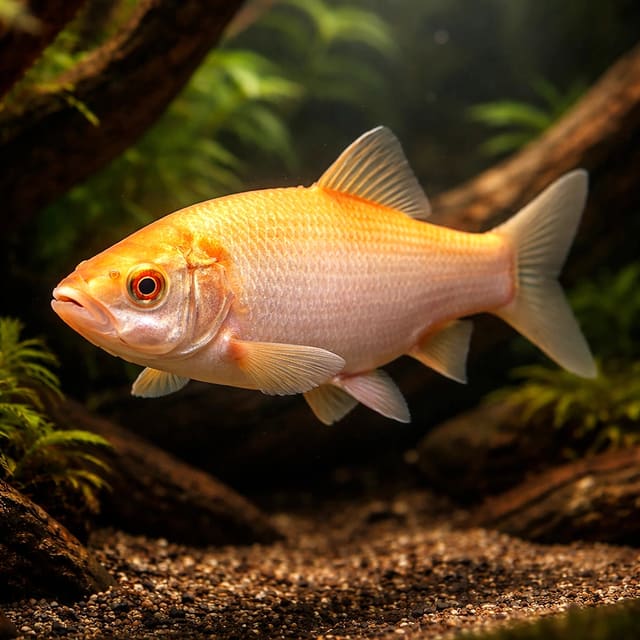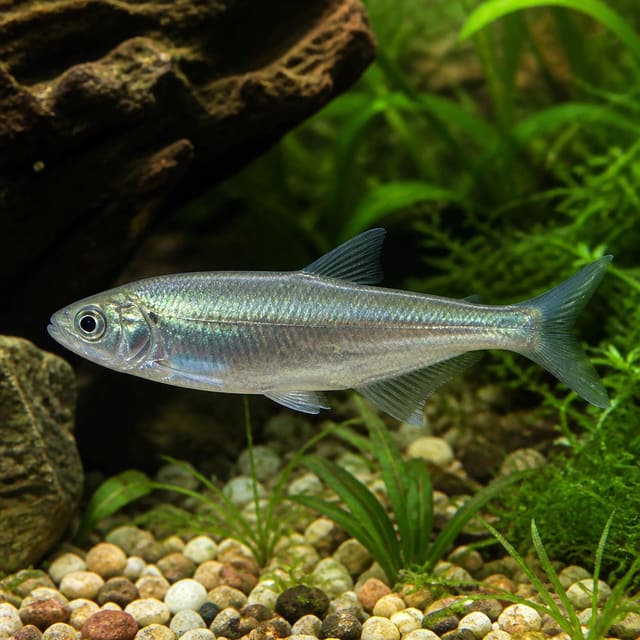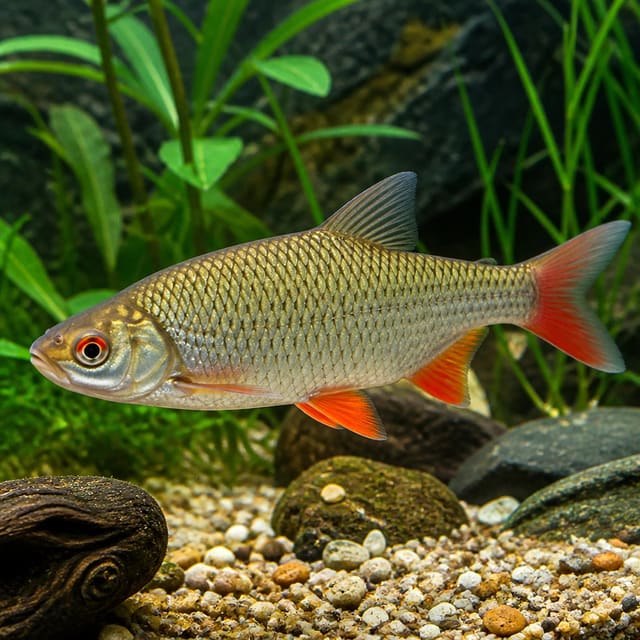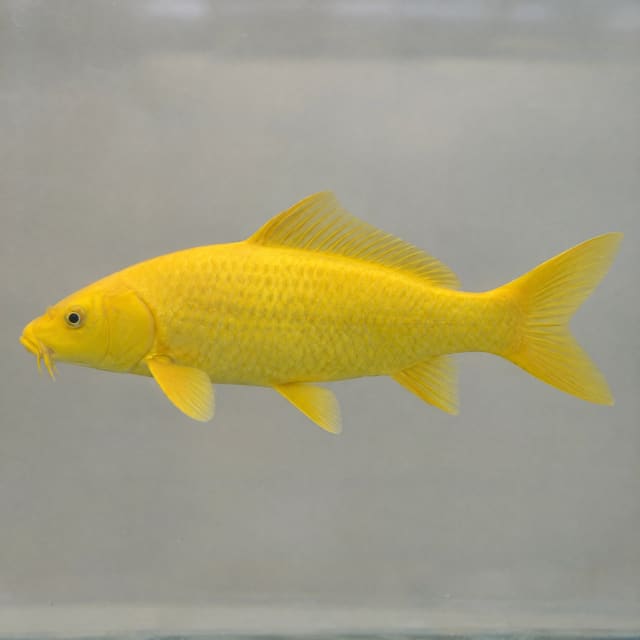
Golden Tench (Tinca tinca)
£34.99
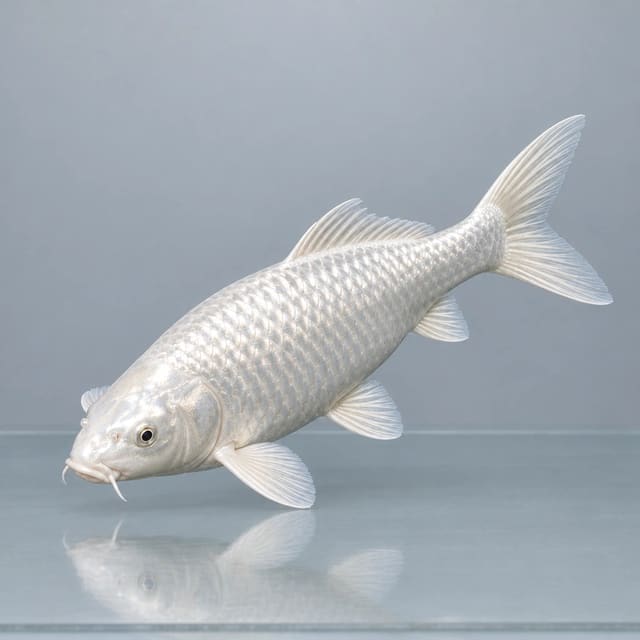
The green grass carp (Ctenopharyngodon idella) is a peaceful, fast-growing pond fish from eastern Asia that grazes soft underwater plants. It can reach 100 cm or more, so it needs a very large, deep, filtered pond of at least 4,500 litres. Sold individually as one live fish at 3–4 inches.
Adult size is the maximum length this species reaches at full maturity (scientific sources). The livestock you receive will be younger and smaller. Product-photo provenance and any image-specific limitations are stated on the listing.
Ctenopharyngodon idella
The green grass carp (Ctenopharyngodon idella) is a peaceful, fast-growing pond fish from eastern Asia that grazes soft underwater plants. It can reach 100 cm or more, so it needs a very large, deep, filtered pond of at least 4,500 litres. Sold individually as one live fish at 3–4 inches.
Adult size is the maximum length this species reaches at full maturity (scientific sources). The livestock you receive will be younger and smaller. Product-photo provenance and any image-specific limitations are stated on the listing.
Read the full care guidance when planning conditions for your aquarium.
The green grass carp, Ctenopharyngodon idella, is a long, streamlined, plant-eating fish for big garden ponds. “Green” is the trade name for the natural colour: an olive to brassy-green back fading to a silvery or yellowish belly. Grass carp are peaceful and grow quickly, and they are famous for grazing submerged plants. If you have a large, deep, well-filtered pond and want a calm, unusual fish that cruises the surface on warm days, a grass carp is worth considering. If your pond is small, it is not the right fish.
FishBase gives the native range as eastern China and Russia, including the Amur River system, and notes that the species has been transported around the world and is one of the most important aquaculture fish anywhere, as well as being used for weed control in rivers, ponds and reservoirs. FishBase now places it in the family Xenocyprididae, the East Asian minnows; many older sources, including the Noble Research Institute, still list it in the carp family, Cyprinidae.
In Britain, the Canal & River Trust describes grass carp as an introduced species from eastern Asia, first stocked in the Lancaster Canal by British Waterways and Liverpool University to control water plants, and still found there in a small population. It is also a popular fish for ornamental ponds.
| Feature | What to look for |
|---|---|
| Body | Long, slender and almost cylindrical, often described as torpedo-shaped, with a low, flat head. |
| Colour | Olive to brassy green above and silvery white to yellow below (FishBase); the Canal & River Trust describes adults as a deep bronze. |
| Mouth | Small, with no barbels. Koi and common carp have barbels, so this is the quickest way to tell them apart. |
| Scales | Large, even scales covering the whole body. |
| Teeth | Comb-like teeth in the throat (pharyngeal teeth) that cut and grind plants; the genus name means “comb-toothed throat”. |
You will find it alongside orfe, tench and rudd in our other coldwater fish category.
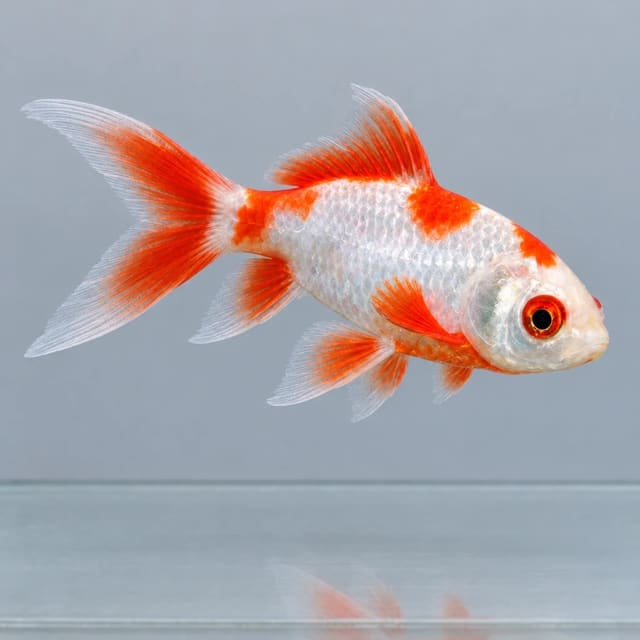
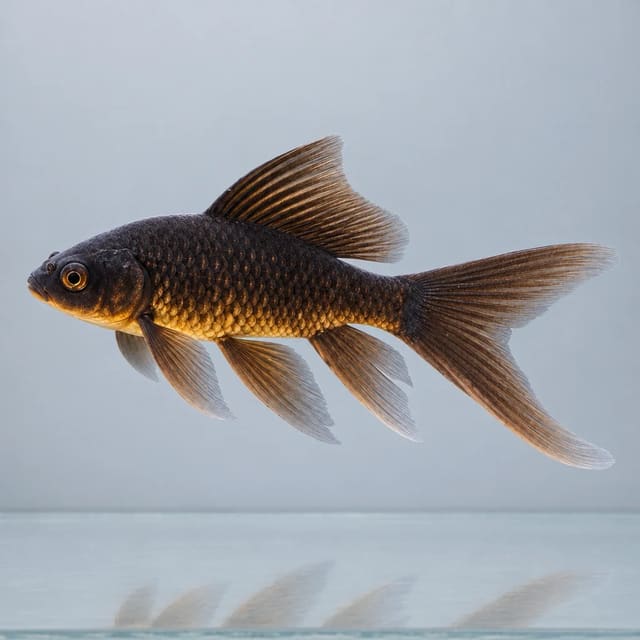
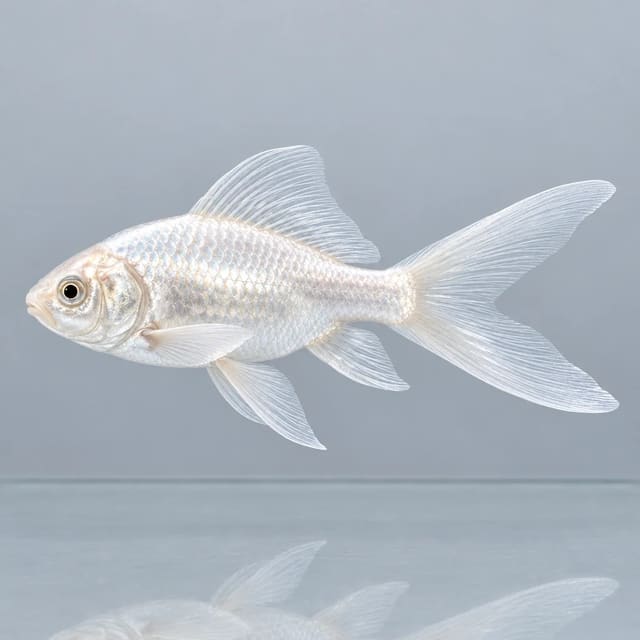
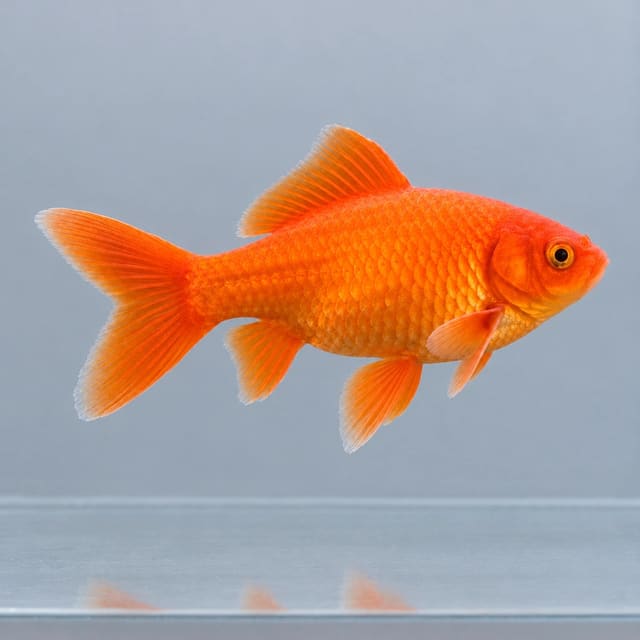
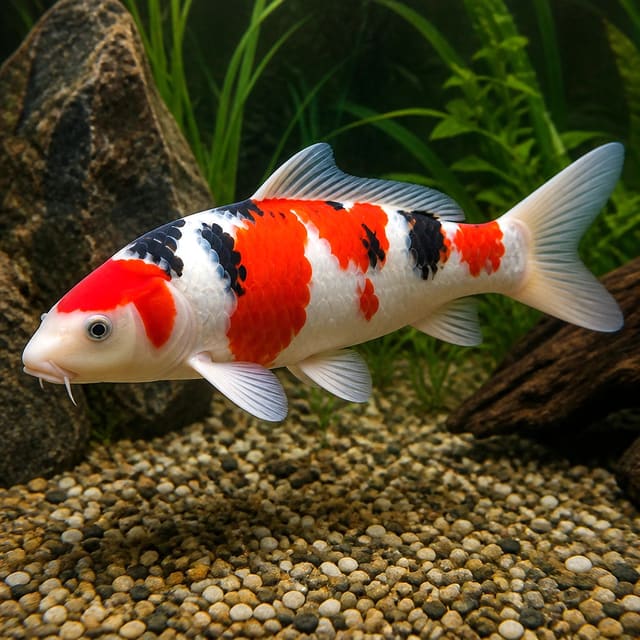
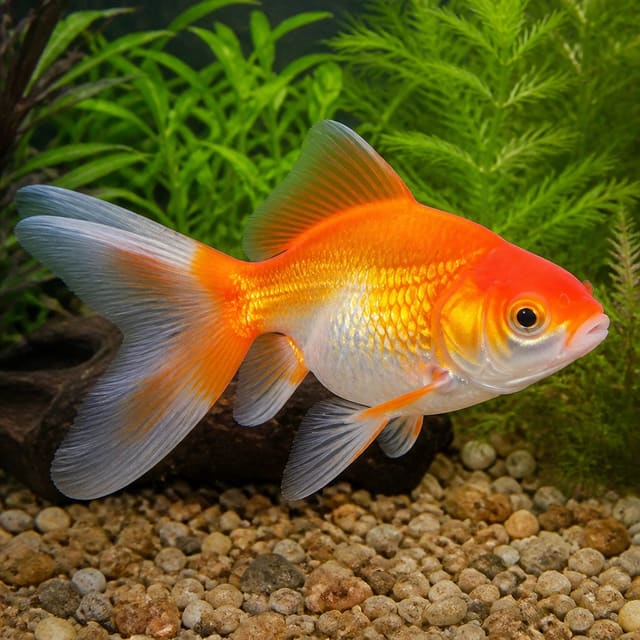
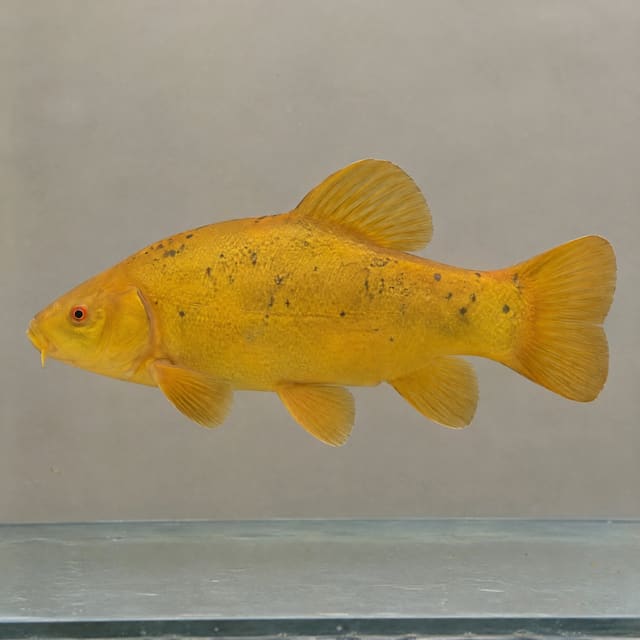
One purchase supplies one live green grass carp at 3–4 inches (roughly 8–10 cm). The price is for one fish. Sex is not chosen or guaranteed. The photographs show the natural colour form, not the individual you will receive, and young fish can look slimmer and more silvery than adults.
The size supplied is a small fraction of the adult size. The Canal & River Trust gives a maximum length of 100 cm and a British record of over 40 lb; FishBase records 150 cm total length and 45 kg, and says fish mature at around 68 cm. The sources differ, but all of them describe a fish that grows to well over half a metre. FishBase gives a maximum reported age of 21 years, so a grass carp is a long commitment.
Grass carp are not native to Britain, so the law matters. GOV.UK guidance for England and Wales says you do not need a licence to keep grass carp in:
Putting grass carp into a lake, fishery, river or any water that is not covered above needs permission, and the same guidance warns that keeping controlled non-native fish without the right licence is an offence. If you live in Scotland or Northern Ireland, check your local rules before you buy. Never release a grass carp, or any pond fish, into the wild: OATA points out that it is illegal and harmful to native wildlife.
OATA recommends a pond of 4,500 litres or more for koi, tench and orfe, which grow to about 75 cm, and a depth of over 90 cm for koi. A grass carp grows larger still, so treat those figures as the bare minimum; the bigger and deeper the pond, the better. Depth keeps temperatures stable, with a cool zone at the bottom in hot weather and a warmer one in freezing winters, and OATA advises a pump or fountain to circulate and oxygenate the water, plus a filter for any pond holding fish.
Because the legal exemption depends on there being no risk of escape, check every overflow. The Noble Research Institute found in American ponds that grass carp escaped when as little as 3 inches of water flowed over a spillway. A garden pond whose overflow runs into a ditch, stream or drain needs a secure screen, or a different fish.
| Check | What you need |
|---|---|
| Volume | At least 4,500 litres, OATA’s minimum for koi; more is better. Work it out with our volume calculator for a regular-shaped pond. |
| Depth | Over 90 cm in at least part of the pond. |
| Filtration | A pond filter and pump sized for large fish; OATA adds a UV unit for koi-type ponds to keep the water clear. |
| Escape route | No overflow or outflow that could carry fish into natural water. |
| Cover | A pond net against herons and to stop new fish jumping out. |
| Plants | Only plants you are happy to see grazed, or plants protected from the fish. |
Count the adult size of every fish already in the pond, not its current size, and check the total with our stocking calculator before adding a fish that will grow this large.
The grass carp’s name describes its diet. FishBase says it feeds on higher aquatic plants and submerged grasses, and also takes detritus, insects and other invertebrates. FishBase also notes that it is considered a pest in many countries because of the damage it does to submerged plants. In a garden pond, that means soft underwater plants will be eaten.
The best evidence on what grass carp do and do not eat comes from large American lakes, not garden ponds, so treat it as a guide. The Noble Research Institute, monitoring dozens of Oklahoma ponds over 34 years, found that grass carp controlled most submerged plants, including filamentous algae, chara, naiad, pondweeds and coontail (hornwort), and a few emergent plants such as creeping water primrose. They did not control water willow or common reed, and usually not cattail (reedmace). It also stresses that partial control is usually better than wiping plants out, because plants remove pollutants, provide cover and stabilise the banks.
Grass carp are remarkably tolerant. FishBase records survival from 0°C to 38°C, salinity up to 10 ppt and oxygen down to 0.5 ppm. Those are survival limits, not keeping targets: a pond fish thrives on stable, clean water. OATA gives these values for UK ponds:
| Value | OATA pond guide |
|---|---|
| Temperature | 4–24°C |
| pH | 6.5–8.5 |
| General hardness | 8–18 °dH (medium-hard) |
| Carbonate hardness | 5–15 °dKH |
| Ammonia and nitrite | 0 mg per litre |
| Nitrate | No more than 20 mg per litre above your tap water level |
OATA recommends testing pond water once a week, especially while a pond is new or after adding fish, and treating any tap water you add with a conditioner to remove chlorine or chloramine. Our water care range has conditioners and test kits, our water matcher compares your tap water with the target values, and our water chemistry guide explains each reading. A new pond needs a mature filter before fish go in; our nitrogen cycle guide explains why, and OATA warns that stocking too fast causes “new pond syndrome”.
Pond plants are the grass carp’s main food, but it will also take pond foods; the Canal & River Trust notes that grass carp eat most anglers’ baits. OATA explains that a pond fish’s appetite rises and falls with the water temperature, and recommends feeding only what the fish eat within a few minutes, once a day.
| Water | Feeding |
|---|---|
| Summer | A floating pond food alongside the plants it grazes, such as Tropical Pond Sticks Mixed or Tropical Pond Sticks Light. OATA says summer feeding builds reserves for winter, but avoid overfeeding in very warm weather. |
| Autumn, as the water cools | Switch to a lower-protein, more digestible wheatgerm food such as Koi and Goldfish Wheat Germ and Garlic sticks. |
| Below about 8°C | OATA says it may be better not to feed at all. |
| Spring, as the water warms | Reintroduce food slowly; OATA notes that filter bacteria take time to recover after winter. |
OATA’s floating-bag method works for ponds: take the bag out of its outer wrapping away from bright light, float it on the pond for 10 minutes so the temperatures match, then add small amounts of pond water to the bag before releasing the fish with as little bag water as possible. Our guide on how to acclimatise new fish shows each step. OATA also suggests a net over the pond after adding new fish, because they are more likely to jump during their first couple of weeks.
In late autumn and winter the pond can be far colder than the bag. In that case we suggest settling the fish in a quarantine tank indoors and moving it to the pond once the weather warms in spring. A quarantine period is good biosecurity at any time of year: Cefas points out that infected fish do not have to look ill to spread disease. Check our delivery information for current dispatch days.
| When | Check | Action |
|---|---|---|
| Arrival | Breathing, fins, balance | Float, acclimatise and release quietly; cover the pond with a net. |
| Days 1–3 | Where the fish rests and whether it feeds | Offer a small amount of food only if the water is above about 8°C. |
| Day 7 | Ammonia, nitrite, nitrate, pH | Correct anything out of range with a partial water change. |
| Day 14 | Skin, fins and behaviour | The fish should be cruising and grazing; keep the net on until it has settled. |
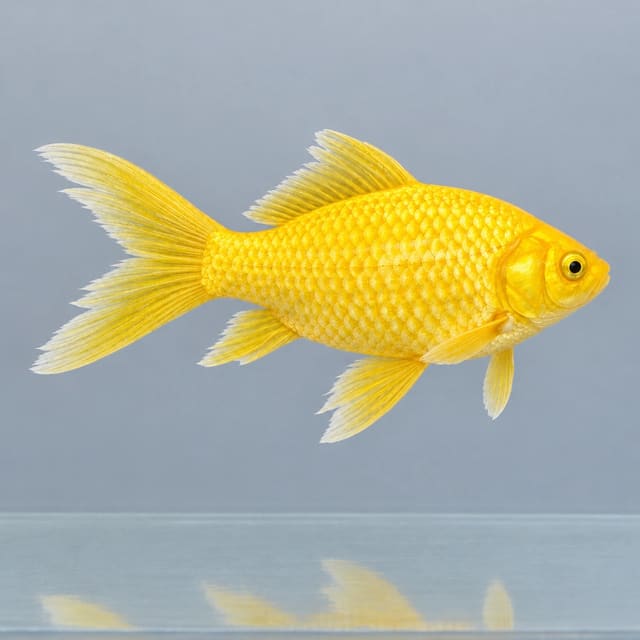
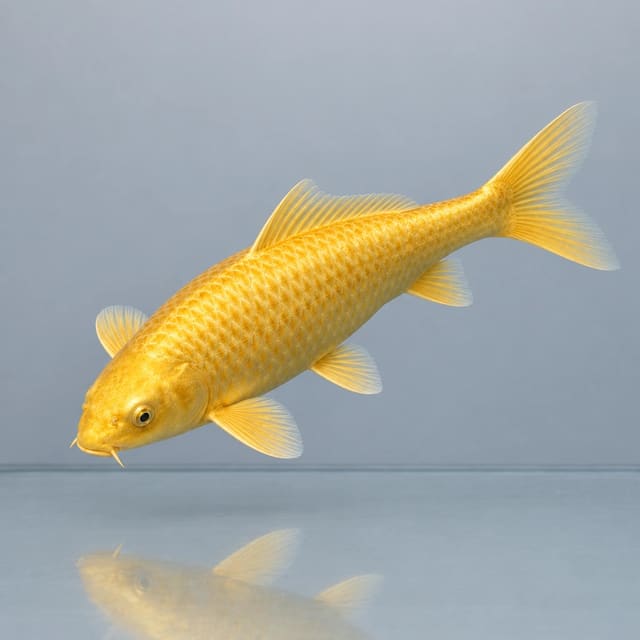
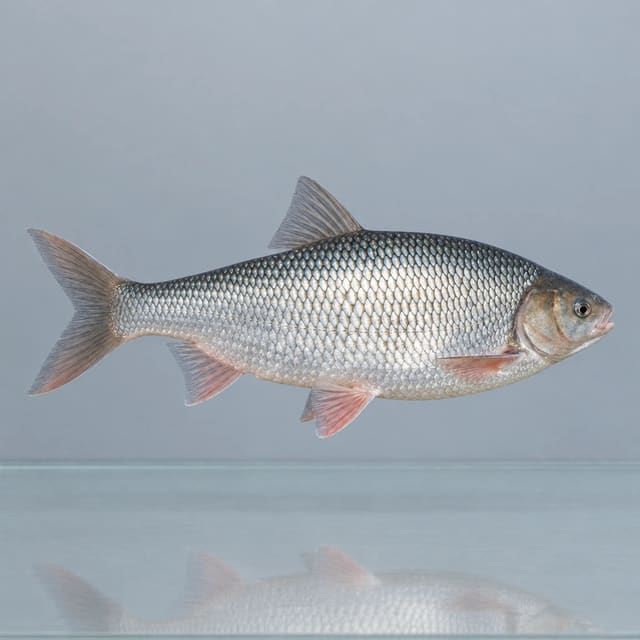
Grass carp are peaceful and live comfortably with the usual British pond fish. OATA says most pond fish are compatible with each other, while noting that they may need slightly different conditions. Good companions are koi such as our Grade A Premium Koi Mix, single-tailed goldfish such as the Bronzed Comet Goldfish, the Golden Orfe, which OATA says should be kept in groups of four or five, the bottom-dwelling Golden Tench and the Pearl Roach Rudd.
| Suits a grass carp | Avoid |
|---|---|
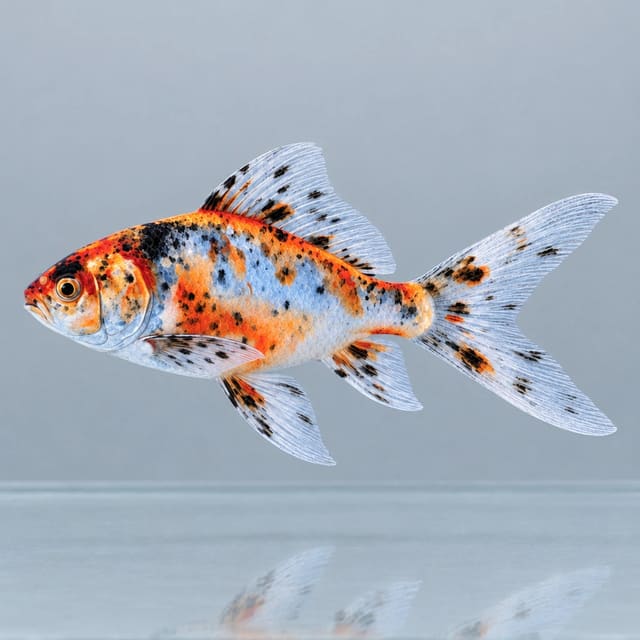
| Koi, comets, shubunkins and other pond goldfish | Twin-tailed fancy goldfish, which OATA keeps in indoor aquaria |
| Orfe, tench and rudd | Sturgeon, which OATA says need cool, highly oxygenated water rather than typical pond conditions |
| A pond with large areas of tough marginal plants | A pond full of prized soft underwater plants |
| A large, deep, filtered pond | Any small garden pond or aquarium for the long term |
Our tank mates tool checks a planned mix, and our guide to choosing cold water fish compares the main pond species. Browse more fish in our other pond fish and cold water fish categories, or the whole goldfish and coldwater fish range.
OATA lists the changes to watch for in any pond fish: hanging at the surface or sitting on the bottom, erratic swimming, colour turning darker or paler, faster or slower breathing, white spots or fluffy growths, loss of fins or scales, weight loss and loss of appetite. It also warns that fish are more vulnerable to disease as the water warms in spring, after the cold has weakened their immune systems.
| Sign | First action |
|---|---|
| Flicking, clamped fins, gasping at the surface | Test the water at once; correct ammonia or nitrite with a partial water change and add aeration. |
| White spots or fluffy growths | Identify the problem before treating, and ask for advice if you are unsure. |
| Bleeding or red patches on the skin, at the fin bases or vent; fish lethargic and hanging at outlets or the pond sides | Possible spring viraemia of carp, which Cefas lists as a disease of grass carp as well as koi and goldfish. Great Britain is free of it and it is notifiable: report suspected cases to the Fish Health Inspectorate at Cefas straight away. |
| Fish missing or scarred | Check the net; herons take young fish, and the Noble Research Institute recommends larger fish where fish-eating birds visit. |
FishBase also records that grass carp introductions around the world often brought a parasitic tapeworm with them, another reason to buy from a trusted source and quarantine new fish.
Grass carp do not breed in garden ponds. The Canal & River Trust explains that they spawn in water above 20°C and cannot breed naturally in the UK. FishBase says spawning takes place on riverbeds with a very strong current, and the Noble Research Institute adds that the eggs need long stretches of flowing water to develop, so grass carp cannot reproduce in still ponds. The fish you buy is the fish you keep, and its numbers will not grow on their own. That is one more reason never to release one: the wild is no place for a pond fish.
It may help, but it is not a cure. In large American lakes grass carp controlled filamentous algae and many submerged plants, but they eat soft pond plants too, and blanket weed is fed by nitrate and phosphate. Fix the cause with good filtration, fewer nutrients and plant cover, and treat the grass carp as a grazer, not a weed killer.
Very big. The Canal & River Trust gives a maximum of 100 cm, and FishBase records 150 cm total length and 45 kg. Fish reach maturity at around 68 cm. Plan for a fish of a metre, even though it is supplied at 3–4 inches.
A very large, deep, filtered pond. OATA recommends 4,500 litres or more and a depth of over 90 cm for koi, which reach about 75 cm; a grass carp grows larger, so treat those figures as the bare minimum. It is not suitable for small garden ponds.
In England and Wales, GOV.UK says you do not need a licence to keep grass carp in indoor aquariums or in garden ponds that are discrete bodies of water of no more than an acre, on private residential premises, with no risk of fish escaping into the wild. Stocking a lake, fishery or any other water needs permission. If you live in Scotland or Northern Ireland, check your local rules first.
Yes. OATA says most pond fish are compatible with each other, and grass carp suit ponds with koi, single-tailed goldfish, orfe, tench and rudd. Keep twin-tailed fancy goldfish in an indoor aquarium instead.
Only for a short time, for example as quarantine on arrival. It grows far too large for any home aquarium and belongs in a big pond.
No. The Canal & River Trust explains that grass carp spawn only in water above 20°C and cannot breed naturally in the UK, and FishBase notes that they spawn on riverbeds with a very strong current. Your pond population will not grow.
It grazes soft pond plants, and FishBase notes it also takes detritus, insects and other invertebrates. Add a floating pond food in the warmer months, a wheatgerm food as the water cools, and stop feeding below about 8°C, as OATA advises for pond fish.
No reviews for this item yet. Bought one? Honest reviews only, good or bad.
What customers say about ordering from us
Easy website plenty of info on fish your buying great to pick a time slot
TRACEY DURRANT · 7 Oct 2026
Got some lovely fish thank you
Kevin Mackie · 7 Oct 2026
Reviews of our shop, collected by Judge.me, an independent third-party review collector. Newest first.
Moved by UK carriers licensed to handle live animals
Hand-packed with oxygen bags, poly box, heat pack
Email photos the same day; an optional unboxing video helps us review problems faster — claim terms apply
Klarna & PayPal Pay in 3 at checkout