Easy
Assorted Pond Goldfish (Carassius auratus)
pH 6.5–8.5
£6.49
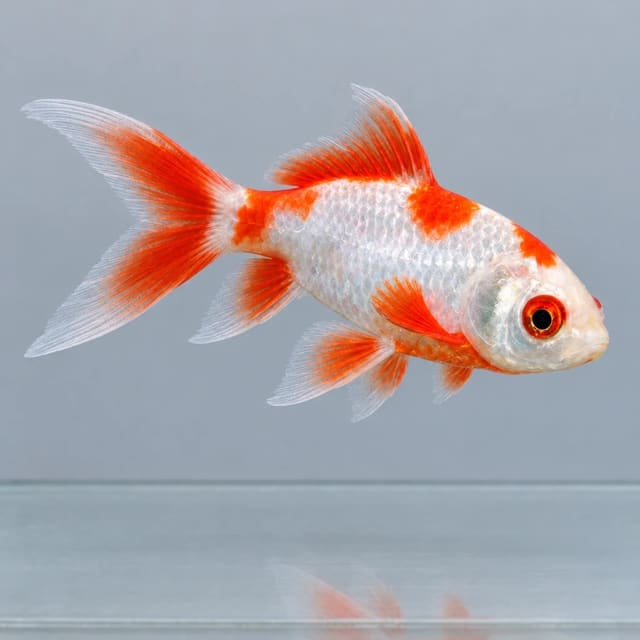
The Shubunkin is a hardy, single-tailed calico goldfish (Carassius auratus) patterned in blue, red, orange, yellow, brown and black. Single-tailed goldfish can grow past 30 cm, so plan for a garden pond at least 45–60 cm deep or, short term, a large coldwater aquarium. Choose 2–3 in, 3–4 in, 4–5 in or 5–6 in; one live fish per purchase.
Adult size is the maximum length this species reaches at full maturity (scientific sources). The livestock you receive will be younger and smaller — pick a size above for the actual shipping size. Product-photo provenance and any image-specific limitations are stated on the listing.
Carassius auratus
The Shubunkin is a hardy, single-tailed calico goldfish (Carassius auratus) patterned in blue, red, orange, yellow, brown and black. Single-tailed goldfish can grow past 30 cm, so plan for a garden pond at least 45–60 cm deep or, short term, a large coldwater aquarium. Choose 2–3 in, 3–4 in, 4–5 in or 5–6 in; one live fish per purchase.
Adult size is the maximum length this species reaches at full maturity (scientific sources). The livestock you receive will be younger and smaller — pick a size above for the actual shipping size. Product-photo provenance and any image-specific limitations are stated on the listing.
Read the full care guidance when planning conditions for your aquarium.
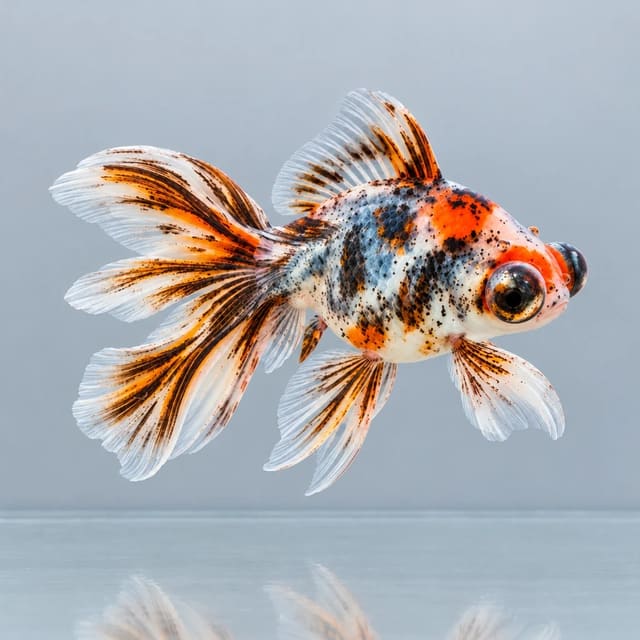
The shubunkin goldfish is a single-tailed calico goldfish, Carassius auratus, and one of the hardiest goldfish you can keep. Its scales make a patchwork of colour: a blue background with patches of red, orange, yellow, brown and violet, freckled with black spots that run into the fins. Practical Fishkeeping traces the variety to Japan, where it began as a calico goldfish, and the Bristol Aquarists’ Society’s history, drawing on Japanese sources, dates the first shubunkins to 1892, with the name given in 1900.
Calico colouring comes from a mixture of scale types. The Bristol Aquarists’ Society explains that metallic scales are shiny, nacreous scales have a soft mother-of-pearl look and matt scales have no shine at all; calico fish carry all three. Like every goldfish it belongs to the carp family, Cyprinidae, and FishBase places the wild species in East Asia.
| Type | Body and tail | Where you meet it |
|---|---|---|
| London shubunkin | The calico form of the common goldfish: sturdy body and a short, slightly forked tail | Common in the UK, alongside the common goldfish |
| Bristol shubunkin | Slim body about 35% as deep as it is long, with a large, rounded, heart-shaped single tail | Standard set by the Bristol Aquarists’ Society in 1934; rarely sold in shops |
| Comet-type (American) shubunkin | Slim body with a long, pointed, forked single tail | The form most often sold in aquatic shops |
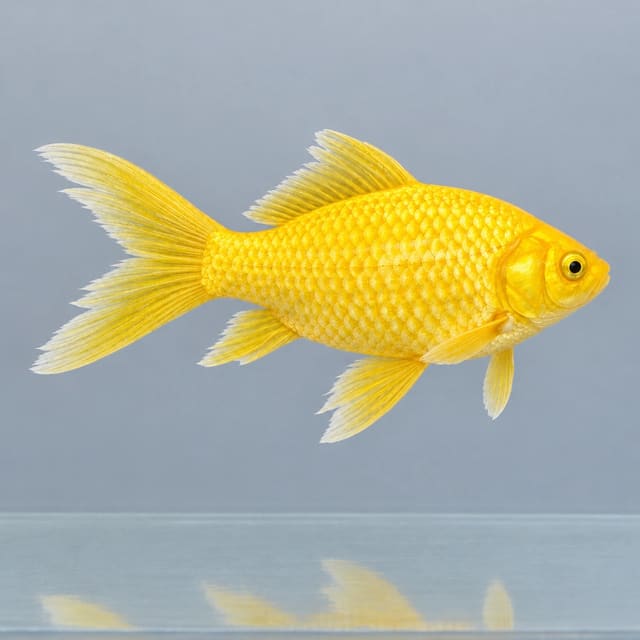
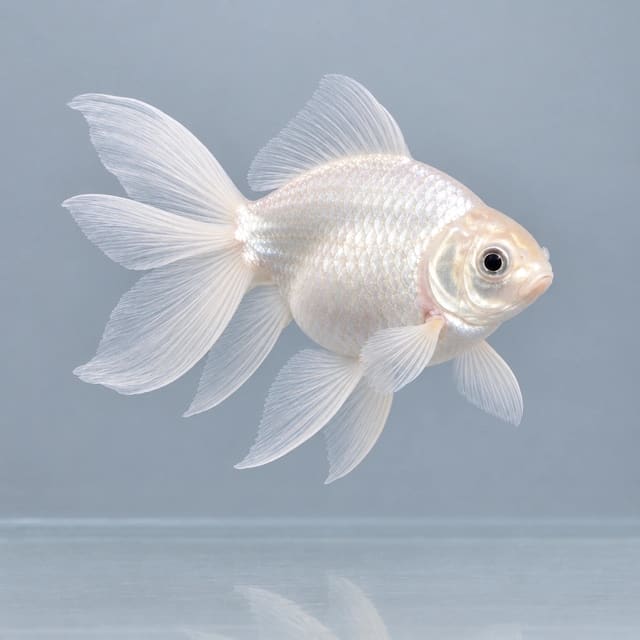
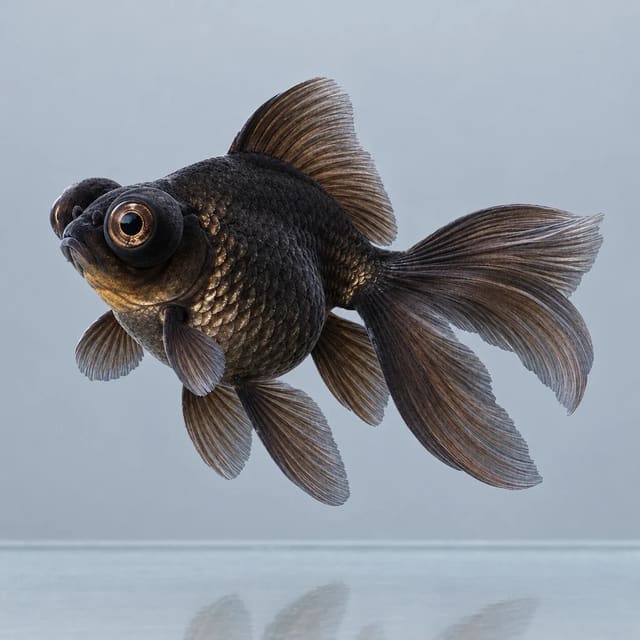
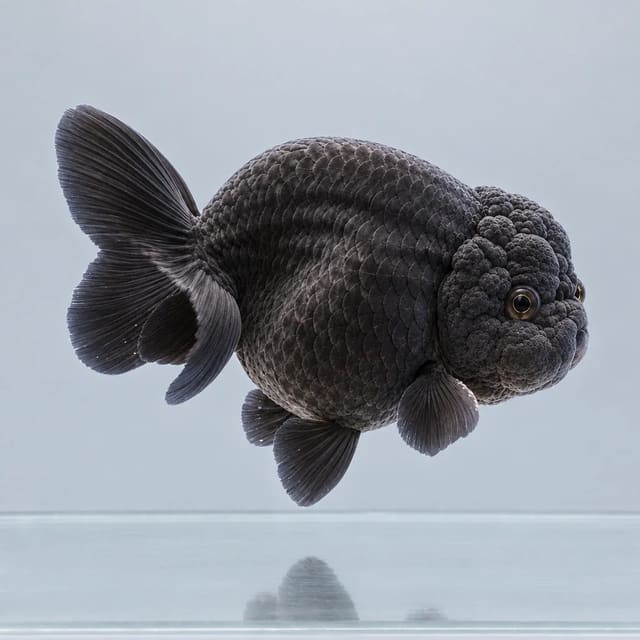
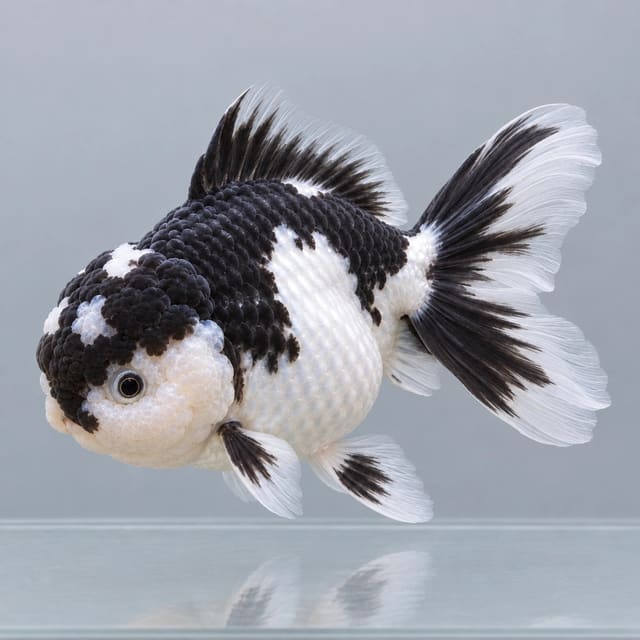
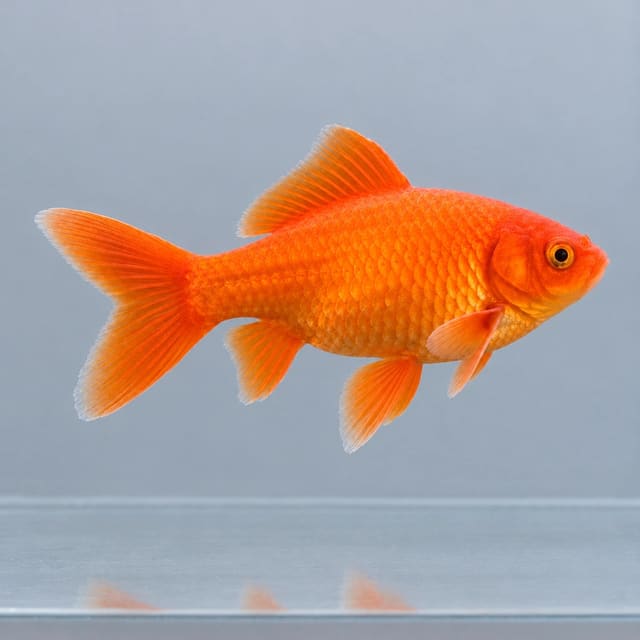
Practical Fishkeeping notes that the single-tailed calico fish often sold as pond shubunkins are what goldfish specialists call calico comets, and the UK comet standard covers them as a calico colour of the comet. The fish in our photographs has that long, forked comet-type tail. If the tail type matters to you, ask us before ordering. Browse the rest of our goldfish and coldwater fish, or go straight to the pond goldfish category.
One purchase supplies one live shubunkin in the size you choose. Sizes are given in inches; the centimetre figures below are conversions. Every shubunkin carries its own pattern, so the gallery images show the variety, not the individual you will receive.
| Option | Approximate length | Good for |
|---|---|---|
| 2–3 in | About 5–7.5 cm | Growing on in a large indoor aquarium before moving to a pond |
| 3–4 in | About 7.5–10 cm | A pond in the warmer months, or an established coldwater aquarium |
| 4–5 in | About 10–13 cm | Adding to an established pond with fish of similar size |
| 5–6 in | About 13–15 cm | Joining comets or other single-tails that are already well grown |
OATA’s pond fish care sheet says goldfish usually reach a maximum of about 30 cm, and Practical Fishkeeping adds that single-tailed goldfish can grow to more than 30 cm, which is why they need an outdoor pond as their long-term home. OATA’s aquarium sheet notes that goldfish can exceed 40 cm, although up to 25 cm is more common in aquariums, and FishBase records 48 cm total length as the species maximum. Bristol shubunkins usually stay smaller, according to Practical Fishkeeping, but are still active fish that do best in the largest home available.
Expect the colours to develop as well. Practical Fishkeeping notes that shubunkins develop more black colouring with age. Goldfish are also long-lived: OATA reports pond goldfish living up to 20 years and FishBase gives a maximum reported age of 41 years. Read our delivery and Live Arrival Guarantee information before ordering so the pond or aquarium is ready on arrival day.
A garden pond is the natural home for an adult shubunkin. OATA lists shubunkins among pond goldfish, and the OATA goldfish aquarium sheet notes that non-fancy goldfish can be moved to an outdoor ornamental pond. Young fish can be grown on indoors, and UK breeders keep shubunkins both in tanks in unheated fish houses and in unheated ponds.
Indoors, OATA advises at least 100 litres for one adult goldfish plus 50 litres for each additional adult; the RSPCA gives 2 litres per 0.5 cm of goldfish length and at least 60 litres for each fish. A single-tail that may pass 30 cm will outgrow most home aquariums, so treat an aquarium as a stage rather than a lifetime home. Our guide to comet goldfish compares pond and aquarium keeping for the same body type.
| Factor | Garden pond | Indoor aquarium |
|---|---|---|
| Space for an adult | Plenty when the pond is well sized | Limited; needs a very large tank long term |
| Minimum guidance | At least 45–60 cm deep (OATA) | 100 litres plus 50 litres per extra adult (OATA) |
| Temperature | Follows the seasons; 4–24°C guide range | Steadier; 4–25°C guide range |
| Feeding | Changes with water temperature through the year | Once daily all year |
| Main risks | Predators, ice cover, falling leaves | Outgrowing the tank, waste build-up |
OATA sets a minimum pond depth of 45–60 cm for goldfish; deeper water holds a more stable temperature, with a cool bottom layer in hot spells and a warmer one in freezing weather. Goldfish suit smaller ponds than koi, orfe or tench, which OATA says need at least 4,500 litres. Any pond with fish needs a filter to stop ammonia and nitrite building up, and a pump or fountain helps circulate and oxygenate the water.
Live plants are recommended: they provide oxygen, take up pollutants and supply food directly or through the tiny organisms living on them. Shallow ledges around the edge allow a wider choice of plants. Some sunlight helps plants and warms the water in spring, but too much drives algae and temperature problems; OATA notes that blanket weed and green water are fed by pollutants such as nitrate and phosphate.
Work out the pond’s volume before stocking: for a rectangular pond, length × width × average depth in centimetres, divided by 1,000, gives litres, and our tank volume calculator does the same sum for aquariums. The stocking calculator helps you judge how many fish it can carry. Add fish slowly: OATA warns that overstocking or adding fish too quickly causes new pond syndrome.
OATA publishes slightly different values for goldfish in ponds and in aquariums, and FishBase’s species values match the aquarium set. Use the column that matches your set-up; in both, ammonia and nitrite must stay at zero.
| Reading | Pond (OATA) | Aquarium (OATA, FishBase) |
|---|---|---|
| Temperature | 4–24°C | 4–25°C |
| pH | 6.5–8.5 | 6.0–8.0 |
| Hardness | 8–18°dH GH; 5–15°dKH KH | 5–19°dH |
| Ammonia and nitrite | 0 mg/l | 0 mg/l |
| Nitrate | No more than 20 mg/l above tap water | No more than 20 mg/l above tap water |
OATA advises testing weekly, more often while setting up and after adding fish, and treating any tap water added to a pond with a tap water conditioner; our water care range covers conditioners. Rinse filter media lightly in pond water removed during a partial water change, never under the tap, because chlorine and chloramine can kill the beneficial bacteria. The water matcher compares your tap water with the shubunkin’s range, and our water chemistry guide explains the readings.
Practical Fishkeeping calls shubunkins easy to feed: they take flakes, pellets, granules and frozen and live foods. Their slim bodies make them less prone to swim bladder problems than the round-bodied fancy goldfish, so floating foods are fine, and a varied diet with algae-based foods, vegetable matter and occasional treats such as bloodworm works best. OATA adds that goldfish may prefer a balanced floating feed in a pond, given once a day and only as much as is eaten within a few minutes.
For a pond, Tropical Pond Flakes are a floating staple, and Koi and Goldfish Wheat Germ and Garlic sticks are floating sticks intended for cooler months. Koi and Goldfish Special frozen food adds variety in the warmer months.
| Water | Feeding (OATA pond guidance) |
|---|---|
| Warm summer water | Higher-protein food to build condition for winter; avoid overfeeding in very warm spells |
| Cooling in autumn | Switch to a lower-protein, more digestible food such as wheatgerm |
| Below 8°C | It may be better not to feed at all |
| Warming in spring | Reintroduce food slowly as the temperature rises |
Indoors, where the temperature stays steadier, feed once a day all year and adjust the amount to what is cleared in a few minutes.
In autumn, OATA advises removing dead plants and leaves and trimming marginal plants back, because rotting vegetation releases toxic gases. In freezing weather a pond heater or floating device stops the surface sealing over with ice. The RSPCA’s winter advice is to keep a hole in the ice with a de-icer or aerator for gas exchange, and notes that pond fish rest near the bottom, where the water stays slightly warmer.
Before the fish arrives, check that ammonia and nitrite read zero and that the pond or aquarium can take another fish. OATA’s floating-bag method for ponds is to float the bag for about 10 minutes so the temperatures match, slowly add small amounts of pond water to the bag, then release the fish while keeping bag water out of the pond. Indoors, the aquarium version adds tank water over up to 20 minutes with the lights off. Our guide to acclimatising new fish covers both.
A new indoor tank needs a mature filter first; the RSPCA recommends fishless cycling of at least two weeks, and our nitrogen cycle guide explains why. If your fish arrives in the cold months, remember that it will be eating little in a pond below 8°C; growing a young fish on indoors until spring follows the practice described by Bristol Aquarists’ Society breeders, who raise young goldfish in tanks before moving them to ponds.
| When | Check |
|---|---|
| Before delivery | Zero ammonia and nitrite; net in place over the pond |
| Release | Temperatures matched; bag water kept out |
| Days 1–3 | Fish swimming normally and not jumping at the net |
| Days 4–7 | Feeding normally at the water temperature; retest the water |
The Bristol Aquarists’ Society describes the Bristol shubunkin as hardy, with few diseases or parasites compared with other fancy goldfish, and very tame. Hardiness does not replace observation. OATA describes a healthy fish as having clear, bright eyes, undamaged fins, intact scales, no ulcers or bumps, normal swimming and steady breathing.
| If you see | Do this |
|---|---|
| Fish gasping at the surface | Test ammonia and nitrite and check the pump or air supply |
| Clamped fins, flicking or shimmying | Test the water and compare with recent readings |
| White spots or fluffy growths | Test the water and ask for fish-health advice |
| A fish hiding or losing weight | Check that it can reach the food among faster fish |
| Torn fins or missing scales | Look for predators, sharp edges or a bullying tank mate |
The RSPCA advises against housing single-tailed and twin-tailed goldfish together because the slower twin-tails miss out on food, and OATA warns that comets outcompete fancy goldfish and that boisterous goldfish have been reported to nip slower varieties. Keep shubunkins with other fast goldfish: our Bronzed Comet Goldfish shares its slim body shape. The Wakin Goldfish has a double tail but, as the Bristol society notes, a body only slightly shorter than the wild type, so it is far closer in build to the single-tails than to the round-bodied fancies.
In a larger pond, OATA lists orfe, rudd and tench among the usual pond fish and says most pond fish are compatible. Orfe and tench need ponds of at least 4,500 litres, and orfe should be kept in groups of four or five, so the Golden Orfe and the Golden Tench suit only a large pond. Browse more in our other pond fish category, and check combinations with the tank mates tool.
| Suits | Avoid |
|---|---|
| Comets, common goldfish and other shubunkins | Moors, telescopes, fantails, orandas and ryukins |
| Slim, fast pond goldfish such as wakin | Tropical fish that need heated water |
| Orfe, tench and rudd in ponds of 4,500 litres or more | Koi in a pond shallower than 90 cm |
| Fish of a similar size | Small fish it could outcompete at every meal |
If you want an unheated indoor tank of small fish instead, our guide to cold water fish for sale compares the options.
Practical Fishkeeping notes that shubunkins spawn readily in a pond with good food, good water and natural seasonal temperature changes. Spawning starts once the water reaches about 18°C: females become plump, and males chase them, especially in the mornings, pushing them among plant roots, algae or oxygenating plants where the eggs are released. OATA adds that goldfish are poor parents that eat eggs and fry, and that a shallow, heavily planted area improves the young fish’s chances.
Many fry will not match their parents; breeders cull metallic bronze fish and colourless ‘pinks’, which lack the calico colour. Plan homes for any young you raise. OATA is clear that releasing goldfish or any aquarium fish into the wild is illegal and usually fatal for the fish, and FishBase records the species as having had adverse ecological effects where it has been introduced.
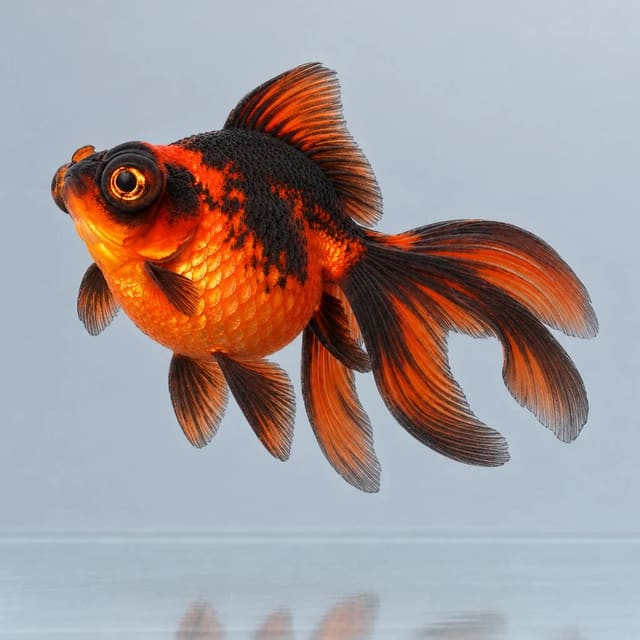
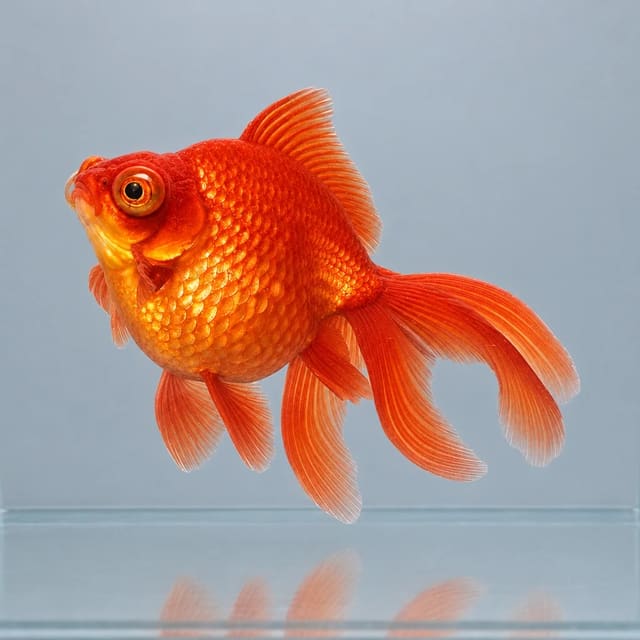
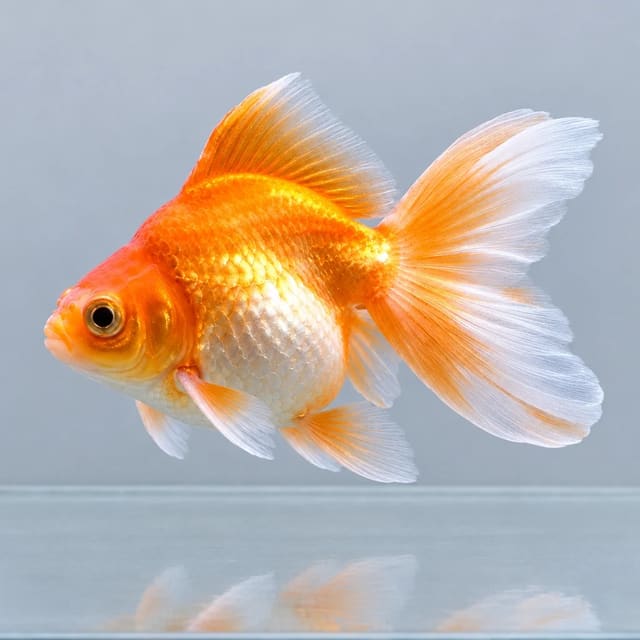
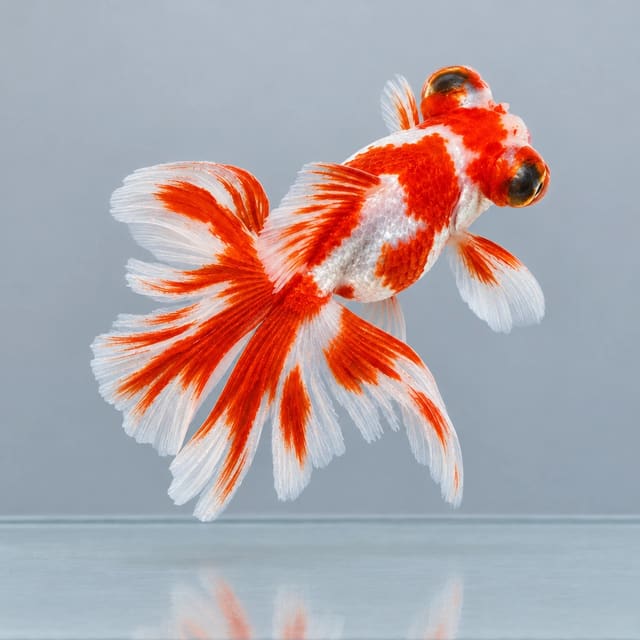
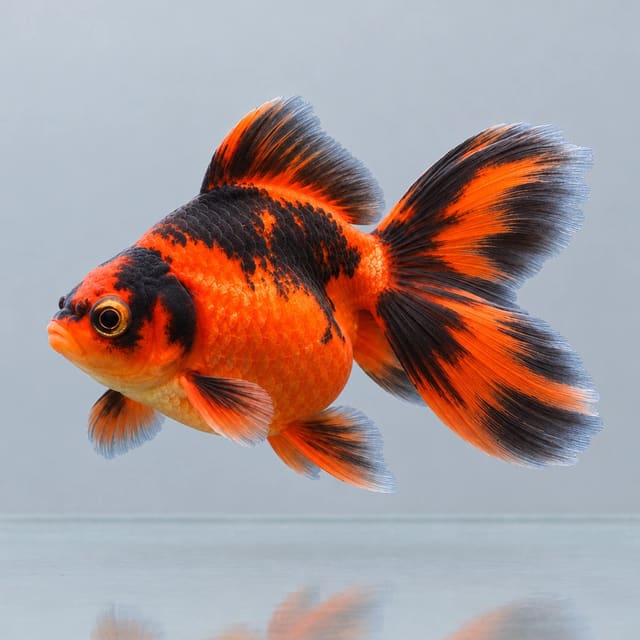
A single-tailed calico goldfish, Carassius auratus, with a blue background patched with red, orange, yellow, brown and violet and spotted with black. The variety was developed in Japan, and the UK societies recognise London and Bristol forms.
OATA puts pond goldfish at about 30 cm at most, and Practical Fishkeeping says single-tailed goldfish can grow to more than 30 cm. Plan for a pond, or a very large aquarium, from the start.
Yes. They are pond goldfish. OATA advises a pond at least 45–60 cm deep, and both OATA and the RSPCA advise keeping a hole in any ice so the surface never seals over.
No. OATA and the RSPCA both advise keeping fast single-tailed goldfish away from slow twin-tailed fancy goldfish, which miss out on food and may have their fins nipped.
A comet is a slim single-tail usually in metallic colours; a shubunkin is calico. The long-tailed calico fish often sold as shubunkins are what specialists call calico comets or American-type shubunkins.
No. OATA gives 4–25°C for goldfish in aquariums and 4–24°C for pond fish, so a heater is not needed. In a pond, a floating device or pond heater is used only to keep a hole in the ice.
A goldfish or pond food once a day, only as much as is eaten in a few minutes. Practical Fishkeeping notes that floating flakes and pellets suit its slim body. Switch to wheatgerm food as the water cools, and below 8°C it may be better not to feed.
OATA reports goldfish living up to 20 years, and the Bristol Aquarists’ Society notes some Bristol shubunkins reaching about 15. FishBase records a maximum reported age of 41 years for the species.
Yes, they can. Practical Fishkeeping notes that shubunkins develop more black with age, and every fish has its own pattern, so the gallery shows the variety rather than your individual fish.
No reviews for this item yet. Bought one? Honest reviews only, good or bad.
What customers say about ordering from us
Easy website plenty of info on fish your buying great to pick a time slot
TRACEY DURRANT · 7 Oct 2026
Got some lovely fish thank you
Kevin Mackie · 7 Oct 2026
Reviews of our shop, collected by Judge.me, an independent third-party review collector. Newest first.
Moved by UK carriers licensed to handle live animals
Hand-packed with oxygen bags, poly box, heat pack
Email photos the same day; an optional unboxing video helps us review problems faster — claim terms apply
Klarna & PayPal Pay in 3 at checkout