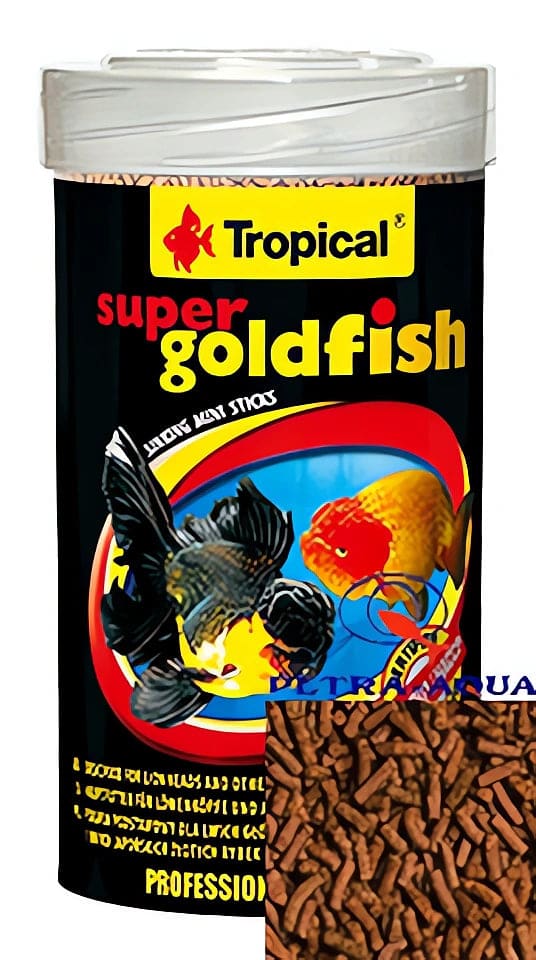
Tropical Super Goldfish Mini Sticks
£4.19

Pond Fish Flake Food offers a balanced, easy-to-feed diet for pond fish and goldfish. Great value for everyday feeding. Order today for UK delivery.
Confirm your email, then we’ll send an availability message for this exact item if it returns within 180 days.
This request is only for this product—no newsletter or other promotions. A mail-provider retry may very rarely duplicate the same availability message. Unconfirmed addresses are removed after 48 hours. See our privacy policy.
Pond Fish Flake Food offers a balanced, easy-to-feed diet for pond fish and goldfish. Great value for everyday feeding. Order today for UK delivery.
Tropical Pond Flakes are a floating pond fish flake food for small to medium pond fish that feed at the surface. Supplied in a practical 500ml tub, these light flakes are ideal for goldfish, young koi, shubunkins, sarasa comets and mixed ornamental pond fish in a garden pond. Where larger sticks and pellets suit bigger mouths, flakes give smaller fish fast, easy access to food and spread widely across the surface so more fish can feed at once. If you have been looking for a dependable everyday staple, this is a specialist pond formula rather than an indoor aquarium flake.
This page answers the questions pond keepers most often ask before buying: what pond fish eat, what food is best for pond fish, how to feed flakes correctly, when to start feeding again in spring, what time of day to feed, and whether flakes are a good choice for pond fish. As goldfish food UK keepers can use through spring and summer, Tropical Pond Flakes support steady feeding, reduce waste, and make it easier to watch your fish closely at the pond edge.
Tropical Pond Flakes sit at the light-feeding end of the pond fish food category. Flakes are easier for smaller mouths to take than sticks, which makes them especially helpful in mixed ponds where not every fish can comfortably swallow thicker floating foods. In everyday fishkeeping they are commonly used as an early-season starter food, a summer staple for smaller fish, or as one part of a mixed feeding routine alongside pond sticks and pellets.
Flake food is often overlooked in outdoor ponds, but it solves a real feeding problem: not every pond fish is large enough to handle sticks well. If you keep juvenile goldfish, smaller comets, or mixed-size fish, pond fish flake food gives broad surface coverage so more fish can feed at the same time. That makes it a smart option for anyone choosing the best pond fish flake food for smaller fish.
Flakes also help you monitor appetite. Because they spread across the surface, you can quickly see which fish are active, which are shy, and whether you are feeding too much. This is useful when you are working out what food is best for pond fish and what to feed fish in a pond during warmer months. For many keepers, flakes are the easiest way to begin a spring pond feeding routine before moving on to larger foods later in the season.
A common buying question is what pond fish flake food is made of. While exact formulas vary by batch and manufacturer update, pond flakes are generally built around fish meal, plant ingredients, cereals, oils, vitamins and mineral supplements designed for omnivorous pond fish. The aim is balance: protein for growth and maintenance, plant matter to support digestion, and added vitamins for routine health.
You may also notice natural variation in flake appearance, with green and yellow tones in the same tub. This usually reflects a blend of different pigment-rich ingredients in the flake mix and does not mean the food is spoiled. For the exact ingredients and analytical constituents of your tub, always check the printed label, as these can be updated by the manufacturer over time.
If you want a broader feeding approach, these flakes can be alternated with larger formats from the Tropical pond food range for fish that need a more substantial bite.
If you want to know how to use pond fish flake food, the rule is simple: feed only what your fish can eat in a few minutes, ideally with all the flakes taken quickly from the surface. Sprinkle a small amount across a wide area rather than dropping one large clump in one spot. This gives timid fish a chance to feed and reduces competition.
To feed flakes to smaller fish, crush larger flakes slightly between your fingers so they are easier for small mouths and juvenile fish to take. If flakes drift to the edge uneaten, reduce the amount next time. Good flake feeding is about observation, not guesswork.
Feed from the same area of the pond each day. Fish soon learn the routine, making it easier to monitor health, count stock, and spot any fish that are hanging back or not feeding normally.
Pond keepers often ask what month to start feeding pond fish and when they can start feeding their pond fish again. In the UK, feeding depends more on water temperature than on the calendar. Most pond fish become properly active again when water temperatures are consistently above about 10C. Below that, digestion slows and heavy feeding can cause health problems.
For a safe spring pond feeding start, begin with tiny portions on mild days and watch whether fish come up confidently. Tropical Pond Flakes are useful here because they are light and easy to portion. During the summer pond feeding season you can increase frequency if fish are active and water quality is stable. In late autumn, reduce feeding as temperatures fall.
Do not feed actively if pond fish are sluggish in very cold water. Uneaten food and poor digestion can both damage water quality and fish health.
The best time to feed is usually during the warmer part of the day, when fish are most active and digestion is strongest. In spring and autumn, late morning or early afternoon is often better than very early morning. In summer, both a morning and an early evening feed work well if oxygen levels are good.
For a simple feeding guide, give one feed daily in cooler active periods and up to two or three smaller feeds in warm summer weather, provided the pond is well filtered and fish clear the food quickly. Small portions at the right time consistently outperform large feeds at random times.
| Time | Food | Amount |
|---|---|---|
| Late morning | Tropical Pond Flakes | Only what fish eat in 2-3 minutes |
| Early evening | Flakes, or flakes mixed with sticks | Small top-up if fish remain active |
Yes, when used correctly. Keepers sometimes worry that pond fish need only large sticks, but flakes are excellent for smaller surface-feeding pond fish and for mixed ponds with varied fish sizes. The key is matching food size to fish size.
Flakes are especially useful as the best flake food for garden pond fish in the UK keeping goldfish and smaller pond species. They are not always the only food you should feed, but they are a very useful staple. In larger ponds with bigger koi, combine them with a more substantial format such as Tropical koi and goldfish sticks so all fish sizes are catered for.
Pond food that sinks, sticks together or clumps is usually caused by moisture, overfeeding, or surface oils gathering food in one area. Flakes should stay available at the surface briefly, but if they absorb water too fast they soften and sink. That does not necessarily mean the food is faulty; it often means too much was added at once.
Food can also drift into marginal plants, skimmer mouths, waterfall splash zones or pond edges. To avoid this, feed away from strong return flow and away from overhanging rockwork. Storing the tub sealed and dry also keeps flakes from clumping and losing texture before you use them.
If you are deciding between flakes and sticks, remember that sticks suit larger mouths while flakes suit smaller fish and lighter feeding. For mixed ponds, rotating flakes with sticks or pellets from the Tropical pond food range can be ideal.
The best candidates are small to medium surface-feeding pond fish: common goldfish, shubunkins, sarasa comets, young koi and mixed ornamental pond fish. Tropical Pond Flakes are especially helpful as pond flakes for goldfish and koi when the koi are still small or the pond holds a range of fish sizes.
For ponds with larger fish, flakes can still be a useful supplementary feed, but they are best paired with a larger format such as Tropical koi and goldfish sticks. This creates a practical pond food mixture that lets small fish feed efficiently while larger fish get a more substantial bite.
Yes, and for many ponds that is the best approach. Mixed ponds often need mixed food sizes: flakes cover small fish and cautious feeders, while sticks and pellets support larger fish and reduce the number of tiny feed particles in the water.
A good routine might be flakes in the morning and sticks later in the day, or flakes during spring and more sticks in high summer as fish grow more active. The right balance comes down to your fish size, their feeding response, and how much surface competition you see.
| Feature | Tropical Pond Flakes | Pond Sticks |
|---|---|---|
| Food size | Small, light floating flakes | Larger floating pieces |
| Best for | Small pond fish and goldfish | Medium to large pond fish |
| Use case | Daily surface feeding and easy portion control | Heavier feeding for larger mouths |
| Ideal season | Spring and summer active feeding | Warm-weather stronger feeding |
The biggest problem is overfeeding. If feeding does not seem to be working, the cause is often that too much food was added for the fish to clear quickly. Leftover flakes break down, cloud the water and add unnecessary waste. The fix is smaller portions and better timing.
The second most common mistake is feeding in unsuitable temperatures. Food given when fish are sluggish in cold water tends to go uneaten, waterlog and sink. Feed only when fish are active, surfacing and able to digest food properly.
Do not throw in large handfuls, feed in very cold water, or leave opened food where damp air can reach it. Moist food clumps, sinks faster, and loses quality more quickly.
Pond fish food is made for fish, not for human or pet consumption. Used normally it is safe to handle, but hands should be washed after feeding and the tub kept sealed and stored away from children and pets. If a dog or cat steals a tiny amount it is usually a matter for observation rather than alarm, but fish food should never be treated as a pet snack. Keep the container dry, closed and stored in a cool cupboard to preserve freshness and prevent contamination.
Tropical Pond Flakes are best used as part of a seasonal feeding strategy. In early spring they are a gentle way to restart feeding. In summer they work as a daily staple for smaller fish, or as one part of a mixed routine. In mixed ponds, many keepers feed flakes first so the small fish get fed, then follow with sticks for the larger fish. A practical combination is Tropical Pond Flakes with a stick or pellet food from the Tropical pond food range for stronger feeders.
The 500ml tub is a sensible size for regular home pond use. It holds enough food for routine feeding without committing you to an oversized bulk container that may sit open too long in a damp shed. For UK pond keepers, this product is easy to store, easy to portion and easy to combine with other foods in the Tropical pond range, making it a smart choice over a generic indoor flake food when you want a specialist pond formula for active-season feeding.
Build a more flexible feeding routine with the wider Tropical pond food range for varied particle sizes, or step up to Tropical koi and goldfish sticks for bigger goldfish and koi in mixed ponds where flakes mainly serve the smaller fish.
No reviews for this item yet. Bought one? Honest reviews only, good or bad.
What customers say about ordering from us
I have a small group of long finned mountain minnows. So was delighted to be able to order ten of this variety to increase the genetics in my tank . The ones I recieved are healthy but it’s to early to give a verdict on wether they are of a long finned type since they are small currently.
Gordon Walker · 23 Sept 2026
100% success travel and "installation". Pleased with quality of purchase. The Siamese fighter a bit "shy" so have not yet seen him at his best yet but looking good. Happy customer. GG
George E Garratt · 21 Sept 2026
Reviews of our shop, collected by Judge.me, an independent third-party review collector. Newest first.