Easy
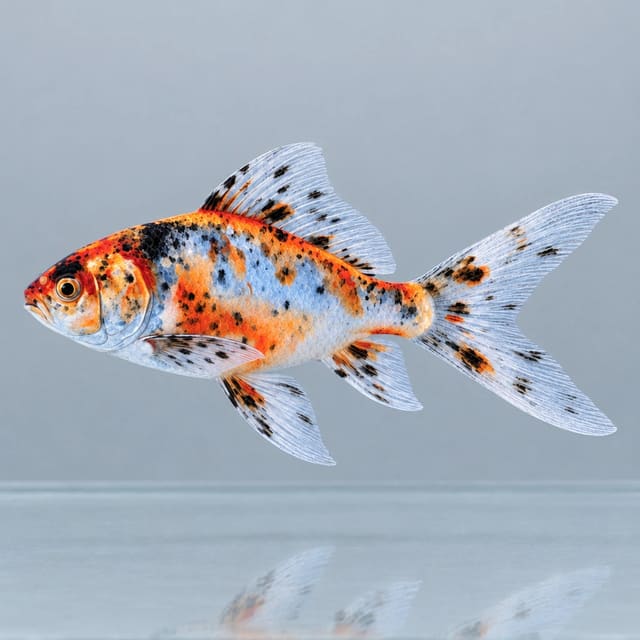
Shubunkin Goldfish (Carassius auratus)
4–25°C · pH 6–8 · 100L
£6.49
Assorted Pond Goldfish are hardy single-tailed goldfish (Carassius auratus) in mixed colours, such as red and yellow common goldfish, comets, sarasa comets and shubunkins, for outdoor garden ponds. They commonly grow to about 30 cm and need a filtered pond at least 45–60 cm deep. Sold individually in four sizes from 2–3 in to 5–6 in.
Adult size is the maximum length this species reaches at full maturity (scientific sources). The livestock you receive will be younger and smaller — pick a size above for the actual shipping size. Product-photo provenance and any image-specific limitations are stated on the listing.
Carassius auratus
Assorted Pond Goldfish are hardy single-tailed goldfish (Carassius auratus) in mixed colours, such as red and yellow common goldfish, comets, sarasa comets and shubunkins, for outdoor garden ponds. They commonly grow to about 30 cm and need a filtered pond at least 45–60 cm deep. Sold individually in four sizes from 2–3 in to 5–6 in.
Adult size is the maximum length this species reaches at full maturity (scientific sources). The livestock you receive will be younger and smaller — pick a size above for the actual shipping size. Product-photo provenance and any image-specific limitations are stated on the listing.
Read the full care guidance when planning conditions for your aquarium.
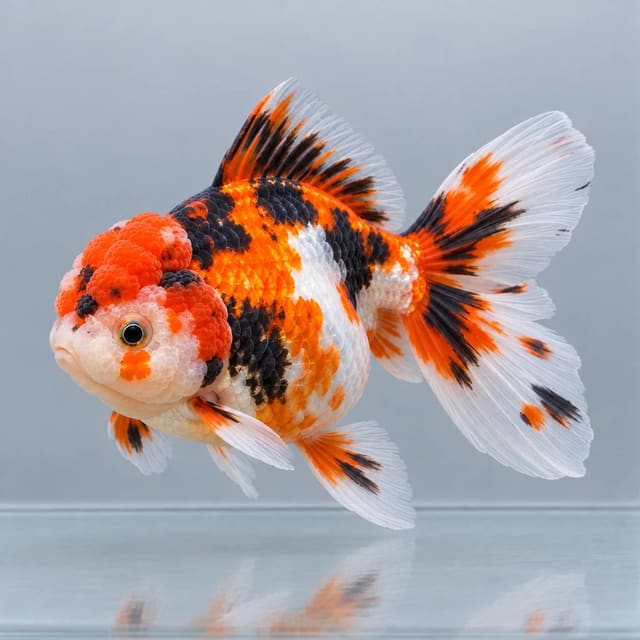
Assorted Pond Goldfish are the classic fish for a UK garden pond: hardy, single-tailed goldfish in a mix of colours, from bright red and orange to yellow, red-and-white and the speckled calico shubunkin. All are Carassius auratus, the goldfish, and all have the long body and single tail that make pond goldfish fast, robust swimmers. OATA's guide to pond fish describes goldfish as staying small enough to suit most pond systems, with the most common maximum length up to 30 cm, and names shubunkins, sarasa and red comets among the popular colour varieties. With good water, it adds, goldfish have been reported living up to 20 years.
The goldfish was domesticated in East Asia. FishBase gives its native range as China and Japan, describes the wild fish as living in slow-flowing or still rivers, lakes, ponds and ditches, often well vegetated, and notes that it lives better in cold water. That background explains why a planted garden pond suits it so well.
| Goldfish | How to recognise it |
|---|---|
| Common goldfish | Stout, thick-set body with a single tail; red, orange or yellow |
| Comet | Slimmer body and a long, deeply forked single tail; very active |
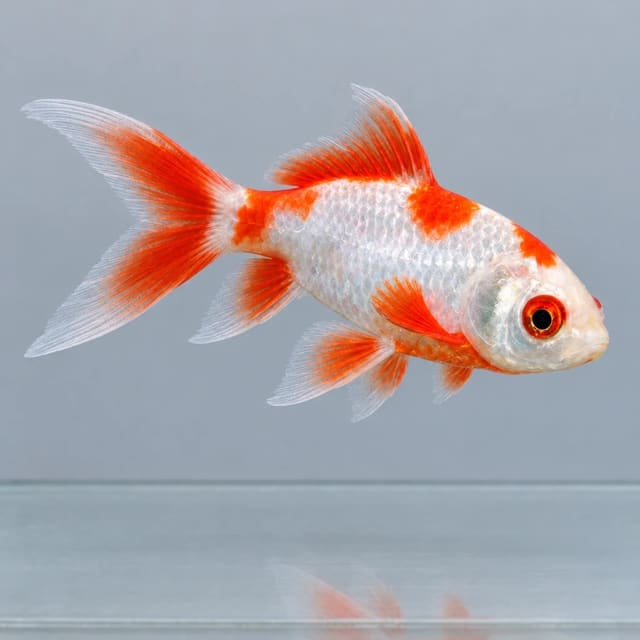
| Sarasa comet | A comet in red and white |
| Shubunkin | Pearly (nacreous) scales in a calico of red, white, blue, grey and black |
The comet and sarasa descriptions come from Wikipedia's account of the comet, which describes it as more active than most goldfish and well suited to ponds; the shubunkin description comes from Wikipedia's account of the shubunkin, a Japanese single-tailed variety in which blue is the most prized colour. Our comet goldfish guide covers single-tailed goldfish in more detail. Browse our goldfish and coldwater fish, the pond and coldwater goldfish range, the wider coldwater fish category and our coldwater fish buying guide to plan your pond.
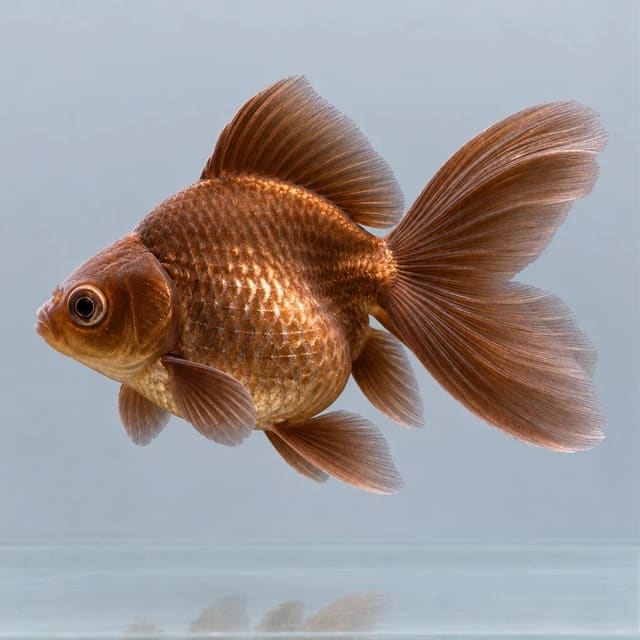
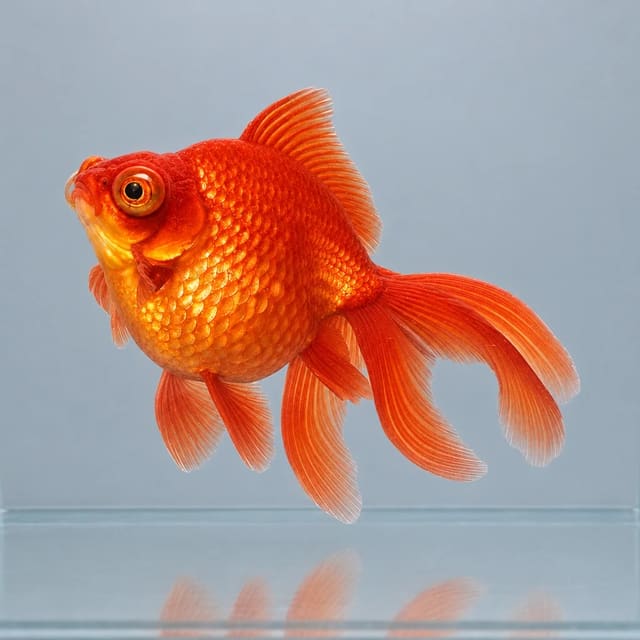
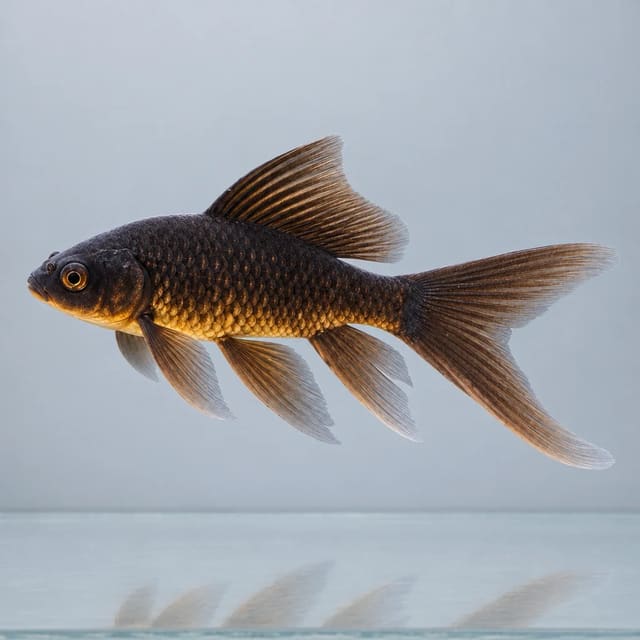
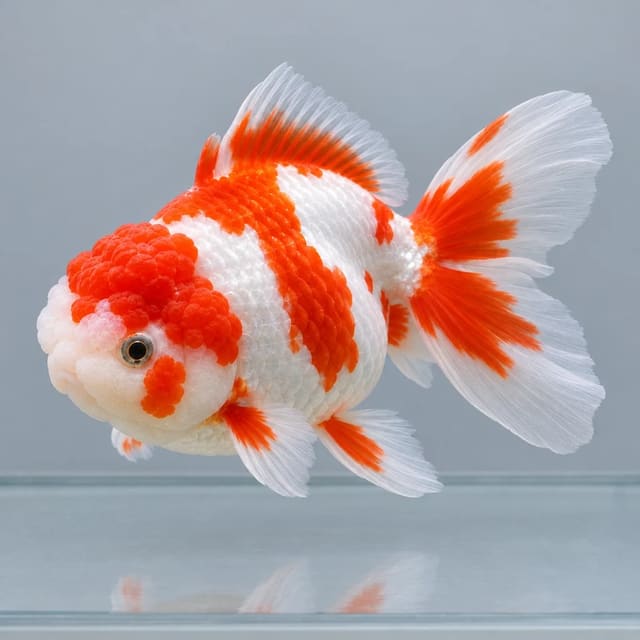
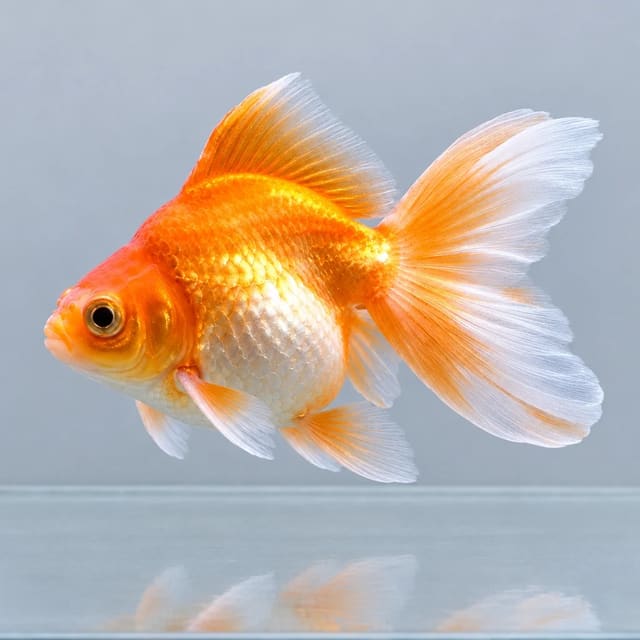
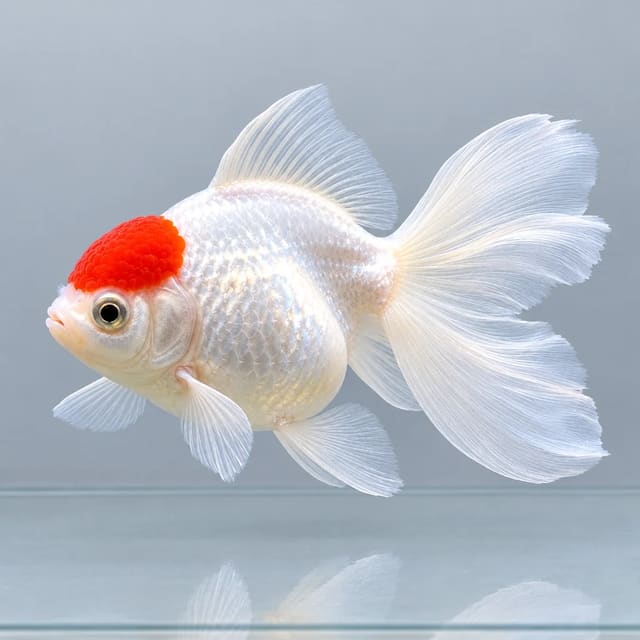
Each purchase is one live pond goldfish in the size you choose. Sizes are given in inches, as is usual for pond fish; the centimetre figures are approximate conversions. Colours are assorted: the fish you receive may be any of the forms in the mix, and the photograph shows one example, a red common goldfish. Sex is not chosen.
| Size option | About | Good for |
|---|---|---|
| 2–3 in | 5–7.5 cm | Stocking a new pond economically and growing fish on |
| 3–4 in | 7.5–10 cm | A good all-round size for most garden ponds |
| 4–5 in | 10–13 cm | Fish whose colour and shape are already well developed |
| 5–6 in | 13–15 cm | Instant impact in an established, mature pond |
Read our delivery information before you order, and see the next section if you are buying in late autumn or winter.
OATA's guide to garden ponds advises avoiding introducing new fish into a pond during the winter months, when their immune systems are inactive and the pond can be far colder than the water the fish arrive in. It adds that most responsible retailers will not sell pond fish for outdoor ponds in winter. Goldfish are hardy once settled, but a new arrival dropped into near-freezing water is under real stress.
| When you buy | What to do |
|---|---|
| Late spring to early autumn | Add them to a mature, filtered pond, a few at a time |
| Late autumn and winter | House them indoors in a filtered coldwater aquarium until spring |
| Spring | Move them out once the pond has warmed and its fish are feeding again |
For an indoor stay, OATA's goldfish aquarium guide recommends at least 100 litres for one adult goldfish plus 50 litres for each extra adult, and notes that single-tailed goldfish can be transferred to a pond later. Our tank volume calculator checks an aquarium's real volume.
OATA gives the most common maximum for pond goldfish as up to 30 cm. FishBase records 48 cm total length as the species' maximum and Wikipedia gives shubunkins 23–46 cm, but those are exceptional; plan for 30 cm fish that live many years. OATA recommends fish ponds of at least 45–60 cm deep, and its pond-building guide says at least 60 cm in some parts, because depth gives a cool zone in hot spells and a warmer layer at the bottom in freezing winters.
| Requirement | OATA guidance |
|---|---|
| Depth | At least 45–60 cm, with shallower ledges for plants |
| Sunlight | About 4–6 hours a day, with some shade |
| Position | Level, away from overhanging trees, with a safe power supply |
| Filtration | Essential for any pond holding fish |
| Circulation | A pump or fountain to move and oxygenate the water |
| Plants | Marginal, submerged and floating plants for oxygen, cover and waste removal |
| Netting | Against birds and other predators, and against jumping in the first weeks |
OATA's garden pond guide warns against two common mistakes. Even a small amount of fresh mortar from paving falling into the pond can make the water dangerously alkaline, and limestone rocks can break up in frost. Once filled, the water must be dechlorinated, either by standing for at least 24 hours or with a dechlorinator, and the equipment should run for at least 24 hours so you can check for leaks.
The process is the same one that matures an aquarium filter; our article on the nitrogen cycle explained and our guide to understanding aquarium filtration explain the biology.
Ponds change with the weather, so OATA stresses frequent testing to catch problems early. Its pond fish guide gives the values below. The two OATA sheets differ on nitrate: the pond fish guide says no more than 20 mg/l above tap water, while the garden pond guide allows up to 50 mg/l above tap water for coldwater fish. The lower figure is the safer target.
| Reading | OATA guideline |
|---|---|
| Temperature | 4–24°C |
| pH | 6.5–8.5 |
| General hardness | 8–18 dGH (medium-hard) |
| Carbonate hardness | 5–15 dKH |
| Ammonia | 0 mg/l |
| Nitrite | 0 mg/l |
| Nitrate | Ideally no more than 20 mg/l above your tap water |
OATA notes that nitrate and phosphate feed blanket weed and green water, so keeping them low also keeps the pond clear. Treat any tap water you add with a conditioner, check your supply with our water matcher, and read our water chemistry guide for what each reading means.
OATA explains that pond fish appetite rises and falls with water temperature. In summer a higher-protein food builds condition for winter; as the water cools, switch to a lower-protein, more digestible food such as wheatgerm; and below about 8°C it may be better not to feed at all. When the water warms in spring, start feeding again slowly, because the filter bacteria also need time to recover. OATA adds that goldfish usually prefer a balanced floating food, and that colour-enhancing foods can bring out their colour.
| Pond conditions | Food |
|---|---|
| Warm summer water | A balanced floating staple such as Tropical Pond Sticks Mixed or Tropical Pond Flakes, with Koi & Goldfish Colour Sticks for colour |
| Cooling water in autumn and early spring | An easily digested wheatgerm food such as Koi & Goldfish Wheat Germ & Garlic, or the lighter Tropical Pond Sticks Light |
| Below about 8°C | Little or no food, as OATA advises |
Whatever the season, feed once a day only what the fish eat within a few minutes, and avoid overfeeding in very warm summers. Uneaten food breaks down and releases toxic waste.
OATA's garden pond guide describes how to release new pond fish. Keep the bag dark and float it in the pond for at least 20 minutes so its temperature gradually matches the pond, covering it with a towel if the sun could overheat it. Then open the bag and add some pond water to help the fish adjust to any difference in water chemistry, wait a further 10 minutes, and release the fish or net them gently into the pond. Our guide on how to acclimatise new fish shows the same principles for aquariums.
| When | What to do |
|---|---|
| Before arrival | Test the water: ammonia and nitrite must read zero |
| Arrival | Float the bag in shade, mix in pond water, then release |
| First two weeks | Keep a net over the pond; OATA notes new fish are more likely to jump |
| Days 2–14 | Watch swimming, breathing and feeding; test the water weekly |
A pond needs a little seasonal care. OATA advises removing dead leaves and trimming marginal plants as winter sets in, because rotting plants release toxic gases into the water, and using a pond heater or a floating device so the surface never seals over with ice. An autumn cover net keeps leaves out. In spring, watch closely for disease as the water warms, because fish immune systems are weakened after the cold months.
| Season | Job |
|---|---|
| Autumn | Net against falling leaves; switch to wheatgerm food as the water cools |
| Winter | Keep a hole in the ice; stop feeding below about 8°C; fit heavy mesh if otters are a risk |
| Spring | Restart feeding slowly; watch for disease; replace the UV bulb if fitted, normally once a year |
| Summer | Higher-protein food; test the water weekly; avoid overfeeding in hot spells |
Herons and otters take pond fish. OATA suggests netting with a 15–100 mm mesh held about 30 cm above the water to deter herons, and heavy-gauge mesh rather than ordinary pond netting against otters in winter. Otters are protected, and it is an offence to disturb them at a place of rest or shelter.
OATA describes a healthy fish as having clear, bright eyes, undamaged fins, intact scales, no ulcers or lumps, normal swimming and steady breathing. Watch for fish hanging at the surface or sitting on the bottom, colour much darker or paler than normal, hiding, faster or slower breathing, white spots or fluffy growths, weight loss and loss of appetite.
| You notice | Do this |
|---|---|
| Fish gasping at the surface | Test ammonia and nitrite, increase aeration and check the pump |
| White spots on body or fins | See our white spot guide |
| Frayed or reddened fins | Test the water and read our fin rot guide |
| Fish missing after a few days | Look for signs of herons or other predators and improve netting |
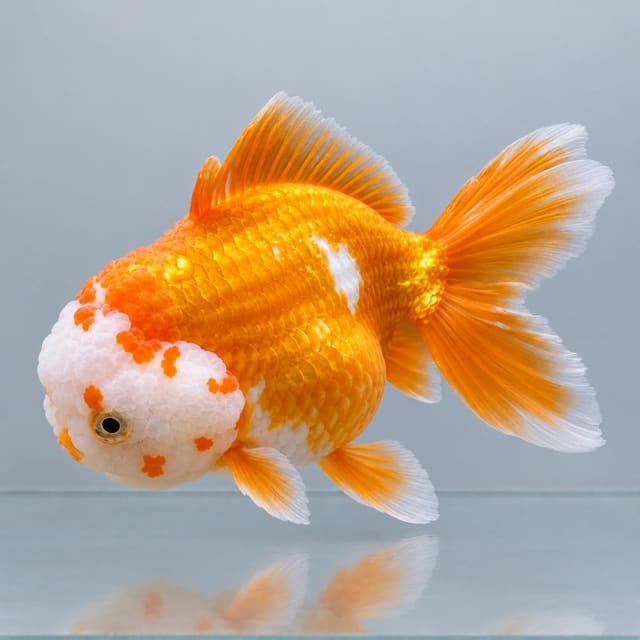
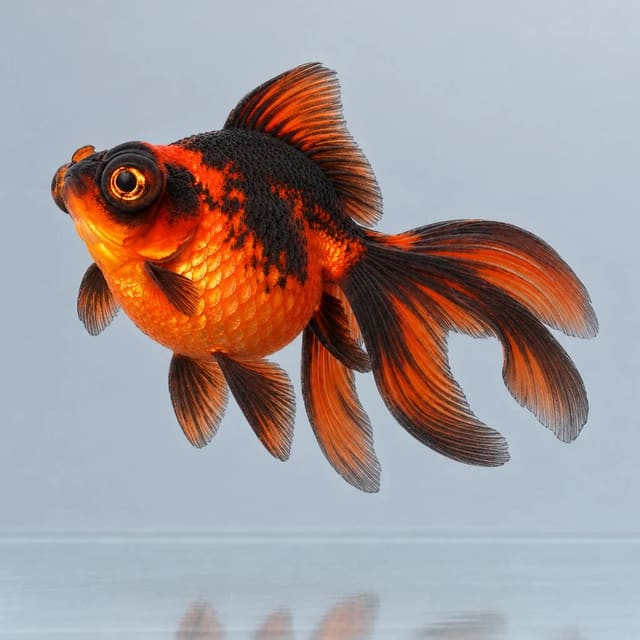
OATA says most pond fish are compatible with each other but may need slightly different conditions. Goldfish and rudd suit most smaller ponds, while koi, tench and orfe grow larger and need ponds of about 4,500 litres or more; orfe should be kept in groups of four or five. Sturgeon will not thrive in the slow-moving, nutrient-rich conditions goldfish are kept in. Keep fancy goldfish out of the pond: OATA's fancy goldfish guide advises against mixing common goldfish with fancy varieties, which are slower and lose out at feeding time.
| Suits | Avoid |
|---|---|
| Other single-tailed goldfish: comets, shubunkins, wakin | Fancy goldfish such as fantails, orandas and moors |
| Rudd in smaller ponds | Sturgeon in an ordinary goldfish pond |
| Koi, orfe and tench in ponds of 4,500 litres or more | Tropical fish of any kind |
Other pond goldfish in our range include the Wakin Goldfish, Bronzed Comet Goldfish, Shubunkin Goldfish and Canary Yellow Goldfish. For a larger pond, see the Grade A Premium Koi Mix and Banana Koi, our koi and carp category and our other pond fish. Our tank mates tool can help check a mix.
OATA notes that goldfish are the pond fish most likely to breed. When there are more adult males than females and the water warms, spawning can happen on its own. FishBase adds that cold winter temperatures are needed for the eggs to develop properly, that goldfish spawn in shallow, weedy water, and that the sticky eggs attach to plants. OATA warns that goldfish are poor parents that eat their eggs and fry, so a shallow, heavily planted area gives the young their best chance.
FishBase lists the goldfish as a potential pest, introduced around the world with reported harm to native wildlife. Never release goldfish into rivers, lakes, canals or wild ponds, and never move them from your pond into the countryside. If you need to rehome fish, contact a retailer, a club or another pond keeper.
Hardy single-tailed pond goldfish in mixed colours, such as red, orange and yellow common goldfish, comets, sarasa comets and shubunkins. The fish you receive may be any of these, and the photograph shows one example, a red common goldfish.
OATA says goldfish in ponds most commonly reach up to 30 cm. FishBase records a maximum of 48 cm total length, but that is exceptional; plan the pond for 30 cm fish.
OATA advises against adding new fish to a pond in the winter months, when their immune systems are inactive and pond temperatures can differ sharply from the water they travelled in. Keep winter purchases indoors in a coldwater aquarium and move them out once the pond has warmed in spring.
OATA recommends at least 45–60 cm for a fish pond, and its pond-building guide says at least 60 cm in some parts. Depth keeps a cool zone in summer and a warmer area at the bottom in freezing weather.
OATA says it is not possible to give an exact number, because it depends on the fish, the filter and the pond. Stock lightly and gradually, never as heavily as a retailer's holding ponds, and let the filter catch up after each addition.
Feed less as the water cools, switching to an easily digested food such as wheatgerm. OATA says that below about 8°C it may be better not to feed at all, and feeding should restart slowly in spring.
Not in the same water. OATA advises against keeping common goldfish with fancy goldfish, because the single-tails swim faster, take the food and may nip fancy fins. Fancy goldfish are best kept indoors.
Yes, as long as the aquarium is big enough: OATA recommends at least 100 litres for one adult goldfish plus 50 litres for each extra adult, and notes goldfish commonly reach up to 25 cm in aquariums. Single-tailed goldfish can move to a pond later.
One live goldfish in the size you choose: 2–3 in, 3–4 in, 4–5 in or 5–6 in. Colour is assorted and sex is not chosen.
No reviews for this item yet. Bought one? Honest reviews only, good or bad.
What customers say about ordering from us
Easy website plenty of info on fish your buying great to pick a time slot
TRACEY DURRANT · 7 Oct 2026
Got some lovely fish thank you
Kevin Mackie · 7 Oct 2026
Reviews of our shop, collected by Judge.me, an independent third-party review collector. Newest first.
Moved by UK carriers licensed to handle live animals
Hand-packed with oxygen bags, poly box, heat pack
Email photos the same day; an optional unboxing video helps us review problems faster — claim terms apply
Klarna & PayPal Pay in 3 at checkout