Moderate
Ellioti Cichlid (Thorichthys ellioti)
25–27°C · pH 7–8
£6.49
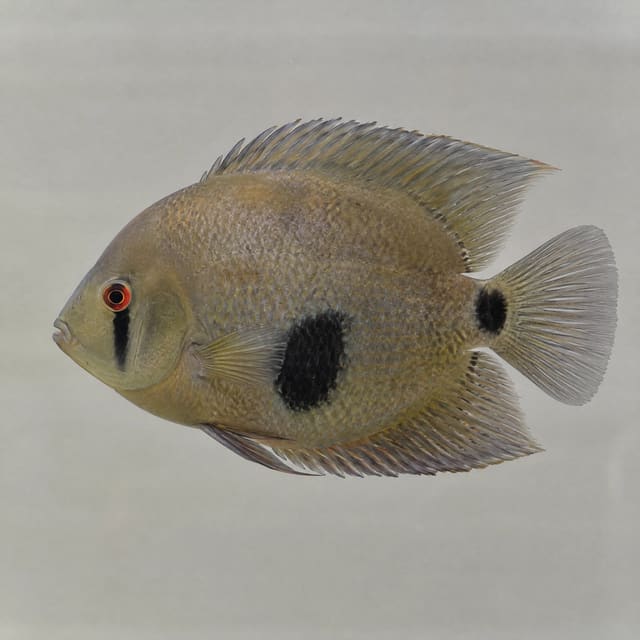
The Gold Flash Cichlid (Thorichthys aureus), also sold as the Blue Flash or Aureus Cichlid, is a Central American relative of the Firemouth that grows to about 15 cm. It sifts soft sand for food, settles arguments by flaring its gill covers and suits a 120 cm or larger aquarium with warm, alkaline water. Sold individually as one live fish.
Thorichthys aureus
Save when buying multiple fish. Each quantity is one fish; sex and pair formation are not guaranteed unless the selected variant explicitly states them.
The Gold Flash Cichlid (Thorichthys aureus), also sold as the Blue Flash or Aureus Cichlid, is a Central American relative of the Firemouth that grows to about 15 cm. It sifts soft sand for food, settles arguments by flaring its gill covers and suits a 120 cm or larger aquarium with warm, alkaline water. Sold individually as one live fish.
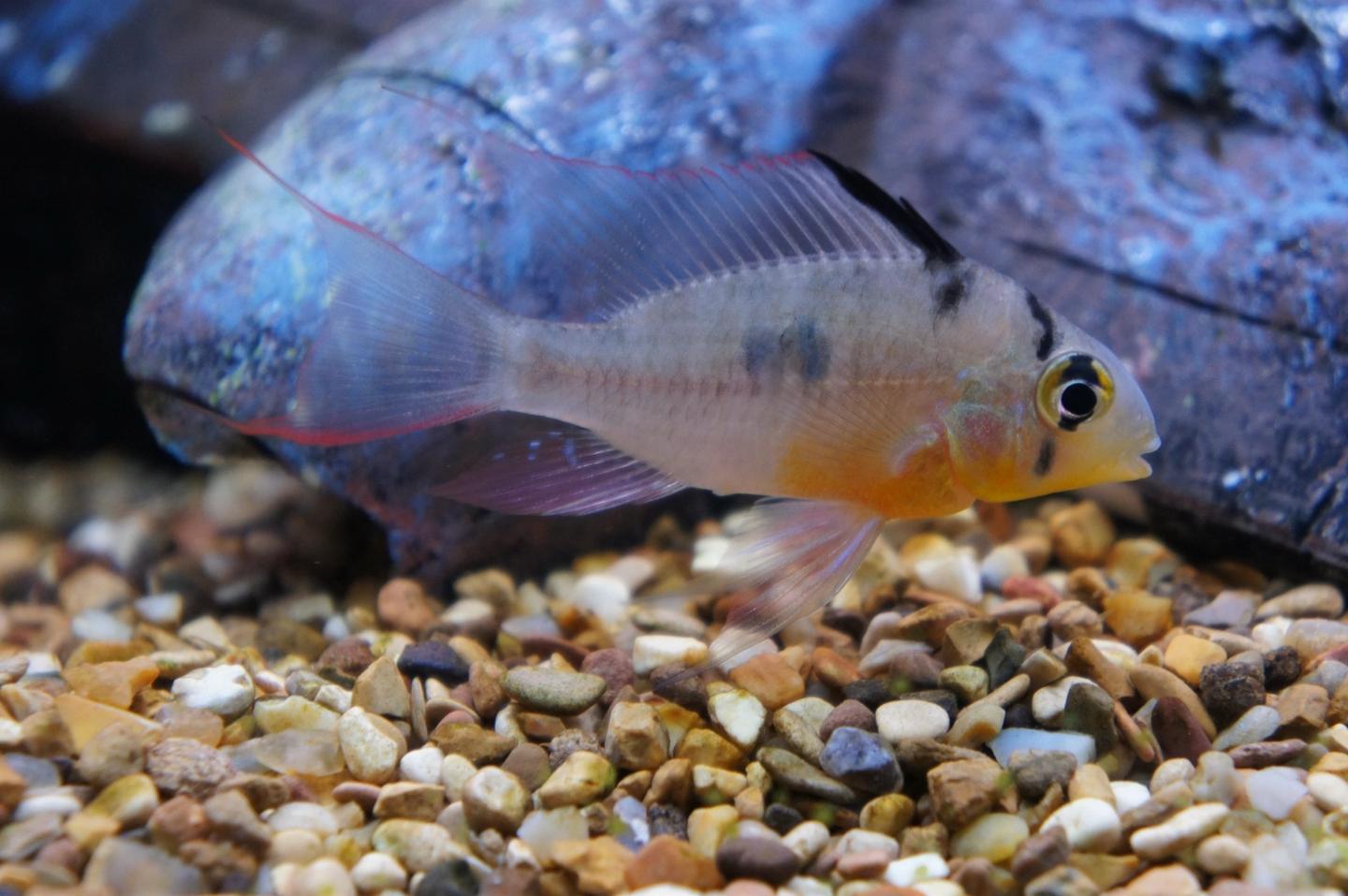
Cichlids are a family of roughly 1,800 accepted species, not one care type. Before buying, identify the exact species and source, then compare adult measurement, usable tank dimensions, social system, territory, tested water, diet and an exit plan. No family-wide minimum tank, water range or tank-mate list is safe.
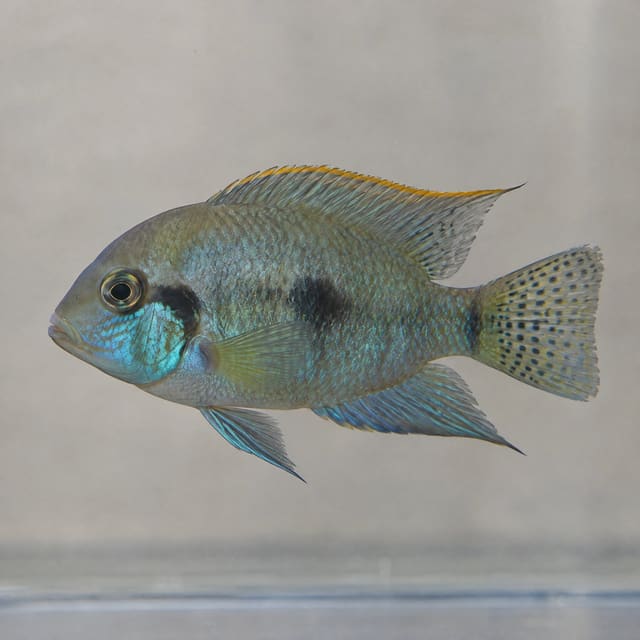
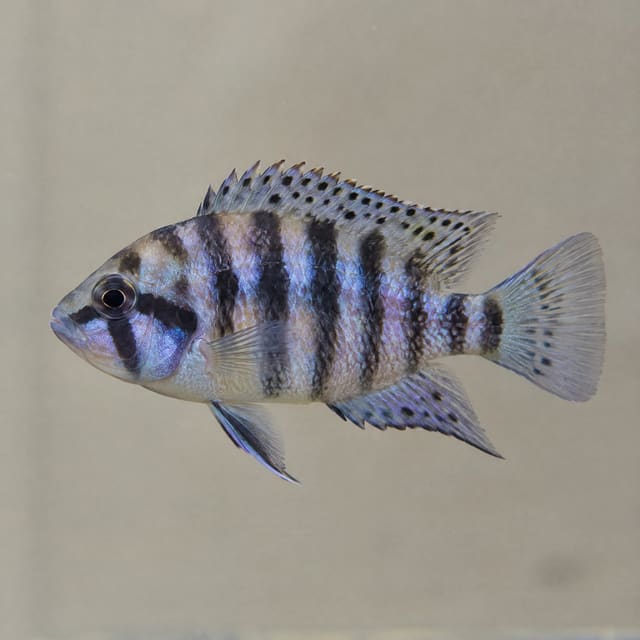
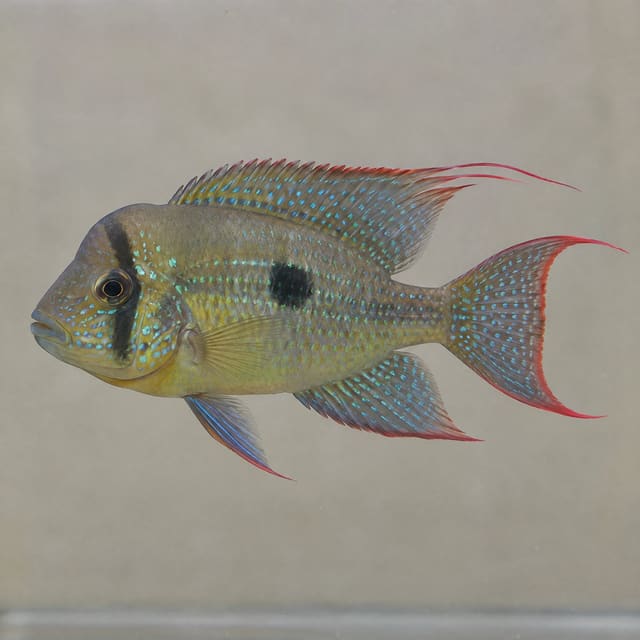
The Gold Flash Cichlid (Thorichthys aureus) is a medium-sized Central American cichlid and a close relative of the Firemouth. The Latin name aureus means golden, and adults have warm gold to olive flanks, a round black spot in the middle of the body, an orange-red throat speckled with turquoise, and long fins edged in red. It is a sand-sifter by nature, a fish you watch working through the substrate all day, and a good choice if you like Firemouths but want something less common.
All nine species of Thorichthys listed on Wikipedia stay under 17 cm standard length. They have pointed heads, often a large dark spot or a dark stripe on the body, and they feed mainly on invertebrates and detritus taken from the bottom. Browse our Thorichthys cichlids to compare the genus side by side.
| Name | Where you will see it |
|---|---|
| Gold Flash Cichlid | UK trade name, used for this listing |
| Blue Flash | The common name on FishBase and in many reference books |
| Aureus or Aureum Cichlid, Golden Cichlid | Shop labels in the UK and Europe |
| Thorichthys aureus (Günther, 1862) | The current scientific name |
| Heros aureus, Cichlasoma aureum | Older names in books and on import lists |
Albert Günther described the species in 1862 as Heros aureus, from a single fish collected at Lake Izabal in Guatemala, according to Eschmeyer's Catalog of Fishes. While it sat in Cichlasoma the name became Cichlasoma aureum, which is why "aureum" still appears on labels. Aquarium Glaser records the first imports in 1911, more than 20 years before the Firemouth, yet it never became as popular.
One purchase supplies one live Gold Flash Cichlid. The size option is "Standard": the fish is sent at the size currently available, which is well below adult size. Sex is not chosen or guaranteed, because young fish are hard to sex.
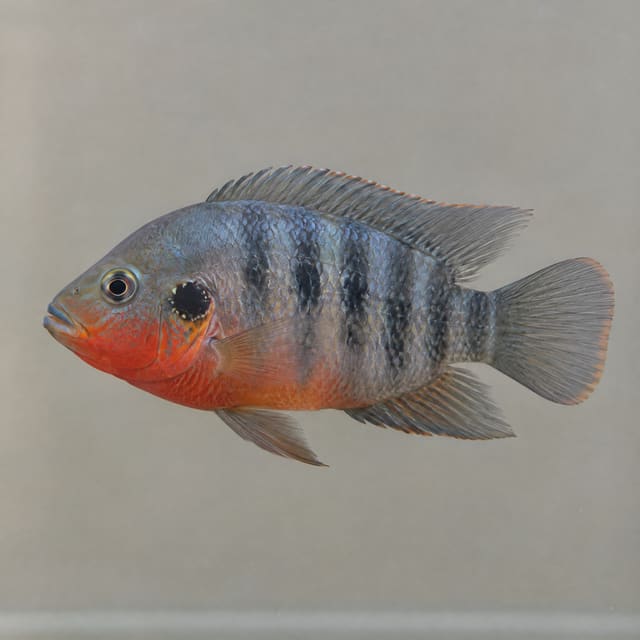
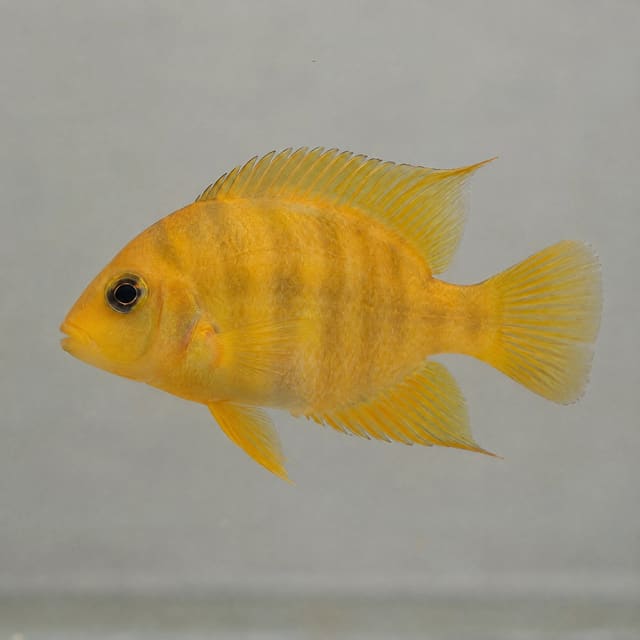
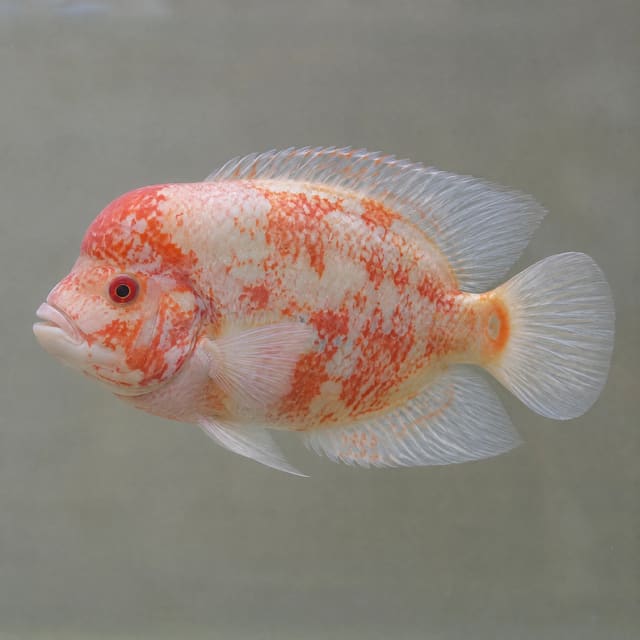
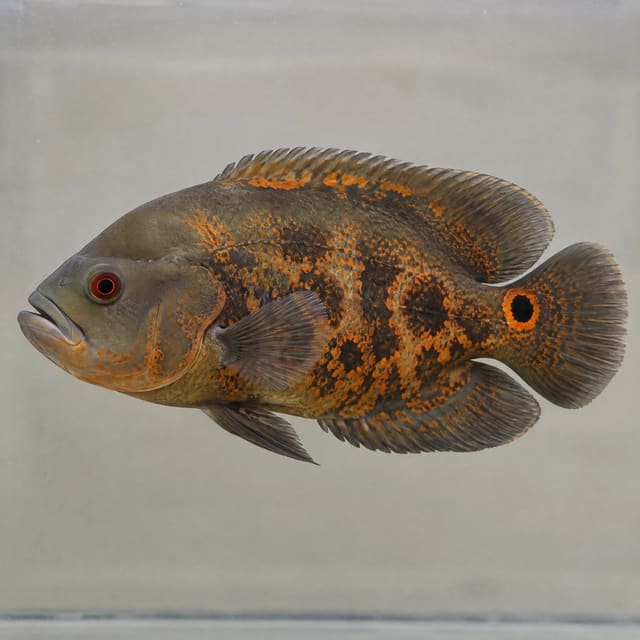
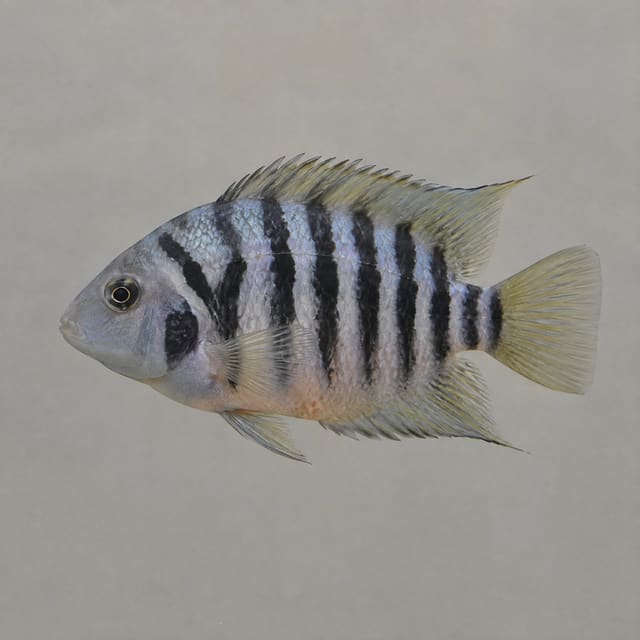
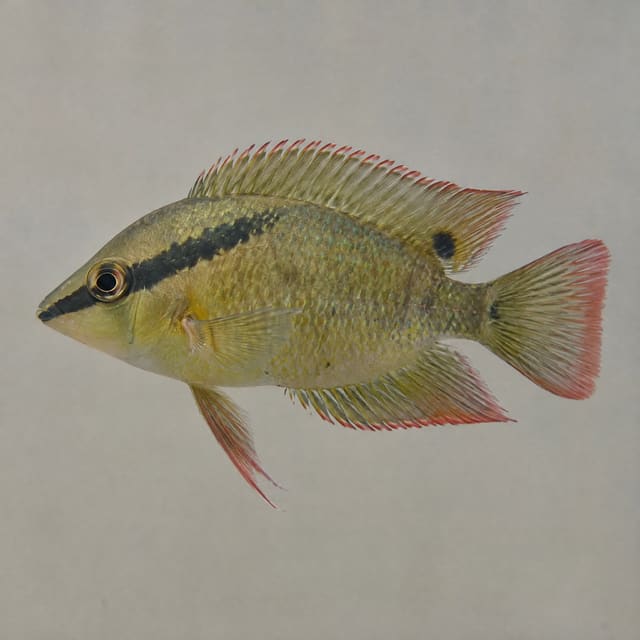
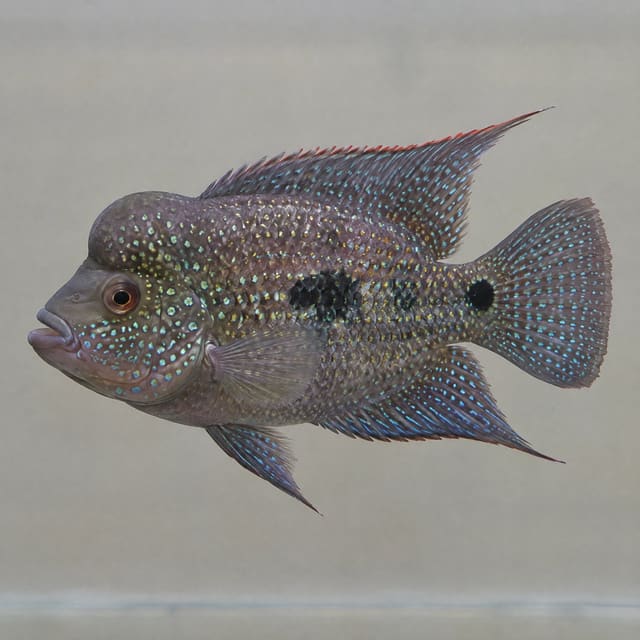
Expect a young fish to look plainer than the pictures. Aquarium Glaser notes that this species stays pastel coloured until it reaches about 10 cm, while the Firemouth colours up much earlier. The gold body, black flank spot and red throat strengthen as the fish matures, settles and starts to display. The photographs show the type of fish, not the individual you will receive.
Check our delivery and Live Arrival Guarantee information before you order, and have the aquarium matured and at temperature before the fish arrives.
FishBase gives a maximum of 15.0 cm standard length (measured from the snout to the base of the tail), and the Fishkeeper profile also gives 15 cm. Males usually grow larger than females. Plan for a deep-bodied fish of that size plus its tail, not for the size that arrives.
No tank size is published for this species. For the closely related Firemouth, which reaches 120 mm standard length, Seriously Fish gives a base of 120 × 30 cm (about 108 litres) for a single pair and says it does better in larger tanks. OATA advises at least 120 litres for a pair of American cichlids under 15 cm and at least 300 litres for species over 15 cm. The Gold Flash sits on that line, so we treat 120 cm as the floor for a young pair and recommend working towards 300 litres for adults or a group.
In the wild this fish lives in warm lakes and lagoons but prefers the lower and middle reaches of rivers, according to FishBase. Thorichthys feed by taking mouthfuls of substrate and sifting out food, then pushing the sand back out through the gills. That makes the floor the most important part of the aquarium.
The Fishkeeper profile recommends fine, soft sand, because sharp sand damages the gills of a fish that sifts all day. Add driftwood and smooth rocks to form caves and shade, and keep open swimming space along the front. Wild waters are often slightly murky with little vegetation, so a dense plant layout is not needed.
| Area | Purpose |
|---|---|
| Open soft sand at the front | Feeding ground for sifting, easy to siphon |
| Flat stones or slate in sheltered spots | Spawning sites; a pair cleans one before laying |
| Driftwood and smooth rock caves | Shade, cover and visual barriers between pairs |
| Robust plants on wood or in pots | Green without roots in the sifting zone |
| Dried leaves such as Indian almond | Natural cover and something to pick through |
Bed every rock directly on the glass before the sand goes in, so sifting cannot undermine it. Seriously Fish adds that ceramic pots and plastic pipe work as well as natural decor, provided there is enough cover for each fish.
The published ranges differ a little. FishBase gives 24–28°C, a pH of 7.5 upwards and a hardness of 2–15 dH. The Fishkeeper profile gives 24–30°C, pH 7.0–8.0 and a carbonate hardness of 6–20 degrees. OATA's general figures for American cichlids are 22–27°C and pH 6.5–8.0. We suggest the overlap below, which suits all three.
| Reading | Our target | Why |
|---|---|---|
| Temperature | 24–27°C | Inside FishBase, Fishkeeper and OATA |
| pH | 7.5–8.0 | FishBase gives 7.5 upwards; Fishkeeper tops out at 8.0 |
| General hardness | 5–15 dGH | Inside the FishBase range of 2–15 |
| Ammonia and nitrite | 0 mg/l | OATA water-quality limit |
| Nitrate | No more than 20 mg/l above tap water | OATA limit; Fishkeeper warns high nitrate brings health problems |
Much of southern and eastern England has hard, alkaline tap water that suits this fish once it is treated with a conditioner. Supplies in Scotland, Wales and parts of northern and south-west England are often softer; there, a little crushed coral or limestone in the filter raises pH and hardness gradually. Check your supply on your water company's postcode checker, compare it with our water matcher, and read our water chemistry guide to understand each number.
A fish that stirs up sand all day sends fine particles into the water, and Seriously Fish stresses that water quality is of the utmost importance for Thorichthys, which should never go into an immature aquarium. Choose a filter rated well above your tank volume, with mechanical media to catch suspended sand and plenty of biological media. Our guide to aquarium filtration explains the choices.
Add fish gradually. OATA explains that the filter bacteria must grow every time stocking and feeding increase, and stocking too fast causes "new tank syndrome".
Wild Thorichthys eat small crustaceans, other invertebrates, molluscs and detritus sifted from the bottom, as Seriously Fish describes for the Firemouth. In the aquarium the Gold Flash is an omnivore. The Fishkeeper profile recommends flake, granules, cichlid pellets and frozen foods, kept varied, and suggests small sinking pellets so that food reaches the sand where the fish naturally feeds.
Watch the belly. A well-fed fish is rounded but not swollen. Overfeeding fouls the sand and raises nitrate, which the Fishkeeper profile links to health problems in this species.
Only add the fish to a filtered aquarium that has run long enough to process waste, with ammonia and nitrite at zero. OATA describes the floating-bag method: switch off the aquarium lights, float the sealed bag for about 10 minutes to match temperature, add small amounts of tank water over up to 20 minutes, then release the fish with as little bag water as possible. Our guide on how to acclimatise new fish shows each step.
| Checkpoint | What to do |
|---|---|
| Before arrival | Test the water, set 24–27°C and arrange caves and open sand |
| Arrival day | Acclimatise with lights off; no food until the next day |
| Days 2–3 | Offer a small sinking portion and watch it start to sift |
| Days 4–7 | Check for clamped fins, rapid breathing or bullying by tank mates |
| End of week | Retest ammonia, nitrite and nitrate and make the usual water change |
The Fishkeeper profile describes the Gold Flash as shy and peaceful outside breeding. It settles most disputes by bluff, flaring its gill covers, which carry eye-like spots, rather than by fighting. When a pair spawns it becomes territorial and defends its patch firmly. Aquarium Glaser notes that the Firemouth is on average much more aggressive, and calls the Gold Flash a fish for connoisseurs.
| Suits | Avoid |
|---|---|
| Robust livebearers such as the Green Swordtail and the Red-Tailed Goodeid | Small fish that fit in its mouth, such as neon tetras |
| Central American characins such as the Blind Cave Tetra | Large, aggressive cichlids that overpower a bluffer |
| Rainbowfish such as Boesemann's Rainbowfish | Dwarf shrimp, which become food |
| Calm cichlids such as the Rainbow Cichlid and Blue-Eyed Cichlid in a big tank | Other floor-dwelling cichlids crowded into a small tank |
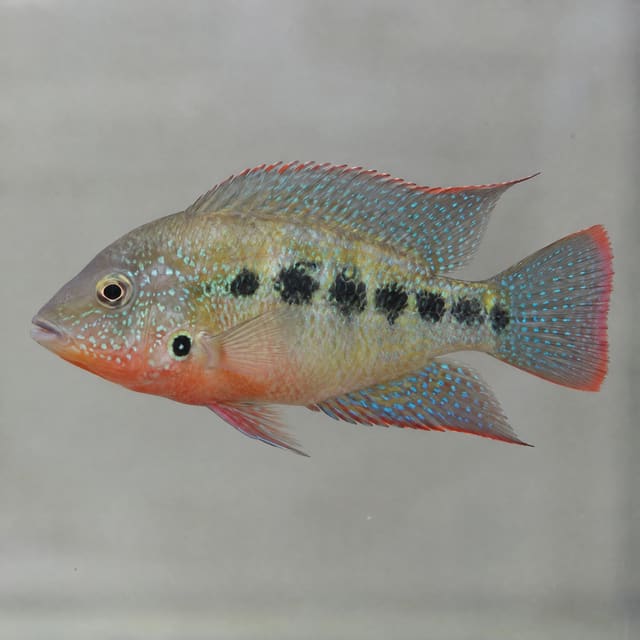
The Fishkeeper profile suggests robust livebearers such as swordtails or goodeids, small to medium Central American characins and rainbowfish, and warns against large, aggressive species. If you like the genus, compare the Firemouth Cichlid and the Ellioti Cichlid, and read our Firemouth cichlid guide, much of which applies here. Check any mix with our tank mates tool and browse all South and Central American cichlids or the wider American cichlid category.
OATA describes a healthy fish as having clear, bright eyes, undamaged fins, intact scales, no ulcers or lumps, normal swimming and steady breathing. Signs of trouble include clamped fins, flicking against decor and shimmying. Learn what normal looks like for your fish in the first month, including where it sifts and how it reacts at feeding time. Our cichlid care guide covers the common problems.
| If you see | Do this |
|---|---|
| Rapid breathing or hanging near the surface | Test ammonia, nitrite and temperature at once; check the filter flow |
| Swollen belly or loss of appetite | Stop feeding for a day or two, then feed smaller, more varied meals |
| Sand no longer passing through the gills, or red gills | Check for sharp grains and siphon the substrate more often |
| Torn fins on tank mates | Look for a spawning pair, add visual barriers or rehome fish |
| White spots or fluffy patches | Test the water and seek fish-health advice before treating |
According to the Fishkeeper profile, females are smaller and rounder and have a dark blotch in the middle of the dorsal fin, which males lack, and both sexes show vertical bars during spawning. Fish mature at about 6–7 cm. A pair cleans a flat rock or piece of slate in a sheltered spot, and the female lays 100–500 eggs in small batches, each fertilised by the male.
| Stage | What happens |
|---|---|
| Spawning | Eggs laid in small batches on a cleaned flat surface; in the related Firemouth the female tends them while the male guards the area |
| Within 72 hours | The eggs hatch and the parents move the larvae to a pit dug in the sand |
| 3–5 days later | The fry swim freely; offer powdered fry food and newly hatched brine shrimp |
| Following weeks | Both parents guard the shoal until the young are about 1–2 cm |
Seriously Fish notes for the Firemouth that young pairs often eat their first broods, and that in a community tank the eggs or the other fish should be moved if you want to raise many fry.
It is Thorichthys aureus, a Central American cichlid from the Atlantic slope between Quintana Roo in Mexico and the Motagua basin in Honduras. It is a close relative of the Firemouth and is also sold as the Blue Flash, Aureus or Aureum Cichlid.
Yes. "Aureum" is the spelling from the years when the fish was placed in Cichlasoma (Cichlasoma aureum). In Thorichthys the correct form is Thorichthys aureus.
FishBase gives a maximum of 15 cm standard length, measured without the tail, and the Fishkeeper profile also gives 15 cm. Males usually grow larger than females.
For a pair we treat a 120 cm long tank as the minimum, following the 120 × 30 cm base Seriously Fish gives for the slightly smaller Firemouth. OATA advises at least 300 litres for American cichlids over 15 cm, so plan towards that figure for adults or a group.
It does best in medium to hard, alkaline water. FishBase gives pH 7.5 upwards and 2–15 dH; the Fishkeeper profile gives pH 7.0–8.0. We suggest pH 7.5–8.0, 24–27°C and a general hardness of 5–15 dGH.
Not usually. It settles most disputes by flaring its gill covers and is described as shy and peaceful outside breeding, but a spawning pair defends its patch firmly. Aquarium Glaser notes that the Firemouth is on average much more aggressive.
Young Gold Flash Cichlids are pastel coloured until they reach about 10 cm, according to Aquarium Glaser. The red throat and gold flanks develop as the fish grows and settles.
It sifts sand all day, so anything rooted in its feeding area may be loosened. Robust plants fixed to wood or rocks, or planted in pots, are the safest choice; the Fishkeeper profile says robust plants are possible.
One live fish of the standard size currently available. Sex is not chosen or guaranteed; young fish are hard to sex.
No reviews for this item yet. Bought one? Honest reviews only, good or bad.
What customers say about ordering from us
Easy website plenty of info on fish your buying great to pick a time slot
TRACEY DURRANT · 7 Oct 2026
Got some lovely fish thank you
Kevin Mackie · 7 Oct 2026
Reviews of our shop, collected by Judge.me, an independent third-party review collector. Newest first.
Moved by UK carriers licensed to handle live animals
Hand-packed with oxygen bags, poly box, heat pack
Email photos the same day; an optional unboxing video helps us review problems faster — claim terms apply
Klarna & PayPal Pay in 3 at checkout