Moderate
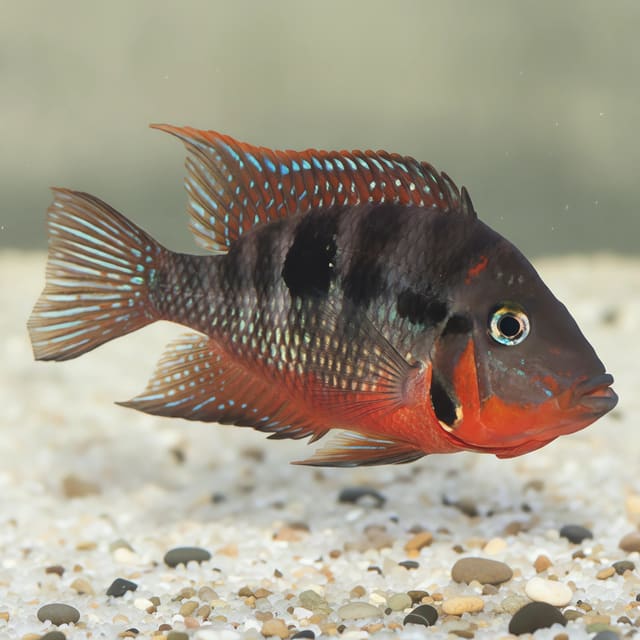
Firemouth Cichlid (Thorichthys meeki)
20–32°C · pH 6.5–8.5 · 108L
£5.39
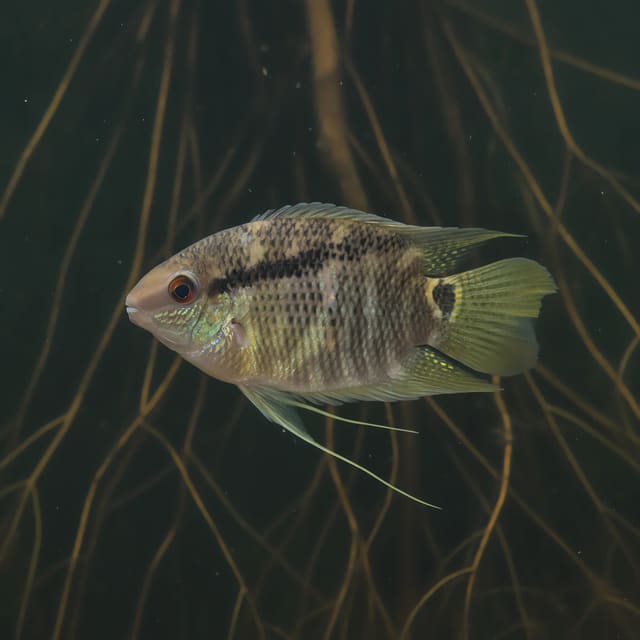
Ellioti Cichlid (Thorichthys ellioti) is a Central American cichlid recorded to 15 cm standard length, suited to a spacious sand-and-rock aquarium with stable warm water and carefully matched companions. Several dispatch sizes are offered; one purchase supplies one fish and sex is not guaranteed.
Adult size is the maximum length this species reaches at full maturity (scientific sources). The livestock you receive will be younger and smaller — pick a size above for the actual shipping size. Product-photo provenance and any image-specific limitations are stated on the listing.
Thorichthys ellioti
Save when buying multiple fish. Each quantity is one fish; sex and pair formation are not guaranteed unless the selected variant explicitly states them.
Ellioti Cichlid (Thorichthys ellioti) is a Central American cichlid recorded to 15 cm standard length, suited to a spacious sand-and-rock aquarium with stable warm water and carefully matched companions. Several dispatch sizes are offered; one purchase supplies one fish and sex is not guaranteed.
Adult size is the maximum length this species reaches at full maturity (scientific sources). The livestock you receive will be younger and smaller — pick a size above for the actual shipping size. Product-photo provenance and any image-specific limitations are stated on the listing.

Cichlids are a family of roughly 1,800 accepted species, not one care type. Before buying, identify the exact species and source, then compare adult measurement, usable tank dimensions, social system, territory, tested water, diet and an exit plan. No family-wide minimum tank, water range or tank-mate list is safe.
Maintain these water conditions for optimal health and vibrant colors
Ellioti Cichlid (Thorichthys ellioti) is a medium Central American cichlid for keepers who can provide a spacious, well-filtered aquarium with a sandy or fine-gravel floor, rock or wood structure and carefully chosen companions. It is recorded to 15 cm standard length. Standard length stops at the base of the tail, so it must not be silently converted into a total-length figure.
One purchase supplies one fish in the chosen dispatch size. The genuine size labels carried by this product are 3–4 cm, 4–5 cm, 5–6 cm and XL. Check the live purchase choice to see what can be ordered. The size you select is the size supplied, not the adult size. No sex is guaranteed for this purchase, and the image must not be used to infer sex.
The supplier identity and customer-facing name remain Thorichthys ellioti. FishBase routes that name to the currently accepted Thorichthys maculipinnis. The accepted-name bridge is useful biological context, but it does not change which supplier-linked fish this listing sells. Keeping both names visible helps a keeper connect aquarium literature written under either name without silently replacing the offer identity.
FishBase places the accepted species in Cichlidae and records it from the Atlantic slope of Mexico in the Papaloapán River basin. It describes lower and middle river valleys with sandy and rocky substrate. Those habitat details support a practical aquarium built around open sand or fine gravel, rounded stone and wood, with enough unobstructed floor area for a benthopelagic cichlid.
Thorichthys as a genus occurs along the Atlantic slope of Middle America, from southern Veracruz and the Yucatán Peninsula through Guatemala and Honduras. That broader genus distribution adds context but does not replace the species-level Papaloapán record.
| Suits | A keeper comfortable with medium cichlid behaviour, strong biological filtration, regular testing and compatibility planning. |
|---|---|
| Needs care with | Cramped layouts, delicate companions, unmanaged cichlid mixes, immature filters and confusing dispatch size with adult length. |
| Adult record | 15 cm standard length, male or unsexed record; tail excluded. |
| Sold unit | One live fish per purchase in the chosen dispatch size; no sex guarantee. |
Sex is guaranteed only when the selected option explicitly states male or female. This Ellioti Cichlid listing has no sex-guaranteed option.
This is an intermediate-care fish in the store’s suitability system. The label reflects the planning required for adult size, territory, filtration and companion choice; it is not a scientific fact. A thoughtful first-time cichlid keeper may succeed, while an experienced keeper can still run into trouble if space or social dynamics are underestimated.
Begin with the adult fish in mind. Make room for swimming and substrate use, create visual breaks with secure décor and leave access for cleaning. A juvenile-sized fish does not justify a temporary cramped home if there is no realistic plan for the full adult aquarium.
For broader browsing, see the South American cichlid collection. The shop category is a navigation grouping; this species’ scientific distribution is Central American. Compare potential purchases by adult size, temperament, water and layout rather than assuming every fish in one retail category belongs together.
Smaller fish offer more time to grow into the aquarium, but they still require a permanent plan for the 15 cm SL adult record. Larger dispatch labels do not change the species’ eventual needs. Choose the size that fits the established community now, while ensuring the aquarium and companions will remain suitable as the fish matures.
Do not use “XL” as a measurement or adult-size substitute. It is a genuine supplier size label without a centimetre boundary in the available record. The three numeric bands and the XL label should remain separate rather than being converted into a made-up overall range.
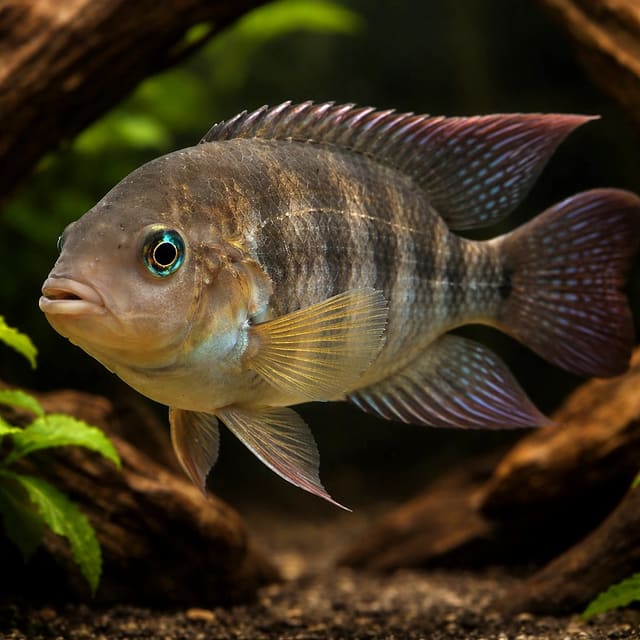
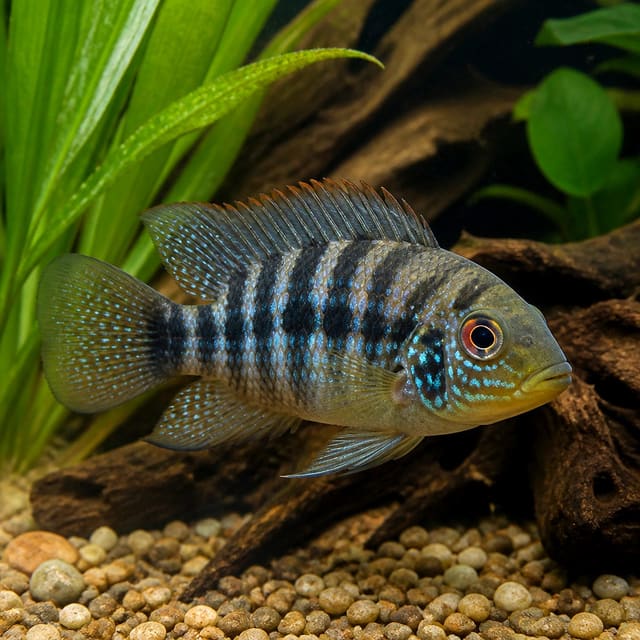
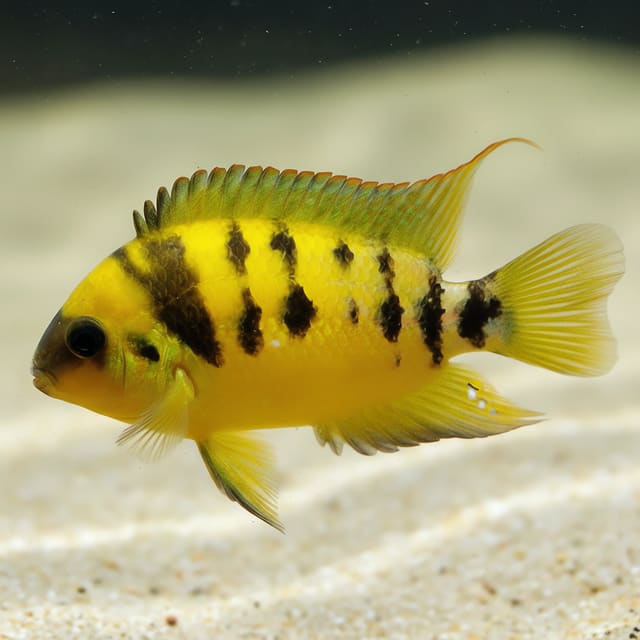
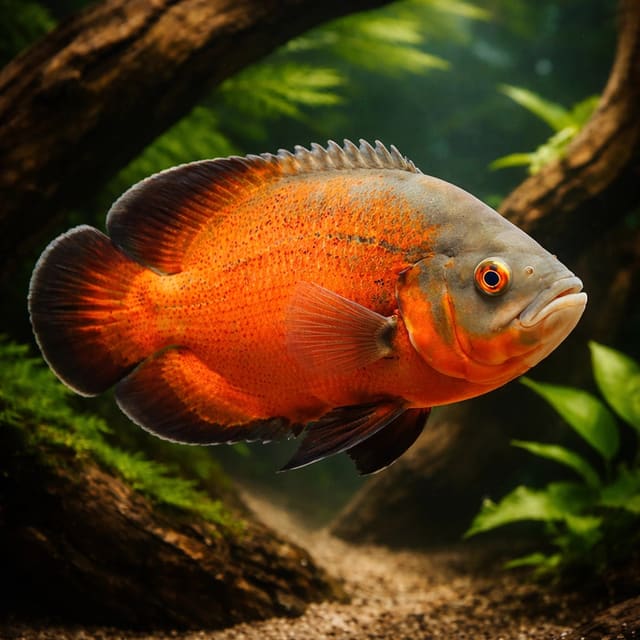
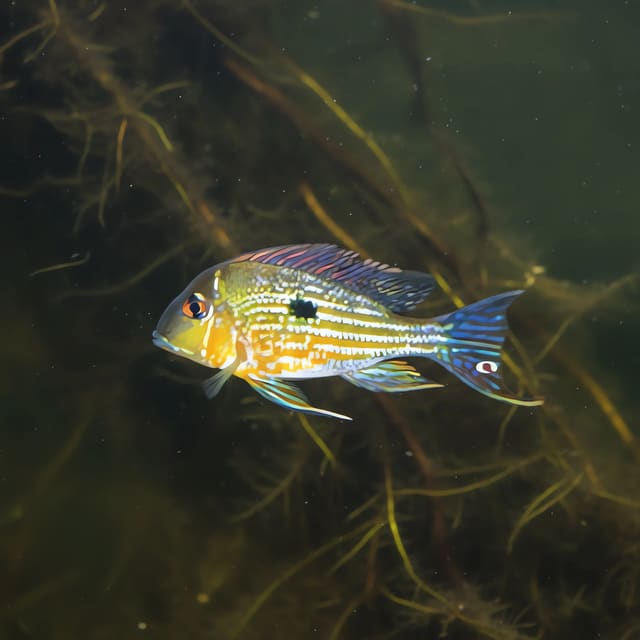
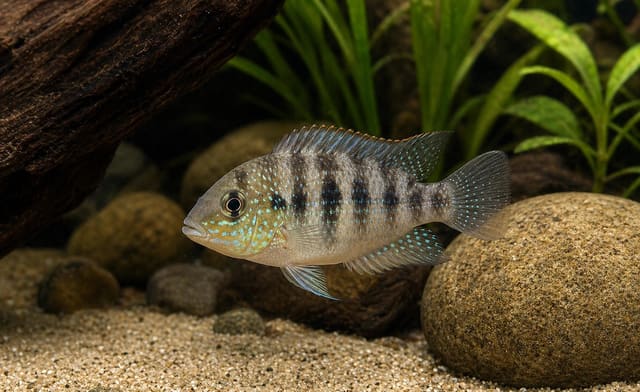
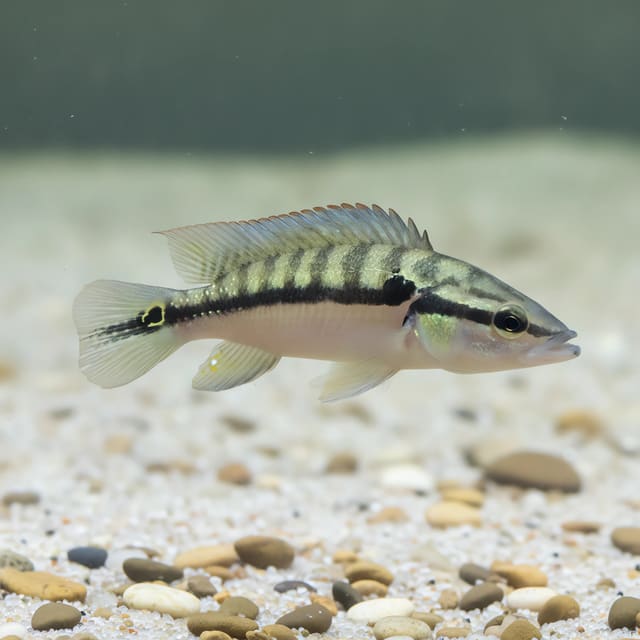
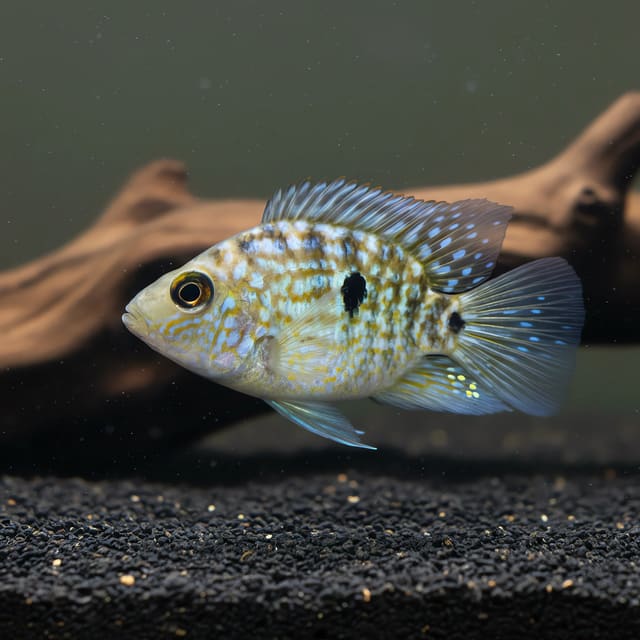
Gallery images have been digitally enhanced to improve image quality. Natural colour, pattern, size and maturity can vary between live animals.
Plan the aquarium around adult length, floor space, behaviour and waste production. Ellioti Cichlids use the lower and middle water layers and benefit from a layout that combines open substrate with secure visual structure. Filtration must be established before the fish arrives, and the keeper needs access to every area that collects waste.
FishBase records a wild-environment temperature of 25–28°C, pH 7.0–8.5 and hardness beginning at 8°dH, with no upper hardness figure. OATA’s broad guidance for American cichlids is 22–27°C, pH 6.5–8.0, 4–12°dH and 3–10°dKH. A practical shared planning range is therefore 25–27°C and pH 7.0–8.0: both figures genuinely sit inside both sources.
OATA’s American cichlid care sheet is group-level aquarium guidance, not a species-specific optimum. FishBase’s values describe the species’ wild environment, not a complete captive-care prescription. The shared range is a cautious starting point for aquarium planning rather than a promise that every value within it is equally suitable in every setup.
| Temperature planning range | 25–27°C, the genuine overlap between the 25–28°C wild record and 22–27°C American-cichlid group guidance. |
|---|---|
| pH planning range | 7.0–8.0, the shared portion of FishBase’s 7.0–8.5 record and OATA’s 6.5–8.0 group guidance. |
| Hardness | FishBase starts at 8°dH without an upper figure; OATA gives 4–12°dH for American cichlids generally. Keep mineral content stable; 8–12°dH must not be presented as a species range. |
| Ammonia and nitrite | Zero mg/l. |
| Nitrate | No more than 20 mg/l above the normal tap-water level under OATA group guidance. |
Use the water-chemistry guide to understand each test, then compare measured values with the water parameter matcher. Test the source water as well as the aquarium. A stable pH depends partly on carbonate hardness, while general hardness describes dissolved calcium and magnesium; the two readings answer different questions.
Do not chase a target by making large one-off adjustments. Record temperature, pH and hardness over time and investigate a trend before adding chemicals. If the aquarium is already stable inside the sensible range, small consistent maintenance steps are safer than repeatedly moving it towards a theoretical midpoint.
OATA recommends at least 120 litres for a pair of smaller American cichlids under 15 cm, and at least 300 litres for larger or more aggressive species over 15 cm. This fish is recorded at exactly 15 cm standard length, so it sits on the boundary rather than neatly inside either size statement. Those volumes are group benchmarks, not a species-specific minimum.
Choose a tank with generous horizontal space, especially for a pair or community. A long footprint gives more opportunity to create distinct zones and separate areas formed by décor than a tall tank of similar volume. Extra volume also buffers waste and temperature, but litres alone cannot compensate for a narrow layout or incompatible companions.
Before buying, map the usable floor after décor is installed. Leave open sand or fine gravel for natural substrate use, place rocks and wood securely, and create more than one retreat. Ensure each structure rests safely and cannot topple when the fish moves substrate around it.
FishBase records sandy and rocky habitat, and OATA notes that American cichlids often dig or sift while feeding or breeding. Use sand or fine aquarium gravel with smooth, stable rockwork and wood. Sharp-edged décor can damage a fish working close to the bottom, while unstable piles can collapse.
Live plants may be disturbed or eaten by American cichlids. If plants are used, choose robust specimens and protect their roots, while accepting that the fish may rearrange them. Artificial plants and other aquarium-safe cover can provide structure where live planting proves impractical. Keep all décor free from garden chemicals and unsafe coatings.
Create a balance of shelter and open space. Solid barriers can break long sight lines and reduce constant confrontation, but a maze with no swimming room is equally unsuitable. Position filter intakes and outlets so that waste moves towards collection without blasting the fish or leaving stagnant pockets behind rocks.
The RSPCA explains the role of a biological filter: fish produce toxic ammonia, bacteria convert it to nitrite and then to the safer nitrate. A filter must be established and maintained, not merely switched on. Test for zero ammonia and zero nitrite before introducing the fish.
The first tropical aquarium guide sets out the preparation sequence for a new system. Use it well before ordering livestock. Only increase stocking gradually because feeding and waste rise with every addition, while the biological filter needs time to respond.
Choose filtration with capacity for a medium cichlid and any planned companions. Check flow, intake guards and media routinely. A large filter cannot rescue persistent overfeeding, overcrowding or blocked flow; it works as part of a complete maintenance routine.
OATA describes American cichlids generally as omnivorous fish that often prefer meaty foods. A good-quality cichlid pellet or granule can form the practical base of the diet, supplemented with suitable frozen or freeze-dried foods. For smaller American cichlids, the sheet names daphnia, brine shrimp and bloodworm as examples.
Feed only what the fish can eat within a few minutes, once a day under OATA group guidance. Begin with a modest portion and observe. Remove obvious remains. A large cichlid appetite is not permission to keep adding food: excess becomes faeces or decays, raising the burden on filtration and water quality.
Match food size to the fish’s mouth and current dispatch size. A 3–4 cm juvenile needs appropriately small pieces, while a larger fish can take a larger pellet. The nutritional objective remains the same: a balanced staple, controlled portions and enough variety to avoid depending on one treat food.
Use feeding time as a health check. A fish that usually approaches food but suddenly hangs back, spits repeatedly or loses interest deserves closer observation and a water test. Appetite alone is not a diagnosis, but a change from the individual’s normal behaviour is useful information.
Change 25% of the water at least once every week, following OATA’s American-cichlid group guidance. Treat new tap water with conditioner for chlorine or chloramine and bring it close to the aquarium’s temperature and chemistry before adding it. Siphon settled waste from open substrate and accessible areas around décor.
Test water at least weekly. Track ammonia, nitrite, nitrate, pH and temperature, with hardness checks whenever source water changes or stability becomes uncertain. A dated log reveals drift earlier than memory does. Compare tap and tank nitrate because OATA frames the nitrate ceiling relative to the normal tap-water level.
Check filters for blockage. If media needs cleaning, rinse it lightly in water removed from the aquarium. Do not run it under the tap, because chlorine or chloramine can harm beneficial bacteria. Clean enough to maintain flow while retaining the biology that processes waste.
Inspect rocks and wood for movement, especially after visible digging. Confirm that heaters remain protected and that cables, lids and filter fittings are secure. A routine safety check takes little time and prevents décor or equipment problems from becoming emergencies.
Learn the fish’s normal swimming, colour, breathing and feeding response. OATA recommends watching for surface hanging, bottom sitting, erratic movement, unusual darkening or paling, altered aggression or hiding, a faster or slower gill rate, white spots, fluffy growths, damaged fins or scales, body-condition change and reduced feeding.
If behaviour changes, test water before reaching for medication. Check recent additions, cleaning, feeding and equipment. A water-quality problem can mimic disease, and an unnecessary treatment can add stress or disrupt biological filtration. Use a treatment only when the problem has been identified and the product is appropriate for the aquarium’s inhabitants.
Be present when the parcel arrives and read the delivery and Live Arrival Guarantee policy. Record one continuous unboxing video for every delivery, beginning with the sealed outer parcel, continuing through opening and showing the fish while it remains sealed in the bag. Keep it as the evidence required for any claim. Inspect the delivery on the day it arrives and contact the shop the same day with the order number if there is a problem.
Float the sealed bag for 20–30 minutes before release, following the store policy. Acclimatise slowly and avoid pouring transport water into the aquarium. During the first week, watch breathing, posture, feeding response, use of cover and reactions from tank mates. Keep the normal maintenance routine steady rather than changing several variables at once.
Reassess the setup as the fish grows. A companion that looks substantial beside a 3–4 cm juvenile may become relatively small beside an adult cichlid, while hiding places that once felt roomy can become narrow or easy for a larger fish to control. Review swimming space, feeding access and territory before growth forces an urgent change.
Growth also changes waste production and portion size. Increase food according to body condition and what the fish finishes, not according to appetite alone. Keep checking nitrate trends and filter flow as biomass rises. The aquarium may remain the same volume while its biological load changes markedly.
Prepare replacement water before removing aquarium water. Measure the amount needed for a 25% change, add conditioner according to its instructions and bring the new water close to the tank’s temperature. Siphon visible waste without dismantling every territory, then return the prepared water steadily.
After the change, confirm that heaters and filters are running normally and that no rock or wood shifted during cleaning. Observe the fish’s breathing and posture. Record the date, amount changed and test results. If a reading moves unexpectedly, the log helps distinguish a one-off test issue from a developing trend.
Maintenance should be thorough without being disruptive. Avoid dismantling the whole layout during routine cleaning. Divide non-urgent tasks across weeks where possible, while still dealing promptly with blocked flow, accumulated waste or unsafe décor.
A maturing cichlid can become more assertive even when the water remains excellent. Separate water-quality investigation from social investigation: test the water and check equipment first, then watch which fish initiates chasing, which areas are contested and whether every animal can feed. Both causes can exist together.
If one fish is pinned in a corner, excluded from food or repeatedly injured, additional décor may be too small a response. Use the prepared separation plan. A spare aquarium must be mature and appropriately heated and filtered; an empty container is not a safe emergency home simply because it creates distance.
American cichlid compatibility cannot be reduced to a list of “safe” names. OATA notes that mixing American cichlids can be difficult because size and aggression vary widely. The practical decision is to compare adult size, temperament, feeding speed, swimming level and territory, then provide enough space to separate animals visually.
OATA says most American cichlids do better singly or in pairs, while some species have different social needs. This listing sells one fish per purchase and does not guarantee sex or a bonded pair. Keeping one fish is the simpler plan. A pair requires more space, compatible individuals and a realistic way to separate them if aggression develops.
Do not infer sex from the product image, colour or size. Sexing differences vary between American cichlid species, and some become clear only around breeding. An unsexed purchase must remain an unsexed purchase in the keeper’s plan.
Choose robust companions of comparable scale only after researching the exact combination. Avoid fish that are very small, delicate or unable to leave an assertive cichlid’s territory. Crowding several cichlids into one visual zone increases the chance of continuous confrontation.
| Potential direction | Robust, similarly sized fish in a spacious aquarium with distinct zones, after the exact combination has been assessed. |
|---|---|
| Caution | Other American cichlids, because individual temperament and territorial needs can change as fish mature. |
| Avoid | Cramped cichlid mixes, fragile community fish and any companion that cannot feed or rest without repeated pressure. |
Watch interactions at feeding time and around preferred shelters. Occasional display is different from one fish being unable to eat, leave a corner or use the open aquarium. Repeated chasing, damaged fins, hiding and loss of appetite are reasons to intervene rather than waiting for a serious injury.
Use secure rock and wood to create separate areas formed by décor, but retain open substrate and swimming room. More than one retreat prevents a single dominant fish from controlling every protected space. Rearranging décor can sometimes reset territorial boundaries, but it is not a substitute for adequate space or a separation tank.
Have a backup plan before trying a new combination. A divider or second mature aquarium is useful only if it is ready when needed. Moving an aggressor into an uncycled container simply swaps a social problem for a water-quality problem.
Compatibility includes access to food. If a faster fish takes every pellet, the quieter fish may lose condition even without direct attack. Distribute food thoughtfully, observe who eats and keep total portions within what the filtration can support. Do not solve competition by overfeeding the whole aquarium.
FishBase records the accepted species to 15 cm standard length for a male or unsexed fish. Standard length excludes the tail, so do not convert that number into an equal total length or use a dispatch-size label as adult size.
OATA’s group guidance gives at least 120 litres for a pair of smaller American cichlids under 15 cm and at least 300 litres for fish over 15 cm or more aggressive species. This fish is recorded at exactly 15 cm SL, so use those as group benchmarks and plan generous horizontal space rather than treating either as a species-specific minimum.
OATA says most American cichlids do better singly or in pairs. One purchase supplies one unsexed fish, not a bonded pair. Keeping one is simpler; a pair needs compatible individuals, more territory and a mature backup space if aggression develops.
The store rates it intermediate. Success depends on an established filter, stable warm water, enough floor space and confident management of territorial behaviour. A prepared first-time cichlid keeper can be suitable; a cramped new community aquarium is not.
OATA’s broad American-cichlid guidance describes an omnivorous diet that often favours meaty foods. Use quality cichlid pellets or granules with suitable frozen or freeze-dried variety, feeding once a day only what the fish can finish within a few minutes.
Plan around 25–27°C and pH 7.0–8.0, the genuine overlap between FishBase’s wild-environment record and OATA’s American-cichlid group guidance. Keep values stable. FishBase records a hardness floor of 8°dH and leaves the upper boundary open, so keep hardness stable rather than presenting a false closed range.
American cichlid aggression varies, and mixing can be difficult. Provide space, separate areas and a separation plan. Judge the individual by repeated chasing, blocked feeding, hiding or fin damage rather than assuming a fixed temperament from the common name.
Consider robust, similarly sized fish only in a spacious aquarium after assessing the exact combination. Avoid fragile, very small or timid companions and cramped cichlid mixes. No species is a universal tank mate, and behaviour can change as fish mature.
Tropical Fish Co hand-packs live orders in oxygenated bags inside insulated boxes, using heat packs when weather requires, and sends them by tracked licensed live-animal courier. Be present to receive and inspect the parcel the same day. Record one continuous unboxing video for every delivery, starting with the sealed parcel and continuing through opening while the fish remains sealed in the bag. Keep it as the evidence required for any Live Arrival Guarantee claim, then contact the shop the same day with your order number.
The supplier-linked record governs the sold fish, its four genuine dispatch-size labels and the one-fish purchase unit. Biological identity and adult length come from FishBase. The accepted name is bridged openly while the product remains anchored to the supplier name Thorichthys ellioti.
Water figures retain their scopes. The 25–27°C and pH 7.0–8.0 planning range is a real overlap of the FishBase wild record and OATA group guidance. Hardness is not collapsed into a false overlap because FishBase gives a lower value of 8°dH without an upper boundary. Aquarium volumes remain labelled as American-cichlid group benchmarks, not species-specific minimums.
No reviews for this item yet. Bought one? Honest reviews only, good or bad.
What customers say about ordering from us
Easy website plenty of info on fish your buying great to pick a time slot
TRACEY DURRANT · 7 Oct 2026
Got some lovely fish thank you
Kevin Mackie · 7 Oct 2026
Reviews of our shop, collected by Judge.me, an independent third-party review collector. Newest first.