Moderate
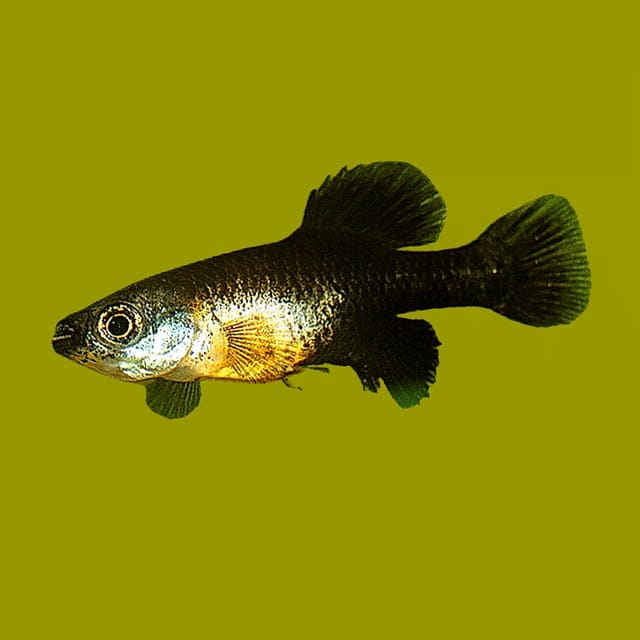
Spotted Skiffia (Skiffia multipunctata)
18–24°C · 60L
£18.99

Red-Tailed Goodeid (Xenotoca eiseni) is a specialist Mexican goodeid for hard-water group aquariums, vegetable-rich feeding and careful tank mate choices. WELCOME10 first-order code and Live Arrival Guarantee apply when stock is available.
Adult size is the maximum length this species reaches at full maturity (scientific sources). The livestock you receive will be younger and smaller — pick a size above for the actual shipping size. Product-photo provenance and any image-specific limitations are stated on the listing.
Xenotoca eiseni
Shoaling fish: kept in a group they feel safer, stay calmer and show their best colour.
Confirm your email, then we’ll send an availability message for this exact item if it returns within 180 days.
This request is only for this product—no newsletter or other promotions. A mail-provider retry may very rarely duplicate the same availability message. Unconfirmed addresses are removed after 48 hours. See our privacy policy.
Red-Tailed Goodeid (Xenotoca eiseni) is a specialist Mexican goodeid for hard-water group aquariums, vegetable-rich feeding and careful tank mate choices. WELCOME10 first-order code and Live Arrival Guarantee apply when stock is available.
Adult size is the maximum length this species reaches at full maturity (scientific sources). The livestock you receive will be younger and smaller — pick a size above for the actual shipping size. Product-photo provenance and any image-specific limitations are stated on the listing.
Maintain these water conditions for optimal health and vibrant colors
Red-Tailed Goodeid (Xenotoca eiseni) is a specialist Mexican goodeid also known as the Redtail Splitfin or Orange-tailed Goodeid. It is a livebearing fish, but it should not be treated like a soft community guppy or a standard mixed livebearer. This is an active, robust splitfin for aquarists who can provide hard, alkaline water, open swimming room, high water quality and a group large enough to spread male attention and occasional fin-nipping.
Current Shopify variants cover 2-2.5 cm juveniles, 3.5-4.5 cm young fish and 5-7 cm larger fish, but live stock changes with supplier availability.
| Common names | Red-Tailed Goodeid, Redtail Splitfin, Orange-tailed Goodeid |
|---|---|
| Scientific name | Xenotoca eiseni |
| Family | Goodeidae, the splitfins |
| Current size options | 2-2.5 cm, 3.5-4.5 cm and 5-7 cm when available |
| Adult size | About 6 cm for males and up to 7 cm for females |
| Care level | Moderate specialist livebearer |
| Best setup | Hard-water species group or carefully chosen specialist community |
| Temperament | Confident, active and sometimes nippy |
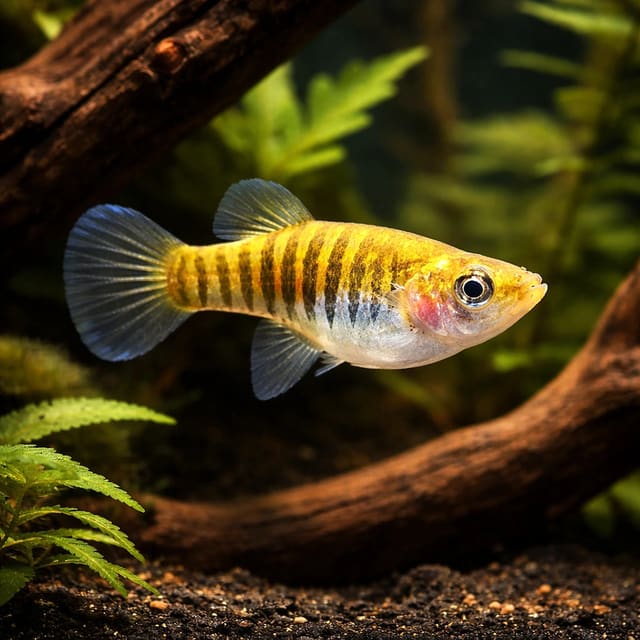
Xenotoca eiseni has a very different feel from common poeciliid livebearers. Mature males develop the red-orange tail and caudal-peduncle colour that gives the species its common name, while females are plainer, deeper-bodied and often slightly larger. A settled group is busy, bold at feeding time and constantly interacting, which makes the species rewarding in a dedicated hard-water aquarium.
This is also a fish with real conservation interest. FishBase lists the species as Endangered, and goodeid specialists highlight that true Redtail Splitfin populations should not be casually mixed with similar-looking redtail goodeids from other locations. In the aquarium, that means keeping the species name and any supplier lineage information accurate and avoiding hybridising with other goodeids.
Red-Tailed Goodeids are adaptable, but they are at their best in clean, mineral-rich water. Avoid soft, acidic conditions and avoid warm, stale tanks. They appreciate oxygen, regular water changes and stable chemistry more than decorative complexity.
| Temperature | 15-30 C tolerated; aim for a steady 18-24 C for long-term maintenance where possible |
|---|---|
| pH | 7.0-8.0 is the supplier-backed target; FishBase records a broader 6.0-8.0 range |
| Hardness | 10-20 dGH preferred; avoid very soft water |
| Adult size | 6-7 cm, with females often the larger sex |
| Water changes | Frequent small-to-moderate changes; goodeids respond badly to neglected water |
For a small group, plan more floor space than a typical nano livebearer setup. A mature aquarium from about 100 litres can work for a modest group if the layout is open and well filtered, while larger groups and breeding colonies deserve substantially more room. Goodeid Working Group husbandry notes are more conservative and recommend very spacious, broad tanks for serious long-term colonies.
Use open swimming space through the front and middle, with robust planting, roots or rocks at the sides and back. Floating plants can calm the fish, but do not pack the whole tank with delicate stems. These fish may browse algae and aufwuchs and can damage very soft plants, so choose hardy planting and accept that a goodeid aquarium can look more natural and rugged than manicured.
Red-Tailed Goodeids are best kept in a species group or with fast, short-finned fish that enjoy similar hard-water conditions. They are not ideal companions for slow fancy guppies, long-finned bettas, delicate dwarf gouramis or tiny soft-water fish. The safest approach is to keep a group of their own kind, with more females than males where sexing is possible, and enough cover that no single fish is constantly chased.
| Good choices | Species group, other robust hard-water livebearers, active short-finned fish of similar size |
|---|---|
| Avoid | Long-finned fish, very small nano fish, soft-water specialists and slow delicate tank mates |
| Group size | Six or more is preferable; larger groups spread attention and reduce bullying |
| Breeding caution | Do not mix with similar redtail goodeids if you care about keeping lines pure |
This species is an unfussy omnivore, but it should not live only on rich frozen foods. Offer a varied diet with quality flake or granule, algae wafers, vegetable-rich foods, and small frozen foods such as daphnia, brineshrimp, mosquito larvae or bloodworm. Vegetable matter is important for condition and digestion, especially in mature groups that spend the day grazing surfaces.
Feed small portions that are eaten quickly. A confident group will rush food, so spread food across the surface and midwater to reduce competition. If you are conditioning adults for breeding, raise the quality of food and water together rather than simply feeding more.
Goodeids are livebearers, but they breed differently from guppies and swordtails. Males use a modified anal fin called an andropodium, and developing young are nourished by structures called trophotaeniae. Females can produce sizeable fry roughly every two months when conditions are good, and newborn fry are much larger than typical guppy fry.
Adults may eat some fry, especially in bare tanks. Dense cover, floating plants, mossy areas or a separate rearing space improve survival. If conservation-style breeding matters to you, keep accurate labels and avoid mixing unknown Redtail Splitfin lines.
When stock is available, the product may appear in juvenile and larger size options. Use the size selector and live stock state on the product page as the final truth before checkout.
First-time customers can use the active WELCOME10 code for 10% off eligible first orders. Live fish orders are packed for licensed live-animal courier service and supported by the Tropical Fish Co Live Arrival Guarantee, with dispatch timing chosen around animal welfare and suitable weather.
| Choose this fish if | You want a rare, active Mexican goodeid for hard water and can keep a proper group |
|---|---|
| Think twice if | Your tank is soft, acidic, very warm, tiny or full of long-finned peaceful fish |
| Main keywords, naturally | Red-Tailed Goodeid, Xenotoca eiseni, Redtail Splitfin, hard-water livebearer, Mexican goodeid |
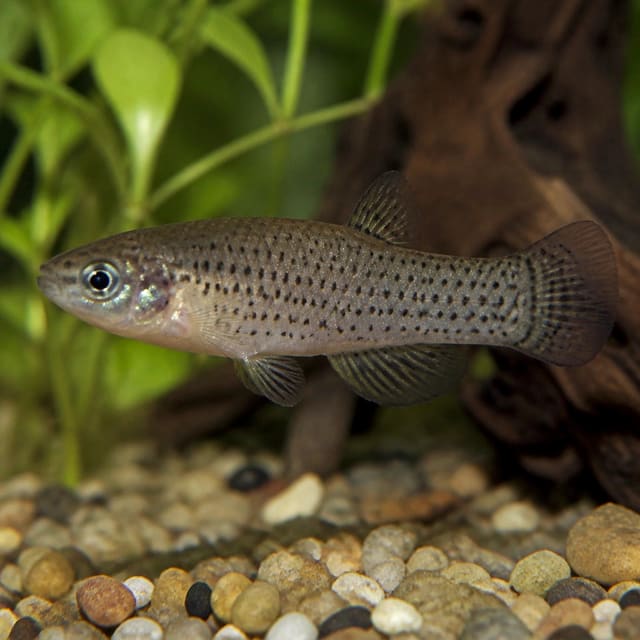
If you are comparing specialist livebearers, also check Barred Splitfin, Alien Splitfin, Spotted Skiffia, Twoline Skiffia and the wider livebearer collection. These links help compare temperament, water hardness and group behaviour before choosing tank mates.
Care and identity were checked against FishBase, Goodeid Working Group husbandry notes, and UK retailer species notes from Maidenhead Aquatics / Fishkeeper. Supplier data was used for the current size options, pH, hardness, temperature and source photo.
No reviews for this item yet. Bought one? Honest reviews only, good or bad.
What customers say about ordering from us
I have a small group of long finned mountain minnows. So was delighted to be able to order ten of this variety to increase the genetics in my tank . The ones I recieved are healthy but it’s to early to give a verdict on wether they are of a long finned type since they are small currently.
Gordon Walker · 23 Sept 2026
100% success travel and "installation". Pleased with quality of purchase. The Siamese fighter a bit "shy" so have not yet seen him at his best yet but looking good. Happy customer. GG
George E Garratt · 21 Sept 2026
Reviews of our shop, collected by Judge.me, an independent third-party review collector. Newest first.