Moderate
Twoline Skiffia (Skiffia bilineata; Neotoca bilineata)
18–24°C · pH 7–7.5 · 80L
£36.99

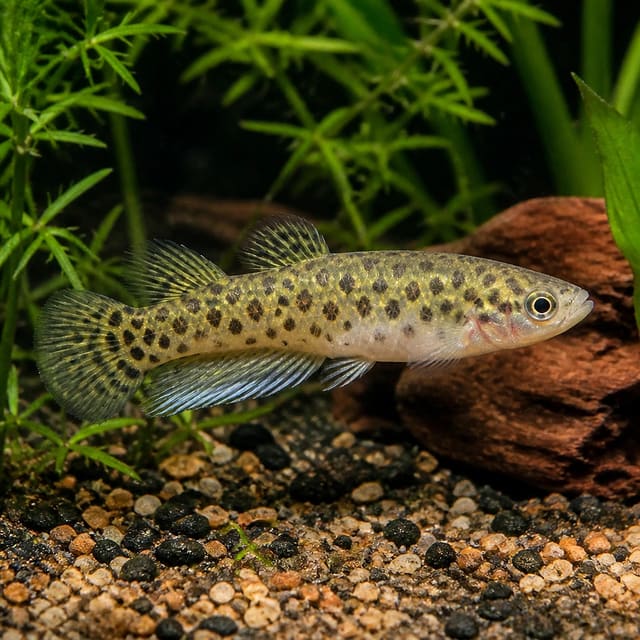
One unsexed Barred Splitfin (Chapalichthys encaustus) at approximately 3-4 cm. Plan for adults approaching 10 cm, a same-species group and a broad mature aquarium of about 250 litres or more. The existing gallery image is a representative aquarium view, not the exact fish dispatched.
Chapalichthys encaustus
Shoaling fish: kept in a group they feel safer, stay calmer and show their best colour.
Confirm your email, then we’ll send an availability message for this exact item if it returns within 180 days.
This request is only for this product—no newsletter or other promotions. A mail-provider retry may very rarely duplicate the same availability message. Unconfirmed addresses are removed after 48 hours. See our privacy policy.
One unsexed Barred Splitfin (Chapalichthys encaustus) at approximately 3-4 cm. Plan for adults approaching 10 cm, a same-species group and a broad mature aquarium of about 250 litres or more. The existing gallery image is a representative aquarium view, not the exact fish dispatched.
Maintain these water conditions for optimal health and vibrant colors
Barred Splitfin (Chapalichthys encaustus) is a substantial Mexican goodeid for aquarists who enjoy natural behaviour, conservation-relevant species and cooler hard-water aquariums. It is a true livebearer, but it should not be planned like a guppy or platy. Adults are active, deep-bodied fish that benefit from a broad aquarium, a proper same-species group, highly oxygenated water and a seasonal temperature pattern rather than permanent tropical heat.
This listing supplies one unsexed fish. The current dispatch size is approximately 3-4 cm, but this is a dispatch size, not the adult planning size. Sex, exact length, pattern intensity and locality are not guaranteed. To build a group, select the number of individual fish required and provide enough long-term space before ordering. The gallery image is a representative aquarium view, not a photograph of the exact individual that will be dispatched.
For long-term care, plan around a fish that can approach 10 cm, especially a large female, and use an aquarium of about 250 litres or more with a broad footprint. A group of at least six is a sensible starting point where the aquarium has the capacity. Keep the water clean, mineral-rich and well oxygenated, with a practical everyday range around 18-23 C. Experienced keepers can provide a gradual cooler winter period below 20 C; constant temperatures above 24 C are not the preferred year-round plan.
| Accepted scientific name | Chapalichthys encaustus (Jordan & Snyder, 1899) |
|---|---|
| What one quantity supplies | One unsexed live fish, not a pair or group pack |
| Current supplier size | Approximately 3-4 cm; exact dispatch length is not guaranteed |
| Adult planning size | Plan for up to about 10 cm; females can be larger than males |
| Long-term aquarium | About 250 litres or more, with a broad footprint and open swimming area |
| Social requirement | Keep a same-species group; six or more is a practical starting point where adult capacity permits |
| Temperature | About 18-23 C for routine care; avoid permanent high heat and consider a gradual cool season |
| Water | pH 7.0-7.8, around 10-20 dGH, zero ammonia and nitrite, strong oxygenation |
| Diet | Plant-rich omnivore diet with algae, biofilm and vegetable-based foods plus measured animal protein |
| Care level | Intermediate; specialist planning is needed for space, seasonality and colony management |
One product quantity means one Barred Splitfin. It does not mean a pair, a trio, a breeding group or a guaranteed male or female. The Shopify option is a single default livestock variant, so there is no sex or size choice on this product. If you need six fish, order six quantities and first confirm that your aquarium can house the adult group. Availability and the number that can be dispatched remain subject to live stock at the time the order is prepared.
The supplier describes the current fish as approximately 3-4 cm. Livestock measurements are approximate because fish are growing animals and batches vary. The fish may be a little smaller or larger at dispatch, and transport posture can make length difficult to judge on arrival. Use the stated band to understand the present juvenile size, never to calculate the permanent aquarium. A juvenile that looks small in a bag still needs a home designed for its adult body, social group and activity.
Sex is not guaranteed at this size. Mature males and females become easier to distinguish, but a retailer cannot promise that a random juvenile group will contain a particular ratio. Order only if an unsexed fish is suitable for your plan. If the purpose is a managed breeding colony, build in time to grow the fish, identify adults and redistribute surplus males or juveniles responsibly.
The representative gallery image helps show the general species concept and aquarium presentation. It is not WYSIWYG: the fish you receive will differ in shade, bar strength, body depth, fin shape, size and sex. Stress during packing can temporarily mute colour. A healthy newly arrived fish may look paler than a settled adult and should colour gradually as it acclimatises.
Chapalichthys encaustus is the accepted species name in the family Goodeidae, subfamily Goodeinae. The name was originally published by Jordan and Snyder in 1899, and older literature may place it under Characodon encaustus. The current identity can be checked in the California Academy of Sciences Catalog of Fishes. This taxonomic link matters because search results and older aquarium articles sometimes mix different splitfins or repeat historic names without explaining them.
The common name "Barred Splitfin" refers to the vertical markings often visible along the flank and to the distinctive male anal-fin structure found in goodeids. Colour is naturally variable. Adults can show a silver, olive, bronze or yellowish base with darker bars, while mood, hierarchy, light, diet, age and lineage all affect contrast. This is not a man-made colour strain with a fixed retail pattern, so do not expect every individual to match one photograph.
Goodeids differ biologically from familiar poeciliid livebearers such as guppies and mollies. Developing young receive maternal nourishment through specialised ribbon-like structures called trophotaeniae. Peer-reviewed work on this species has shown that sexual differentiation occurs before birth, during embryonic development. That unusual reproductive biology is one reason the species interests serious livebearer keepers, but it does not make breeding automatic or conservation claims simple.
This listing should be chosen for the correct reasons: the keeper has suitable water, adult space, a group plan and an interest in its natural behaviour. It should not be bought as a tiny, easy fish for a 55- or 60-litre community.
The Barred Splitfin is endemic to west-central Mexico. Its historic range is associated with the lower Lerma drainage, Lake Chapala and the Grande de Santiago system in Jalisco and Michoacan. The Goodeid Working Group species account describes populations from quiet or slow-moving waters in lakes, ponds and river channels. Substrates may include mud, silt, sand and rock, and aquatic vegetation can be sparse rather than forming a dense tropical jungle.
That habitat suggests a practical aquarium: generous horizontal swimming room, rocks and wood carrying mature grazing films, patches of hardy plants, gentle to moderate water movement and excellent oxygen availability. It does not support the old idea that the fish needs permanently hot water. Seasonal conditions in its native region matter, and a managed cooler period can be part of good long-term husbandry.
Wild populations have faced pollution, water extraction, habitat alteration and introduced species. The Goodeid Working Group reports serious decline and local disappearance from parts of the historic range. FishBase currently reports the 2018 IUCN assessment as Vulnerable. Conservation labels can change as assessments are revised, so the date and source should always accompany the claim.
Buying a retail fish does not by itself restore a wild population. We do not claim that this stock has a documented collection locality, belongs to a formal conservation programme or can be released. Responsible captive keeping still matters: maintain accurate species records, avoid mixing uncertain lineages, exchange surplus only with informed keepers and never release aquarium fish or water into the environment. A peer-reviewed report of translocated C. encaustus outside its native basin illustrates why moving fish between watersheds can create ecological and genetic problems.
Published size figures vary because sources may report total length or standard length and may separate males from females. FishBase lists about 6 cm for male or unsexed fish and about 8 cm for females. The specialist species record documents a female reaching 93 mm standard length, which excludes the tail. For safe aquarium planning, treat the Barred Splitfin as a fish that can approach 10 cm rather than assuming every adult stops at 6 cm.
Body shape matters as much as length. This is a robust, deep-bodied fish with active social movement, not a slender 3 cm nano fish. A group needs room to cruise, feed and move away from one another. Decorations, plants and internal filters reduce usable volume, and a tall narrow aquarium can contain many litres while offering poor horizontal space. Choose length and width first, then confirm that the total volume and filtration are sufficient.
A long-term target of roughly 250 litres or more follows specialist husbandry guidance and is a much more defensible plan than the previous 55-100 litre recommendation. A broad aquarium around 120 cm in length is a useful starting shape, though exact dimensions depend on width, group size, tank mates, decor and maintenance capacity. Larger is preferable for a colony or mixed display. Use the aquarium volume calculator to check the real internal volume after measuring the tank rather than relying only on a model name.
A smaller mature aquarium may be used temporarily for quarantine, observation or fry, provided water quality and stocking are controlled. Temporary use does not make it an appropriate permanent home. Plan the adult system before the fish arrives, especially because a successful colony can produce juveniles and increase its biological load quickly.
Barred Splitfins are social and should not be planned as solitary fish. A same-species group allows normal interaction and spreads attention, while a single fish or pair can leave one individual exposed to repeated pursuit. Six or more is a practical starting point where the aquarium has sufficient adult capacity. A larger colony can work in a larger system, but the answer is never to crowd more fish into an undersized tank merely to reach a number.
Specialist observations describe serious intraspecific aggression as uncommon, although similarly sized males may display or spar. Short chases and posture changes can be normal. Persistent exclusion from food, torn fins, a fish hiding continuously or one individual being pinned in a corner are not normal group dynamics and require action. Increase sight breaks, spread food across the tank, check the sex balance as adults mature and be ready to separate a problem fish.
A mixed-sex group may eventually produce fry. More females than males often reduces courtship pressure, but this listing cannot guarantee sex and juveniles may be difficult to identify. Do not buy an exact number on the assumption that a desired ratio will arrive. Keep spare mature accommodation available if the adult balance proves unsuitable.
The fish are confident, alert and visible when settled. They spend time in the middle and lower water column, investigate surfaces, graze and respond quickly to food. Their activity is part of their appeal, but it also means shy, slow or long-finned companions may be stressed even without overt biting. The tank-mate checker can help organise a first comparison, but the final decision must use adult size, temperature, hardness, behaviour and available space.
A useful routine range is about 18-23 C. The species can experience warmer conditions, and FishBase reports a broader reference range, but a maximum tolerance is not the same as an ideal year-round setting. Specialist experience warns that keeping goodeids continuously above 24 C may shorten healthy lifespan or increase illness. Avoid treating 25-28 C as the default simply because the fish appears in the tropical section.
Many experienced keepers provide a cooler rest below 20 C for two or three months. This should be gradual, stable and appropriate to the established stock, not an abrupt temperature drop. A well-insulated indoor aquarium may reach the needed range without a heater in a cool room, but every home is different. Use a reliable thermometer and protect the tank from rapid overnight swings, cold drafts and direct sun.
If you choose to run a seasonal cycle, lower temperature and feeding gradually while watching appetite and body condition. Keep oxygenation high and maintain water quality. Do not copy outdoor or unheated methods without understanding the lowest temperature, daily variation and provenance of the fish. This is not a licence to place the species in a British garden pond through winter.
Breeding activity often changes with temperature. Specialist records note increased reproductive activity around 20-21 C after a cooler period and reduced reproduction at sustained temperatures above about 25 C. These observations are useful for colony management, but individual batches vary and breeding is never guaranteed.
Use neutral to alkaline, mineral-rich water. A practical target is pH 7.0-7.8 with roughly 10-20 dGH. Stability matters more than forcing a mathematically perfect value. Test the source water and aquarium before purchase, and compare them with our system where possible. The water matcher can help identify obvious mismatches before the order is placed.
Ammonia and nitrite must remain at zero. Keep nitrate controlled through sensible stocking, planting where suitable and regular water changes. Because the fish are active feeders and a colony may expand, size the biological filter for the adult biomass rather than the first juvenile delivery. Never add them to an uncycled aquarium.
High dissolved oxygen is important. Use a filter outlet that moves the surface and add an air stone or other aeration where temperature, stocking or plant respiration could reduce oxygen. Slow habitat current does not mean stagnant aquarium water. The goal is gentle to moderate flow with strong gas exchange, not a forceful jet that makes the group fight the current all day.
Do not alter hardness rapidly with unmeasured salts. If your tap water is very soft, use a consistent remineralisation method and test the result. If the fish are moving from harder shop water to softer home water, acclimation reduces immediate osmotic stress but does not correct an unsuitable permanent environment. Prepare the long-term chemistry first.
Choose mature biological filtration with enough mechanical capacity to collect food and waste without creating an excessive current. An external canister, large internal filter or well-sized air-driven system can work when its actual capacity matches the aquarium. Protect intakes if fry are present and keep a spare air pump available for warm weather or power interruptions.
Perform regular partial water changes with dechlorinated water matched for temperature and mineral content. The exact percentage depends on stocking, nitrate, feeding and source water. Specialist keepers may use very large changes in heavily managed colonies, but a retail guide should not prescribe one extreme number for every home. Start with a consistent weekly schedule, test the water and increase frequency or volume when the results and stocking require it.
Clean filter media in removed aquarium water or according to the filter manufacturer's biological-media guidance. Do not replace all mature media at once. Siphon trapped debris from open areas while retaining some mature grazing surfaces on stable rocks and wood. Algae and biofilm are useful foods, but accumulating waste is not.
Watch the fish during maintenance. Rapid breathing, surface gathering, clamped fins or loss of balance can signal oxygen or water-quality trouble. Check the basics immediately before reaching for medication. A large group can look normal at a glance while one subordinate fish loses condition, so count the fish and observe each feeding.
Use a broad layout with open swimming water and several visual breaks. Rounded rocks, stable wood and hardy plants can divide the aquarium without forming narrow traps. Leave enough clear space for the group to turn and feed. All decor must be stable because active fish can dislodge lightweight items, and any gap should be wide enough for an adult to pass or too small to enter.
Sand or smooth fine gravel is suitable. The fish are not specialised bottom sifters, so substrate choice should support cleanliness, plants and safe movement. Darker tones can increase visual contrast, but colour is secondary to hygiene and a layout that lets every fish access food.
Plants such as Vallisneria, Java fern, Anubias and robust floating cover can work. Protect soft new growth if the fish graze it. Dense edge planting gives juveniles and subordinate adults refuge, while open central space supports normal movement. Moderate light encourages algae and biofilm on selected surfaces; there is no need to make every panel spotless.
Use a secure lid. Although Barred Splitfins are not famous jumpers, any startled fish can leave an open aquarium. Cover filter cut-outs and cable gaps without blocking ventilation. Keep the tank away from household sprays, smoke and sudden vibration.
Available anatomical and gut evidence suggests an important herbivorous or grazing component. In nature, adults are associated with algae and aufwuchs, while insects and other small animal foods are also taken. Describe the species as an omnivore with a strong need for plant-rich food, not as a carnivore and not as a substitute for an algae-cleaning animal.
Use a quality spirulina flake, plant-rich granule or complete livebearer food as the regular staple. Add softened vegetables such as courgette, spinach or peas in small amounts where accepted, and remove uneaten pieces before they spoil. Mature biofilm on rock and wood gives the fish additional natural grazing opportunity.
Offer daphnia, Artemia, mosquito larvae or suitable frozen foods in measured portions. These are useful for variety and conditioning but should not displace the plant-rich base. Heavy feeding with bloodworm or other rich foods can produce obesity, poor water quality and an unbalanced diet. The fact that the fish attack food eagerly does not mean they need more.
Feed adults once or twice daily in portions cleared promptly. Spread food over several points so shy fish can eat. Fry and growing juveniles need smaller, more frequent meals, which makes filtration and water changes especially important. Monitor body shape: a healthy fish should look well filled without a persistently distended abdomen.
| Food role | Examples | How to use it |
|---|---|---|
| Daily plant-rich staple | Spirulina flake, vegetable granule, balanced livebearer pellet | Small portions, distributed across the group |
| Natural grazing | Algae and mature biofilm on safe rocks or wood | Leave selected surfaces mature without allowing waste to accumulate |
| Fresh vegetable variety | Softened courgette, spinach or shelled pea | Offer sparingly and remove leftovers |
| Animal-protein supplement | Daphnia, Artemia or suitable insect larvae | Measured feeds several times a week, not the whole diet |
A species-focused aquarium is the safest choice for observing natural behaviour, managing reproduction and preserving identity. It removes competition from unrelated fish and makes it easier to notice changes in appetite, sex balance and fry numbers. For a keeper interested in the conservation value of goodeids, separate labelled colonies are preferable to a decorative mix of uncertain origin.
In a large display, robust fish with similar cooler, hard-water requirements may be possible. They need enough size and confidence to avoid being intimidated, while remaining non-predatory and non-territorial. Compatibility is individual and cannot be guaranteed. Introduce carefully, provide multiple feeding zones and have a separation plan.
Avoid slow long-finned fish, very timid species, tiny fish that may be outcompeted, warm-water specialists and aggressive cichlids. Small shrimp and fry may be eaten. Snails are not a guaranteed food or pest-control service. Do not combine animals merely because an online list calls both "community fish".
Other goodeids are valuable comparisons, but keeping separate species is usually clearer for breeding records and husbandry. Compare the closely related Alien Splitfin and Polka-dot Splitfin, or consider the Spotted Skiffia, Twoline Skiffia and Red-tailed Goodeid. These links are for comparison, not automatic cohabitation recommendations.
| Potential companion | Risk level | Reason |
|---|---|---|
| Other Barred Splitfins | Required social consideration | Provide a proper same-species group and enough adult space |
| Robust, similarly sized cool hard-water fish | Possible with care | Only in a spacious aquarium after matching every adult requirement |
| Other goodeid species | Specialist decision | Separate colonies are easier for identity, breeding records and behaviour |
| Long-finned, timid or very slow fish | Avoid | Activity and food competition can create chronic stress |
| Tiny fish, fry and small shrimp | High risk | May be eaten or outcompeted |
| Warm-water specialists | Avoid | Permanent high temperature conflicts with seasonal goodeid care |
Mature males develop the split or notched anal-fin structure that gives splitfins their common family name. The front rays form a specialised mating structure, the andropodium. Mature males may also show a larger dorsal fin, a slimmer body and stronger display behaviour. Females usually become deeper-bodied and can grow larger, particularly when carrying young.
Body colour alone is not a reliable sexing method. Juveniles may not show clear differences, and viewing angle can hide the anal fin. Do not identify sex from one pale arrival photograph. Let the fish settle and mature, then compare fin structure and body form under good light.
This product remains unsexed. A customer should not infer that a strongly barred gallery fish is male or that an order of two will form a pair. If a specific adult sex is essential, contact the team before ordering; unless the live batch has been checked and a separate option is offered, no sex promise applies.
Barred Splitfins give birth to live young. Goodeid embryos develop inside the female and are nourished through trophotaeniae, which can sometimes be seen briefly on newborn fry. Gestation is often described in the region of seven to nine weeks, but temperature, age, nutrition and individual condition affect timing. Do not move a heavily pregnant female repeatedly in an attempt to predict an exact day.
Fry are relatively large and can usually take newly hatched Artemia, fine quality fry food and crushed plant-rich flakes. Specialist observations indicate that adults often leave fry alone, but predation is still possible and survival is not guaranteed. Dense edge cover and close observation help. A separate mature rearing tank gives better control where every youngster matters.
A successful colony can expand quickly. Before breeding, decide where juveniles will go and how you will maintain records. Do not produce fish without suitable long-term homes. Keep the species name, source and acquisition date with the colony, and avoid labelling ordinary retail offspring with a wild locality that has not been documented.
Seasonal temperature can regulate reproduction. A cool rest followed by a gradual spring rise may support natural cycles, while perpetual warmth can drive continuous reproduction and reduce recovery time. Feed females well without creating obesity, preserve high oxygen levels and use water changes matched to the increased fry load.
A healthy settled Barred Splitfin is upright, alert and interested in food, with clear eyes, open fins and a well-filled body. Colour varies, so judge health by behaviour and condition rather than the strength of the bars. Newly transported fish may be pale and quiet for a short period, but breathing should stabilise as the aquarium light remains low and acclimation proceeds.
Quarantine new fish in a mature, appropriately mineralised system before mixing them with an established colony. Use separate nets and equipment where possible. Observe feeding, faeces, skin, gills and fin edges. A quarantine tank can be smaller than the permanent aquarium for a controlled short period, but it still needs filtration, oxygen, cover and stable temperature.
Warning signs include persistent gasping, clamped fins, flashing, white spots, ulcers, progressive weight loss, inability to feed, isolation or repeated injury. First test ammonia, nitrite, nitrate, temperature, pH and oxygenation. Many apparent disease symptoms begin with water or social stress. Treat only after the likely cause and medication safety have been checked.
Do not raise temperature automatically for every illness. A common "heat cure" can conflict with this cooler-water species and lower dissolved oxygen. Seek qualified aquatic veterinary or experienced specialist advice for serious or unexplained problems. Never release treated water, fish or plants into natural waterways.
Prepare the mature aquarium before dispatch. Test temperature, pH, hardness, ammonia and nitrite, and make sure the filter and aeration are running. Use the order tracking to be available for delivery. Open the outer box promptly, keep the room calm and follow the current livestock instructions supplied with the order.
Do not leave a sealed livestock bag floating for an extended period. Transport water chemistry changes after the bag is opened, so follow the instructed acclimation method rather than improvising a long process. The acclimation timer can help you follow the intended stages without losing track of time.
Keep aquarium lights low for the rest of the arrival day and offer only a small feed after the fish is swimming normally. Check that every new fish can access cover and is not immediately targeted by established residents. Record any concern promptly with clear photographs before altering the evidence needed for a delivery claim.
Related goodeids share unusual reproductive biology and an interest to specialist keepers, but they are not interchangeable. Adult size, social pressure, temperature and available stock differ. Use the table as a browsing aid and read the current page for each species before ordering.
| Species | What stands out | Planning note |
|---|---|---|
| Barred Splitfin Chapalichthys encaustus |
Deep body, vertical barring, active grazing and social behaviour | Plan about 250 litres or more, a same-species group and seasonal cooler care |
|
Alien Splitfin Chapalichthys pardalis complex |
Close congener with spotted or mottled pattern | Check current accepted identity and listing-specific care; do not mix lineages casually |
|
Polka-dot Splitfin Chapalichthys pardalis |
Polka-dot flank pattern and similar specialist appeal | Separate species-focused care supports clear records and observation |
|
Twoline Skiffia Skiffia bilineata |
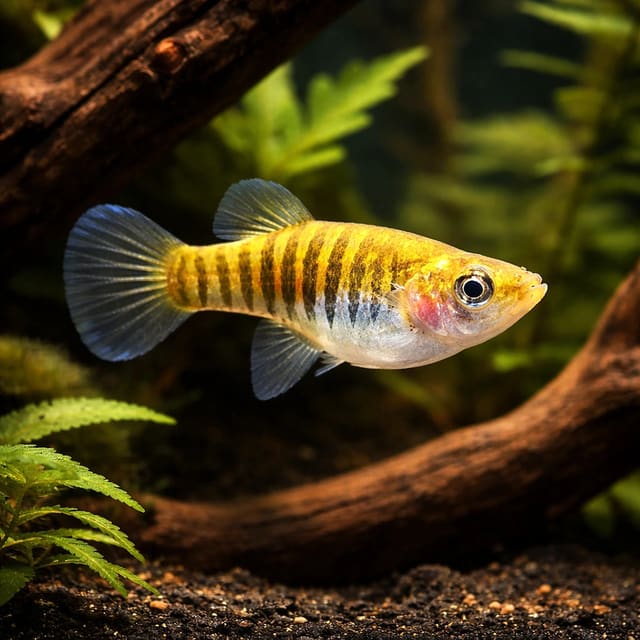
Different body pattern and social display | Use its reviewed adult size, sex and tank guidance rather than copying this page |
|
Spotted Skiffia Skiffia multipunctata |
Distinct spotted pattern and conservation interest | Best evaluated as its own colony, not as filler for a mixed livebearer tank |
|
Red-tailed Goodeid Xenotoca eiseni complex |
Bold colour and robust behaviour | Can be assertive; verify accepted identity and adult compatibility separately |
Keep the invoice or acquisition record, accepted species name and date with the colony. If you later pass fish to another keeper, provide the same information and clearly state when locality is unknown. Accurate modest records are more useful than an impressive but unsupported claim about wild origin.
Do not mix Barred Splitfins with another Chapalichthys species and then distribute offspring under a pure name. Even where hybridisation has not been demonstrated for a particular pairing, mixed colonies make parentage and behaviour difficult to interpret. Separate systems protect clarity.
Never release aquarium fish, fry, eggs, plants, snails or water into ponds, streams or drains leading to natural waters. The scientific literature documents this species outside its native basin, and translocation can threaten local ecosystems and the genetic identity of native populations. Rehome surplus through responsible aquarists or specialist groups.
Conservation interest should improve welfare, not become a sales slogan. This retail stock is not presented as a formal recovery-programme animal. Its value is that it gives a prepared aquarist the opportunity to keep, learn from and responsibly maintain a remarkable species.
Barred Splitfins are packed for UK livestock delivery in oxygen-charged bags inside insulated packaging and moved through a licensed live-animal courier service. Dispatch timing, postcode coverage, weather holds and available services are governed by the current delivery information shown at checkout. We do not promise next-day or overnight delivery where the selected service and schedule do not support it.
Every eligible livestock order is covered by the published Live Arrival Guarantee. If there is a problem, photograph the affected fish in the unopened sealed bag within two hours of delivery and contact us promptly. Read the current delivery page before ordering so the evidence and reporting steps are understood in advance.
New customers can use WELCOME10 for 10% off a first qualifying order. The discount is applied at checkout and remains subject to the active code terms. It does not change the care requirement, sale unit or number of fish supplied.
One quantity supplies one unsexed fish. The listing is not a pair, trio or group pack. Order the number needed for a suitable same-species group only after confirming the adult aquarium capacity.
The current dispatch size is approximately 3-4 cm. This is an approximate juvenile band, not a guaranteed exact measurement and not the adult size.
Published figures vary by sex and measurement method. Plan for a fish approaching 10 cm; females may be larger than males. A specialist record documents a 93 mm standard-length female.
Plan around 250 litres or more with a broad footprint and open swimming room. A long aquarium around 120 cm is a useful starting shape, but width, group size, decor, filtration and tank mates also matter.
Do not plan solitary housing. Keep a same-species group; six or more is a practical starting point where the adult aquarium has enough capacity. Do not overcrowd a small tank just to reach that number.
About 18-23 C is a practical routine range. Avoid permanent temperatures above 24 C and consider a gradual winter rest below 20 C if you can provide stable, well-managed seasonal care.
That depends on the room and season. Many UK homes may maintain part of the preferred range without constant heating, but a thermostat can prevent unsafe drops. Measure the aquarium rather than assuming.
Aim for pH 7.0-7.8 and roughly 10-20 dGH, with stable chemistry, zero ammonia and nitrite and strong oxygenation. Match changes gradually.
It is robust but not a generic easy community fish. Adult space, group structure, cooler seasonal care, plant-rich feeding and responsible colony management make it better for an intermediate or well-prepared keeper.
Use a plant-rich omnivore diet: spirulina or vegetable-based staple foods, mature algae and biofilm, measured vegetables and smaller amounts of daphnia, Artemia or suitable frozen food.
A species tank is safest. Robust similarly sized fish with matching cool hard-water needs may work in a large system, but compatibility is not guaranteed. Avoid long-finned, timid, tiny and warm-water species.
Small shrimp and fry are at risk. Even if some individuals ignore adults, do not buy this species expecting it to be shrimp-safe or to protect every newborn.
Mature males show a specialised split or notched anal-fin structure and are often slimmer. Females are generally deeper-bodied and may grow larger. Juveniles can be difficult to sex, so this listing remains unsexed.
They can reproduce readily once mature, but good breeding is more than producing fry. It requires stable seasonal care, a suitable adult group, records, rearing capacity and responsible homes for offspring.
Specialist observations suggest fry are often tolerated, but predation and food competition remain possible. Dense cover and a separate mature rearing tank improve control; survival is not guaranteed.
No. It is a representative aquarium view. The dispatched fish will vary in size within the current stock band, sex, shade, barring, fin shape and body depth.
No locality or formal programme is guaranteed by this listing. The wild species has conservation importance, but ordinary retail ownership should not be presented as direct wild-population recovery.
Do not treat it as a year-round British pond fish. Experienced seasonal outdoor keeping requires controlled minimum temperatures, predator protection and biosecurity; cold winter exposure is unsafe.
Follow the current delivery terms. If a fish arrives with a covered problem, photograph it in the unopened sealed bag within two hours and contact us promptly so the claim can be assessed.
WELCOME10 gives 10% off a first qualifying order while the active code terms apply. Enter it at checkout; it does not alter livestock delivery charges, care needs or the one-fish sale unit.
Bottom line: choose the Barred Splitfin if you can provide a broad mature aquarium, a proper same-species group, mineral-rich oxygenated water, a plant-rich diet and thoughtful seasonal care. It is a rewarding goodeid with real biological and conservation interest, but it deserves more planning than its juvenile dispatch size suggests.
No reviews for this item yet. Bought one? Honest reviews only, good or bad.
What customers say about ordering from us
I have a small group of long finned mountain minnows. So was delighted to be able to order ten of this variety to increase the genetics in my tank . The ones I recieved are healthy but it’s to early to give a verdict on wether they are of a long finned type since they are small currently.
Gordon Walker · 23 Sept 2026
100% success travel and "installation". Pleased with quality of purchase. The Siamese fighter a bit "shy" so have not yet seen him at his best yet but looking good. Happy customer. GG
George E Garratt · 21 Sept 2026
Reviews of our shop, collected by Judge.me, an independent third-party review collector. Newest first.