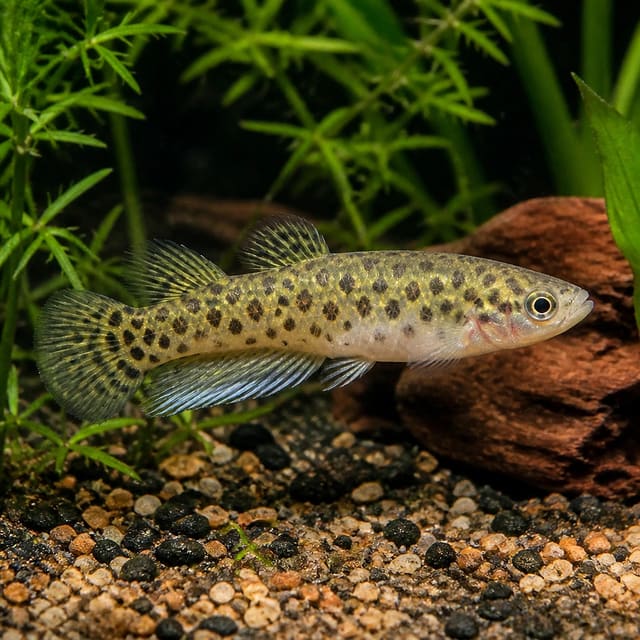
Polka-dot splitfin (Chapalichthys pardalis)
150L
£11.99

The Celebes Halfbeak (Nomorhamphus celebensis) is a viviparous freshwater halfbeak from Lake Poso and its tributaries in Sulawesi, Indonesia, reaching 8 cm standard length. It suits keepers who can provide a mature, filtered aquarium, stable tropical conditions and careful compatibility screening. Sold individually at a dispatch size of 3.5–5 cm.
Adult size is the maximum length this species reaches at full maturity (scientific sources). The livestock you receive will be younger and smaller. Product-photo provenance and any image-specific limitations are stated on the listing.
Nomorhamphus celebensis
Shoaling fish: kept in a group they feel safer, stay calmer and show their best colour.
The Celebes Halfbeak (Nomorhamphus celebensis) is a viviparous freshwater halfbeak from Lake Poso and its tributaries in Sulawesi, Indonesia, reaching 8 cm standard length. It suits keepers who can provide a mature, filtered aquarium, stable tropical conditions and careful compatibility screening. Sold individually at a dispatch size of 3.5–5 cm.
Adult size is the maximum length this species reaches at full maturity (scientific sources). The livestock you receive will be younger and smaller. Product-photo provenance and any image-specific limitations are stated on the listing.
The Celebes Halfbeak (Nomorhamphus celebensis), also called the Poso halfbeak, is a viviparous freshwater fish in the Zenarchopteridae family. It is endemic to Lake Poso and its tributaries in Sulawesi, Indonesia. FishBase records a maximum of 8 cm standard length, which is the adult planning figure to use for this fish. It suits keepers who can prepare a mature biological filter, maintain stable tropical freshwater and assess every proposed companion before mixing animals.
The species is pelagic in freshwater, meaning it lives in the open water rather than being identified as a bottom-dwelling fish. Its characteristic halfbeak form includes an extended lower jaw. Wikipedia describes the Poso halfbeak as viviparous, so it produces live young rather than laying eggs. This is natural-history context, not a reason to assume the sex of an individual animal or expect breeding in a community aquarium.
FishBase lists the species as Endangered and places its natural range entirely within the Lake Poso system. That restricted range makes accurate identification important. Plan care around Nomorhamphus celebensis, its recorded 8 cm adult length and the needs of the complete aquarium rather than relying on general assumptions about other halfbeaks.
| Suits | Not suited to |
|---|---|
| A mature, biologically filtered freshwater aquarium | An aquarium whose filter has not completed maturation |
| A keeper who tests temperature, pH, ammonia and nitrite | A setup where water quality cannot be checked regularly |
| A stocking plan based on the 8 cm adult length | A plan based only on the smaller dispatch size |
| Companions screened for water type, temperature, flow and behaviour | Animals combined without a compatibility assessment |
We rate this as an intermediate-care fish. The rating reflects the need to mature the filter before introduction, keep ammonia and nitrite at zero, monitor the aquarium consistently and make compatibility decisions for the individual stocking plan. It is a better match for a keeper prepared to measure conditions and act on changes than for someone seeking a fish that can be added to an unprepared aquarium.
One purchase supplies one Celebes Halfbeak. The dispatch size is 3.5–5 cm, while the recorded adult planning length is 8 cm standard length. Dispatch size describes the animal when sent; it is not its expected adult size. Allow for the full adult length from the beginning rather than planning a temporary arrangement around the smaller measurement.
Sex is guaranteed only when the selected option explicitly states male or female. This Celebes Halfbeak listing has no sex-guaranteed option. Do not use colour, body shape, fin markings, dispatch size or the gallery image to assume the sex of the animal.
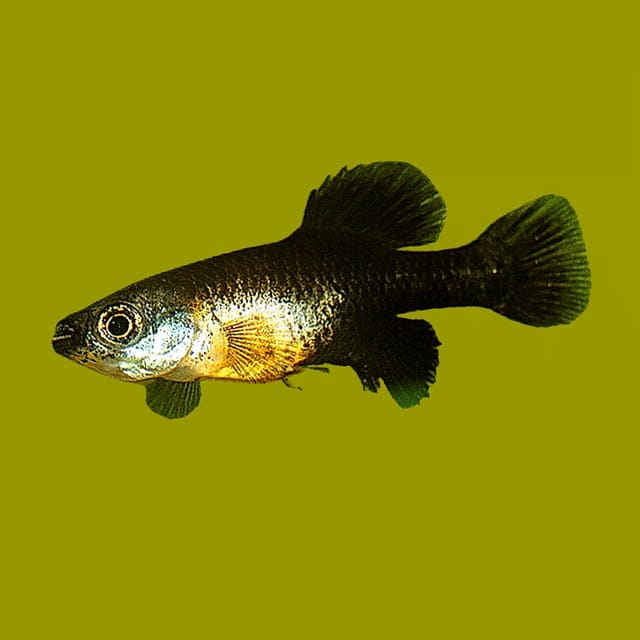
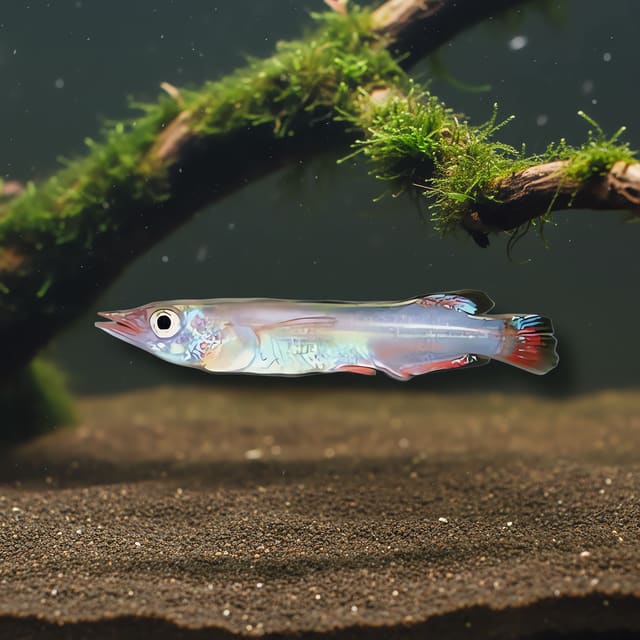
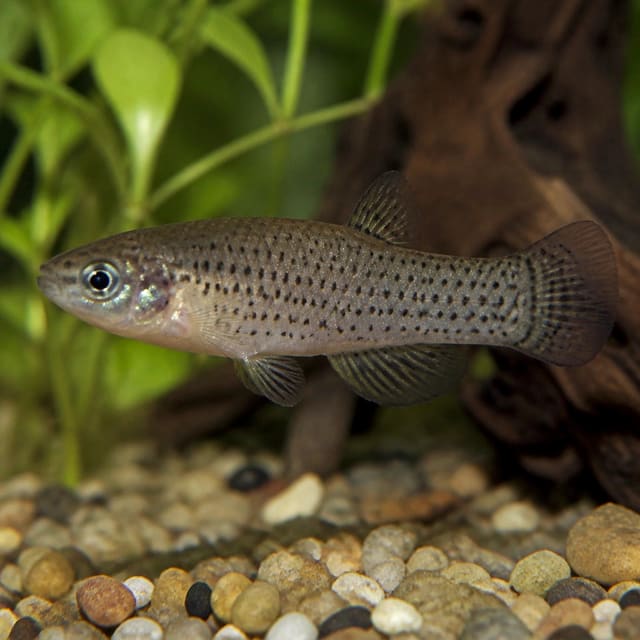
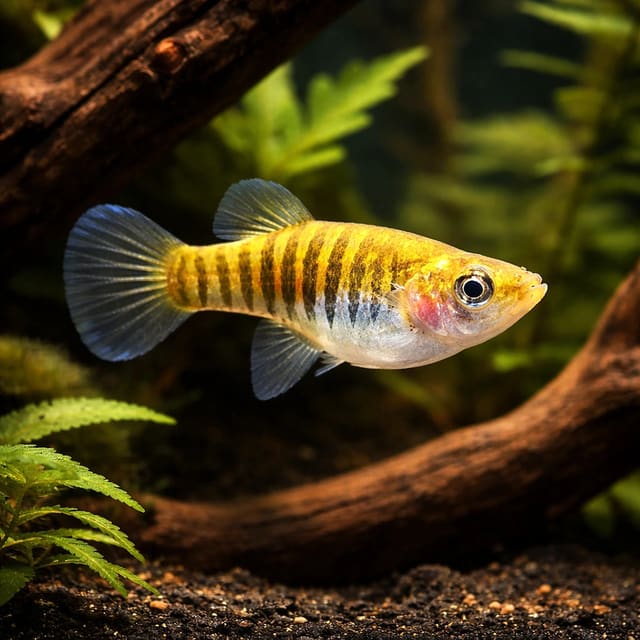
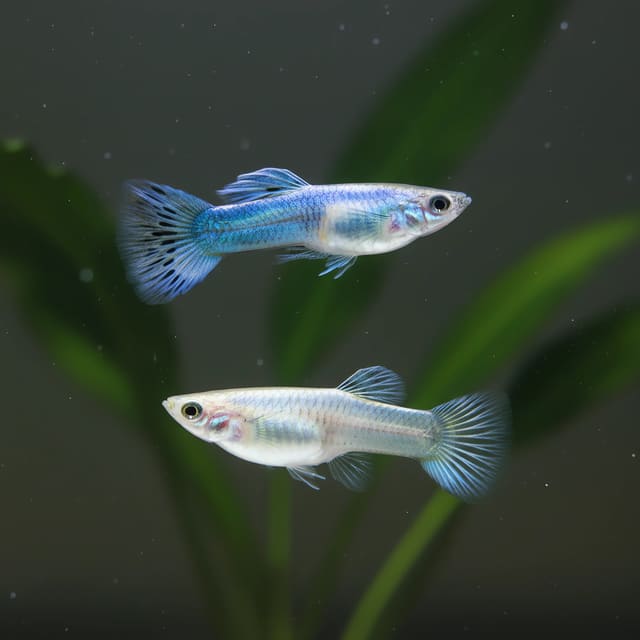
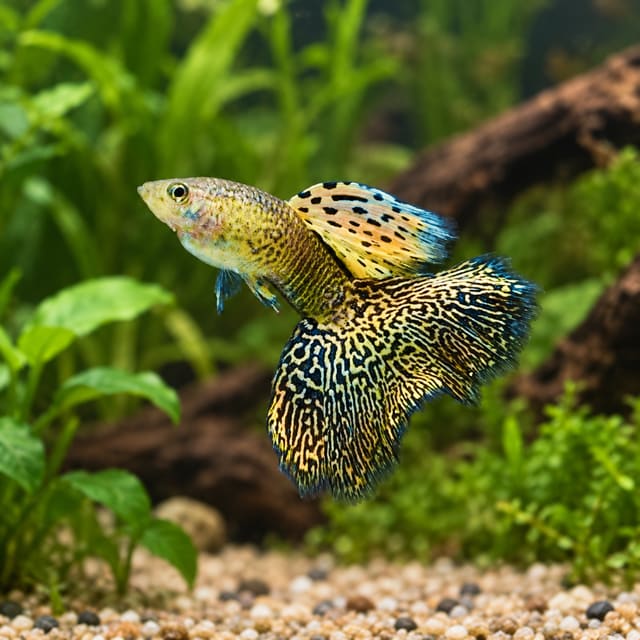
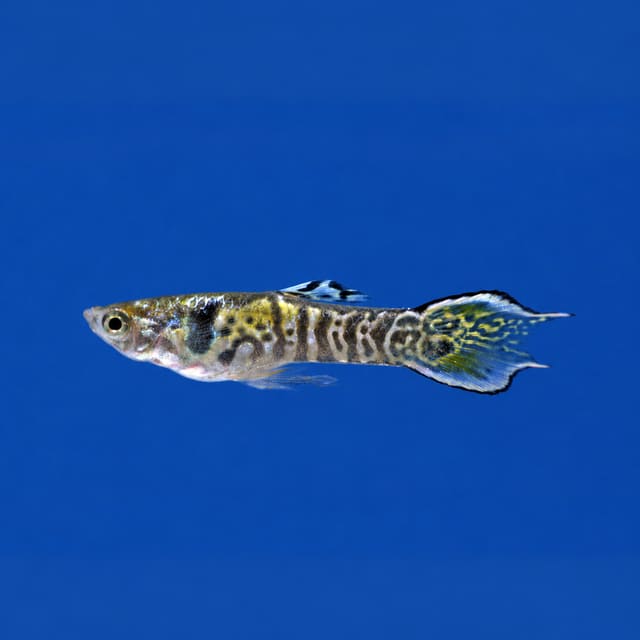
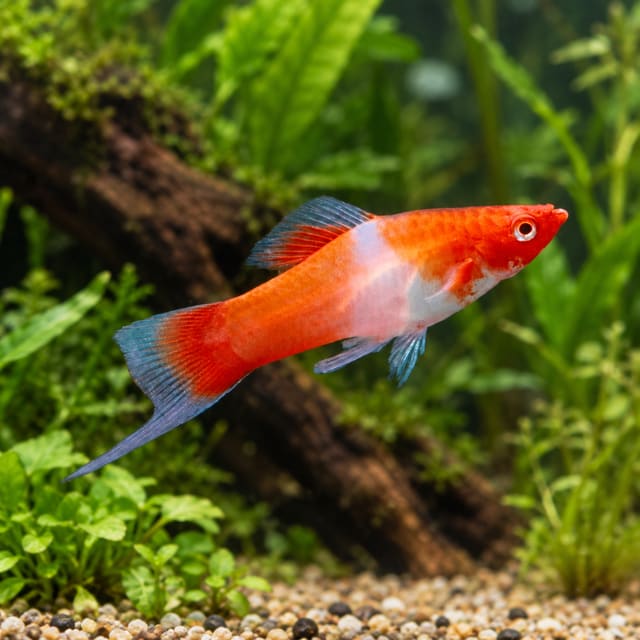
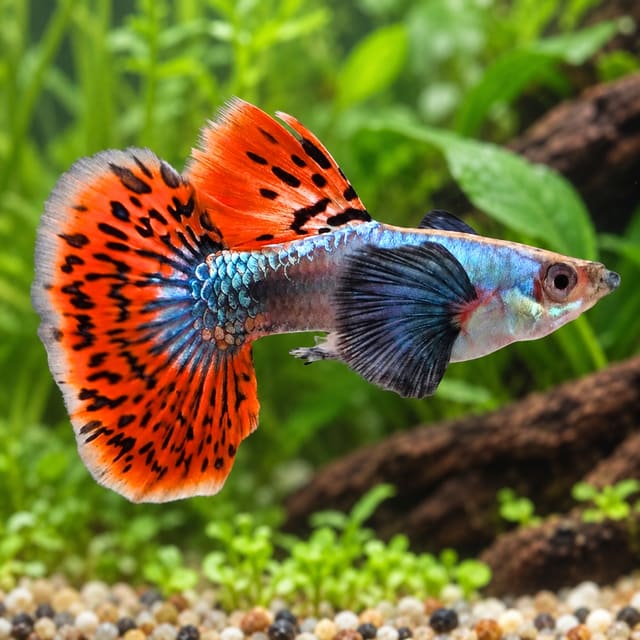
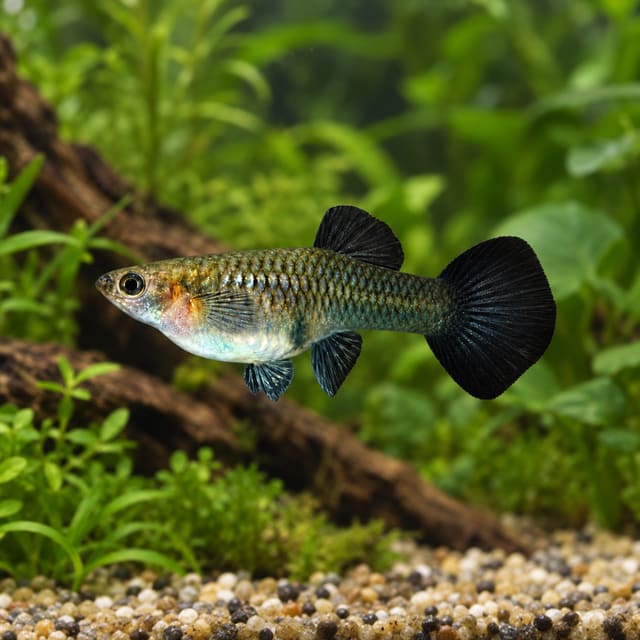
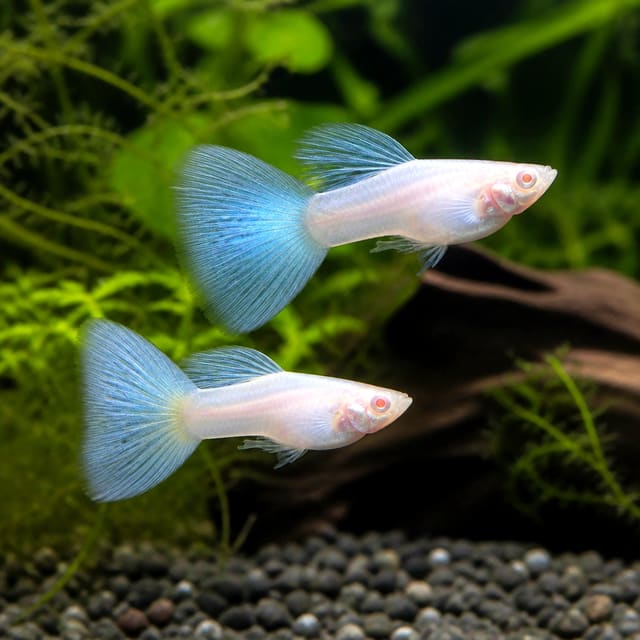
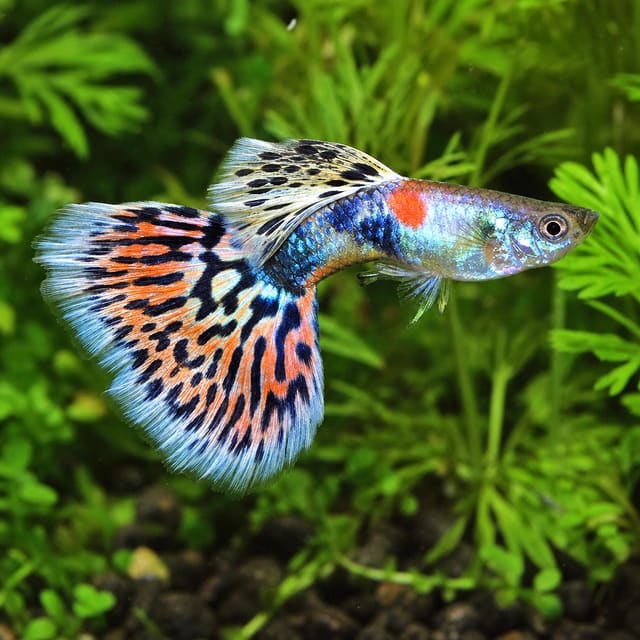
The gallery images are representative of this type of animal rather than photographs of the exact animal supplied, so colours can look slightly different from the live animal. The pictured fish shows the elongated body, pointed lower jaw and coloured fin markings associated with the listed type, but its appearance does not set a colour or sex guarantee for an individual order.
This species sits within our livebearers collection. The collection describes its reproductive group, but aquarium decisions still need to be made for this species and for the animals already living in the planned setup.
Before ordering, compare the 8 cm adult figure with the aquarium’s usable swimming space, decoration, existing livestock and filtration capacity. Plants and ornaments provide enrichment and retreat areas, but they also occupy water volume and physical space. The correct decision is therefore based on the whole layout rather than the nominal tank capacity alone.
Choose an aquarium that can accommodate this fish at its recorded adult length of 8 cm alongside every other adult animal in the stocking plan. OATA’s freshwater aquarium guidance recommends buying as large an aquarium as possible within reason and planning for chosen fish once fully grown. This is broad group guidance, not a species-specific optimum.
A larger volume of water is less susceptible to rapid changes in temperature and pH than a small volume. That stability is useful when caring for an intermediate fish, but the external dimensions, internal layout and existing stocking still matter. A nominal volume cannot by itself show whether several adult fish, decorations and equipment leave enough usable room.
Do not treat a smaller aquarium as a suitable first stage simply because the fish is dispatched below adult size. Starting with the intended adult setup avoids another move as the fish grows and lets the biological filter develop around the aquarium that will actually be used.
If this is your first setup, prepare it through our first tropical aquarium guide before livestock arrives. Fill and dechlorinate the water, install and switch on the equipment, confirm that the system reaches the intended stable temperature, and then complete biological filter maturation. Equipment operating for a day or two is not the same as a mature filter.
Do not place this fish in an aquarium without a well set up and maintained filter. The RSPCA explains that biological filtration supports beneficial bacteria which convert toxic ammonia into nitrite and then into the safer compound nitrate. Fish waste and uneaten food continually add to the load, so filtration is an ongoing welfare requirement rather than equipment used only to clear visible debris.
After filling the aquarium, dechlorinate the water before relying on the filter. OATA advises either allowing water to stand for 24 hours or using a commercial dechlorinator. Once the equipment is running, leave the aquarium for 24–48 hours to settle so that the intended temperature can be reached and equipment operation can be checked. The biological filter then needs to mature; the initial 24–48-hour settling period does not complete that process.
| Check | Required action |
|---|---|
| Ammonia | Confirm 0 mg/L before adding fish |
| Nitrite | Confirm 0 mg/L before adding fish |
| pH | Measure it and confirm that it remains suitable for the planned livestock |
| Temperature | Confirm that the tropical setup has reached a stable intended temperature |
| Equipment | Check that the filter and other equipment are operating correctly |
Ammonia and nitrite are toxic, so a clear-looking aquarium is not enough. Use liquid or other suitable aquarium test kits rather than judging water quality by appearance. Repeat tests while maturation progresses and do not use livestock to test whether the biological filter is ready.
Beneficial bacterial capacity must also keep pace with the eventual stocking and feeding load. Increase livestock numbers slowly after maturation rather than filling the aquarium in a single step. Each increase in fish and food increases waste production, and the bacterial population needs time to respond. Adding too much too quickly can produce new tank syndrome, in which ammonia or nitrite rises because the filter cannot yet process the increased load.
Keep the Celebes Halfbeak in stable tropical freshwater, and measure the aquarium rather than relying on how the water looks. Test temperature and pH as routine operating values, with ammonia and nitrite maintained at 0 mg/L. Record the local water’s hardness as part of the compatibility check because different fish may require different water types even when all are described as tropical freshwater animals.
Use our water chemistry guide to understand what each measurement means. Temperature describes thermal conditions, pH describes acidity or alkalinity, and hardness helps characterise the mineral content of the water. These readings should be considered together with the requirements of every animal in the aquarium.
Do not combine fish merely because they share the words “freshwater” or “tropical”. OATA notes that species can prefer different water types, temperatures and flow rates. A workable community needs one set of aquarium conditions that meets every animal’s requirements at the same time.
Check the readings again after livestock is added. The important change is not only a dramatic reading: a movement away from the aquarium’s established pattern can indicate that waste production, maintenance or equipment operation needs attention. Confirm water quality before adding more animals, and pause additions whenever ammonia or nitrite is detectable.
At least once a week, check the aquarium’s water quality. OATA recommends regular tests to prevent the build-up of harmful waste, with more frequent testing while an aquarium is being established or after fish are added. Include ammonia, nitrite, nitrate and pH in the test routine, and check that the temperature remains correct.
Carry out a partial water change of up to 25% every week to help remove excess waste chemicals. The appropriate frequency and amount may vary with the species kept, aquarium size, number of fish and other conditions, so use the test results and the behaviour of the aquarium as part of the decision. Before adding replacement tap water, treat it to make it safe for fish and bring it to the correct temperature.
Keep records so a change can be recognised early. A single written line for the date, temperature, pH, ammonia, nitrite, nitrate and maintenance performed gives a useful baseline. The purpose is not to chase constant adjustments; it is to know whether the established aquarium is still operating as expected.
After adding any fish, test more frequently until the biological filter is demonstrably coping with the increased waste load. Do not add another group simply because the first animals appear settled. Water tests provide the direct check that the filter has adapted while observation shows whether the animals are behaving and feeding normally.
Use a high-quality freshwater fish food chosen for Nomorhamphus celebensis, and offer it where the fish readily takes it. Diet and feeding position vary among freshwater species: some feed near the surface, others throughout the water column, and others near the bottom. Watch the individual fish take food before deciding that a particular format is suitable.
Give modest portions and prevent uneaten food from accumulating. Leftover food contributes to ammonia, while a fish that repeatedly fails to reach or accept food needs the feeding plan reviewed. The aim is for the intended animal to eat without creating a persistent residue that the biological filter must process.
| What you see | What to do |
|---|---|
| The fish takes food readily | Continue with a portion that does not leave waste behind |
| Food remains uneaten | Reduce the portion and remove the residue before it affects water quality |
| Other fish reach every portion first | Change how food is distributed and reassess companion suitability |
| Interest in food declines | Test water quality and compare behaviour, breathing and appearance with normal |
| Ammonia or nitrite becomes detectable | Stop further stocking and address the water-quality problem |
Do not label this species an insectivore or prescribe a list of live, frozen or prepared foods without a diet basis for this exact fish. A safer practical approach is to choose food for the identified species, confirm that the individual animal accepts it and use water tests to ensure that the amount offered is not overloading the aquarium.
Include feeding observations in the weekly record. Note whether the fish approaches food, takes it successfully and maintains condition. Appetite is useful because a reduction can accompany changes in water quality or health, but it should be considered alongside swimming, breathing, colour and physical appearance rather than used as the only health check.
Learn the fish’s normal swimming, breathing, colour, temperament, body condition and feeding response. Individual fish naturally vary, so a change from that animal’s established pattern is more useful than comparing it with a single photograph. Observe during ordinary care rather than waiting for a scheduled maintenance day.
OATA highlights hanging at the surface, sitting on the bottom and erratic swimming as changes that can indicate a problem. Other warning signs include becoming darker or paler, hiding more, showing a different level of aggression, moving the gill covers unusually quickly or slowly, developing white spots or fluffy growths, losing fins or scales, changing body condition, or showing less interest in food.
When a health change appears, begin with water tests because ammonia and nitrite are toxic and can affect every fish in the aquarium. Record the results, temperature, recent maintenance, new livestock and the signs observed. Contact us for further guidance if the change persists or the fish shows visible injury, abnormal breathing, growths or loss of condition.
Do not start a disease treatment from appearance alone. Different problems can produce similar signs, and any response must account for the other livestock and the established biological filter. Immediate, supported actions are to check water quality, confirm equipment operation, reduce further stocking pressure and document the change clearly.
Be at the delivery address to receive the parcel so live fish are not left unattended. Tropical Fish Co hand-bags fish in pure oxygen and uses an insulated poly box, with a heat pack when the weather calls for it. The parcel travels through a licensed live-animal courier service.
Follow the Tropical Fish Co delivery and Live Arrival Guarantee policy from the moment the parcel is received. The continuous video protects the condition record before the box, bag or fish is disturbed.
Film every delivery from the sealed parcel onward. For a Live Arrival Guarantee claim, keep the fish inside the sealed bag while its condition is shown, and contact us on the same day with the order number and continuous unboxing video. Do not release the fish before recording the condition needed for a claim.
Prepare the aquarium before the parcel arrives. The filter should already be mature, ammonia and nitrite should each test at 0 mg/L, and the tropical temperature and pH should be stable for the intended setup. These aquarium checks belong before arrival because the fish should not remain in its transport bag while basic setup work is completed.
After release, observe swimming, breathing and general condition. Keep the established test routine in place and check the water more frequently after a new fish is added. The biological filter must adapt to the increased waste and feeding load, so pause any further stocking until tests show that ammonia and nitrite remain at zero.
Assess compatibility one proposed animal at a time. OATA notes that freshwater species can differ in adult size, water type, preferred temperature, flow requirement and social behaviour. Some fish need shoals, while others are territorial or aggressive. A shared retail category does not show that two animals can live together peacefully.
For the Celebes Halfbeak, begin with the confirmed facts: it is an 8 cm freshwater pelagic halfbeak from the Lake Poso system and needs a mature, filtered tropical aquarium. Then compare each proposed companion against the conditions already measured in the tank. The final plan must provide one workable environment for all animals throughout adulthood.
| Decision | Check before combining animals |
|---|---|
| Adult space | Use the 8 cm adult length and the adult sizes of every companion, including space displaced by décor |
| Water type | Compare measured pH and hardness with the needs of every proposed animal |
| Temperature | Choose one stable tropical setting that falls within every animal’s care requirements |
| Flow | Confirm that the same flow arrangement suits every species |
| Behaviour | Check whether any proposed fish is territorial, aggressive or dependent on a particular social group |
| Feeding access | Ensure that each animal can reach and accept suitable food without persistent interference |
Do not convert a general description such as “community fish” or “livebearer” into a universal compatibility claim. The fish already present, aquarium dimensions, layout, water measurements and feeding pattern all change the decision. Ask us for a stocking and compatibility assessment with the aquarium volume and dimensions, measured water values, existing livestock and proposed additions.
Compatibility remains an observation task after introduction. Watch for altered aggression, hiding, failure to reach food, abnormal swimming, colour changes or damaged fins and scales. Test water at the same time so behavioural pressure is not confused with a change in ammonia, nitrite, temperature or pH.
Add fish gradually after the aquarium’s biological filter has matured. Every added animal and every increase in feeding raises waste production. OATA warns that stocking too quickly can cause new tank syndrome when there are not enough nitrifying bacteria to process the increased ammonia and nitrite.
Before each addition, confirm that ammonia and nitrite are 0 mg/L and that temperature and pH remain stable. Recheck the compatibility screen using the adult sizes and requirements of the complete proposed community. Do not base the decision only on the amount of empty-looking space visible in the aquarium.
The number of Celebes Halfbeaks to keep must be planned from the aquarium’s full stocking picture rather than from a universal group figure. Capacity depends on adult body size, species requirements, water values, compatibility, aquarium dimensions, décor and filtration. Use the 8 cm adult length for each Celebes Halfbeak included in that calculation.
If behaviour changes after a fish is added, treat the change as a compatibility warning even when water tests remain acceptable. If ammonia or nitrite rises, treat it as a filtration and stocking warning even when the animals still appear active. These two checks answer different questions and should be performed together.
Keep the plan conservative while the aquarium establishes its new routine. Stable results and normal behaviour after one addition are the basis for considering the next step; they are not a reason to add several animals at the same time.
FishBase records the Celebes Halfbeak at a maximum of 8 cm standard length. Use 8 cm as the adult planning figure even though the fish is dispatched at 3.5–5 cm.
Choose an aquarium large enough for its 8 cm adult length and the complete adult stocking plan. OATA recommends as large an aquarium as possible within reason because larger water volumes are more stable.
Set the number through the complete stocking plan, accounting for adult size, aquarium dimensions, water values, filtration and compatibility. Use 8 cm for each fish included in the calculation.
We rate it intermediate because it needs a mature biological filter, stable tropical freshwater, regular testing and careful compatibility screening. It suits a prepared keeper rather than an aquarium whose filter is still maturing.
Use a high-quality freshwater food chosen for the species and offer it where the fish readily takes it. Keep portions modest, prevent leftovers and review the plan if the fish repeatedly misses food.
Keep the Celebes Halfbeak in stable tropical freshwater and measure temperature and pH regularly; OATA freshwater guidance requires ammonia and nitrite to remain at 0 mg/L. Match pH and hardness before combining fish.
Do not assume a temperament from the halfbeak name. Screen proposed companions for territorial or aggressive behaviour, then observe for chasing, hiding, feeding interference, altered aggression or damaged fins after introduction.
Choose only animals that match its tropical freshwater conditions, available adult space, flow and stocking plan. Check every proposed companion’s adult size, water type, temperature, behaviour and feeding access before combining them.
Start filming with the parcel still sealed before opening it or floating the bag. Fish are bagged in pure oxygen inside an insulated box; open in one continuous take, show the sealed bag, then float the bag for 20–30 minutes before release.
No reviews for this item yet. Bought one? Honest reviews only, good or bad.
What customers say about ordering from us
I have a small group of long finned mountain minnows. So was delighted to be able to order ten of this variety to increase the genetics in my tank . The ones I recieved are healthy but it’s to early to give a verdict on wether they are of a long finned type since they are small currently.
Gordon Walker · 23 Sept 2026
100% success travel and "installation". Pleased with quality of purchase. The Siamese fighter a bit "shy" so have not yet seen him at his best yet but looking good. Happy customer. GG
George E Garratt · 21 Sept 2026
Reviews of our shop, collected by Judge.me, an independent third-party review collector. Newest first.