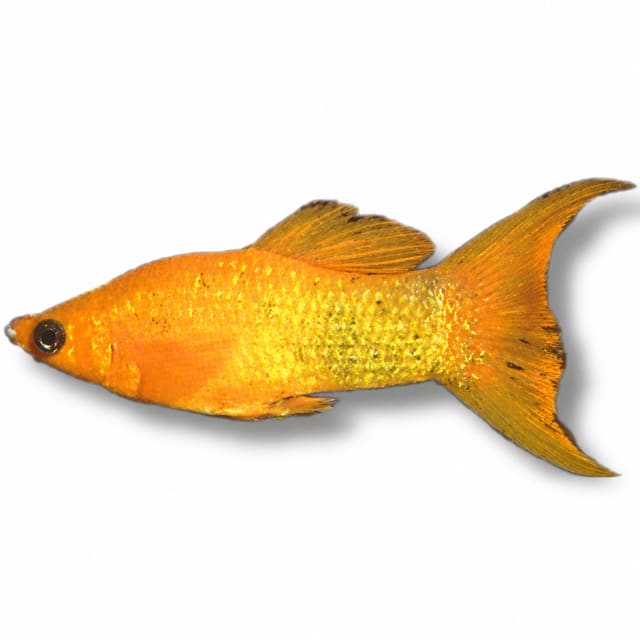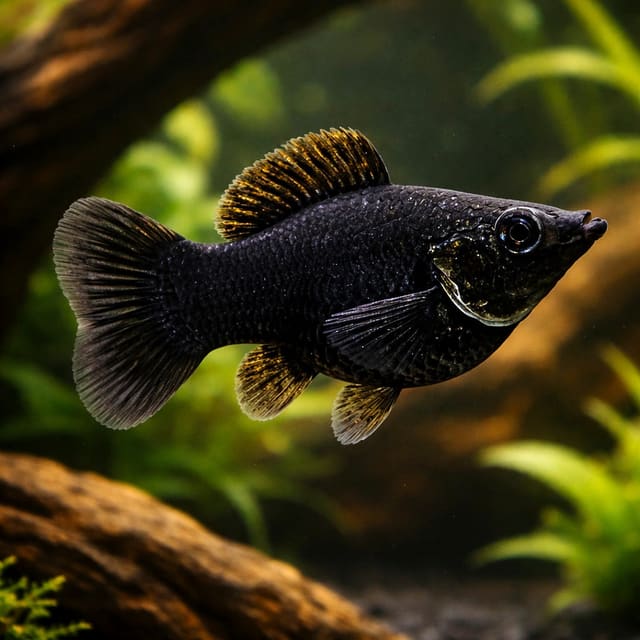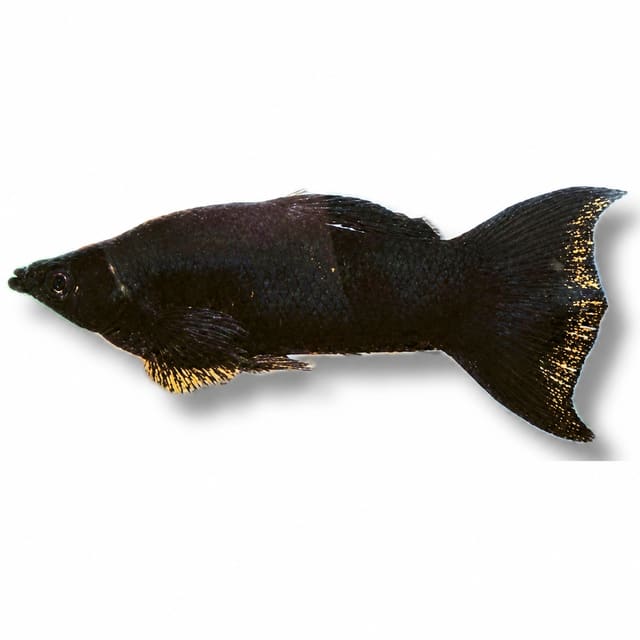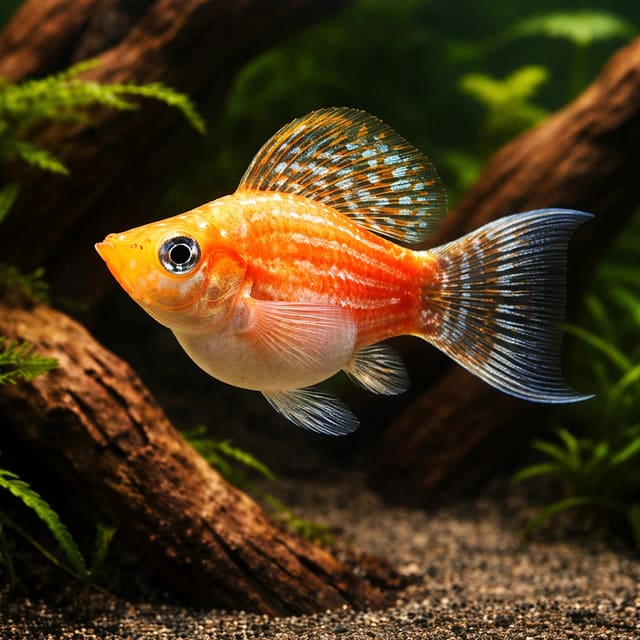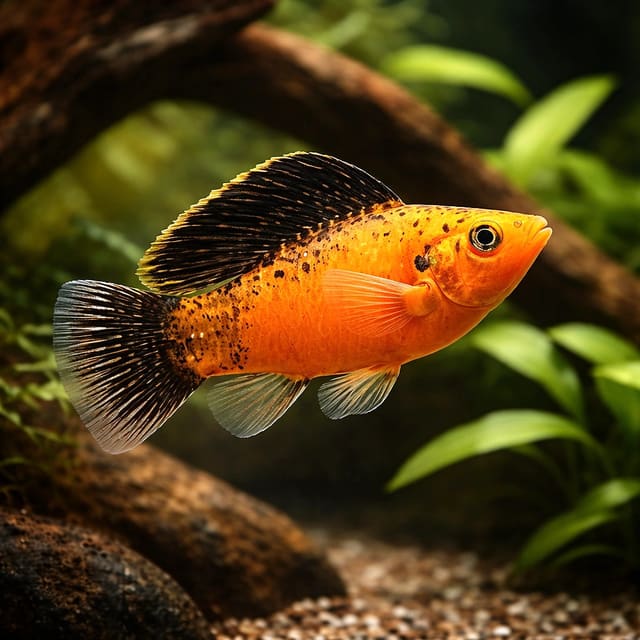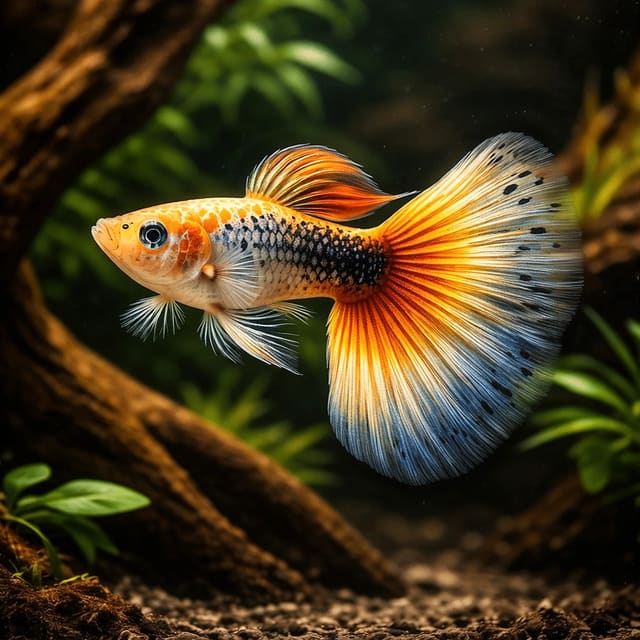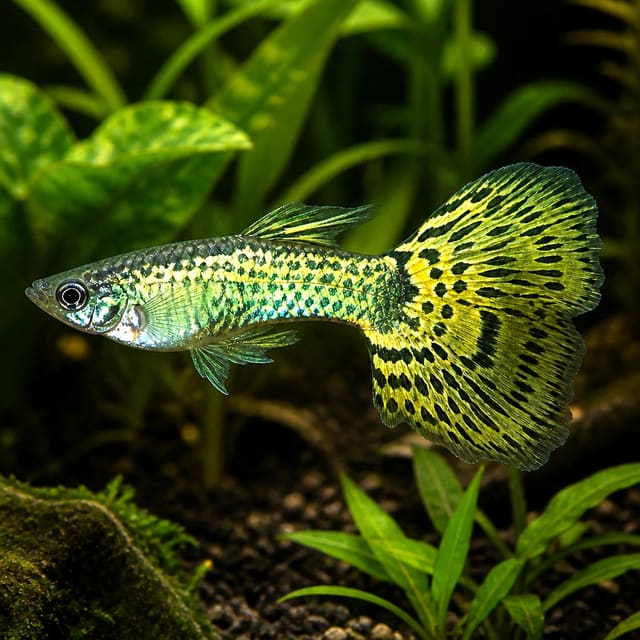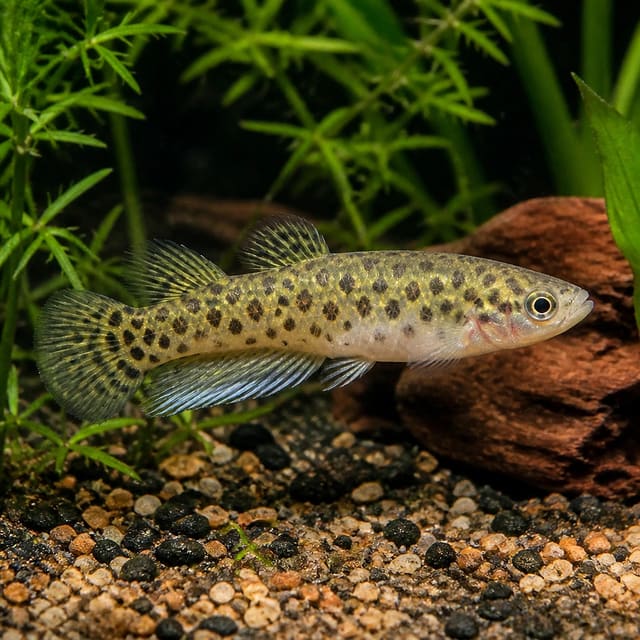
Polka-dot splitfin (Chapalichthys pardalis)
150L
£11.99

Spotted Skiffia is an Endangered Mexican goodeid for a mature, highly oxygenated, hard-water aquarium with a managed group and a cooler winter rest. Each quantity is one unsexed fish; ask for the current dispatch size if needed.
Skiffia multipunctata
Shoaling fish: kept in a group they feel safer, stay calmer and show their best colour.
Spotted Skiffia is an Endangered Mexican goodeid for a mature, highly oxygenated, hard-water aquarium with a managed group and a cooler winter rest. Each quantity is one unsexed fish; ask for the current dispatch size if needed.
Maintain these water conditions for optimal health and vibrant colors
Spotted Skiffia (Skiffia multipunctata) is a compact Mexican goodeid with a much bigger story than its size suggests. Males can develop yellow or orange colour, a blue sheen and irregular dark blotches; females are usually silver-grey to olive-brown. No two mature fish need look alike. This natural variation, active grazing behaviour and unusual livebearing biology make the species rewarding for an aquarist who wants to maintain a real breeding group rather than add a decorative fish to a general community.
This is an Endangered freshwater species, not a routine guppy substitute. It needs clean, highly oxygenated water, a mature aquarium, vegetable-rich food, social planning and a cooler seasonal rhythm. It can nip long fins, males may be persistent, and captive conditions can influence aggression. A species-focused aquarium is the safest starting point.
Each quantity is one unsexed live fish. Live dispatch size varies; ask for the current size before ordering if it matters to your group plan. Sex, colour pattern, a male-female pair and the exact individual shown in the gallery are not guaranteed. The existing gallery image is representative; it is not a taxonomic voucher or a photograph of the exact fish that will arrive.
Read the seasonal-temperature and group sections before ordering. Current price and availability come from the live product controls, while the care information remains useful when stock changes.
| Accepted species | Skiffia multipunctata (Pellegrin, 1901) |
|---|---|
| Family | Goodeidae, subfamily Goodeinae |
| Common names | Spotted Skiffia, Splotched Skiffia, Tiro pintado |
| Natural range | Endemic to west-central Mexico, principally surviving in the Rio Duero drainage of the Lerma-Santiago system |
| Conservation status | Endangered and declining |
| Adult size | Usually around 5-6 cm total length; maximum published standard length about 7.2 cm |
| Practical aquarium | 60 litres is a specialist minimum; about 90 litres and 75 cm length or more is more forgiving for a managed group |
| Normal working temperature | About 18-24°C, with a planned cooler winter rest rather than constant tropical heat |
| Water chemistry | Moderately hard to hard and slightly alkaline; approximately pH 7.2-8.5 and 12-25 dGH |
| Temperament | Active and socially complex; fin nipping and male pressure are possible |
| Diet | Predominantly aufwuchs, algae and vegetable matter, supplemented with small invertebrate foods |
| Care level | Intermediate, best for a prepared goodeid keeper |
The accepted scientific name is Skiffia multipunctata. It is a splitfin in the family Goodeidae, not a species of Xenotoca or Neotoca, and it should not be sold under the common name Butterfly Goodeid. The Butterfly Goodeid is Ameca splendens, a different fish with different adult behaviour. Correct naming matters because goodeid groups are often maintained for many generations and a mistaken label can permanently weaken the value of a captive population.
The species was described by Jacques Pellegrin in 1901 from material collected around Agua Azul near Guadalajara. Historical synonyms include Goodea multipunctata, Ollentodon multipunctatus and Xenendum multipunctatum. Those names can appear in old literature, but they are not separate aquarium species. The accepted name gives keepers and future custodians one consistent identity.
Within Goodeinae, reproduction differs from familiar poeciliid livebearers such as guppies. Developing young receive maternal nutrients through trophotaeniae, temporary ribbon-like structures sometimes compared with an umbilical system. They are not a true placenta, and the male does not have the guppy-style gonopodium. These distinctions are useful when planning breeding and identifying mature sexes.
One quantity means one unsexed Spotted Skiffia. It does not mean a pair, trio, colony or breeding group. Younger fish may not show the full colour or sex characters visible in mature examples. Live size can vary with age, condition and the timing of dispatch.
Ordering several fish increases the chance of obtaining both sexes but cannot guarantee a particular ratio. A random small group may mature with too many males, so have enough aquarium space and a plan to separate or rehome individuals. The welfare decision comes after the sexes and personalities become visible, not at checkout.
| Feature | What is supplied | What is not guaranteed |
|---|---|---|
| Sale unit | One live Spotted Skiffia per quantity | A pair, trio or fixed group |
| Size | Live size varies; ask for the current dispatch size | An exact millimetre measurement |
| Sex | Unsexed unless the live selector explicitly says otherwise | Male, female or a chosen ratio |
| Colour | Natural juvenile or adult colour for the individual | Orange, yellow or black blotches on demand |
| Image match | A representative species image | The exact individual pictured |
Spotted Skiffia suits a keeper who enjoys observing a group, adjusting diet and managing a seasonal aquarium. It is especially appealing to aquarists interested in Mexican fishes, livebearer biology or responsible captive populations. It is not difficult because of extreme water chemistry; it is demanding because the fish benefits from consistency, cool periods, oxygen, social management and accurate record keeping.
A first-time fishkeeper can learn to maintain the species, but it should not be marketed as effortless. You need to recognise male pressure, test water, make substantial regular water changes, keep vegetable foods in the diet and avoid prolonged overheating. A mature spare aquarium or divider is valuable when a group develops an unfavourable sex ratio or one fish is persistently harassed.
For a broader choice of livebearers, visit the livebearer collection. Compare adult care rather than choosing only by colour. Many livebearers share hard-water preferences, yet their temperature, aggression, group structure and hybridisation risks can be very different.
Females are commonly reported at about 6 cm total length, with males often slightly smaller. The Goodeid Working Group records a maximum known standard length of 72 mm. Standard length excludes the tail fin, so the visual nose-to-tail measurement can be longer. Plan the aquarium around adult body depth, group movement and courtship space rather than the approximate 3 cm arrival size.
The safest mature male character is the splitfin structure: a notch follows the shortened front rays of the anal fin. Males also tend to have a larger, notched dorsal fin and may develop yellow, orange, blue and black patterning. Females are generally plainer, fuller-bodied and can show a gravid area when carrying young. Colour alone is unreliable because markings vary widely and some females can show blotches.
| Character | Mature male | Mature female |
|---|---|---|
| Anal fin | Splitfin notch after shortened anterior rays | No male splitfin structure |
| Dorsal fin | Often larger with a visibly notched front section | Usually smoother and less exaggerated |
| Body colour | May show yellow, orange, blue sheen and irregular dark blotches | Usually silver-grey, olive or brown-grey |
| Body shape | Often slimmer | Typically fuller, particularly when gravid |
| Retail sexing | Juveniles at the offered size may not be reliably sexable | |
Historical records place Spotted Skiffia in small lakes, spring-fed ponds, ditches and quiet river channels in west-central Mexico. Habitats include shallow water, often around one metre or less, with mud, silt, sand and rocks. Roots, branches, emergent plants, floating vegetation and green algae create a complicated margin rather than an empty open pool.
Flow ranges from still to moderate, but the specialist husbandry account emphasises high dissolved oxygen. That combination is important: the aquarium does not need to blast the fish with a narrow jet, yet it does need excellent gas exchange and water movement through the filter. Broad circulation, a rippled surface and calmer areas among plants are more useful than a single violent outlet.
Adults are often seen just beneath the surface, while juveniles gather near protected margins. A good aquarium therefore combines open horizontal room with dense edge cover. Grazing surfaces are equally important. Mature wood, smooth stone, plant stems and leaves support the biofilm and algae that form part of the natural feeding pattern.
| Wild feature | Aquarium response | Reason |
|---|---|---|
| Shallow margins | Prioritise footprint and length over a very tall tank | Creates usable group and courtship space |
| Roots and branches | Use smooth branching wood with open escape routes | Breaks sight lines and provides grazing surfaces |
| Dense vegetation | Plant the back, ends and surface while retaining open water | Gives females and fry places to withdraw |
| Green algae and aufwuchs | Allow selected stones or wood to mature naturally | Supports normal browsing between meals |
| None-to-moderate current | Use distributed flow rather than one harsh jet | Balances oxygen with resting areas |
| High oxygen | Maintain surface movement and avoid heat-driven oxygen loss | Supports respiration and water quality |
The Goodeid Working Group gives 60 litres as a minimum and notes that a larger aquarium with a generous base is better. Treat 60 litres as a carefully managed specialist minimum, not a universal promise. For a social group, about 90 litres and at least 75 cm of usable length is a more forgiving practical starting point. A 90 cm aquarium gives still more room to separate courtship and feeding activity.
Footprint matters more than headline volume. A tall narrow tank can hold the same litres while providing less horizontal space and fewer distinct retreats. Arrange wood, stone and plants so a pursued fish can leave the pursuer's view without becoming trapped in a dead end. Leave a clear feeding area where every fish can be observed.
Stocking depends on sex ratio and individual behaviour. A small breeding group may fit a well-designed aquarium that would be unsuitable for the same number of male-heavy adults. Do not use the minimum volume to justify crowding. More space improves oxygen stability, feeding access and the ability to maintain separate social zones.
Use a mature, biologically stable aquarium with a secure cover. Spotted Skiffia are active near the upper water layers and can jump when startled. Fit gaps around cables and filter pipes while preserving ventilation. Keep the front or centre open for swimming and observation, then build denser cover at the sides and rear.
Hard-water-tolerant plants are sensible choices. Java fern, Anubias and Bucephalandra can be fixed to wood or rock; Vallisneria, hornwort, guppy grass and floating plants can create shelter where conditions suit them. Plant selection is flexible, but the structure is not: the group needs cover, open water, grazing surfaces and enough light to support some natural growth.
A dark or mixed natural substrate can make the fish feel secure, but avoid sharp material. Smooth gravel and sand are easier around grazing fish. Leaf litter may be used sparingly if it does not drive soft, acidic conditions or obstruct maintenance. The aim is a clean, mineral-rich system with natural complexity, not a heavily tannin-stained soft-water layout.
This is the most important correction to many generic care summaries. The species has been recorded across a broad 15-28°C envelope, but that does not mean every temperature in the range is equally suitable all year. The specialist Goodeid Working Group warns that constant temperatures above 24°C can reduce disease resistance, accelerate ageing and keep reproduction running without a restorative pause.
For ordinary indoor care, aim for a stable working range around 18-24°C. A planned cooler period below 20°C for two or three months can provide a winter rest. Temperature should change gradually with the season; never drop a warm aquarium abruptly. The lower boundary around 15°C belongs to experienced, carefully monitored seasonal management and is not a routine thermostat target.
At the warm end, increase surface movement and watch dissolved oxygen because warmer water carries less oxygen. If the aquarium remains above 24°C during a heatwave, improve room ventilation, use safe fan cooling where appropriate, reduce unnecessary lighting heat and avoid overfeeding. Do not add ice or cause rapid swings.
| Period | Practical target | Management focus |
|---|---|---|
| Normal active season | About 20-24°C | Growth, varied feeding and observation of courtship |
| Cool rest | About 16-20°C for two or three months | Gradual transition, lighter feeding and continued excellent water quality |
| Heatwave | Avoid prolonged exposure above 24°C | Maximise oxygen and lower heat safely |
| Outdoor seasonal care | Specialist only; move fish only when daytime water is reliably above 15°C | Monitor nights, predators, contamination and rapid weather change |
Moderately hard to hard, slightly alkaline water is the most defensible aquarium target: approximately pH 7.2-8.5 and 12-25 dGH. Stability is more important than chasing a single number within that range. Test the source water before buying. If your tap water is very soft, use an appropriate remineralisation method and verify the result rather than adding unmeasured household materials.
Ammonia and nitrite must remain at 0 mg/L. Nitrate should be controlled with stocking, plants, feeding discipline and water changes. A mature filter is essential; an aquarium that has merely been filled for several days is not cycled. Test after adding the group because even a previously stable aquarium can respond to increased feeding and biomass.
Do not chase pH with repeated quick chemical adjustments. Sudden changes in mineral content and pH can be more stressful than a stable value near the useful range. If adjustment is necessary, prepare replacement water consistently and make changes over time while measuring pH, general hardness and carbonate hardness.
Use a filter sized for the aquarium and its real livestock load, with enough biological media and broad circulation. Add an air stone or supplementary surface movement when oxygen is uncertain, particularly in warm weather, densely planted tanks at night or systems with a heavy breeding population. Protect strong intakes with a pre-filter sponge so juveniles are not drawn in.
The Goodeid Working Group recommends unusually substantial weekly water changes, around 60-80%, for this spring and river-associated species. That can be appropriate when replacement water is closely matched for temperature and chemistry. Keepers who are not prepared for one large change can divide the work into multiple changes, but the total maintenance must still control dissolved waste and replenish minerals without instability.
Vacuum open substrate, rinse mechanical media in removed aquarium water when flow falls, and never replace all biological media at once. Clean the impeller and check the outlet because a filter can sound normal while circulation slowly declines. Observe fish during maintenance; rapid breathing at the surface, clamped fins or unusual hiding warrants immediate water and oxygen checks.
| Interval | Action | Pass condition |
|---|---|---|
| Daily | Check breathing, appetite, chasing, temperature and equipment | All fish feed and can rest without persistent harassment |
| Weekly | Test ammonia, nitrite, nitrate and pH; inspect hardness periodically | Ammonia and nitrite 0 mg/L, chemistry stable |
| Weekly | Change a substantial proportion of matched, conditioned water | No abrupt temperature or pH shift |
| As needed | Rinse mechanical media and clean the impeller | Broad circulation and strong surface movement restored |
| Monthly | Inspect lid gaps, cables, intake guards and plant density | Secure cover, safe intake and usable escape routes |
Spotted Skiffia is predominantly a grazer. In nature it feeds on aufwuchs and algae, including growth on roots and plant stems, while also taking small invertebrates and insects at the surface. The long gut and tooth structure support a plant-rich feeding strategy. Calling the fish simply omnivorous can lead to too much rich animal food and too little fibre.
Use a quality vegetable flake, small granule or algae-based food as the regular prepared diet. Add blanched spinach, courgette, shelled pea or other safe vegetables in small portions, removing leftovers before they spoil. Mature algae-covered stones can be rotated into the aquarium from a fish-safe container that has never been exposed to pesticides, detergents or wild fish.
Offer small animal foods such as Daphnia, Cyclops, baby brine shrimp or suitable mosquito larvae as measured supplements, not the entire menu. Feed amounts the group can finish promptly and distribute food across more than one area so females and quieter fish are not excluded. A healthy grazing surface is enrichment, but aquarium algae alone is neither complete nor reliably abundant.
| Food type | Role | How to use it |
|---|---|---|
| Vegetable flake or fine granule | Daily nutritional base | Small portions spread across the group |
| Algae or spirulina-based food | Supports grazing diet | Rotate with the staple rather than overfeeding wafers |
| Blanched vegetables | Fibre and browsing enrichment | Offer modest pieces and remove leftovers |
| Daphnia, Cyclops or baby brine shrimp | Small invertebrate variety | Measured portions several times a week |
| Mature biofilm and algae | Natural between-meal browsing | Maintain on selected safe wood, plants or stones |
This fish is best understood as a group species, but the word group is not permission to crowd it. Once fish can be sexed, aim for at least two females per male. More female cover can reduce the attention received by any one fish, but only if the aquarium has enough footprint, hiding structure and feeding access. A male-heavy group may need to be divided.
Starting with six or more juveniles can provide a better chance of a workable ratio than buying two or three, provided the aquarium is large enough for the adults. That number is a practical husbandry approach, not a guarantee. Genetics also matters: a captive population should not be founded from the fewest fish possible when unrelated stock and space are available.
Watch interactions at different times of day. Short displays and brief chases are not the same as one fish being denied food, pinned into a corner or losing condition. Persistent pursuit, torn fins, hiding throughout feeding or a pinched abdomen means management has failed and the group needs more cover, more space or separation.
Spotted Skiffia is sometimes described as peaceful, but that label is too simple. It can nip long fins, males can pressure females, and a peer-reviewed study found aquarium-reared fish showed more aggression than pond-reared fish. The safest recommendation is a species-focused aquarium. A carefully chosen specialist community is possible, but it is not the default promise.
Potential companions must tolerate hard, alkaline, relatively cool water and must not be slow or long-finned. They also need enough food despite the Skiffia's active feeding. Avoid delicate nano fish, bettas, fancy guppies, long-finned gouramis and similar vulnerable species. Do not mix different Skiffia species because hybridisation can damage the identity of both captive lines.
Related goodeids are valuable comparisons, but not automatic tank mates. Different species can vary in size and assertiveness, and maintaining them together can make fry identification impossible. Use the tank-mate tool as an initial screen, then make the final decision from adult size, water, behaviour, feeding and breeding goals.
| Candidate | Assessment | Reason |
|---|---|---|
| Spotted Skiffia group | Preferred | Supports natural social and breeding behaviour when ratio and space are managed |
| Robust cool-water livebearers | Conditional | Water may match, but feeding, aggression and fry identity must be assessed |
| Other Skiffia species | Avoid | Hybridisation can compromise captive line identity |
| Long-finned guppies, bettas or gouramis | Avoid | Fins may be nipped and slow fish can be stressed |
| Delicate nano fish | Avoid | Activity and feeding competition can overwhelm them |
| Shrimp colonies | Not guaranteed safe | Small young may be eaten and food competition is likely |
| Snails | Often possible | Check species-specific water needs and observe feeding competition |
Skiffia multipunctata is assessed as Endangered. Historical populations were lost from parts of the Lerma-Santiago system through pollution, habitat alteration, channelisation, water diversion and introduced fishes. Specialist sources report that only a small number of populations remain, particularly in spring-fed habitats of the Rio Duero drainage.
Maintaining correctly identified captive lines can support ex-situ conservation knowledge, but an ordinary home breeding group is not automatically part of a recognised conservation programme. Keep locality information when it is genuinely supplied, never invent it, avoid hybrids and record where stock came from. Specialist networks such as the Goodeid Working Group can advise keepers who want to contribute beyond routine aquarium breeding.
Responsible ownership also means preventing release. Never put aquarium fish, fry, plants or water into a pond, river or drain. Rehome surplus through experienced keepers or retailers. Captive fish can carry pathogens, establish outside their native range or affect local wildlife even when release appears compassionate.
Prepare a fully cycled aquarium before dispatch. Match temperature gradually and follow the fish acclimation guide; the acclimation timer can help keep the process measured. Do not leave an opened shipping bag standing for an unnecessarily long period, because gas exchange changes the chemistry of transport water.
Keep the aquarium dim after release and offer only a small first meal once breathing and swimming settle. Confirm that every fish can reach food. Avoid major decor changes during the first days unless aggression requires immediate intervention. Test ammonia and nitrite because a new group can increase load even in a mature system.
| Time | Check | Action if abnormal |
|---|---|---|
| On arrival | Bag condition, fish position and breathing | Photograph any concern and follow current delivery instructions |
| After release | Steady swimming and access to cover | Reduce light and increase safe oxygenation |
| First feeding | Every fish locates a small meal | Spread food and identify social exclusion |
| Daily | Fins, skin, belly, breathing and chasing | Test water and separate a persistently targeted fish |
| Days 2-7 | Ammonia, nitrite, temperature and appetite | Make matched water changes and correct the cause |
A healthy Spotted Skiffia is alert, grazes surfaces, holds its fins normally and joins group feeding. Colour intensity varies naturally, so do not diagnose health from brightness alone. Body condition, breathing, appetite, skin, fin integrity and social access are better indicators.
Rapid breathing can signal low oxygen, ammonia, nitrite, heat stress or disease. A pinched belly may indicate food exclusion, parasites or chronic illness. White spots, excess mucus, ulcers, clamped fins and uncontrolled swimming need prompt investigation. Test water and review temperature before selecting medication; treating blindly can delay correction of the real problem.
Quarantine new fish in a mature separate aquarium where practical. Keep nets and siphons separate, and do not share water between systems. Because this species can be maintained as a long-lived captive line, disease prevention protects more than one purchase; it protects future generations and other keepers who may receive surplus fish.
| Observation | Possible causes | First response |
|---|---|---|
| Rapid surface breathing | Low oxygen, heat, ammonia, nitrite or gill disease | Test immediately and increase safe aeration |
| Pinched abdomen | Feeding exclusion, inadequate diet or internal illness | Observe individual feeding and quarantine if needed |
| Torn fins with hiding | Persistent social pressure | Separate the aggressor or victim and reassess the group |
| Loss of balance | Severe water, temperature or health problem | Check equipment and water, then seek diagnosis |
| White spots or heavy mucus | Parasites or irritation | Quarantine and identify the condition before treatment |
Spotted Skiffia gives birth to large, well-developed young. Specialist observations place the natural reproductive season mainly from late winter into spring, and aquarium breeding often resumes as temperature rises towards 20°C after a cooler rest. This seasonal pattern is another reason not to hold the species at high tropical temperatures all year.
Published aquarium accounts commonly describe gestation around six to eight weeks, varying with temperature and female condition. Broods are often around ten to fifteen, with larger females capable of more. Treat those figures as typical observations, not guarantees. First broods can be small, and disturbance, diet, age or social pressure can affect outcomes.
Adults do not always pursue fry aggressively, especially in a well-fed, densely structured aquarium, but survival is never guaranteed. Fine-leaved plants, floating cover and intake sponges improve refuge. If preserving every brood is important, move fry carefully to a matched mature rearing aquarium rather than isolating a heavily gravid female in a tiny trap.
The young are comparatively large and can usually take finely crushed vegetable-rich flake, small live foods, microworms, Cyclops and baby brine shrimp. Feed little and often while protecting water quality. A thin film of algae and mature biofilm gives fry useful browsing between prepared meals.
Do not grow fry in stagnant, overcrowded containers. Use gentle filtration with a guarded intake, stable mineral content and regular matched water changes. Sort only when necessary and maintain notes on parent group, dates, sex ratio and any supplied locality. Never label offspring with a collection location that was not documented for their parents.
Plan for homes before breeding repeatedly. The cool seasonal rest helps pause reproduction and prevents the aquarium from becoming permanently overcrowded. Passing correctly labelled fish to experienced keepers is more responsible than producing continuous broods without space.
Different Skiffia species can hybridise, and fertile historical hybrids are documented. Keep Spotted Skiffia separate from Twoline Skiffia and other members of the genus when breeding or when fry could be produced. Visual sorting after the event is not a dependable way to restore a pure line.
Do not use the words pure, wild, F1 or locality strain unless records support them. Commercially bred fish can still be valuable and healthy, but provenance claims must be honest. The species name, source, approximate arrival date and any verified locality should travel with fish passed to another keeper.
The products below are related comparisons, not a list of guaranteed companions. Review each listing separately and keep species apart where hybridisation, aggression or fry identification is a concern.
| Fish | Why compare it | Important distinction |
|---|---|---|
| Twoline Skiffia Female | Another member of the genus | Do not mix breeding groups because hybridisation is possible |
| Barred Splitfin | Another Mexican goodeid of similar specialist interest | Different genus, adult profile and social behaviour |
| Butterfly Goodeid | A well-known goodeid comparison | This is Ameca splendens, not another common name for Spotted Skiffia |
| Red-Tailed Goodeid | Useful for comparing colour and temperament | Xenotoca eiseni is a separate, often assertive species |
| Polka-dot Splitfin | Another patterned splitfin | Patterned common names do not indicate the same species |
| Alien Splitfin | Another rare goodeid option | Verify its own identity and care rather than transferring this guide |
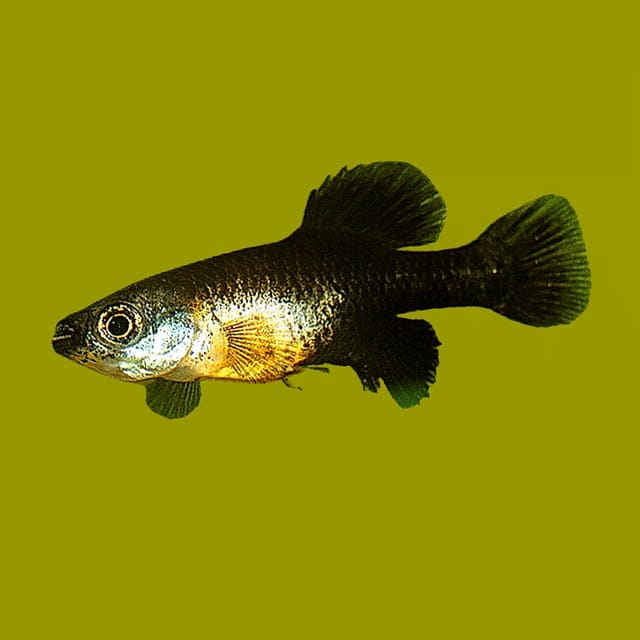
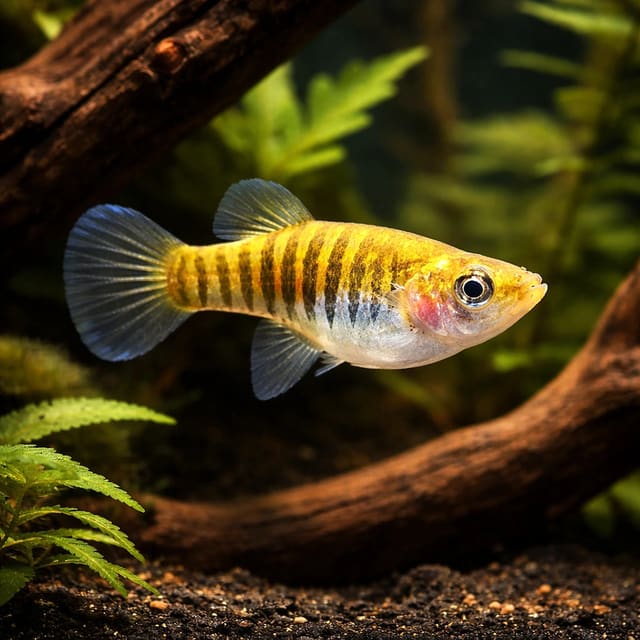
The species name means many-spotted, but the dark pattern is highly variable. One male may show only a few marks; another can develop large asymmetrical black areas, with different patterns on each side. Yellow, orange and bluish tones also vary. Females are usually quieter in colour, though rare blotched females are reported.
Juveniles may arrive without dramatic markings, and adult colour can change with age, sex, social state, lighting and background. Do not choose the species expecting every fish to become a black-and-orange show male. The representative gallery image helps communicate the general subject but cannot promise individual anatomy, colour, sex or markings.
For fish welfare, avoid trying to force colour through excessive rich food, permanent heat or stressful display conditions. Stable seasonal care, a varied diet and a secure social environment allow natural condition to develop without making a cosmetic result the priority.
Choose Spotted Skiffia when you can provide a mature hard-water aquarium, a managed group, strong oxygenation, a plant-rich grazing layout and a cooler winter period. Choose a different fish if the tank must remain permanently hot, contains long-finned delicate species, cannot accommodate a group or has no separation option.
| Mature aquarium | Fully cycled, secure lid and broad circulation |
|---|---|
| Space | At least the specialist 60-litre minimum; preferably about 90 litres and 75 cm or more for a managed group |
| Water | Stable pH 7.2-8.5, approximately 12-25 dGH, ammonia and nitrite at 0 mg/L |
| Temperature plan | Normal care around 18-24°C with a gradual cooler winter rest |
| Diet | Vegetable-rich staple, grazing surfaces and measured small invertebrate foods |
| Social plan | Group with female cover, visual barriers and a separation option |
| Breeding responsibility | No mixed Skiffia species; accurate records and homes for fry |
The accepted identity, distribution, size and current Endangered status are supported by the FishBase species account and Eschmeyer's Catalog of Fishes. Habitat, seasonal temperature, diet, group structure and conservation detail draw on the Goodeid Working Group species account. Behavioural caution is supported by peer-reviewed research on captive and pond rearing.
Some aquarium recommendations are practical inferences rather than measurements from a scientific paper. In particular, about 90 litres and 75 cm length is presented as a more forgiving group starting point above the specialist 60-litre minimum. Aquarium shape, sex ratio, filtration, planting and individual behaviour can require more space.
Check the live stock control and quantity beside this guide. Each quantity is one unsexed fish. Before ordering, review the live-fish buying guide and current delivery information, and make sure the mature aquarium is ready before the parcel leaves.
Our Live Arrival Guarantee applies to qualifying livestock orders when the current delivery, reception and claim requirements are followed. Check adult care and compatibility before buying.
It is Skiffia multipunctata, an Endangered Mexican goodeid in the splitfin subfamily Goodeinae.
No. Butterfly Goodeid is Ameca splendens. Using that name for this product would confuse two separate species.
Females are commonly around 6 cm total length, while the maximum published standard length is about 7.2 cm. Standard length excludes the tail.
The specialist published minimum is 60 litres. About 90 litres with at least 75 cm of usable length is a more forgiving practical starting point for a managed group, and some groups need more.
Use about 18-24°C for normal care and provide a gradual cooler period below 20°C for two or three months. Avoid keeping the fish above 24°C continuously.
Specialist accounts use 15°C as a carefully managed seasonal boundary, not an everyday target. Do not expose recently transported fish to abrupt cold or move them outdoors without experience and reliable weather.
A useful target is pH 7.2-8.5 with moderately hard to hard water around 12-25 dGH. Keep conditions stable and maintain ammonia and nitrite at 0 mg/L.
Yes. Use good surface movement, broad filtration flow and extra aeration when necessary, particularly in warm weather or a densely stocked breeding aquarium.
Build the diet around aufwuchs, algae, vegetable-rich prepared food and safe vegetables, with measured small invertebrate foods such as Daphnia or baby brine shrimp.
No. Natural grazing is valuable enrichment, but aquarium algae is neither nutritionally complete nor reliably available in the right quantity.
It is socially active rather than universally peaceful. Fin nipping, male pressure and persistent chasing can occur, so a structured species-focused aquarium is safest.
Long-finned guppies and bettas are poor choices because fins can be nipped and the temperature plan may not match. Do not rely on the broad word livebearer to decide compatibility.
Keep a managed group rather than one isolated fish where space allows. Once sexable, aim for at least two females per male and separate fish if the ratio or behaviour becomes unsafe.
No. Each fish is unsexed, so a chosen sex or ratio cannot be guaranteed. Have enough space to adjust the group after maturity.
Mature males have the characteristic splitfin notch and a more notched dorsal fin, and are often more colourful. Juveniles may not be reliably sexable from ordinary retail appearance.
Yes. It is a goodeid livebearer. Developing young receive maternal nutrition through temporary trophotaeniae and are born relatively large and developed.
Adults often leave fry alone when well fed and given dense cover, but survival cannot be guaranteed. Guard filter intakes and provide fine-leaved or floating refuge.
Do not combine them where breeding can occur. Documented hybridisation can compromise the identity and conservation value of captive lines.
Pollution, habitat alteration, water diversion, channelisation and introduced fishes have removed it from much of its historical Mexican range.
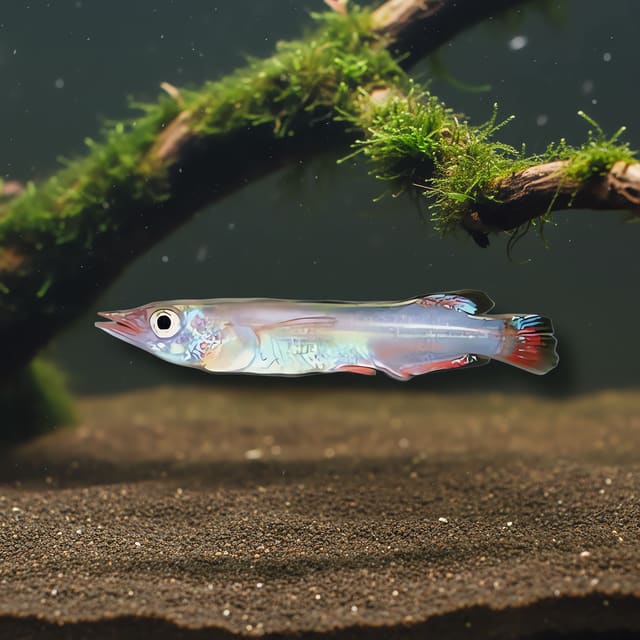
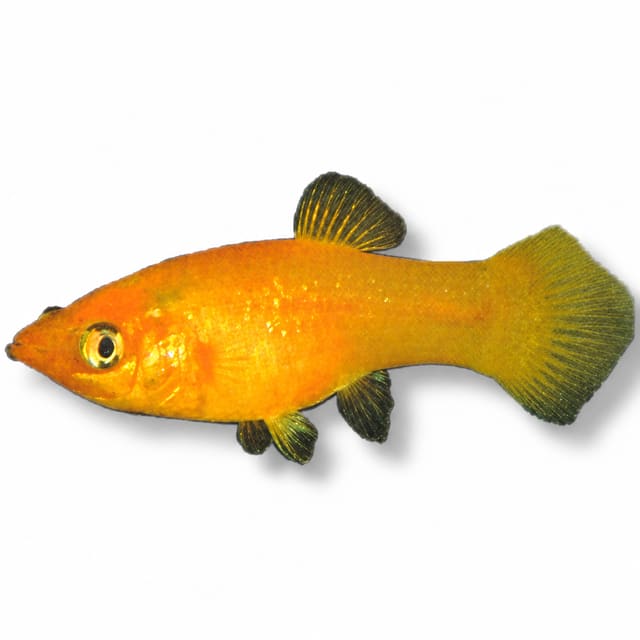
No. The gallery is representative. Natural colour, markings, sex, size and body shape vary, and the fish dispatched is not the exact individual pictured.
The Live Arrival Guarantee applies to qualifying livestock orders when the current delivery and claim conditions are followed.
No reviews for this item yet. Bought one? Honest reviews only, good or bad.
What customers say about ordering from us
I have a small group of long finned mountain minnows. So was delighted to be able to order ten of this variety to increase the genetics in my tank . The ones I recieved are healthy but it’s to early to give a verdict on wether they are of a long finned type since they are small currently.
Gordon Walker · 23 Sept 2026
100% success travel and "installation". Pleased with quality of purchase. The Siamese fighter a bit "shy" so have not yet seen him at his best yet but looking good. Happy customer. GG
George E Garratt · 21 Sept 2026
Reviews of our shop, collected by Judge.me, an independent third-party review collector. Newest first.