Moderate
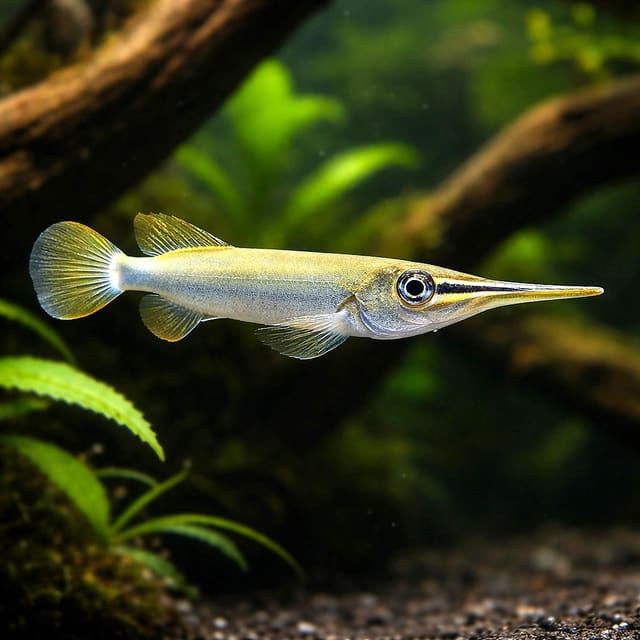
Malayan Halfbeak (Dermogenys pusilla) – Surface-Dwelling Livebearer
24–28°C · pH 7–8 · 80L
£5.99

A hardy, peaceful dwarf livebearer with subtle spotted markings, ideal for planted community aquariums. Easy care, peaceful. 18-26C, pH 6.5-8.0.
Adult size is the maximum length this species reaches at full maturity (scientific sources). The livestock you receive will be younger and smaller. Product-photo provenance and any image-specific limitations are stated on the listing.
Phalloceros caudomaculatus
Shoaling fish: kept in a group they feel safer, stay calmer and show their best colour.
Confirm your email, then we’ll send an availability message for this exact item if it returns within 180 days.
This request is only for this product—no newsletter or other promotions. A mail-provider retry may very rarely duplicate the same availability message. Unconfirmed addresses are removed after 48 hours. See our privacy policy.
A hardy, peaceful dwarf livebearer with subtle spotted markings, ideal for planted community aquariums. Easy care, peaceful. 18-26C, pH 6.5-8.0.
Adult size is the maximum length this species reaches at full maturity (scientific sources). The livestock you receive will be younger and smaller. Product-photo provenance and any image-specific limitations are stated on the listing.
Maintain these water conditions for optimal health and vibrant colors
Spotted Livebearer / Caudo (Phalloceros caudimaculatus) is a small South American poeciliid livebearer with a speckled, natural-looking pattern and easy-going planted-tank behaviour. The fish supplied under SKU 6041 are normally around 3-4 cm. In the trade this spotted aquarium form is often linked with reticulated or speckled strain wording, but the safe scientific anchor for the species is Phalloceros caudimaculatus.
This is not a large display fish. It is a subtle, active group fish for keepers who enjoy small livebearers, planted aquariums and natural movement. It suits mature, calm setups where the fish can graze, explore plant cover and breed without being harassed by larger tank mates.
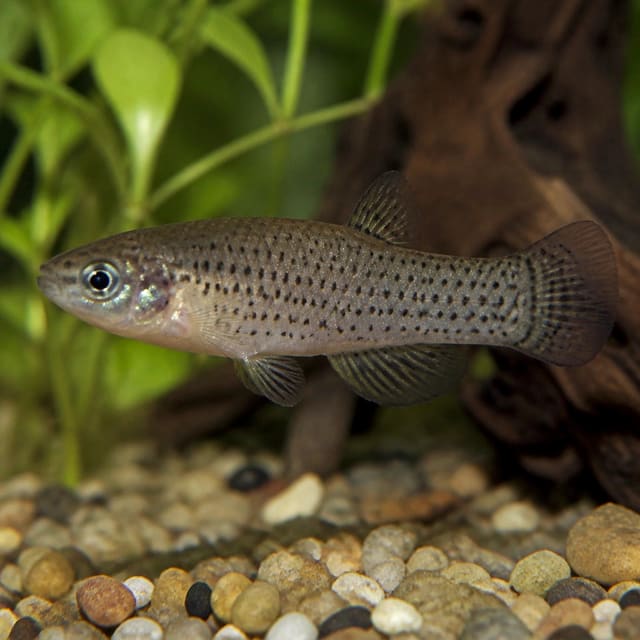
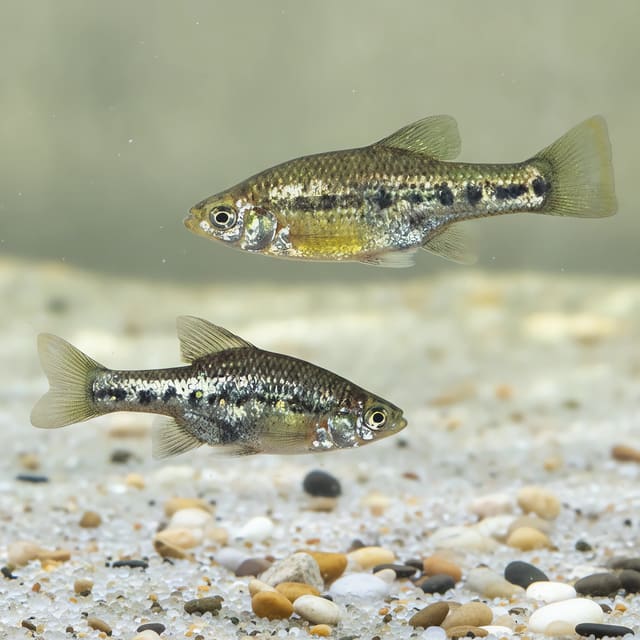
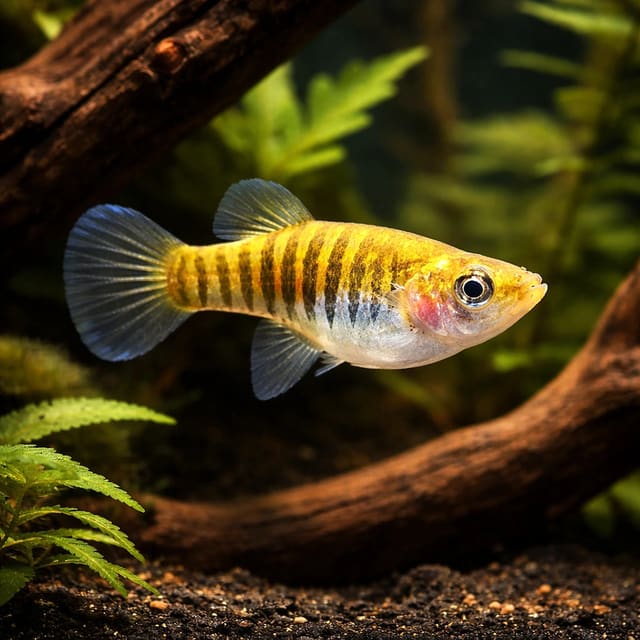
This listing now includes the original reference photo for SKU 6041 alongside the existing planted-aquarium images. The source photo shows the real speckled body pattern, yellow-green fin colour and livebearer shape of this strain.
The spotted form is the reason this fish catches attention. The body is small, slim and pale olive to yellowish, with a broken covering of dark speckles and blotches. Fishes of Australia describes the species as yellowish overall with a black blotch on the caudal peduncle, and males can be speckled with dark spots and blotches plus a black dorsal-fin margin. Females are larger and rounder; males stay smaller and carry the modified anal fin typical of livebearers.
FishBase gives maximum size as about 3.5 cm standard length for males/unsexed fish and about 6 cm total length for females. Practical Fishkeeping gives a similar aquarium view, with males a little over 3 cm and females commonly around 6 cm, occasionally larger. Plan for a small fish that still needs group space and stable water.
Phalloceros caudimaculatus is native to eastern and southern Brazil, Uruguay, Paraguay and northern Argentina. FishBase records freshwater and brackish use, pH 7.0-8.0, dH 9-19 and a 20-24 C tropical range, with the species introduced in several countries. Seriously Fish describes it as unfussy and omnivorous, grazing algae and taking small insects, larvae and crustaceans.
For aquarium care, the important point is adaptability with stability. It is not a fish for dirty water or rough tank mates just because it is hardy. Give it plants, clean water, gentle flow and a calm group, and it becomes much more confident.
Use a mature planted aquarium of 60 litres or more for a small group. Fine gravel or sand, moss, floating plants, Cryptocoryne, Java fern and open swimming lanes all work well. Gentle filtration is better than strong current. Plant cover matters because it reduces male pressure, shelters fry and helps small fish feel secure.
Keep a secure lid and avoid overcrowding. A female-heavy group is sensible because males can be persistent. If you want to raise fry, add dense moss or floating roots and avoid tank mates that will hunt newborns.
Feed fine flakes or micro granules, vegetable-rich foods, spirulina or algae flakes, and small live or frozen foods such as daphnia, baby brine shrimp, cyclops and mosquito larvae. The natural diet includes algae grazing and small invertebrate foods, so variety is better than one rich food every day. Small portions help keep water quality high.
Spotted Livebearers are peaceful and active, best kept in a group where males spread their attention. They can live with calm small fish that like similar water, peaceful snails and adult shrimp in planted tanks. Avoid large predators, fin nippers, boisterous barbs, aggressive cichlids and very delicate soft-water fish. The safest setup is a planted species group or a quiet community built around small peaceful fish.
This species is a livebearer and can breed readily once settled. Females give birth to free-swimming fry after roughly a month, and FishBase notes 10-50 young after about 24 days gestation. Provide fine foods and plant cover if you want fry to survive. Because it is an adaptable livebearer with invasive history in some countries, never release unwanted fish or plants into outdoor waterways.
Order when the aquarium is mature, planted and ready for small livebearers. Tropical Fish Co ships livestock with insulated packing, weather-aware dispatch and a Live Arrival Guarantee. New customers can use WELCOME10 for 10% off their first eligible order. If weather or route conditions are unsuitable, we prioritise the fish and hold dispatch until shipping is safer.
No reviews for this item yet. Bought one? Honest reviews only, good or bad.
What customers say about ordering from us
I have a small group of long finned mountain minnows. So was delighted to be able to order ten of this variety to increase the genetics in my tank . The ones I recieved are healthy but it’s to early to give a verdict on wether they are of a long finned type since they are small currently.
Gordon Walker · 23 Sept 2026
100% success travel and "installation". Pleased with quality of purchase. The Siamese fighter a bit "shy" so have not yet seen him at his best yet but looking good. Happy customer. GG
George E Garratt · 21 Sept 2026
Reviews of our shop, collected by Judge.me, an independent third-party review collector. Newest first.