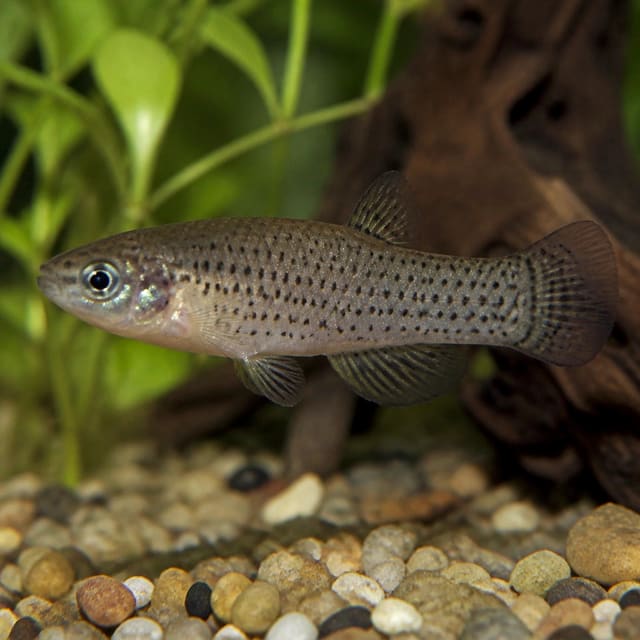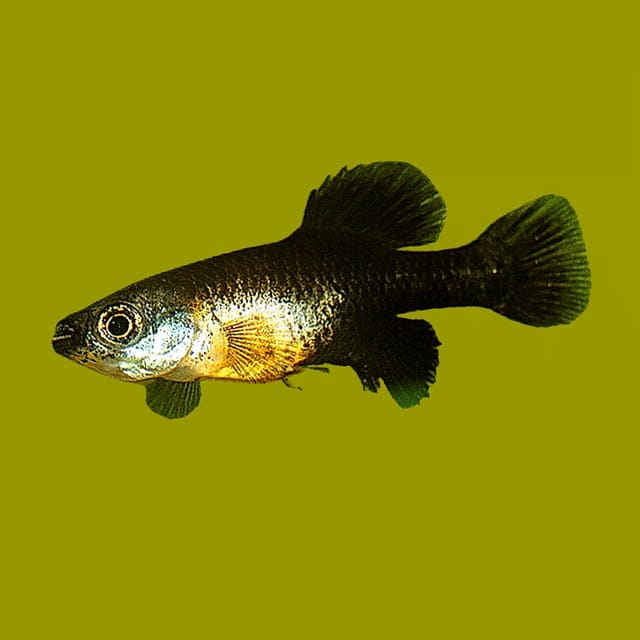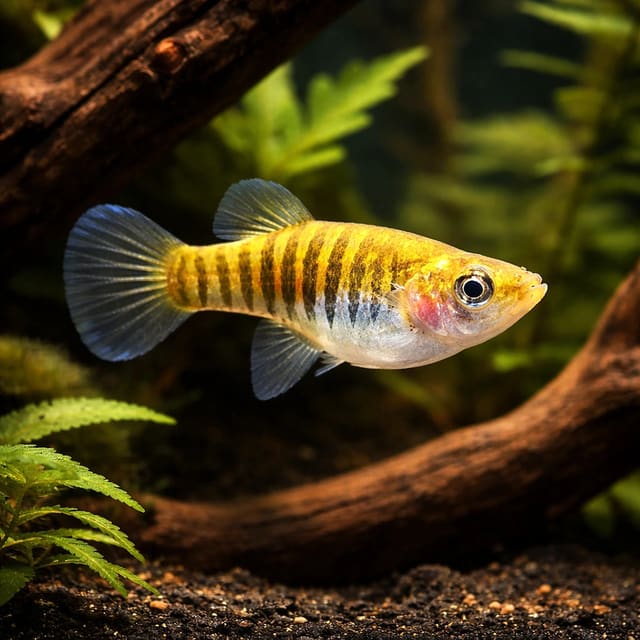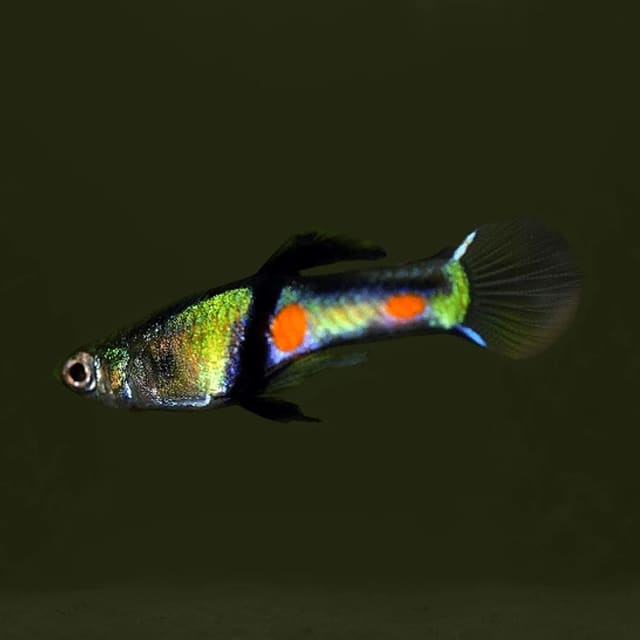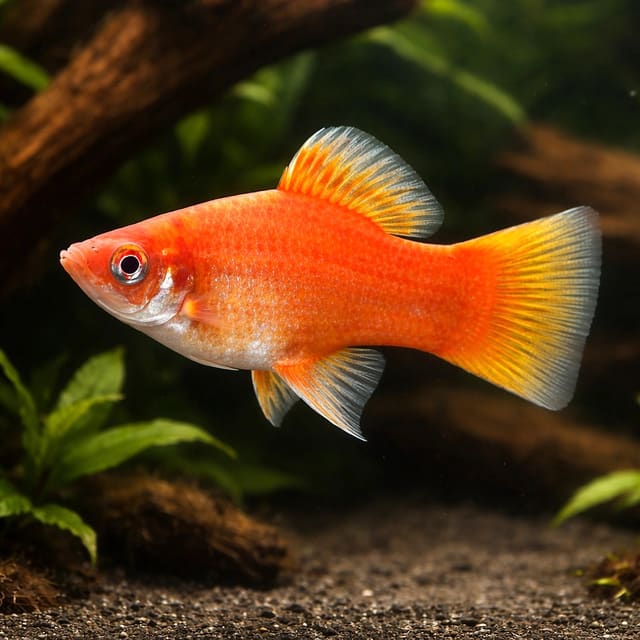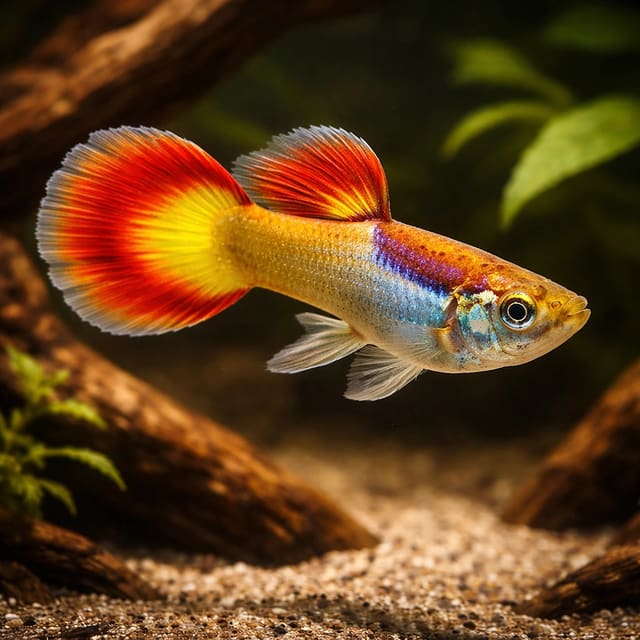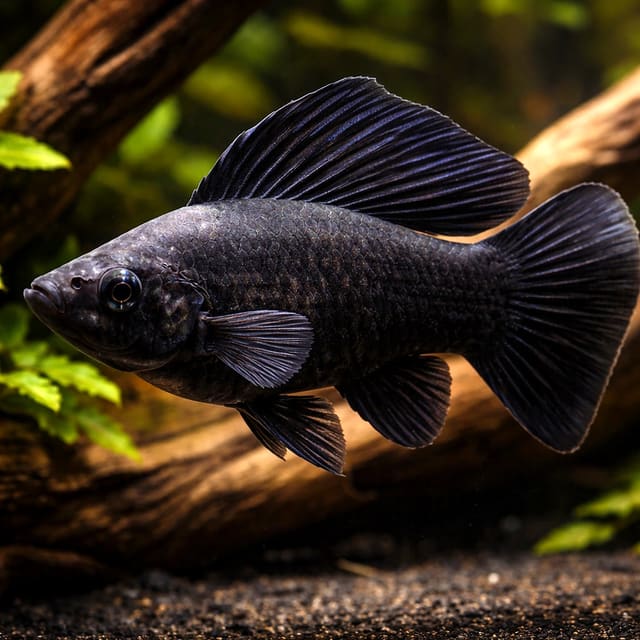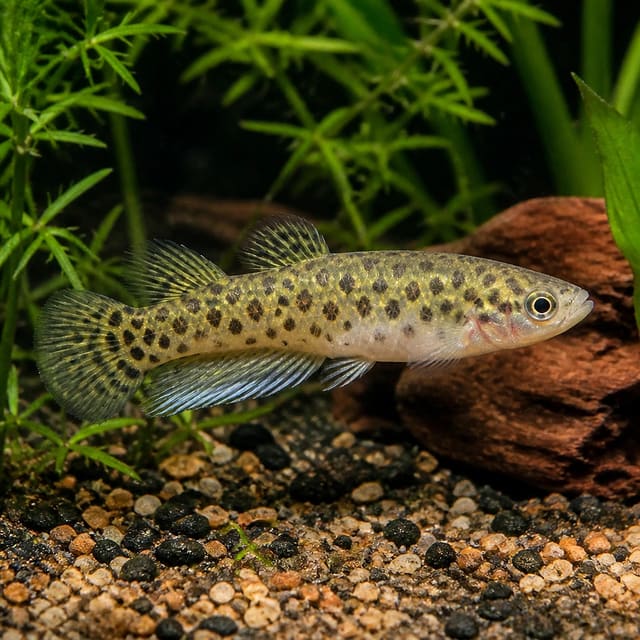
Polka-dot splitfin (Chapalichthys pardalis)
150L
£11.99

Photo coming soon
The size, price and care details on this page are for this listing.
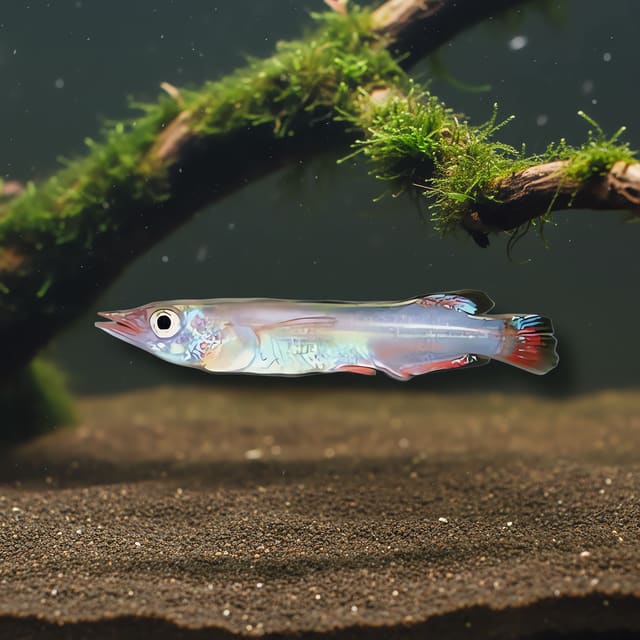
The White Wrestling Halfbeak (Dermogenys cf. pusilla) is a viviparous halfbeak from a genus native to fresh and brackish waters of South and Southeast Asia. It suits an attentive keeper who can maintain a mature filtered aquarium, keep ammonia and nitrite at 0 mg/l and plan social space carefully because males may be aggressive towards one another. Sold individually in sizes from 3–4 cm to 4–5 cm.
Dermogenys cf. pusilla
Shoaling fish: kept in a group they feel safer, stay calmer and show their best colour.
The White Wrestling Halfbeak (Dermogenys cf. pusilla) is a viviparous halfbeak from a genus native to fresh and brackish waters of South and Southeast Asia. It suits an attentive keeper who can maintain a mature filtered aquarium, keep ammonia and nitrite at 0 mg/l and plan social space carefully because males may be aggressive towards one another. Sold individually in sizes from 3–4 cm to 4–5 cm.
The White Wrestling Halfbeak (Dermogenys cf. pusilla) is a viviparous halfbeak in the family Zenarchopteridae. The genus occurs in fresh and brackish waters across South and Southeast Asia, from India to the Philippines and Greater Sundas. It suits an attentive keeper who can prepare a mature filtered aquarium, test the water regularly and monitor social behaviour. Males of the genus may be aggressive towards one another, so the keeper must respond if one fish is repeatedly displaced or prevented from feeding.
WoRMS recognises Dermogenys as an accepted genus within Zenarchopteridae. The cautious cf. pusilla label associates this pale trade animal with the familiar Wrestling Halfbeak while keeping its identity at genus level. Its scientific name should therefore remain Dermogenys cf. pusilla throughout the aquarium plan.
Wikipedia describes Dermogenys as a genus of viviparous halfbeaks. Both sexes have a lower jaw that extends well beyond the upper jaw, which gives the group its halfbeak name. The same genus account notes that males tend to be more brightly coloured and are well known for aggression towards one another. Use behaviour in the aquarium, rather than assumptions about sex or rank, to decide whether the social arrangement is working.
We rate this fish intermediate as a store suitability assessment. The rating reflects the need for mature filtration, regular testing, careful stocking and close observation of interactions. A prepared keeper can make clear decisions from daily behaviour and water tests; a newly filled aquarium or an unplanned mixed community leaves too little room to respond well.
One purchase supplies one White Wrestling Halfbeak. The live size selector uses the labels 3–4 cm and 4–5 cm; use the label to choose the dispatch size and set the quantity to the number of individual fish required. One fish is supplied for each purchase unit, not a pair, trio or pack.
The size you select is the size supplied, not the adult size. A dispatch measurement describes the approximate size of the animal prepared for the order. It does not identify a life stage, predict sex or set a limit on future growth. Plan the aquarium around the needs of a fully grown fish and leave enough capacity to revise the social arrangement as the animals develop.
The exact species has not been identified, so the care advice here follows the genus Dermogenys and its care group.
Sex is guaranteed only when the selected option explicitly states male or female. This White Wrestling Halfbeak listing has no sex-guaranteed option.
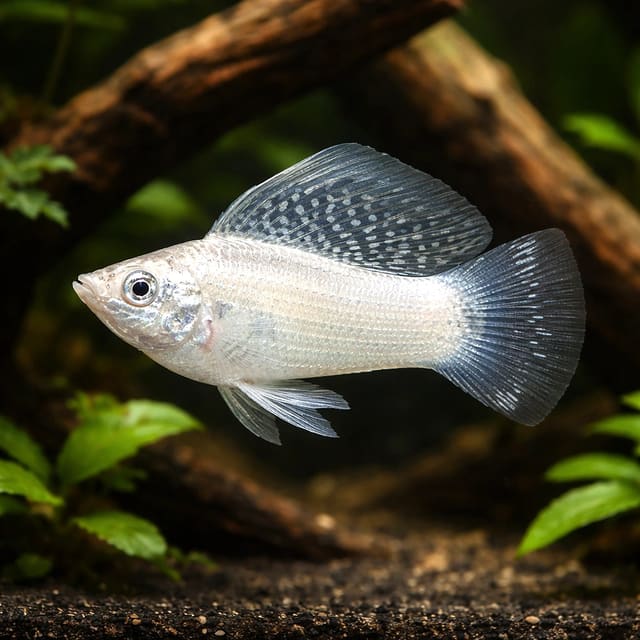
The word White is the established trade label for this pale form. It should not be read as a biological diagnosis or as a promise of one exact shade. Lighting, background and normal individual variation can alter the visible tone of a live fish.
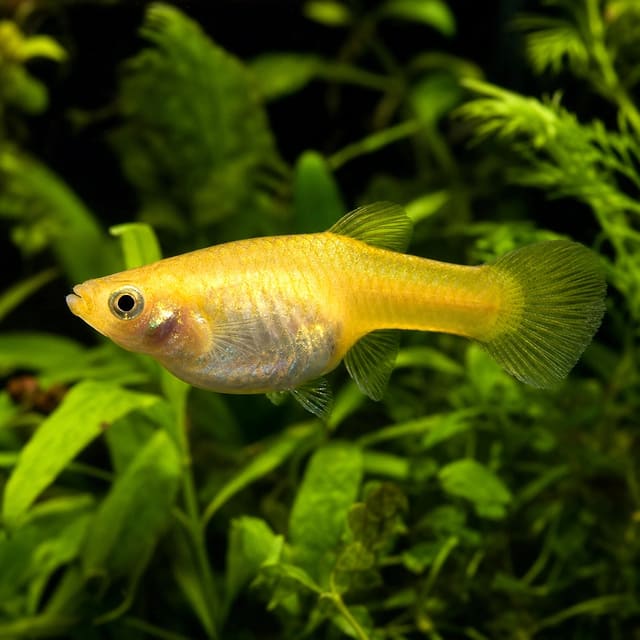
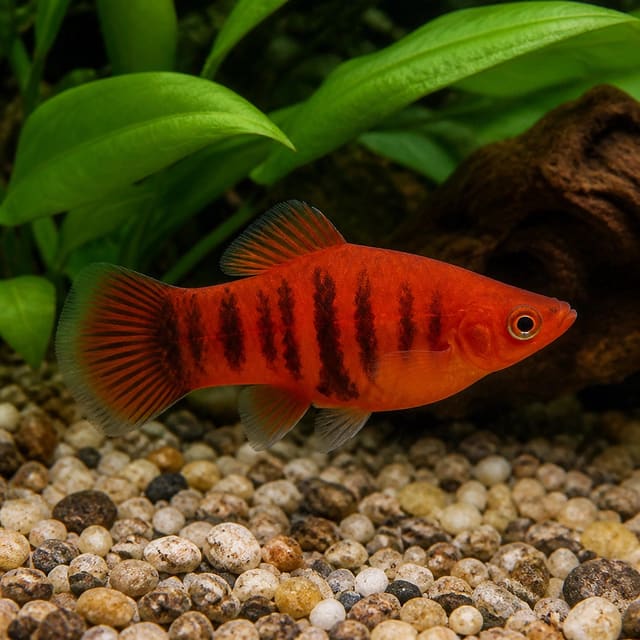
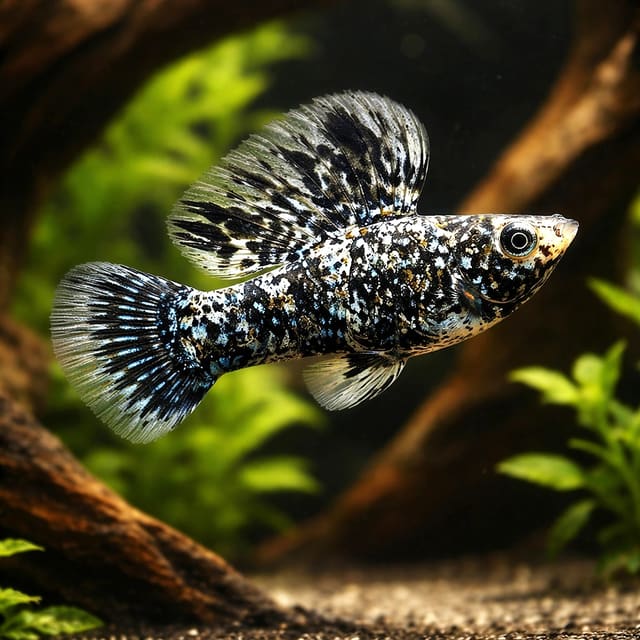
The gallery images are representative of this type of animal rather than photographs of the exact animal supplied, so colours can look slightly different from the live animal.
Start with a mature, filtered freshwater aquarium in which ammonia and nitrite both test at 0 mg/l. Check pH regularly, confirm that the aquarium remains stable and assess stocking from the animals’ eventual needs rather than from their dispatch measurements. OATA’s freshwater guidance is broad group guidance rather than a species-specific optimum: it recommends choosing an aquarium that can accommodate the fish when fully grown and notes that larger volumes are generally more stable.
| Suits | Not suited to |
|---|---|
| A mature aquarium with established biological filtration | A newly filled aquarium without a mature filter |
| A keeper who tests ammonia, nitrite, nitrate and pH | A plan based only on clear-looking water |
| Gradual stocking that allows filter bacteria to adjust | Adding many fish before the filter can process the extra waste |
| Daily observation of feeding and social behaviour | A group left unchanged despite persistent aggression |
| Space planned around fully grown fish | An aquarium chosen only for the 3–4 cm or 4–5 cm dispatch size |
Place the aquarium out of direct sunlight and away from heat, draughts, loud noise, vibration and sudden movement. Set it on a flat, level stand that can support the filled aquarium indefinitely. These choices reduce avoidable environmental fluctuations and make routine observation easier.
Use the first tropical aquarium guide to prepare the system before livestock arrives. Confirm that the equipment works, the filter processes waste and the water tests remain suitable after feeding or other normal demands on the aquarium.
Choose the largest practical aquarium that can accommodate every intended inhabitant when fully grown. Larger aquariums contain more water and are generally less susceptible to rapid variations in temperature and pH than small aquariums. Allow for the space occupied by plants and decoration when judging the usable volume.
Plants and ornaments provide enrichment, but they also occupy swimming space. Add them with the needs of the complete community in mind. Live plants may help remove nitrate, while sheltered areas let a fish move away from activity elsewhere in the aquarium. Avoid packing the aquarium so densely that fish cannot be observed or waste cannot be removed.
Reassess the layout after introducing livestock. If one fish remains hidden, misses meals or repeatedly encounters another animal, first check water quality and then examine whether the layout provides useful retreat space. Move decorations only when the change has a clear purpose, because repeated rearrangement adds disturbance without addressing an unidentified cause.
Keep routine access straightforward. Filters, heaters and test points should remain reachable without dismantling the whole aquascape. A design that supports quick checks makes it easier to act when temperature, flow or fish behaviour changes.
Keep ammonia and nitrite at 0 mg/l, check nitrate and pH, and monitor temperature regularly. Use test kits rather than judging water quality from appearance. Clear water can still contain toxic ammonia or nitrite, while an established testing routine shows whether feeding, stocking and maintenance are placing too much demand on the filter.
OATA advises checking water quality at least once a week and testing more frequently when setting up an aquarium or adding fish. Its freshwater sheet sets ammonia and nitrite at zero and recommends partial water changes of up to 25% every week as broad aquarium guidance. Apply the routine according to test results, aquarium size, stocking and feeding.
Use the water chemistry guide to understand what each test measures, then enter actual readings in the water matcher before comparing a potential community. Testing both the aquarium and replacement water helps prevent an abrupt change during maintenance.
| Result or observation | Action |
|---|---|
| Ammonia above 0 mg/l | Test again, reduce the waste source and check biological filtration |
| Nitrite above 0 mg/l | Act promptly and review filter maturity and recent stocking |
| pH changes between tests | Check replacement water, maintenance and the aquarium’s stability |
| Temperature changes unexpectedly | Inspect equipment and nearby sources of heat or draughts |
| Water tests remain stable | Continue the established routine and record the trend |
Treat new tap water to make it safe for fish and match its temperature before adding it. Make changes deliberately rather than altering several variables at the same time. A written test record helps distinguish a gradual trend from a single unusual reading.
A mature biological filter is essential. The RSPCA explains that filter bacteria convert toxic ammonia into nitrite and then into safer nitrate. Filling an aquarium and switching on equipment begins preparation, but the system must also develop enough beneficial bacteria to process the waste produced by its inhabitants.
Dechlorinate the water before relying on the filter. OATA advises allowing a newly prepared aquarium 24–48 hours to settle so that equipment can be checked and the intended temperature reached, but that settling period is not the same as biological filter maturation. Continue testing ammonia and nitrite while the bacterial population develops.
Stocking too many fish too quickly can cause new tank syndrome because the bacterial population cannot process the extra ammonia and nitrite. The aquarium’s capacity cannot be calculated from volume alone: body size, species needs, water requirements and compatibility all affect how many animals it can support.
If breathing, swimming or feeding changes, test the water before assuming disease. Check whether the filter has stopped, become blocked or been disturbed during maintenance. Restoring safe environmental conditions is the first practical response when ammonia, nitrite, temperature or circulation has moved away from the established routine.
Offer an appropriate fish food in portions that can be consumed without leaving uneaten material to decay. Diet and feeding needs vary between species, and fish may feed at the surface, throughout the water column or near the bottom. Watch where each animal takes food and distribute the meal so that every fish can eat.
Uneaten food contributes to ammonia, increasing the load on the biological filter. Begin with a modest portion, observe consumption and remove leftovers. More food is not the answer when one fish fails to eat; first check whether another animal controls the feeding area, whether water quality has changed or whether the fish’s behaviour differs from its normal pattern.
| What you observe | What to do |
|---|---|
| Every fish reaches food | Continue the measured portion and monitor body condition |
| Food remains uneaten | Remove it and reduce the next portion |
| One fish is repeatedly displaced | Spread food access and reassess the social arrangement |
| Interest in food falls suddenly | Test water and temperature and inspect filtration |
| Waste rises after feeding | Reduce excess food and review maintenance and stocking |
Keep variety appropriate to the fish being maintained, but introduce changes in a controlled way so acceptance and waste can be judged. Avoid adding several unfamiliar foods at once. A simple feeding record is useful when appetite, behaviour or body condition changes.
Observe the quietest fish rather than using the boldest individual as proof that the whole group has eaten. Feeding access is part of compatibility: two animals can share water conditions yet still be a poor match if one consistently prevents the other from taking food.
Prepare the aquarium before the parcel is due. Confirm that ammonia and nitrite are at 0 mg/l, the filter is working and the established water conditions are stable. Someone must be present to receive the parcel because live fish cannot be left unattended.
Read the delivery and Live Arrival Guarantee policy before the delivery day. Keep your order details ready and make sure the receiving person can film the opening continuously.
The continuous video is required for every delivery from the sealed parcel onward. It records the sealed parcel being opened and the fish while it is still inside the bag before anything is disturbed. If a Live Arrival Guarantee claim is needed, contact us the same day with the order number and video.
After release, observe posture, breathing and swimming without making several immediate changes to the aquarium. Test the water if behaviour differs sharply from normal. Keep the filter operating and avoid adding further livestock until the aquarium remains stable under its new waste load.
During the first week, confirm that the fish feeds, maintains normal condition and is not persistently displaced by another animal. Record any water-test movement after introduction. Gradual stocking gives the biological filter time to develop the additional bacteria needed as waste and feeding increase.
Observe the aquarium every day. Count the fish, check swimming and breathing, watch part of a feed and note changes in colour, temperament, body condition or appetite. Familiarity with normal behaviour makes a meaningful change easier to recognise.
Test ammonia, nitrite, nitrate and pH at least weekly, and check temperature regularly. Test more often after adding fish, changing feeding, interrupting the filter or seeing unusual behaviour. Keep ammonia and nitrite at zero and use results to decide whether waste control, stocking or filter performance needs attention.
| If you see | Do this |
|---|---|
| Hanging unusually in one area | Test water and inspect flow and social pressure |
| Faster or slower gill movement | Check ammonia, nitrite and temperature promptly |
| Darker or paler colour than normal | Review recent environmental and social changes |
| More aggression or hiding | Check water, space, retreat areas and feeding access |
| Reduced appetite | Test the aquarium before adding more food |
| White spots, fluffy growth or damaged fins | Record the change and seek health guidance promptly |
Carry out partial water changes of up to 25% every week as OATA’s broad freshwater routine, adjusting frequency and size according to the species kept, aquarium size, stocking and test results. Match and treat replacement water before adding it. Remove accessible waste and check the filter without dismantling all established media at once.
Inspect filter flow and clear blockages before circulation falls significantly. Retain mature biological media because it houses bacteria that process ammonia and nitrite. If livestock health remains a concern after water and equipment checks, contact us for further guidance.
Plan the number of fish around the aquarium’s mature capacity, water stability and observed behaviour rather than around a fixed fish-per-litre formula. OATA notes that body size, species requirements, water parameters and compatibility vary too widely for one universal stocking number.
The genus account says males may be aggressive towards one another. Because sex is not guaranteed for this offer, do not build the plan around a presumed ratio. Begin with enough spare capacity to respond if social pressure develops, and make decisions from repeated behaviour rather than one brief encounter.
| Observation | Decision |
|---|---|
| Every fish feeds and moves freely | Continue observing without changing the group unnecessarily |
| One fish misses repeated meals | Improve feeding access and reassess the group |
| Aggression increases over several days | Review space, retreats and the number of competing fish |
| Hiding or body condition worsens | Test water and prepare to separate the affected animal |
| Filter tests deteriorate after stocking | Stop adding livestock and restore stable water quality |
Increase aquarium stocking slowly. Each addition raises waste production and feeding, so the bacterial population in the filter must adjust. A larger aquarium may be more stable, but it still needs adequate filtration and maintenance.
Reassess the community as fish grow. The 3–4 cm and 4–5 cm labels describe dispatch sizes only. Plants and ornaments reduce usable space, while boisterous animals may require more retreat room than a calm group. The correct number is the one the mature aquarium can support while every inhabitant feeds, behaves normally and remains in stable water.
Screen companions for matching water type, temperature needs, flow requirements, adult space and behaviour before adding them. OATA notes that some fish need shoals while others are territorial or aggressive, and that species may prefer different water and flow conditions. A shared retail category does not make two animals compatible.
Use the livebearers collection to identify animals for further comparison, not as a universal tank-mate list. Read the individual care requirements and judge the complete aquarium, including its mature stocking, feeding pattern and filter capacity.
| Candidate feature | Screening decision |
|---|---|
| Matching established water needs | Continue the assessment |
| Different required temperature or water type | Choose a different community plan |
| Compatible flow requirements | Check space and behaviour next |
| Territorial or aggressive behaviour | Assess whether every fish can retreat and feed |
| Unknown adult requirements | Complete the comparison before purchase |
Give particular attention to interactions between halfbeaks because males of Dermogenys may be aggressive towards one another. The offer does not guarantee sex, so watch the fish rather than assuming a planned ratio has been supplied. Persistent displacement, hiding or missed meals means the arrangement needs intervention.
Compatibility remains conditional. Aquarium dimensions, decoration, stocking order and individual behaviour can alter the result, while stable water alone cannot resolve social pressure. Introduce livestock gradually and observe ordinary feeding and resting behaviour before making another addition.
Judge the community through ordinary daily behaviour rather than the first minutes after introduction. A workable arrangement allows every animal to feed, maintain normal swimming and use retreat areas without persistent displacement. Keep water tests stable while observing these interactions because poor water can change behaviour across the entire aquarium.
Observe more than one meal. If the same fish repeatedly fails to eat, distribute the portion more effectively and determine whether another animal controls access. Do not keep increasing the total food, because leftovers add ammonia and place further demand on the filter.
Male Dermogenys may be aggressive towards one another. Record whether an interaction ends or continues, and whether one individual becomes hidden, loses condition or misses repeated feeds. Improve space and retreat opportunities where possible, then separate fish when persistent aggression continues.
Check that every species remains suited to the same water type, temperature and flow. Test ammonia and nitrite after stocking changes and keep both at 0 mg/l. A community that looks calm may still be overloading the filter, so behaviour and water tests must be assessed together.
| Community checkpoint | Positive result |
|---|---|
| Water quality | Ammonia and nitrite remain at 0 mg/l |
| Feeding | Every fish reaches an appropriate portion |
| Behaviour | No animal is persistently displaced or hidden |
| Filtration | Flow remains normal and waste is controlled |
| Stocking | New animals are added gradually |
If a match fails, correct the cause rather than waiting for chronic stress to resolve itself. Water maintenance, feeding access and retreat space can be improved, but separation is appropriate when persistent aggression or incompatible requirements remain.
Plan the aquarium around a fully grown White Wrestling Halfbeak rather than the 3–4 cm or 4–5 cm dispatch size. The identity remains at genus level, so use an aquarium with spare mature capacity and reassess space as the fish grows.
Choose the largest practical aquarium that can accommodate every inhabitant when fully grown. OATA notes that larger aquariums are generally more stable, while plants and ornaments reduce usable space; judge capacity from mature needs, filtration and behaviour rather than a fixed fish-per-litre rule.
Plan the number around mature aquarium capacity and observed behaviour rather than a fixed group figure. Male Dermogenys may be aggressive towards one another, so ensure every fish can feed and respond if one individual is persistently displaced.
We rate the White Wrestling Halfbeak intermediate because it needs mature filtration, regular testing, gradual stocking and careful observation of social behaviour. It suits a prepared keeper who can keep ammonia and nitrite at 0 mg/l and act when behaviour changes.
Offer appropriate fish food in measured portions and watch where each animal feeds. Remove uneaten material because leftovers contribute to ammonia, and check water quality and social pressure if the fish suddenly loses interest in food.
Keep temperature and pH stable, measure both rather than guessing and test pH at least weekly as part of OATA’s broad freshwater guidance. Match replacement water to the established aquarium and confirm ammonia and nitrite remain at 0 mg/l.
Male White Wrestling Halfbeaks may be aggressive towards one another. Monitor feeding, hiding and repeated displacement; the genus account does not establish a general fin-nipping rule, so judge interactions from the behaviour of the fish in the complete aquarium.
Consider animals whose water type, temperature, flow, adult space and behaviour match the established aquarium. OATA advises screening every species because some fish require shoals while others are territorial or aggressive; no tank-mate combination is automatic.
Someone must be present to receive the White Wrestling Halfbeak. Start filming every delivery while the parcel is sealed, open it in one continuous take with the fish still in the bag, float the bag for 20–30 minutes, and never pour the bag water into the aquarium.
No reviews for this item yet. Bought one? Honest reviews only, good or bad.
What customers say about ordering from us
I have a small group of long finned mountain minnows. So was delighted to be able to order ten of this variety to increase the genetics in my tank . The ones I recieved are healthy but it’s to early to give a verdict on wether they are of a long finned type since they are small currently.
Gordon Walker · 23 Sept 2026
100% success travel and "installation". Pleased with quality of purchase. The Siamese fighter a bit "shy" so have not yet seen him at his best yet but looking good. Happy customer. GG
George E Garratt · 21 Sept 2026
Reviews of our shop, collected by Judge.me, an independent third-party review collector. Newest first.