Easy
Blue Moscow Male Guppy (Poecilia reticulata)
22–28°C · pH 7–8 · 45L
£4.09
Photo coming soon
The size, price and care details on this page are for this listing.
Guppy male red blond (Poecilia reticulata) is a peaceful livebearer for a mature, filtered aquarium with mineral-bearing water and a carefully planned social group. Tropical Fish Co's conservative guide uses a 60 cm aquarium and five or more guppies where capacity allows. One purchase supplies one live male fish in the chosen size; two size choices are offered.
Poecilia reticulata
Shoaling fish: kept in a group they feel safer, stay calmer and show their best colour.
Guppy male red blond (Poecilia reticulata) is a peaceful livebearer for a mature, filtered aquarium with mineral-bearing water and a carefully planned social group. Tropical Fish Co's conservative guide uses a 60 cm aquarium and five or more guppies where capacity allows. One purchase supplies one live male fish in the chosen size; two size choices are offered.

Guppies are social livebearers suited to a prepared beginner, not a fish-per-litre formula. Use a mature filtered aquarium, tested neutral-to-alkaline mineral-bearing water, deliberate sex and population planning, open swimming room, cover and a separation option.
Maintain these water conditions for optimal health and vibrant colors
The Red Blond Male Guppy is a selectively bred colour form of Poecilia reticulata, the familiar guppy. The colour and sex describe this exact offer; the scientific name remains Poecilia reticulata. It is a peaceful social livebearer that can suit a prepared beginner, provided “easy” means a mature filtered aquarium, tested suitable water and a plan for the whole group rather than an uncycled bowl.
One purchase supplies one live male guppy in the chosen size. This parent listing has two genuine size choices: 3–4 cm and XL. The XL label has no numeric conversion in the evidence, so it stays as the exact selector term. The size you select is the size supplied, not the adult size.
Sex is guaranteed only when the exact product or selected option explicitly states male or female. This Guppy male red blond listing is sold as male. That offer fact is stronger evidence than colour, tail shape or a photograph. It also changes the social decision: a male-only group avoids new mixed-sex mating, but males can still display, pursue one another or suffer fin damage, so the group still needs room and observation.
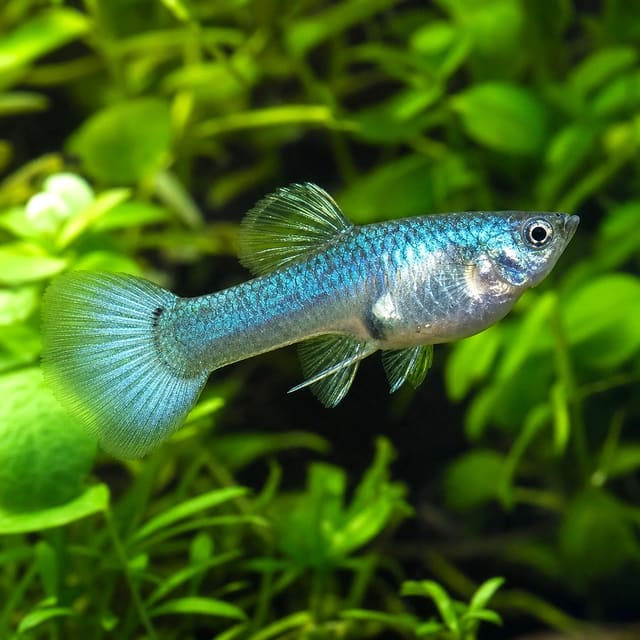
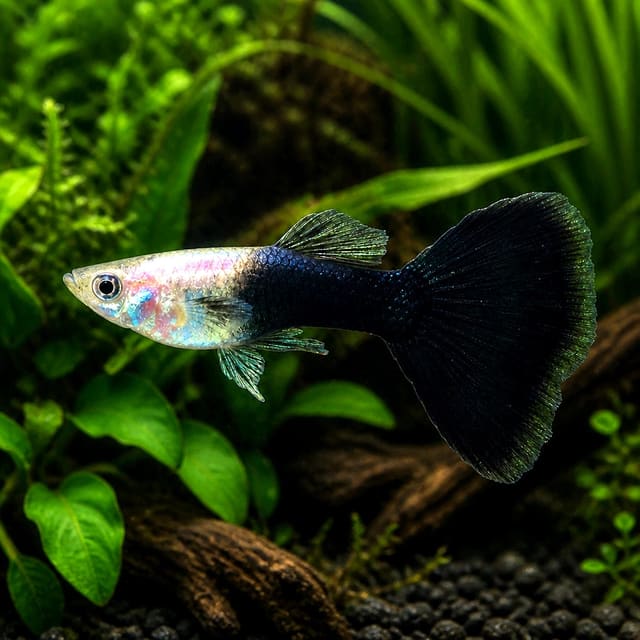
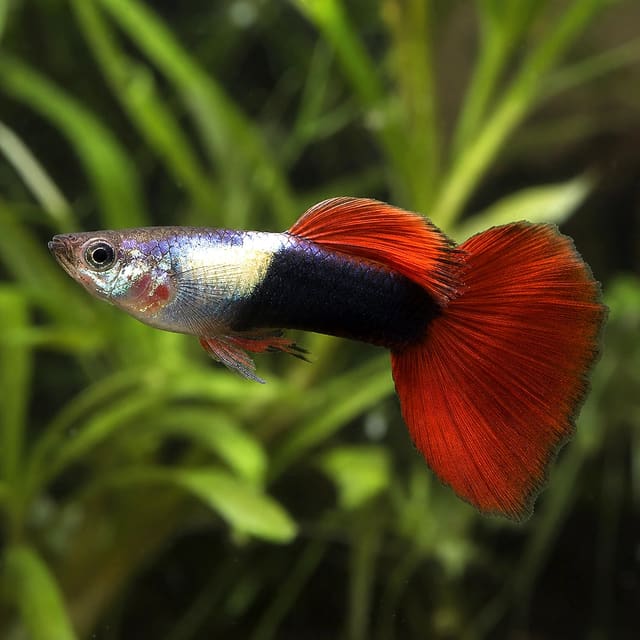
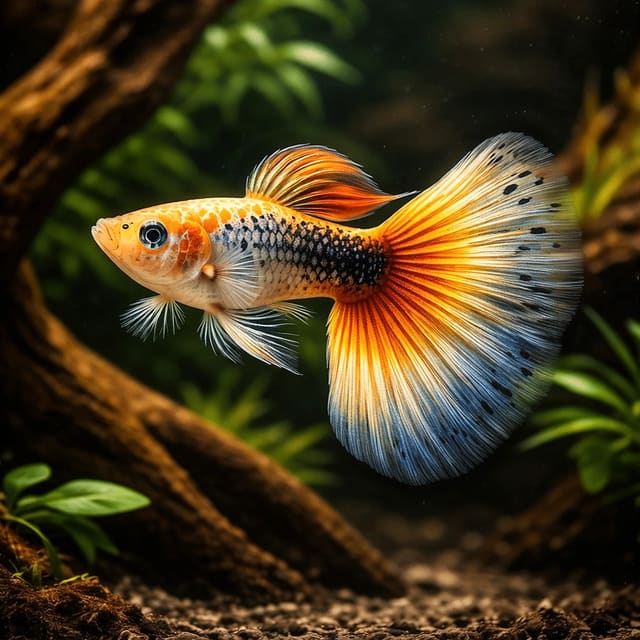
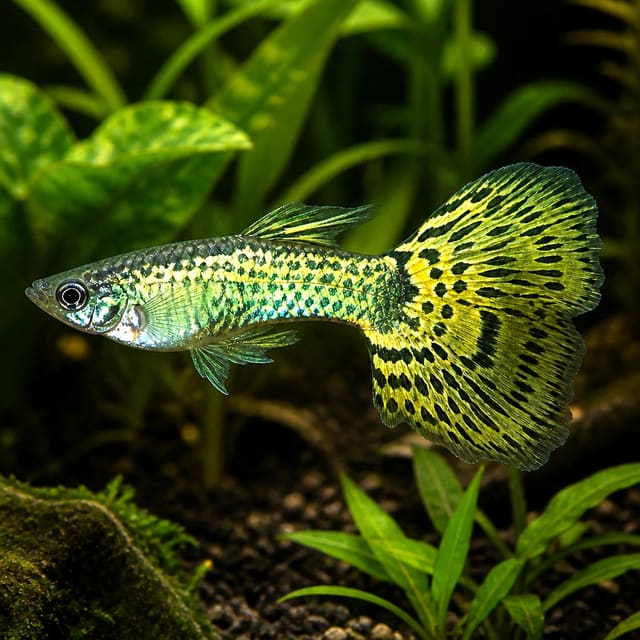
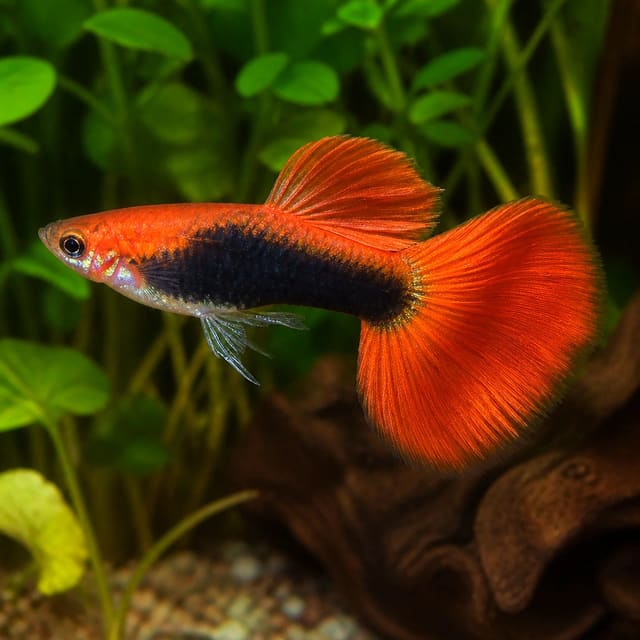
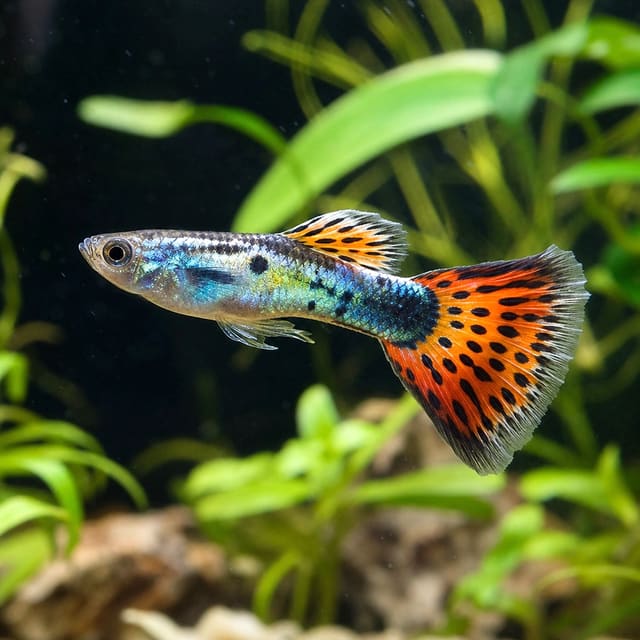
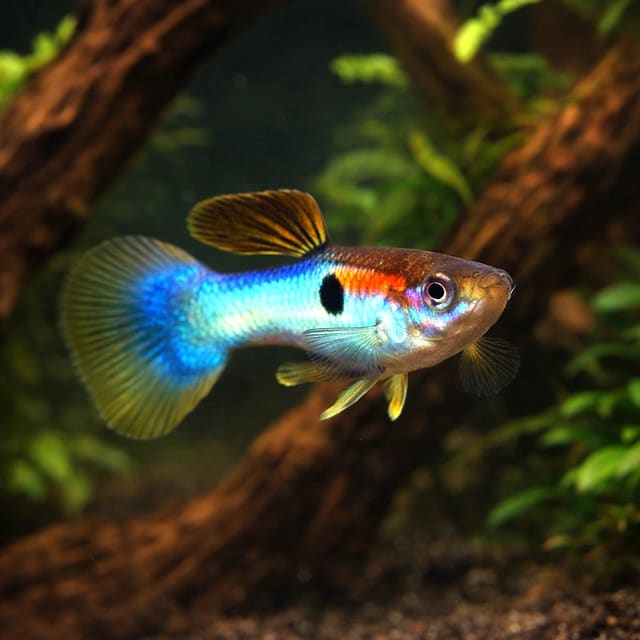
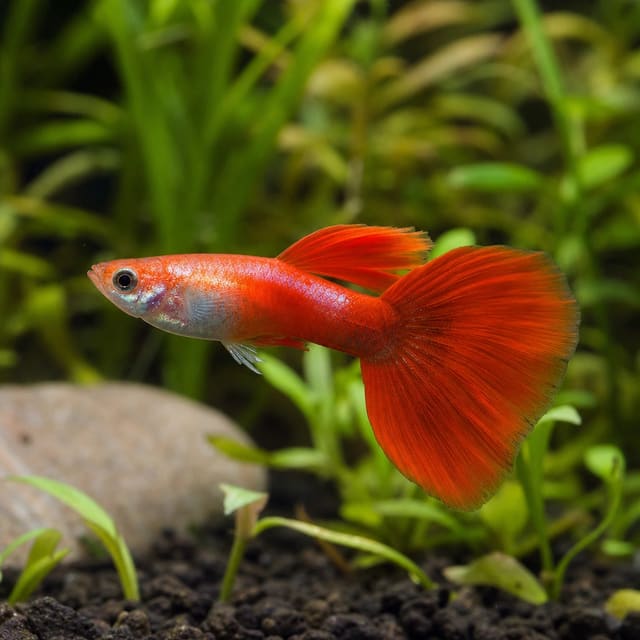
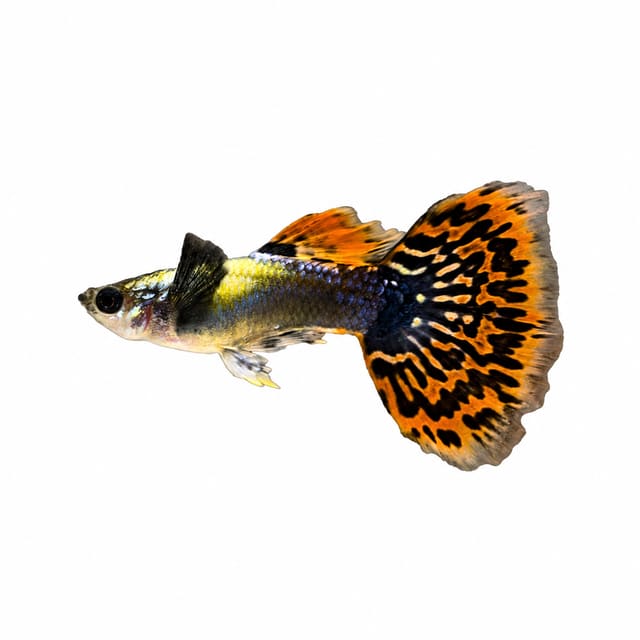
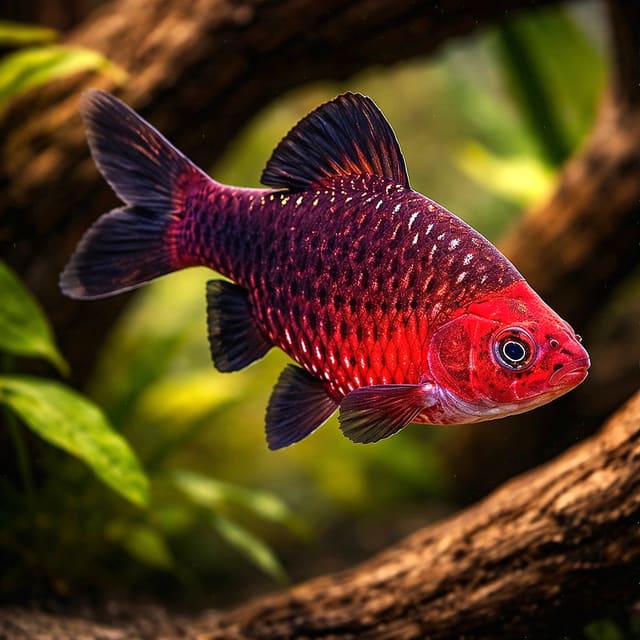
Gallery images have been digitally enhanced to improve image quality. Natural colour, pattern, size and maturity can vary between live animals. The single gallery image shows a red-orange long-finned guppy in a planted scene. It does not promise the exact shade, tail outline, pattern or individual that will arrive.
| A good match | Reconsider the plan |
|---|---|
| A mature filtered aquarium at least 60 cm long under the store's conservative group policy | A bowl, uncycled tank or short container chosen only from a litre label |
| A group plan for five or more guppies, with male display monitored | One isolated fish or a group added without social space and a separation option |
| Stable 22–28°C water around pH 7.0–8.0 and 8–18 dGH | Persistently soft acidic water with no measured plan to provide suitable conditions |
| Quiet companions that will not nip long fins or dominate feeding | Tiger barbs, serpae tetras, predators or other persistent fin nippers |
The verified complete Guppy Care Guide explains the store's reasoning in depth. If this colour form is not the right fit, the current guppy collection shows other offers; compare the exact sex, size and form on each listing rather than treating colour names as separate species.
FishBase records 5.0 cm standard length for male or unsexed P. reticulata. Standard length excludes the tail fin, which matters for a long-finned domestic male. The store care guide separately records 6 cm standard length for females and repeats the 5 cm male or unsexed figure. This male listing therefore uses 5 cm SL as its scoped adult record while keeping the tail outside that standard-length measurement.
Guppy suitability cannot be calculated from litres alone. Seriously Fish gives a 45 × 30 cm base and an example of about 41 litres for the species. OATA gives 45 litres for a small group of smaller guppies or mollies. Tropical Fish Co takes the more conservative position of at least 60 cm aquarium length for one small guppy group, then checks adult fish, sex plan, tank mates, filtration and test results. Use that 60 cm screen for this listing.
A nominal 60-litre aquarium can be a candidate when it is about 60 cm long, mature, filtered and not already crowded. It is not automatic permission for a fixed number beyond the initial group. Decor, internal equipment and substrate reduce usable water and swimming room; existing animals add their own social space and waste. A mixed community may need much more capacity than the box label suggests.
The store's routine temperature range is 22–28°C. OATA's combined guppy-and-molly guidance gives pH 7.0–8.0 and 8–18 dGH. These pH and hardness figures are group guidance adopted by the store care guide. Guppies are hard-water fish; Seriously Fish notes that long-term maintenance should be in moderately hard or harder water even though individuals may temporarily manage in softer or more acidic conditions.
Test the water used for the aquarium. UK tap water is not a single chemistry, and supplier reports cannot show what happens after substrate, rocks, water changes and biological activity alter the tank. Use the aquarium water-chemistry guide to understand the tests and the water parameter matcher to compare actual readings with the stated range.
OATA advises zero detectable ammonia and nitrite, with nitrate no more than 20 mg per litre above the normal tap-water level. Those are routine welfare checks, not optional refinements. A mature biological filter houses bacteria that convert toxic ammonia through toxic nitrite into less harmful nitrate. If this is a new aquarium, use the first tropical tank guide and prove that process with repeated tests before the guppies arrive.
Use a thermostatically controlled aquarium heater where the room cannot keep the water inside range, and confirm the actual water temperature with an independent aquarium thermometer. Set points and heater dials can differ from the water. Position flow so warmed and oxygenated water circulates without creating a jet that pins or exhausts a long-tailed male.
Guppies can occur in brackish habitats, but that fact does not make routine salt necessary. Add salt or minerals only for a measured purpose that is suitable for every animal and plant in the aquarium. Stability inside an appropriate range is a better goal than repeated chemical corrections.
Provide horizontal swimming room with plants or safe structure around the margins. Seriously Fish says planted aquariums with floating vegetation are appreciated and strong current should be avoided. OATA likewise recommends plants with open swimming space and gentler flow for long-finned fish. Use cover to break long sight lines, but keep enough open water that the group can swim and feed without squeezing through dense decor.
Check ornaments and artificial plants for rough edges that can catch elongated fins. Guard filter intakes where a fin could be drawn in, and fit a secure cover around cables and pipework. The useful layout is one you can inspect and maintain: a hidden dead area collecting food is not good cover.
The store's conservative policy is five or more guppies where aquarium capacity and the sex plan allow. OATA's group sheet gives a floor of three and FishBase's aquarium note gives five or more; the store chooses the more conservative social number alongside the 60 cm length screen. This is a planning policy, not a magic number that guarantees harmony.
This exact offer is male. A male-only group avoids new mixed-sex mating, but it does not remove display, competition or the possibility of persistent pursuit. Watch whether every fish can feed, rest and use open water. Repeated chasing, cornering, hiding, missed meals or fin damage means the layout or social plan needs intervention.
A mixed-sex community is outside the sold unit of this listing, but it matters if females already live in the aquarium. OATA suggests two females per male to reduce pressure, while the store guide stresses that no ratio guarantees low harassment or manageable reproduction. Add males only after deciding how courtship, fry and separation would be managed.
For mature guppies, anal-fin shape is more reliable than colour alone: males have a narrow modified anal fin called a gonopodium, while females have a broader triangular anal fin. That biology is useful when observing an established group, but the purchase sex comes from the exact listing. A bright colour or rounded abdomen should not be used to override the stated offer or to declare pregnancy.
Do not respond to every chase by adding more fish. More fish add waste and can intensify competition when the space or layout is already inadequate. Diagnose the limiting factor: usable length, visual structure, group composition, water quality, feeding access or an unusually persistent individual.
Use an appropriately sized, nutritionally complete omnivore flake or granule as the staple. The store guide recommends safe compatible algal and invertebrate variety; OATA gives small live or frozen foods such as daphnia, small bloodworm or tubifex as examples alongside a quality prepared food. Variety should complement a complete staple rather than become a string of treats.
Portion for the actual group. Watch each male take food and remove what remains before it decays. Long fins and social display can affect access, and a shy or newly introduced fish may miss food even when the surface looks busy. Spread small portions through the feeding area instead of dropping one large clump for the quickest fish.
Wild guppies eat varied material including small invertebrates and detritus, but wild ecology is not a home-feeding recipe. Use biosecure aquarium food, store it correctly and match particle size to the fish. Avoid a rigid universal “times per day” claim because age, food density, group size and filtration differ; the reliable rule is that every fish feeds and waste does not accumulate.
Pair feeding observation with water testing. Uneaten food and additional fish raise the biological load. Clear water can still contain ammonia or nitrite, and a filter that coped with the previous group may need time and maintenance to support a larger one. Increase livestock slowly and test after a change.
A settled guppy should swim steadily, breathe regularly, hold open undamaged fins, maintain a normal body profile and feed consistently. Hiding, clamped fins, surface gasping, unusual balance, spots, wounds or a sudden appetite change are warning signs rather than a diagnosis. Test ammonia, nitrite, nitrate, pH and temperature immediately, then inspect the filter, heater, recent maintenance, food, new arrivals and social behaviour.
Use a separate quarantine system with dedicated equipment, established biological filtration and repeated tests. The MSD Veterinary Manual advises at least 30 days, with longer isolation where indicated. That is professional US veterinary guidance; this listing does not reproduce drug doses. In the UK, use lawfully labelled products and qualified veterinary direction.
One symptom does not choose a treatment. Salt, heat and medication can create new problems when the diagnosis, dose or companion tolerance is wrong. Isolate safely where appropriate, record signs with dates or photographs and use the UK fish-vet directory if expert diagnosis is needed. The verified OATA fish-vet directory is listed in the public references below rather than counted as a store navigation link.
Never release a guppy, fry, aquarium plant, snail, pathogen or aquarium water outdoors or into a surface-water drain. FishBase documents introductions beyond the native range, and the store guide explains the ecological risk. Rehome livestock responsibly and dispose of water and substrate so aquarium organisms cannot reach natural watercourses.
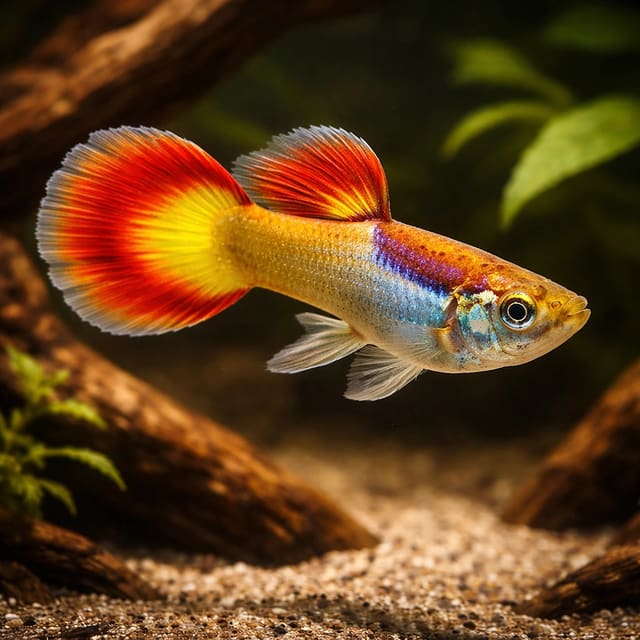
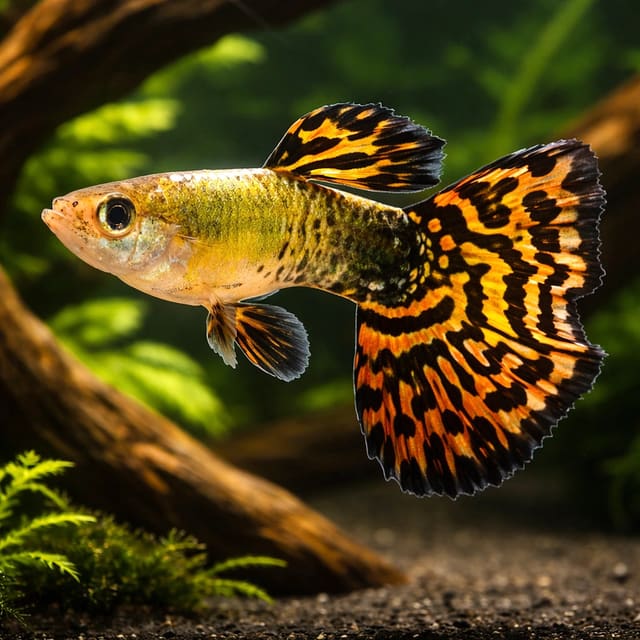
Red blond describes the selected domestic appearance in this offer. It does not create a separate scientific species, pedigree certificate or guarantee that every individual will show an identical shade. Domestic guppy varieties can differ in tail length and colour intensity, so gallery images should not be used as colour swatches.
The accepted species here is Poecilia reticulata. Endler's livebearer is the separately described species Poecilia wingei. The store guide notes that laboratory research has demonstrated hybridisation between them, so a fish should not be advertised as a pure example of either species merely because it resembles a familiar colour form. Keep documented lines separately to prevent crossbreeding and loss of the documented line identity.
This product is sold as male. A male-only group prevents new mixed-sex mating inside that group, which simplifies population planning, but it does not remove the need for a social group, good water or intervention when chasing persists. If females are already present in the aquarium, adding this male changes the plan: courtship and fry become possible and space, filtration and responsible rehoming must be considered before purchase.
Dense plants can help fish move out of sight and may increase fry survival in a mixed-sex setup. That can be useful only when a brood is deliberately planned. Extra cover does not replace suitable space, filtration or a route for responsibly housing young fish. Predation by adults or tank mates is not a welfare-led population-control method.
Prepare and test the mature aquarium before dispatch. Confirm temperature, pH, hardness, zero ammonia and zero nitrite; check the filter, cover and social space; and have a separation option ready. Arrival day should be a controlled introduction, not the start of cycling or a complete redesign.
The current delivery and Live Arrival Guarantee policy is the source of truth for packing, delivery days and claim steps. Tropical Fish Co hand-bags live fish in oxygen, uses an insulated poly box and adds a heat pack when the weather calls for it. Tracking and the confirmed Thursday or Friday date are sent by email, and someone must be present to receive live fish.
Open and inspect the parcel on the day it arrives. A Live Arrival Guarantee claim requires one continuous short video showing the parcel still sealed, the outer box, the opening and the fish still in the sealed bag before anything is disturbed. Contact the business the same day with the order number. That video is claim evidence, not a biological care requirement.
Follow the current supplied acclimation directions. The policy advises slow acclimation and describes floating the sealed bag for 20–30 minutes before release. Keep bag water out of the aquarium. After release, observe swimming, breathing, balance and fin carriage, then check that the new fish can feed without being driven away.
Persistent distress should trigger aquarium tests and the current reporting steps. Do not dismiss surface gasping, loss of balance, clamped fins or continuing pursuit as normal travel behaviour merely because the fish arrived recently.
Seriously Fish describes guppies as very peaceful and names other livebearers, rasboras, corydoras and small loricariids as quiet community types. The exact species must share appropriate water, remain a safe adult size, fit after both social groups are counted and allow each animal to feed.
Guppies should not be kept with any species which might nip their fins, such as barbs. Tiger barbs and serpae tetras are specific examples. This is a firm exclusion, not a trial arrangement. Do not keep this guppy with large predatory fish or with fish that repeatedly prevent it from feeding.
Check water overlap in the middle of each species' range, not at two opposite edges. This listing uses 22–28°C with pH 7.0–8.0 and 8–18 dGH as the working guidance. A companion that merely survives one boundary is not necessarily a good long-term match.
Count the footprint and group needs of every species. Corydoras or small loricariids use a different zone, but they still need the correct substrate, group, oxygen and floor area. Other livebearers can add courtship, competition and fry. Small shrimp or young animals may be eaten, so “adult invertebrates” is too broad to promise.
Do not use a betta and guppy combination as the default community. Long fins, display and territorial behaviour can produce pursuit or conflict, and a larger planted aquarium does not guarantee safety. Choose a more predictable community and keep a mature separation space ready for any livestock introduction.
The related products field contains verified alternative guppy offers. They are comparisons, not recommended tank mates. In particular, a female product alternative should not be added to this male group without a deliberate mixed-sex and fry plan.
FishBase records 5.0 cm standard length for male or unsexed Poecilia reticulata. Standard length excludes the tail, so keep the 5.0 cm measurement labelled as SL and treat the long domestic tail separately.
For Poecilia reticulata, Tropical Fish Co uses a conservative screen of a mature, filtered aquarium at least 60 cm long for one small group. OATA gives 45 litres for a small group of smaller livebearers, but length, sex plan, tank mates, filtration and test results still decide whether the aquarium is suitable.
The store's conservative policy is five or more where aquarium capacity and the sex plan allow. Five is a social starting point, not a fixed stocking entitlement; watch whether every fish can feed, rest and avoid persistent pursuit.
They can suit a prepared beginner, but easy does not mean maintenance-free or safe in an uncycled bowl. Start with mature filtration, zero ammonia and nitrite, stable mineral-bearing water, a planned group and a response plan for chasing or illness.
Use an appropriately sized, nutritionally complete omnivore flake or granule as the staple, with safe compatible algal and invertebrate variety. Feed portions the group can finish, make sure every fish gets food and remove leftovers before they decay.
For Poecilia reticulata, use Tropical Fish Co.s routine 22–28°C range with OATA.s combined guppy-and-molly guidance of pH 7.0–8.0 and 8–18 dGH. Keep conditions stable, verify them with tests and change them gradually.
Poecilia reticulata is described as peaceful, but males can display and pursue one another. Do not keep them with fin-nipping species; tiger barbs and serpae tetras are named examples.
Seriously Fish names other livebearers, rasboras, corydoras and small loricariids as quiet community types for Poecilia reticulata. Check the exact species for water, adult size, group space, feeding and behaviour before adding it.
Tropical Fish Co hand-bags live fish in oxygen, uses an insulated box and adds a heat pack when the weather calls for it, then sends the parcel with a licensed live-animal courier. Be present on the confirmed delivery day and follow the current Live Arrival Guarantee instructions.
The exact offer establishes one live male fish per purchase, two size choices and the frozen product identity. Care claims are grounded in the following public references.
This listing makes no lifespan, treatment, breeding-output or exact-colour promise. Numeric advice remains tied to its source and scope.
No reviews for this item yet. Bought one? Honest reviews only, good or bad.
What customers say about ordering from us
Easy website plenty of info on fish your buying great to pick a time slot
TRACEY DURRANT · 7 Oct 2026
Got some lovely fish thank you
Kevin Mackie · 7 Oct 2026
Reviews of our shop, collected by Judge.me, an independent third-party review collector. Newest first.