Moderate
Spotted Skiffia (Skiffia multipunctata)
18–24°C · 60L
£18.99

A hardy, attractive Cuban livebearer with a golden belly and bright blue eyes, ideal for peaceful planted aquariums. Moderate care, peaceful. 22-28C, pH 7.0-8.0.
Adult size is the maximum length this species reaches at full maturity (scientific sources). The livestock you receive will be younger and smaller. Product-photo provenance and any image-specific limitations are stated on the listing.
Girardinus falcatus
Shoaling fish: kept in a group they feel safer, stay calmer and show their best colour.
Confirm your email, then we’ll send an availability message for this exact item if it returns within 180 days.
This request is only for this product—no newsletter or other promotions. A mail-provider retry may very rarely duplicate the same availability message. Unconfirmed addresses are removed after 48 hours. See our privacy policy.
A hardy, attractive Cuban livebearer with a golden belly and bright blue eyes, ideal for peaceful planted aquariums. Moderate care, peaceful. 22-28C, pH 7.0-8.0.
Adult size is the maximum length this species reaches at full maturity (scientific sources). The livestock you receive will be younger and smaller. Product-photo provenance and any image-specific limitations are stated on the listing.
Maintain these water conditions for optimal health and vibrant colors
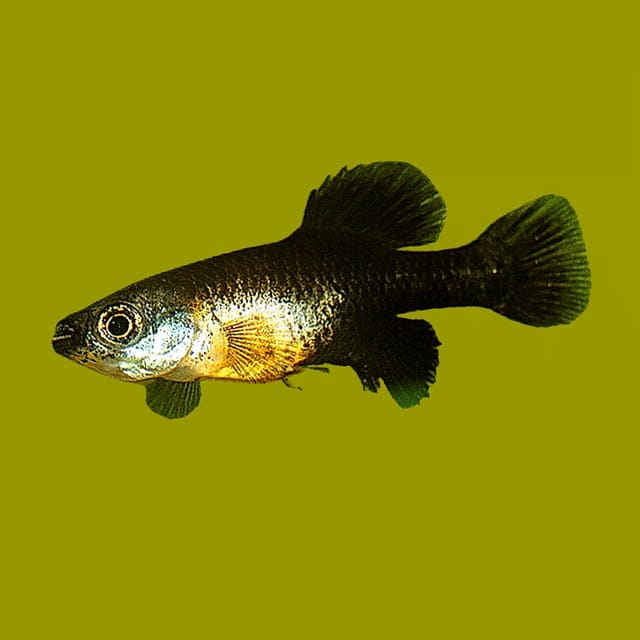
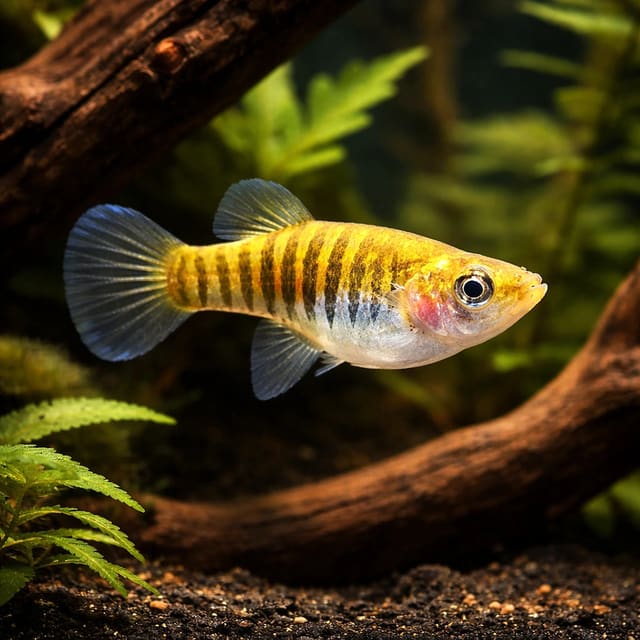
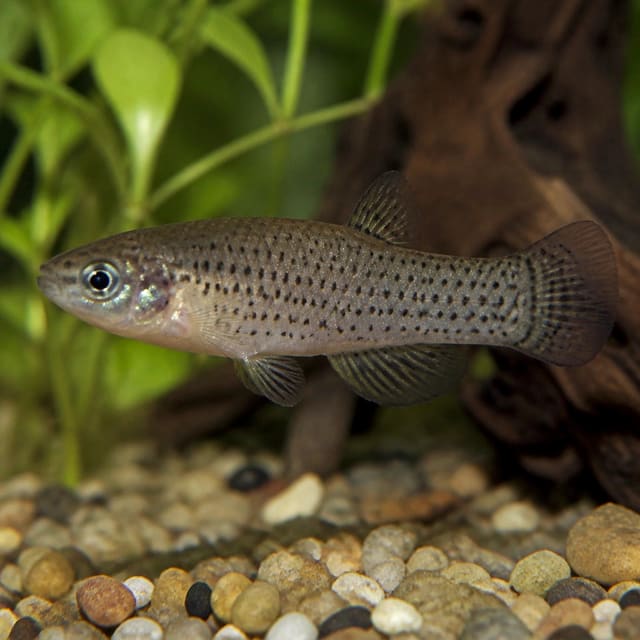
Yellow Belly (Girardinus falcatus), also known as the Sickle Girardinus or Goldbelly Topminnow, is a hardy, attractive Cuban livebearer with a golden belly and bright blue eyes, ideal for peaceful planted aquariums. Native to Cuba, this species is prized for its subtle beauty, peaceful nature, and easy breeding habits. Now available for sale UK from Tropical Fish Co, this charming livebearer is ideal for the community aquarium enthusiast seeking a rare and colorful species.
The Yellow Belly typically reaches around 3.5 cm in total length, making it a small livebearer. The body is robust and deep-bodied, with a pale silver or gold base color and a distinctive golden yellow belly. The eyes are bright blue, a striking feature that gives the species much of its visual appeal. The fins are delicate and transparent. Males are smaller than females and display more intense coloration. Healthy specimens have bright, clear eyes and smooth, undamaged scales.
In the wild, Girardinus falcatus is native to Cuba, where it inhabits slow-moving streams, ponds, marshes, and coastal lagoons with dense aquatic vegetation. These waters are typically moderately hard, warm, and slightly alkaline. The substrate is composed of fine mud or sand, and the fish spend much of their time among plants and cover, feeding on small invertebrates, algae, and organic detritus.
A well-planted aquarium of at least 60 litres is recommended for a small group of Yellow Bellies. Use a fine gravel or sand substrate and incorporate plenty of live plants such as Vallisneria, Java fern, Cryptocoryne species, and floating plants to provide cover and hiding places. Ensure good filtration and moderate water movement. A secure lid is advisable, as livebearers can jump when startled. Maintain stable, warm water with slightly alkaline pH.
The Yellow Belly is an omnivore and thrives on a varied diet. Offer quality flake or small pellet foods as a staple, supplemented with frozen and live foods such as daphnia, brine shrimp, mosquito larvae, and other small invertebrates. Include some vegetable matter or algae-based foods to support digestive health. Feed twice daily in small amounts to maintain excellent water quality.
This livebearer is peaceful, active, and social, constantly on the move and best kept in a small group. Males are smaller than females and will court continuously, so a proper ratio of females to males helps reduce stress. When kept in proper numbers, the Yellow Belly is confident and displays natural behavior. They occupy all levels of the aquarium and are most active during the day.
The Yellow Belly is suitable for a peaceful community aquarium with other small fish. Good tankmates include other peaceful small fish of similar size and temperament, non-aggressive top-dwelling fish of similar size, and peaceful invertebrates too large to be eaten. Avoid large predatory fish, fin-nipping species, aggressive cichlids, and very small fry or shrimp that may be eaten.
Breeding the Yellow Belly is straightforward. This is a livebearer that breeds readily in good conditions. Males are smaller than females and will court continuously. Provide dense planting or fine-leaved cover, as adults may eat fry. Females give birth to free-swimming fry that can be raised on very small live foods.
Tropical Fish Co is a leading UK aquatics specialist offering rare and beautiful livebearers like the Yellow Belly direct to your door. Every fish is quarantined, inspected, and dispatched with expert care to ensure it arrives in peak condition. With decades of experience, transparent pricing, and exceptional customer support, we make it easy to add peaceful, colorful species to your collection. Order online today and enjoy fast, reliable delivery across the UK.
No reviews for this item yet. Bought one? Honest reviews only, good or bad.
What customers say about ordering from us
I have a small group of long finned mountain minnows. So was delighted to be able to order ten of this variety to increase the genetics in my tank . The ones I recieved are healthy but it’s to early to give a verdict on wether they are of a long finned type since they are small currently.
Gordon Walker · 23 Sept 2026
100% success travel and "installation". Pleased with quality of purchase. The Siamese fighter a bit "shy" so have not yet seen him at his best yet but looking good. Happy customer. GG
George E Garratt · 21 Sept 2026
Reviews of our shop, collected by Judge.me, an independent third-party review collector. Newest first.