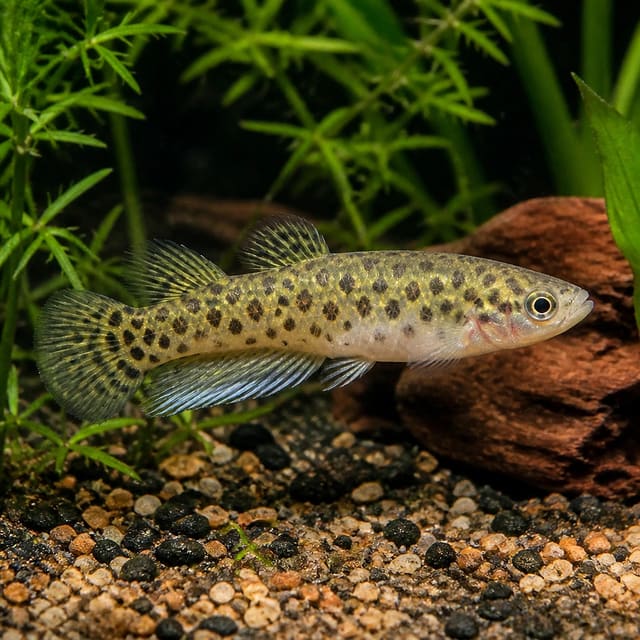
Polka-dot splitfin (Chapalichthys pardalis)
150L
£11.99

The Tiger Teddy Livebearer (Neoheterandria elegans) is a tiny poeciliid from Colombia’s Rio Truando system with females reaching 2.5 cm total length. It suits keepers prepared for a small species-only colony, heavy planting and pH 7.0–8.0; 24–28°C is the overlap of FishBase and Seriously Fish. Sold individually.
Adult size is the maximum length this species reaches at full maturity (scientific sources). The livestock you receive will be younger and smaller. Product-photo provenance and any image-specific limitations are stated on the listing.
Neoheterandria elegans
Shoaling fish: kept in a group they feel safer, stay calmer and show their best colour.
The Tiger Teddy Livebearer (Neoheterandria elegans) is a tiny poeciliid from Colombia’s Rio Truando system with females reaching 2.5 cm total length. It suits keepers prepared for a small species-only colony, heavy planting and pH 7.0–8.0; 24–28°C is the overlap of FishBase and Seriously Fish. Sold individually.
Adult size is the maximum length this species reaches at full maturity (scientific sources). The livestock you receive will be younger and smaller. Product-photo provenance and any image-specific limitations are stated on the listing.
Maintain these water conditions for optimal health and vibrant colors
The Tiger Teddy Livebearer (Neoheterandria elegans) is a tiny freshwater poeciliid from the Rio Truando, a tributary of the Rio Atrato in Colombia. FishBase records maximum lengths of 2.0 cm total length for male or unsexed fish and 2.5 cm for females. This fish suits a keeper who can maintain exceptionally clean water, gentle filtration, dense planting and a quiet species-only colony.
Keep it at 24–28°C, pH 7.0–8.0 and 5–25 dGH. The temperature is the overlap between FishBase’s recorded 24–28°C environment and the 24–30°C aquarium range in the Seriously Fish species profile. The pH and hardness values follow that species profile. This combination gives a clear routine target without placing the fish at the hotter end of its aquarium range for extended periods.
Its minute size does not make husbandry automatic. A small volume changes temperature and chemistry more quickly than a large aquarium, while tiny fish are easy to overlook during feeding and observation. Choose this animal when you enjoy close, regular observation and can keep its surroundings stable.
A heavily planted species aquarium is the clearest match. Give it a gently filtered, heavily planted set-up: exceptionally clean water is a prerequisite, and its diminutive size makes it unsuitable for the general community aquarium. It is also described as shy and best kept alone in a small colony.
| Suits | Not suited to |
|---|---|
| A heavily planted species-only aquarium | A general community aquarium |
| Gentle filtration and sheltered areas | A sparse layout without cover |
| A keeper able to change around 50% of the water weekly | Irregular maintenance or an unfiltered aquarium |
| Stable water at 24–28°C and pH 7.0–8.0 | Water outside the stated species ranges |
| A 30 × 20 cm base and about 12 litres for a pair, with larger quarters for a colony | Using the pair-sized reference for a larger colony |
Position the aquarium on a flat, level support that can bear the filled weight indefinitely. Keep it away from direct sunlight, heat, draughts, loud noise, vibration and sudden movement. These placement choices reduce avoidable environmental variation before filtration and maintenance are considered.
Each purchase supplies one Tiger Teddy Livebearer. The dispatch grade is 1.5 cm; this is the approximate supplied size, not the adult planning size. Allow for FishBase’s 2.5 cm female total-length record when planning the aquarium and remember that individual animals can differ in appearance and development.
Sex is guaranteed only when the selected option explicitly states male or female. This Tiger Teddy Livebearer listing has no sex-guaranteed option.
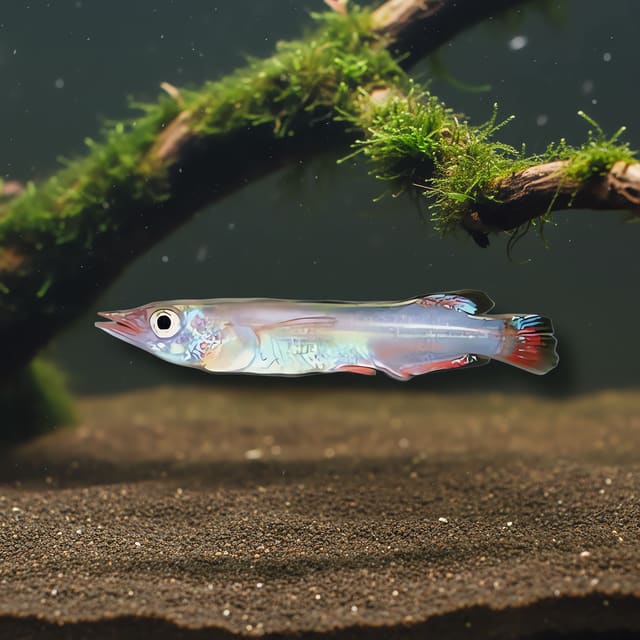
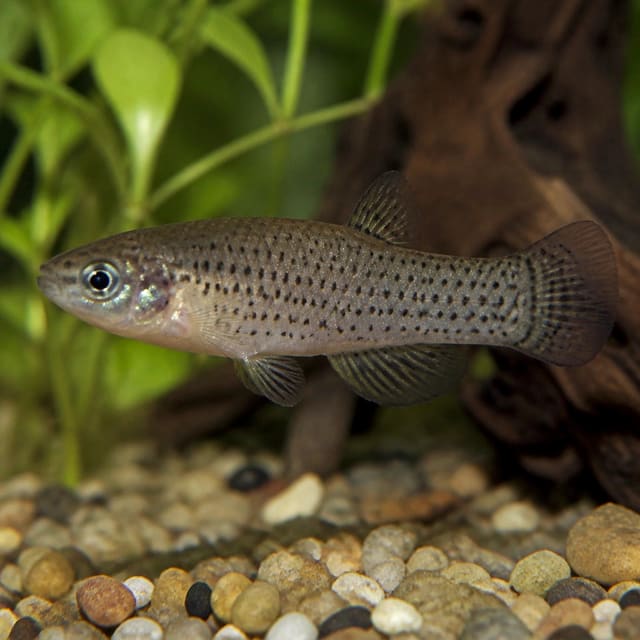
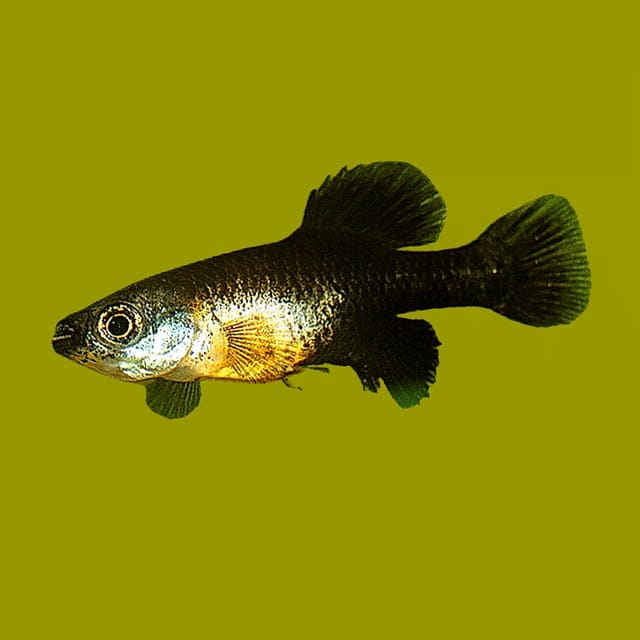
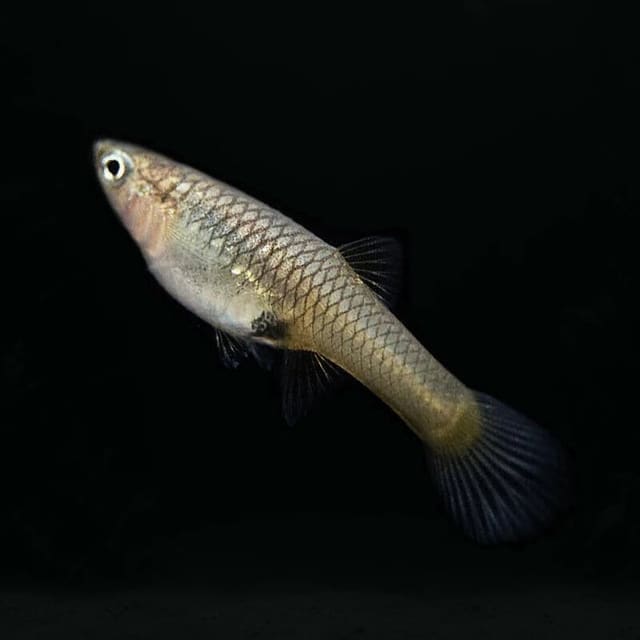
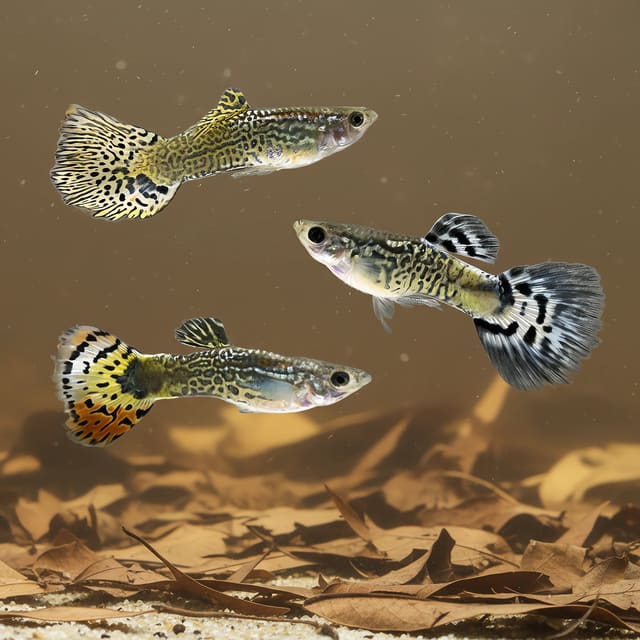
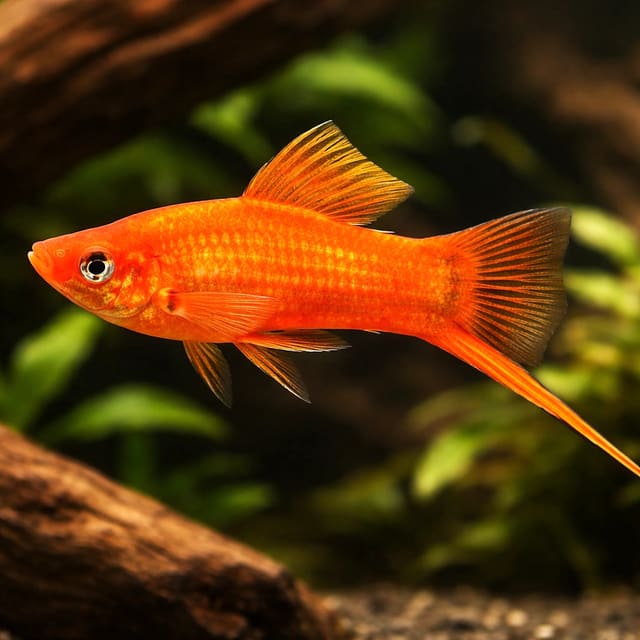
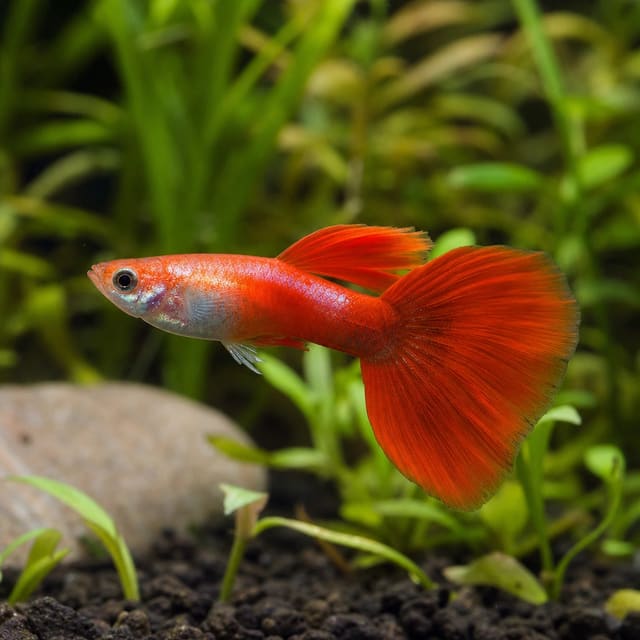
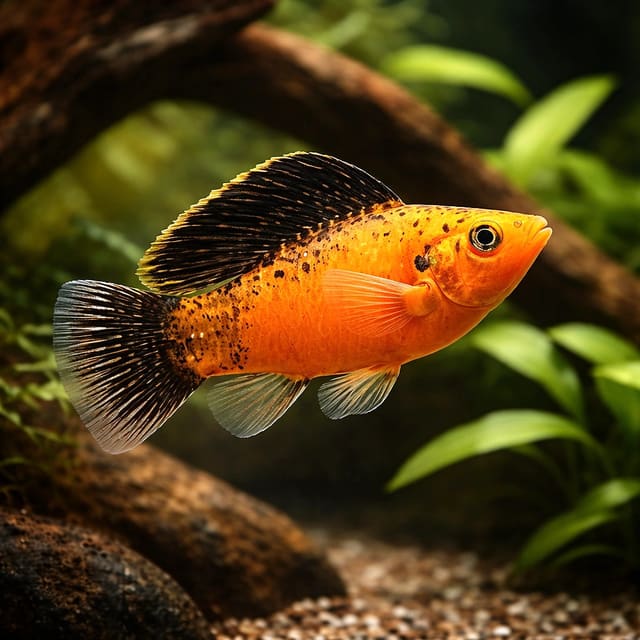
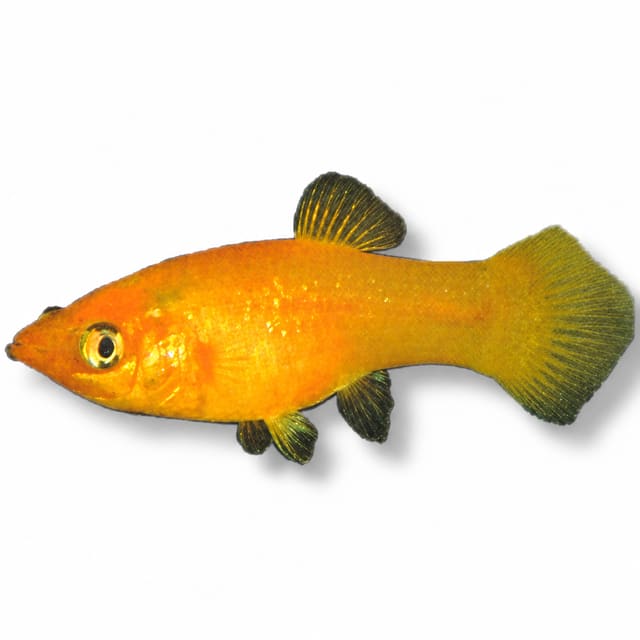
The gallery images are representative, based on reference photographs of this species, so colours can look slightly different from the live animal.
If you are comparing this fish with other livebearing species, browse our livebearers collection. Treat those animals as alternatives to this species, not as companions for its colony.
FishBase records 2.0 cm total length for male or unsexed fish and 2.5 cm for females. Plan the aquarium, cover and colony to accommodate females reaching 2.5 cm total length rather than the 1.5 cm dispatch grade. Seriously Fish gives 25 mm standard length, measured without the tail; it is a different measurement and should not be treated as the same figure.
A pair can be maintained over a 30 × 20 cm base in approximately 12 litres. This is a floor-area decision as well as a volume decision: the fish need planted cover, swimming routes and enough separation for shy individuals. The preferred arrangement is a small colony, and that requires larger quarters than the pair reference.
Do not calculate capacity by multiplying litres by the fish’s length. Plants, filter equipment, behaviour, water stability and the biological capacity of the mature filter all affect the sensible stocking level. Add animals slowly so the filter’s beneficial bacteria can respond to the increase in waste and feeding.
The 30 × 20 cm base and approximately 12-litre volume apply to a pair. Larger quarters are necessary for the preferred small-colony arrangement. Additional water volume also helps moderate changes in temperature and water chemistry, although it does not replace testing, filtration or water changes.
| Planning question | Decision |
|---|---|
| Keeping a pair? | Use at least a 30 × 20 cm base and about 12 litres. |
| Keeping the preferred small colony? | Choose larger quarters and divide the layout with dense planting. |
| Using a very small aquarium? | Increase the frequency of observation because small volumes vary more quickly. |
| Adding more fish later? | Increase numbers slowly and confirm ammonia and nitrite remain at zero. |
Choose the final aquarium before building the colony. Moving a settled colony because the pair-sized aquarium became crowded creates avoidable disruption. A larger planted footprint also gives females and shy fish more opportunities to move out of sight.
Keep the aquarium at 24–28°C, pH 7.0–8.0 and 5–25 dGH. FishBase records 24–28°C for the species’ environment, while Seriously Fish gives 24–30°C for aquarium care and warns against maintaining the upper extreme for extended periods. The 24–28°C routine range sits within both. Seriously Fish supplies the pH and hardness ranges and notes that this poeciliid tolerates softer water than many related fish.
Test the aquarium rather than estimating its chemistry from tap-water reputation or appearance. Our water chemistry guide explains what the common measurements mean, while the water matcher helps compare measured values with this fish’s stated range.
If temperature is drifting, check the heater and the aquarium’s position before repeatedly altering its setting. Keep the tank away from direct sunlight, heat sources and draughts. If pH changes between tests, examine maintenance, replacement water and waste accumulation before using products intended to force a rapid correction.
Match replacement water to the aquarium’s temperature and treat tap water to make it safe before adding it. Consistency matters because this small fish depends on the entire water volume remaining suitable; a sudden change affects every planted refuge and feeding area at once.
| Measured result | Next decision |
|---|---|
| 24–28°C | Keep monitoring the established routine instead of adjusting a reading already inside the target. |
| Temperature repeatedly above 28°C | Check the heater, direct sunlight and nearby heat sources; do not maintain the hotter extreme for extended periods. |
| pH 7.0–8.0 | Preserve stability and compare future readings with the same testing method. |
| pH outside 7.0–8.0 | Recheck the result and examine replacement water and maintenance before making a change. |
| Hardness 5–25 dGH | Keep the aquarium within that range and avoid unnecessary swings. |
For example, a reading of 28°C is inside the routine range, but it is the upper boundary. Record it and check that it stays steady rather than changing the heater setting straight away. A pH result of 7.0 is also within range and does not need to be pushed towards the middle. These boundary examples prevent needless changes while keeping each value inside the stated limits.
Use a well-established biological filter and confirm ammonia and nitrite are both zero before introducing the fish. The RSPCA explains that fish waste produces toxic ammonia, which filter bacteria convert first to toxic nitrite and then to safer nitrate. A filter therefore needs living bacterial capacity as well as water movement.
OATA’s freshwater aquarium sheet gives group guidance to dechlorinate the water, switch on the equipment, allow 24–48 hours for temperature and equipment checks, and mature the biological filter before livestock is added. Use test kits for ammonia, nitrite, nitrate and pH. Our first tropical tank guide sets out the preparation sequence.
Seriously Fish recommends gentle filtration. At its approximately 12-litre pair reference, it gives a turnover of four to five times the aquarium volume per hour and a filter rating of about 50–60 litres per hour. For that pair-sized aquarium, choose a filter rated at about 50–60 litres per hour and keep the flow gentle.
Filter ratings describe nominal throughput, not the exact current experienced by a tiny fish after media, plants and maintenance are considered. Arrange the outlet so water circulates through the aquarium without removing every sheltered area. Check that plants are not trapping debris in places that cannot be cleaned and that the intake is operating normally.
A heater reaching the chosen temperature and a filter moving water show that the equipment runs; they do not by themselves show that the filter can process fish waste. Use the ammonia and nitrite results as the biological check. Both need to read zero before the Tiger Teddy Livebearer is introduced.
After introduction, compare test results with the zero baseline rather than waiting for visible distress. If either ammonia or nitrite appears, the filter is not keeping pace with the present waste load. Check its operation and restore suitable water quality before considering any increase in livestock or feeding.
| Checkpoint | What to confirm |
|---|---|
| Before introduction | Stable temperature, working equipment, zero ammonia and zero nitrite. |
| After livestock is added | More frequent tests remain at zero while feeding begins. |
| After a stocking increase | The biological filter continues to process the additional waste. |
| During maintenance | Flow remains gentle, the intake is clear and planted areas are accessible. |
Use a heavily planted aquarium with fine-leaved growth, dense cover and gentle filtration. This layout supports the species’ shy behaviour and helps reduce problems when females are sometimes aggressive. Fine foliage also carries micro-organisms that can become important to very small young.
| Area | Purpose |
|---|---|
| Dense planted cover | Lets shy or pursued fish shelter among plants. |
| Fine-leaved growth | Creates small-scale refuge and surfaces for micro-organisms. |
| Open routes | Allows fish to reach food without crossing one exposed space. |
| Accessible filter area | Makes blockages and trapped debris easier to find. |
Maintain heavy planting throughout the aquarium. Keep that cover in place from the start, because heavy planting can reduce the aggression females sometimes show, and that aggression can cause casualties.
Keep the planting heavy but leave viewing gaps so you can see whether every fish is swimming normally, maintaining condition and taking food. Rearrange growth without thinning the heavy planting if food repeatedly settles where the fish cannot reach it.
Check the whole system rather than focusing on the fish’s length. Plants occupy space but create important cover, and the filter must provide biological processing without turning the aquarium into a high-flow environment. Leave open swimming routes between planted areas so every fish can move away from another and reach food.
Make appropriately small animal-based foods the centre of the menu. Seriously Fish describes Neoheterandria elegans as an unfussy omnivore and micro-predator that is particularly fond of small live or frozen Artemia and Daphnia. Finely crushed dry food is also accepted.
Use variety within those supported food types. A rotation between finely crushed dry food and suitably small live or frozen foods gives different textures while preserving the small particle size this fish can manage. Keep portions controlled because uneaten food adds to the biological load in a compact aquarium.
If food remains untouched, first check whether the particles are too large or whether the fish are staying behind cover. If one fish eats while another repeatedly misses food, spread the next portion between separated planted areas. A shy individual should not have to cross an exposed zone or approach an aggressive fish for every mouthful.
Newly produced fry are only about 2–3 mm long. Seriously Fish reports that they cannot manage microworms or freshly hatched Artemia during their first few days and initially require infusoria-type foods. Fine-leaved plants can support micro-organisms for young fish, but their presence does not replace observation of whether the fry are actually feeding.
Reduced feeding interest can also signal a health or water-quality problem. Test the water and compare the fish’s swimming, breathing, colour and body condition with its normal pattern before assuming it has simply become selective.
Change around 50% of the aquarium water weekly. Exceptionally clean water is a prerequisite for this species, so these weekly changes of around 50% are required. This species-level instruction is more demanding than the smaller routine partial changes often used for general freshwater aquariums.
Test water at least weekly and more frequently after introducing fish or increasing livestock. Ammonia and nitrite should remain at zero. Monitor nitrate, pH and temperature as trends, because a change from the aquarium’s normal pattern can reveal a developing maintenance or equipment problem.
| If you see | Do this |
|---|---|
| Ammonia or nitrite above zero | Treat the result as urgent, check the filter and restore suitable water quality. |
| A blocked or reduced filter flow | Inspect the filter and remove the blockage without leaving the aquarium unfiltered. |
| Waste trapped among plants | Remove it during the water change and adjust access for future cleaning. |
| A repeated temperature shift | Check the heater and the aquarium’s position near heat, sunlight or draughts. |
Observe swimming, colour, breathing, body condition, feeding and changes in hiding or aggression. White spots, fluffy growths, damaged fins or scales, erratic swimming, unusual surface hanging, altered breathing and loss of appetite all justify an immediate water test. If you are concerned about a health change, contact us for guidance rather than adding a treatment before checking the aquarium conditions.
Have the mature, planted aquarium ready before the parcel arrives. Confirm 24–28°C, pH 7.0–8.0, ammonia at zero and nitrite at zero, and check that the filter is running gently. Use test kits for ammonia, nitrite and pH so each reading is measured rather than assumed. Prepare the small foods described above so feeding does not depend on crushing or sourcing a suitable food after the fish has arrived.
Fish are hand-bagged in pure oxygen and packed in an insulated box, with a heat pack used when the weather calls for it. A licensed live-animal courier carries the parcel. Read the current delivery and Live Arrival Guarantee policy before the delivery date so the receipt and claim requirements are understood.
Do not increase the population quickly. The mature filter’s bacterial community must respond each time livestock and feeding increase. Keeping the first week focused on the new fish makes changes in behaviour, feeding or water quality easier to recognise.
At the first weekly maintenance point, complete the planned water tests and change around 50% of the water using conditioned, temperature-matched replacement water. Check filter flow and inspect the planted refuges while keeping the layout intact.
Keep Tiger Teddy Livebearers in a small species-only colony. Seriously Fish considers the species unsuitable for the general community aquarium because of its diminutive size and describes it as shyer than Heterandria formosa. Keep other species out of the colony, however small they are.
A pair can occupy the 30 × 20 cm, approximately 12-litre reference aquarium, but a colony requires larger quarters. Build the larger aquarium around heavy planting so fish can shelter without losing access to food.
Females are sometimes aggressive, and this aggression can cause casualties. A heavily planted aquarium can reduce this behaviour. Plant cover does not make observation optional: check whether one fish is repeatedly chased, prevented from feeding or confined to one corner.
| Behaviour | Response |
|---|---|
| Brief movement away after an encounter | Continue observing access to cover and food. |
| Repeated chasing by the same fish | Maintain heavy planting and continue close observation. |
| One fish excluded from feeding | Offer small food in several separated areas. |
| Damage, declining condition or persistent isolation | Separate the endangered fish and check water quality immediately. |
Do not infer sex from the gallery, dispatch size or colour. The offer does not guarantee sex, so plan the aquarium to manage the behaviour actually observed rather than assuming a particular male-to-female composition.
This is a good choice for someone who enjoys observing subtle behaviour and managing a heavily planted species aquarium closely. It is a poor choice when the main aim is to add one more fish to a mixed collection.
Each of these points is a reason to give the colony its own aquarium. Sharing the same temperature does not make a mixed arrangement suitable. Similar adult length still leaves the community arrangement unsuitable.
Begin with water. Another animal that cannot live within those values would push the water away from what this colony needs. Another animal that shares those values is still not a suitable companion.
Next, consider the physical arrangement. Another species that requires stronger water movement would remove the Tiger Teddy Livebearer’s gently filtered, sheltered areas. An animal that prevents heavy planting or occupies the planted refuges would also leave this shy livebearer exposed.
Another species can also disrupt feeding access. These shy fish need small food placed in separated planted openings, so every Tiger Teddy Livebearer can feed. Repeated missed meals, hiding through feeding or exposure to persistent aggression are further reasons to keep the colony species-only.
| Worked result | Decision |
|---|---|
| Another species requires strong flow | Keep it out of the colony aquarium. |
| Another species could interfere with tiny foods | Protect feeding access by keeping the colony species-only. |
| Another species could increase chasing or isolation | Do not add it to the colony aquarium. |
Observe the aquarium during feeding and at different positions within the planted layout. Repeated hiding, missed meals, altered breathing, colour change or a shift in aggression means the colony needs attention even when test results remain within range.
FishBase records 2.0 cm total length for male or unsexed fish and 2.5 cm for females. Plan for females reaching 2.5 cm total length in this unsexed offer. Seriously Fish gives 25 mm standard length, which excludes the tail and is a different measurement.
Seriously Fish gives a 30 × 20 cm base and about 12 litres for a pair. Use larger quarters for the preferred small colony.
Keep them alone in a small colony. A pair can use the 12-litre reference aquarium, while a colony needs a larger planted aquarium.
Choose it only if you can keep a small species-only colony away from a general community aquarium. It suits a keeper able to provide exceptionally clean water, gentle filtration, heavy planting and weekly water changes around 50%.
Feed small live or frozen Artemia and Daphnia, plus finely crushed dry food. Check that every fish can swallow the particles and remove leftovers.
Keep it at 24–28°C and pH 7.0–8.0. The temperature is the overlap of FishBase’s recorded environment and Seriously Fish aquarium guidance; hardness is 5–25 dGH.
Females are sometimes aggressive, and this can cause casualties. Reduce the risk with heavy planting and monitor every fish for chasing, injury or exclusion from food.
Keep this fish in a small species-only colony rather than a general community aquarium. Give the colony its own heavily planted aquarium, because its diminutive size makes a general community aquarium unsuitable.
Start filming while the parcel is still sealed and before opening it, then open and inspect it on the day it arrives. Tropical Fish Co hand-bags the fish in pure oxygen, uses an insulated box and adds a heat pack when needed. The parcel travels with a licensed live-animal courier.
No reviews for this item yet. Bought one? Honest reviews only, good or bad.
What customers say about ordering from us
I have a small group of long finned mountain minnows. So was delighted to be able to order ten of this variety to increase the genetics in my tank . The ones I recieved are healthy but it’s to early to give a verdict on wether they are of a long finned type since they are small currently.
Gordon Walker · 23 Sept 2026
100% success travel and "installation". Pleased with quality of purchase. The Siamese fighter a bit "shy" so have not yet seen him at his best yet but looking good. Happy customer. GG
George E Garratt · 21 Sept 2026
Reviews of our shop, collected by Judge.me, an independent third-party review collector. Newest first.