Moderate
Twoline Skiffia (Skiffia bilineata; Neotoca bilineata)
18–24°C · pH 7–7.5 · 80L
£36.99

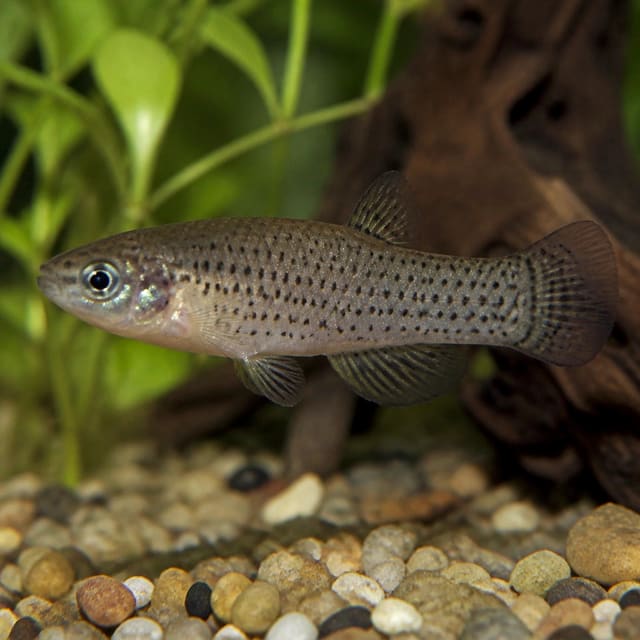
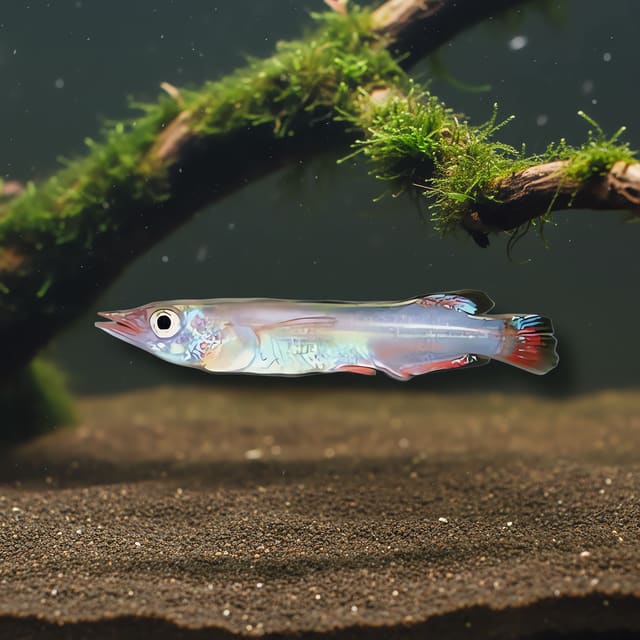
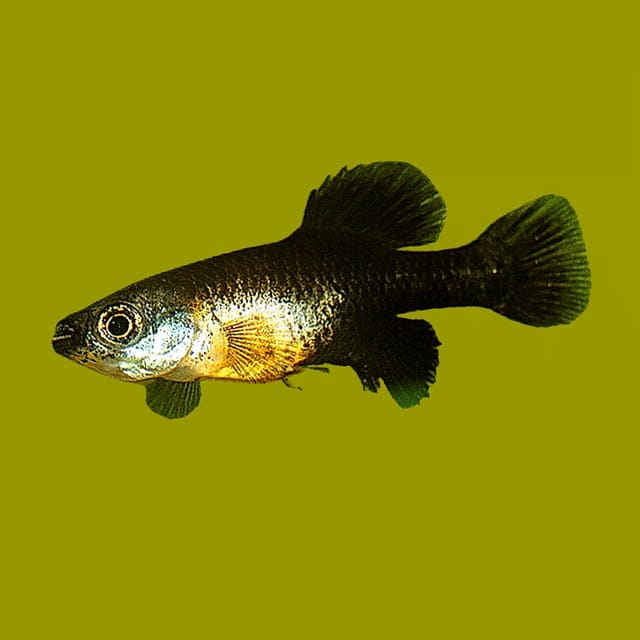
One live, unsexed Twoline Skiffia (Skiffia bilineata) at approximately 2-3 cm. Keep at least six in a mature 80L+ aquarium at 18-24 C; all four gallery images are representative illustrations.
Skiffia bilineata
Shoaling fish: kept in a group they feel safer, stay calmer and show their best colour.
Confirm your email, then we’ll send an availability message for this exact item if it returns within 180 days.
This request is only for this product—no newsletter or other promotions. A mail-provider retry may very rarely duplicate the same availability message. Unconfirmed addresses are removed after 48 hours. See our privacy policy.
One live, unsexed Twoline Skiffia (Skiffia bilineata) at approximately 2-3 cm. Keep at least six in a mature 80L+ aquarium at 18-24 C; all four gallery images are representative illustrations.
Maintain these water conditions for optimal health and vibrant colors
Twoline Skiffia (Skiffia bilineata) is a small, active Mexican goodeid for an aquarist who values unusual livebearers and is prepared to manage a social group in stable, moderately hard water. The understated silver-grey body can develop dark fin and flank patterning as the fish matures. Its modest adult length does not make it a solitary nano fish: group structure, temperature and long-term water quality are central to successful care.
This product is one live, unsexed fish at approximately 2-3 cm when available. Quantity one does not mean a pair, and no male or female is promised. Plan a group of at least six and set the basket quantity accordingly, subject to current inventory and the capacity of the intended aquarium.
One selection adds one live fish to the basket. The supplied length is approximately 2-3 cm, with normal biological variation possible. The current product has a single default option and our stock records do not specify sex, locality or a pair. This listing therefore makes no promise that the individual will be male, female, mature, gravid or from a named population.
| Listing detail | Current meaning | Not promised |
|---|---|---|
| Quantity 1 | One live fish | Not a pair, trio or colony |
| Approximate supplied size | About 2-3 cm | Not an exact measured length |
| Sex | Unsexed | No male or female guarantee |
| Origin detail | Species identity only | No collection locality or population code |
| Gallery | Four representative illustrations | Not exact-stock photographs |
| Availability | Controlled by the live variant inventory | Not reserved until checkout completes |
The present our stock records offer Skiffia bilineata at 2-3 cm without a sex designation, while Shopify has no sex-selection option. Customer-facing content must follow the current product contract.
The fish is offered singly so an experienced keeper can choose the number appropriate for an existing group. A new setup should be planned for at least six of the same species. Do not buy one as a permanent solitary specimen. When fewer than six are currently available, either add them to an established compatible group with known lineage management or wait until a responsible social plan is possible.
This catalogue uses Skiffia bilineata, the accepted combination shown by FishBase and our stock records. The species belongs to order Cyprinodontiformes and family Goodeidae, whose members are commonly called splitfins. It is a goodeid livebearer, not a guppy, platy or molly from family Poeciliidae.
The former or alternative specialist name Neotoca bilineata appears in older aquarium literature and remains in use by the Goodeid Working Group. ITIS records that name as a synonym, while specialist phylogenetic interpretation may recognise Neotoca separately. These labels refer to the same product identity here; they do not describe two sale options or justify repeating both names throughout the page.
| Name or group | How it is used here | Customer consequence |
|---|---|---|
| Skiffia bilineata | Primary catalogue name | Used in the title and care data |
| Neotoca bilineata | Former or alternative specialist name | Useful for recognising older references |
| Twoline Skiffia | Established English common name | Used naturally for customer recognition |
| Goodeidae | Family | Explains splitfin and livebearing biology |
| Goodeinae | Subfamily | Males develop the characteristic split anal fin |
The species is endemic to west-central Mexico. Published records place it in systems associated with the Lerma basin, Lake Cuitzeo and parts of the Rio Grande de Santiago drainage. Its habitats include quiet or slow-moving, often shallow water with vegetation, mud, silt, sand, rock and organic material. This product has no named wild locality, so the listing does not attach it to a particular river, lake or conservation population.
| Care point | Practical recommendation |
|---|---|
| Scientific name | Skiffia bilineata |
| Alternative name | Neotoca bilineata |
| Family | Goodeidae |
| Supplied size | Approximately 2-3 cm |
| Adult planning size | Up to about 6 cm total length |
| Minimum same-species group | Six |
| Practical minimum aquarium | 80L+, at least 60 cm long for six |
| Preferred long-term temperature | 18-24°C |
| pH | 7.0-7.5 |
| Hardness | Approximately 5-20 dGH |
| Diet | Micro-omnivore; complete staple plus small invertebrate and grazing foods |
| Temperament | Active and social; display and pursuit require structure |
| Tank region | Lower to middle water, using planted margins and open feeding areas |
| Care level | Moderate to advanced |
FishBase and our stock records include temperatures of 22-28°C, but the specialist husbandry profile warns that continuous temperatures above 24°C can shorten healthy performance. The 18-24°C recommendation is therefore a long-term aquarium target, not a claim that the species can never encounter warmer water. Avoid abrupt changes and judge any seasonal plan by the established group, room conditions and measured water.
This species suits a mature, well-covered aquarium with stable neutral-to-mildly alkaline water, moderate hardness, a cooler tropical or temperate-tropical temperature plan and room for a social group. It is especially rewarding for an aquarist interested in goodeids, natural behaviour and careful record keeping rather than a single brightly coloured centrepiece.
Do not choose it for an uncycled aquarium, a permanently hot discus-style system, a tiny container, or a community built around slow delicate fish. It is also a poor fit when only one individual can be housed, when sex selection is essential, or when a named conservation lineage is required. The product does not include population provenance.
| Existing setup | Suitability | Why |
|---|---|---|
| Mature 80L+ planted aquarium | Potentially suitable | Confirm length, group number and water |
| Cooler livebearer display | Potentially suitable | Use compatible species and prevent lineage confusion |
| 28-30°C warm-water community | Unsuitable long term | Continuous heat is outside the preferred plan |
| 30L nano aquarium | Unsuitable | Insufficient space for a stable group |
| Single-fish display | Unsuitable | The species should be kept socially |
| Named-population breeding project | Not supported by this listing | No population code or lineage is documented |
| Uncycled new aquarium | Unsuitable | Ammonia and nitrite must remain at zero |
The fish is small and accepts prepared food, but responsible care asks more than basic feeding. A keeper must manage a complete group, avoid chronic heat, maintain moderately hard stable water, recognise social pressure and avoid casual mixing that could compromise goodeid identity. Those requirements make a moderate-to-advanced label more honest than marketing it as an effortless beginner livebearer.
Use at least 80 litres with 60 cm or more aquarium length for six adults. The Goodeid Working Group gives 60 litres as a species minimum; the larger working recommendation provides more room for plant cover, visual barriers, feeding access and water-quality stability. A larger aquarium is appropriate for more fish, substantial companions or a keeper who wants a self-sustaining colony.
A tall tank can hold the same litres as a longer one while offering less useful territory. This species uses shallow, structured habitats in nature and benefits from horizontal room divided by vegetation, wood and smooth stone. Leave open areas for group feeding and observation, but prevent one fish from seeing every other fish across a completely bare box.
| Planning case | Direction | Important note |
|---|---|---|
| Six adults, species-led setup | 80L+, 60 cm length | Use dense refuge and open feeding space |
| Larger colony | Increase length and volume | Watch social balance and filtration load |
| Group with tank mates | Increase footprint | Fit every species at its full group size |
| Juvenile holding arrangement | Short and planned only | Do not delay the adult setup indefinitely |
| Breeding or lineage project | Dedicated aquarium preferred | Keep records and avoid species mixing |
Fit a close cover and check the gaps around hoses, cables and feeders. Active livebearers can jump when startled or pursued. A lid should prevent escape without suppressing normal gas exchange. Recheck it after every maintenance session; a shifted panel or forgotten feeding hatch can undo an otherwise careful setup.
A stable 18-24°C is a practical long-term range for most home setups. The fish can occur across broader conditions, but the goal is not to test the edge of tolerance. Avoid placing the aquarium beside a radiator or in direct summer sun. Use a reliable thermometer, and plan cooling or room ventilation before a heatwave rather than after fish show respiratory stress.
The specialist account warns that holding this goodeid continuously above 24°C can reduce resistance and accelerate ageing. A brief warm period is not the same as permanent heat, but a tank that sits at 26-28°C all year should be assigned to a genuinely warm-water species. At higher temperature, oxygen demand rises while dissolved oxygen availability falls.
| Temperature situation | Meaning | Action |
|---|---|---|
| 18-22°C | Comfortable routine range | Keep stable with good oxygenation |
| 22-24°C | Warmer routine range | Observe oxygen and avoid crowding |
| Above 24°C continuously | Poor long-term plan | Reduce room heat safely or choose another species |
| 16-19°C planned winter phase | Advanced seasonal option | Use only for an established healthy group and change gradually |
| Sudden multi-degree shift | Stress risk | Correct the cause gradually unless an emergency requires action |
Experienced keepers may provide an established group with two to three cooler months below 20°C, often around 16-19°C, to reflect seasonal husbandry and give a reproductive pause. This is optional advanced management, not an arrival-day instruction. Never move a newly delivered juvenile abruptly into cold water, and do not create a seasonal change without confirming that tank mates share the same needs.
Target pH 7.0-7.5 and approximately 5-20 dGH. This is a neutral to mildly alkaline, moderately hard-water plan. Avoid chasing an exact decimal with repeated chemical corrections. A stable pH of 7.2 is more useful than water that swings between 7.0 and 7.5 because additives are being used to force a number.
| Parameter | Target | Management priority |
|---|---|---|
| Temperature | 18-24°C long term | Avoid chronic heat and sudden change |
| pH | 7.0-7.5 | Stability before precision |
| General hardness | About 5-20 dGH | Maintain minerals consistently |
| Ammonia | 0 | Any detectable reading needs immediate investigation |
| Nitrite | 0 | Any detectable reading needs immediate investigation |
| Nitrate | Low and stable | Control through stocking, feeding and water changes |
Measure the aquarium and tap or prepared source water before ordering. The water matcher can help compare your measured conditions with the intended range. Where the tap supply is very soft, use a repeatable remineralisation method rather than adding an unmeasured amount of mineral product. Where it is extremely hard or alkaline, choose a suitable dilution plan or a fish that naturally matches the water.
Slow introduction reduces the stress of a difference between transport water and aquarium water, but it does not make an unsuitable long-term chemistry safe. Prepare the destination first. Ammonia and nitrite must remain at zero, temperature must be stable, and the biological filter must already be mature enough for the planned group.
Use a cycled filter with enough biological media for the adult group and any companions. Small fish still produce a meaningful combined load when kept as six or more, particularly when powdered, frozen or live foods are offered. Choose equipment that is easy to inspect and clean so maintenance is performed before flow declines.
Natural habitat descriptions include quiet water and slight current, so the aquarium does not need a forceful river jet. Distribute the return so the surface moves and oxygen enters without pinning fish against one end. Plants and wood can create calmer pockets. Guard intakes where a 2-3 cm juvenile could be trapped or repeatedly pulled toward a grille.
Surface movement matters most when the room is warm, the group is active or medication reduces oxygen. Rapid breathing across several fish, gathering at the surface or loss of coordination calls for immediate checks of temperature, ammonia, nitrite, filter operation and gas exchange. Do not assume that adding an air stone solves the underlying water-quality fault.
Build the layout around cover, visibility breaks and clean feeding access. Dense planting at the back and sides can shelter juveniles and allow a pursued fish to leave view. Smooth wood, small branches, rounded stones and a little leaf litter can add structure. Keep enough open substrate or midwater space to observe every fish at feeding time.
| Aquarium zone | Purpose | Avoid |
|---|---|---|
| Back and side margins | Dense plants and visual refuge | A bare line of sight across the entire tank |
| Centre | Open group movement and feeding | A cramped hardscape maze |
| Lower level | Smooth substrate, leaves and low cover | Sharp gravel or waste-trapping pockets |
| Surface | Gas exchange, shade and secure cover | Blocked flow or escape gaps |
| Filter area | Reliable circulation and protected intake | Unscreened suction near juveniles |
Fine-leaved and bushy plants provide useful refuge, while older wood and stone can support biofilm and aufwuchs. Do not sterilise every surface until it is visually bare. At the same time, remove decaying material before it compromises water. If live plants repeatedly fail under the chosen hardness or temperature, use safe artificial cover rather than leaving the group exposed.
Moderate light with shaded areas usually allows natural observation without making the fish feel exposed. Switch room light on before a sudden aquarium light, or use a timed ramp where available. Fish arriving after transport may look pale and hide initially; strong light and repeated disturbance will not make adult colour appear faster.
A group spreads social attention and gives individuals several choices of companion and refuge. A singleton cannot show normal group interaction, while a pair can concentrate pursuit on one fish. Six is a practical starting point, not a magical maximum. Increase the aquarium footprint, filtration and cover for a larger colony.
Adult males can develop dark fins and stronger colour during courtship or social display. Brief chasing may occur, especially when fish mature. The important distinction is whether every individual continues to feed, rest and use the tank normally. Repeated cornering, damaged fins, weight loss or one fish staying hidden throughout the day signals a management problem.
When tension appears, first check aquarium size, group composition, cover, water quality and feeding distribution. Rearranging sight lines can be more useful than automatically adding livestock. Any new fish changes the social system and biological load. A divider or separate mature aquarium may be required if one individual remains under sustained pressure.
A species-focused aquarium is the simplest option. In a community, choose calm fish of similar size that accept the same 18-24°C, neutral-to-mildly alkaline, moderately hard water. Match feeding speed and adult behaviour, not just current length. Avoid predators, persistent fin-nippers and warm-water-only species.
| Companion type | Assessment | Reason |
|---|---|---|
| Calm similarly sized hard-water fish | Often possible | Confirm full adult group and temperature overlap |
| Peaceful bottom dwellers | Possible with care | Protect feeding access and floor space |
| Slow long-finned fish | Use caution or avoid | Activity and pursuit may cause stress |
| Aggressive fin-nippers | Avoid | Risk of injury and chronic pressure |
| Large predatory fish | Avoid | The goodeid may be swallowed or harassed |
| Fish needing 27-30°C | Avoid long term | Temperature needs conflict |
| Other goodeid species | Dedicated management preferred | Prevent hybridisation and lineage confusion |
| Dwarf shrimp and newborn fry | At risk | Small moving animals may be eaten |
Many shop categories place goodeids beside guppies, mollies and platies, but those fish do not all share identical temperature, salinity, hardness or social needs. Use the livebearer hub to compare options, then return to the species-level requirements. Similar reproductive biology does not guarantee community compatibility.
The rare and collector fish hub can help compare unusual alternatives. Rarity should never replace welfare as the reason to buy. Choose this fish only when its group, temperature and water requirements already fit; do not use an endangered status or uncommon name as permission for an unsuitable impulse purchase.
Base the diet on a quality small flake, soft granule or appropriately sized micro-pellet that provides complete nutrition. Rotate suitable formats so all individuals can feed. Crush food only as much as needed for the 2-3 cm supplied size; excessive dust disappears into the substrate and increases waste.
The specialist profile describes tiny invertebrates, insect larvae, aufwuchs and detritus in the natural diet. Small frozen or live foods such as daphnia, cyclops and brine-shrimp nauplii can provide variety. Use clean, aquarium-safe sources and keep portions modest. A varied diet is useful; a rich meat-only diet is not.
Mature surfaces, biofilm and fine plant structure support picking behaviour between meals. This does not replace a nutritionally complete diet. Avoid introducing objects from outdoor water without a safe preparation method, because parasites, pollutants and unwanted organisms can accompany them.
| Food type | Role | Use |
|---|---|---|
| Quality micro-pellet, granule or flake | Complete staple | Small portions once or twice daily |
| Daphnia or cyclops | Small invertebrate variety | Rotate in modest portions |
| Brine-shrimp nauplii | Useful small live/frozen food | Appropriate for juveniles and adults |
| Freeze-dried foods | Occasional variety | Pre-soak where appropriate and avoid excess |
| Biofilm and aufwuchs | Browsing opportunity | Support with mature safe surfaces |
| Large hard pellets | Poor match | May be inaccessible at the supplied size |
| High-fat meat-only diet | Unsuitable routine | Does not reflect the varied natural feeding pattern |
Distribute food across two or more points and watch each individual take it. A fish that repeatedly misses meals may be socially excluded, unwell or unable to handle the food size. Remove obvious leftovers. Adjust quantity from body condition, feeding response and water tests rather than adding food simply because fish continue to approach the glass.
Count the group, compare breathing, check that every fish feeds and confirm normal filter return. Look for fin damage, clamped posture, white spots, stringy waste, swelling or one fish isolating. A brief consistent observation catches change earlier than occasional disruptive handling.
Test nitrate and any unstable parameter, remove trapped food and plant debris, inspect intake guards and perform an appropriate partial water change. Match replacement-water temperature and mineral content. The specialist profile describes modest regular water changes as sufficient under suitable stocking, but the aquarium's measured nitrate and feeding load should determine the actual schedule.
Inspect hoses, seals, impellers, lid gaps, heater or room-temperature control and hardscape stability. Review whether the group has outgrown its visual barriers or filtration. Rinse mechanical media as required and protect biological media from chlorine and unnecessary complete replacement.
| Interval | Core checks | Purpose |
|---|---|---|
| Daily | Count, breathing, feeding, flow, social pressure | Detect change early |
| Weekly | Water tests, partial change, debris removal | Control waste and verify stability |
| Monthly | Equipment, cover, media, hardscape, group condition | Prevent gradual mechanical or space problems |
| During hot weather | Temperature, oxygen, room ventilation | Avoid chronic heat and respiratory stress |
| After adding livestock | Ammonia, nitrite, feeding access, behaviour | Confirm the system absorbed the new load |
The aquarium should be fully cycled, covered, at a stable temperature and within the planned pH and hardness range. Prepare a dim refuge and confirm that filter intakes are safe for a 2-3 cm fish. Do not order livestock while a new tank is still producing ammonia or nitrite, during a known household move, or when nobody can receive the delivery.
Open the outer box in a calm room and follow the current instructions supplied with the order. Keep the aquarium light low. Compare transport and tank conditions rather than using a fixed ritual for every delivery. The acclimation timer can support the process, but observation and the included livestock instructions take priority.
Transfer the fish with appropriate equipment after the instructed acclimation method and discard transport water. Avoid chasing a small fish around a large bucket. Once introduced, leave the group to settle. Do not repeatedly lift decor, tap the glass or add food every hour in an attempt to force a response.
Paler colour, cautious movement and reduced appetite can follow transport. Check breathing and balance, keep disturbance low and offer only a small amount of familiar-sized food if the fish is settled. Remove leftovers. A fish that cannot remain upright, gasps persistently or shows a rapid worsening pattern needs prompt investigation rather than passive waiting.
Adults are generally silver-grey with darker patterning. Males may develop darker dorsal and anal fins and stronger yellow-black flank contrast during display, while females are often larger and can remain more subdued. Lighting, substrate, age, social condition and stress affect how visible these features are. A juvenile may not resemble a fully displaying adult.
The supplied fish is approximately 2-3 cm and unsexed. The listing does not promise a specific fin colour, stripe count, body depth, reproductive state or adult sex. Those traits develop and vary. A fish looking pale in the bag is not proof of the wrong species, and a dark individual is not automatically male without the relevant mature anal-fin structure.
All four images are representative illustrations intended to communicate the general fish and aquarium context; none is an exact-stock photograph. The old files include the word `female`, but filenames are not a purchase option and do not override the current unsexed sale contract.
Mature males develop the split anal-fin arrangement characteristic of goodeine fishes and are generally smaller and more slender. Females can grow larger and may show a fuller body. At the juvenile supplied size, reliable sexing is not promised. Do not interpret one still image or a temporary colour change as a guaranteed sex.
Goodeids give birth to live young, but their reproductive biology differs from the familiar poeciliid pattern of guppies and platies. Developing young receive maternal support through specialised trophotaeniae. This is useful biological context, not a guarantee that a newly purchased group will breed or that fry will survive.
Dense fine cover can help fry avoid disturbance, and adults may not always consume them when food and refuge are adequate. Watch that smaller fish can feed. A dedicated grow-out arrangement may still be necessary. Keep accurate dates, parent information and source records if the aim is more than a casual home colony.
Responsible goodeid breeding depends on knowing the source population. This product has no documented ESU, river, lake or captive population code, so offspring should not be labelled as a named conservation line. Avoid mixing it with another goodeid where hybridisation or later identification could become uncertain.
The IUCN Red List assessment classifies the species as Endangered. Habitat modification, pollution, introduced species and local population loss are part of its documented context. That status deserves accurate language: the species is not globally classified as Extinct in the Wild.
Some historic geographic populations appear to have disappeared while others persist. The Goodeid Working Group profile gives a detailed account of distribution, habitat and husbandry under the alternative genus. These sources support education, but they do not establish the provenance of the individual offered here.
Buying this fish does not automatically fund a field programme, preserve a named genetic unit or prove that the animal is captive bred. No such claim is made. Responsible ownership means meeting its welfare needs, preventing accidental release, keeping honest records and avoiding unsupported locality labels. Conservation value must come from documented programmes, not marketing inference.
A newly arrived juvenile may shelter, carry muted colour and eat cautiously. Improvement should be gradual: breathing steadies, the fish joins the group, fins open and appetite returns. Compare individuals rather than judging one moment. A consistent daily note or photograph can reveal whether condition is improving without repeated handling.
Persistent rapid breathing, gasping, loss of balance, clamped fins, repeated rubbing, visible spots, ulcers, severe swelling, ongoing white/stringy waste, progressive weight loss or social exclusion are not normal variations. Test water immediately. Check temperature, filter flow and oxygen before assuming a pathogen. Seek qualified aquatic veterinary advice where symptoms are severe, spreading or unexplained.
| Observation | First checks | Avoid |
|---|---|---|
| Whole group breathing rapidly | Temperature, oxygen, ammonia, nitrite, filter | Blindly adding medication |
| One fish always hiding | Pursuit, cover, injury, feeding access | Assuming it is simply shy forever |
| Loss of appetite | Water, food size, social pressure, visible disease | Adding larger portions that decay |
| Fin damage | Tank mates, displays, sharp decor, water quality | Treating without removing the cause |
| Repeated surface gathering | Oxygen, heat, toxins, flow | Waiting for the next routine water change |
| Gradual weight loss | Individual feeding, parasites, chronic stress | Overfeeding the entire aquarium |
Do not combine treatments or dose a display tank on guesswork. Confirm the active ingredient, calculate the real water volume and consider the sensitivity of plants, invertebrates and biological filtration. Quarantine is most useful when it is a mature, appropriately sized system with stable conditions, not an uncycled container created after a problem appears.
Check room heat, sunlight, enclosed cabinets, pump heat and an incorrectly set heater. Improve safe ventilation and surface movement. Any temperature reduction should be controlled; a sudden large drop can be as stressful as the heat. If the home cannot maintain a suitable long-term range, choose another species rather than relying on permanent emergency cooling.
Confirm the group is large enough and the aquarium provides genuine sight breaks. Add or rearrange safe cover, spread feeding points and monitor for injury. A persistent aggressor or weakened target may need separation into another mature system. Do not add random fish until water capacity and likely social effects have been assessed.
Check food size and whether faster fish take everything. Offer a small familiar live or frozen food to establish feeding, then transition gradually to a complete staple. Maintain hygiene and remove leftovers. Persistent refusal accompanied by rapid breathing, weight loss or isolation points to a welfare problem rather than simple preference.
Measure KH, source-water chemistry, stocking, organic waste and the interval between changes. Low buffering combined with biological acid production can drive a decline. Correct the maintenance and mineral plan consistently. Avoid a large one-off alkaline dose that causes a rapid swing.
| Period | Main task | What success looks like |
|---|---|---|
| Before arrival | Cycle, test, cover and stabilise the aquarium | Zero ammonia/nitrite and matching water |
| First 24 hours | Low disturbance and close breathing checks | Balanced swimming and gradual settling |
| Days 2-7 | Confirm every fish feeds and monitor water daily | No exclusion and stable test results |
| Week 2 | Review cover, feeding points and maintenance load | Group uses the full habitat calmly |
| Weeks 3-4 | Assess body condition and long-term temperature | Even growth, normal fins and reliable routine |
| After one month | Decide whether any community additions are justified | Existing group remains the priority |
Delay new tank mates until the current group is feeding reliably and the filter has demonstrated stable capacity. A visually quiet first week is not an empty space that must be filled. Small juveniles grow, mature and establish social relationships; let the aquarium reveal its real load before making another livestock decision.
The page reflects the current Shopify inventory. When out of stock, do not substitute an unsuitable species solely because the aquarium is ready. When available, quantity one is one unsexed fish. Build or extend a group only when the aquarium has the space, filtration and social plan for every individual.
Eligible first-time customers can use WELCOME10 for 10% off under the current promotion terms. The discount does not change the livestock quantity, sex or care requirements. Check the basket and current terms before payment rather than treating promotional text as a permanent price promise.
Eligible livestock delivery is covered by the Live Arrival Guarantee. Read the current delivery and guarantee information before ordering because dispatch days, postcode coverage, evidence requirements and exclusions can change. Arrange for someone to receive the parcel and have the destination aquarium ready before the delivery window.
The Skiffia category contains related catalogue options. Similar trade names can refer to different species, so compare the scientific name, adult size, temperature and sale unit on each page. Do not assume that every spotted or splitfin goodeid has the same care or lineage.
One live fish is included per quantity selected. The approximate supplied size is 2-3 cm. A new social setup should plan for at least six of the same species.
No. Our stock records and Shopify option do not specify sex, so the fish is sold as unsexed. The old URL and media filenames contain historic female wording but do not create a current sex guarantee.
They are taxonomic treatments of the same species identity here. This product uses Skiffia bilineata as the primary current name, while Neotoca bilineata helps customers recognise older and specialist literature.
Plan for up to about 6 cm total length, allowing for larger adult females. Supplied juveniles at 2-3 cm are not close to their complete adult footprint or social development.
For six, use at least 80 litres and 60 cm aquarium length. Increase the footprint for a larger colony or tank mates. Dense refuge and open feeding space both matter.
A permanent singleton is not recommended. Keep at least six so social attention is distributed and normal group behaviour is possible.
That depends on the room. The long-term target is 18-24°C, so a cool stable home may not need continuous heating. Use a reliable thermometer and protect the aquarium from sudden drops or summer overheating.
Target pH 7.0-7.5 and approximately 5-20 dGH with stable chemistry, zero ammonia and zero nitrite. Test the aquarium rather than relying on a regional tap-water assumption.
Use a quality complete micro-pellet, granule or flake as the staple, with varied small frozen or live invertebrate foods and safe mature surfaces for grazing. Keep portions small enough that waste does not accumulate.
Only when adult size, temperature, hardness, behaviour and lineage management all match. The shared label `livebearer` is not enough. Avoid mixing goodeid species where hybridisation or later identification could become uncertain.
No. The global IUCN category is Endangered. Some historical populations may be lost, while surviving populations remain documented. This product has no named population provenance or conservation-programme claim.
No. All four are representative illustrations. Exact colour, pattern, body shape, maturity and sex vary between live individuals, and the gallery is not a set of exact-stock photographs.
Identity, size, broad water records and global conservation status were checked against FishBase. Taxonomic context was cross-checked with NCBI Taxonomy and ITIS. Habitat, diet, temperature management and aquarium recommendations were informed by the Goodeid Working Group's specialist profile. The practical 80-litre group recommendation deliberately adds working room above that profile's 60-litre minimum.
Scientific sources describe populations and biological limits; they do not automatically prescribe every detail of a home aquarium. Where this page gives a practical recommendation, it is labelled as such and chosen conservatively. The text does not invent a sex, locality, lineage, review score, exact-stock image, breeding guarantee, quarantine process or conservation donation.
No reviews for this item yet. Bought one? Honest reviews only, good or bad.
What customers say about ordering from us
I have a small group of long finned mountain minnows. So was delighted to be able to order ten of this variety to increase the genetics in my tank . The ones I recieved are healthy but it’s to early to give a verdict on wether they are of a long finned type since they are small currently.
Gordon Walker · 23 Sept 2026
100% success travel and "installation". Pleased with quality of purchase. The Siamese fighter a bit "shy" so have not yet seen him at his best yet but looking good. Happy customer. GG
George E Garratt · 21 Sept 2026
Reviews of our shop, collected by Judge.me, an independent third-party review collector. Newest first.