Moderate
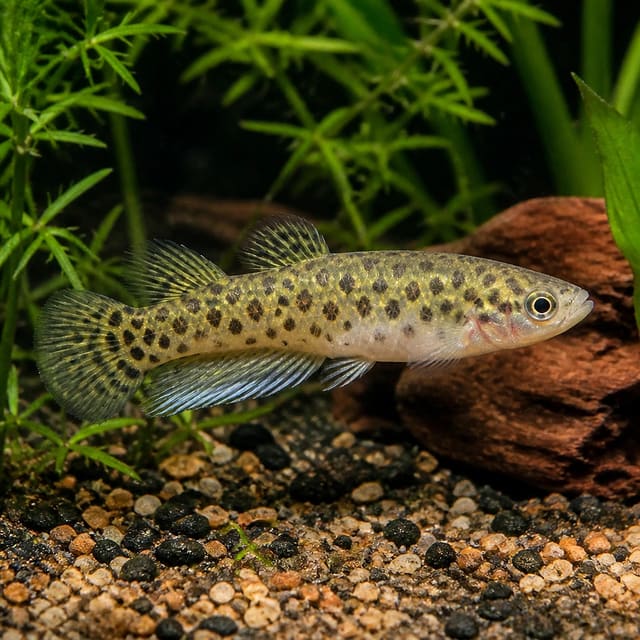
Spotted Skiffia (Skiffia multipunctata)
18–24°C · 60L
£18.99
One unsexed Twoline Skiffia at approximately 2–3 cm at dispatch. Keep this Endangered Mexican goodeid in a mature, well-oxygenated aquarium with stable alkaline, moderately hard to hard water, cover, open swimming room and a carefully planned social group.
Skiffia bilineata (synonym: Neotoca bilineata)
Shoaling fish: kept in a group they feel safer, stay calmer and show their best colour.
One unsexed Twoline Skiffia at approximately 2–3 cm at dispatch. Keep this Endangered Mexican goodeid in a mature, well-oxygenated aquarium with stable alkaline, moderately hard to hard water, cover, open swimming room and a carefully planned social group.
Maintain these water conditions for optimal health and vibrant colors
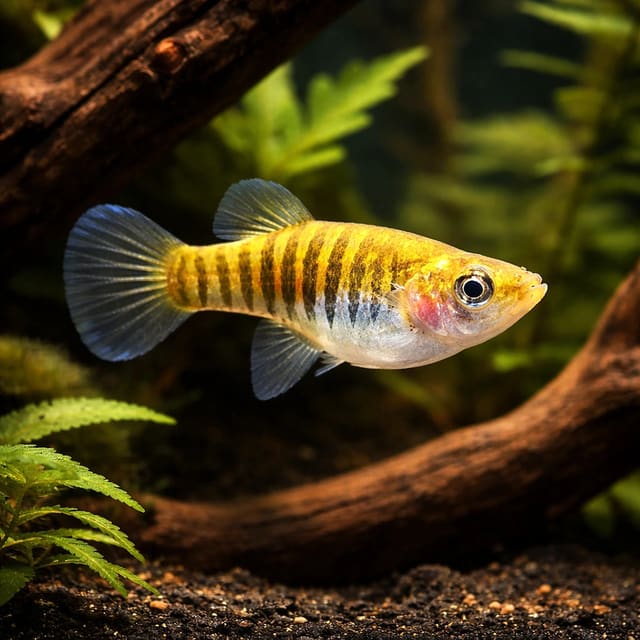
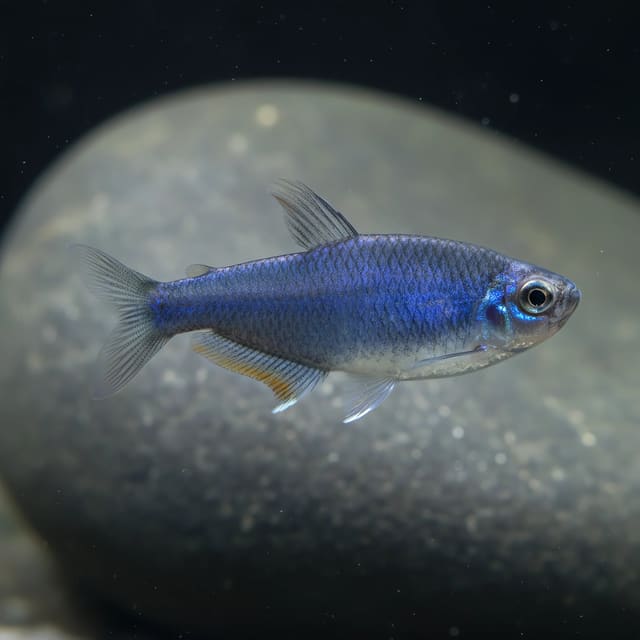
Twoline Skiffia is an Endangered livebearing goodeid from central Mexico. It is widely known in the aquarium hobby as Neotoca bilineata, while FishBase, ITIS and GBIF currently place it as Skiffia bilineata. Both names refer to the same fish on this listing. It is a small but highly distinctive species: males can develop dark dorsal and anal fins during courtship, females grow larger, and both sexes show a series of fine vertical markings along the flanks.
This listing offers one unsexed fish at approximately 2–3 cm at dispatch. It is not a confirmed male, female, pair or breeding group. The fish needs a mature, well-oxygenated aquarium with moderately hard to hard, alkaline water, plant or hardscape cover, open swimming room and a carefully planned social group. It is better approached as a specialist goodeid than as an automatic addition to a warm mixed community. Browse the Other Livebearers collection to compare related stock.
The name is genuinely more complicated than a spelling correction. The original description was Characodon bilineatus Bean, 1887. The fish was later placed in Skiffia, Goodea and then the monotypic genus Neotoca. FishBase currently presents Skiffia bilineata as the accepted combination and treats Neotoca bilineata as a synonym. ITIS also lists the species within Skiffia. The Goodeid Working Group and a substantial body of conservation and behavioural research continue to use Neotoca bilineata.
For that reason, this page retains both names. Doing so helps keepers connect aquarium records, scientific papers and current database entries without pretending that every authority uses the same genus. The supplier spelling "bilienata" is a transposition error. When keeping breeding or lineage records, write the name used by your source and note the alternative combination so that future keepers can trace the same species.
| Name | How it is used | Meaning on this page |
|---|---|---|
| Skiffia bilineata | Current FishBase, ITIS and GBIF placement | The accepted database combination used in the taxonomic note |
| Neotoca bilineata | Specialist goodeid, aquarium and peer-reviewed literature | A widely recognised synonym for the same Twoline Skiffia |
| Twoline Skiffia | English common name | Common English name |
| "Neotoca bilienata" | Supplier spelling | A misspelling, not a different species |
One unit is one unsexed Twoline Skiffia at approximately 2–3 cm at dispatch. Natural variation, posture and measuring method mean a live fish will not be identical to a ruler measurement. The grade does not promise a particular sex, adult colour, locality, age or breeding condition. At this size, confident sexing may not be possible from a quick colour assessment, and transport can temporarily reduce colour or display behaviour.
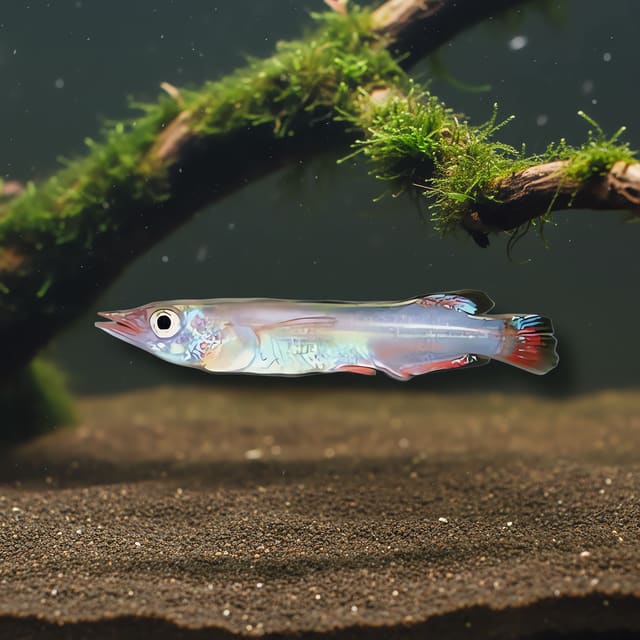
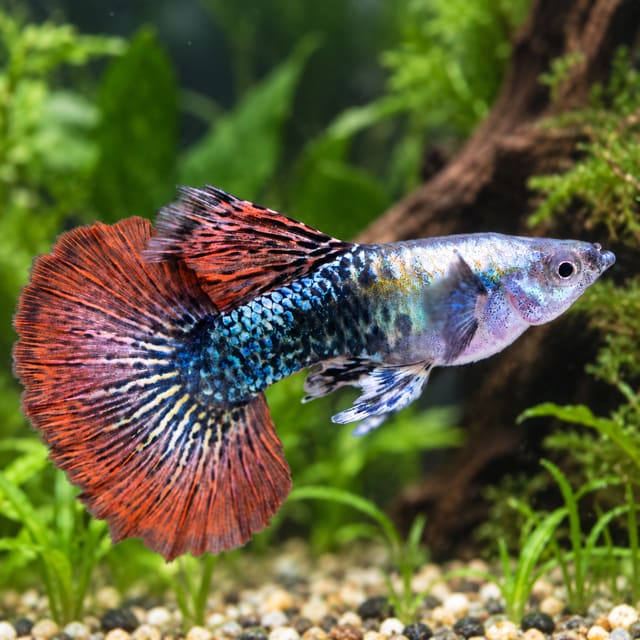
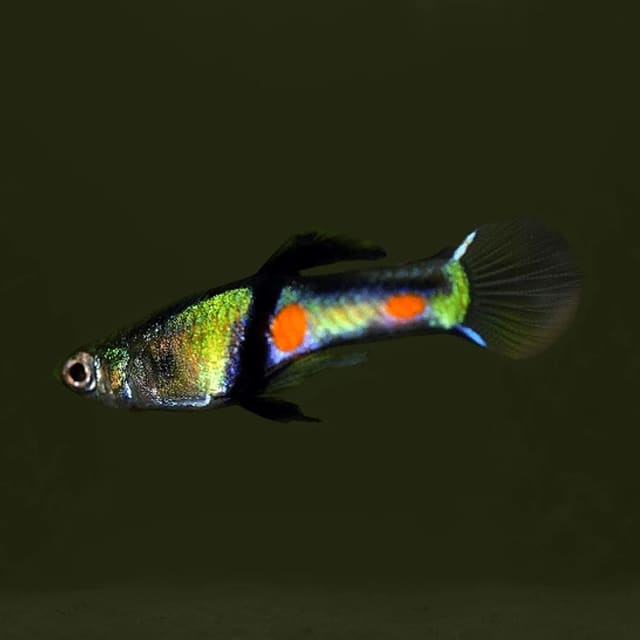
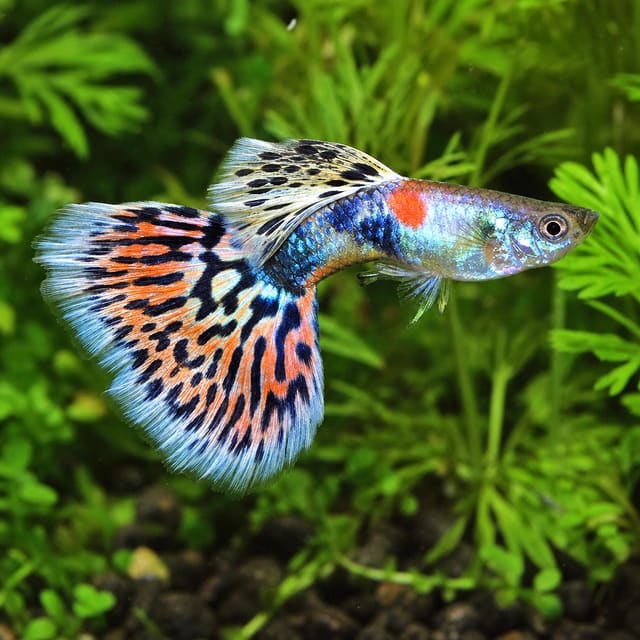
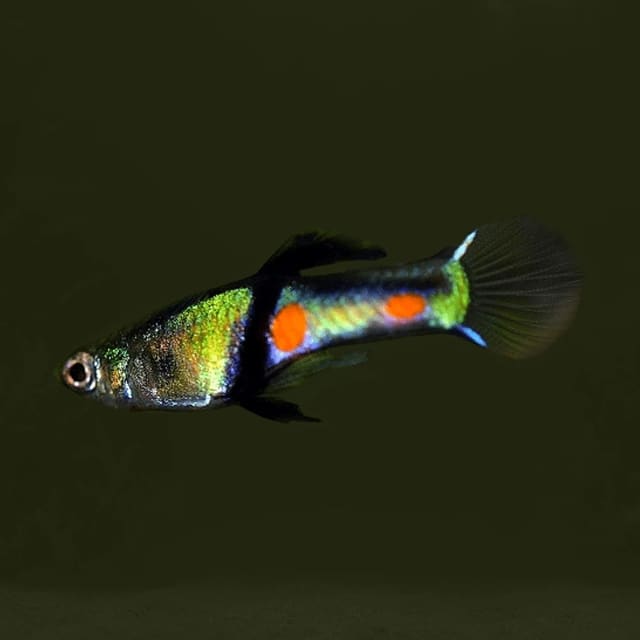
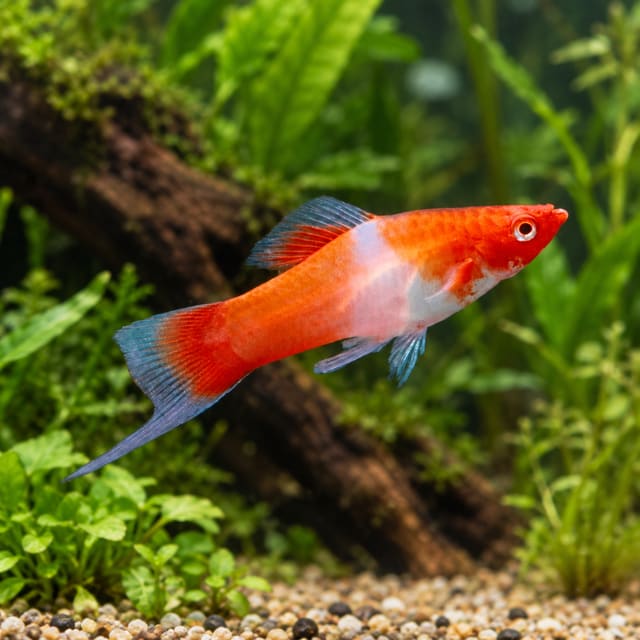
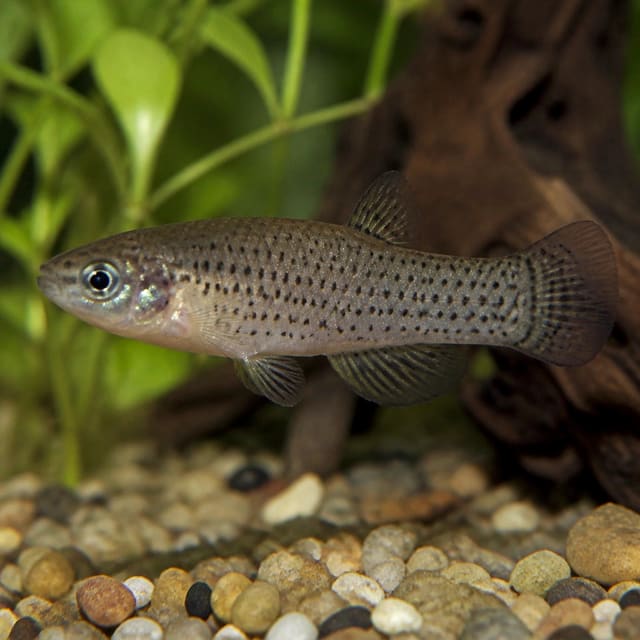
The gallery is representative of the species rather than an exact dispatch photograph. The current images are preserved so customers can inspect the recorded body shape and markings, but colour varies with sex, maturity, social state, lighting and acclimation. A young or subordinate fish can be much greyer than a displaying adult male. Do not select this species on the assumption that every fish will become the darkest example shown in reference material.
The stock is sold by size, not as a sexed pair. No collection locality or Evolutionarily Significant Unit has been supplied for this commercial stock. Keep provenance records, never release aquarium fish, and do not represent offspring as a documented wild conservation line unless that lineage is independently evidenced.
The species is endemic to central Mexico and has experienced severe range loss. A peer-reviewed genetic and habitat study reported local extinction across roughly 80 per cent of the historical distribution examined, with remaining populations fragmented between the Cuitzeo and Lerma-Santiago systems. The Goodeid Working Group describes losses from several historic areas and notes that surviving populations can be small and fluctuate substantially. FishBase reports the IUCN category as Endangered, assessed in 2018.
That status deserves accuracy rather than marketing language. Buying an aquarium fish is not automatically a conservation action. Captive maintenance becomes conservation-relevant only when identity, locality, genetic management, long-term records and responsible distribution are handled properly. A commercial fish with no documented locality can still be kept well and can help build interest in threatened Mexican freshwater fishes, but it should not be described as restoring a wild population or preserving a particular genetic unit.
Never release this or any aquarium fish into a pond, stream or drainage. Release can spread disease, create invasive populations or compromise native genetics. If the keeper wants to participate in a formal conservation programme, contact a specialist livebearer or goodeid organisation and ask what provenance and record-keeping standards are required before choosing stock.
Twoline Skiffia have been found in shallow, quiet or gently moving water in lakes, ponds, ditches, canals and slough-like channels. Habitats can be turbid, greenish or muddy, with substrates including mud, silt, sand, clay, stones and rock. Flooded grass, marginal plants, algae and other dense cover can be important, particularly in very shallow shoreline areas.
The historic range includes parts of Jalisco, Guanajuato and Michoacan. Records span the Cuitzeo drainage, portions of the Lerma system and historic localities around the Santiago and Chapala region, although some populations are now considered lost and the exact older distribution is debated. This is a central Mexican freshwater fish, not a South American blackwater species and not a fish from high-flow mountain rapids.
An aquarium does not need to reproduce muddy water. The useful lessons are structural: provide quiet areas, cover, grazing surfaces, gentle to moderate circulation and stable mineral-rich water. Planting around the back and sides, floating cover and open lanes through the centre can produce a much more functional layout than a bare tank or a strong river-style current.
| Wild observation | Useful aquarium translation | What to avoid |
|---|---|---|
| Shallow margins and flooded vegetation | Plant cover, floating cover and accessible refuge | A bright bare aquarium with nowhere to withdraw |
| Quiet to slight current | Gentle or moderate circulation with calm zones | Relentless high-velocity flow across the whole tank |
| Algae, aufwuchs and detritus | Mature grazing surfaces and a varied omnivore diet | Expecting the fish to live on algae alone |
| Variable natural substrate | Fine gravel or sand with stones, wood and plants | Sharp decor or unstable structures |
There is no scientific database rule that turns one litre figure into a guaranteed setup. Adult Twoline Skiffia are small, but social activity, sex composition and refuge matter more than body length alone. Around 80 litres is a cautious lower planning floor for a modest species-focused group, while a longer aquarium around 100 litres or larger gives more room to create cover, feeding areas and broken sightlines. Larger mixed groups need more space.
Prioritise horizontal footprint over height. A long tank lets fish move between open water and refuge without repeatedly crossing the same dominant individual's path. Plant or hardscape the ends and rear, then leave a broad central swimming lane. Use multiple loose zones rather than a single cave that can be controlled by one fish. Cover the aquarium securely because active livebearers can jump, particularly during chasing or when startled.
This species should not be purchased as a solitary ornament. One fish from this listing is suitable for joining a prepared compatible group or for building a group through deliberately planned purchases. Because the supplied fish is unsexed, do not assume that ordering a fixed number creates a particular male-to-female ratio. Watch the group as it matures and keep a separation or rehoming plan.
Choose the aquarium for the mature social group, not for the 2-3 cm fish in the transport bag. Extra footprint and broken sightlines provide a larger safety margin than a rigid stocking formula.
A peer-reviewed Scientific Reports study describes the species as preferring moderately hard, alkaline water at 18-24°C. FishBase reports pH 7.0-7.5, hardness up to 20 dH and a 22-28°C environmental range from its cited reference. These numbers are not identical because they come from different contexts. For routine aquarium care, a stable 18-24°C working range is the more cautious choice, with good oxygenation and no abrupt swings.
The species has been observed and experimentally studied across wider temperatures, but an experimental exposure is not a husbandry target. The Scientific Reports study found changes in refuge use and swimming activity across a 15-30°C gradient, and pilot fish showed stress behaviour at 32°C. Do not use a broad tolerance claim to justify chronic heat. Warmer water also carries less dissolved oxygen, which adds another reason to avoid running this fish like a consistently hot tropical species.
Test the source water before altering it. Many UK tap-water areas may already provide suitable mineral content. If the water is very soft or acidic, use a controlled remineralisation plan rather than adding unmeasured buffers directly to an occupied tank. Stability matters more than chasing the exact centre of a published range. Record temperature, pH, general hardness and carbonate hardness so changes can be understood rather than guessed.
| Parameter | Cautious working target | Evidence boundary |
|---|---|---|
| Temperature | 18-24°C | Routine range supported by peer-reviewed species context; broader experimental exposure is not the daily target |
| pH | About 7.0-7.5 | FishBase reported range; avoid rapid correction |
| General hardness | Moderately hard to hard, up to about 20 dH | Use measured source water and a repeatable method |
| Ammonia and nitrite | Zero | Universal mature-aquarium requirement, not a species-specific tolerance claim |
Use a mature biological filter sized for the actual group and feeding load. Gentle to moderate circulation is appropriate, but provide visible surface movement and make sure the whole tank receives oxygenated water. A sponge pre-filter is useful where fry may be present. Avoid directing a powerful outlet through every refuge; the aquarium should include both circulation and calmer resting areas.
Test ammonia, nitrite and nitrate, especially after stocking changes. Ammonia and nitrite should remain at zero. Perform regular partial water changes using conditioned water matched closely for temperature and mineral content. Clean mechanical media before it clogs, but do not sterilise all biological media at once. Rinse reusable filter media in removed aquarium water or another suitable dechlorinated water source.
There is no dependable calendar promise that a new aquarium becomes cycled after four or six weeks. A tank is ready when testing shows that the biological filter can process the expected waste safely. Add the fish only after this is demonstrated. In a mature aquarium, note changes in breathing, surface use, feeding and social position because these can reveal a water or oxygen problem before a single test tells the whole story.
The Goodeid Working Group describes the species as microphagous-omnivorous, with tiny invertebrates, aufwuchs and detritus forming useful natural feeding context. In captivity, use a complete small omnivore flake, crumb or micro-pellet as the staple. Include some plant and algae-derived material, then add measured portions of suitable frozen or live invertebrate foods for variety.
Feed food small enough for every fish to take cleanly. One or two measured feeds per day can work, but portion size, group size and filtration determine the result. Watch each fish rather than judging only how quickly the dominant individuals eat. Spread food across more than one area if a shy or subordinate fish is being excluded. Remove obvious excess before it decomposes.
Biofilm and soft algae on mature surfaces are valuable grazing opportunities, but the fish is not a substitute for aquarium maintenance and should not be sold as an algae cleaner. Likewise, rich frozen food should not become the whole diet. Body condition should remain firm without a swollen abdomen, and the group should be active without frantic competition at every feed.
| Food role | Examples | Use |
|---|---|---|
| Complete staple | Small balanced omnivore flake, crumb or micro-pellet | Main nutritional base |
| Plant and grazing component | Spirulina-containing food, mature biofilm and suitable vegetable matter | Supports the omnivorous diet |
| Invertebrate variety | Daphnia, cyclops, Artemia or other appropriately sized foods | Measured rotation, not the sole diet |
| Avoid | Large portions, food too large to swallow, repeated rich feeding | Reduces waste and uneven body condition |
Twoline Skiffia are active social goodeids. They should not be advertised simply as peaceful or guaranteed community-safe. Males can display, individuals can chase, and food competition or a poor sex balance can make a small aquarium stressful. A species-focused setup is the clearest starting point because it allows the keeper to observe normal behaviour without asking slower or long-finned fish to absorb the pressure.
In a mixed aquarium, choose companions that share the cooler, mineral-rich water and are not so timid, slow or delicate that persistent attention becomes harmful. Adult size alone is not enough. Compare preferred temperature, hardness, feeding speed, swimming level and social behaviour. Long-finned fancy fish, very warm-water specialists, tiny shrimp and fish that require soft acidic water are poor choices. Shrimp young are likely to be treated as food.
Related goodeids can be useful comparisons, but combining several livebearer species in limited space may complicate feeding, breeding records and social management. The Spotted Skiffia, Barred Splitfin and Polka-dot Splitfin pages show other currently listed goodeids. Treat those links as comparison tools, not automatic tank-mate approvals.
Have a second cycled space, divider or rehoming plan. Persistent hiding, clamped fins, torn fins, weight loss, missed feeds or repeated chasing mean the social arrangement needs intervention.
FishBase reports males at about 4 cm total length and females up to about 6 cm. Specialist descriptions also note that females are usually larger and deeper-bodied. The most dependable male feature is the modified split anal fin typical of goodeines: a notch follows the shortened front rays. This is different from the narrow gonopodium of guppies and mollies.
During courtship, males can darken the dorsal and anal fins and show stronger yellow, black or darker flank detail. Females remain more silvery-grey or may show a bluish, yellowish or purplish cast, with a fuller body and a dark area around the anal region. Colour alone is not a safe sexing method for a small newly arrived fish. Lighting, stress, age and social status all affect appearance.
The 2-3 cm dispatch grade is sold unsexed. If the group eventually develops an unsuitable balance, change the composition or provide more space rather than assuming a fixed formula will solve every interaction. Do not buy a single fish as a promised female or displaying male when the variant does not say that.
Twoline Skiffia are viviparous goodeids. Developing young are retained within the female and receive maternal nourishment through specialised embryonic structures called trophotaeniae. These ribbon-like extensions are associated with the developing fry and are one of the biological features that distinguish goodeid reproduction from the better-known guppy model.
A mature, stable group may breed when temperature, condition and social structure are suitable. Dense plant cover and a sponge-protected filter improve refuge for young, but a separate prepared grow-out aquarium gives the keeper more control over feeding and parentage. Fry are not guaranteed, and this listing does not promise a pregnant female or a breeding pair.
Brood size and timing depend on female size, condition, temperature, lineage and observation method, so no fixed figure is guaranteed. Historical literature includes individual brood observations, but one record is not a dispatch promise. Record dates and parentage from your own group instead of forcing every birth into a calendar.
Because this is an Endangered species, label offspring carefully. Keep the source and any locality information exactly as received. Do not invent a locality, and do not mix undocumented commercial stock into a managed lineage without agreement from the programme maintaining it.
Prepare the aquarium before ordering. Check temperature, pH, hardness, ammonia and nitrite, and confirm that the filter is mature. On arrival, follow the current instructions rather than leaving a closed transport bag floating for an arbitrary period. Keep lights subdued, minimise handling and compare the transport and aquarium conditions before completing acclimation.
Quarantine is the safest way to protect an established collection when suitable facilities and experience are available. The quarantine aquarium must itself be cycled, heated or cooled appropriately, covered and equipped with refuge. Use separate nets and siphons. Quarantine duration should respond to observed health and veterinary or fish-health guidance; the page does not promise that every pathogen declares itself within a fixed two- or four-week window.
Monitor breathing, balance, posture, appetite, body condition, fin position, faeces and social placement. White spots, flashing, rapid gill movement, clamped fins, ulcers, swelling, wasting or persistent isolation need investigation. These signs are not diagnoses. Test the water first, document recent additions and treatments, and seek qualified advice before medicating. Unnecessary medication can add stress and damage biological filtration.
| Observation | Possible context | First response |
|---|---|---|
| Rapid breathing or surface use | Oxygen, temperature, ammonia, nitrite or illness | Test water, increase gas exchange and investigate promptly |
| Persistent hiding or missed feeds | Arrival stress, bullying, water mismatch or illness | Observe interactions and verify water conditions |
| Torn or clamped fins | Chasing, decor injury or disease | Separate if needed and identify the cause |
| Loss of body condition | Food exclusion, parasites or chronic stress | Confirm feeding access and obtain informed health advice |
Twoline Skiffia are smaller than the robust Butterfly Goodeid and have a more restrained body pattern than the bold Red-Tailed Goodeid. Compared with Spotted Skiffia, the Twoline species is associated with fine vertical lines and strong courtship darkening rather than large dark spots. These comparisons help with identification, but they do not mean the species should be mixed in one aquarium.
The most important difference from common poeciliid livebearers is not simply rarity. Twoline Skiffia have goodeine reproductive anatomy, a cooler routine temperature recommendation, a threatened wild history and a need for careful identity records. They should not be treated as an expensive guppy substitute. Their appeal lies in natural behaviour, subtle sexual dimorphism and the responsibility of maintaining an accurately named Mexican freshwater species.
| Species | Useful distinction | Planning note |
|---|---|---|
| Twoline Skiffia | Fine vertical markings; dark courtship fins in males; 4-6 cm reported adult range | Cooler hard-water goodeid; this page's subject |
| Spotted Skiffia | More obvious spotted pattern | Compare care and stock separately |
| Butterfly Goodeid | Larger, bolder and more robust | Needs its own adult-space assessment |
| Red-Tailed Goodeid | Different genus, body colour and social profile | Do not infer identical care from the family name |
Check the live stock and checkout information before ordering. One unit is one unsexed 2-3 cm fish. The price shown beside the variant is the current price for that unit; the page does not sell a pair unless a future variant explicitly says so. Confirm that the aquarium is mature, the water is suitable and a social plan is ready before selecting a delivery date.
Current postcode coverage, schedules, weather restrictions and livestock packing information are explained on the delivery page. The Live Arrival Guarantee and reporting steps depend on the published terms. If there is a problem, follow the arrival instructions and the returns and reporting policy, retain the relevant packaging and provide the requested photographs within the current reporting window.
Before ordering, confirm that the aquarium can provide stable temperature, suitable mineral-rich water, a planned social group and mature filtration.
FishBase supports the current Skiffia bilineata placement, reported size, water context and Endangered assessment. the Goodeid Working Group species account supports the Neotoca usage, historical distribution, habitat, diet, sexual dimorphism and conservation detail.
The peer-reviewed population-genetics study supports the severe range contraction, remaining population structure and need for careful lineage thinking. The open-access Scientific Reports temperature study supports the 18-24°C species context and shows why broad experimental temperatures should not be converted into a simplistic care range.
No fixed lifespan is published here because the checked scientific and supplier sources do not establish one for this stock. No guaranteed brood size, gestation period, community compatibility or conservation lineage is claimed. Aquarium recommendations such as tank footprint and group planning are cautious husbandry guidance, not a claim that the wild species naturally occupies an 80- or 100-litre volume.
FishBase, ITIS and GBIF currently use Skiffia bilineata. Specialist goodeid sources and peer-reviewed papers also use Neotoca bilineata. This listing records both for the same Twoline Skiffia.
One unit is one unsexed fish in the approximate 2-3 cm dispatch grade. It is not a pair or group.
No. The current variant is unsexed, and colour alone is not a safe way to promise sex at this size.
FishBase reports about 4 cm total length for males and up to 6 cm for females. Females are generally larger and deeper-bodied.
Use a stable 18-24°C as a cautious routine range. Do not convert experimental exposure at lower or higher temperatures into a daily target.
FishBase reports pH 7.0-7.5 and hardness up to 20 dH. Aim for stable alkaline, moderately hard to hard water.
Do not assume so. It is an active social goodeid, and individuals can chase or compete. A species-focused group is the clearest starting point.
Shared temperature alone does not make the match ideal. Research documents interactions between invasive guppies and native Twoline Skiffia, and long-term mixed keeping can complicate behaviour, feeding and conservation records.
Plan it as a social species rather than a solitary display fish. The exact group composition depends on sex, aquarium footprint and individual behaviour.
Use a complete small omnivore staple with plant content, plus measured invertebrate variety and access to mature grazing surfaces.
It may graze soft algae and aufwuchs, but it is not an algae-control tool and still needs a complete diet.
No. Treat 80 litres as a cautious lower planning floor for a modest species setup. A longer 100-litre or larger aquarium gives more social and layout flexibility.
It is a viviparous goodeid. Developing young receive maternal nourishment through trophotaeniae before live birth.
No. The fish is unsexed, and breeding depends on maturity, sex composition, condition, environment and social stability.
Not automatically. Formal conservation value requires documented identity, locality, genetics, records and responsible coordination. Never release aquarium stock.
No. The gallery is representative. The dispatched fish varies naturally with sex, maturity, social state and acclimation.
Follow the arrival instructions, document the fish and packaging as requested, and report the issue within the current Live Arrival Guarantee policy window.
No reviews for this item yet. Bought one? Honest reviews only, good or bad.
What customers say about ordering from us
Easy website plenty of info on fish your buying great to pick a time slot
TRACEY DURRANT · 7 Oct 2026
Got some lovely fish thank you
Kevin Mackie · 7 Oct 2026
Reviews of our shop, collected by Judge.me, an independent third-party review collector. Newest first.