Easy
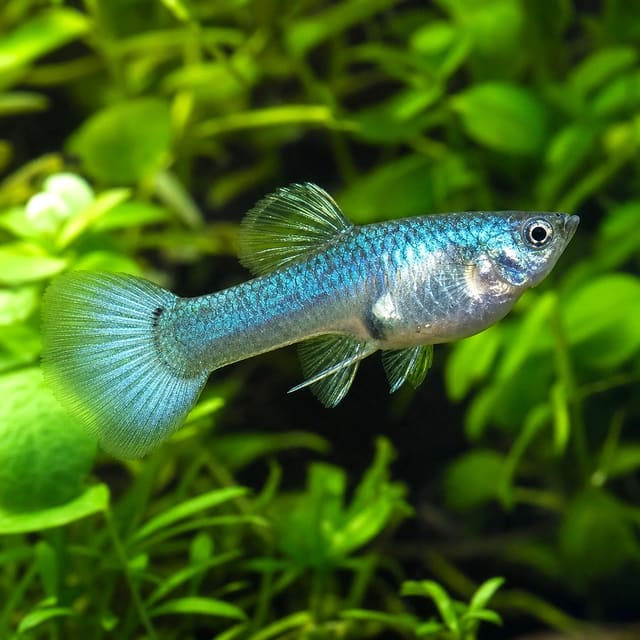
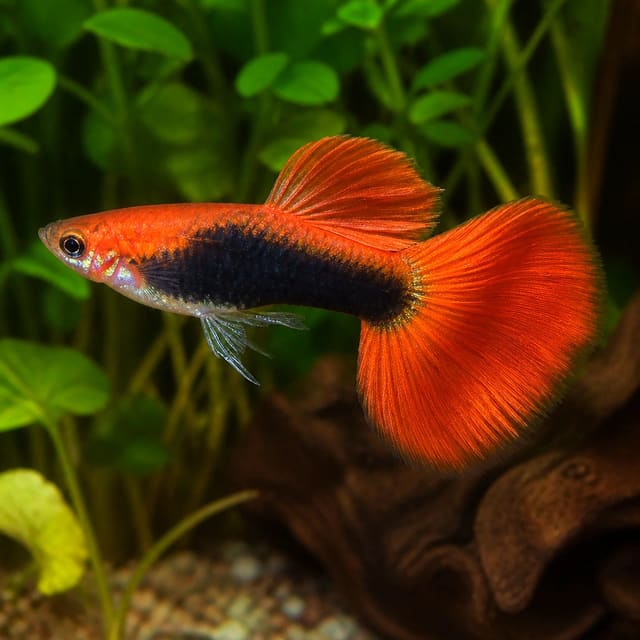
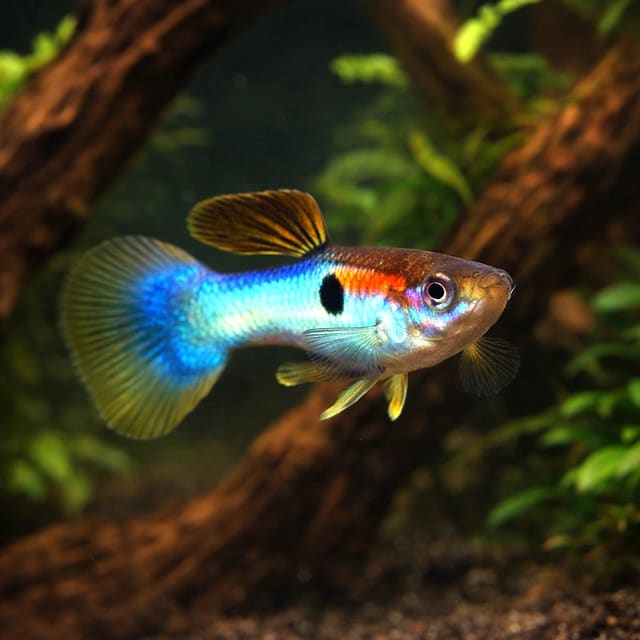
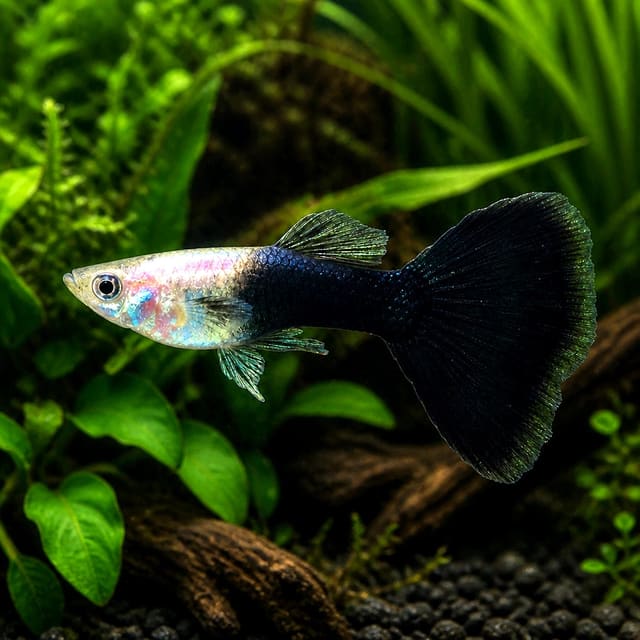
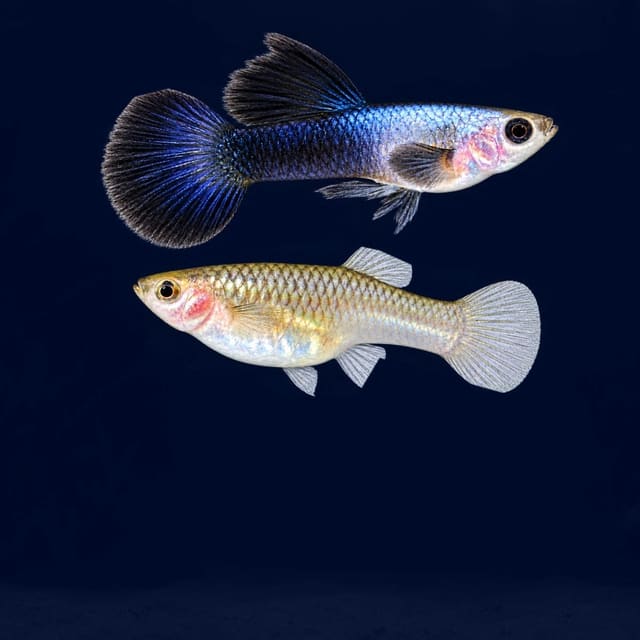
Blue Moscow Male Guppy (Poecilia reticulata)
22–28°C · pH 7–8 · 45L
£6.49
Female Elephant Ear Guppy (Poecilia reticulata) is a Poeciliidae livebearer from Venezuela, Barbados, Trinidad, northern Brazil and the Guianas that reaches 6 cm. It suits a prepared beginner; Tropical Fish Co recommends five or more in a mature aquarium at least 60 cm long and 22–28°C, while OATA’s group guidance gives pH 7.0–8.0 and 8–18 dGH. Sold individually.
Adult size is the maximum length this species reaches at full maturity (scientific sources). The livestock you receive will be younger and smaller. Product-photo provenance and any image-specific limitations are stated on the listing.
Shoaling fish: kept in a group they feel safer, stay calmer and show their best colour.
Minimum of 2 per order.
Female Elephant Ear Guppy (Poecilia reticulata) is a Poeciliidae livebearer from Venezuela, Barbados, Trinidad, northern Brazil and the Guianas that reaches 6 cm. It suits a prepared beginner; Tropical Fish Co recommends five or more in a mature aquarium at least 60 cm long and 22–28°C, while OATA’s group guidance gives pH 7.0–8.0 and 8–18 dGH. Sold individually.
Adult size is the maximum length this species reaches at full maturity (scientific sources). The livestock you receive will be younger and smaller. Product-photo provenance and any image-specific limitations are stated on the listing.

Guppies are social livebearers suited to a prepared beginner, not a fish-per-litre formula. Use a mature filtered aquarium, tested neutral-to-alkaline mineral-bearing water, deliberate sex and population planning, open swimming room, cover and a separation option.
Maintain these water conditions for optimal health and vibrant colors
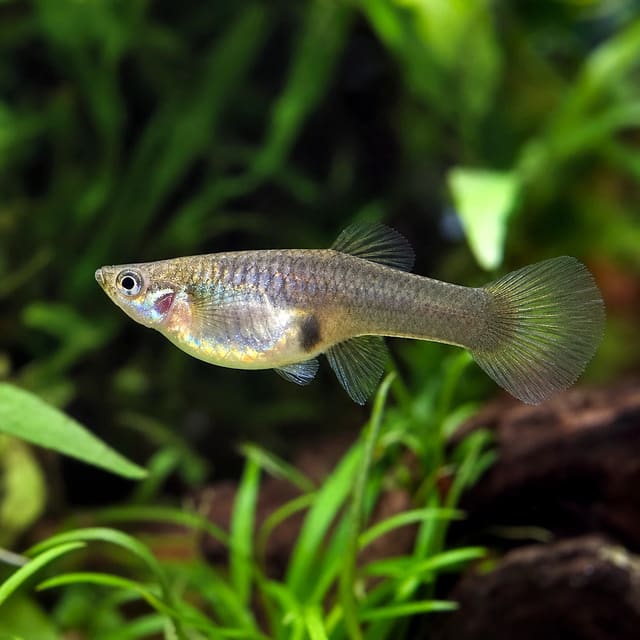
The female elephant-ear guppy is a selected trade form of Poecilia reticulata, a livebearing fish in the family Poeciliidae. FishBase records its native range as Venezuela, Barbados, Trinidad, northern Brazil and the Guianas. Plan for an adult female body length of up to 6 cm standard length. This peaceful social fish can suit a prepared beginner who has a mature, filtered aquarium and can maintain its group, water and population needs.
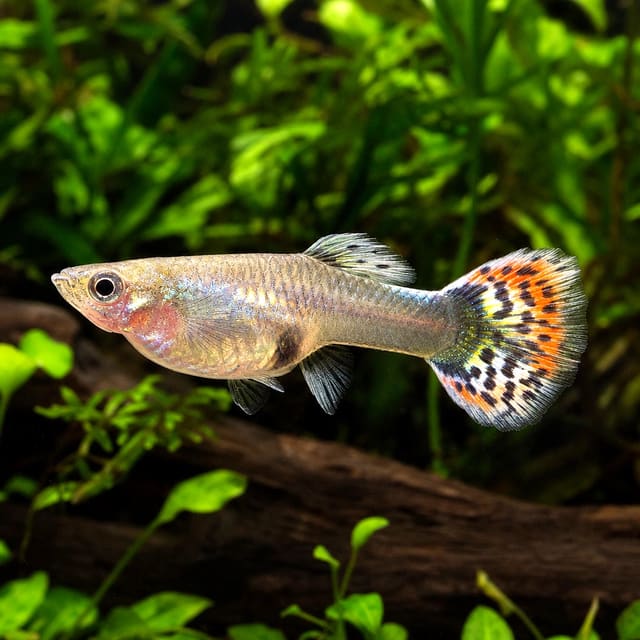
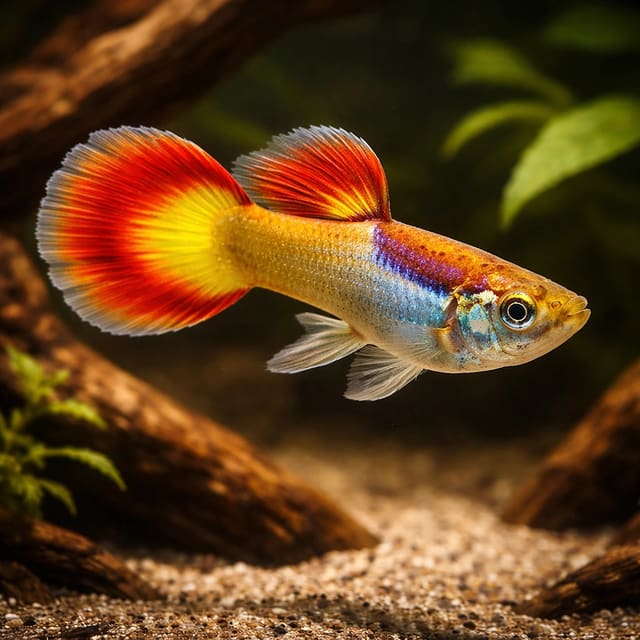
The accepted scientific name is recorded by Eschmeyer’s Catalog of Fishes. “Elephant ears” is the trade-form description attached to this offer rather than a separate species. Aquarium varieties can differ markedly in colour and finnage, so use the identity, adult measurements and care requirements rather than expecting every individual to carry identical markings.
You can compare other forms through our guppy collection, while keeping each animal’s stated sex and identity separate.
Reference: FishBase species account.
Seriously Fish uses up to 6 cm standard length as its aquarium planning measurement for Poecilia reticulata; FishBase records 5 cm standard length for females. Standard length excludes the tail fin, and selected domestic finnage varies, so allow swimming room beyond the body measurement.
Our complete guppy care guide uses a conservative house plan: a mature, filtered aquarium at least 60 cm long for one small social group, with five or more guppies where the sex plan, filtration, water tests and other animals allow. The 3–4 cm dispatch size must not be used to calculate a smaller permanent home.
OATA’s guppy-and-molly sheet gives group guidance of at least 45 litres for a small group of smaller livebearers, 20–28°C, pH 7.0–8.0 and 8–18 dGH. We narrow routine temperature to 22–28°C while retaining pH 7.0–8.0 and 8–18 dGH, all within the wider species ranges described by Seriously Fish.
| Planning check | Working value |
|---|---|
| Adult body length | Plan for up to 6 cm standard length |
| Aquarium | At least 60 cm long, mature and filtered |
| Social group | Five or more where capacity and sex planning allow |
| Routine temperature | 22–28°C |
| Routine chemistry | pH 7.0–8.0; 8–18 dGH |
Sex is guaranteed only when the exact product or selected option explicitly states male or female. This Female Elephant Ear Guppy listing is sold as female.
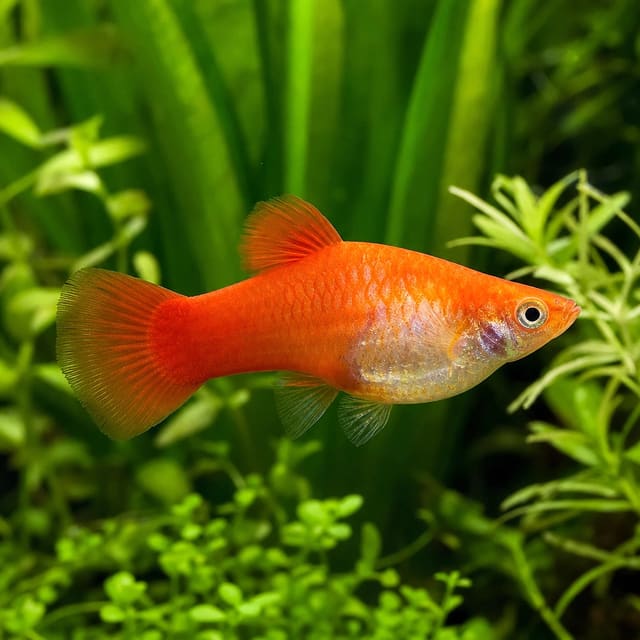
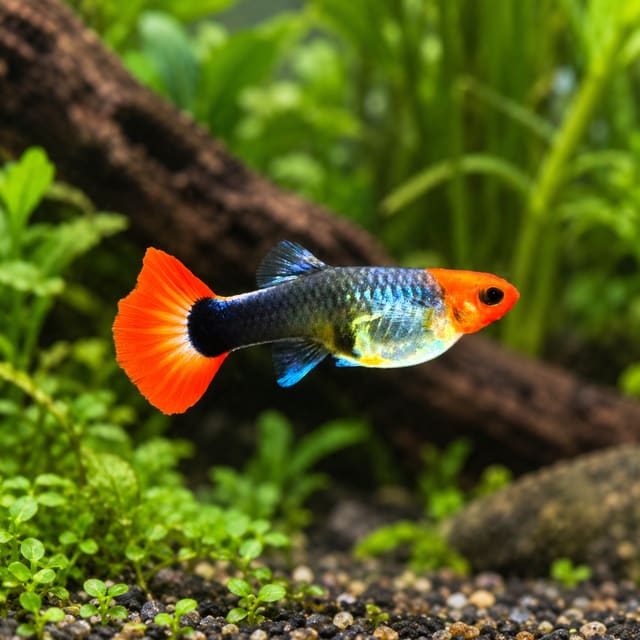
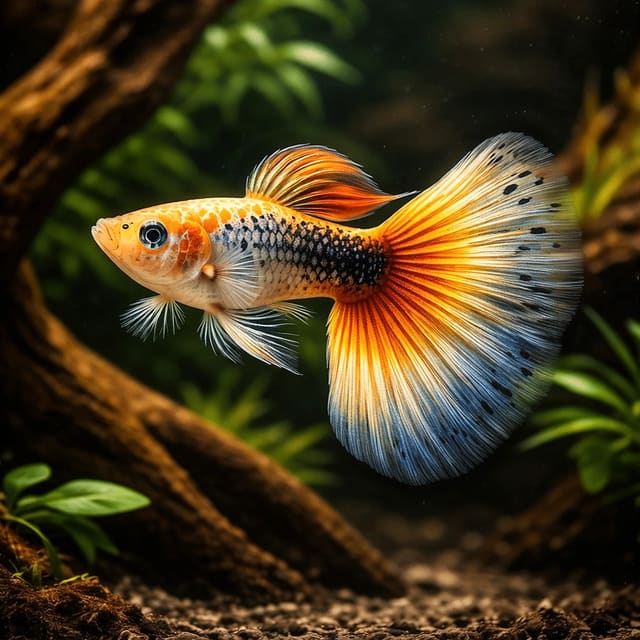
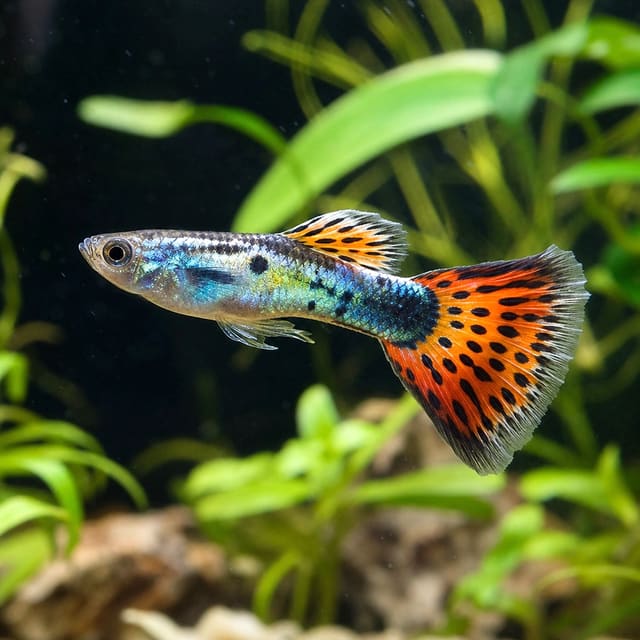
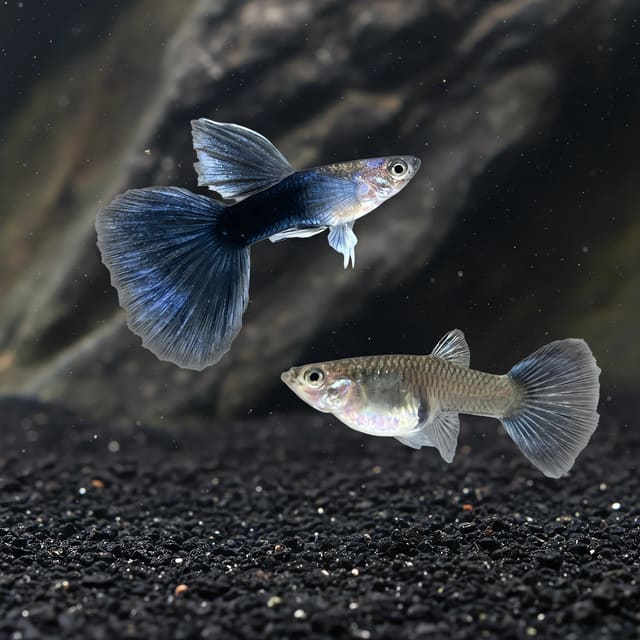
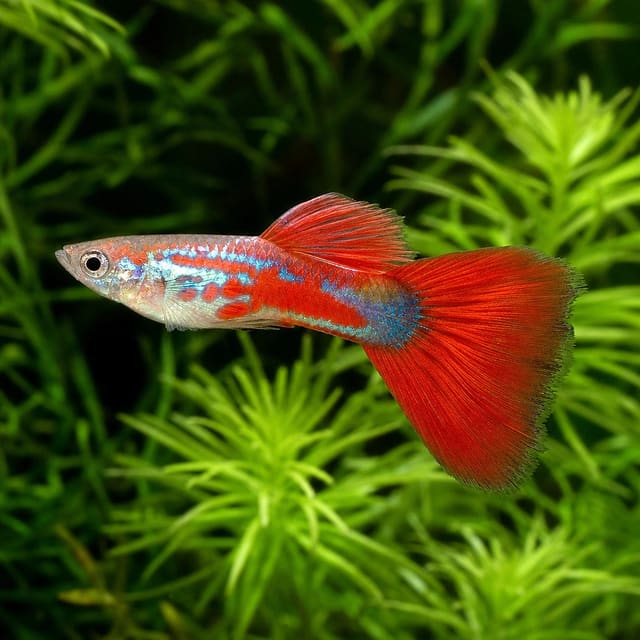
The gallery images are representative of this type of animal rather than photographs of the exact animal supplied, so colours can look slightly different from the live animal.
We classify guppy care as easy for a prepared keeper, but that assessment assumes a mature biological filter, stable mineral-bearing water, a planned social group and time for weekly maintenance. An uncycled bowl, a lone fish or an aquarium chosen only from its litre label does not meet those conditions.
| Suits | Not suited to |
|---|---|
| A prepared beginner with a mature filtered aquarium | An uncycled aquarium or unfiltered bowl |
| A planned social group of five or more where capacity allows | Permanent solitary keeping |
| Neutral-to-alkaline, mineral-bearing water | Long-term soft or acidic conditions |
| A quiet community without fin-nipping species | Tiger barbs, serpae tetras or other fin-nippers |
| An aquarium at least 60 cm long | A home chosen only for the 3–4 cm dispatch size |
| If you find | Change the plan |
|---|---|
| A short aquarium chosen because the fish is 3–4 cm | Plan around the adult body and tail, not dispatch size |
| Soft or acidic water outside the routine range | Measure the source water and choose livestock that suits it |
| Fin-nipping companions | Choose a separate community plan |
| No capacity for a social group | Select an animal whose social needs fit the aquarium |
| No population plan | Set out separation and responsible rehoming options first |
A larger aquarium usually gives more room for cover, social spacing and stable conditions, but volume alone never creates a fixed entitlement to add a particular number of fish.
Maintain 22–28°C, pH 7.0–8.0 and general hardness of 8–18 dGH for the routine aquarium. Seriously Fish describes a wider species range of 17–28°C, pH 7.0–8.5 and 8–30 dGH, while the OATA group values narrow pH and hardness and our house range narrows the lower temperature. The routine values therefore remain inside the wider range rather than extending beyond it.
Our aquarium water chemistry guide explains what each measurement means. Record the actual results and use the water matcher to compare them with the routine range.
| Result | Action |
|---|---|
| Ammonia or nitrite above zero | Pause new additions, test again and correct filtration or maintenance causes |
| Temperature drifting | Check the heater, thermometer and room influence |
| pH or hardness outside range | Check both tap and aquarium water before choosing any measured adjustment |
| Nitrate rising between changes | Review waste removal, feeding and stocking pressure |
Change conditions gradually. Guppies occur in fresh and brackish environments, but that does not make aquarium salt a routine requirement. Add salt or minerals only for a measured purpose after checking the needs of every fish, invertebrate and plant sharing the system.
A mature biological filter is essential because fish waste produces toxic ammonia. The RSPCA’s aquarium guidance explains how beneficial bacteria convert ammonia to nitrite and then to safer nitrate. Prepare and test that system before livestock enters it; our first tropical aquarium guide sets out the preparation sequence.
Seriously Fish presents a 45 × 30 cm base and approximately 41 litres for this species, while OATA gives at least 45 litres for a small group of smaller livebearers. Our more conservative group screen requires an aquarium at least 60 cm long. A tank must therefore pass the length, biological capacity, group and water checks rather than merely exceeding one litre figure.
| Feature | Decision |
|---|---|
| Horizontal length | Use at least 60 cm for one small guppy group |
| Swimming room | Keep an open area clear of dense decor |
| Cover | Add live plants or safe artificial cover and sight breaks |
| Flow | Avoid a strong current that pins or exhausts the fish |
| Filter intake | Make sure small fish and possible fry cannot be endangered |
| Top | Use a secure aquarium cover |
The species profile uses four to five aquarium volumes per hour as a filter-rating reference. For a measured 60-litre water volume, that arithmetic gives 240–300 litres per hour. Treat this as a starting comparison for the filter rating, then watch the fish: they should swim normally, reach food and rest without fighting the current.
Arrange smooth furnishings so fins cannot catch on sharp edges. Plants and other cover should break lines of sight without filling every swimming route. If one fish remains cornered or excluded after a layout change, intervene rather than adding more decoration and hoping the social problem resolves itself.
Measure the aquarium’s internal length and inspect the space left after the filter, heater, plants and ornaments are in place. The nominal volume does not show whether the fish can cross the aquarium freely, move out of another fish’s line of sight or reach the feeding area without entering strong flow. Complete this check with the aquarium filled and operating so the assessment reflects the finished home rather than an empty glass box.
A useful worked check is to compare the open area with the occupied area from the front and above. If plants and ornaments leave only one narrow corridor, remove or reposition some furnishings before adding livestock. If the aquarium has open water but nowhere for a fish to break visual contact, add suitable cover without blocking that route. Once the group is present, use its behaviour as the final test: normal use of both open water and shelter supports the layout, while repeated cornering, difficulty reaching food or constant effort against the current means the arrangement needs changing.
Guppies need companionship. FishBase gives an aquarium group of five or more, while OATA advises at least three; our house policy uses five or more where aquarium capacity and the sex plan allow. Count the whole planned group, not only this one female, before deciding whether the aquarium has enough swimming room and filtration.
| Group plan | What to prepare for |
|---|---|
| Female-only | No new mating within the group, but a female may retain sperm from an earlier encounter and later produce fry |
| Mixed sex | Courtship, persistent pursuit and fry are possible; OATA suggests two females for each male |
| Adding one female | Check that the resulting group still reaches five or more and that every fish can feed and retreat |
A ratio is a planning tool, not a guarantee of calm behaviour. Watch for repeated pursuit, cornering, hiding, missed meals, weight loss or fin damage. If one animal cannot avoid another, use the prepared separation space and reassess the group rather than treating continuous harassment as normal livebearer activity.
Female guppies may store viable sperm for several months. A female-only purchase therefore prevents new mating in that group but cannot rule out later fry from an earlier encounter. Decide in advance how young fish would be housed, fed and responsibly rehomed, and include their potential waste and space needs in the aquarium plan.
Increase the population gradually. The biological filter’s bacteria must respond to each additional waste load, and adding several animals too quickly can allow ammonia or nitrite to rise.
Use an appropriately sized, nutritionally complete omnivore flake or granule as the staple. OATA recommends a good-quality flake or granule with a high algae content for guppies and mollies, with small live or frozen foods such as daphnia, small bloodworm or tubifex as compatible variety.
FishBase records zooplankton, small insects and detritus in the wild diet, while Seriously Fish notes that aquarium strains accept most foods. Those natural-history details explain the need for varied omnivorous nutrition; they are not a reason to collect wild detritus or rely on one treat food.
| Food role | Practical choice |
|---|---|
| Daily staple | Complete omnivore flake or granule sized for the fish |
| Algal element | Choose a staple with suitable algae content |
| Invertebrate variety | Small, biosecure live or frozen foods that fit the mouth |
| Fry | Use food sized for very small mouths and monitor water closely |
Overfeeding raises the amount of uneaten food and fish waste entering the filter. If ammonia, nitrite or nitrate rises, review the portion, removal of leftovers, group size and maintenance together rather than changing food at random.
Complete the aquarium, group and water checks before dispatch. Arrange for someone to receive the parcel because live fish must not be left unattended, and keep the tested aquarium at 22–28°C with zero ammonia and nitrite.
Temperature matching is only one part of preparation: the destination aquarium must already be mature, filtered and within the intended pH and hardness range.
| Checkpoint | What to look for |
|---|---|
| After release | Controlled swimming, regular breathing and normal balance |
| First feeds | Interest in appropriately sized food without exclusion by the group |
| Each day | Open fins, a stable body profile and access to cover and open water |
| After group contact | No persistent pursuit, cornering or fin damage |
| During the first week | Zero ammonia and nitrite, stable temperature and acceptable nitrate |
If the fish gasps at the surface, sits on the bottom, swims erratically, loses balance or shows a sudden change in colour or appetite, test the aquarium immediately and follow the health response below.
Carry out a 25% partial water change at least once a week. Use a siphon to remove solid waste from the substrate, condition replacement tap water for chlorine or chloramine, and introduce it without creating a sudden temperature or chemistry change.
When filter media needs cleaning, rinse it lightly in aquarium water removed during the partial change. Do not wash mature media under the tap because chlorine or chloramine may damage the beneficial bacterial population responsible for processing waste.
| Change you notice | First response |
|---|---|
| Reduced filter flow | Check for blockages and rinse media gently in removed aquarium water |
| Uneaten food | Remove it and reduce the next portion |
| Rising nitrate | Review water changes, waste removal, feeding and livestock load |
| Ammonia or nitrite detected | Pause additions and investigate biological filtration immediately |
| Fish missing meals | Check competition, flow, illness signs and food size |
Compare test results and observations across several weeks rather than reacting to one isolated reading. A stable plan produces zero ammonia and nitrite, controlled nitrate, regular feeding and fish that can swim, rest and avoid pursuit. If the same warning sign returns, address its cause before expanding the group.
A settled guppy should swim steadily, breathe regularly, hold open undamaged fins, maintain a normal body profile and feed consistently. The RSPCA’s fish health guidance treats changes in behaviour, appearance and feeding as reasons to check welfare and water quality rather than as diagnoses by themselves.
| What you see | What to do first |
|---|---|
| Surface gasping or rapid breathing | Test temperature, ammonia, nitrite, nitrate and pH; inspect filter operation |
| Sitting on the bottom or erratic swimming | Check water, balance, social pressure and recent changes |
| Clamped or damaged fins | Inspect for fin-nipping, sharp furnishings and other signs |
| Spots, fluffy growths, wounds or scale loss | Isolate safely where appropriate and obtain a diagnosis |
| Sudden appetite or body-condition change | Check food access, waste levels, group behaviour and health |
Record the date, test results, recent maintenance, food, new arrivals and visible signs. Do not choose salt, extra heat or medication from one symptom alone. A qualified diagnosis avoids exposing the fish and its tank mates to an unsuitable treatment; OATA maintains a UK fish-vet directory.
The MSD Veterinary Manual recommends at least 30 days of quarantine, with longer isolation where indicated. Use a separate system with dedicated equipment, biologically supported filtration, stable 22–28°C water and repeated testing for zero ammonia and nitrite.
A quarantine aquarium must still meet the fish’s welfare needs; a small uncycled container is not a safe substitute. Keep nets, siphons and other wet equipment separate, and move livestock only when its condition and the receiving aquarium have been assessed.
This guppy is described as peaceful, but peaceful temperament does not guarantee a successful mix. Avoid fin-nipping species: Seriously Fish specifically identifies tiger barbs and serpae tetras, while OATA advises against keeping guppies with fish likely to nip their fins.
Quiet community fish such as compatible livebearers, rasboras, corydoras, small loricariids and some tetras may pass this screen in a suitably sized aquarium. Those group names are starting points rather than universal recommendations: exact species, adult size, water range and temperament still decide the outcome.
| Observation after mixing | Decision |
|---|---|
| Steady feeding and open fins | Continue close observation |
| Brief display with easy retreat | Monitor space and sight breaks |
| Repeated pursuit or cornering | Separate and reassess |
| Fin damage or missed feeding | End the mix rather than waiting for escalation |
| Ammonia or nitrite appears | Reduce stocking pressure and correct filtration conditions |
No species name removes individual variation. Judge the actual behaviour during the first hours and days, then continue checking because social dynamics can change as fish settle or grow.
Some livebearers may share compatible water and peaceful behaviour, but account for their adult size, social group and reproductive potential. A mixed-sex plan can increase pursuit and produce fry, so the aquarium needs capacity and separation options beyond the initial fish count.
Some rasboras, corydoras and small loricariids are described as possible companions, but exact water needs and group sizes must overlap. Screen every tetra for fin-nipping behaviour; serpae tetras are specifically unsuitable, and a general “tetra” label cannot override that risk.
A betta–guppy combination is not a sensible default. Territorial responses, display behaviour and long-fin interactions vary between individuals, and a larger planted aquarium cannot guarantee safety. Use separate plans unless the exact animals pass a careful behavioural and space assessment with immediate separation ready.
“Invertebrate” is too broad to promise compatibility. Adult size, moulting vulnerability, feeding competition and water chemistry all matter, and small shrimp or young may be eaten. Treat any proposed species as a separate assessment rather than assuming peaceful fish will ignore it.
Endler’s livebearer is the distinct species Poecilia wingei, formally described in the species description by Poeser, Kempkes and Isbrücker. A laboratory hybridisation study confirms reciprocal P. reticulata × P. wingei hybridisation through F1 and F2 generations. Keep documented lines apart if preserving their identity matters, and do not represent hybrid descendants as pure examples of either species.
If you want a stocking and compatibility assessment, ask us with the aquarium’s internal dimensions, measured water values, filter details, existing livestock and intended group sizes. Those details allow a useful screen; the litre label by itself does not.
Female Elephant Ear Guppy reaches the 6 cm standard-length planning figure used for adult females; standard length excludes the tail fin.
Use a mature, filtered aquarium at least 60 cm long; Tropical Fish Co applies this conservative group plan alongside OATA’s minimum of 45 litres for a small group of smaller livebearers.
Plan five or more guppies where aquarium capacity and the sex plan allow; FishBase gives five or more, while OATA advises at least three.
Female Elephant Ear Guppy can suit a prepared beginner who provides a mature filter, zero ammonia and nitrite, stable suitable water, a social plan and weekly maintenance.
Feed an appropriately sized complete omnivore flake or granule once daily, offering only what the group consumes within a few minutes, with safe compatible algal and invertebrate variety.
Maintain 22–28°C under Tropical Fish Co’s routine guidance; OATA’s guppy-and-molly guidance gives pH 7.0–8.0 and 8–18 dGH, with zero ammonia and nitrite.
This guppy is described as very peaceful, but group behaviour still needs monitoring; avoid fin-nipping species such as tiger barbs and serpae tetras.
Compatible livebearers, rasboras, corydoras, small loricariids and some tetras may suit a quiet community after their exact water, adult size, social-space and feeding needs have been screened.
Someone must be present to receive it. Film every delivery continuously from the sealed parcel as it is opened, showing the fish still in the bag; float the bag for 20–30 minutes, then transfer the fish without pouring the bag water into the aquarium.
Independently collected by Judge.me from customers who bought this item. All reviews are shown.
Slowly acclimatised them like with shrimp, majority have caught white spot, and now spread to my existing fish, the conditions in my tanks are perfect. Its been a nightmare trying to keep under control, not sure if il be buying from this place again.
Reply from Tropical Fish Co
Chris, that sounds miserable and I'm sorry — an outbreak jumping into an established tank is every fishkeeper's nightmare, and I'm not going to question your water. White spot travels. Stressed fish shed it, so stock that looks clean here can still carry it through a move. That part is ours. One tip that may spare you a repeat: slow drip acclimation is right for shrimp but works against bagged fish. The CO2 in the bag keeps the ammonia harmless until you open it — then the pH climbs and it turns toxic. Float the sealed bag to temperature, net them straight in, bin the water. For the outbreak: treat the whole tank, and keep dosing a week past the last visible spot — the spots aren't the stage the treatment kills, which is why it comes back. Tell me if you keep shrimp or loaches. Please contact us we will do our best to help you.