Tiger Teddy Livebearer (Neoheterandria elegans) – Tiny Planted-Tank Livebearer
24–28°C · pH 7–8 · 12L
£10.99

A striking, peaceful Mexican goodeid with flowing fins and active behavior, ideal for cool, hard-water community aquariums. Moderate care, peaceful. 18-24C, pH 7.0-8.2.
Adult size is the maximum length this species reaches at full maturity (scientific sources). The livestock you receive will be younger and smaller — pick a size above for the actual shipping size. Product-photo provenance and any image-specific limitations are stated on the listing.
Ameca splendens
Shoaling fish: kept in a group they feel safer, stay calmer and show their best colour.
Confirm your email, then we’ll send an availability message for this exact item if it returns within 180 days.
This request is only for this product—no newsletter or other promotions. A mail-provider retry may very rarely duplicate the same availability message. Unconfirmed addresses are removed after 48 hours. See our privacy policy.
A striking, peaceful Mexican goodeid with flowing fins and active behavior, ideal for cool, hard-water community aquariums. Moderate care, peaceful. 18-24C, pH 7.0-8.2.
Adult size is the maximum length this species reaches at full maturity (scientific sources). The livestock you receive will be younger and smaller — pick a size above for the actual shipping size. Product-photo provenance and any image-specific limitations are stated on the listing.
Maintain these water conditions for optimal health and vibrant colors
Butterfly Goodeid (Ameca splendens) is a Mexican splitfin/goodeid livebearer with metallic body sheen, yellow-edged male tail colour and a much more specialist story than the common guppy or platy. The fish supplied under SKU 6011 are normally around 3-4 cm, with larger size options sometimes sharing the same parent product.
It is a strong, active fish for keepers who can provide hard, alkaline, oxygen-rich water, a planted and rocky layout, and a proper group. FishBase lists Ameca splendens in Goodeidae, with freshwater habitat in Jalisco, Mexico, and an IUCN global status of Critically Endangered. Eschmeyer's Catalog of Fishes confirms the valid name and places the type locality at Rio Teuchitlan, Jalisco. That conservation background is part of the appeal, but it also means the fish deserves accurate care rather than generic livebearer copy.
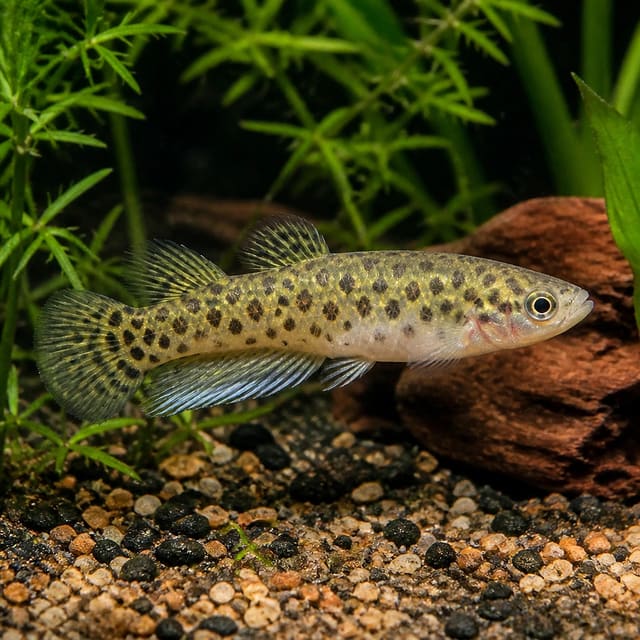
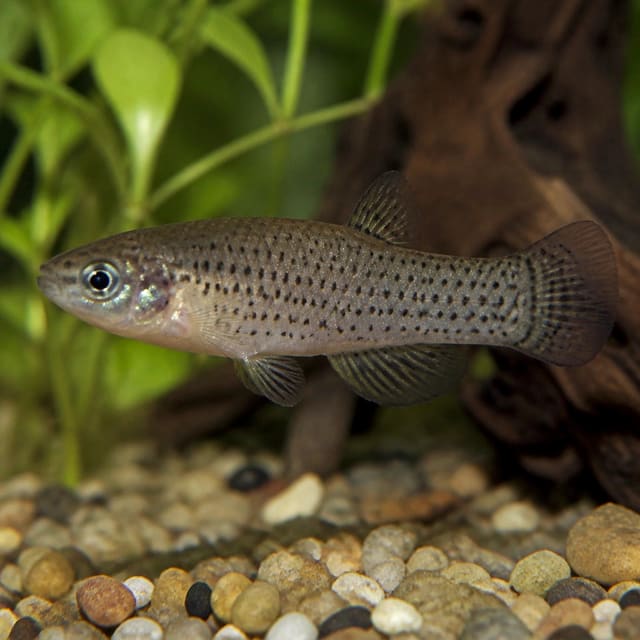
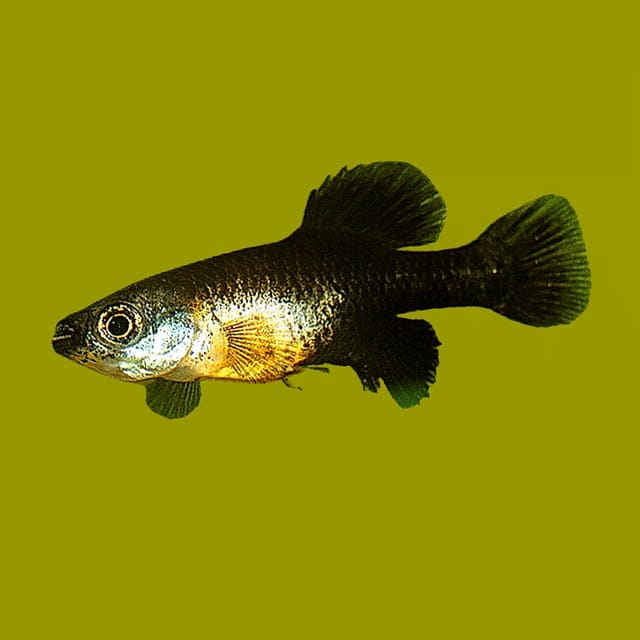
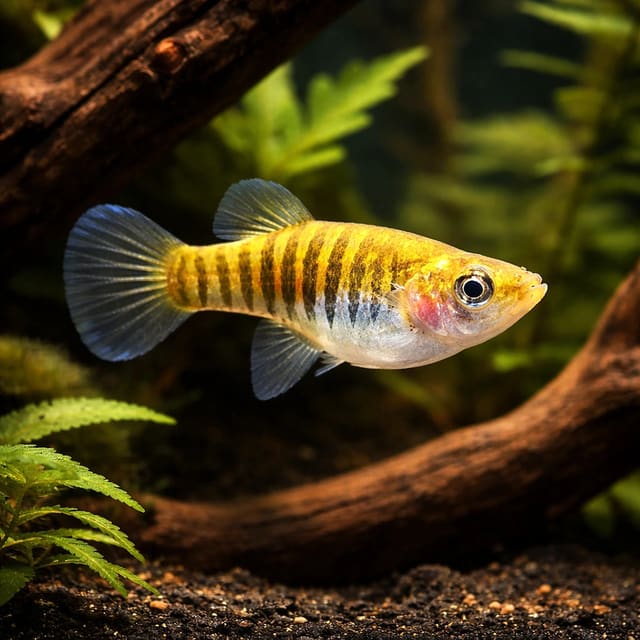
This listing now includes the original reference photo for SKU 6011 alongside the existing planted-aquarium images. The source photo shows the true slim but deep-bodied goodeid shape, bright reflective scale pattern and yellow-edged caudal fin that give the Butterfly Goodeid its name.
Males are the showier sex, with a glittering silver-green body, a yellow to orange margin on the tail and stronger dorsal and caudal fin display. Females are usually larger and fuller-bodied, with a softer olive-silver pattern and less dramatic fin colour. FishBase reports males/unsexed fish to around 8 cm total length and females up to around 12 cm total length, while retail aquarium listings often describe the common aquarium size around 9 cm. Plan for a medium active goodeid, not a tiny nano livebearer.
Healthy fish should look alert, full-bodied and constantly interested in grazing. They are not long-finned ornamental livebearers; their beauty is in the shining scales, clean body shape and bold male tail edge. A darker background, green plant growth and open swimming space make their colour much easier to see.
Ameca splendens is endemic to Jalisco, Mexico. Goodeid Working Group notes historical records from the Rio Teuchitlan/Rio Ameca area and connected spring systems, with some populations lost and remaining populations under pressure from habitat damage, water extraction and non-native fish. The habitat is not a soft acidic rainforest stream. It is clear spring and outflow water over mud, sand, gravel, rock and plant growth, with strong oxygen and mineral content.
In the aquarium, the useful translation is simple: hard, alkaline, clean water; good gas exchange; and a layout that lets the fish graze, display and retreat. Avoid cramped, soft-water, over-warm community tanks. Butterfly Goodeids can be robust once settled, but they do best when the setup matches their needs.
Use a mature aquarium with open swimming space, hardy plants, rocks, roots and visible barriers. A group of at least six is workable, while eight or more is better where space allows because males spread their attention and the group behaves more naturally. For the smallest size option, an 80 litre aquarium can work as a starting point, but 120 litres or more is a better target for a long-term group, especially with mixed tank mates or larger adults.
Choose hardy plants such as Vallisneria, Java fern, Anubias, hornwort and tougher floating plants. Very soft plants may be grazed. Filtration should be mature and efficient, with enough flow and surface movement to keep oxygen high. Weekly water changes are important because active goodeids produce waste and do not show their best in tired water.
Butterfly Goodeids are omnivores, but their diet should not be built only around rich meaty foods. Use quality flakes or granules with spirulina, algae wafers, vegetable-based foods and blanched greens such as courgette or spinach, then rotate small frozen or live foods such as daphnia, brine shrimp and bloodworm as supplements. A vegetable component helps digestion and encourages natural grazing.
Feed modest portions and let them browse between meals. If the aquarium has soft algae and biofilm, the fish will use it. Overfeeding high-protein foods can make the fish heavy and the water poor, so variety and restraint matter.
This is an active goodeid, not a shy background fish. Males display, chase and form a hierarchy, especially when the group is too small or the tank is bare. In a good group with plants and rocks, the behaviour is usually lively rather than damaging. They are best with robust, short-finned fish that appreciate similar hard-water conditions. Avoid slow long-finned species, delicate nano fish, warm soft-water specialists and anything that will be stressed by constant movement.
A species-focused group is often the cleanest choice, especially for keepers interested in conservation breeding. If you do mix them, choose tank mates for water chemistry and energy level first, not just adult size.
Goodeids are livebearing fish, but they are biologically different from guppies and platies. Females give birth to fewer, larger, well-developed fry after a longer gestation, and the young can usually take fine crushed foods and newly hatched brine shrimp quickly. Provide plant cover and avoid moving heavily pregnant females unless necessary, because stress can lead to poor outcomes.
If you want to breed Butterfly Goodeids responsibly, keep clear records, avoid mixing uncertain locality strains, and share surplus fish with keepers who understand the species. This is one of those aquarium fish where good husbandry can also support long-term captive security.
Order when the aquarium is mature, hard enough and ready for active livebearers. Tropical Fish Co ships livestock with insulated packing, weather-aware dispatch and a Live Arrival Guarantee. New customers can use WELCOME10 for 10% off their first eligible order. If weather or route conditions are unsuitable, we prioritise the fish and hold dispatch until shipping is safer.
No reviews for this item yet. Bought one? Honest reviews only, good or bad.
What customers say about ordering from us
I have a small group of long finned mountain minnows. So was delighted to be able to order ten of this variety to increase the genetics in my tank . The ones I recieved are healthy but it’s to early to give a verdict on wether they are of a long finned type since they are small currently.
Gordon Walker · 23 Sept 2026
100% success travel and "installation". Pleased with quality of purchase. The Siamese fighter a bit "shy" so have not yet seen him at his best yet but looking good. Happy customer. GG
George E Garratt · 21 Sept 2026
Reviews of our shop, collected by Judge.me, an independent third-party review collector. Newest first.