
Easy
Barred Splitfin (Chapalichthys encaustus)
18–25°C · pH 7–8 · 60L
£14.99

Rare Twoline Skiffia (Neotoca bilineata) for freshwater aquariums, prized for its line markings and active behaviour. A moderate-care Mexican goodeid livebearer with a live arrival guarantee.
Adult size is the maximum length this species reaches at full maturity (scientific sources). The livestock you receive will be younger and smaller — pick a size variant above for the actual shipping size. Photos are AI-enhanced, so the animal may show subtle colour or marking differences.
Neotoca bilienata
Twoline Skiffia are a shoaling species — they need 6+ to feel safe and show their full colour. Larger shoals stay calmer, eat better, and look stunning.
Rare Twoline Skiffia (Neotoca bilineata) for freshwater aquariums, prized for its line markings and active behaviour. A moderate-care Mexican goodeid livebearer with a live arrival guarantee.
Adult size is the maximum length this species reaches at full maturity (scientific sources). The livestock you receive will be younger and smaller — pick a size variant above for the actual shipping size. Photos are AI-enhanced, so the animal may show subtle colour or marking differences.
Maintain these water conditions for optimal health and vibrant colors
The Twoline Skiffia is one of those rare fish that instantly tells experienced keepers they are looking at something special. Known in the hobby as Neotoca bilineata, this compact Mexican goodeid combines conservation value, lively personality, and striking patterning in a way few tropical fish UK hobbyists expect. Adults usually reach a Neotoca bilineata size of around 5-8 cm, they live for roughly 3-5 years, and they are best described as active, robust, and semi-aggressive rather than delicate community fish. If you have been searching for tropical fish UK for sale, live fish for sale UK, or the best place to buy tropical fish online UK, the Twoline Skiffia stands out because it offers unusual behaviour and real character without demanding specialist blackwater conditions. See our detailed photos showing body shape, finnage, and the subtle line pattern that makes this species so distinctive in a well-kept aquarium. For aquarists browsing aquarium fish online UK, comparing the aquarium fish price, or looking for live tropical fish delivered UK, this species is an excellent choice when you want something uncommon, hardy, and rewarding. It is especially appealing to keepers interested in endangered livebearers, active mid-water fish, and a more interesting alternative to standard community tropical fish UK stock.
The Twoline Skiffia belongs to the Goodeidae, a fascinating family of livebearing fish from Mexico. Unlike common guppies and mollies, goodeids are true livebearers with trophotaenia, a specialised structure that nourishes developing fry. In the aquarium hobby, Neotoca bilineata is valued both as an unusual display fish and as part of conservation-minded fishkeeping, since many goodeid species have declined sharply in the wild.
The Twoline Skiffia comes from Mexico, in Central America, where goodeids evolved in spring systems, streams, and connected freshwater habitats with mineral-rich water and seasonal variation. Understanding the Neotoca bilineata habitat is the key to long-term success. In nature, these fish often inhabit clear to slightly turbid waters with moderate flow, submerged vegetation, algae growth, and plenty of structure from roots, stones, and marginal plants. That is very different from the soft, acidic rainforest setup many people picture when they search for tropical fish UK freshwater species.
Because this fish comes from a more alkaline, harder-water environment, a proper UK tropical fish habitat recreation should focus on stability, oxygenation, and grazing surfaces rather than peat-stained water. The species is not suited to outdoor conditions year-round in Britain, but experienced keepers may use indoor systems that gently mimic cooler nights and warmer days. For most keepers of aquarium fish in the UK, a stable indoor aquarium is the safest and most practical option.
Many goodeids are under pressure in the wild because of habitat loss, pollution, invasive fish, and water extraction. That makes captive maintenance more than just a hobby project. Breeding and keeping species like Neotoca bilineata helps maintain interest in fish that are often overlooked compared with the most colourful tropical fish UK favourites. Among enthusiasts, goodeids are respected for their conservation importance as much as their looks.
Twoline Skiffia are not native British fish, but they adapt well to indoor aquaria in the UK when their natural chemistry and social needs are respected. Their native waters are typically hard, alkaline, and biologically rich, which is why they thrive in mature tanks with algae film, biofilm, and mixed foods.
Mimicking the natural habitat of Neotoca bilineata improves colour, confidence, and breeding success. Use hard water, strong biological filtration, open swimming space, and some plant cover rather than a densely overgrown, very soft-water setup.
A good Neotoca bilineata tank setup starts with space, flow, and stable water rather than expensive gadgets. Although the listed Neotoca bilineata minimum tank size is 55 litres, that is best treated as a bare minimum for a small group. In practice, the best Neotoca bilineata tank size for long-term success is 90-100 litres or more, especially if you want to keep a proper social group and reduce aggression. A 90 cm aquarium around 100 litres is a far better starting point for this species than a tiny beginner tank.
Twoline Skiffia are active mid-water fish that establish a pecking order. A cramped aquarium increases chasing, fin nipping, and stress. Keepers often underestimate the space needed for semi-aggressive fish with strong feeding responses. A group of 5-8 fish works well in a 100-litre aquarium, with more females than males where possible. If you are wondering how many Neotoca bilineata in a tank, a sensible starting point is 1 male with 3-5 females in 90-100 litres, or a larger mixed group in a bigger aquarium with broken lines of sight.
The ideal Neotoca bilineata water parameters are stable rather than extreme. Aim for a Neotoca bilineata temperature close to 24°C, though the species can tolerate a broad Neotoca bilineata water temperature range of 15-30°C if changes are gradual. For UK keepers checking tropical fish tank temperature, this species does well at 22-25°C in most home aquaria. pH should sit between 6.0 and 8.0, with 7.2-7.8 being especially comfortable. Neotoca bilineata water hardness should be moderate to hard, ideally around 10-20 dGH.
Twoline Skiffia need a properly filtered, stocked aquarium to stay healthy and stable over the long term. They appreciate clean, oxygen-rich water, so use a mature internal or external filter sized to turn over at least the full tank volume several times per hour. Gentle to moderate flow is ideal. A robust sponge pre-filter can help protect fry in breeding tanks.
For equipment, pair them with reliable filtration and heating suited to a medium aquarium. A properly sized aquarium, good filter, and dependable heater matter more than decorative extras. When planning the tank, remember that footprint matters more than height for this active mid-water species.
A dark sand or fine gravel substrate helps the fish feel secure and shows off their line pattern. Rounded stones, wood, and open swimming lanes work well. A thoughtful Neotoca bilineata aquarium setup should include visual barriers so dominant fish cannot constantly see subordinates. Although they may nibble soft growth, a Neotoca bilineata planted tank can work very well with hardy species such as Java fern, Anubias, Vallisneria, and floating plants. Planting the back and sides while keeping the centre open is usually more effective than filling the whole tank with stems.
It is worth planning the whole system before buying fish. Twoline Skiffia reward mature, structured aquariums, not rushed setups.
Moderate lighting is ideal. Bright light encourages algae and plant growth, which supports natural grazing, but too much direct light without cover can make the fish skittish. A 7-9 hour photoperiod suits most tanks. Good lighting also helps reveal the subtle metallic sheen and body lines that make this species so attractive in a mature aquarium.
Always cycle the aquarium for 4-6 weeks before adding Twoline Skiffia. Stable bacteria, measurable nitrate control, and consistent temperature are far more important than buying fish on impulse.
A solid Neotoca bilineata care guide must include variety at feeding time. Twoline Skiffia are omnivores, which means the best Neotoca bilineata diet contains both protein and vegetable matter. In nature they pick at algae, biofilm, tiny invertebrates, and organic debris. In the aquarium, the best results come from a mixed menu of quality flakes, micro pellets, frozen foods, and some green foods. If you are researching how to care for Neotoca bilineata, feeding is one of the biggest factors behind colour, fertility, and reduced aggression.
A practical Neotoca bilineata feeding guide starts with a high-quality omnivore flake or small pellet. The best tropical fish food for this species offers genuine nutrition rather than filler: choose foods with fish meal, spirulina, and vegetable content. The key is variety rather than relying on one dry food forever.
Offer frozen daphnia, cyclops, brine shrimp, and bloodworm in moderation. Blanched spinach, courgette, and shelled peas can also be accepted. These additions improve body condition and help mimic the mixed natural diet. This species is not one of the classic algae eating fish choices, but it will browse soft algae and biofilm, especially in mature tanks.
A common question is how often should you feed tropical fish. For Twoline Skiffia, feed small portions 1-2 times daily. Adults can usually manage a short fast of 1-2 days without issue, but regular underfeeding increases bullying because dominant fish compete harder. Breeding groups benefit from two varied meals per day, while a maintenance group can often be fed once daily with one fasting day per week.
| Time | Food | Amount |
|---|---|---|
| Morning | Quality omnivore flake or micro pellet | What they finish in 30-60 seconds |
| Evening | Frozen daphnia, brine shrimp, or vegetable-based food | Small pinch or a few thawed portions |
These fish are enthusiastic feeders, so it is easy to overfeed them. Feed little and often, and remove uneaten frozen food promptly to keep water quality high.
Use a varied omnivore staple with some vegetable content to support growth, colour, and steady condition in active goodeids.
Overfeeding causes ammonia spikes, cloudy water, and obesity. Twoline Skiffia are bold at feeding time, so it is easy to give too much. Feed little and often, and remove uneaten frozen food promptly.
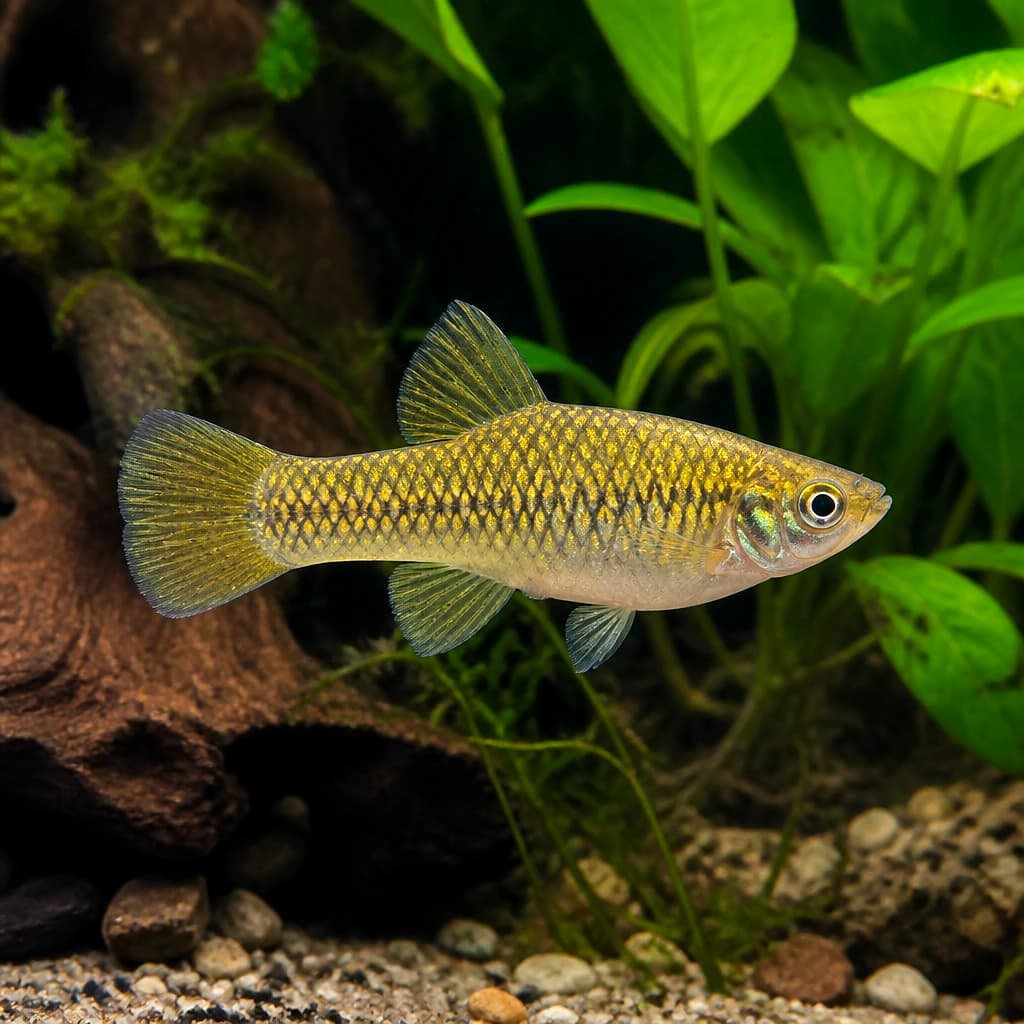
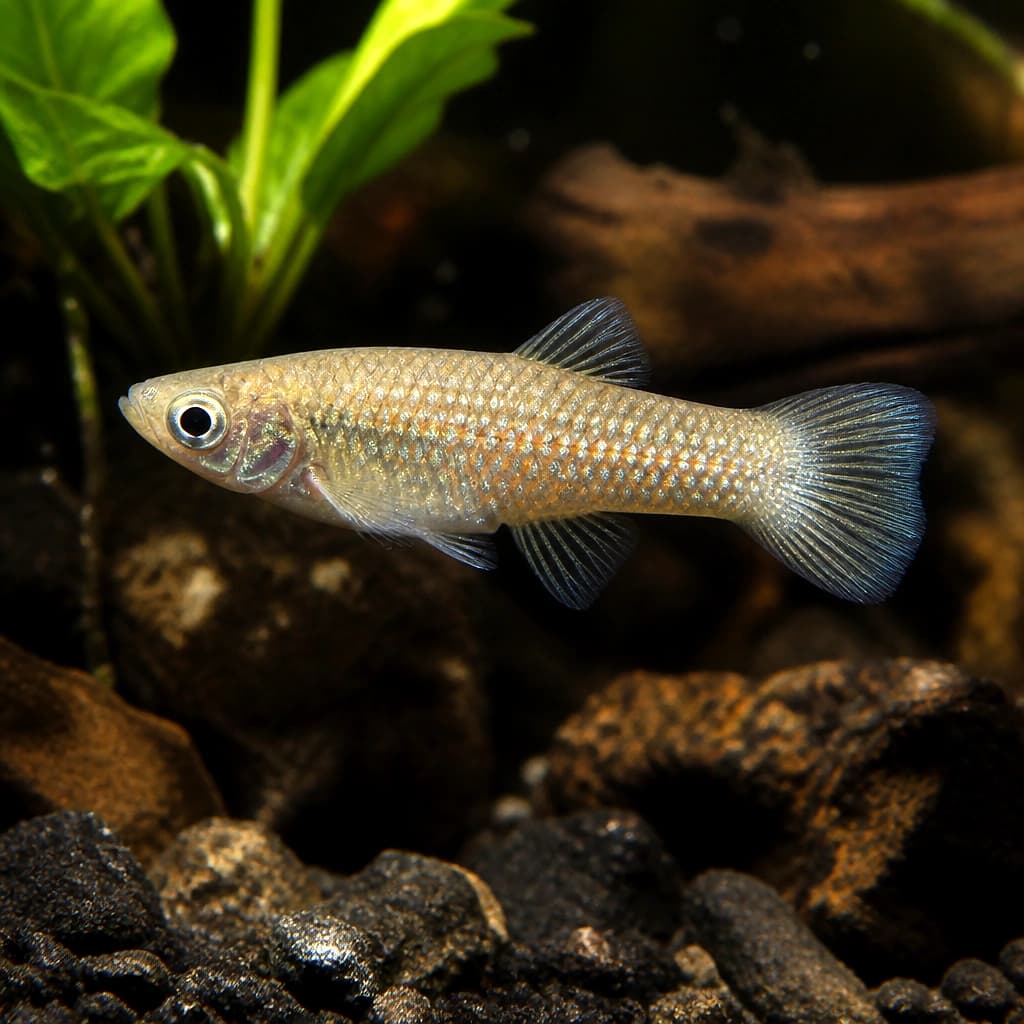
The Twoline Skiffia has a compact, sturdy livebearer shape with a slightly arched back, rounded fins, and a confident swimming posture. Adult fish usually reach 5-8 cm, making them large enough to be noticed without needing a huge aquarium. The body pattern is subtler than many flashy livebearers, which is exactly why serious aquarists appreciate them. Instead of exaggerated finnage, they offer clean lines, earthy tones, and a purposeful, athletic look.
In good condition, the base colour ranges from olive-brown to warm bronze, often with darker line markings that give the species its common name. Depending on mood, age, and lighting, some fish show a richer tan or a slightly greenish sheen across the flanks. They are not usually sold as the most colourful tropical fish UK option, but among enthusiasts of unusual species, they have a restrained beauty that stands out in a mature planted or rocky aquarium.
Neotoca bilineata male vs female differences are visible with practice. Males are often slimmer, more intense in pattern, and more active in displays, while females are deeper-bodied, especially when gravid. If you compare a mature male with a Neotoca Bilineata Female - Twoline Skiffia, the fuller abdomen and more understated profile of the female become easier to spot. Our photos show the body depth, line pattern, and healthy finnage you should expect from well-conditioned fish.
The biggest mistake with this species is treating it like a completely peaceful community fish. Twoline Skiffia are active, social, and assertive. They are often described as one of the candidates for the best goodeid for a community tank, but that only applies when the tank is large enough and the companions are chosen carefully. If you are researching Neotoca bilineata tank mates or Neotoca bilineata compatible fish, think “robust and fast enough to cope” rather than “small and gentle.”
Good companions include other robust livebearers, hardy barbs, and some small plecos. Within specialist setups, other goodeids can also work if the aquarium is spacious and carefully structured. Suitable related species include Skiffia Multipunctata - Spotted Skiffia, Alien Splitfin - Chapalichthys Peraticus, Butterfly Splitfin - Ameca Splendens, and Barred Splitfin - Chapalichthys Encaustus. These are better matches than slow, trailing-finned fish because they share similar confidence and water preferences.
Twoline Skiffia are not extreme bullies, but they can be persistent fin nippers and social pushers. Avoid timid tetras, fancy guppies, long-finned gouramis, and slow-moving fish that cannot get away from repeated attention. Large fish such as Gold Giant Gourami, Piaractus Brachypomus - Red-Bellied Pacu -, or Red-Bellied Pacu - Piaractus Brachypomus are also poor choices because of size mismatch and very different long-term requirements.
For a 100-litre species-focused aquarium, keep 1 male and 4-5 females or a group of 6-8 juveniles grown on together. In a larger 180-litre setup, a group of Twoline Skiffia can be combined with a bottom group of hardy algae-grazing catfish and one other robust mid-water species. A good UK tropical fish guide approach matters here: stock for behaviour, not just size.
For invertebrates, larger snails may be tolerated, but shrimp fry are likely to be eaten. Adult shrimp may survive in heavily structured tanks, though success is mixed. If your goal is a classic shrimp community, this is not the right fish.
| Species | Compatible? | Notes |
|---|---|---|
| Butterfly Splitfin - Ameca Splendens | ✅ Yes | Works in larger, structured tanks with close monitoring of hierarchy. |
| Skiffia Multipunctata - Spotted Skiffia | ⚠️ Caution | Possible in specialist goodeid tanks with enough space and visual barriers. |
| Long-finned fancy guppies | ❌ Avoid | Too slow and too tempting for fin nipping. |
Always quarantine new arrivals for 2-4 weeks before adding them to an established tank. This protects your goodeids from parasites and gives you time to assess temperament before full introduction.
Neotoca bilineata breeding is one of the most rewarding parts of keeping this species. Like other goodeids, they are true livebearers rather than egg scatterers. The breeding method is more specialised than standard livebearers because embryos are nourished through trophotaenia. For hobbyists interested in conservation-focused tropical fish breeding in the UK, Twoline Skiffia are a meaningful species to work with.
A dedicated breeding group does best in a mature 75-100 litre aquarium with hard, clean water and excellent filtration. The ideal Neotoca bilineata water temperature for breeding is usually around 23-25°C. Condition adults with a varied diet of quality staple foods, frozen foods, and vegetable matter. Dense cover helps females avoid constant male attention.
Understanding Neotoca bilineata male vs female traits matters. Males are generally slimmer and more active in display, while females become noticeably fuller as pregnancy advances. Courtship often involves chasing, lateral displays, and repeated attempts to stay close to females. This is why a ratio with more females than males is strongly recommended.
Gestation typically lasts around 7-8 weeks. Brood size can range from 5 to 50 fry, though moderate broods are more common in average home aquaria. The fry are relatively large compared with many livebearers and can take crushed flake, powdered foods, baby brine shrimp, and microworms from an early stage. Parents may not always ignore fry, so heavy planting or separate rearing can improve survival.
If you are researching how to care for Neotoca bilineata fry, the most important points are clean water, small frequent feeds, and avoiding sudden temperature swings. Because fry are larger and more robust than guppy fry, they often grow steadily when given space and varied food.
For stronger fry survival, raise breeding adults in a mature tank with algae film and biofilm on hard surfaces. Newly born goodeid fry often browse constantly between meals, and this extra natural food source can noticeably improve early growth.
Choosing between goodeids can be tricky because many share similar care needs but differ in temperament, colour, and rarity. If you are comparing fish before you buy live fish online UK, it helps to decide whether you want a species for conservation interest, stronger colour, or easier community behaviour. Twoline Skiffia are a great middle ground: unusual, active, and manageable for keepers with a little experience.
| Feature | Twoline Skiffia | Butterfly Splitfin |
|---|---|---|
| Max Size | 5-8 cm | 8-10 cm |
| Care Level | Moderate | Moderate |
| Temperature | 15-30°C | 20-28°C |
| Price | £27.10 | Varies |
| Best For | Conservation-minded keepers wanting a compact goodeid | Keepers wanting a larger, bolder splitfin |
| Feature | Twoline Skiffia | Spotted Skiffia |
|---|---|---|
| Temperament | Semi-aggressive | Semi-aggressive |
| Tank Style | Open areas with cover | Structured specialist setup |
| Breeding | Easy for prepared keepers | Easy to moderate |
| Visual Appeal | Subtle lines and earthy tones | Spotted patterning |
| Best For | Keepers wanting rarity without huge size | Collectors of unusual goodeids |
Choose Twoline Skiffia if you want a compact, active fish with conservation interest and a more understated look than flashy livebearers. Choose Butterfly Splitfin - Ameca Splendens if you want a larger, more assertive splitfin, or Skiffia Multipunctata - Spotted Skiffia if you prefer pattern over line detail. For many keepers, Twoline Skiffia hit the sweet spot between rarity, manageable size, and fascinating behaviour.
Healthy Twoline Skiffia are alert, eager to feed, and constantly aware of what is happening in the tank. They should hold their fins well, show clear eyes, and maintain steady mid-water swimming. If a fish isolates itself, clamps fins, loses weight, or starts gasping, check water quality first. Most health problems in this species begin with stress, crowding, or poor maintenance rather than mysterious disease.
The most common problems are fin damage from aggression, bacterial infections after stress, and general decline in soft or unstable water. Newly imported or recently moved fish can also show white spot, flashing, or appetite loss if acclimation is rushed. Experienced keepers tend to choose hardy species like this only after they understand water chemistry and quarantine.
Prevention starts with stable filtration, regular water changes, and correct stocking. If disease appears, move affected fish to a hospital tank where possible and confirm the cause before medicating. It is tempting to buy quickly, but quarantine is more important than speed. A 2-4 week observation period catches many issues before they reach your display tank. Focus on the measurable basics: ammonia 0, nitrite 0, controlled nitrate, and stable temperature.
Never medicate the whole aquarium unless you know the diagnosis. Unnecessary treatment stresses fish and can damage filter bacteria. If your setup includes shrimp or snails, avoid copper-based medication unless you are certain it is safe for every inhabitant.
Twoline Skiffia are busy, alert fish with a strong interest in food, social rank, and their surroundings. They are not shy in a settled aquarium and usually spend much of the day cruising the mid-water zone, investigating surfaces, and interacting with one another. This makes them especially enjoyable for aquarists who prefer fish with visible personality rather than purely decorative schooling species.
They are social, but not gentle in the way many beginners expect. Small disputes, chasing, and display behaviour are normal, especially among males or in cramped conditions. A larger group spreads attention and often reduces pressure on individual fish. A well-planned Neotoca bilineata tank setup with open swimming space and broken sight lines encourages more natural behaviour and less relentless pursuit.
One of the pleasures of keeping this species is watching how quickly they learn feeding routines. They often recognise movement near the glass and become very interactive. This combination of hardiness, intelligence, and social behaviour is exactly what makes goodeids so addictive.
Twoline Skiffia are not just another livebearer on a stock list. They are an uncommon goodeid that benefits from careful conditioning, accurate identification, and sensible group planning before sale. That matters when customers compare the best online tropical fish UK options and the best tropical fish shop UK choices. A species like this should arrive feeding, stable, and ready for a properly prepared aquarium.
Before dispatch, fish are observed for health, feeding response, and general condition. We recommend a mature setup with hard, clean water, and we provide care guidance so buyers understand the difference between a Twoline Skiffia and a standard shop livebearer. For customers searching to buy live fish online UK or buy aquarium fish online UK, safe packing is essential. Fish are packed in insulated boxes, with weather-appropriate protection such as heat packs in cold periods, and sent using tracked delivery methods designed for livestock.
The real advantage of ordering a specialist species online is getting the right fish with the right advice. Order your Twoline Skiffia today with confidence if you want a rare, characterful fish that rewards proper care.
Build a more interesting specialist setup by pairing your Twoline Skiffia plans with other unusual livebearers and compatible fish. Consider Alien Splitfin - Chapalichthys Peraticus for another conservation-focused goodeid with plenty of personality. Barred Splitfin - Chapalichthys Encaustus is a good option for keepers who enjoy robust, active fish in hard water. If you want a stronger visual contrast, Butterfly Splitfin - Ameca Splendens offers larger size and bolder presence. You can also compare female stock with Neotoca Bilineata Female - Twoline Skiffia when planning a breeding group. Finally, keep a varied feeding routine with quality staple tropical fish foods and only add fish to a fully cycled, correctly sized aquarium.
18–25°C · pH 7–8 · 60L

24–28°C · pH 7–8 · 80L

18–26°C · pH 6.5–8 · 30L

23–27°C · pH 7.4–8.4 · 500L

20–27°C · pH 6–7 · 54L

23–27°C · pH 7.4–8.4 · 150L

24–28°C · pH 6.5–7.8 · 300L

20–24°C · pH 7–8 · 45L

24–28°C · pH 5.5–7 · 60L

18–25°C · pH 6–8 · 100L

24–28°C · pH 7–8 · 120L

18–28°C · pH 6.5–8 · 20L

24–27°C · pH 7.5–8.8 · 150L

22–26°C · pH 6–7.5 · 60L

24–28°C · pH 7.5–8.5 · 40L

24–28°C · pH 7.5–8.5 · 500L

