Moderate
Celebes Halfbeak (Nomorhamphus celebensis)
£10.99

Polka-dot splitfin (Chapalichthys pardalis), one live Mexican goodeid per purchase. Plan a mature, spacious aquarium and specialist water-change and seasonal care routines.
Chapalichthys pardalis
Shoaling fish: kept in a group they feel safer, stay calmer and show their best colour.
Polka-dot splitfin (Chapalichthys pardalis), one live Mexican goodeid per purchase. Plan a mature, spacious aquarium and specialist water-change and seasonal care routines.
The Polka-dot splitfin, Chapalichthys pardalis, is a Mexican freshwater livebearer in the family Goodeidae. It is a fish to choose as the centre of a considered aquarium plan. Its spotted appearance and livebearing biology are part of its interest, but the practical question comes first: can you provide suitable space, a mature filtration system and the water-management routine the fish will need throughout the year?
This species comes from Michoacán in Mexico. The native range is a description of the animal's natural history, not a locality guarantee for the fish supplied. Names associated with particular Mexican sites can matter when maintaining documented lines, so keep any verified history with the fish rather than assuming a collection location from a common name.
One purchase supplies one live fish. The size supplied is the recurring 3–4 cm grade. That grade describes the size supplied and should not be used as an adult-size limit. Plan the finished aquarium before deciding the number to order, including suitable space for growth and any future young.
Sex is guaranteed only when the selected option explicitly states male or female. This Polka-dot splitfin listing has no sex-guaranteed option. A purchase is therefore not a promise of a male, female or breeding pair. If a particular group composition is essential to an established project, resolve that requirement before adding fish.
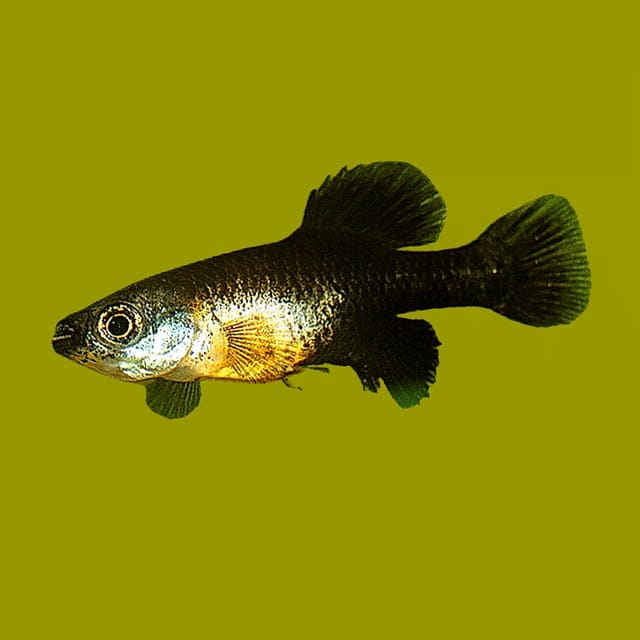
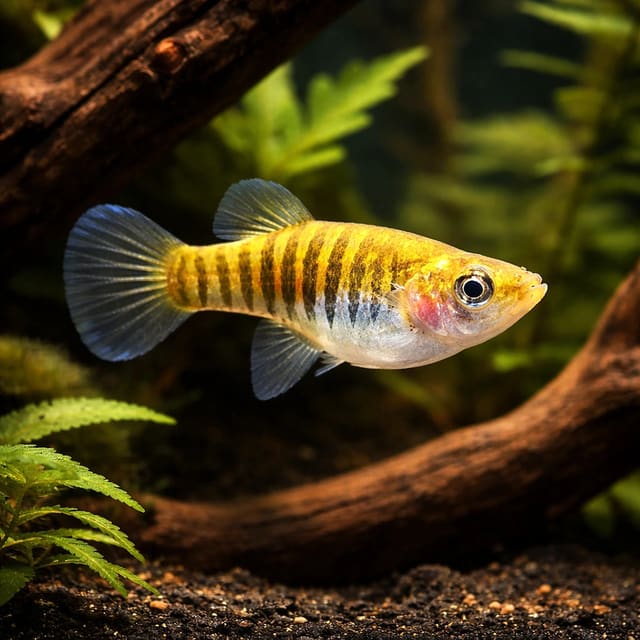
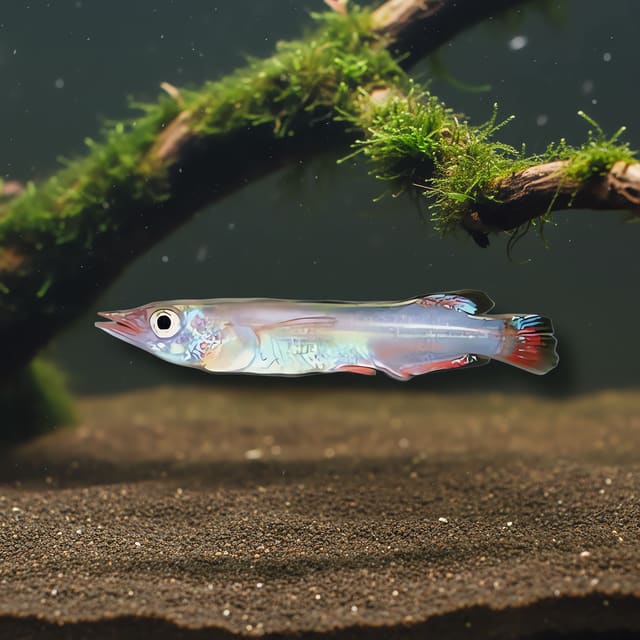
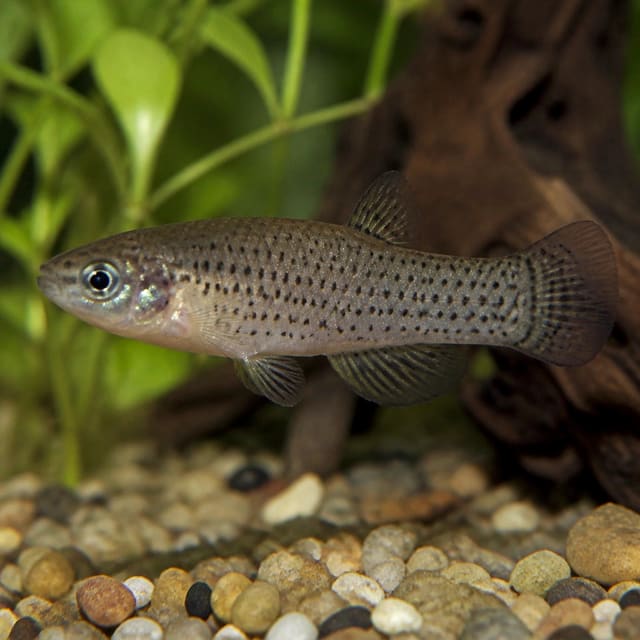
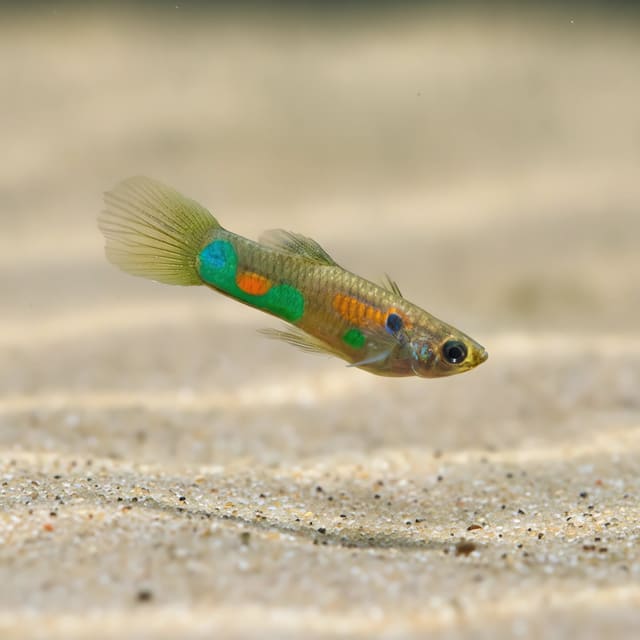
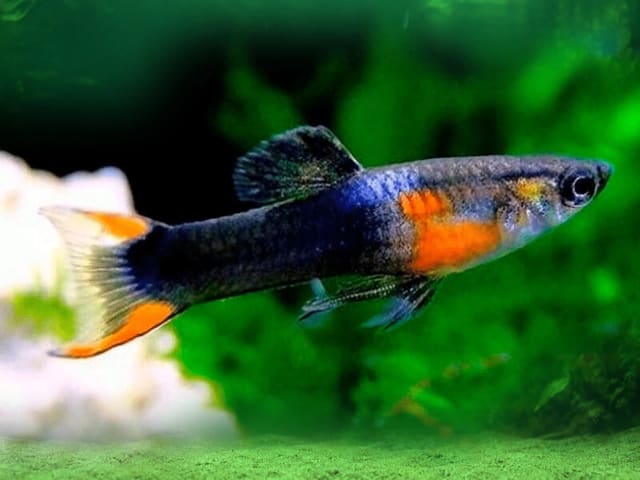
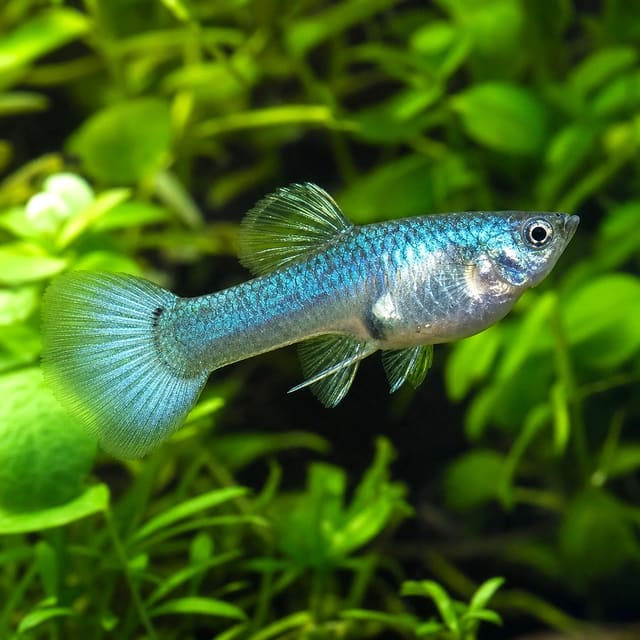
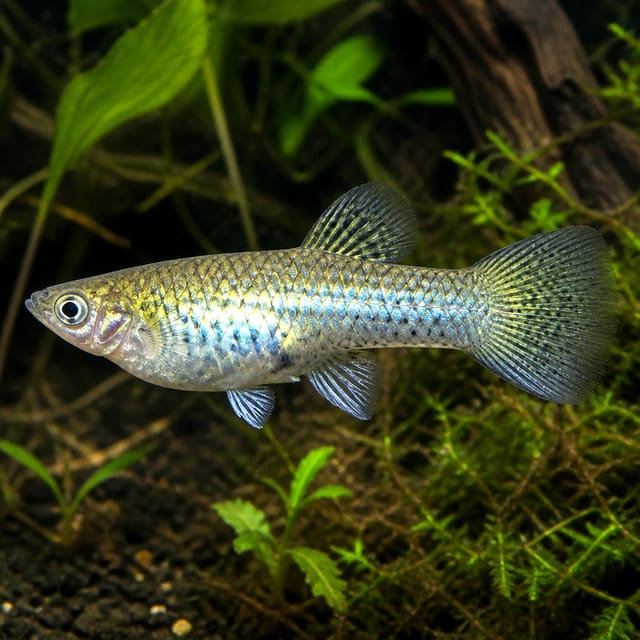
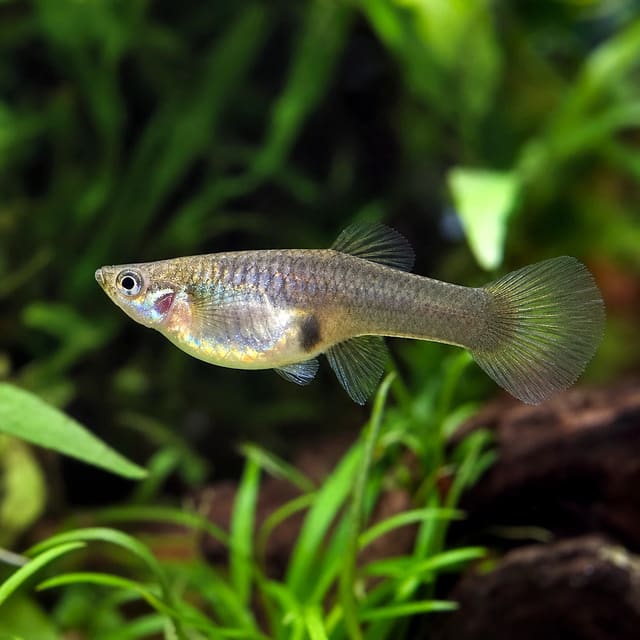
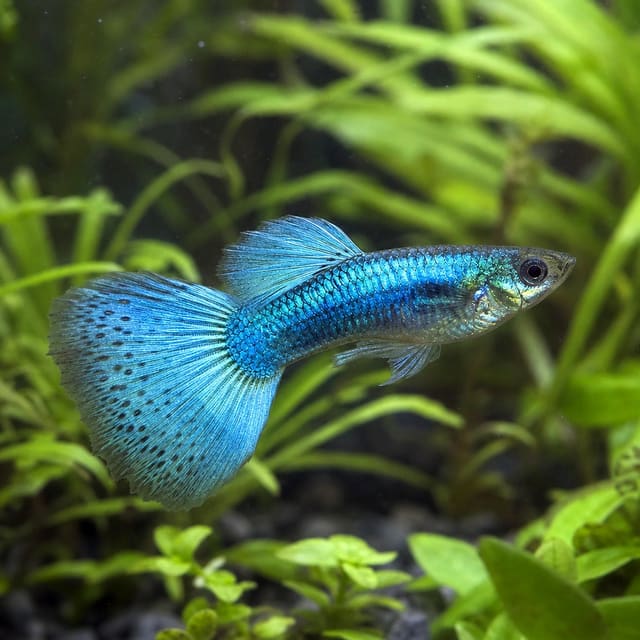
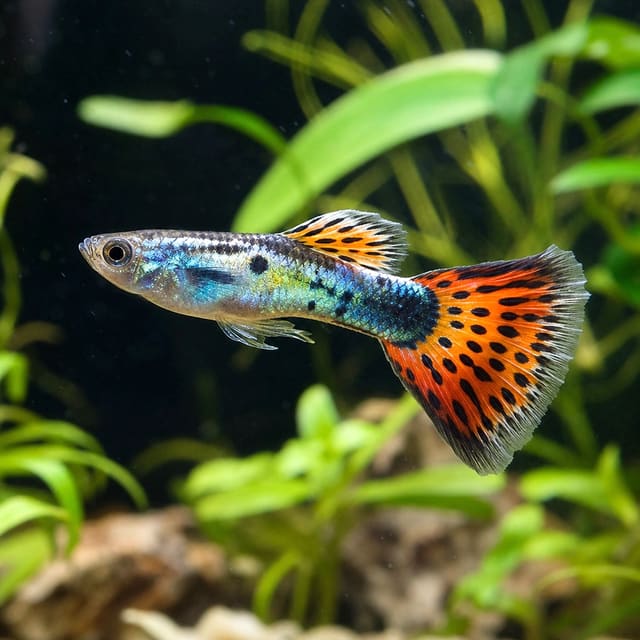
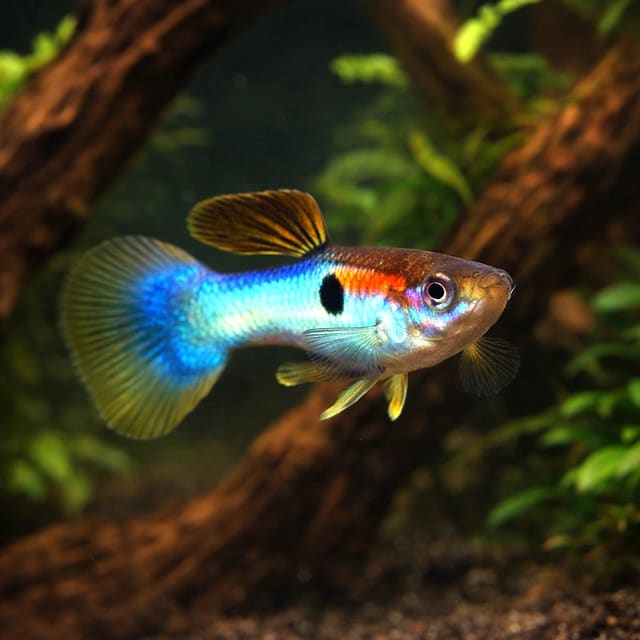
Please do not use this gallery image to identify the species or predict the exact animal supplied. Its identity has not been verified against the stock; the offer and care information refer to the animal named in this listing. Judge the space and care commitment from the animal's needs rather than the apparent scale of a photograph. A close view cannot show the dimensions or daily maintenance of the aquarium around it.
The Goodeid Working Group recommends at least 150 litres for this species, with a generous base. That makes aquarium planning a more substantial commitment than the fish's small dispatch grade might suggest. Consider the entire layout: open water, places to retreat, accessible cleaning areas and equipment that remains easy to check. A tank should still function well once the fish are grown.
Temperature planning deserves particular attention with a subtropical fish. A warm mixed community kept at one temperature all year may not fit the intended annual care routine. Check the location of the aquarium, how warm it becomes in summer and how you would manage seasonal conditions before choosing companions or equipment.
Feeding is another opportunity to observe the fish closely. Provide an appropriate varied diet and check what each individual actually eats. Looking at appetite, posture, swimming and body condition together gives a more useful picture than counting food portions alone. Waste from the feeding routine also becomes part of the aquarium's filtration and water-change demand.
If you are choosing between less familiar livebearers, the Twoline Skiffia listing is a useful separate species to investigate. Compare the actual requirements of each before selecting the fish around which to build your aquarium. The comparison does not imply that the two belong together. The wider livebearer collection also helps put different choices in context.
The pleasure of a focused aquarium is being able to notice how its inhabitants use the environment: where they feed, when they approach cover and how they interact. Good preparation leaves you time to enjoy that behaviour. It also gives you a clear reference point when something changes, because the equipment, feeding and maintenance routine are already established.
FishBase lists a 6 cm total-length record with male/unsexed scope. Total length includes the tail. The Goodeid Working Group cites a maximum known standard length of 85 mm, or 8.5 cm, from Miller and colleagues; standard length excludes the tail. These figures should stay attached to their definitions. The 6 cm record is not an overall adult ceiling, and an exact conversion between standard and total length should not be assumed.
Allow for the whole grown fish when arranging the aquarium. A juvenile can move around decoration that later becomes restrictive. Leave routes between features, useful open water and access to the filter and cleaning areas. Look at the layout from both the front and the end of the tank to see whether it offers real space or only appears spacious from one viewpoint.
A litre figure is only part of the decision. Two aquariums with similar advertised capacities can offer very different horizontal areas. Substrate, wood, rocks and equipment also displace water. Discuss the actual dimensions and proposed stock list when assessing a setup rather than relying on an empty-tank volume alone.
OATA advises choosing an aquarium that can accommodate the fish once grown and notes that larger water volumes are generally more stable. Those general principles are especially useful when planning a dedicated aquarium. Make sure the chosen stand and location are suitable for the filled system, and position it away from direct sunlight, sources of heat, draughts and repeated disturbance.
Check how you will reach the tank with a siphon and prepare replacement water. If every water change requires moving furniture or lifting heavy containers through a narrow gap, the routine becomes harder to sustain. A practical route for maintenance is part of providing a reliable environment, not an afterthought once the aquarium looks finished.
Leave enough visible space to observe individual fish. Dense decoration can make an aquarium attractive, but it should not conceal whether one animal is feeding or being repeatedly displaced. A useful design combines interest and shelter with the ability to see how the inhabitants are doing. Adjust it based on their behaviour rather than assuming the first arrangement must remain permanent.
FishBase records a subtropical environmental temperature range of 18–24°C and pH 7.2–8.0 for the species. Those figures are environmental context rather than a complete year-round aquarium recipe. Its hardness entry has no complete upper endpoint, so it should not be treated as a usable closed target range. Have your source water and aquarium measured before agreeing a practical keeping plan.
The Goodeid Working Group's aquarium advice includes avoiding sustained temperatures above 24°C and providing a winter period below 20°C for two or three months. Seasonal changes should be planned gradually with experienced guidance; a sudden temperature adjustment in an occupied aquarium is not a substitute for a considered annual routine. Review every prospective companion against that routine.
Test pH and general hardness separately. A pH result alone does not describe all the dissolved minerals in the water, and the replacement water matters as much as the display tank when assessing what you can maintain. Keep the actual readings available when asking for advice. Descriptions such as hard, soft or normal tap water are much less helpful than numbers with units.
The water chemistry guide explains common aquarium measurements. You can also use the water matcher to organise a comparison, remembering to distinguish a general environmental record from a specific aquarium recommendation. A tool can help you compare information; it cannot turn an incomplete hardness record into a precise husbandry prescription.
RSPCA guidance explains the biological filter's role: ammonia released by fish is processed into nitrite and then nitrate by beneficial bacteria. Ammonia and nitrite are both harmful. Water that looks clear may still contain them, so appearance cannot replace testing. The aquarium must be mature and able to process waste before fish are introduced.
OATA advises having tests for ammonia, nitrite, nitrate and pH and checking that equipment works properly during setup. An initial settling period is distinct from biological maturity. The first aquarium setup guide is useful for understanding the preparation stages, even when the eventual aquarium is intended for a specialist species.
Add fish gradually rather than treating the empty space in a new aquarium as capacity that should be filled immediately. The biological system responds to the amount of waste being produced. Keeping the first additions manageable also helps you observe each fish and understand how the aquarium responds before the next change.
A biological filter is a living part of the aquarium's support system. Keep it operating reliably and check for blocked intakes or reduced flow. Arrange decoration so you can reach the equipment and see whether it is functioning. Hiding a filter completely behind a large feature can make a gradual problem harder to notice.
Choose cleaning methods that preserve the beneficial bacteria. Consult the equipment instructions and use aquarium-appropriate handling for biological media. Cleaning should remove obstruction and accumulated waste without stripping the system of the processes it depends on. Record a substantial filter clean or equipment change so that it can be considered if later water tests change.
Flow through the equipment and conditions where the fish swim are related but not identical. Watch how the fish use the aquarium rather than judging the whole system by the output of a pump. If they cannot move comfortably through a region or congregate persistently in one place, investigate the layout and water quality as well as the equipment setting.
General aquarium guidance from OATA recommends plants and suitable decoration as enrichment and retreat space. Give the fish more than one way around a feature so it does not become a dead end. Leave room to observe feeding and to reach places where waste settles. An aquarium can be both structured and accessible.
Plants and ornaments occupy space. Count that when considering the fish's adult requirements rather than treating the advertised volume as entirely available for swimming. Suitable cover should make the remaining area more useful, allowing animals to move out of one another's view while retaining open routes.
When changing a layout, watch the effect over time. A fish that starts using more of the tank or reaches food more easily may be responding positively. A fish that stays hidden after the change needs closer attention. Small, deliberate adjustments are easier to assess than replacing the whole aquascape and changing several other aspects of care at once.
Spend a little time watching before food is added as well as during feeding. Food can draw animals into view and briefly hide how they use the tank normally. Notice whether all fish can move around, whether one is repeatedly pursued and whether a particular area is avoided. Those details help distinguish a feeding rush from a persistent social problem.
OATA highlights changes in swimming, colour, temperament, breathing, appearance, body condition and appetite as reasons to investigate. You do not need to diagnose a disease from a glance. Recognising that something is different, testing the water and describing the change clearly are useful first actions.
The Goodeid Working Group describes plant and algae material as important in this species' diet and reports acceptance of flakes, granules and tablets, supplemented with animal foods. A useful feeding plan therefore includes an appropriate vegetable component and variety. Check the food's suitability and particle size, and ask what the fish are eating before they travel.
Acceptance of a type of food does not mean every product or piece size is equally convenient. Watch the fish swallowing it. Food repeatedly taken and dropped, or food that quickly ends up in inaccessible areas, tells you something about how the meal is working. Make changes to presentation or portion size before simply adding more.
Different positions in the aquarium can affect access to food. A confident fish may reach the first portion before the others arrive. Observe the quieter animals too, and arrange feeding so that the whole group has a fair opportunity. The aim is adequate nutrition without leaving a large amount of material to break down in the water.
The right amount depends on the actual fish present, their size and their response. A fixed spoonful or an entire frozen portion is not automatically appropriate. Start with manageable amounts, observe consumption and remove uneaten material. A clear feeding area makes it easier to see what is being consumed and what is settling unnoticed.
Keep track of changes in population. Growing fish may need a different food size, and additional young increase the overall feeding demand. Review the water-change routine alongside feeding because extra input ultimately becomes extra waste. A meal plan should fit the aquarium's capacity to remain stable.
Follow the manufacturer's storage guidance and keep dried food dry. Avoid allowing aquarium water into the food container. Consistent handling helps you compare appetite from day to day: a change is easier to recognise when the food and routine are familiar.
If an individual repeatedly misses meals, check whether it can reach food and whether another fish is interfering. Look at breathing, swimming and body condition at the same time. Test water quality and review recent changes before assuming the answer is a different food. Several possible problems can look like poor appetite initially.
Contact a knowledgeable retailer if the problem persists or other symptoms appear. Share the water readings, recent maintenance and a clear description of behaviour. Avoid an improvised treatment based only on the fact that a fish is eating less. A careful account of the whole aquarium gives the person advising you much more to work with.
The Goodeid Working Group recommends substantial weekly water replacement of 60–80% for this species. That recommendation depends on replacement water prepared to suit the fish. Plan how you can perform the work consistently, with appropriate conditioning and temperature control, before relying on a demanding routine.
OATA's general freshwater guidance says water-change frequency and volume depend on the species, aquarium size, population and other factors. This is why a general community-tank routine cannot simply be assumed sufficient for every fish. Use species guidance alongside measured water quality and practical advice about your own setup.
Test ammonia and nitrite and keep both at zero. Record nitrate and discuss a suitable target for the stock with an experienced adviser, as source-water nitrate can vary. Knowing the replacement-water reading helps explain what a water change can achieve. A change of water should be part of an informed routine rather than a response based only on whether the tank looks dirty.
Treat new tap water to make it safe and check the temperature before it enters the aquarium. Make the preparation repeatable so that an ordinary maintenance day does not introduce an unexpected difference in conditions. Keep suitable containers and equipment available for the purpose, and follow the instructions for any conditioner used.
Remove accessible settled waste with a siphon and check for accumulation around feeding areas and behind features. Work methodically without unnecessarily disturbing the entire layout. Take the opportunity to confirm that equipment is running normally and that every fish can be accounted for.
A short written record helps connect causes and effects. Note water-test results, approximate replacement volume, new additions, equipment changes and unusual behaviour. If the aquarium becomes harder to maintain after young appear, the record makes the changing population visible as part of the problem rather than an unrelated detail.
OATA recommends regular water checks, at least weekly, with more frequent testing when establishing an aquarium or adding fish. Use those occasions to review the actual system rather than merely ticking off a calendar task. An unexpected result should prompt investigation before further livestock is added.
If fish show distress, test the water promptly and seek appropriate advice. Give actual values with units, describe recent changes and explain whether all fish or only one is affected. That information helps separate a whole-tank issue from an individual problem and supports a more useful response than guessing at treatment.
A focused species aquarium is a practical way to observe this fish and manage its care as one coherent project. The Goodeid Working Group reports little aggression within the species apart from occasional disputes between similarly sized males. This does not establish a universal list of companions or a fixed group size for every aquarium.
Choose the number and composition with the actual tank dimensions, available space and long-term plan in mind. Buying a particular number of unsexed fish does not guarantee an intended balance. If maintaining a documented line is your aim, keep reliable identity and history records and discuss group planning with a specialist before combining fish.
Watch whether each individual can feed and move freely. Persistent chasing, repeated retreat and missed feeding need attention even in a group expected to be relatively calm. Cover can make the environment more useful, while an appropriate alternative aquarium may be needed if individuals cannot share the space comfortably.
Compare the complete requirements of a prospective companion, including its adult dimensions, water needs, seasonal temperature routine, behaviour and feeding. A common category such as livebearer is not enough to demonstrate compatibility. Do not add another species simply because it is shown as a related product or shares a similar appearance.
Allow for the whole population's effect on filtration and maintenance. An aquarium chosen for one group does not automatically have spare capacity for a second. Any companion should fit both the physical space and the routine you can provide. If the combination would require conflicting water conditions, a separate setup is the more coherent plan.
This is a livebearing fish, so future young may become part of the aquarium's population. Think about growing space and suitable homes before numbers increase. Count the fish during maintenance and review the plan as they grow. Small young still contribute to the system's feeding and waste demands, and they eventually become adults.
Keep records factual when passing fish on. Use the verified species name and any supported history without adding an assumed locality, conservation-programme claim or pedigree. Accurate information helps the next keeper plan responsibly and preserves useful knowledge where it exists.
Arrange for someone to be at the delivery address and have the prepared aquarium ready to receive the fish. Check equipment and water conditions in advance so that arrival day does not depend on starting a new filter or making hurried adjustments. Keep the order confirmation available and follow the confirmed delivery date.
Tropical Fish Co's delivery and Live Arrival Guarantee policy describes hand-packing in oxygenated bags and insulated boxes, with heat packs when the weather calls for them. The confirmed Thursday or Friday delivery date and tracking information are sent by email. Read the current policy before the parcel arrives so the receiving arrangements are clear.
Open and inspect the parcel on the day of arrival. For a Live Arrival Guarantee claim, make a continuous unboxing video showing the sealed parcel, its opening and the fish still inside the sealed bag, and contact the store that day with the order number. The video provides evidence of arrival condition for a claim.
Follow the store's acclimatisation guidance for the fish, including floating the bag for 20–30 minutes and acclimatising slowly. Do not pour transport water into the aquarium. OATA's general guidance also advises avoiding bright light and unnecessary disturbance when handling new arrivals. Keep the process organised so you can concentrate on the fish's condition and the instructions supplied.
Once the fish are introduced, observe their breathing, movement and later feeding response. Record anything unusual and the water readings if advice is needed. Continue checking the aquarium as the biological system responds to the new inhabitants, and postpone further additions until the group and water quality are stable.
The Goodeid Working Group cites a maximum known standard length of 8.5 cm, excluding the tail. FishBase's 6 cm total-length record is male/unsexed in scope and is not an overall adult ceiling. Allow room for grown fish rather than planning around the size supplied.
The Goodeid Working Group recommends at least 150 litres with a generous base. Consider usable horizontal room, decoration and the whole adult population as well as advertised volume. Plan equipment access and water changes before choosing the aquarium.
Plan a group with experienced advice for your actual aquarium dimensions and stock. A fixed number is not a substitute for enough space and a suitable composition. Observe whether every fish can feed and move freely, and have a practical plan for future young.
Its aquarium should be planned around specialist species guidance, including substantial water changes and seasonal temperature management. A new keeper should be comfortable with testing, biological filtration and a reliable maintenance routine before taking on this fish, with experienced help available.
Provide an appropriate vegetable or algae component alongside a varied diet. The specialist account reports acceptance of flakes, granules and tablets with additional animal foods. Watch what each fish consumes and remove uneaten material rather than relying on a fixed portion for every group.
FishBase's environmental context is 18–24°C and pH 7.2–8.0, rather than a complete year-round aquarium prescription. The specialist care advice includes a cooler winter period and avoiding sustained temperatures above 24°C. Agree a gradual seasonal plan for your water and aquarium with experienced guidance.
The Goodeid Working Group reports little aggression within the species, apart from occasional disputes between similarly sized males. Still observe feeding access, repeated chasing and retreating individuals. A generally calm description does not remove the need to manage the actual group.
Assess each proposed species against the complete adult space, water, seasonal temperature and feeding plan. Sharing a livebearer label does not establish compatibility. A focused species aquarium makes observation and management simpler, and related products should be treated as separate options to research.
Tropical Fish Co hand-packs fish in oxygenated bags and insulated boxes, with heat packs when conditions require them, for a licensed live-animal courier. The confirmed Thursday or Friday delivery date is sent by email. Be present and inspect the parcel that day, following the current delivery policy and claim requirements.
The Goodeid Working Group species account provides specialist husbandry guidance and carefully scoped natural-history information. FishBase supplies the species identity, family and separately labelled environmental and male/unsexed length records.
OATA's freshwater aquarium guide covers preparation, gradual stocking, water testing and observation. The RSPCA aquarium environment guide explains filtration and general welfare. Use the specialist care guidance alongside these general principles when discussing an aquarium plan.
No reviews for this item yet. Bought one? Honest reviews only, good or bad.
What customers say about ordering from us
I have a small group of long finned mountain minnows. So was delighted to be able to order ten of this variety to increase the genetics in my tank . The ones I recieved are healthy but it’s to early to give a verdict on wether they are of a long finned type since they are small currently.
Gordon Walker · 23 Sept 2026
100% success travel and "installation". Pleased with quality of purchase. The Siamese fighter a bit "shy" so have not yet seen him at his best yet but looking good. Happy customer. GG
George E Garratt · 21 Sept 2026
Reviews of our shop, collected by Judge.me, an independent third-party review collector. Newest first.