Easy
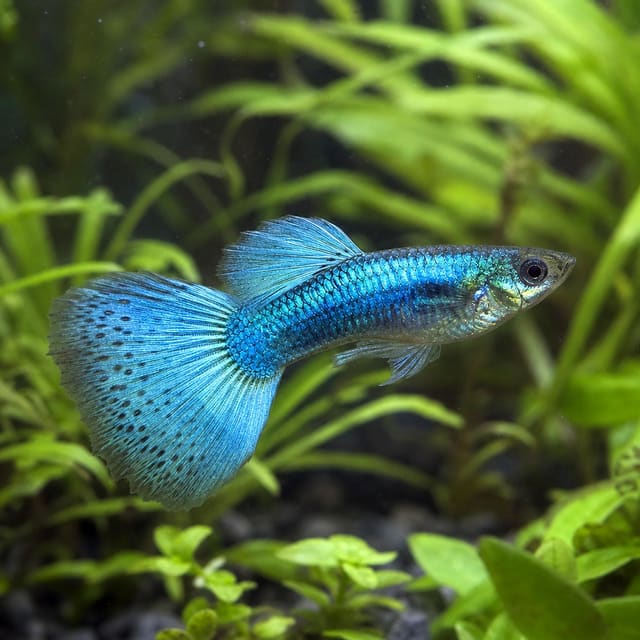
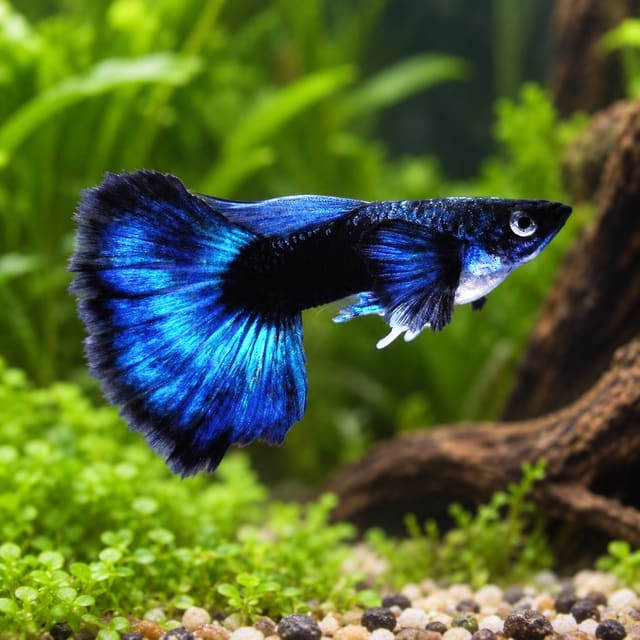
Blue Moscow Male Guppy (Poecilia reticulata)
22–28°C · pH 7–8 · 45L
£4.09
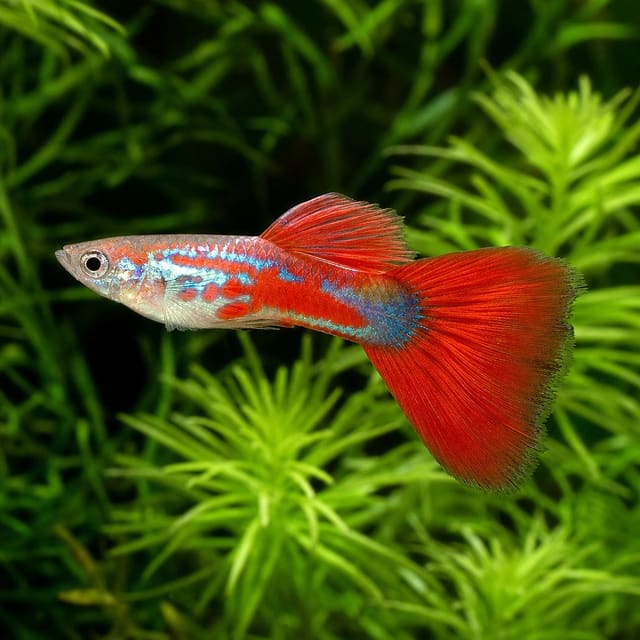
The Royal Red Male Guppy (Poecilia reticulata) is a peaceful poeciliid livebearer native to Venezuela, Barbados, Trinidad, northern Brazil and the Guianas that reaches 6 cm standard length. It suits a prepared beginner; keep five or more at 22–28°C, pH 7.0–8.0 and 9–18 dGH, the routine overlap of FishBase, Seriously Fish, OATA and Tropical Fish Co guidance. Sold individually as one male fish.
Adult size is the maximum length this species reaches at full maturity (scientific sources). The livestock you receive will be younger and smaller. Product-photo provenance and any image-specific limitations are stated on the listing.
Poecilia reticulata
Shoaling fish: kept in a group they feel safer, stay calmer and show their best colour.
The Royal Red Male Guppy (Poecilia reticulata) is a peaceful poeciliid livebearer native to Venezuela, Barbados, Trinidad, northern Brazil and the Guianas that reaches 6 cm standard length. It suits a prepared beginner; keep five or more at 22–28°C, pH 7.0–8.0 and 9–18 dGH, the routine overlap of FishBase, Seriously Fish, OATA and Tropical Fish Co guidance. Sold individually as one male fish.
Adult size is the maximum length this species reaches at full maturity (scientific sources). The livestock you receive will be younger and smaller. Product-photo provenance and any image-specific limitations are stated on the listing.
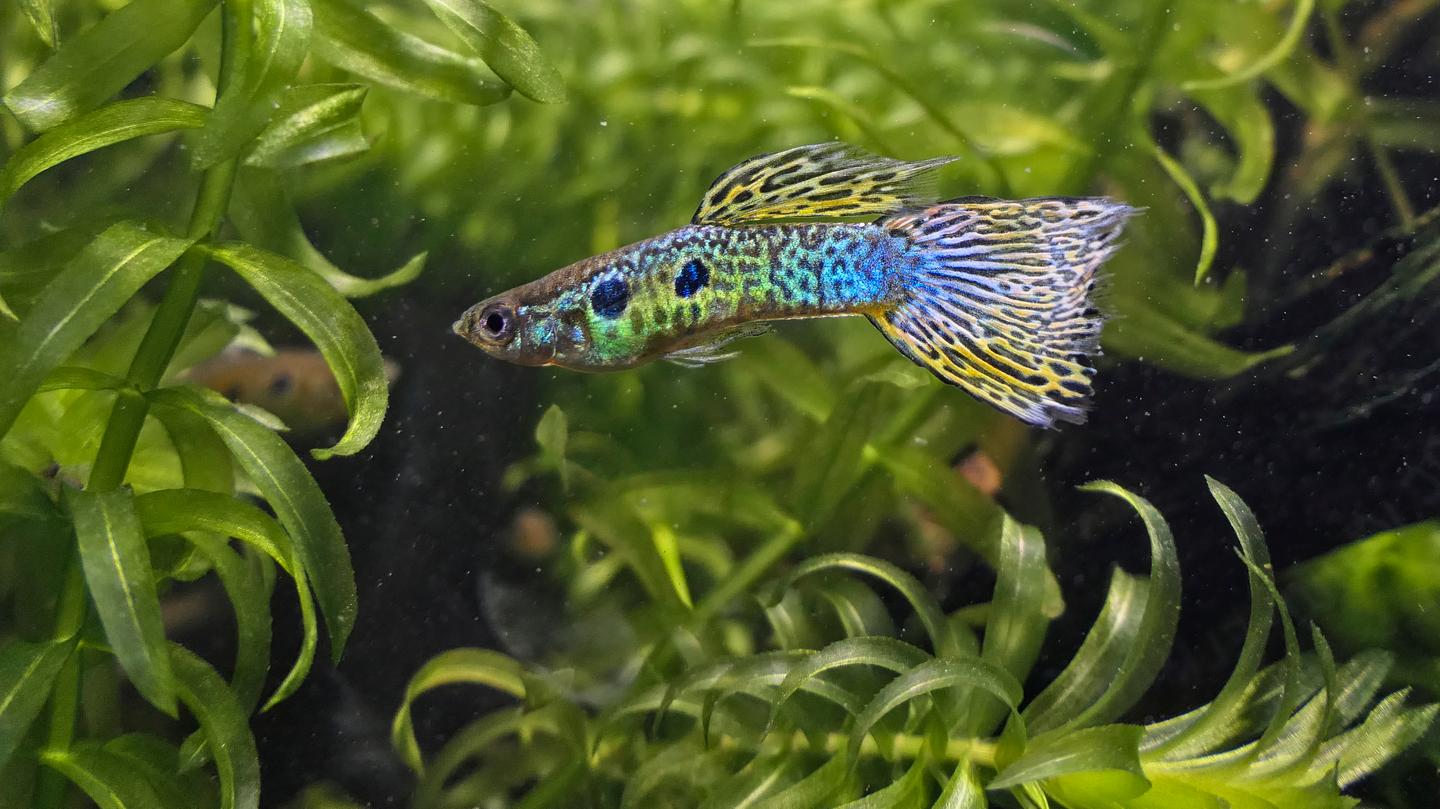
Guppies are social livebearers suited to a prepared beginner, not a fish-per-litre formula. Use a mature filtered aquarium, tested neutral-to-alkaline mineral-bearing water, deliberate sex and population planning, open swimming room, cover and a separation option.
Maintain these water conditions for optimal health and vibrant colors
The Royal Red Male Guppy (Poecilia reticulata) is a peaceful freshwater livebearer from the family Poeciliidae. Its native range covers Venezuela, Barbados, Trinidad, northern Brazil and the Guianas. FishBase records 5 cm standard length for a male or unsexed fish, so plan for a 5 cm adult body as well as the space occupied by the flowing domestic fins.
This fish can suit a prepared beginner who starts with a mature, filtered aquarium, tests the water and plans a social group before adding livestock. “Easy” describes its store care assessment, not permission to place it in an uncycled bowl or skip weekly maintenance. The important decisions are stable mineral-bearing water, enough horizontal swimming room, compatible companions and a response plan if chasing or fin damage appears.
| Suits | Not suited to |
|---|---|
| A mature, filtered aquarium at least 60 cm long | An uncycled bowl or unfiltered container |
| A planned social group of five or more | Permanent solitary keeping |
| Neutral-to-alkaline, moderately hard or harder water | Long-term soft or acidic conditions |
| A quiet community screened for fin safety | Fin-nipping species |
| A prepared beginner who will test and maintain the aquarium | A fish-per-litre stocking formula without behavioural checks |
Choose this guppy when you can meet the adult-group plan from the start. Open swimming room, planted cover and a ready separation option let you respond if one fish is repeatedly pursued, excluded from food or injured.
One purchase supplies one Royal Red Male Guppy measuring 3–4 cm at dispatch. Allow for its 5 cm adult standard length and extended domestic fins when planning the aquarium.
Sex is guaranteed only when the exact product or selected option explicitly states male or female. This Royal Red Male Guppy listing is sold as male.
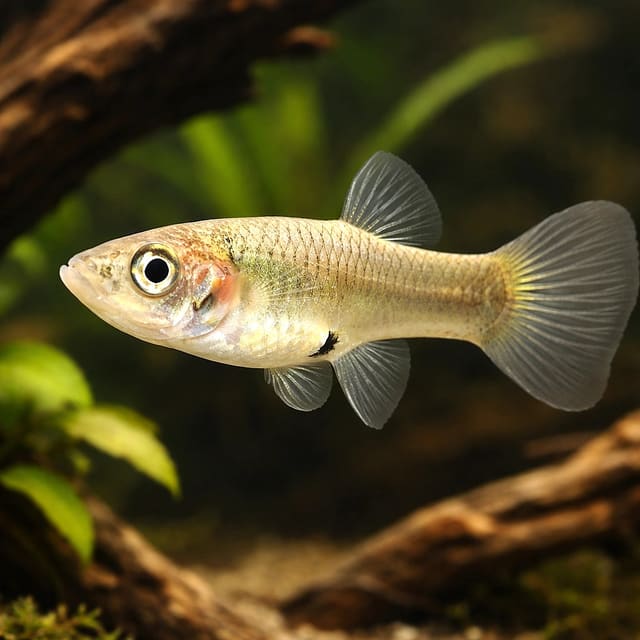
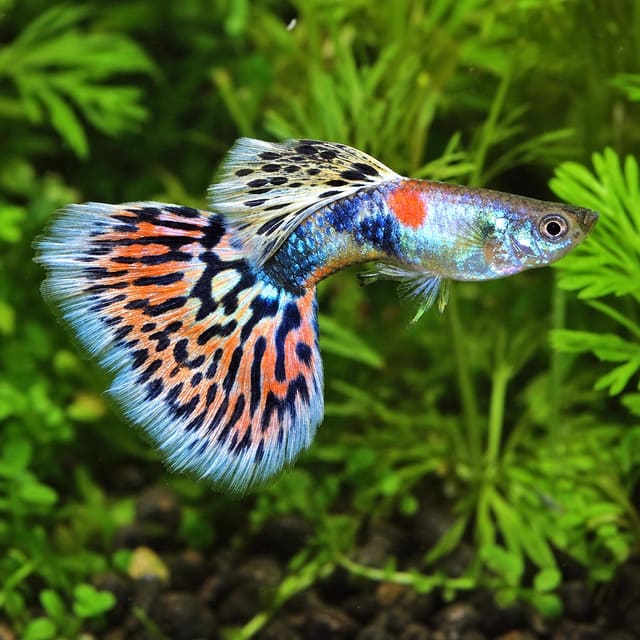
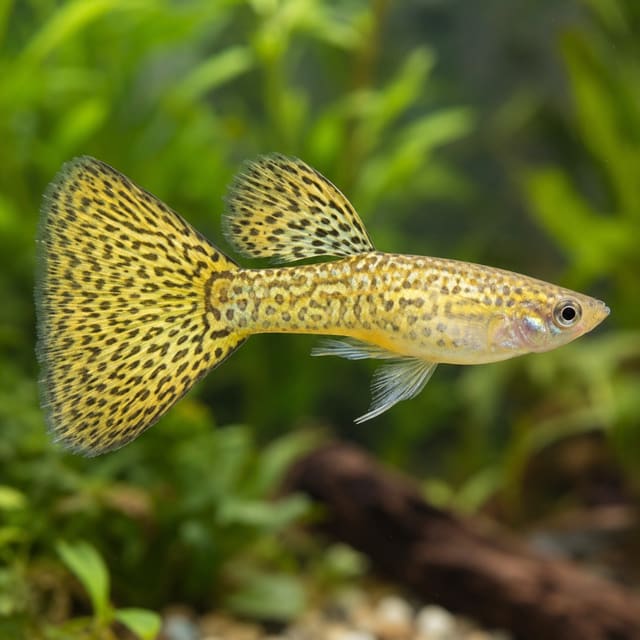
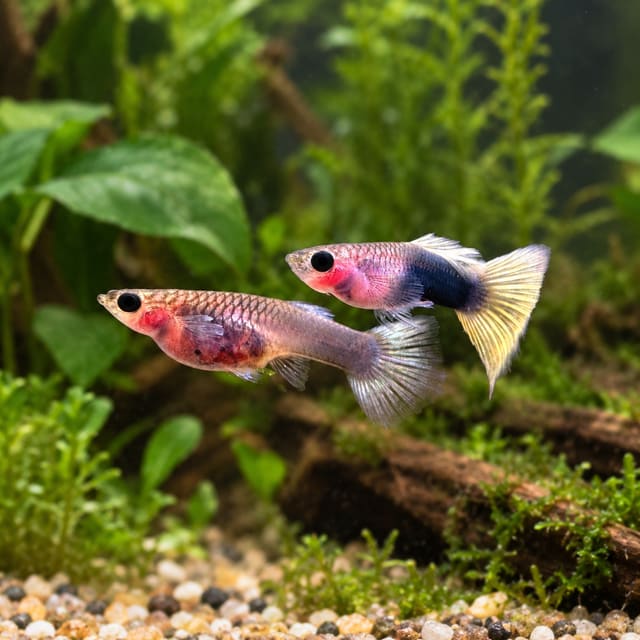
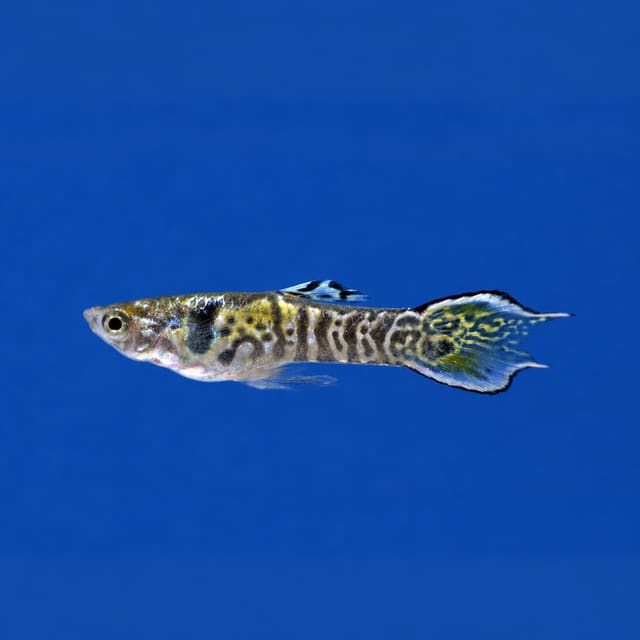
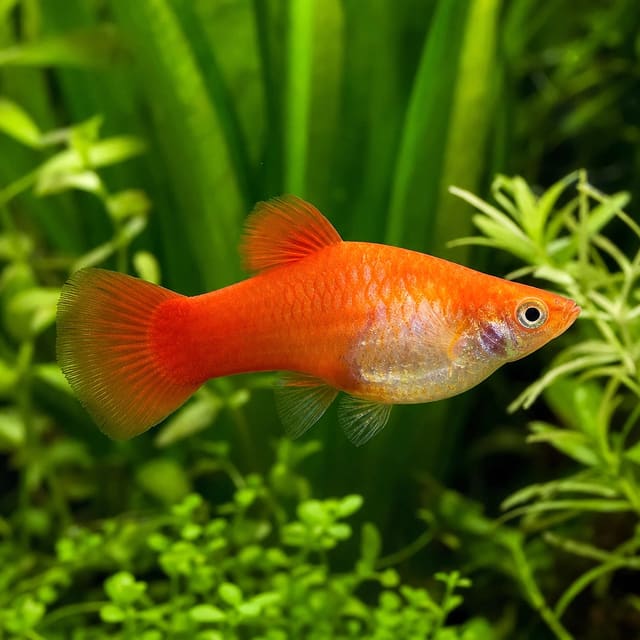
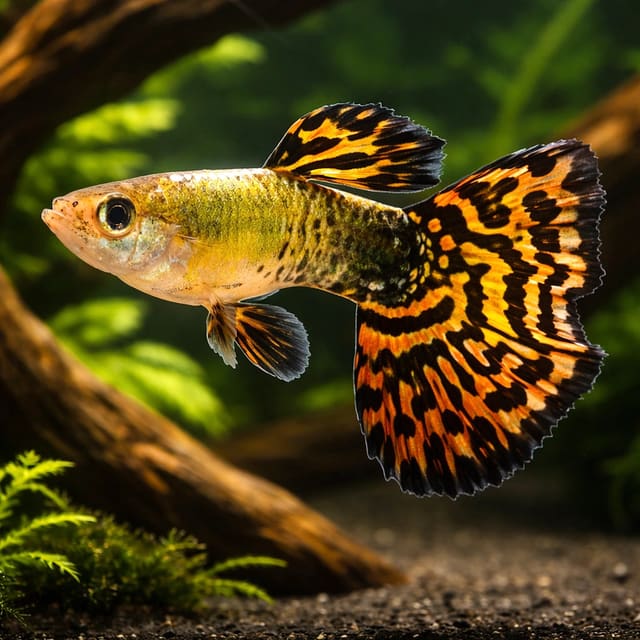
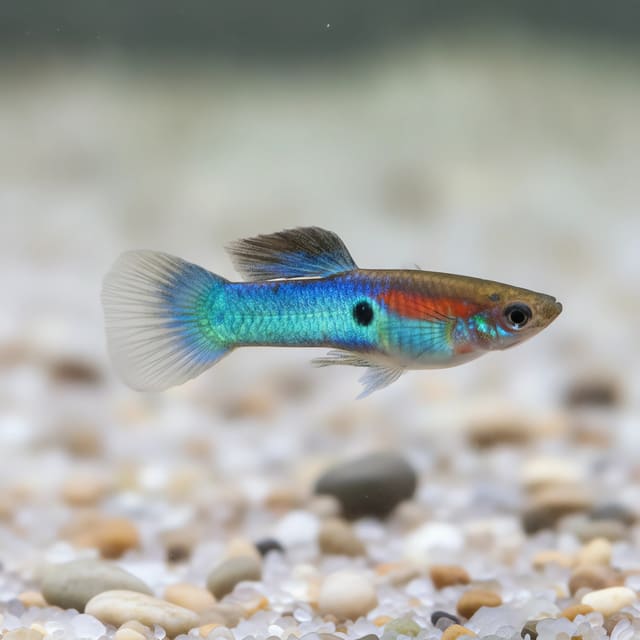
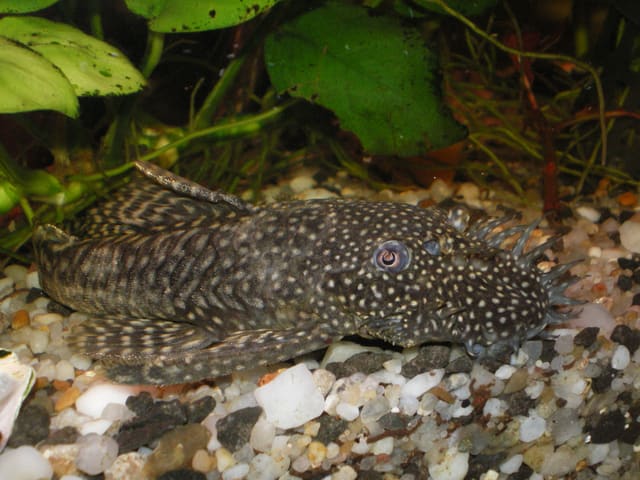
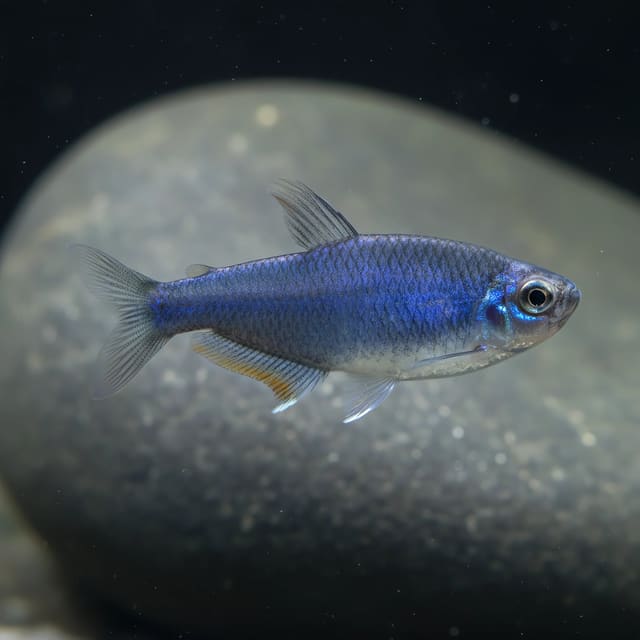
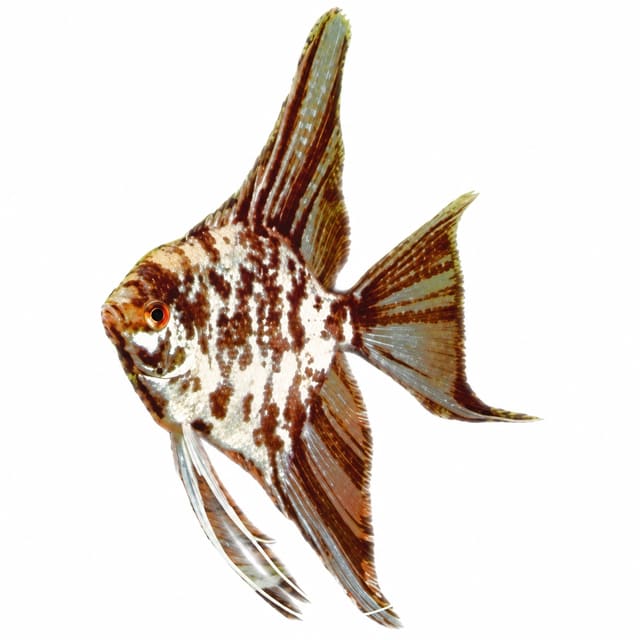
The gallery images are representative of this type of animal rather than photographs of the exact animal supplied, so colours can look slightly different from the live animal.
Royal Red is a selected guppy colour label rather than a separate species. The fish remains Poecilia reticulata, with the social, water and space needs described here. Domestic guppy varieties can have conspicuous colour and elongated fins, but those visible traits do not replace checks of swimming, breathing, fin condition and appetite.
If you are comparing this fish with other members of the same retail group, use the livebearers collection to identify candidates, then screen each species against the water, adult size and behaviour requirements below. A shared collection does not make every member an automatic companion.
Keep the aquarium at 22–28°C, pH 7.0–8.0 and 9–18 dGH. These routine values are the overlap of FishBase, Seriously Fish, OATA and the Tropical Fish Co guppy guide. OATA’s guppy-and-molly guidance contributes group-level values, not a species-specific optimum.
Use a mature, filtered aquarium at least 60 cm long for one small group, and plan for five or more guppies where the sex plan, filtration, water tests and other livestock allow. The 60 cm length and five-fish starting point are our conservative house policy. They are not a fixed stocking maximum or permission to fill every aquarium with the same number.
| Decision | Starting requirement |
|---|---|
| Adult size | Plan around 5 cm standard length |
| Social group | Five or more where capacity and sex planning allow |
| Aquarium | Mature, filtered and at least 60 cm long |
| Routine water | 22–28°C, pH 7.0–8.0 and 9–18 dGH |
| Waste control | Zero ammonia and zero nitrite |
OATA advises at least 45 litres for a small group of the smaller livebearers, while Seriously Fish describes a 45 × 30 cm base with an approximate volume of 41 litres. Use the more conservative 60 cm length screen because nominal litres alone cannot show usable swimming length, existing livestock, filtration strength or social pressure.
Plan for a 5 cm standard-length male and give the group an aquarium at least 60 cm long. Standard length measures the body without the tail fin, so the long domestic tail still needs clear swimming space even though it is not added to the 5 cm figure.
Seriously Fish uses 6 cm standard length in its general species profile. For this male offer, the working adult figure remains FishBase’s 5 cm maximum for male or unsexed fish. Whichever aquarium shape you consider, assess the internal length and footprint rather than relying on the volume printed on the box.
A conventional aquarium around 60 litres can be a candidate for a small group when it is at least about 60 cm long, mature, filtered, furnished appropriately and not already crowded. Five guppies can be a conservative starting group under our policy, but this is not an automatic maximum. Existing fish, fry, weak filtration or repeated chasing can make the same nominal volume unsuitable.
Do not start a young or recently dispatched fish in a smaller permanent home on the assumption that an upgrade will happen later. Prepare the adult-group aquarium first so filtration, water chemistry and social space are stable before the fish arrives.
Cycle and test the aquarium before adding the guppy. Keep ammonia at zero mg/l, nitrite at zero mg/l and nitrate no more than 20 mg/l above the normal tap-water level. Verify 22–28°C with an aquarium thermometer, then check pH and hardness against the 7.0–8.0 and 9–18 dGH routine ranges.
A working biological filter is essential. The RSPCA explains that fish release toxic ammonia; beneficial filter bacteria convert it to nitrite and then to the safer nitrate. A recently filled aquarium is not mature merely because the water looks clear, and a heater does not replace biological filtration.
Use the first tropical aquarium guide to prepare and mature the system before livestock arrives. Our water chemistry guide explains what the principal tests measure, while the water matcher helps compare measured values with this guppy’s routine range.
Change conditions gradually. UK tap water differs between regions and can change when water companies alter or blend supplies, so test the source used for the aquarium. Do not add aquarium salt simply because wild guppies occur in some brackish habitats. Any mineral adjustment needs a measured purpose and must remain safe for every fish, invertebrate and plant in the aquarium.
Provide open horizontal swimming room with planted or structured areas that break lines of sight. Guppies appreciate a planted aquarium, including floating vegetation, while still needing clear water in which the group can move and feed. A secure cover also prevents an open-topped aquarium becoming an escape route.
Avoid strong current that forces the fish to struggle continuously. Long-finned domestic guppies should be able to hold position, turn and cross the aquarium without being pinned by the filter outlet. Adjust the outlet direction or spread the flow when fins fold back, the fish shelter constantly behind objects or they cannot approach food normally.
Use observation to judge the layout. Structure can provide refuge, but dense decoration is not a cure for overcrowding or persistent pursuit. If one fish remains trapped in a corner, misses meals or repeatedly emerges with damaged fins, change the social plan and use the separation option rather than adding more objects around it.
Dense planting can increase the survival of fry. That may be useful in a deliberately managed breeding aquarium, but it also increases the future demand for space, filtration and responsible rehoming. Keep enough open water to inspect the group and account for young fish.
Use an appropriately sized, nutritionally complete omnivore flake or granule as the staple. FishBase records wild guppies eating zooplankton, small insects and detritus, while Seriously Fish notes that domestic fish accept most aquarium foods. Add safe compatible algal and invertebrate variety instead of relying on one treat food.
OATA advises feeding once a day and offering only what the fish can eat within a few minutes. Start with a modest measured portion, watch every fish and remove uneaten food before it breaks down. Increase or reduce the portion according to actual consumption, body condition and water-test results rather than repeatedly adding food whenever a fish approaches the glass.
Appetite is also an observation tool. A sudden reduction in feeding, repeated spitting, loss of body condition or one fish missing every meal calls for a water test and closer inspection. Do not compensate for exclusion by adding a large portion that leaves more waste; separate the affected fish safely or resolve the chasing.
Fry require food sized for their mouths and closer water-quality monitoring. Before deliberately raising a brood, prepare biologically supported nursery filtration, suitable water and enough future capacity rather than depending on a small uncycled container.
At least once every week, carry out a 25% partial water change. Test ammonia and nitrite at least weekly, monitor nitrate, pH and temperature, and treat replacement tap water with conditioner before it enters the aquarium. Siphon solid waste from accessible substrate without stripping the aquarium of all established biological material.
Check the filter for blockage during routine maintenance. If the media needs cleaning, do not run it under the tap. Rinse it lightly in aquarium water removed during the partial change so fewer beneficial bacteria are lost. Keep the filter operating according to its instructions and investigate any sudden reduction in flow.
A settled guppy should swim steadily, breathe regularly, hold open undamaged fins, maintain a normal body profile and feed consistently. The RSPCA’s fish health guidance supports checking water quality and seeking qualified help when behaviour or appearance changes.
For new fish, the MSD Veterinary Manual recommends at least 30 days of quarantine, with longer isolation where indicated. Use a separate biologically supported system, dedicated equipment and repeated testing. For diagnosis and treatment in the UK, use OATA’s fish-vet directory to locate qualified help.
Prepare and test the mature aquarium before the delivery day. Confirm zero ammonia and nitrite, a stable temperature within 22–28°C and suitable pH and hardness. These aquarium checks belong before the parcel arrives so the fish is not held while equipment or water chemistry is adjusted.
Follow the current delivery and Live Arrival Guarantee policy in this order:
Keep the continuous video and order number. If the fish’s condition creates a Live Arrival Guarantee concern, contact us the same day and follow the reporting instructions on the policy page.
After release, watch swimming, breathing, balance and fin position. During the first week, check that the new male can reach food and move away from other fish. Test the aquarium if it hangs at the surface, sits on the bottom, loses balance, breathes unusually or refuses food.
During the first month, continue the weekly water-change and testing routine while watching for repeated pursuit, torn fins or weight loss. A new fish increases waste and feeding demand, so ammonia or nitrite above zero requires immediate corrective action. Do not treat continuing distress as an inevitable part of settling in.
Keep five or more guppies where aquarium capacity, filtration, water tests, other livestock and the sex plan allow. FishBase’s aquarium note uses a group of five or more, while OATA suggests at least three. Our conservative house policy therefore starts with five rather than treating three as the preferred endpoint.
This offer adds one male fish to the plan. A male-only group avoids new mixed-sex mating, but display and chasing can still become persistent and long fins can still be damaged. Watch whether every fish can feed, rest and leave another fish’s line of sight.
| Group plan | Decision to prepare |
|---|---|
| Male-only guppies | Monitor chasing, feeding access and fin condition |
| Mixed-sex guppies | OATA suggests two females per male; prepare for fry and continued courtship |
| Adding to an established group | Recheck total space, sex mix, filtration and behaviour |
| Keeping documented lines | Separate lines that could interbreed |
No ratio guarantees that pressure will remain low or that reproduction will be manageable. Persistent pursuit, cornering, hiding, missed feeding or damage requires intervention. Use sight breaks, reassess available space and move the affected fish to a prepared system when necessary.
Guppies are livebearers. Before maintaining a mixed-sex group, decide how fry would be housed, fed and responsibly rehomed. Adult predation is not a dependable population-control plan, and dense cover may allow more young to survive. Never release guppies, fry, aquarium plants or aquarium water outdoors or into a pond, natural waterway or surface-water drain.
Avoid fin-nipping species, including tiger barbs and serpae tetras. Both Seriously Fish and OATA identify fin damage as a clear risk for guppies, whose extended domestic tails and dorsal fins make this an important exclusion.
A quiet community can include other livebearers, rasboras, corydoras, small loricariids and tetras that pass the full screen. These are candidate groups named by Seriously Fish, not universal promises. Exact species, adult requirements and the behaviour of the individual animals still decide whether a combination is appropriate.
Screen every companion for adult size, water needs and individual temperament. Guppies are described as very peaceful, but an aquarium can still produce competition, male display or persistent pursuit. Similarly, a companion described as peaceful may have different water, flow, group-size or feeding requirements.
Check compatibility again after introduction. Repeated hiding, surface-hanging, missed meals, clamped fins or new damage means the plan needs intervention. Do not add another fish in an attempt to dilute a problem until water quality, group structure and usable space have been reassessed.
The guppy is Poecilia reticulata; Endler’s livebearer is Poecilia wingei. A formal species description distinguishes Poecilia wingei, and Eschmeyer’s Catalog of Fishes lists that name as valid. Do not treat “guppy” and “Endler” as interchangeable species labels.
Laboratory research documents reciprocal hybridisation between P. reticulata and P. wingei through F1 and F2 generations. This establishes that interbreeding is possible. It does not establish how common hybrids are in retail or identify the ancestry of a fish by appearance.
If preserving a documented guppy or Endler line matters, house the lines separately and do not represent hybrid descendants as pure examples of either parent species. Because this offer is male, the relevant reproductive risk arises if it is housed with female Endlers or female guppies from a line that the keeper intends to preserve separately.
Passing the welfare screen does not preserve line identity, and separating lines does not by itself create a suitable aquarium. Apply both decisions before combining animals.
The Royal Red Male Guppy reaches 5 cm standard length according to FishBase’s male or unsexed figure. Standard length excludes the tail fin, so leave clear swimming space for its extended domestic fins.
Use a mature, filtered aquarium at least 60 cm long for one small Royal Red Male Guppy group. This is Tropical Fish Co’s conservative policy; usable footprint, sex mix, tank mates, filtration and water tests still determine capacity.
Plan for five or more guppies where aquarium capacity and the sex plan allow. FishBase uses a group of five or more, and Tropical Fish Co adopts that as its conservative starting policy rather than a fixed maximum.
The Royal Red Male Guppy can suit a prepared beginner and carries an easy store care assessment. It still needs a mature filtered aquarium, tested water, a planned social group and weekly maintenance.
Use an appropriately sized, nutritionally complete omnivore flake or granule as the staple, with safe compatible algal and invertebrate variety. OATA advises feeding once a day and only what it can eat within a few minutes.
Keep it at 22–28°C, pH 7.0–8.0 and 9–18 dGH. These routine values are the overlap of FishBase, Seriously Fish, OATA and Tropical Fish Co guidance.
This guppy is described as very peaceful, but male display and persistent pursuit still need monitoring. Avoid fin-nipping species, including tiger barbs and serpae tetras, because they can damage its extended fins.
Quiet-community candidates named by Seriously Fish include other livebearers, rasboras, corydoras, small loricariids and tetras that pass checks for water, adult size, behaviour, group space and feeding access. No candidate is an automatic match.
Start filming while the parcel is still sealed and the outer box is visible, then open it in one continuous take and show the fish in the sealed bag. Be present to receive it, inspect it that day, float the bag for 20–30 minutes before releasing, and keep the video with your order number for any Live Arrival Guarantee claim.
No reviews for this item yet. Bought one? Honest reviews only, good or bad.
What customers say about ordering from us
Easy website plenty of info on fish your buying great to pick a time slot
TRACEY DURRANT · 7 Oct 2026
Got some lovely fish thank you
Kevin Mackie · 7 Oct 2026
Reviews of our shop, collected by Judge.me, an independent third-party review collector. Newest first.
Moved by UK carriers licensed to handle live animals
Hand-packed with oxygen bags, poly box, heat pack
Email photos the same day; an optional unboxing video helps us review problems faster — claim terms apply
Klarna & PayPal Pay in 3 at checkout